
Gorillas are gentle giants of the African forests, packed with power, smarts, and surprising habits.
This big list brings you bite-size facts about their bodies, families, foods, and futures.
Whether you’re into numbers or nature, you’ll find wow moments here, perfect for quick learning or fun family reading.
Origins & Definitions
- Gorillas are great apes in the genus Gorilla.
- There are two species: the eastern gorilla and the western gorilla.
- Each species has two subspecies: mountain and Grauer’s in the east, western lowland and Cross River in the west.
- Gorillas are the largest living primates.
- They are native to central and western sub-Saharan Africa.
- Gorillas live mainly in tropical forests from lowland swamps to cloud forests.
- They are mostly terrestrial and move by knuckle-walking.
- Adult males with a silver saddle of hair on their backs are called silverbacks.
- A group of gorillas is called a troop or band.
- Gorillas share about 98% of their DNA with humans.
- The genus Gorilla was first described scientifically in 1847.
- Like all great apes, gorillas do not have tails.
Record-Breakers & Wow Numbers
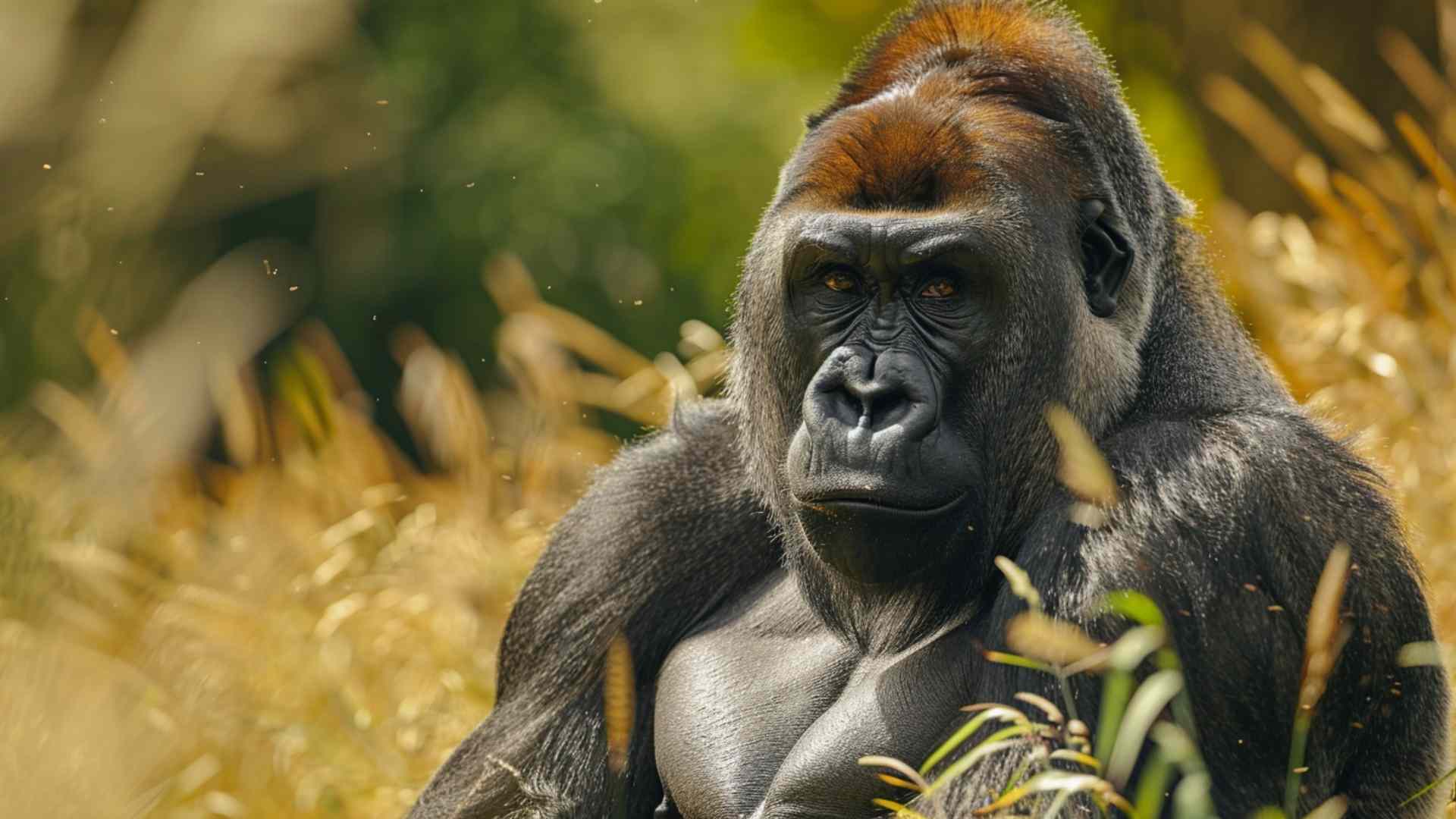
- A large silverback can weigh 150–220 kg, with rare individuals heavier.
- Adult females typically weigh 70–115 kg.
- Standing upright, a big male can reach about 1.6–1.8 m tall.
- Gorillas can sprint at roughly 40 km/h for short bursts.
- Estimates put a gorilla’s bite force around 1,300 psi (about 9,000 kPa).
- A silverback’s arm span can exceed 2.3 m.
- Adult male canine teeth can grow longer than 5 cm.
- A troop may travel 0.5–2 km in a day searching for food.
- Home ranges often cover 5–30 km² depending on habitat quality.
- Mountain gorillas live at elevations up to about 4,000 m.
- Grauer’s gorillas range from roughly 600–2,900 m in elevation.
- Western lowland gorillas inhabit some of Africa’s densest swamp forests.
- Cross River gorillas occupy a small highland region along the Nigeria–Cameroon border.
- Gorillas build a fresh sleeping nest each evening in under 10 minutes.
- Newborn gorillas weigh around 2–2.5 kg at birth.
- Wild gorillas commonly live 35–40 years, and some in care surpass 50 years.
- An adult can eat 15–30 kg of vegetation in a single day.
- A chest-beat can carry through the forest for over 500 m.
Biology & Anatomy
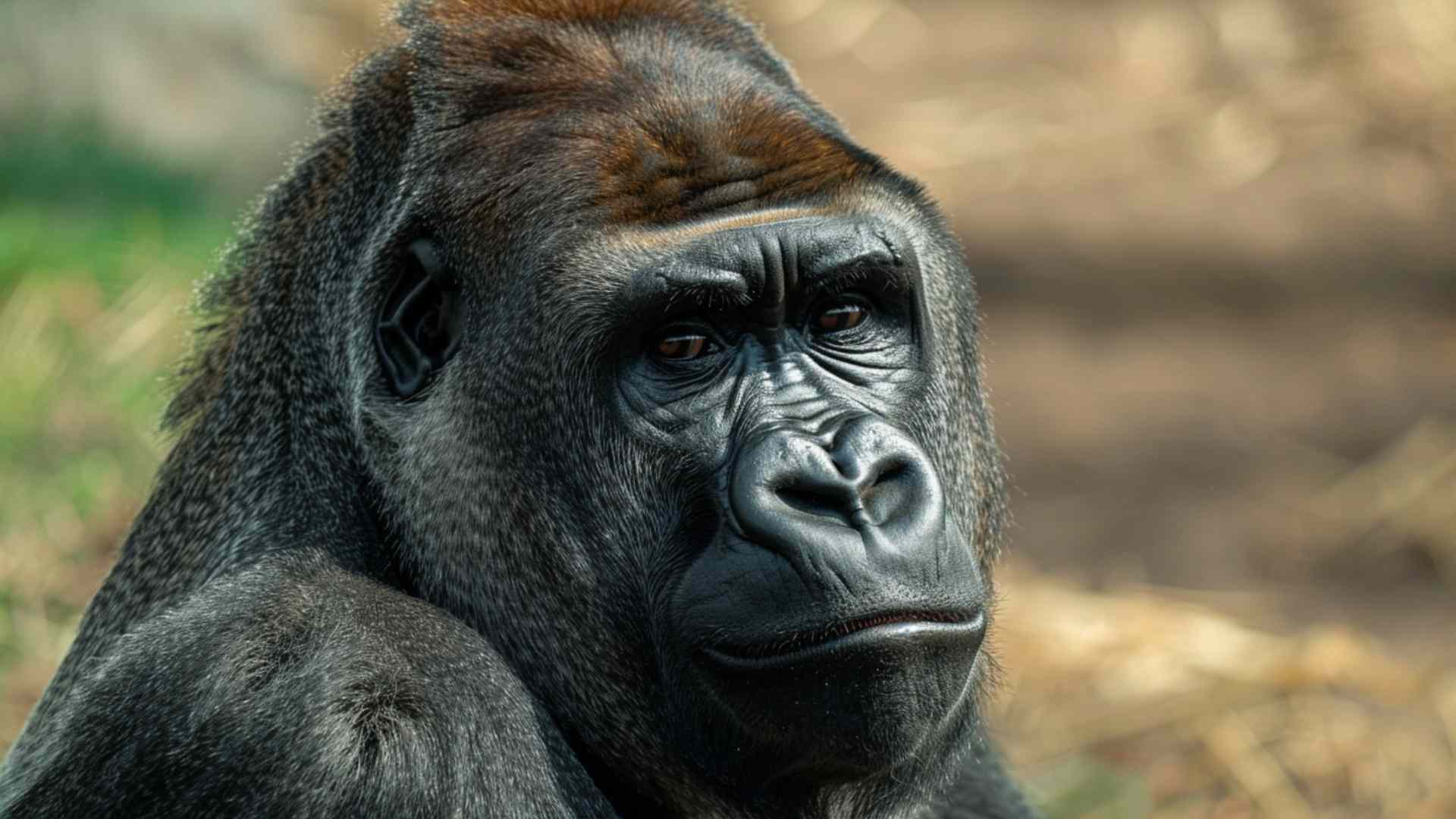
- Gorillas have broad chests, massive shoulders, and heavily muscled arms.
- A sagittal crest on the skull anchors huge jaw muscles, especially in males.
- Gorillas have 32 teeth, the same number as adult humans.
- Thick-enameled molars are adapted for grinding fibrous plants.
- Gorillas have opposable thumbs and big toes for grasping.
- Fingerprints are unique to each individual.
- Each gorilla’s nose wrinkles form a unique noseprint used for identification.
- Gorillas have dark brown eyes with human-like forward-facing vision.
- Average body temperature is about 37°C.
- With few sweat glands, gorillas cool mainly by resting and shade.
- Fur color ranges from black to dark brown, with mountain gorillas sporting longer hair.
- Older males develop a silver or gray saddle across the back.
- Arms are longer than legs, with an arm-to-leg ratio greater than 1.1.
- They walk on their knuckles using curled fingers for support.
- Gorillas can stand upright briefly but usually move on all fours.
- A large, fermentation-friendly gut helps digest tough plant fibers.
- Gut microbes break down cellulose and produce energy-rich fatty acids.
- A laryngeal air sac helps amplify calls and chest-beat resonance.
- A gorilla brain weighs roughly 400 grams on average.
- Gorillas have color vision useful for spotting young leaves and ripe fruits.
- Hands and feet have five digits with flat nails instead of claws.
- Faces, ears, palms, and soles have little or no hair.
- Powerful hands allow both precision grips and strong power grips.
- Fermenting plant matter in the gut produces plenty of gas.
- Infant gorillas cut their baby teeth by about 9–12 months.
- Female gorillas do not show the large estrus swellings seen in some apes.
- Gorillas have lower basal metabolic rates than humans of similar mass.
- Respiratory illnesses can pose serious risks to gorilla health.
Behavior & Communication
- Gorillas live in cohesive groups usually led by one silverback.
- Typical groups include one to several adult females and their offspring.
- Some groups contain multiple males, including younger blackbacks.
- Chest-beating is a display that helps resolve conflicts without fighting.
- Gorillas use many distinct calls for contact, alarm, play, and reassurance.
- Soft grunts help keep moving groups coordinated in thick vegetation.
- Youngsters practice chest-beating during playful bouts.
- Grooming occurs but is less frequent than in chimpanzees.
- Serious fights are rare because displays often settle disputes.
- The silverback mediates conflicts and leads travel and resting decisions.
- Mothers first carry infants on the belly and later on the back.
- Infants typically shift to piggyback rides at about 4–6 months.
- Weaning usually happens between 3 and 4 years of age.
- Females often give birth every 4–6 years due to long infant care.
- Gestation lasts about 8.5 months.
- Juveniles form playgroups that build social and motor skills.
- Males often leave their birth group to form or join new groups.
- Group spacing is maintained with calls and scent cues from dung and urine.
- Day nests or rest beds are made for midday naps.
- Tool use has been observed, such as using sticks to test water depth.
- Gorillas can learn simple tasks and symbols in human care.
- Comforting gestures show empathy toward distressed group members.
- Facial expressions include tight-lipped faces, play faces, and fear grimaces.
- Leaders often pause at vantage points to watch over the troop.
- Adult males may protect or adopt orphaned infants within their group.
- Wild gorillas tend to be shy and avoid human contact.

Habitat, Diet & Ecology
- Gorillas are mostly herbivorous, eating leaves, stems, shoots, and fruits.
- Mountain gorillas rely heavily on herbaceous plants and bamboo shoots.
- Western lowland gorillas have the most fruit-rich diets among gorillas.
- Ants, termites, and occasional grubs add small amounts of protein.
- Gorillas rarely drink standing water because plants provide ample moisture.
- By dispersing seeds, gorillas help regenerate tropical forests.
- Daily schedules alternate between feeding, traveling, and resting.
- Troops usually leave night nests around sunrise and settle before dusk.
- Mountain gorillas favor cool, misty, high-altitude forests.
- Western lowland gorillas often roam in seasonally flooded swamp forests.
- Cross River gorillas live in rugged highlands and steep valleys.
- Grauer’s gorillas occupy eastern DR Congo across varied elevations.
- Despite their size, gorillas climb trees to reach fruiting branches.
- Natural predation is rare, with leopards the main potential predator.
- Human activities pose the greatest threats through habitat loss and hunting.
- Gorillas build ground nests or tree nests depending on safety and site.
- Nest sites are chosen for comfort, shelter, and parasite avoidance.
- Dung middens can mark frequently used areas within a range.
- Home ranges may overlap without strict territorial defense.
- Seasonal fruiting patterns change daily travel distances and routes.
- Heavy rain and storms reduce movement and encourage sheltering.
- Contact with people can spread parasites and respiratory diseases.
- Ecotourism rules limit close approaches to reduce disease risks.
- In monitored areas, veterinarians sometimes intervene for snare injuries.
History & Conservation
- Western lowland gorillas are the most numerous gorillas living today.
- Mountain gorillas declined sharply during the 20th century.
- Careful protection has led to gradual mountain gorilla increases in recent decades.
- Grauer’s gorillas have suffered major declines from conflict, mining, and poaching.
- Cross River gorillas are the rarest gorilla subspecies.
- All gorillas receive legal protection across their range countries.
- Logging, mining, farming, and roads drive much gorilla habitat loss.
- Wire snares set for other animals can seriously injure gorillas.
- Ebola outbreaks have killed many western gorillas in some regions.
- Community-based conservation reduces human–wildlife conflict near parks.
- Some groups are regularly monitored for research and tourism management.
- Strict hygiene protocols during visits help protect gorilla health.
- Cross-border cooperation protects populations that span national lines.
- Long-term studies reveal slow life histories and complex social bonds.
- Regulated tourism can fund habitat protection and local livelihoods.
- Reforestation projects aim to restore corridors between isolated groups.
- Gorilla-friendly farming practices reduce pressure at forest edges.
- Reducing demand for unsustainably sourced wood and minerals lowers habitat pressure.

Names & Etymology
- The word “gorilla” traces to a Greek account describing “hairy people” near West Africa.
- The western gorilla carries the species name Gorilla gorilla.
- The eastern gorilla’s species name beringei honors Captain von Beringe from 1902.
- Grauer’s gorilla is named after explorer Rudolf Grauer.
- The Cross River gorilla is named for the Cross River region on the Nigeria–Cameroon border.
- A blackback is an adult male that has not yet developed the silver saddle.
- The mountain gorilla’s subspecies name is beringei beringei.
For Kids: Quick Comparisons
- A 180 kg silverback weighs about as much as two 90 kg adults combined.
- With a 2.3 m reach, a gorilla’s arm span is longer than a queen-size bed is wide.
- Eating 20 kg of plants a day equals roughly 40 heads of lettuce.
- A top speed near 40 km/h beats a typical 30 km/h city speed limit.
- A 2.2 kg newborn gorilla is about the size of a human newborn.
- A gorilla group of 10 is like a small school class moving through the forest.
Pop Culture & Fun Extras
- The 1933 film “King Kong” made a giant fictional gorilla famous worldwide.
- A captive gorilla named Koko became widely known for using hand signs to communicate.
- Gorillas beat their chests with cupped hands that make a deep, drumming sound.
- Chest-beat rhythms can vary and may signal body size to listeners.
- Gorillas sometimes hum while eating, a sound like soft contented purring.
- Humans and gorillas last shared a common ancestor about 8–10 million years ago.
Quick FAQ
Are gorillas dangerous to humans?
Gorillas are generally shy and avoid people, and most conflicts happen only when they feel threatened.
What do gorillas eat?
They mainly eat leaves, stems, shoots, and fruits, with small amounts of insects.
How strong is a gorilla?
A silverback’s powerful muscles, large jaws, and long arms make it extraordinarily strong for climbing and feeding.
Where do gorillas live?
Gorillas live in tropical forests of central and western Africa, from lowland swamps to high mountain forests.
Why do gorillas beat their chests?
Chest-beating communicates information such as presence, mood, and size, often preventing fights.

Ellie is the owner and sole author of Fun Facts, combining her mechanical engineering background with years of research-driven writing to deliver facts you can trust. Every article is thoroughly fact-checked and routinely updated as new science and sources emerge to keep information accurate and current. Her mission is to make learning delightful while upholding high standards of reliability and transparency.