
Welcome to Bolivia, a country of sky-high cities, mirror-like salt flats, and rainforest alive with color.
This family-friendly guide packs quick, curious facts about places, people, food, and history.
Whether you’re planning a trip or just love learning, these bite-size facts will make Bolivia easy and fun to explore.
Origins & definitions
- The country’s official name is the Plurinational State of Bolivia, adopted in the 2009 constitution.
- Bolivia is named in honor of independence leader Simón Bolívar.
- Independence was declared on 6 August 1825 in the city of Sucre.
- Sucre is the constitutional capital and seat of the Supreme Court.
- La Paz is the administrative capital and home to the executive and legislative branches.
- The national flag is a red-yellow-green tricolor first adopted in 1851.
- The multicolored Wiphala is recognized as a national symbol alongside the tricolor.
- Bolivia is landlocked after losing its coastline in the late 19th century.
- Despite being landlocked, Bolivia maintains a navy that trains on lakes and rivers.
- Bolivia uses the UTC−4 time zone year-round with no daylight saving time.
- The country is divided into 9 first-level regions called departments.
- Spanish plus 36 indigenous languages are official under the constitution.
Record-breakers & wow numbers
- La Paz is the world’s highest seat of government at about 3,650 m above sea level.
- El Alto International Airport sits around 4,061 m and is among the highest international airports.
- Salar de Uyuni is the world’s largest salt flat at roughly 10,582 km².
- Lake Titicaca lies at about 3,812 m and is often cited as the highest navigable lake for large vessels.
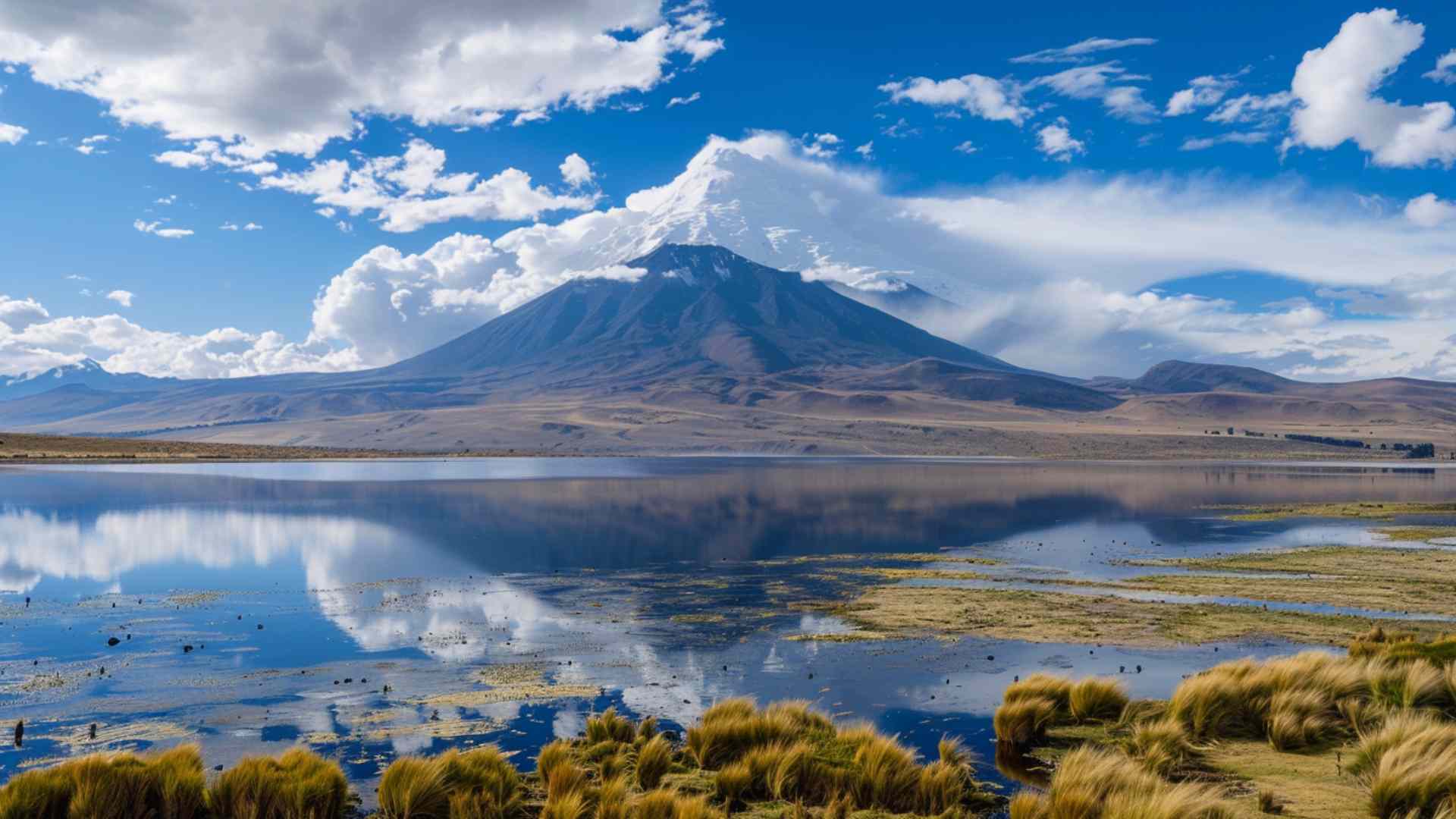
- Nevado Sajama is Bolivia’s tallest mountain at 6,542 m.
- Bolivia covers about 1,098,581 km², making it roughly twice the size of France.
- Brines beneath Uyuni hold one of the world’s largest lithium resources.
- Madidi National Park ranks among the planet’s most biodiverse protected areas.
- The Bolivian Amazon shelters hundreds of mammal species, including giant river otters and tapirs.
- The Oruro Carnival is one of South America’s largest traditional festivals.
- Tiwanaku is one of the highest major pre-Columbian urban centers ever built.
- Chacaltaya once hosted the world’s highest ski area before its glacier vanished in 2009.
- The Jesuit Missions of Chiquitos preserve centuries-old baroque music traditions.
- Torotoro National Park contains remarkably dense fossilized dinosaur trackways.
- The La Paz–El Alto cable car network is among the world’s largest urban cable car systems.
- Salar de Uyuni is so flat that its surface elevation varies by less than a meter over huge distances.
Geography & nature
- Bolivia borders Brazil, Peru, Chile, Argentina, and Paraguay.
- The Andes split the country into western highlands and vast eastern lowlands known as the Oriente.
- The Altiplano plateau sits between Andean ranges and hosts cities like La Paz and Oruro.
- East of La Paz the land plunges into cloud-forested slopes called the Yungas.
- About two-thirds of Bolivia drains to the Amazon and Orinoco river systems.
- The southeastern Chaco is a hot, scrubby plain shared with Paraguay and Argentina.
- The world’s largest tropical wetland, the Pantanal, extends into eastern Bolivia.
- Lake Poopó on the Altiplano is shallow and has repeatedly shrunk during droughts.
- The Desaguadero River connects Lake Titicaca to Lake Poopó across the plateau.
- The Mamoré and Beni rivers join to form the Madeira, a major Amazon tributary.
- Salar de Uyuni formed from ancient lakes that evaporated thousands of years ago.
- The salt flat’s polygon patterns come from cycles of evaporation, wind, and thermal contraction.
- Isla Incahuasi in Uyuni hosts giant columnar cacti that can exceed 10 m.
- Sajama National Park protects high puna grasslands and ancient queñua (Polylepis) woodlands.
- The Andean condor soars over Bolivia and has one of the widest wingspans of any land bird.
- Vicuñas and llamas graze hardy grasses on the wind-swept Altiplano.
- Three flamingo species breed in Bolivia’s salty high-Andean lagoons.
- The Bolivian river dolphin is a distinct freshwater species in the Mamoré basin.
- Madidi National Park spans habitats from tropical lowlands to snowcapped peaks.
- The Chiquitano dry forest in eastern Bolivia is one of the largest intact tropical dry forests.
- Noel Kempff Mercado National Park features sandstone mesas and dramatic waterfalls.
- Uyuni’s salt crust can be several meters thick above mineral-rich brines.
- Valleys near Cochabamba enjoy a mild, springlike climate much of the year.
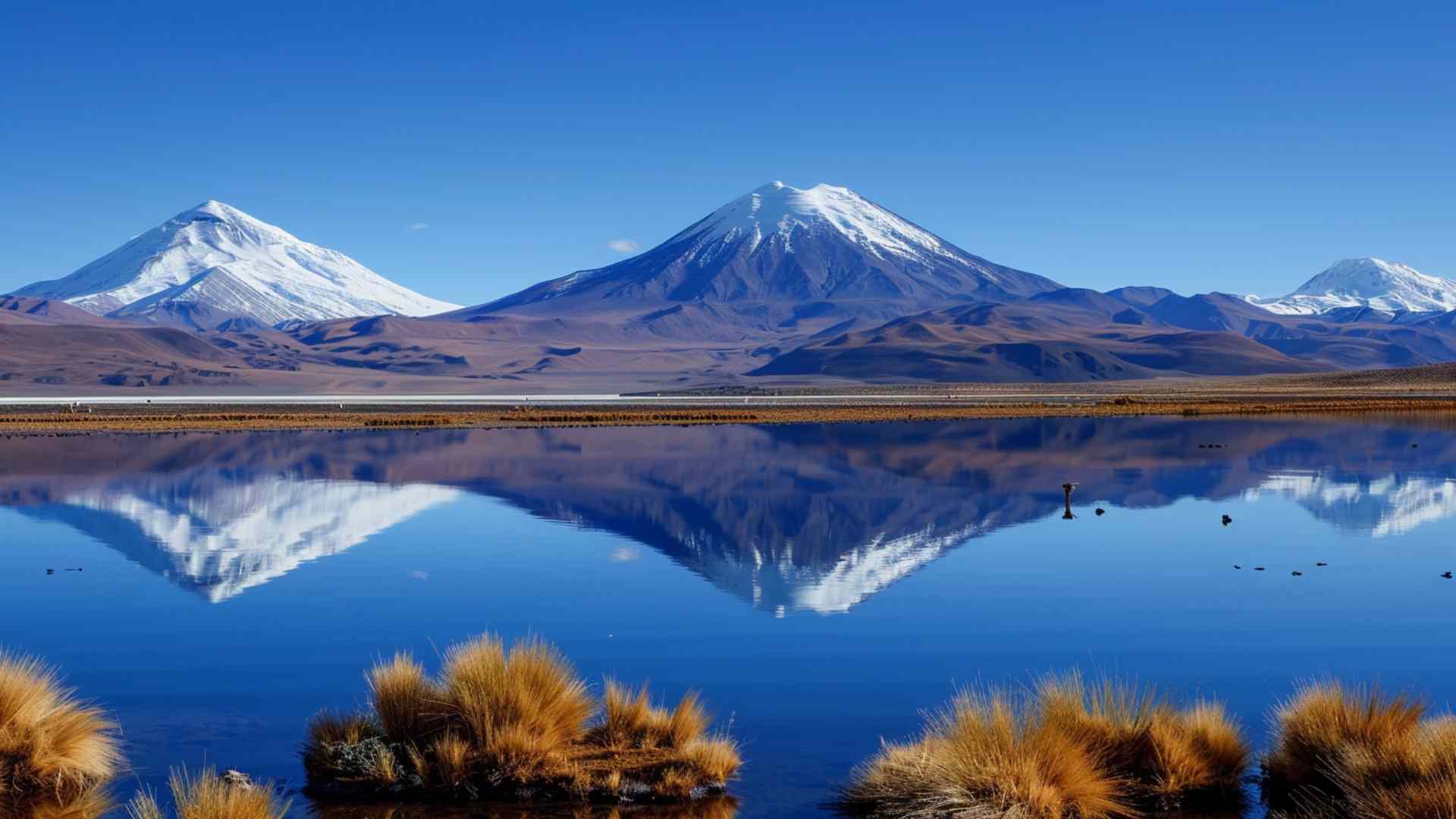
- In the wet season, shallow water over Uyuni creates mirror-like reflections of the sky.
- El Alto sits on the rim of the Altiplano above La Paz at over 4,000 m.
- Bolivia’s biodiversity includes thousands of plant species from cushion plants to giant rainforest trees.
Science, economy & resources
- The city of Potosí boomed in the 1500s from silver mined at Cerro Rico.
- Tin mining surged in the early 20th century and later declined with global price drops.
- Natural gas is a major export transported by pipelines to neighboring countries.
- Bolivia’s currency is the boliviano, abbreviated Bs.
- Quinoa was domesticated on the Altiplano thousands of years ago and remains a staple.
- Chuño is a traditional freeze-dried potato made using freezing nights and sunny days.
- Uyuni’s vast, flat, bright surface helps calibrate satellite altimeters.
- Lithium-rich brines beneath Uyuni can be processed into battery chemicals.
- Cochineal insects historically provided vivid red dye on Andean cactus farms.
- Coca leaves are legally grown for traditional chewing and herbal teas.
- At La Paz’s altitude, water boils around 88–90 °C, so cooking takes longer.
- Thin air at El Alto requires longer runways and careful aircraft performance planning.
- The old Yungas Road gained a dangerous reputation before a newer highway improved safety.
- Mi Teleférico moves commuters above traffic on dozens of kilometers of cable lines.
- Strong solar radiation at high elevations boosts potential for solar energy.
- Stone-and-earth terraces called andenes conserve soil and water on steep slopes.
- Eastern lowlands produce soy, sugarcane, and cattle on large farms.
- Cooperative miners still work in traditional shafts around Potosí and Oruro.
History & politics
- Tiwanaku was a powerful highland culture that flourished near Lake Titicaca over 1,000 years ago.
- The Inca Empire absorbed parts of present-day Bolivia in the 15th century.
- Spanish colonizers founded La Plata, later named Sucre, in the 1500s.
- Silver from Potosí fueled global trade during the 16th and 17th centuries.
- Bolivia declared independence on 6 August 1825 after regional liberation wars.
- The new nation took its name from Simón Bolívar.
- Antonio José de Sucre gave his name to the capital and served as an early leader.
- Bolivia lost its Pacific coast to Chile in the War of the Pacific from 1879 to 1884.
- The Chaco War with Paraguay from 1932 to 1935 was fought over a dry frontier thought to hold oil.
- Each March, Día del Mar commemorates the nation’s historical loss of access to the sea.
- The 1952 National Revolution expanded suffrage and launched agrarian reform.
- Major mines were nationalized in the 1950s as part of restructuring.
- Military and civilian governments alternated through much of the 20th century.
- The 2009 constitution redefined Bolivia as a plurinational state.
- Indigenous autonomies gained legal recognition under the 2009 framework.
- The Wiphala was affirmed as a national symbol in the same constitutional changes.
- La Higuera is known as the place where Che Guevara was captured and killed in 1967.
- The Supreme Court sits in Sucre while the executive and legislature operate in La Paz.
- As of 2024 Bolivia had nine departments with elected departmental authorities.
- Social movements of miners, farmers, and neighborhood groups are highly active in public life.
Languages, people & culture
- Spanish, Quechua, and Aymara are the most widely spoken languages in Bolivia.
- Dozens of indigenous languages share official status with Spanish nationwide.
- Guaraní communities are concentrated in the southeastern lowlands.
- Many Aymara women proudly identify as cholitas and wear pollera skirts and bowler hats.
- Offerings called ch’alla honor Pachamama, or Mother Earth, at homes and worksites.
- The charango is a small, bright-sounding Andean stringed instrument.
- Zampoña panpipes and quena flutes are staples of highland folk music.
- The tinku dance reenacts ritual encounters and appears in festival performances.
- Caporales and morenada are energetic dances featured in Carnaval parades.
- The Andean New Year, or Willkakuti, is celebrated at sunrise on June 21.
- Street art in La Paz and El Alto often celebrates indigenous identity and history.
- The Wiphala’s seven colors symbolize Andean ideas of community, time, and balance.
- Weekend family lunches can stretch for hours and bring multiple generations together.
- Football is the most popular sport across cities and towns.
- Estadio Hernando Siles in La Paz sits at about 3,637 m and hosts big matches.
- Many students learn both Spanish and a local indigenous language in school.
- Dried potatoes like chuño and tunta are pantry staples for highland families.
- Markets brim with fruit from the lowlands, including papaya, mango, and cacao.

Food, festivals & sports
- Salteñas are baked savory pastries with a slightly sweet, soupy filling.
- Pique macho piles sliced beef, sausages, fries, and peppers on one hearty plate.
- Silpancho layers thin beef, rice, potatoes, and a fried egg into a Cochabamba favorite.
- Sopa de maní is a creamy peanut soup often served with fries on top.
- Api morado is a warm, spiced purple-corn drink popular at breakfast.
- Singani is a high-altitude grape brandy distilled from Muscat of Alexandria.
- Llajua is a fresh hot sauce made with locoto peppers and tomatoes or quirquiña.
- Anticuchos are marinated skewers grilled over charcoal and sold as street food.
- The Oruro Carnival features masked dancers portraying Andean and colonial characters.
- La Paz’s Gran Poder parade fills the streets with thousands of dancers and musicians.
- As of 2024 Santa Cruz de la Sierra is the country’s largest city by population.
- The national football team plays home qualifiers at high altitude to use home conditions.
- The Alasitas fair sells miniatures that people bless to make their wishes come true.
- San Juan Night in June brings bonfires and mid-winter celebrations in the highlands.
- Tarija’s sunny valleys support vineyards and long, leisurely lunches.
- Rurrenabaque serves as a gateway to rainforest and pampas wildlife tours.
- The Uyuni salt flats draw visitors for stargazing and mirror-season photography.
- Community soccer games often pause for shared cups of coca or cinnamon tea.
Pop culture, travel & fun extras
- The old Yungas “Death Road” is now a popular guided mountain-bike descent.
- Uyuni’s train cemetery displays rusting locomotives from the mining boom era.
- The Palacio Quemado in central La Paz is the traditional presidential palace building.
- A clock on Bolivia’s Congress building was set to run counterclockwise as a Southern Hemisphere symbol.
- Isla del Sol on Lake Titicaca features Inca stairways and terraced fields with sweeping views.
- Totora-reed boats still glide across Lake Titicaca beside modern motorboats.
- La Paz’s witches’ market sells amulets, herbs, and llama fetuses for traditional offerings.
- The dry season from May to September brings clearer skies for Andean travel.
- On the Altiplano, the rainy season usually runs from about November to March.
- Long-distance buses called flotas connect remote towns across mountains and plains.
- In El Alto, cholitas luchadoras stage lively wrestling shows in colorful outfits.
- Torotoro’s caves, canyons, and dinosaur tracks are explored on guided hikes.
- Sucre preserves whitewashed colonial buildings and shaded central plazas.
- Potosí’s skyline is dominated by the cone-shaped Cerro Rico mine mountain.
- Winter nights on Uyuni can dip well below freezing under brilliant stars.
- Many travelers sip coca tea to ease mild altitude discomfort when they arrive.
- A friendly “¡Buen día!” and unhurried chat are everyday Bolivian ways to start a conversation.
Quick FAQ
What is the capital of Bolivia?
Bolivia has two capitals: Sucre is the constitutional capital, and La Paz is the seat of government.
Is Bolivia landlocked?
Yes, Bolivia has been landlocked since the late 1800s but maintains a river and lake navy.
What is Bolivia famous for?
Bolivia is known for the Uyuni salt flats, Lake Titicaca, high-altitude cities, rich Indigenous cultures, and diverse wildlife.
Which languages are spoken in Bolivia?
Spanish, Quechua, and Aymara are widely spoken, and dozens of other Indigenous languages are official.
When is the best time to visit the salt flats?
Visit May–September for dry, white crust views, or January–March for mirror-like reflections after rains.

Ellie is the owner and sole author of Fun Facts, combining her mechanical engineering background with years of research-driven writing to deliver facts you can trust. Every article is thoroughly fact-checked and routinely updated as new science and sources emerge to keep information accurate and current. Her mission is to make learning delightful while upholding high standards of reliability and transparency.