
Black Friday is the biggest shopping buzz of the year for many families.
It started in the United States and spread worldwide with in-store lines and online carts.
These quick facts unpack the name, the dates, the deals, and the do’s and don’ts so you can shop smarter and stay safe.
Origins & definitions
- Black Friday is the day after the U.S. Thanksgiving, which falls on the fourth Thursday of November.
- Because of that calendar rule, Black Friday can land between November 23 and November 29.
- Many people treat Black Friday as the unofficial start of the winter holiday shopping season.
- Black Friday is not a federal holiday in the United States.
- Several U.S. states give public employees the Friday after Thanksgiving off.
- The term “Black Friday” was used by Philadelphia police in the 1950s to describe heavy post-Thanksgiving traffic.
- Retailers later promoted the friendlier idea that “black” referred to profits instead of losses.
- The “in the black” explanation became popular years after the traffic meaning took hold.
- The phrase “Black Friday” once referred to an 1869 financial panic that had nothing to do with shopping.
- By the 1980s, Black Friday had become a nationwide shopping idea in the U.S.
- Doorbusters are limited-quantity items priced very low to draw big crowds.
- A doorbuster usually has strict limits such as one per customer.
- Rain checks are uncommon for doorbusters because inventory is intentionally small.
- Many retailers publish Black Friday ads weeks ahead to build excitement.
- Online stores often spread deals across much of November.
- Cyber Monday is the Monday after Black Friday and spotlights online deals.
- Small Business Saturday sits between Black Friday and Cyber Monday to highlight local shops.
- Giving Tuesday follows Cyber Monday and encourages charitable donations.
- Some stores once opened on Thanksgiving evening, but many returned to Friday openings in the 2020s.
- Early-bird hours like 5 a.m. or earlier are common for in-store events.
- Extended holiday return windows typically start around Black Friday.
- Black Friday policies often exclude price matching on special doorbusters.
- The weekend from Black Friday through Cyber Monday is often nicknamed the “Cyber Five.”
- Many families keep Black Friday traditions like matching outfits or breakfast in the car line.
- Black Friday practices now mix in-store excitement with click-to-cart convenience.
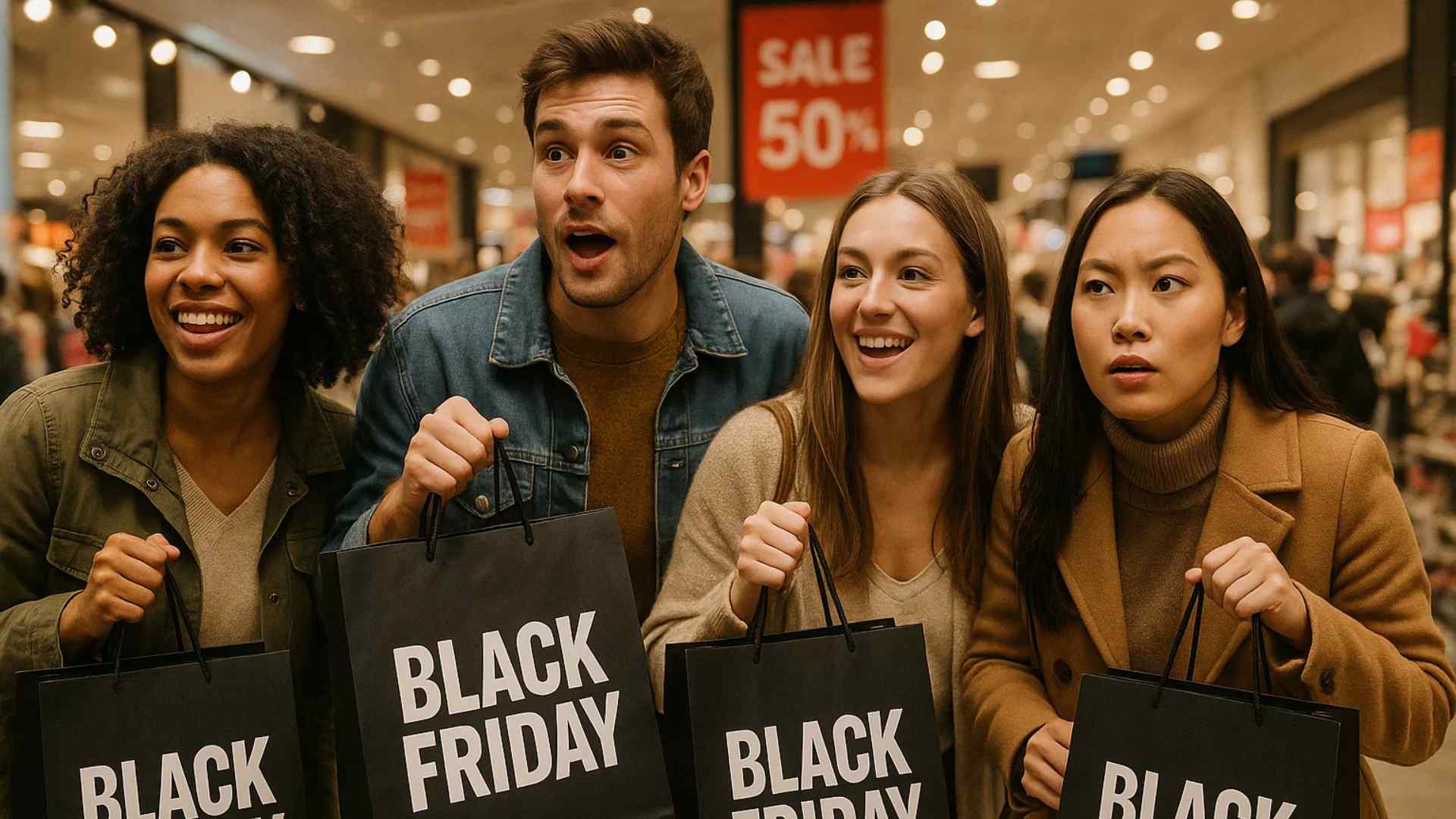
Record-breakers & wow numbers
- Mobile phones account for a large share of Black Friday online traffic as of 2024.
- Package volumes over the Black Friday weekend can rival the busiest postal days of the year.
- Streaming and software subscriptions often show rare annual discounts during the weekend.
- Fitness equipment sales rise in late November as people plan New Year goals.
- Mattresses frequently appear with some of the deepest percentage discounts of the season.
- Toys are a classic Black Friday category with broad markdowns across many brands.
- Kitchen appliances like air fryers and mixers are headline deals nearly every year.
- Video game consoles often show up as limited-stock bundles rather than big ticket discounts.
- Smart home gadgets frequently feature as doorbusters with add-on bulbs or plugs.
- Apparel chains commonly advertise store-wide percentage-off sales on Black Friday.
- Travel and experiences sometimes join the mix with day-limited promo codes.
- Beauty and skincare gift sets are popular because they pack multiple items in one box.
- Fragrance sampler kits are common because they feel gift-ready out of the package.
- Outdoor gear sees discounts that align with cold-weather sports and winter hiking.
- Furniture and mattresses often include free delivery or setup as part of the deal.
- DIY tool bundles frequently pair a tool body with extra batteries or bits.
- Bookstores may run buy-one-get-one-type promotions to boost gifting.
- Digital gift cards sometimes include bonus credit when bought in certain amounts.
- Loyalty points multipliers appear to boost repeat visits after the big day.
- Some retailers extend Black Friday pricing through Sunday before switching to Cyber Monday themes.

How it works (stores, pricing, logistics)
- Retailers use sales forecasts to allocate hot items by store and region.
- Loss leaders are items priced at or below cost to attract shoppers who then buy other goods.
- Bundles raise perceived value by adding accessories or services at a combined price.
- Special Black Friday model numbers for TVs or gadgets may differ from year-round lines.
- Email and app alerts often reveal surprise drops or time-boxed offers during the day.
- Free shipping thresholds are often lowered to speed conversions.
- Buy-now-pay-later options see heavier use during Black Friday.
- Shoppers can compare unit prices to judge whether a discount is truly strong.
- A big percent-off can hide that the base price was quietly raised earlier in the season.
- Price history checks help confirm whether a deal is actually the lowest of the year.
- Some stores offer brief price guarantees that refund differences if prices drop again soon.
- Restocks can happen midday as managers release backroom inventory or shipments arrive.
- Lines form hours before opening for the most coveted doorbusters.
- Wristbands or tickets are sometimes handed out to control first access to hot items.
- Store maps and numbered entrances can improve crowd flow at opening time.
- Many retailers hire seasonal workers to handle the holiday rush.
- Distribution centers extend shifts and add lanes to process surge volumes.
- Carriers plan extra routes to handle the weekend shipping spike.
- Free in-store returns help retailers reduce costly reverse-logistics shipping.
- Waitlists and back-in-stock alerts help customers grab second-wave inventory.
- Virtual queues can throttle site traffic to prevent crashes during peak moments.
- Captchas and bot protections tighten to stop automated checkouts on limited items.
- Fraud monitoring increases because transaction counts soar on the big weekend.
- Phishing emails that mimic “deal alerts” often spike around Black Friday.
- Two-factor authentication adds protection for logins and payments during checkout.
- Curbside pickup gives a fast option that avoids shipping delays.
- In-store pickup can cut delivery miles and speed gift readiness.
- Barcode scanners in retailer apps help verify exact model numbers on crowded shelves.
- Comparing model numbers prevents mixing up similar products with different specs.
- Exclusive color variants or bundles may exist only for Black Friday.
- Instant rebates at checkout are common for electronics and appliances.
- Mail-in rebates appear less often now than a decade ago but still exist.
- Extended service plans see higher attach rates on big electronics during the day.
- Refurbished electronics can carry warranties even when discounted for Black Friday.
- Eco-conscious shoppers may choose refurbished or repair bundles to reduce waste.
- Packaging waste increases during the weekend and encourages extra recycling at home.
- Consolidated shipping for multi-item orders can reduce boxes and emissions.
- Some retailers cap quantities per shopper to deter large-scale resellers.
- Ticket systems and numbered entries reduce pushing at busy store openings.
- Clear signage and accessible aisles help everyone navigate safely in crowds.

History & culture
- Many families shop together on Black Friday as a yearly tradition.
- Some people visit stores to people-watch and enjoy the bustle rather than buy.
- Midnight openings in the 2000s felt like a rite of passage for some shoppers.
- In the 2010s, several big chains tested opening as early as 17:00 on Thanksgiving.
- By the mid-2020s, more chains shifted back to Friday-only store hours.
- Retailers balance the old thrill of in-store hunts with the ease of online carts.
- Weather can change in-store line lengths and product demand on Black Friday.
- Cold snaps can shift interest toward heaters, boots, and winter coats.
- Warm late-November weather can soften demand for heavy outerwear.
- Flash-freeze conditions can delay deliveries just after the weekend.
- Returns rise again in early December as sizes and colors get swapped.
- Restocking fees are rare for unopened items during holiday return windows.
- Open-box sections often grow after Black Friday as returns are processed.
- Standard manufacturer warranties still apply unless a listing clearly says otherwise.
- Price mistakes can occur under heavy traffic and are usually corrected quickly.
- Clearance or “last chance” sections can hide excellent finds after opening surges.
- Many malls add music or small events to keep early morning lines cheerful.
- Security staffing increases to manage crowd flow and safety at entrances.
- Emergency exits must remain clear even during doorbuster rushes.
- Staff briefings on crowd control and safety often happen the week before.
- Shoppers sometimes use walkie-talkie style apps to coordinate in large stores.
- Families split shopping lists and communicate to cover more ground quickly.
- Portable chargers help keep digital tickets and wallets ready during long lines.
- Some communities organize “cash mobs” or local events to support small shops.
- International versions of Black Friday have appeared in many countries outside the U.S.
Names & etymology
- The “black” in “Black Friday” is commonly explained today as meaning profit rather than loss.
- The traffic-jam origin came from police slang describing the post-Thanksgiving crush.
- The profit-based explanation spread later because it sounded more positive to shoppers.
- “Doorbuster” suggests doors opening to a rush, though stores now use managed lines.
- “Early bird special” borrows from restaurant language that rewards early arrivals.
- “Cyber Monday” blends the online world with the first workday after the long weekend.
- “Small Business Saturday” names a day to focus on local and independent shops.
- “Giving Tuesday” caps the arc by pointing spending energy toward charity.

For kids: quick comparisons
- Black Friday is like a championship game for shopping because the stakes and excitement feel huge.
- A doorbuster is like a golden ticket because only a few people can get it.
- Online queues are like virtual lines where your screen spot saves your turn.
- A price guarantee is like a promise to adjust your score if the rules change later.
- A bundle is like a kids’ meal because extras come together for one price.
- A loyalty multiplier is like getting extra stickers on your reward chart that day.
- A lightning deal is like a game timer that runs out fast if you do not act.
- Curbside pickup is like a drive-through for your shopping cart.
- In-store pickup is like a locker room where you grab your gear and go.
- An exclusive color is like a team jersey that only shows up for one special game.
- A refurbished item is like a tuned-up bike that rides great after a careful check.
- A gift receipt is like a secret note that lets you swap without spoiling surprises.
Pop culture & fun extras
- Social media hashtags trend all day with deal chatter and haul photos.
- Influencers often preview products the night before to build hype.
- Morning TV shows typically cover first purchases as doors open.
- Many schools are closed the Friday after Thanksgiving, boosting daytime store traffic.
- Some workplaces offer flexible shifts so staff can shop or rest.
- Many shoppers bring thermoses and blankets to stay cozy in early lines.
- Background playlists in stores are often updated just for the big weekend.
- Shoppers sometimes set synchronized alarms to catch limited online drops.
- Families create color-coded lists so each person hunts a zone or category.
- People track spending with simple envelopes or budget apps to avoid overshooting.
- Travelers sometimes plan routes that hit several stores in one efficient loop.
- Photo booths or selfie spots pop up in some malls to make the wait more fun.
- The weekend often ends with a Cyber Monday plan so carts are ready by Sunday night.
- Even with online growth, many people still enjoy the in-store treasure hunt feeling.
- The core idea stays the same every year: big crowds, limited time, and the thrill of a great deal.
Quick FAQ
Q: What date is Black Friday each year?
A: It is the Friday after the fourth Thursday of November, so it falls between November 23 and November 29.
Q: Is Black Friday a federal holiday?
A: No, but many people have the day off and some states give public employees leave.
Q: What is a doorbuster?
A: A doorbuster is a very low-priced, limited-quantity item designed to draw early shoppers.
Q: How is Cyber Monday different from Black Friday?
A: Black Friday blends store and online deals, while Cyber Monday focuses on online-only discounts.
Q: Do Black Friday purchases have normal warranties?
A: Yes, standard warranties usually apply unless the product page clearly says otherwise.

Ellie is the owner and sole author of Fun Facts, combining her mechanical engineering background with years of research-driven writing to deliver facts you can trust. Every article is thoroughly fact-checked and routinely updated as new science and sources emerge to keep information accurate and current. Her mission is to make learning delightful while upholding high standards of reliability and transparency.