
Trains are giant moving puzzles that carry people and goods across cities and continents.
From puffing steam engines to whisper-quiet magnetic levitation, rail keeps the world connected.
Dive into this mega-list of bite-size facts to learn how trains began, how they work, and why they still matter today.
Origins & Definitions
- A train is a connected series of rail vehicles that move along a track to carry passengers or freight.
- The word “railway” commonly refers to the fixed track and infrastructure, while “railroad” is used more in North America.
- Early mine carts running on wooden rails appeared in Europe by the 1500s.
- Iron rails replaced wood in the late 1700s to handle heavier loads.
- The first full-scale working steam railway locomotive ran in 1804.
- Public steam railway service began in the 1820s and 1830s in Britain.
- Standard gauge track measures 1,435 mm between the inner faces of the rails.
- Narrow-gauge tracks are anything less than standard gauge.
- Broad gauge tracks are wider than 1,435 mm to allow larger cars or stability.
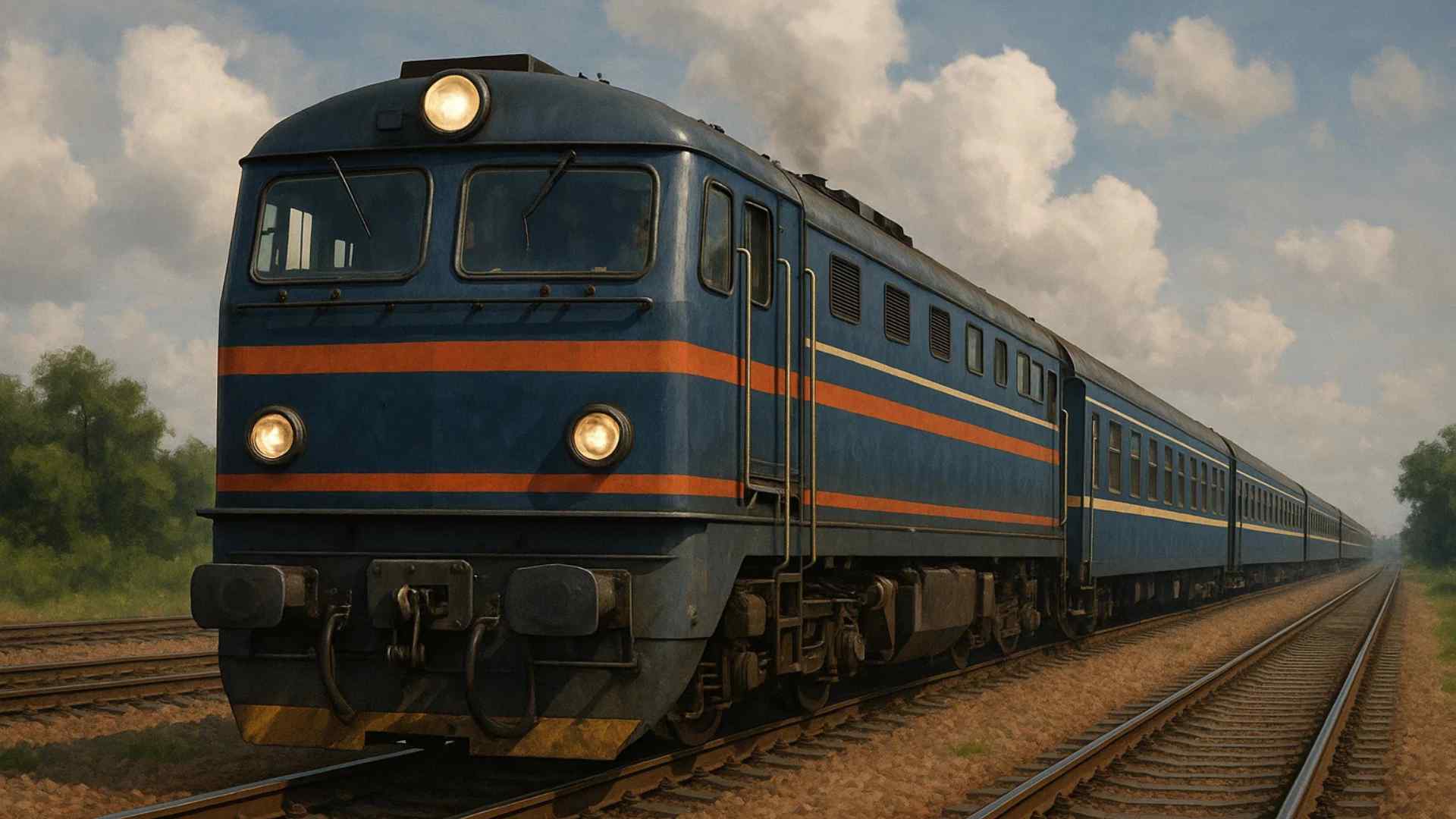
- A locomotive provides the power, while carriages or wagons carry people or goods.
- A consist is the specific lineup and order of cars in a train.
- A caboose was the crew’s rolling office and lookout at the end of freight trains.
- A railway siding is a low-speed track for loading, unloading, or passing.
- A switch (or turnout) lets trains move from one track to another.
- A timetable is the planned schedule of train movements over a route.
Record-Breakers & Wow Numbers
- The fastest wheeled rail speed trial exceeded 570 km/h as of 2024.
- Maglev test runs have topped 600 km/h as of 2024.
- High-speed trains in daily service commonly operate between 250 and 320 km/h.
- Some freight trains can exceed 3 km in length on long-haul routes.
- Heavy-haul trains can exceed 20,000 tonnes with distributed power.
- The longest daily passenger rail journeys can run over 8,000 km with connections.
- The Trans-Siberian route spans about 9,289 km across Russia.
- Urban metro systems can move more than 60,000 passengers per hour per direction with long trains and short headways.
- The steepest regular adhesion railway gradients can exceed 9% with special equipment.
- Rack railways use cog wheels to climb slopes steeper than 20%.
- Some commuter lines dispatch trains every 2 minutes in peak times.
- Double-stacked freight trains carry two shipping containers per car to boost capacity.
- The heaviest rails used in main lines can exceed 60 kg per meter.
- High bridges on rail lines can tower more than 200 m above valleys.
- Long rail tunnels can stretch for dozens of kilometers under mountains or seas.
- The coldest-operated lines endure winter temperatures below −40 °C.
- Desert lines battle summer rail temperatures above 60 °C on the steel.
- Modern high-speed lines often limit curves to radii above 4,000 m for comfort.

How Trains Work: Power & Physics
- Steel wheel on steel rail gives very low rolling resistance, so trains are energy efficient.
- The contact patch between wheel and rail is roughly the size of a coin.
- Flanged wheels keep trains centered while conical wheel shapes help self-steer curves.
- Adhesion is the friction that lets wheels transmit tractive effort without slipping.
- Locomotive power is measured in kilowatts or horsepower.
- Tractive effort describes the pulling force available at the wheel rim.
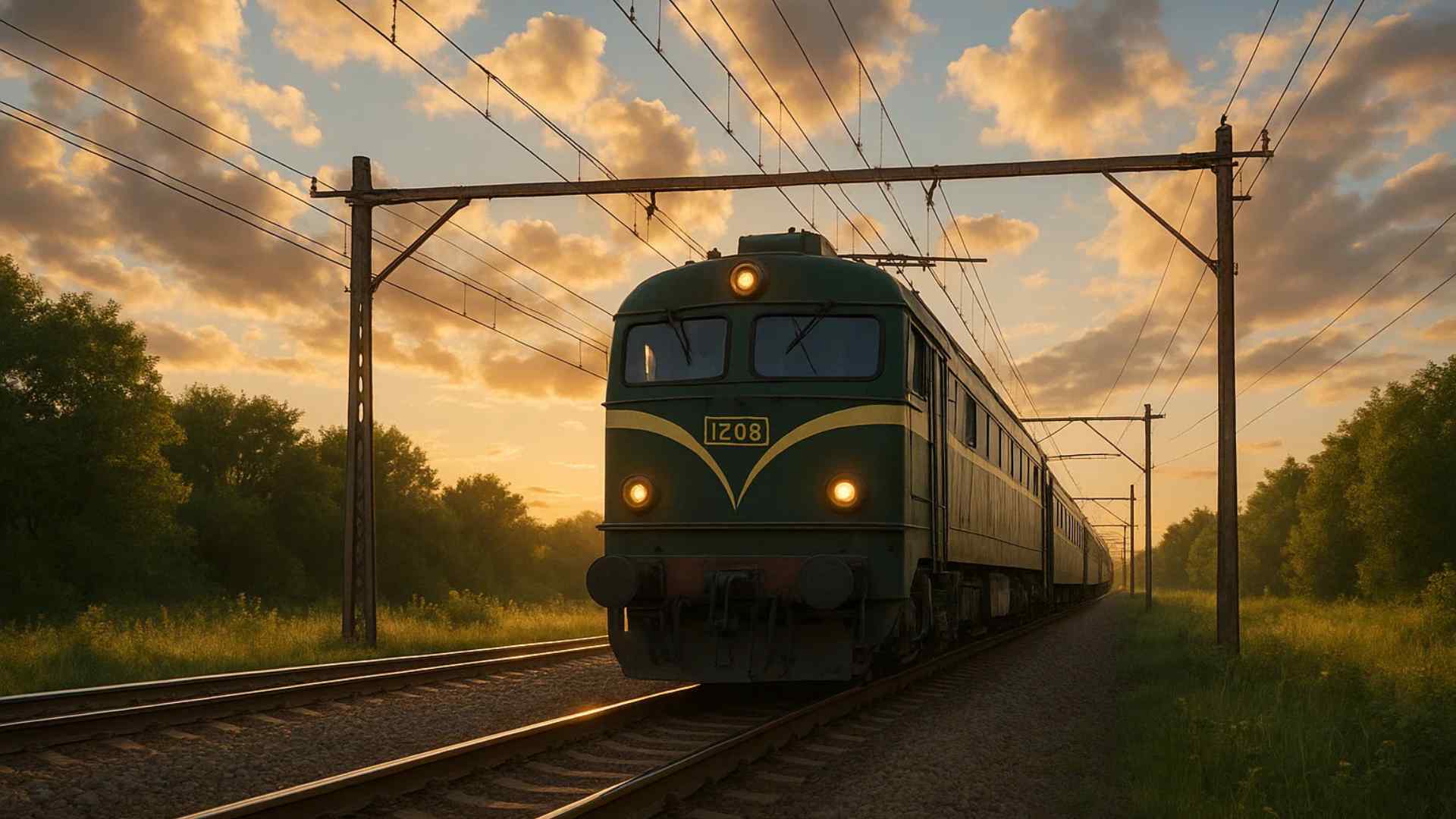
- Electric locomotives draw power from overhead wires or a third rail.
- Pantographs press against overhead catenary to collect electricity.
- Third rails deliver power at ground level in many metro systems.
- Diesel-electric locomotives use a diesel engine to drive a generator that powers traction motors.
- Pure diesel-mechanical systems are common on small railcars and maintenance vehicles.
- Regenerative braking turns a train’s kinetic energy back into electrical energy.
- Dynamic braking converts motion into heat through resistors when regen is not available.
- Air brakes use compressed air to apply brake shoes or pads on every car.
- Electronically controlled pneumatic brakes can apply more quickly and evenly.
- Multiple-unit control lets one driver command several powered cars at once.
- Distributed power places locomotives in the middle or end to reduce coupler forces.
- Tilting trains lean into curves to reduce lateral acceleration felt by passengers.
- Superelevation raises the outer rail on curves to counter centrifugal force.
- Ballasted track uses crushed stone to hold sleepers and distribute loads.
- Slab track uses concrete beds for high-speed stability and lower maintenance.
- Rail grinding smooths the running surface to reduce noise and wear.
- Hot weather can cause rail buckling, so rail is stress-relieved during installation.
- Cold weather can cause rail fractures, so detectors and inspections are critical.
History & Milestones
- Steam power dominated railways from the 1800s to the mid-1900s.
- Electric traction appeared in the late 1800s and grew quickly in urban systems.
- Diesel traction expanded after the 1930s for its flexibility and lower upkeep than steam.
- The first underground urban rail lines opened in the 19th century using steam before electrification.
- Sleeping cars made overnight rail travel more comfortable in the 19th century.
- Dining cars brought full meals to moving passengers by the late 1800s.
- Containerization in the mid-20th century transformed freight rail efficiency.
- High-speed passenger service began in the mid-20th century and expanded in the late 1900s.
- Double-tracking corridors allowed trains to run in both directions without waiting.
- Signaling evolved from manual flags to automated block systems.
- Centralized traffic control let dispatchers manage long territories from one location.
- Automatic train protection systems enforce speed limits and signal compliance.
- In-cab signaling displays movement authority directly to the driver.
- Positive train control concepts aim to prevent collisions and overspeed derailments.
- Gauge standardization reduced the need to change cars between networks.
- Early wood-bodied coaches gave way to steel construction for safety.
- Streamlined designs in the 1930s reduced drag and saved fuel.
- Post-war rail reconstruction modernized bridges, tunnels, and yards worldwide.
- Intermodal hubs linked ships, trains, and trucks into global supply chains.
- Computerized timetabling improved capacity through precise planning.
- Many countries revitalized night trains in the 2010s and 2020s.
- Heritage railways preserve steam operations for tourism and education.
Types & Technology
- Commuter rail links suburbs to city centers with fewer stops than metros.
- Metro or subway systems run high-frequency trains within cities on dedicated tracks.
- Light rail uses lower-capacity vehicles and can share streets in some sections.
- Trams are street-running rail vehicles with frequent stops and tight curves.
- Regional rail connects nearby towns with moderate speeds and distances.
- High-speed rail operates over dedicated or upgraded lines above 200 km/h.
- Maglev trains float using magnetic forces instead of traditional wheels.
- Monorails run on a single beam, often for airports or theme areas.
- Rack railways use a toothed rail for very steep climbs.
- Funiculars use two counterbalanced cars on a cable for short steep routes.
- Auto-train services carry passengers and their cars on the same train.
- Car-carrier wagons move automobiles from factories to markets.
- Tank cars carry liquids like fuel or chemicals in cylindrical vessels.
- Hopper cars unload bulk materials such as grain, coal, or ore.
- Flatcars carry containers, machinery, or oversized loads.
- Double-deck passenger cars increase capacity without adding train length.
Operations & Safety
- Railway signals use colors and aspects to govern train movement.
- Block systems divide tracks into sections where only one train is allowed at a time.
- Interlockings prevent conflicting movements at junctions and crossings.
- Grade crossings are where rail lines intersect roads at the same level.
- Overpasses or underpasses remove conflicts between trains and road traffic.
- Horns and bells warn at crossings and in yards.
- Sanding increases wheel-rail friction during wet or icy conditions.
- Rail defect detectors listen and scan for cracks and overheating components.
- Wayside hot-box detectors monitor wheel bearings for excessive heat.
- Track geometry cars measure alignment, gauge, and smoothness at speed.
- Snowplow trains clear drifts and keep lines open in winter.
- Brush-cutting trains help control vegetation along the right-of-way.
- Emergency braking distances are long, so prevention and signaling are vital.
- Safety fences and platform screen doors reduce accidents on busy stations.
Geography & Routes
- Some railways cross entire continents linking oceans and major cities.
- Mountain lines use loops and switchbacks to gain elevation gradually.
- Spiral tunnels let trains climb steep slopes within limited space.
- Coastal routes often require sea walls and corrosion-resistant materials.
- Desert lines manage drifting sand with fences and maintenance patrols.
- Permafrost zones need insulated embankments to keep ground stable.
- Urban rail networks can include dozens of lines and hundreds of stations.
- Airport rail links connect terminals to city centers in minutes.
- Border stations handle customs checks for international trains.
- Night trains use sleepers and couchettes to cover long distances while passengers rest.
- Tourist trains highlight scenic routes with large windows and slow schedules.
- Seasonal rail services adjust frequency for holidays or festivals.
- Some lines operate on isolated islands with dedicated ferries or bridges.
- Freight corridors prioritize long, heavy trains with passing loops and long sidings.

Names & Etymology
- The word “train” comes from a root meaning “to draw” or “to pull.”
- “Locomotive” combines Latin for “place” and “to move,” meaning movement from place to place.
- “Coach” originally referred to a horse-drawn carriage adapted to rail.
- “Caboose” likely traces to words for small ship cabins or cooking spaces.
- “Turnout” is another name for a track switch that lets trains diverge.
- “Depot” refers to a station building or maintenance base depending on context.
- “Right-of-way” means the land corridor reserved for railway use.
- “Consist” describes the ordered list of cars making up a particular train.
For Kids: Quick Comparisons
- A train’s wheels are metal because metal-on-metal rolls easier than rubber-on-road.
- One freight train can replace more than 100 trucks on a highway for heavy cargo.
- A modern high-speed train can travel faster than most small airplanes at takeoff speed.
- Metro trains stop more often than intercity trains, like a bus compared to a coach.
- Rail bridges are like long, strong balance beams that carry very heavy toys safely.
- A sleeper train is like a rolling hotel that moves while you snooze.
Pop Culture & Fun Extras
- Toy train sets have introduced generations to railways with tracks on living-room floors.
- Train whistles and horns have distinct patterns called signal codes.
- Dining cars inspired classic recipes served at white-clothed tables.
- Observation cars feature big windows or domes for sightseeing on scenic routes.
- Many stations host public art, turning daily commutes into mini gallery visits.
Quick FAQ
What is the difference between a train and a locomotive?
A locomotive provides power, while a train includes the locomotive plus any passenger cars or freight wagons.
Why are steel wheels used on trains?
Steel wheels on steel rails reduce friction, so trains move heavy loads with less energy.
How fast can trains go today?
Regular service speeds of 250–320 km/h are common on high-speed lines, with test runs exceeding 570 km/h as of 2024.
Why do some tracks look different?
Tracks vary by gauge, construction (ballasted or slab), and intended speed, which affects rail weight and spacing.
Are trains environmentally friendly?
Trains can move many people or tonnes of freight per unit of energy, making them efficient and often lower in emissions per passenger-kilometer.

Ellie is the owner and sole author of Fun Facts, combining her mechanical engineering background with years of research-driven writing to deliver facts you can trust. Every article is thoroughly fact-checked and routinely updated as new science and sources emerge to keep information accurate and current. Her mission is to make learning delightful while upholding high standards of reliability and transparency.