
Idaho is wild, scenic, and full of surprises, from record-breaking canyons to glittering star garnets.
Whether you love ski days, hot springs, or road-trip stops for huckleberry shakes, this list packs the Gem State into quick, kid-friendly bites.
Ready to explore the mountains, rivers, and stories of Idaho?
Origins & definitions
- Idaho became the 43rd U.S. state on July 3, 1890.
- The state nickname is the Gem State because of its rich gemstone deposits.
- Boise is the capital and largest city.
- People who live in Idaho are called Idahoans.
- The state motto is "Esto perpetua," which means "Let it be perpetual."
- Idaho uses the two-letter postal code ID.
- The state has 44 counties.
- Most of Idaho is in the Mountain Time Zone, while the northern Panhandle observes Pacific Time.
- Idaho’s northern Panhandle touches Canada at the border with British Columbia.
- The name “Idaho” has uncertain origins and was likely coined in the 1860s.
Record-breakers & wow numbers
- Hells Canyon is North America’s deepest river gorge at about 2,436 m (7,993 ft) from rim to river.
- Shoshone Falls drops about 65 m (212 ft), which is higher than Niagara Falls.
- Borah Peak is Idaho’s highest point at 3,859 m (12,662 ft).
- Lake Pend Oreille is Idaho’s largest lake and its deepest at roughly 353 m (1,158 ft).
- The Frank Church—River of No Return Wilderness spans about 9,700 km² (3,750 sq mi), making it one of the largest in the lower 48.
- Around 63% of Idaho’s land is managed as public land.
- The Central Idaho Dark Sky Reserve covers about 3,668 km² (1,416 sq mi) and was the first of its kind in the United States.
- Dworshak Dam stands 219 m (717 ft) high, ranking among the tallest dams in the country.
- Idaho ranks 14th in area among U.S. states at about 216,443 km² (83,569 sq mi).
- The Port of Lewiston is the West Coast’s most inland seaport, about 750 km (465 river miles) from the Pacific Ocean.
- The Sawtooth Range contains more than 50 peaks over 3,000 m (10,000 ft).
- Bruneau Dunes State Park features what is often called the tallest single-structured sand dune in North America at about 143 m (470 ft).
Geography & nature
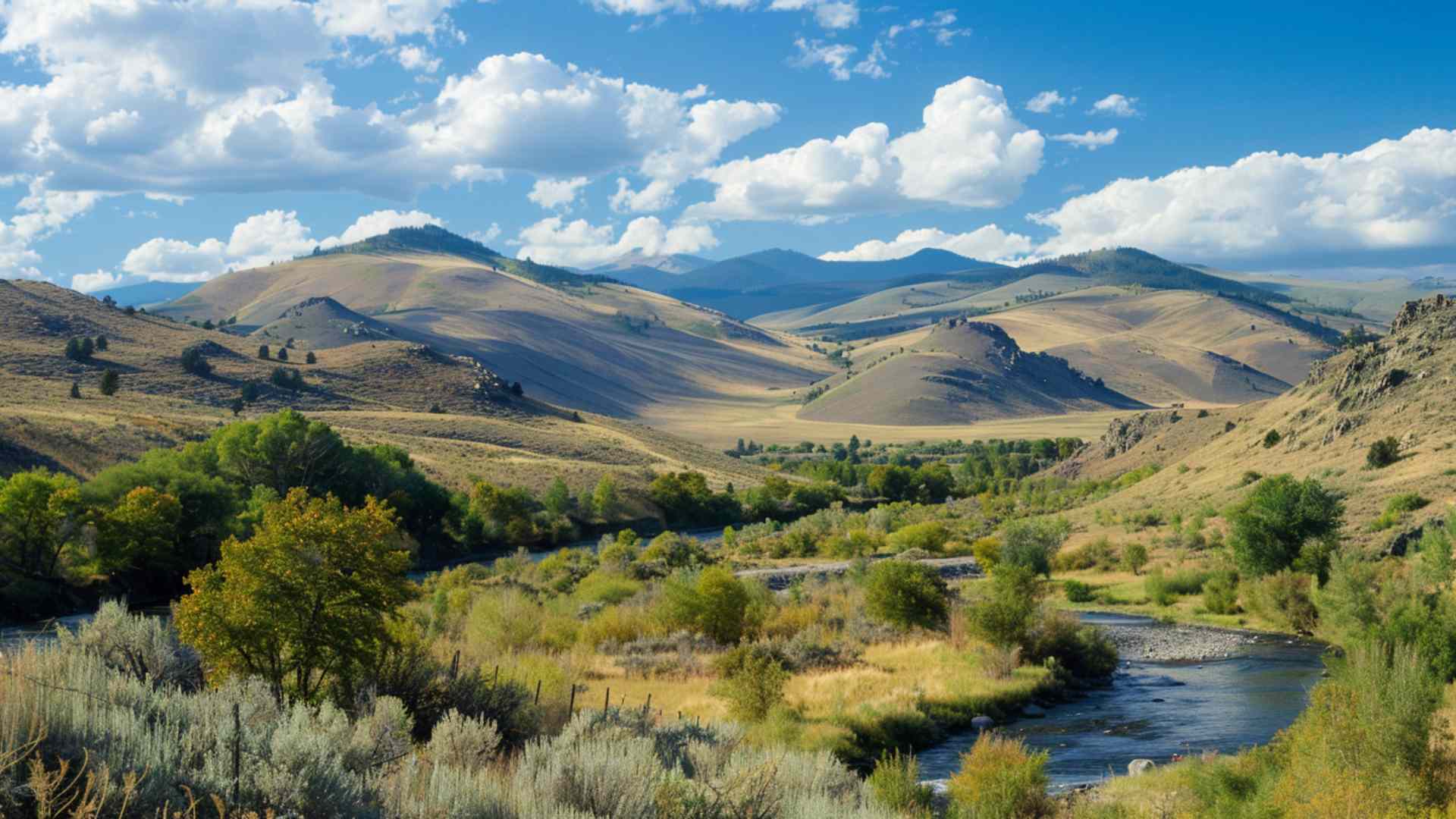
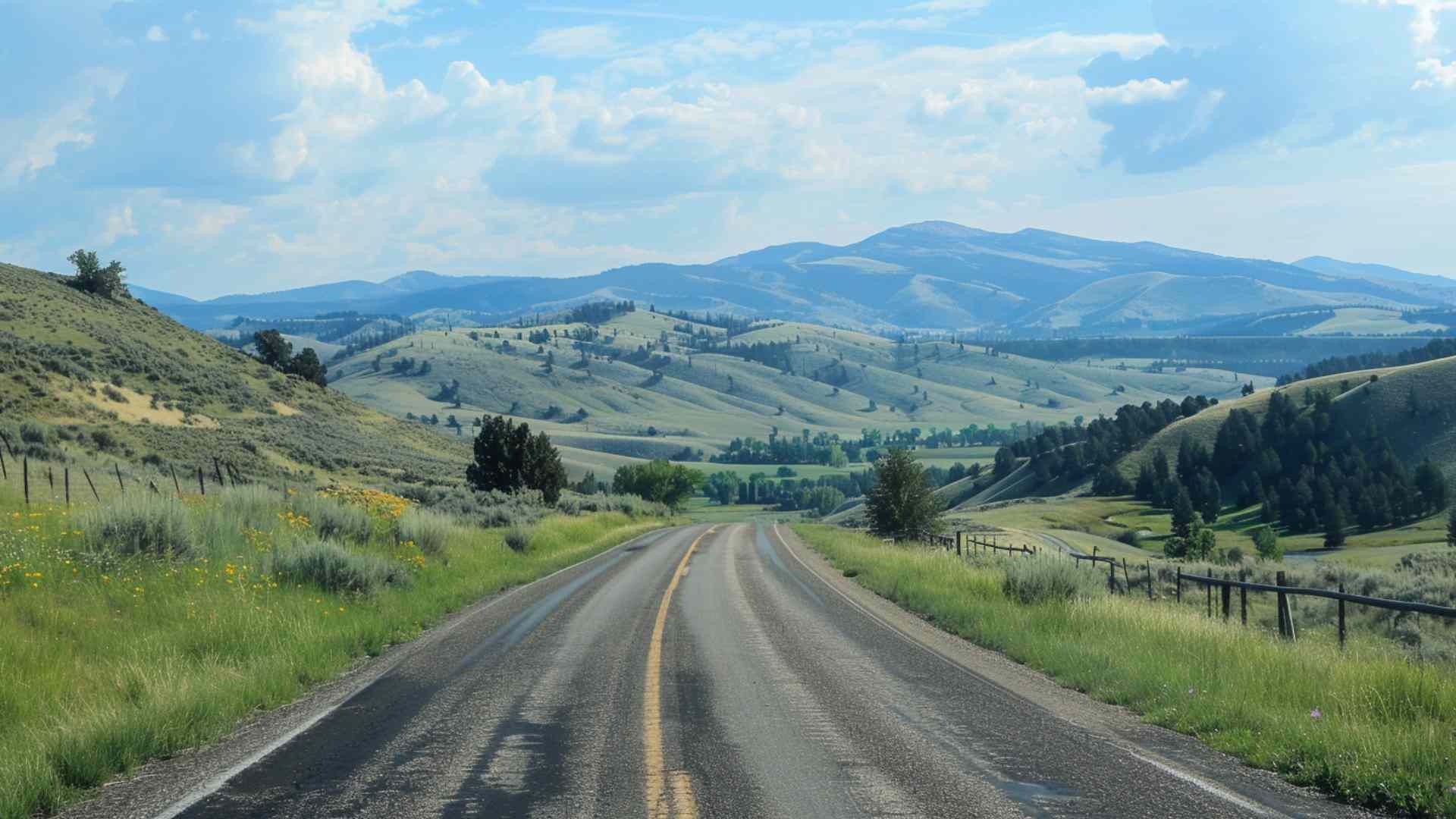
- The Snake River Plain arcs like a crescent across southern Idaho.
- Idaho shares borders with Washington, Oregon, Nevada, Utah, Wyoming, and Montana.
- A small portion of Yellowstone National Park extends into Idaho.
- The Bitterroot Range forms much of the state’s border with Montana.
- The Owyhee Canyonlands in the southwest hold deep canyons and remote plateaus.
- City of Rocks National Reserve protects dramatic granite pinnacles along a historic wagon route.
- Craters of the Moon National Monument and Preserve showcases vast basaltic lava fields and cinder cones.
- Big Southern Butte rises sharply from the Snake River Plain as a giant volcanic dome.
- The Lost River Range includes several of the state’s highest peaks beyond Borah Peak.
- The Selkirk and Cabinet mountains rim the far north with rugged, glaciated terrain.
- The Palouse hills spill into north central Idaho with thick, windblown soils.
- The Teton Valley sits on Idaho’s western side of the Teton Range.
- Ancient red cedars survive in pockets across the Panhandle’s moist valleys.
- The Idaho Batholith is a massive granite core underlying central mountains.
- Spring wildflowers blanket the Camas Prairie near Fairfield when camas bulbs bloom.
- Thousand Springs emerges from canyon walls along the middle Snake River near Hagerman.
- The Great Rift is a long volcanic fissure system that helped build Craters of the Moon.
- The dry, sunny Snake River Plain contrasts with the wetter forests of the Panhandle.
Rivers, lakes & water
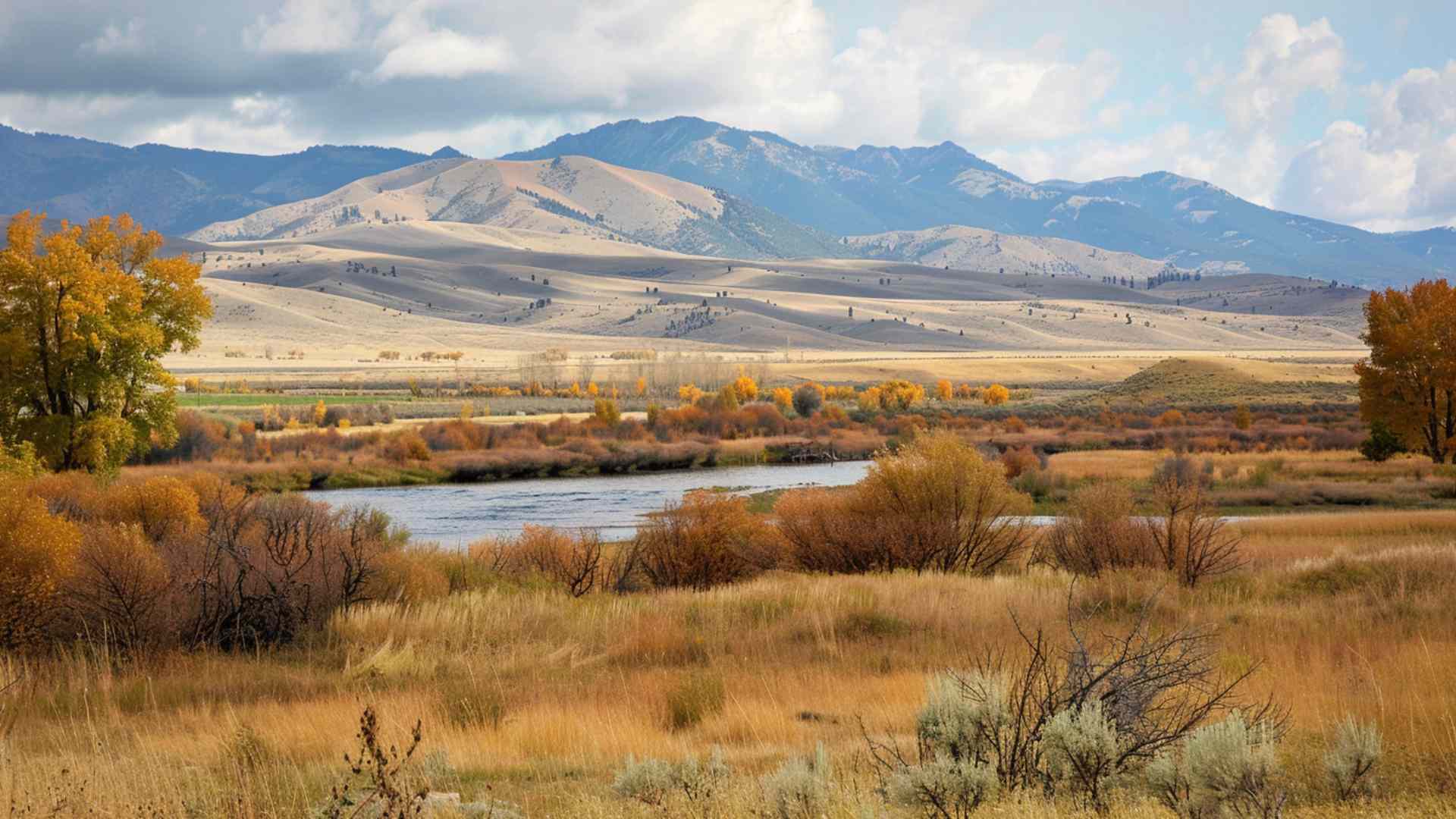
- The Snake River is Idaho’s longest river and drains most of the state.
- The Salmon River runs free of dams on its main stem and is nicknamed the River of No Return.
- The Clearwater River’s forks meet near Orofino before joining the Snake at Lewiston.
- The Boise River flows through downtown Boise and anchors the city’s greenbelt.
- The Payette River is renowned for whitewater rafting and kayaking.
- The Henrys Fork is a famed trout stream and a major tributary of the Snake.
- The St. Joe River feeds Lake Coeur d’Alene and meanders through lush valleys.
- Lake Coeur d’Alene drains west through the Spokane River.
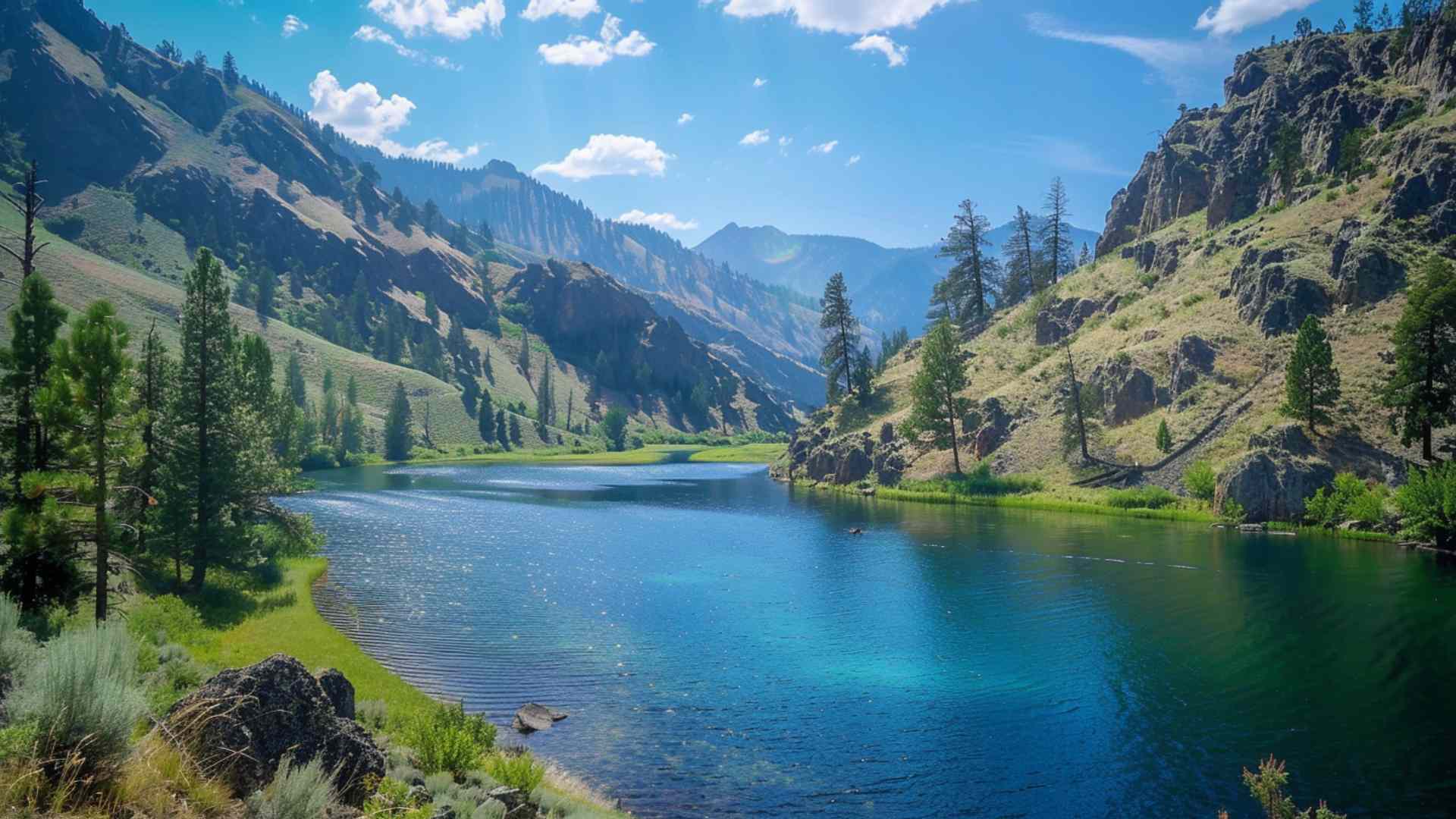
- Priest Lake is a clear, deep mountain lake close to the Canadian border.
- Redfish Lake in the Sawtooths is named for the bright-red sockeye salmon that once filled its waters.
- Bear Lake straddles Idaho and Utah and glows turquoise from suspended minerals.
- American Falls Reservoir is one of the largest impoundments on the Snake River in Idaho.
- Dworshak Reservoir stretches deep into the Clearwater Mountains behind its high dam.
- Idaho is dotted with hundreds of natural hot springs from its active geothermal systems.
Wildlife & environment
- Large elk herds roam central Idaho’s forests and meadows.
- Pronghorn sprint across the sagebrush plains of southern Idaho.
- Bighorn sheep navigate the steep walls of Hells Canyon and the Salmon River country.
- Mountain goats cling to cliffs in the Sawtooth and Lost River ranges.
- Gray wolves reestablished in central Idaho in the 1990s and now occupy several regions.
- Black bears are common across forested parts of the state.
- Grizzly bears persist in small numbers in the Panhandle and along the Yellowstone border.
- Wolverines survive in remote high country where deep snow lasts into spring.
- The Kootenai River hosts a distinct white sturgeon population that is federally protected.
- Greater sage-grouse depend on intact sagebrush habitats in southern Idaho.
- Idaho’s state insect is the monarch butterfly.
- The Idaho giant salamander lives in cold streams and forests of central and northern Idaho.
- Western larch, also called tamarack, is a rare deciduous conifer that turns gold each autumn.
- Fire-adapted forests like lodgepole pine rely on periodic burns to regenerate.
History & people
- Indigenous nations including the Nimiipuu, Shoshone-Bannock, Coeur d’Alene, Kootenai, and Shoshone-Paiute have deep roots in Idaho.
- The Nimiipuu are widely known in English as the Nez Perce.
- Lewis and Clark crossed the Bitterroots into Idaho in September 1805.
- The Lolo Trail served as a historic corridor over the mountains for trade and travel.
- Gold strikes in the 1860s fueled boomtowns like Idaho City and Florence.
- Idaho Territory was created on March 4, 1863.
- The original territory once stretched over areas that later became Montana and most of Wyoming.
- The territorial capital moved from Lewiston to Boise in 1864.
- Idaho became a state on July 3, 1890, just before Independence Day.
- The Coeur d’Alene Mining District gained fame for rich silver deposits.
- The Old Idaho Penitentiary operated from 1872 to 1973 and now welcomes visitors.
- The Nez Perce War of 1877 sent the Nimiipuu on a long fighting retreat across the Northwest.
- The transcontinental Oregon Trail followed the Snake River across southern Idaho.
- The 1983 Borah Peak earthquake reached magnitude 6.9 and was the strongest recorded in Idaho.
- Arco became the first town ever lit solely by nuclear-generated electricity on July 17, 1955.
- Sun Valley opened in 1936 as a destination ski resort and debuted the world’s first chairlift.
- Franklin, founded in 1860 near the Utah line, is often cited as Idaho’s oldest town.
- Pocatello adopted a lighthearted “Smile Ordinance” tradition starting in 1948.
Cities & places
- Boise’s nickname is the City of Trees, a nod to its leafy river corridor.
- Meridian has expanded rapidly and now ranks among Idaho’s largest cities.
- Nampa anchors agriculture and industry in the Treasure Valley.
- Idaho Falls sits on the Snake River and is a key hub for eastern Idaho.
- Pocatello is home to a major public university and a busy rail junction.
- Twin Falls overlooks the Snake River Canyon and the mighty Shoshone Falls.
- Coeur d’Alene pairs lake recreation with a lively downtown and resort vibe.
- Lewiston marks the meeting of the Clearwater and Snake rivers at the head of navigation.
- Moscow lies in the rolling Palouse and hosts the state’s land-grant university.
- Sandpoint spreads along Lake Pend Oreille beneath a large ski area.
- McCall is a four-season mountain town on Payette Lake.
- Ketchum and Hailey serve the Sun Valley area in the Wood River Valley.
- Rexburg has grown quickly with a youthful student population.
- Driggs and Victor sit in the Teton Valley with views of the Tetons’ west faces.
- Wallace celebrates its mining past and quirky “Center of the Universe” claim downtown.
- Salmon acts as a gateway to the Frank Church—River of No Return Wilderness.
- Blackfoot brands itself as the Potato Capital and hosts a potato museum.
- Bonners Ferry near the Canadian border grew from a historic river crossing.
Economy & industries
- Idaho farmers grow potatoes, barley, wheat, hay, sugar beets, and seed crops across its valleys.
- The state often leads the nation in potato production and exports.
- The Magic Valley is a center for trout aquaculture and fish processing.
- Southeastern Idaho mines major phosphate deposits used in fertilizers.
- Timber and wood products remain important to northern communities.
- Hydropower supplies more than half of Idaho’s in-state electricity in many recent years.
- Outdoor recreation supports guides, outfitters, gear makers, and hospitality jobs statewide.
- Technology and advanced manufacturing employ thousands in the Boise area and beyond.
- Idaho produces hops and has expanded specialty crop acres for craft beverages.
- The Snake River Valley and other AVAs support a growing wine industry.
Science, tech & energy
- The Idaho National Laboratory conducts nuclear and clean-energy research on the Snake River Plain.
- The Experimental Breeder Reactor I generated the first usable electricity from nuclear fission in 1951.
- Arco’s historic EBR-I is now a museum that explains early nuclear power.
- Boise heats dozens of buildings with geothermal water piped from nearby wells.
- The city’s geothermal district is among the largest in the country for direct heating.
- Wind farms operate on ridges and plains where steady winds blow.
- Solar arrays have grown in southern Idaho’s sunny, high-desert climate.
- A network of hydroelectric dams on the Snake and its tributaries powers homes and industry.
- Apollo-era astronauts trained on volcanic terrain at Craters of the Moon in 1969.
- The Central Idaho Dark Sky Reserve protects exceptionally low light levels for stargazing.
Culture, food & festivals
- Boise’s Basque Block preserves language, food, and dance traditions from one of the state’s largest immigrant groups.
- Idaho’s official state fruit is the huckleberry, which ripens in mountain forests each summer.
- The state horse is the Appaloosa, celebrated for its spotted coat and Nez Perce heritage.
- Star garnets, the state gem, display four-ray or six-ray stars when polished.
- Many towns stage summer rodeos that showcase ranching skills and western music.
- The Trailing of the Sheep Festival honors sheep drives and fiber arts in the Wood River Valley.
- A giant glowing potato drops on New Year’s Eve at a downtown Boise celebration.
- Huckleberry milkshakes, jams, and pies are favorite treats in mountain communities.
- Trout, game meats, and local produce appear on menus across the state.
- Old Mission State Park preserves a hand-built 1850s Catholic mission at Cataldo.
- The Boise River Greenbelt hosts fun runs, concerts, and family bike rides through the city.
Transportation & travel
- Interstate 84 links the Treasure Valley to eastern Oregon and southeast Idaho.
- Interstate 90 crosses the Panhandle through Coeur d’Alene, Kellogg, and Wallace.
- Interstate 15 runs north–south through Pocatello, Blackfoot, and Idaho Falls.
- U.S. Route 95 spans the state from the Nevada line to the Canadian border.
- The Northwest Passage Scenic Byway follows the Clearwater and Lochsa rivers over Lolo Pass.
- The Route of the Hiawatha bike trail features long tunnels and high trestles on the Idaho–Montana line.
- Backcountry airstrips allow small planes to reach remote canyons and ranches.
- Winter travelers often face chain requirements and avalanche-controlled passes in high country.
- The Boise Whitewater Park creates an adjustable river-surfing wave near downtown.
- Outfitters guide multi-day rafting trips on the Middle Fork of the Salmon each summer.
Quick FAQ
What is Idaho famous for?
Potatoes, Hells Canyon, Shoshone Falls, big wilderness, and sparkling star garnets give Idaho its “Gem State” fame.
What is the capital of Idaho?
Boise is the capital and the state’s largest city.
Is Idaho in two time zones?
Yes, most of Idaho uses Mountain Time, while the Panhandle follows Pacific Time.
When is the best time to visit Idaho?
Late spring through early autumn offers warm days, wildflowers, and open roads, while winter brings great skiing and snow sports.
Why is Idaho called the Gem State?
The nickname celebrates Idaho’s many minerals and gemstones, including rare star garnets.

Ellie is the owner and sole author of Fun Facts, combining her mechanical engineering background with years of research-driven writing to deliver facts you can trust. Every article is thoroughly fact-checked and routinely updated as new science and sources emerge to keep information accurate and current. Her mission is to make learning delightful while upholding high standards of reliability and transparency.