
The circulatory system is your body’s delivery network, moving oxygen, food, and messages to every cell and carrying wastes away.
From the steady thump of your heart to tiny capillaries thinner than a hair, these facts make the science simple, friendly, and fun for curious minds of all ages.
Origins & definitions
- The circulatory system is the body’s transport network for oxygen, nutrients, hormones, and waste products.
- It has three main parts: the heart, the blood, and the blood vessels.
- Humans have a closed circulatory system, meaning blood stays inside vessels as it circulates.
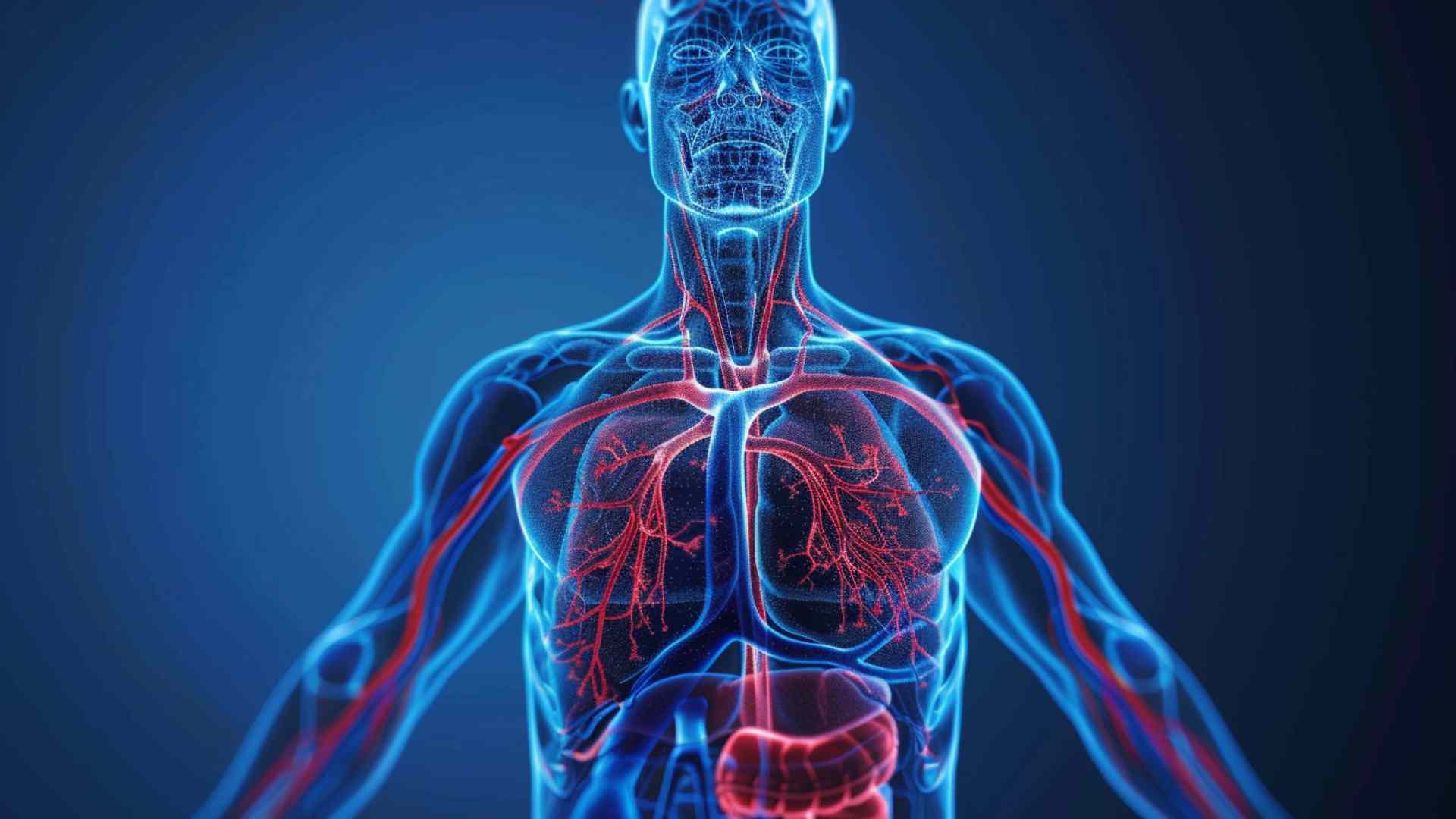
- There are two main circuits in humans: the pulmonary circuit to the lungs and the systemic circuit to the body.
- Arteries carry blood away from the heart, and veins carry blood back to the heart.
- Pulmonary arteries are a special case because they carry deoxygenated blood to the lungs.
- Pulmonary veins are another exception because they carry oxygenated blood to the heart.
- Capillaries are tiny vessels with walls one cell thick that allow exchange of gases and nutrients.
- The heart sits slightly left of center behind the breastbone in the chest.
- The average adult has about 5 liters of blood circulating through the body.
- Blood is a fluid connective tissue made of cells suspended in plasma.
- Plasma is the liquid part of blood and is mostly water with dissolved proteins and solutes.
- Red blood cells carry oxygen using the protein hemoglobin.
- White blood cells are part of the immune system and help fight infections.
- Platelets are cell fragments that help your blood clot when you get a cut.
- The circulatory system helps regulate body temperature by moving heat around.
- It also helps maintain pH balance and fluid balance across tissues.
- Portal systems, like the hepatic portal system, route blood through two capillary beds in series.
- The circulatory and lymphatic systems work together to return excess fluid to the bloodstream.
- Blood pH is tightly regulated around 7.35 to 7.45 in healthy humans.
Anatomy & components
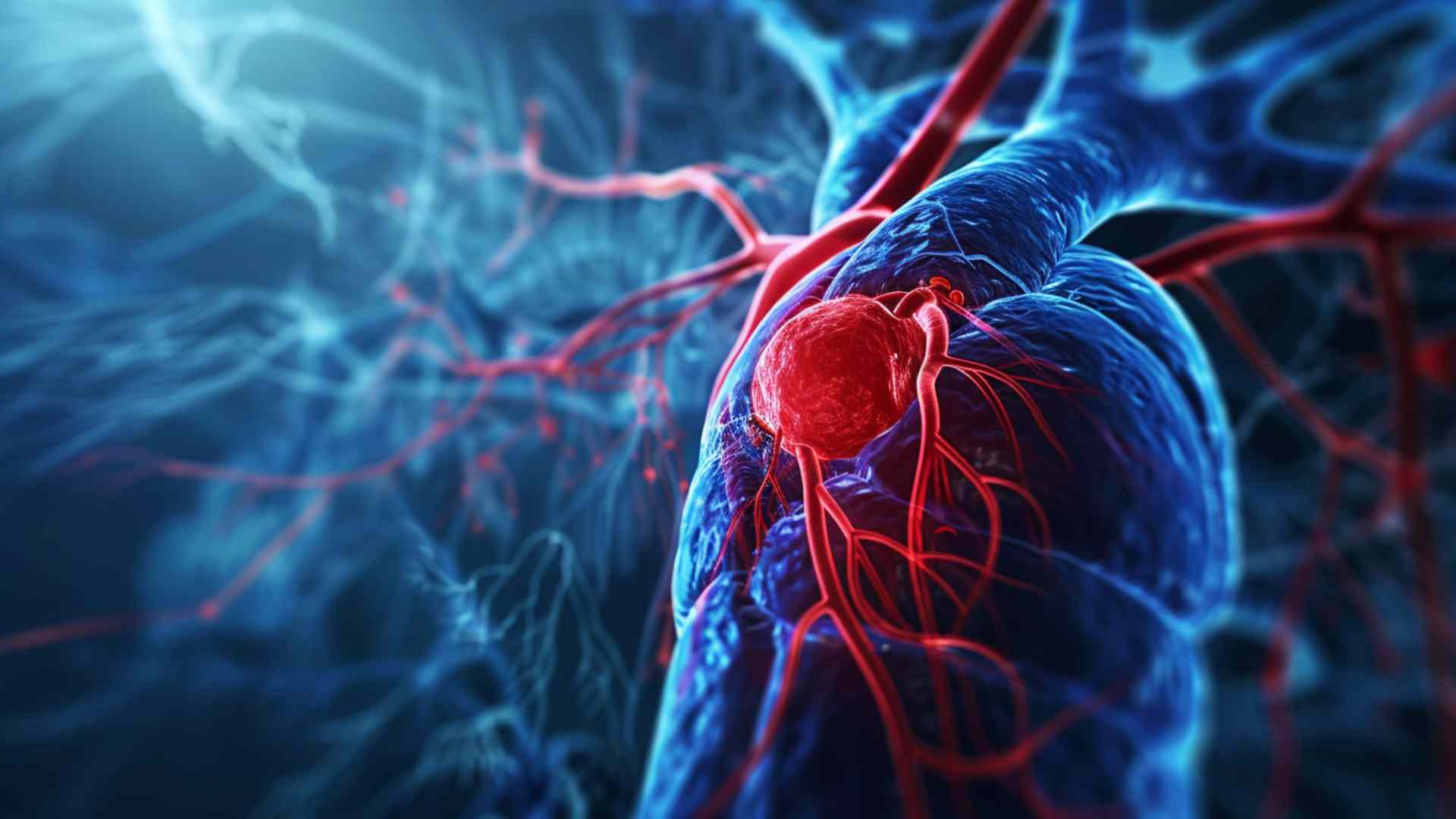
- The human heart has four chambers: two atria on top and two ventricles below.
- The right side of the heart handles deoxygenated blood, and the left side handles oxygenated blood.
- The tricuspid valve sits between the right atrium and right ventricle.
- The pulmonary valve controls flow from the right ventricle to the pulmonary artery.
- The mitral valve sits between the left atrium and left ventricle.
- The aortic valve controls flow from the left ventricle to the aorta.
- Heart valves open and close like doors to keep blood moving one way.
- Chordae tendineae are tough strings that keep atrioventricular valves from flipping backward.
- Papillary muscles anchor the chordae tendineae during ventricular contraction.
- The sinoatrial node in the right atrium acts as the natural pacemaker of the heart.
- Electrical signals travel from the sinoatrial node to the atrioventricular node.
- The bundle of His and Purkinje fibers spread the signal quickly through the ventricles.
- The heart wall has three layers: endocardium, myocardium, and epicardium.
- The pericardium is a protective sac that surrounds the heart with a small fluid layer.
- The aorta is the largest artery and carries blood from the left ventricle to the body.
- The superior vena cava returns blood from the head and arms to the right atrium.
- The inferior vena cava returns blood from the lower body to the right atrium.
- Arteries have thicker muscular walls than veins to withstand higher pressure.
- Veins often have valves that prevent blood from flowing backward.
- Elastic arteries like the aorta stretch and recoil to smooth out the pulse.
- Muscular arteries distribute blood to organs and can change diameter to control flow.
- Arterioles are small arteries that act as major resistance vessels.
- Capillaries form vast networks where exchange with tissues occurs.
- Venules collect blood from capillaries and drain into veins.
- The endothelium is a single-cell lining that coats the inside of all blood vessels.
- Vasa vasorum are tiny vessels that supply the walls of large arteries and veins.
- The left ventricle has the thickest wall because it pumps blood to the whole body.
- An adult heart typically weighs about 250 to 350 grams.
- A typical red blood cell is about 7 to 8 micrometers wide.
- A red blood cell lacks a nucleus, which makes more room for hemoglobin.
- Each hemoglobin molecule can bind up to four oxygen molecules.
- Red blood cells live about 120 days before being recycled.
- Platelets usually live about 7 to 10 days in the bloodstream.
- The hematocrit is the percentage of blood volume occupied by red blood cells.
- Plasma is about 90% water, with the rest mostly proteins, salts, and nutrients.
- Albumin is the most abundant plasma protein and helps maintain osmotic pressure.
- ABO and Rh are the two major blood group systems used in transfusion.
- People with type O negative blood are often called universal donors for red cells.
- People with type AB positive blood are often called universal recipients for red cells.
- The walls of capillaries can be continuous, fenestrated, or sinusoidal depending on the organ.
How it works
- The cardiac cycle has two main phases: diastole when the heart relaxes and systole when it contracts.
- A normal resting heart rate for adults is often between 60 and 100 beats per minute.
- Stroke volume is the amount of blood pumped by one ventricle in a single beat.
- Cardiac output equals heart rate multiplied by stroke volume.
- At rest, typical cardiac output is about 5 liters per minute in adults.
- During intense exercise, cardiac output can rise to four to seven times resting levels.
- Ejection fraction shows what fraction of blood in the ventricle is pumped out each beat.
- Systolic pressure is the higher number and occurs during ventricular contraction.
- Diastolic pressure is the lower number and occurs during ventricular relaxation.
- Pulse pressure equals systolic pressure minus diastolic pressure.
- Mean arterial pressure is a weighted average that reflects perfusion of tissues.
- Frank–Starling law states the heart pumps more forcefully when it fills more.
- Baroreceptors in the carotid sinus and aortic arch sense changes in blood pressure.
- Chemoreceptors sense oxygen, carbon dioxide, and pH to adjust breathing and circulation.
- The sympathetic nervous system speeds the heart and constricts many vessels.
- The parasympathetic nervous system slows the heart through the vagus nerve.
- Nitric oxide made by endothelial cells relaxes smooth muscle and dilates vessels.
- Capillary exchange happens by diffusion, filtration, and vesicular transport.
- Oncotic pressure pulls fluid into capillaries, and hydrostatic pressure pushes fluid out.
- Most carbon dioxide travels in blood as bicarbonate ions.
- Carbonic anhydrase in red blood cells helps convert carbon dioxide to bicarbonate.
- The chloride shift keeps electrical balance when bicarbonate moves across red cell membranes.
- The Bohr effect helps hemoglobin release more oxygen in active tissues.
- Oxygen diffuses from alveolar air into pulmonary capillary blood down its gradient.
- In a healthy adult, one full circulation loop can take about a minute at rest.
- Venous return to the heart is helped by skeletal muscle squeezing veins during movement.
- The respiratory pump aids venous return as breathing changes chest pressures.
- Coronary arteries supply the heart muscle itself with oxygenated blood.
- Coronary veins drain into the coronary sinus, which empties into the right atrium.
- Kidney autoregulation helps keep blood flow steady across normal pressure ranges.
- The hepatic portal system delivers nutrient-rich blood from the gut to the liver for processing.
- The spleen filters old red blood cells and helps mount immune responses.
- Bone marrow produces new blood cells in a process called hematopoiesis.
- Erythropoietin is a hormone that stimulates red blood cell production in the marrow.
- Body position can change blood pressure and heart rate through reflexes and pooling.

Record-breakers & wow numbers
- Your heart beats about 100,000 times per day on average.
- That adds up to around 35 million beats per year.
- Over a long lifetime, the heart may beat more than 2.5 billion times.
- The aorta in adults is roughly 2.5 to 3.5 centimeters in diameter.
- The total length of all your blood vessels is often estimated near 100,000 kilometers.
- A typical adult heart pumps about 7,000 to 9,000 liters of blood each day.
- Red blood cells are produced at a rate of roughly 2 million per second.
- Capillaries are so narrow that red blood cells often pass through them single file.
- The smallest capillaries are about 5 to 10 micrometers wide.
- The fastest heartbeats among mammals belong to shrews that can exceed 1,000 beats per minute.
- The slowest mammalian heart rates are found in large whales that can drop to single digits per minute.
- A giraffe can have systolic arterial pressures exceeding 200 millimeters of mercury to reach its brain.
- The left ventricle can generate pressures well over 100 millimeters of mercury in healthy adults.
- Blood takes only seconds to go from the heart to the brain in a resting adult.
- A single drop of blood can contain millions of red blood cells.
- The average adult red blood cell count is often around 4.5 to 5.5 million per microliter.
- Platelet counts commonly range from about 150,000 to 400,000 per microliter.
- White blood cell counts commonly range from about 4,000 to 11,000 per microliter.
- The human heart can increase its output more than fivefold during maximal effort in trained athletes.
- The elastic recoil of the aorta helps maintain blood flow between heartbeats.
Health & measurement
- Blood pressure is measured in millimeters of mercury using a cuff and gauge or sensor.
- A stethoscope can detect heart sounds produced by valve closing and blood flow.
- The first heart sound mainly comes from the closing of the mitral and tricuspid valves.
- The second heart sound mainly comes from the closing of the aortic and pulmonary valves.
- An electrocardiogram records the heart’s electrical activity as P waves, QRS complexes, and T waves.
- A pulse can be felt at the wrist, neck, groin, and several other artery points.
- Echocardiography uses ultrasound to show heart chambers, valves, and blood flow.
- Cardiac catheterization can measure pressures inside the heart and major vessels.
- Coronary stents are tiny metal tubes that help keep narrowed heart arteries open.
- Coronary artery bypass graft surgery reroutes blood around blocked heart arteries.
- A pacemaker can deliver timed electrical signals to keep the heart beating regularly.
- A defibrillator can reset dangerous heart rhythms with a controlled shock.
- A heart murmur is a whooshing sound caused by turbulent blood flow.
- Atherosclerosis involves fatty plaques that can narrow or stiffen arteries.
- Varicose veins happen when vein valves fail and blood pools in surface veins.
- Deep vein thrombosis is a clot in a deep vein that can become dangerous if it travels.
- High altitude exposure can raise red blood cell production to carry more oxygen.
- Endurance athletes often have lower resting heart rates due to increased stroke volume.
- Dehydration can reduce plasma volume and make the heart work harder to maintain output.
- Donated whole blood is generally collected in units of about 450 to 500 milliliters.
History & etymology
- In 1628, William Harvey described the full circulation of blood and the role of the heart as a pump.
- In 1661, Marcello Malpighi observed capillaries, linking arteries and veins under the microscope.
- In 1733, Stephen Hales made the first direct measurement of blood pressure in an animal.
- The word “atrium” comes from Latin for a main room or central hall.
- The word “ventricle” comes from Latin for “little belly.”
- The word “artery” traces to a Greek term once linked with air, reflecting ancient beliefs.
- The stethoscope was invented in 1816 and changed how doctors listen to the heart.
- The first successful human heart transplant took place in 1967.
- Early ideas from antiquity imagined blood ebbing and flowing rather than circulating in a closed loop.
- The widespread adoption of microscopy in the 17th century transformed understanding of blood and vessels.
Quick FAQ
What are the main parts of the circulatory system?
The main parts are the heart, the blood, and the blood vessels that carry blood throughout the body.
How much blood does an adult have?
An adult typically has about 5 liters of blood circulating in their body.
Why do we have two circuits?
The pulmonary circuit sends blood to the lungs for gas exchange, and the systemic circuit delivers oxygenated blood to the rest of the body.
What makes the heartbeat?
Special pacemaker cells in the sinoatrial node generate electrical signals that spread through the heart muscle.
What is blood pressure?
Blood pressure is the force of blood pushing against artery walls, measured as systolic over diastolic in millimeters of mercury.

Ellie is the owner and sole author of Fun Facts, combining her mechanical engineering background with years of research-driven writing to deliver facts you can trust. Every article is thoroughly fact-checked and routinely updated as new science and sources emerge to keep information accurate and current. Her mission is to make learning delightful while upholding high standards of reliability and transparency.