
Deserts are far more than endless sand.
These dry places can be hot or freezing, sandy or rocky, and full of surprising life.
This big list breaks down what a desert is, where they form, the biggest record-breakers, and the clever ways plants and animals survive with almost no water.
Origins & definitions
- A desert is an area that receives less than 250 millimeters of precipitation per year.
- Many deserts are defined more by dryness than heat, with some being cold year-round.
- In deserts, evaporation often exceeds precipitation, making water scarce even after rain.
- Deserts can be sandy, rocky, gravelly, or covered in ice, not just sand.
- Antarctica qualifies as a desert because it is extremely dry despite its ice.
- The geographic word “desert” is different from “dessert,” the sweet treat.
- Deserts occur on every continent, including Europe and Antarctica.
- Some deserts form in rain shadows where mountains block moist air.
- Coastal deserts develop where cold ocean currents limit moisture in the air.
- Subtropical deserts form under persistent high-pressure belts around 20–30° latitude.
- Interior deserts form far from oceans where moist winds rarely reach.
- Desert soils are often thin and low in organic matter compared with forest soils.
- Desert landscapes commonly include gravel plains called regs or desert pavements.
- A wadi is a dry riverbed that can fill suddenly during rare storms.
- A playa is a flat basin where water evaporates and leaves salts behind.
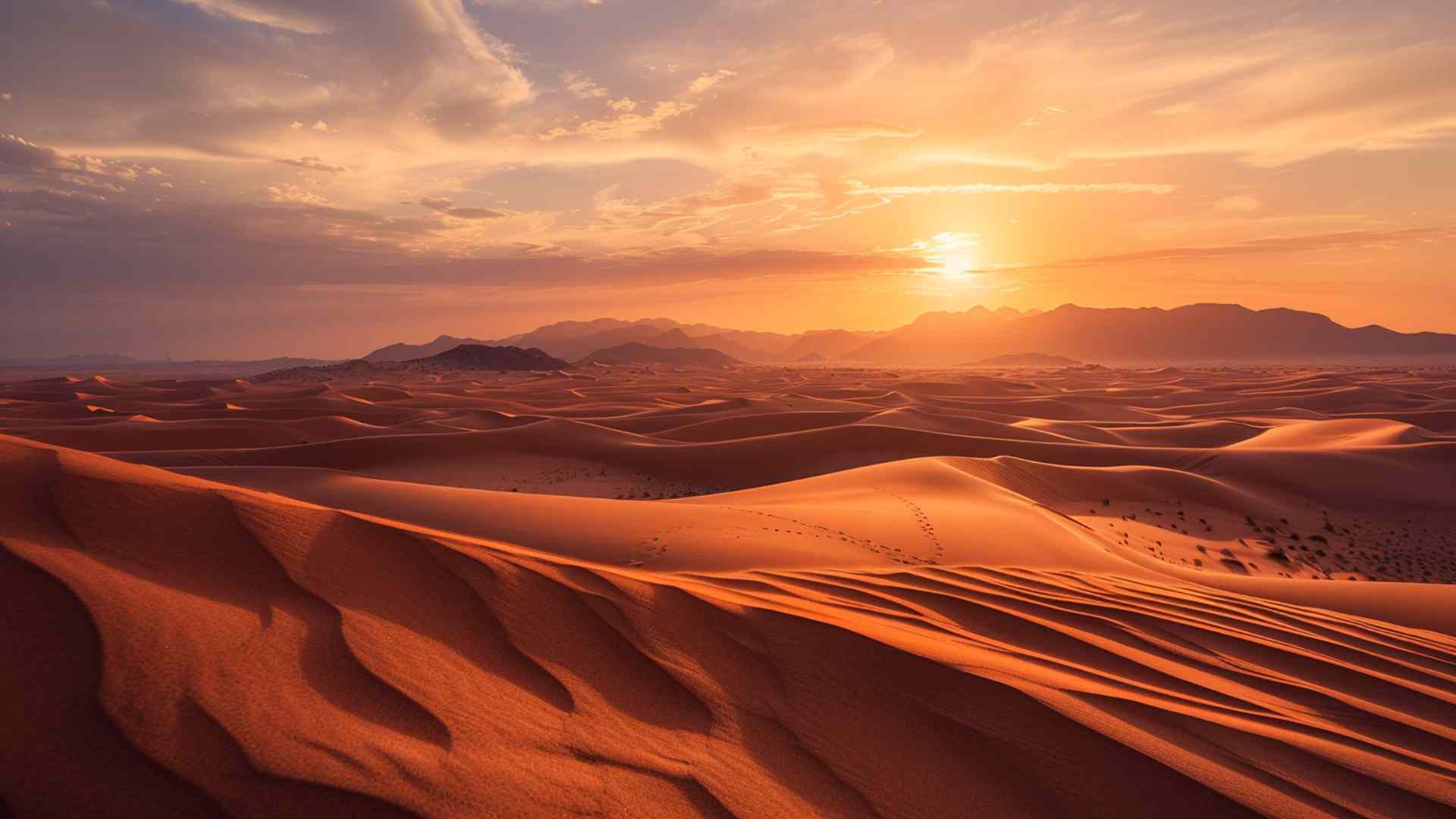
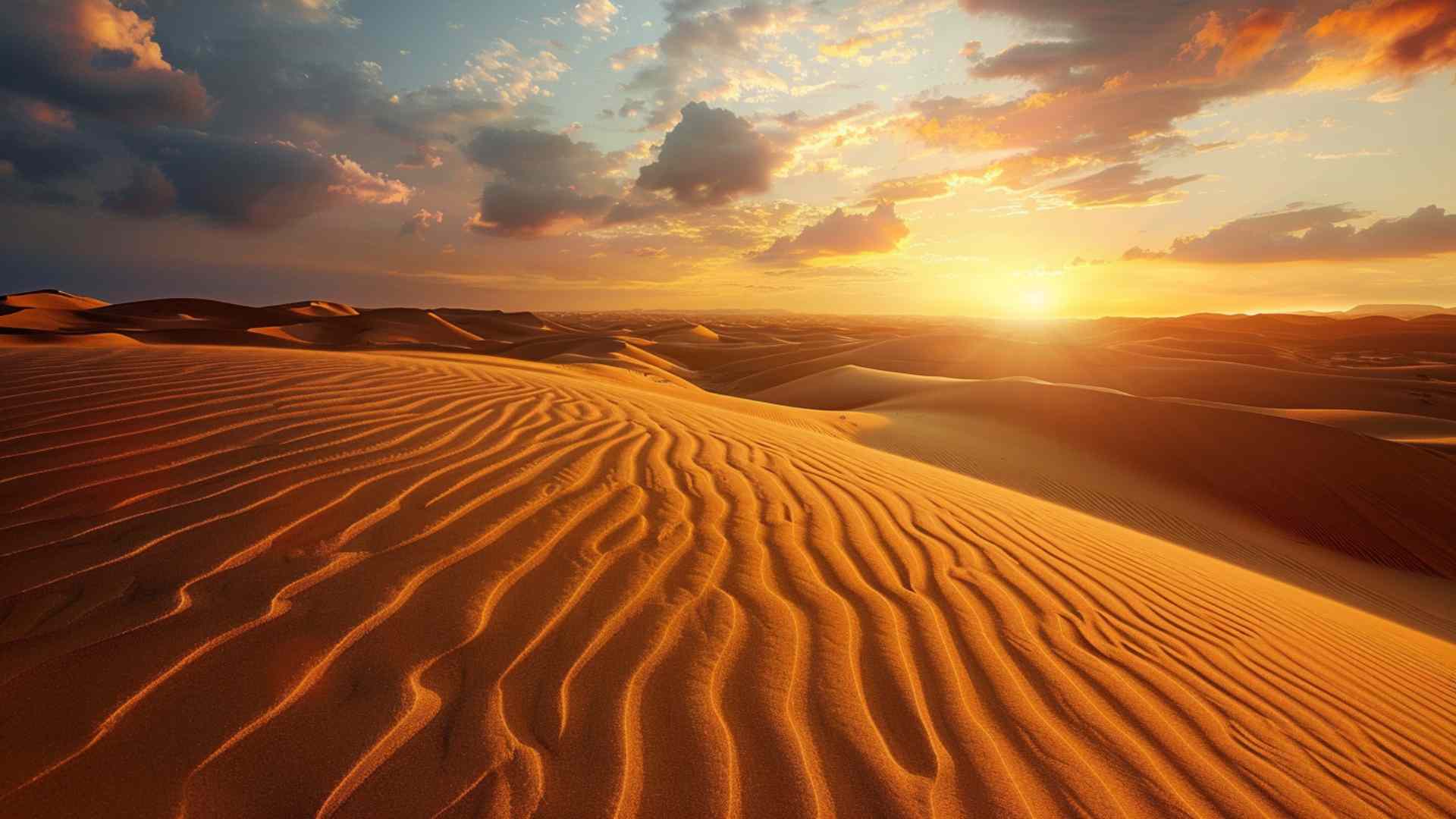
- A dune is a hill of sand shaped and moved by wind.
- Xerophytes are plants adapted to survive with very little water.
- Many deserts have big daily temperature swings between hot days and cool nights.
Record-breakers & wow numbers
- Antarctica is Earth’s largest desert at roughly 14 million square kilometers.
- The Arctic is the second-largest desert at around 13 million square kilometers.
- The Sahara is the largest hot desert at about 9 million square kilometers.
- Parts of the Atacama average under 15 millimeters of rain per year.
- Some Atacama weather stations have recorded years with zero measurable rainfall.
- Dunes in Namibia’s Namib Desert rise more than 300 meters (about 980 feet).
- Badwater Basin in Death Valley sits about 86 meters (282 feet) below sea level.
- A 56.7°C (134°F) reading in Death Valley in 1913 is widely cited as the highest air temperature measured on Earth.
- A 1922 58°C reading at El Azizia was later deemed unreliable and removed from official records.
- Desert pavements can be tens of thousands of years old as wind removes fine dust.
- Dust from the Sahara can cross the Atlantic, traveling thousands of kilometers.
- Desert dust carries nutrients that can fertilize distant oceans and forests.
- The Rub’ al Khali sand sea spans over 600,000 square kilometers of dunes.
- The Gobi Desert is mostly rock and gravel rather than sand seas.
- The Painted Desert is named for its colorful, layered rock formations.
- The Kalahari receives more rain than true deserts but contains vast arid areas.
- Satellite measurements have recorded land surface temperatures over 70°C in Iran’s Lut Desert.
- Australia’s Simpson Desert is famous for long, straight, parallel dune fields.

Science & how deserts work
- Subtropical high-pressure systems cause sinking air that suppresses clouds and rain.
- Cold currents like those along some west coasts cool air and reduce its moisture capacity.
- Mountains force air to rise and drop rain, creating dry rain shadows on leeward sides.
- Desert soils often develop caliche, a hard layer of calcium carbonate.
- Salt flats form when mineral-rich water evaporates and crystals accumulate.
- Aeolian processes move sand by saltation, creep, and suspension in the wind.
- Barchan dunes are crescent-shaped with horns pointing downwind.
- Star dunes form where winds blow from several directions during the year.
- Yardangs are streamlined ridges carved by wind-blown sand.
- Desert varnish is a dark coating on rocks made of clay, oxides, and microbes.
- Flash floods occur when intense rain hits hard, low-absorption ground.
- Ephemeral lakes called playas can appear after storms and vanish quickly.
- Seasonal winds in deserts shape dunes and transport dust long distances.
- Temperature inversions can trap haze and dust in desert basins.
- Cryptobiotic soil crusts made by microbes help bind and protect desert soils.
- Some deserts receive moisture from dew or fog even when rain is rare.
- Coastal fog in the Namib supplies measurable water to plants and insects.
- Surface albedo, or reflectivity, influences how much heat desert ground absorbs.
- Clear, dry air lets heat escape at night, making many deserts cool after sunset.
- Lightning strikes in dry storms can ignite brush and start wildfires.
Biology & adaptations
- Many desert plants use CAM photosynthesis, opening stomata at night to save water.
- Succulents store water in fleshy leaves, stems, or roots for dry spells.
- Spines on cacti reduce water loss and protect against hungry animals.
- Some shrubs use deep taproots to reach groundwater far below the surface.
- Annual “ephemerals” sprout, flower, and seed quickly after rare rains.
- Certain seeds remain dormant for years until moisture triggers germination.
- Desert tortoises dig burrows to escape heat and conserve moisture.
- Fennec foxes have large ears that help release body heat and detect prey.
- Jerboas hop on long hind legs to move quickly across loose sand.
- Kangaroo rats can live without drinking by making water from food metabolism.
- Many desert reptiles bask in morning sun to warm up efficiently.
- Camels store fat in humps that can be metabolized for energy and water.
- Camel nostrils can narrow to keep out sand and reduce moisture loss.
- Some beetles harvest fog by channeling droplets along textured shells.
- Saguaro cacti expand like accordions to absorb huge amounts of water.
- Creosote bush produces resins that slow water loss and deter grazing.
- Mesquite roots can grow more than 50 meters deep in search of water.
- Many desert animals are nocturnal to avoid daytime heat and dehydration.
- Burrowing helps small mammals escape predators and extreme temperatures.
- Gila monsters store fat in their tails to survive lean times.
- Sidewinder rattlesnakes move with minimal body contact to reduce heat gain.
- Desert bighorn sheep can go days without drinking by minimizing water loss.
- Lichens and cyanobacteria in soil crusts help stabilize sand and fix nitrogen.
- Oases form where groundwater reaches the surface and supports palms and crops.

Human history & culture
- Ancient caravan routes crossed deserts using camels to carry goods and water.
- Desert rock art preserves scenes of animals and hunting from wetter pasts.
- Nomadic cultures move seasonally to find grazing and reliable water sources.
- Traditional desert houses use thick walls and small windows to stay cool.
- Windcatchers and shaded courtyards help ventilate homes in hot arid towns.
- Underground channels called qanats have supplied farms with gravity-fed water.
- Date palms are key oasis crops that provide fruit, shade, and building materials.
- Salt mining has long been an important desert livelihood.
- Desert festivals sometimes celebrate spectacular wildflower blooms after heavy rain.
- Large solar farms are built in deserts to capture abundant sunlight.
- Desert tourism includes dune trekking, stargazing, and wildlife watching.
- Many cities near deserts rely on aqueducts and reservoirs for water security.
- Overgrazing and poor land management can push semi-arid regions toward desertification.
- Planting windbreaks and rotating grazing can slow land degradation in drylands.
- Sandstorms can disrupt roads, flights, and health in nearby urban areas.
- Pumping groundwater faster than it recharges can dry out springs and wetlands.
- Managed recharge projects store stormwater in aquifers for later use.
- Protected areas in deserts conserve fragile habitats and cultural heritage sites.
Geography & famous deserts
- The Sahara stretches across North Africa from the Atlantic Ocean to the Red Sea.
- The Arabian Desert covers most of the Arabian Peninsula.
- The Thar Desert lies along the border of India and Pakistan.
- The Gobi is a cold desert north of the Himalayas with snowy winters.
- The Namib runs along Namibia’s Atlantic coast and is one of the oldest deserts.
- The Kalahari spans parts of Botswana, Namibia, and South Africa.
- The Atacama lines Chile’s Pacific coast along the Andes Mountains.
- The Sonoran Desert covers parts of Arizona, California, and northwestern Mexico.
- The Mojave Desert lies between the Sierra Nevada and the Colorado Plateau.
- The Patagonian Desert is the largest desert in Argentina.
- The Simpson and Great Victoria deserts dominate central and western Australia.
- The Karakum and Kyzylkum deserts lie across Turkmenistan, Uzbekistan, and Kazakhstan.
- The Dasht-e Kavir is a vast salt desert in central Iran.
- The Negev Desert occupies the southern third of Israel.
- The Syrian Desert spans Syria, Jordan, Iraq, and Saudi Arabia.
- Antarctica’s Dry Valleys are among the coldest and driest places on Earth.
- Poland’s Błędów Desert formed through human activity and shifting sands.
- Spain’s Tabernas Desert is a semi-arid badlands used as a filming location.
Names & etymology
- The word “desert” traces to a Latin root meaning “abandoned” or “left waste.”
- The name “Sahara” comes from an Arabic word meaning “desert.”
- “Kalahari” is linked to terms meaning “great thirst” or “waterless place.”
- “Gobi” comes from a Mongolian term for a waterless, stony plain.
- “Atacama” likely derives from indigenous languages of northern Chile.
- In many languages, “oasis” means a fertile spot in a desert fed by water.
- A vast sand sea is called an erg, a word widely used for dune fields.
- A gravel plain is often called a reg or desert pavement in regional terms.
For kids: quick comparisons
- A desert can be colder than your freezer if it is a polar desert.
- A cactus stores water like a sponge inside its stem.
- A camel’s hump is a fat backpack it can use for energy.
- Desert nights can feel chilly like autumn because heat escapes fast.
- Some dunes are as tall as a 100-story building when measured from base to crest.
- Fog in the Namib can matter as much as rain for small creatures.
- Flash floods in deserts can move rocks as big as cars.
- Desert dust can ride the wind across entire oceans.
- Many desert animals sleep by day and work at night like night-shift workers.
- Earth’s largest desert is full of ice and penguins because it is Antarctica.
Pop culture & fun extras
- Some deserts have “singing sand” that hums or booms when grains slide.
- Mirages happen in deserts when light bends over layers of hot and cool air.
- Ancient rivers once flowed across parts of today’s Sahara during wetter times.
- Desert blooms can carpet valleys with flowers after rare heavy rains.
- National parks in desert regions protect unique arches, canyons, and dunes.
- Deserts are used to test rovers and suits because conditions mimic other planets.
- Desert skies offer great stargazing thanks to dry, clear air and low light.
- Salt polygons on playas form as crusts shrink and crack while drying.
- Desert varnish can preserve handprints and symbols on rock for millennia.
- Wind moves dunes grain by grain, causing them to migrate across the landscape.
- Even tiny water sources in deserts can support rich communities of plants and animals.
Quick FAQ
Q: What defines a desert?
A: A desert is defined by very low precipitation, typically under 250 millimeters per year.
Q: Which is the largest desert on Earth?
A: Antarctica is the largest desert by area.
Q: Can deserts be cold?
A: Yes, polar deserts are cold and dry, with little snowfall overall.
Q: How do plants survive in deserts?
A: Plants use strategies like deep roots, water storage, and CAM photosynthesis to conserve water.
Q: Why do sand dunes move?
A: Wind pushes sand grains along the ground, slowly shifting dune shapes and positions over time.
Q: Where do deserts usually form?
A: Many form under subtropical high-pressure zones, in rain shadows, along cold coasts, or deep inland far from oceans.

Ellie is the owner and sole author of Fun Facts, combining her mechanical engineering background with years of research-driven writing to deliver facts you can trust. Every article is thoroughly fact-checked and routinely updated as new science and sources emerge to keep information accurate and current. Her mission is to make learning delightful while upholding high standards of reliability and transparency.