
Dinosaurs once ruled the land, coming in all shapes and sizes, from tiny bird-like hunters to long-necked giants that could look over trees.
They lived in a world very different from ours, but left behind amazing clues in rocks.
Let’s stomp back through time and explore their incredible story.
Origins & Definitions
- Dinosaurs appeared over 230 million years ago during the Late Triassic Period.
- They were part of a larger group called archosaurs, which also includes crocodiles and birds.
- The Mesozoic Era is nicknamed the "Age of Dinosaurs" and lasted about 186 million years.
- Dinosaurs are divided into two main groups based on hip structure: Saurischia and Ornithischia.
- Saurischians include meat-eating theropods and long-necked sauropodomorphs.
- Ornithischians include plant-eaters like stegosaurs, ceratopsians, and hadrosaurs.
- Not all prehistoric reptiles were dinosaurs—pterosaurs and ichthyosaurs weren’t.
- Birds evolved from small feathered theropods, making them living dinosaurs.
- The first known dinosaur named was Megalosaurus in 1824.
- The term “Dinosauria” was created in 1842 and means “terrible lizards.”
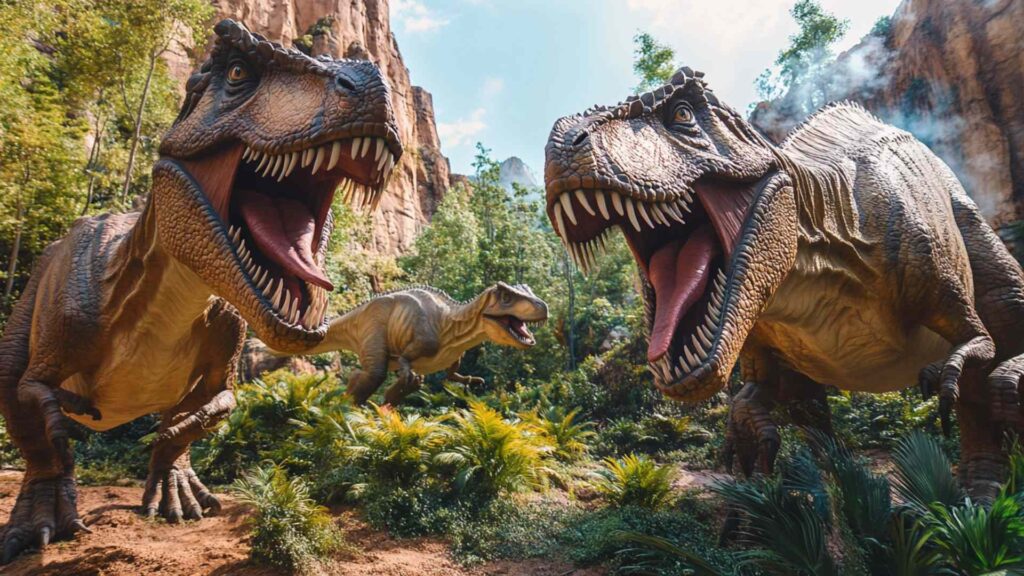
Record-Breakers & Wow Numbers
- Argentinosaurus may have been the heaviest dinosaur, weighing over 60 tonnes.
- Patagotitan reached about 37 meters in length.
- The tallest dinosaurs, like Brachiosaurus, stood over 12 meters high.
- The smallest non-avian dinosaur was about the size of a chicken.
- Spinosaurus may have been the longest carnivorous dinosaur at over 15 meters.
- Tyrannosaurus rex could bite with a force of about 30,000 newtons.
- Velociraptor was much smaller than in movies, about 1 meter tall.
- Stegosaurus had a brain roughly the size of a walnut.
- Some sauropod necks were over 15 meters long.
- Ornithomimids could likely run up to 70 km/h.
- Therizinosaurus had claws nearly 1 meter long.
- Diplodocus had a tail longer than many city buses.
- The largest dinosaur egg found was about 60 centimeters long.
- Titanosaurs had footprints over 1 meter wide.
- A T. rex tooth could be over 30 centimeters long.
Science: How They Lived
- Many dinosaurs had hollow bones to make them lighter.
- Sauropods had air sacs to help them breathe efficiently.
- Some species had beaks for cropping plants.
- Many dinosaurs replaced teeth continuously throughout their lives.
- Feathers first evolved for insulation or display, not flight.
- Color patterns can sometimes be guessed from fossilized pigments.
- Some hadrosaurs had hundreds of teeth arranged like a grinding mill.
- Fossilized stomach stones (gastroliths) helped grind tough plant material.
- Evidence suggests some dinosaurs were warm-blooded.
- Theropods likely had excellent eyesight for hunting.
- Sauropods’ long necks helped them reach leaves far above the ground.
- Ankylosaurs had armored backs for protection.
- Ceratopsians’ frills may have been used for species recognition.
- Small raptors had a large sickle claw on each foot.
- Some dinosaurs could probably swim across rivers and lakes.

Habitats & Behavior
- Dinosaurs lived on every continent, including Antarctica.
- Some species migrated seasonally in search of food.
- Trackways show some traveled in herds.
- Fossils have been found in deserts, forests, and coastal plains.
- Bonebeds sometimes contain hundreds of individuals from one event.
- Some polar dinosaurs endured months of darkness each year.
- Oviraptors were found sitting on nests, showing parental care.
- Ceratopsians may have used horns for display as well as defense.
- Many predators scavenged as well as hunted.
- Certain species may have communicated with deep, resonant calls.
- Hadrosaurs may have nested in large colonies.
- Some dinosaurs hunted in packs.
- Spinosaurus may have fished for prey.
- Desert-dwelling dinosaurs adapted to dry climates.
- Floodplains often preserved dinosaur footprints.
Names & Etymology
- Tyrannosaurus rex means “tyrant lizard king.”
- Triceratops means “three-horned face.”
- Velociraptor means “swift thief.”
- Stegosaurus means “roof lizard.”
- Diplodocus means “double beam.”
- Brachiosaurus means “arm lizard.”
- Ankylosaurus means “fused lizard.”
- Archaeopteryx means “ancient wing.”
- Iguanodon means “iguana tooth.”
- Parasaurolophus means “near crested one.”
- Maiasaura means “good mother lizard.”
- Gallimimus means “chicken mimic.”
- Pachycephalosaurus means “thick-headed lizard.”
- Allosaurus means “different lizard.”
- Deinonychus means “terrible claw.”
For Kids: Quick Comparisons
- Argentinosaurus was as heavy as 10 African elephants.
- Velociraptor was about the size of a turkey.
- A T. rex tooth was as long as a banana.
- Some dinosaur eggs were the size of soccer balls.
- The tail of a Diplodocus was longer than a school bus is wide.
- The crest of a Parasaurolophus was longer than an average arm.
- Stegosaurus plates could be as tall as a child.
- A Microraptor weighed about as much as a loaf of bread.
- Some sauropod footprints were bigger than car tires.
- The smallest dinosaur fossils could fit in your hand.
- A T. rex skull could be as long as a person is tall.
- Some dinosaurs had claws longer than kitchen knives.
- The wingspan of Microraptor was about the width of a couch.
- The longest dinosaur lived millions of times longer than the average human lifespan.
- Some dinosaurs laid more than 20 eggs at once.
Pop Culture & Fun Extras
- A 1993 dinosaur movie caused a huge surge in fossil interest.
- The “thagomizer” name for Stegosaurus tail spikes started as a cartoon joke.
- Not all movie dinosaurs lived at the same time in real life.
- The idea that T. rex couldn’t see you if you stood still is a myth.
- Dinosaur toys often make them all the same size for play.
- Some paleontologists recreate roars using animal sounds.
- Museums sometimes display skeletons made from several individuals.
- “Dinosaur mummies” are fossils with skin impressions.
- New dinosaur species are still named every year.
- Birds today are the direct descendants of certain theropods.
- Fossil casts can be spotted by repeated patterns in bones.
- Dinosaur statues in parks are often painted in imaginative colors.
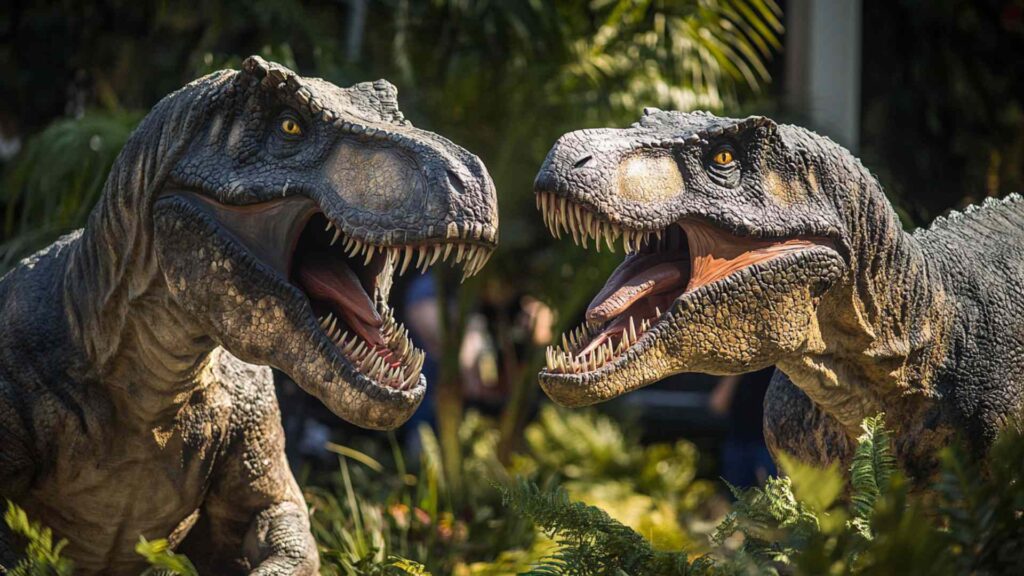
- Some theme parks feature life-sized moving dinosaur robots.
- The dinosaur emoji 🦖 is based on T. rex.
- Hollywood often exaggerates dinosaur sounds and speeds.
Fossils & Discovery
- Fossils form when bones are buried quickly and mineralize over millions of years.
- Some fossils preserve skin, feathers, or stomach contents.
- Coprolites are fossilized dinosaur droppings.
- Trackways are preserved footprints in ancient mud or sand.
- Amber can trap small feathers and insects from the dinosaur age.
- Some dinosaur bones contain preserved blood vessel structures.
- Fossils help scientists learn about prehistoric climates.
- Paleontologists use brushes and chisels to carefully remove fossils from rock.
- Casts are made from molds of real fossils for museum displays.
- Some fossils are so fragile they must be encased in plaster for transport.
- Fossilized nests reveal dinosaur reproductive behavior.
- Bonebeds sometimes result from drought or flooding events.
- Some fossils are found in cliffs and badlands.
- Fossil hunting often requires special permits.
- New finds can rewrite what we know about dinosaur evolution.
Extinction & Survival
- Most dinosaurs went extinct about 66 million years ago.
- The main cause was likely an asteroid impact in what is now Mexico.
- The impact crater is over 150 kilometers wide.
- The asteroid was about 10–12 kilometers across.
- The impact caused wildfires and blocked sunlight.
- Global temperatures dropped drastically afterward.
- Many plant species died, collapsing food chains.
- Only small animals that could find shelter survived in large numbers.
- Crocodiles survived the extinction event.
- Birds are the only dinosaurs that survived.
- Mammals expanded rapidly after dinosaurs vanished.
- The extinction also wiped out ammonites and many marine reptiles.
- Some scientists suggest volcanic activity worsened the disaster.
- The event is called the Cretaceous–Paleogene extinction.
- Recovery of ecosystems took millions of years.
More Amazing Facts
- The gap between Stegosaurus and T. rex was about 80 million years.
- Dinosaurs lived alongside early mammals.
- Some dinosaurs had display crests like modern peacocks.
- Feathered dinosaurs lived in forests and wetlands.
- Some herbivores had defensive tail clubs.
- A few dinosaurs could change growth rates depending on climate.
- Juvenile dinosaurs often looked different from adults.
- Fossils show evidence of dinosaur injuries healing.
- Some dinosaurs may have lived up to 80 years.
- Seasonal changes are recorded in dinosaur bone growth rings.
- Some hadrosaurs had skin textures resembling modern reptiles.
- Theropod claws could be razor-sharp.
- Some fossils are so well preserved that muscle impressions remain.
- Dinosaurs inspire scientists to study biomechanics and robotics.
- The story of dinosaurs continues to grow with every new discovery.
Quick FAQ
What were dinosaurs?
Dinosaurs were land-dwelling reptiles that evolved over 230 million years ago and dominated Earth for over 160 million years.
Did all dinosaurs go extinct?
No—birds are living dinosaurs that survived and evolved.
How big was T. rex?
T. rex was about 12–13 meters long and weighed up to 9 tonnes.
When did dinosaurs live?
From the Triassic Period (about 252 million years ago) to the end of the Cretaceous (66 million years ago).
What killed most dinosaurs?
A massive asteroid impact and volcanic activity caused environmental collapse.

Ellie is the owner and sole author of Fun Facts, combining her mechanical engineering background with years of research-driven writing to deliver facts you can trust. Every article is thoroughly fact-checked and routinely updated as new science and sources emerge to keep information accurate and current. Her mission is to make learning delightful while upholding high standards of reliability and transparency.