
Rugby looks like one game until you discover union, sevens, scrums, lineouts, mauls, tries, conversions, drop goals, tactical kicking, and a ball that refuses to bounce predictably. Its modern laws evolved from 19th-century British football traditions and now support a global sport played from school fields to packed World Cup stadiums. These 145 rugby facts explore history, scoring, positions, laws, tactics, equipment, sevens, World Cups, and player safety.
Rugby basics
- Rugby union is a full-contact team sport played with an oval ball.
- A standard rugby union team has 15 players on the field.
- Rugby sevens uses seven players per side.
- The playing field is rectangular with goal lines at each end.
- H-shaped goalposts stand on the goal lines.
- A try is the highest-value single scoring play in rugby union.
- A try is worth five points under current World Rugby laws.
- A conversion after a try is worth two points.
- A penalty goal is worth three points.
- A drop goal is also worth three points.
- The ball may be carried, kicked, passed, or grounded.
- Players normally pass the ball sideways or backward by hand.
- A forward pass is illegal.
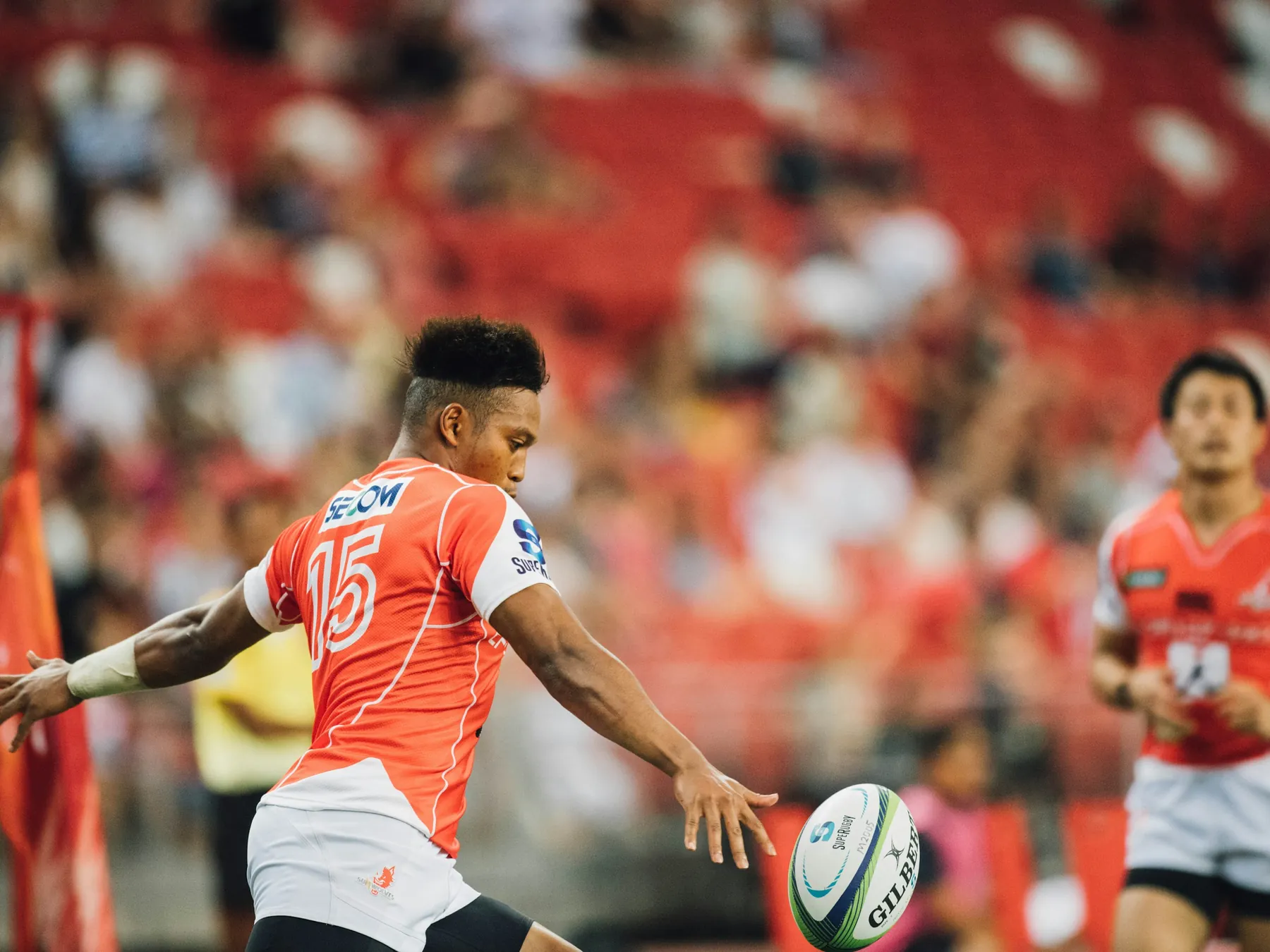
- Kicking the ball forward is legal.
- World Rugby publishes and updates the international Laws of the Game.
The Rugby School story
- Rugby takes its name from Rugby School in England.
- A famous tradition credits student William Webb Ellis with running while holding the ball in 1823.
- The historical evidence for the exact Webb Ellis incident is weak.
- The story was recorded decades after the supposed event.
- Football games already varied greatly among British schools.
- Some allowed handling the ball.
- Rugby School gradually developed its own written rules.
- Rules officially allowing running with the ball appeared during the 19th century.
- Former pupils carried Rugby School traditions to clubs and universities.
- Different football codes continued to evolve separately.
- The Football Association standardized association football rules in 1863.
- Rugby-style clubs rejected rules that removed carrying and certain forms of tackling.
- The Rugby Football Union was founded in England in 1871.
- The first rugby union international was played between Scotland and England in 1871.
- The Rugby World Cup trophy is named the Webb Ellis Cup despite uncertainty about the founding legend.
Why rugby split into union and league
- Rugby union and rugby league are separate sports with common roots.
- The major split occurred in England in 1895.
- Northern clubs wanted to compensate working players for wages lost while playing.
- The Rugby Football Union insisted on strict amateurism.
- Twenty-two clubs broke away and formed the Northern Rugby Football Union.
- That organization later became the Rugby Football League.
- League rules changed progressively after the split.
- Rugby league now uses 13 players per side.
- League has a tackle-count system.
- Union instead features rucks, mauls, lineouts, and contested possession structures.
- The two codes also use different scoring values and tactical patterns.
- Some athletes have switched successfully between league and union.
- Rugby union remained officially amateur for a century after the split.
- World Rugby declared union open to professionalism in August 1995.
- That decision transformed club contracts, training, broadcasting, and international competition.
How a try works
- A try is scored by grounding the ball in the opponent’s in-goal area under the laws.
- Simply crossing the goal line while holding the ball does not automatically complete the score.
- The ball must be grounded legally.
- Grounding can involve downward pressure or holding the ball while it contacts the ground.
- A try is worth five points.
- The scoring team then receives a conversion attempt.
- The conversion is taken in line with the place where the try was scored.
- Scoring nearer the posts therefore creates an easier conversion angle.
- Players sometimes run toward the center before grounding when they have enough space.
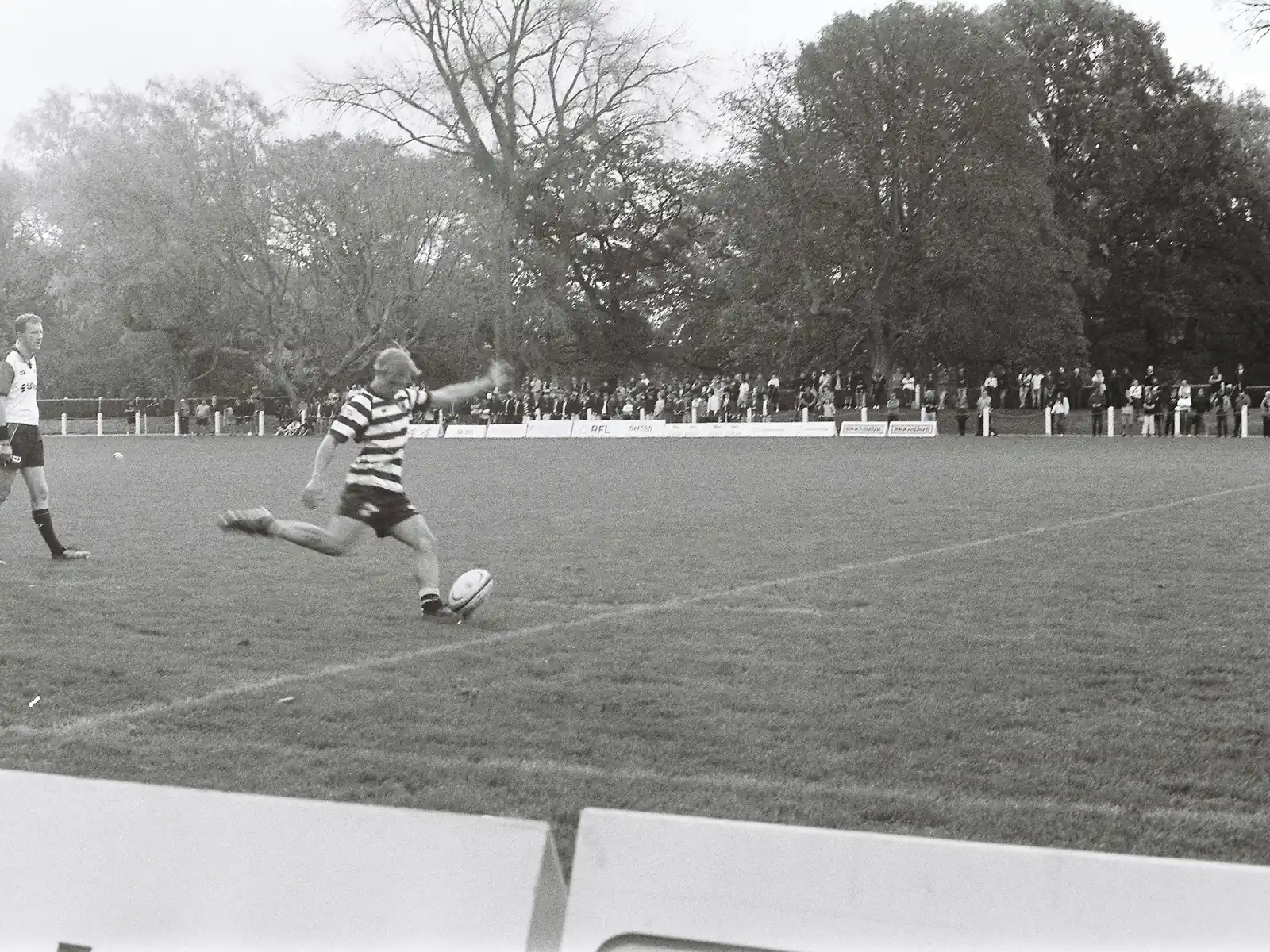
- A conversion can be taken as a place kick or drop kick under the applicable law.
- A successful conversion passes over the crossbar and between the uprights.
- Penalty tries can be awarded when foul play prevents a probable try.
- A penalty try is worth seven points.
- No separate conversion is taken after a penalty try.
- The word try comes from the sport’s early scoring history, when grounding the ball originally earned a try at goal rather than points by itself.
The scrum
- A scrum restarts play after certain minor infringements or stoppages.
- Eight forwards from each side normally bind together in a full 15-a-side scrum.
- The front row consists of two props and one hooker.
- Locks form the second row.
- Three loose forwards complete the usual eight-player pack.
- The scrum-half feeds the ball into the scrum.
- Both teams push while players use their feet to compete for the ball.
- The hooker traditionally attempts to hook the ball backward with a foot.
- Scrum technique involves body position, synchronized force, balance, and timing.
- Props experience enormous compressive forces.
- World Rugby regulates engagement carefully for safety.
- The referee gives a sequence of commands before the packs engage fully.
- Collapsing a scrum deliberately is illegal.
- A dominant scrum can win penalties and valuable field position.
- The scrum is both a restart mechanism and a specialized contest requiring skills rarely seen in other sports.
Rucks and mauls
- A tackle does not automatically end possession in rugby union.
- The tackled player must release or place the ball according to the laws.
- Players arriving over the ball can form a ruck.
- In a ruck, the ball is on the ground.
- Players in the ruck generally compete using their feet and body position rather than handling the ball.
- Players must join a ruck from legal positions.
- A maul forms when the ball carrier remains on their feet while bound with teammates and opponents.
- In a maul, the ball is off the ground.
- A coordinated maul can drive forward as a moving group.
- Lineout mauls are a common attacking tactic near the goal line.
- Defenders try to stop or legally disrupt the drive.
- Players may not collapse a maul illegally.
- Rucks can happen dozens or even hundreds of times in one match.
- Fast ruck ball gives the attack less time for the defense to reset.
- Much of elite rugby strategy revolves around winning tiny advantages at these breakdowns.
The lineout
- A lineout is a common way to restart play after the ball goes into touch.
- Forwards from both teams form parallel lines.
- The hooker commonly throws the ball into the gap between them.
- Teams use coded calls to choose a target.
- Jumpers leap to catch or tap the ball.
- Teammates may lift and support jumpers under legal conditions.
- Locks are frequent lineout targets because they are often tall.
- Back-row forwards can jump too.
- The throw must satisfy accuracy requirements.
- A crooked throw can give the opposition a choice of restart.
- Defenses try to read calls and steal possession.
- Attacking teams disguise which player will jump.
- A clean catch can immediately become a maul.
- Teams can also throw short or long to create space.
- The lineout looks simple from a distance but operates like a rehearsed airborne set play.

Positions have very different jobs
- Rugby union divides the starting 15 into eight forwards and seven backs.
- Forwards generally specialize in physical contests for possession and close-range carries.
- Backs generally handle more open-field running and kicking.
- The scrum-half connects forwards with the backline.
- The fly-half often directs attacking shape and tactical kicking.
- Centers combine running, passing, tackling, and defensive organization.
- Wings are usually among the fastest players.
- The fullback covers deep kicks and joins counterattacks.
- Props anchor the scrum.
- The hooker throws most lineouts and packs between the props.
- Locks provide height in lineouts and power in scrums.
- Flankers chase tackles, contest breakdowns, and support attacks.
- The number eight controls the ball at the back of many scrums.
- Modern players blur traditional stereotypes because forwards increasingly pass and backs increasingly contest breakdowns.
- A rugby team needs very different body types and skill sets working inside one tactical system.
World Cups and rugby sevens
- The first men’s Rugby World Cup was held in 1987.
- New Zealand and Australia jointly hosted the tournament.
- New Zealand won the inaugural men’s title.
- The first women’s Rugby World Cup was held in 1991.
- Women’s international rugby existed before that first World Cup.
- Rugby sevens uses seven players on a full-sized field.
- Sevens matches are much shorter than standard 15-a-side matches.
- The reduced player count creates enormous open space.
- Speed, conditioning, tackling in space, and support play become especially important.
- The Hong Kong Sevens became one of the code’s famous international events.
- Rugby sevens joined the Olympic Games at Rio 2016.
- Fiji won the first Olympic men’s rugby sevens gold medal.
- That medal was Fiji’s first Olympic medal of any kind.
- World Rugby’s membership has expanded far beyond the sport’s traditional strongholds.
- International rugby is now played across every inhabited continent.
Ten surprising rugby facts
- The famous William Webb Ellis origin story is a tradition, not a securely proven eyewitness event.
- A try was originally called a try because it earned the right to try a kick at goal.
- Rugby union became officially professional only in 1995.
- Rugby league split from union largely over compensation for working players.
- A penalty try is automatically worth seven points under current laws.
- The ball can legally move forward through a kick even though forward hand passes are forbidden.
- A ruck has the ball on the ground, while a maul keeps the ball carrier on their feet.
- Rugby sevens uses a full-sized field with less than half as many players per team.
- Fiji’s 2016 rugby sevens gold was the nation’s first Olympic medal.
- For more sports trivia, explore our American football facts, soccer facts, and Olympics facts.
Quick rugby FAQ
How many players are on a rugby union team?
Fifteen players start for each side in standard rugby union, while rugby sevens uses seven.
How many points is a try?
Five points, followed by a possible two-point conversion.
Can you pass forward in rugby?
Not by hand. A player may kick the ball forward, but ordinary hand passes must travel sideways or backward.
What is the difference between a ruck and a maul?
In a ruck, the ball is on the ground with players bound over it. In a maul, the ball carrier remains on their feet while players bind around them.
When did rugby union become professional?
World Rugby’s predecessor declared the game open to professionalism in August 1995.

Ellie is the owner and sole author of Fun Facts, combining her mechanical engineering background with years of research-driven writing to deliver facts you can trust. Every article is thoroughly fact-checked and routinely updated as new science and sources emerge to keep information accurate and current. Her mission is to make learning delightful while upholding high standards of reliability and transparency.