
England is only one part of the United Kingdom, but its castles, language, football clubs, royal history, afternoon teas, ancient universities, quirky place names, and global cultural influence can make it feel like a country several times its size. These 145 England facts explore geography, history, cities, traditions, literature, food, inventions, sport, language, and the details people often accidentally attribute to all of Britain.
England basics
- England is one of the four countries of the United Kingdom.
- The other three are Scotland, Wales, and Northern Ireland.
- England occupies most of the southern and central part of Great Britain.
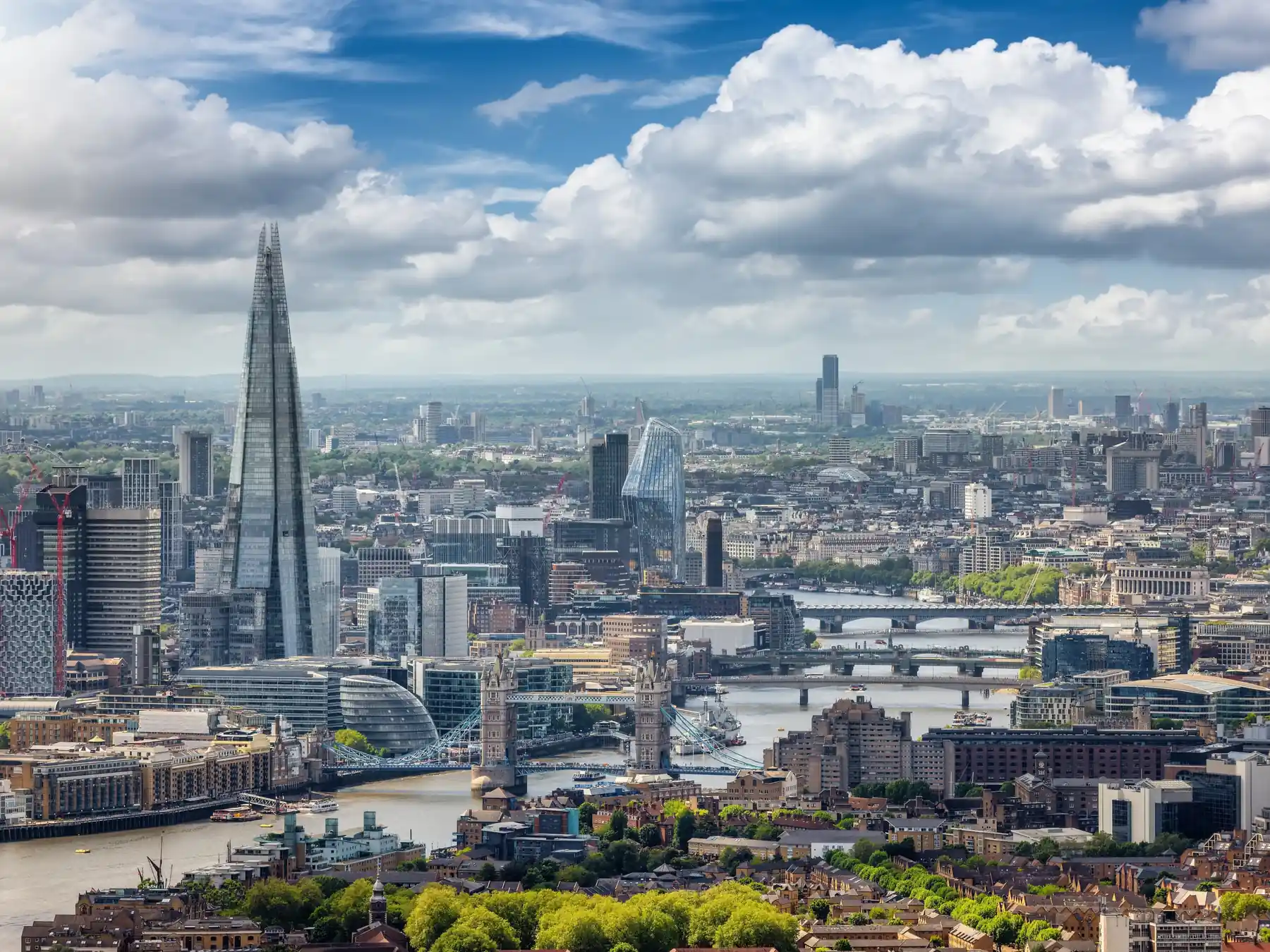
- London is the capital of England.
- London is also the capital of the entire United Kingdom.
- England shares a land border with Scotland to the north.
- It shares a land border with Wales to the west.
- The North Sea lies along much of England’s eastern coast.
- The English Channel separates southern England from France.
- The Irish Sea lies west of northwestern England.
- England does not have its own separate sovereign currency.
- It uses the pound sterling as part of the United Kingdom.
- The flag of England is a red cross on a white field.
- That design is known as the Cross of St George.
- England and the United Kingdom are not interchangeable terms.
England’s landscape
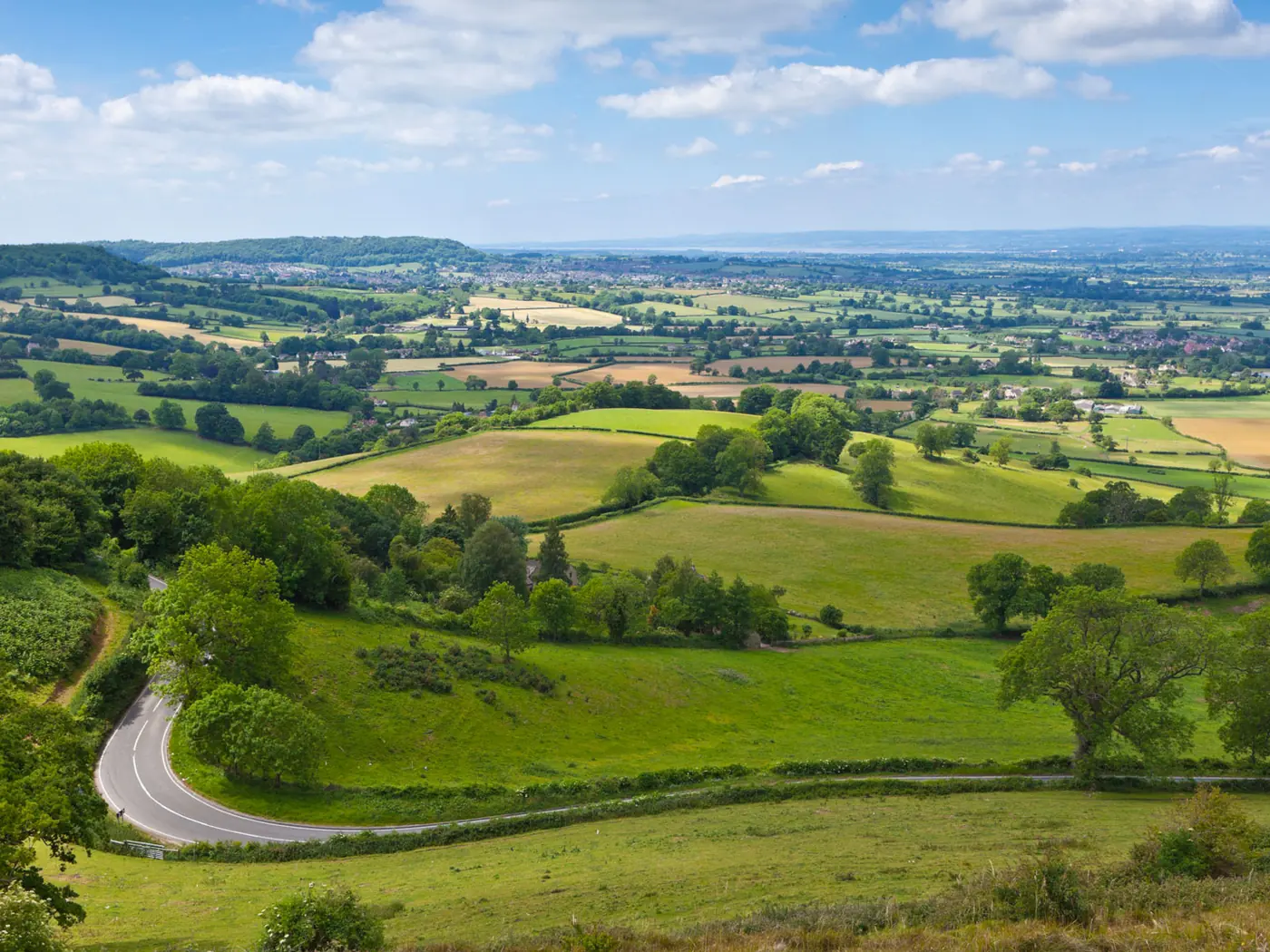
- Much of southern and eastern England consists of rolling lowlands.
- Northern and western England contain more rugged uplands.
- Scafell Pike is the highest mountain in England.
- It rises 978 meters, or 3,209 feet, above sea level.
- Scafell Pike stands in the Lake District.
- The Lake District is famous for glacial valleys, lakes, mountains, and literary history.
- Windermere is England’s largest natural lake by surface area.
- The Pennines form a major upland chain through northern England.
- They are sometimes nicknamed the backbone of England.
- The Cotswolds are known for rolling hills and honey-colored limestone villages.
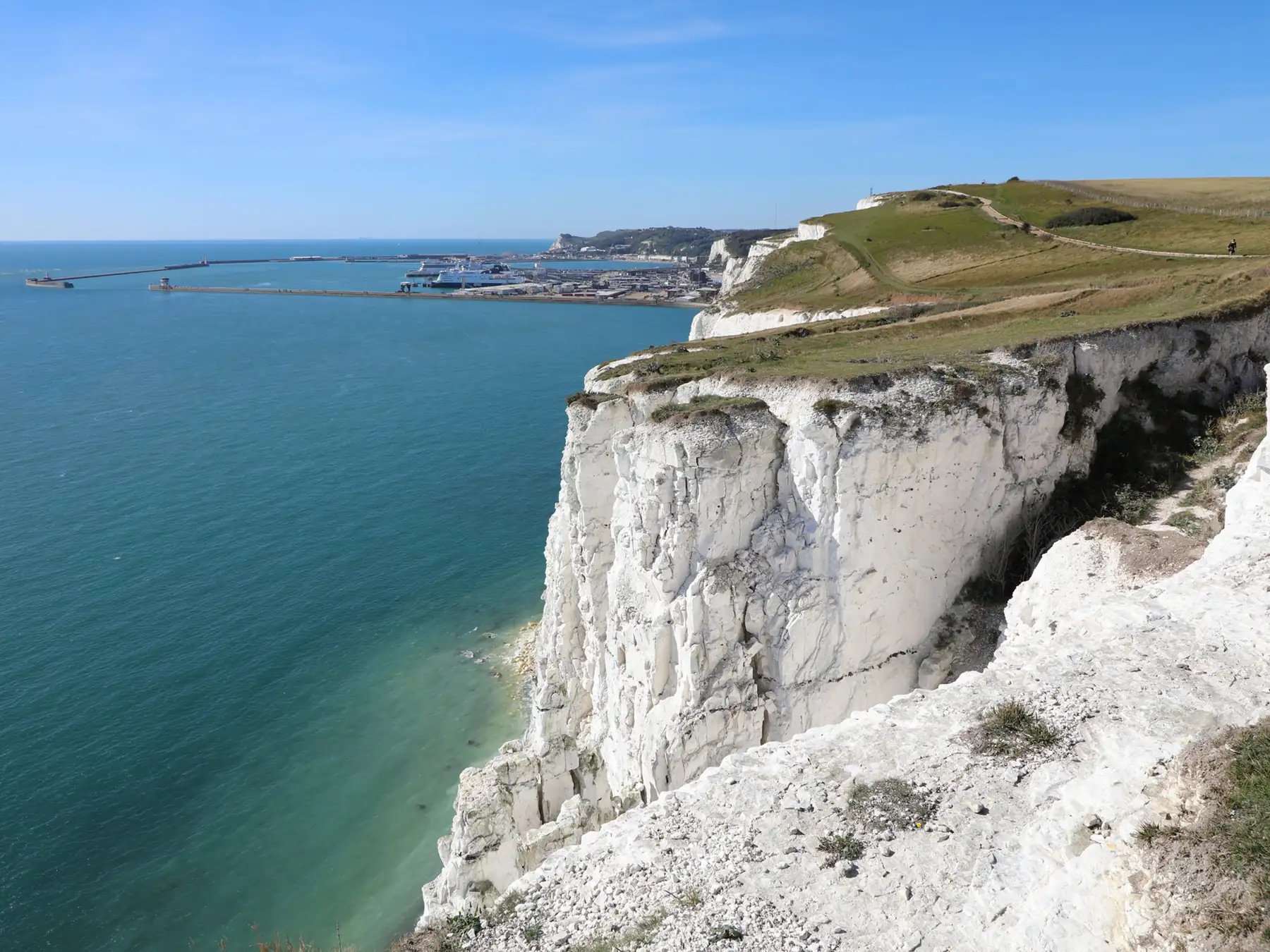
- Chalk creates the brilliant white cliffs of Dover.
- The cliffs face the Strait of Dover toward continental Europe.
- The Fens of eastern England contain extremely flat low-lying farmland.
- Much Fenland was drained over centuries for agriculture.
- England’s scenery changes dramatically within relatively short travel distances.
Rivers and coastline
- The River Thames flows through London.
- Its tidal section rises and falls with the sea.
- The Thames flows into the North Sea through a broad estuary.
- The River Severn is the longest river in the United Kingdom.
- It begins in Wales before flowing through western England.
- The River Trent is one of England’s major rivers.
- Historically, rivers acted as transport routes, boundaries, water sources, and industrial corridors.
- England has a long coastline relative to its land area.
- Coastal landscapes include cliffs, beaches, salt marshes, estuaries, and dunes.
- Beachy Head is a dramatic chalk headland on the south coast.
- The Jurassic Coast stretches across Dorset and neighboring Devon.
- Its rocks record about 185 million years of Earth history.
- Fossil hunting made the Dorset coast internationally famous.
- Mary Anning made major fossil discoveries near Lyme Regis during the early 19th century.
- England’s geology helped shape both landscape and the history of modern Earth science.
From Romans to Anglo-Saxons
- Humans lived in what is now England long before written history.
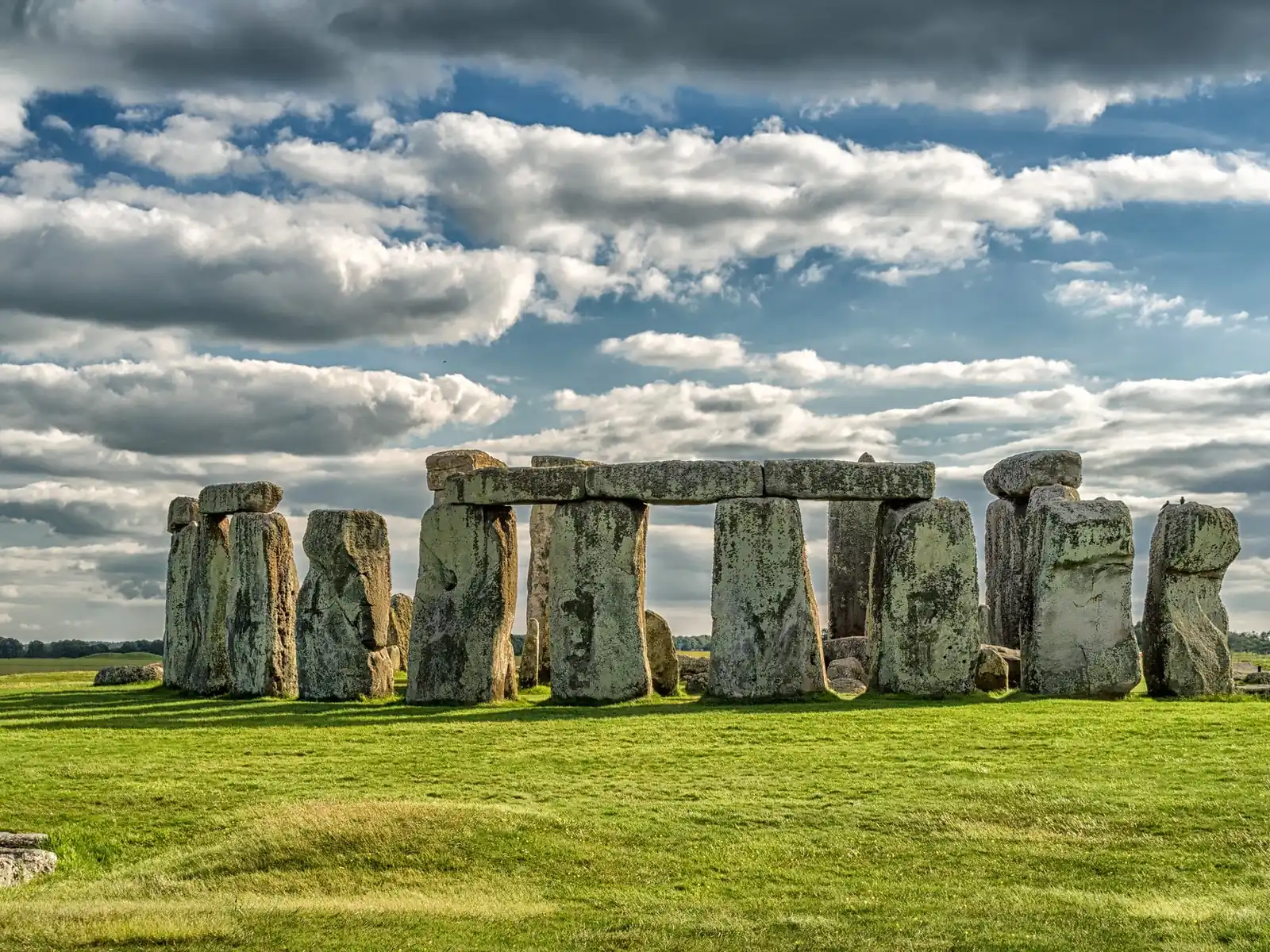
- Stonehenge was constructed in stages during prehistoric Britain.
- Roman emperor Claudius launched a major invasion of Britain in AD 43.
- Roman rule transformed roads, towns, trade, military organization, and architecture.
- London began as the Roman settlement Londinium.
- Bath became famous for Roman hot-spring baths.
- Hadrian’s Wall was built across northern Britain beginning in AD 122.
- Most of the wall lies within modern England near the Scottish border.
- Roman authority collapsed in Britain during the early fifth century.
- Germanic-speaking groups including Angles, Saxons, and Jutes settled in parts of Britain.
- The name England derives from the land of the Angles.
- Several Anglo-Saxon kingdoms emerged.
- These included Wessex, Mercia, Northumbria, and East Anglia.
- Old English developed from Germanic languages spoken by these communities.
- Christian missionaries helped reconnect Anglo-Saxon England with wider European religious networks.
Vikings and the Norman Conquest
- Viking raiders began attacking English monasteries in the late eighth century.
- Lindisfarne was famously raided in 793.
- Viking armies later conquered and settled large areas.
- The Danelaw covered much of northern and eastern England.
- Norse settlement left a strong mark on English place names.
- Town names ending in “-by” often reflect Old Norse influence.
- York was an important Viking city known as Jórvík.
- King Alfred of Wessex resisted Viking expansion.
- England eventually developed into a more unified kingdom.
- In 1066, Edward the Confessor died without a direct heir.
- Harold Godwinson became king.
- William, Duke of Normandy, claimed the English throne.
- William defeated Harold at the Battle of Hastings on October 14, 1066.
- William became known as William the Conqueror.
- The Norman Conquest profoundly reshaped England’s aristocracy, castles, government, and language.
Castles, Magna Carta, and Parliament
- Normans built castles across England to control conquered territory.
- Early Norman castles often used earth-and-timber motte-and-bailey designs.
- Many were later rebuilt in stone.
- The Tower of London began under William the Conqueror.
- Its White Tower remains one of England’s most famous Norman buildings.
- King John sealed Magna Carta at Runnymede in 1215.
- Magna Carta originally addressed a political crisis between the king and powerful barons.
- Most of its clauses concerned medieval issues rather than modern democracy.
- A few principles later became symbols of limits on government power.
- The English Parliament developed gradually during the Middle Ages.
- Its evolution involved kings seeking taxes and counsel from nobles, clergy, knights, and towns.
- The House of Commons and House of Lords emerged as separate chambers.
- England and Scotland shared a monarch from 1603.
- The Acts of Union in 1707 created the Kingdom of Great Britain.
- After 1707, England no longer had a separate sovereign Parliament of its own.
The English language
- Modern English grew from several historical language layers.
- Old English was primarily Germanic.
- Viking settlement added many Old Norse words and influences.
- The Norman Conquest brought enormous French influence.
- Latin contributed heavily through religion, scholarship, law, and science.
- Middle English looked very different from modern written English.
- Geoffrey Chaucer wrote The Canterbury Tales in Middle English.
- The printing press helped stabilize some spelling conventions.
- William Caxton established a printing press at Westminster in 1476.
- The Great Vowel Shift changed English pronunciation over several centuries.
- This helps explain why English spelling and pronunciation often disagree.
- William Shakespeare wrote during the Early Modern English period.
- English spread globally through colonization, trade, migration, science, and media.
- England itself contains dozens of strongly distinctive regional accents.
- There is no single accent that represents all English people.
Food traditions
- Fish and chips became widespread in England during the 19th century.
- Fried fish and fried potatoes entered British food culture through different migrant and trade histories.
- Sunday roast traditionally combines roasted meat, potatoes, vegetables, gravy, and accompaniments.
- Yorkshire pudding is baked batter served with savory meals.
- It originated as a practical way to use drippings from roasting meat.
- Toad in the hole is sausages baked in Yorkshire-pudding batter.
- The dish contains no toads.
- Shepherd’s pie traditionally uses lamb or mutton.
- Cottage pie traditionally uses beef.
- Cornish pasties became associated with miners in Cornwall.
- The sturdy pastry case made a convenient portable meal.
- Afternoon tea became fashionable during the 19th century.
- Scones are commonly served with jam and clotted cream.
- Cornwall and Devon famously disagree about the preferred order of cream and jam.
- English regional food includes far more than the stereotype of bland boiled meals.
Sports, science, and culture
- Modern association football rules were codified in England.
- The Football Association was founded in London in 1863.
- Wimbledon began as a lawn-tennis tournament in 1877.
- Cricket has been played in England for centuries.
- The Marylebone Cricket Club became an influential guardian of cricket’s laws.
- Rugby football takes its name from Rugby School in Warwickshire.
- Isaac Newton was born in Lincolnshire.
- Charles Darwin was born in Shrewsbury.
- Stephen Hawking was born in Oxford.
- The Industrial Revolution transformed English manufacturing towns.
- Railways changed English travel during the 19th century.
- The first public railway to use steam locomotives successfully opened in northeast England.
- The Beatles formed in Liverpool.
- Stonehenge, the Tower of London, Westminster Abbey, and the Lake District are UNESCO World Heritage sites.
- England’s cultural influence comes from centuries of literature, empire, migration, science, sport, music, and media.
Ten surprising England facts
- England does not have a separate sovereign national parliament today.
- London began as a Roman settlement.
- The word England literally grew from the name of the Angles.
- Many northern English place names preserve Viking language.
- Magna Carta was originally a medieval barons’ peace settlement, not a modern constitution.
- Yorkshire pudding is savory.
- Toad in the hole contains absolutely no amphibians.
- English spelling preserves historical sound changes that pronunciation left behind.
- The white cliffs of Dover are made largely from microscopic marine remains compacted into chalk.
- For more regional trivia, explore our United Kingdom facts and Culture facts.
Quick England FAQ
Is England the same as the United Kingdom?
No. England is one of four countries in the UK, alongside Scotland, Wales, and Northern Ireland.
What is England’s capital?
London, which is also the capital of the United Kingdom.
What is the highest mountain in England?
Scafell Pike in the Lake District, at 978 meters, or 3,209 feet.
Where does the name England come from?
It developed from a term meaning the land of the Angles, one of the Germanic peoples who settled parts of Britain after Roman rule.
Does England have its own parliament?
Not a separate sovereign national parliament equivalent to Scotland’s devolved Parliament. England is governed for national matters through the UK Parliament, alongside various local and regional bodies.

Ellie is the owner and sole author of Fun Facts, combining her mechanical engineering background with years of research-driven writing to deliver facts you can trust. Every article is thoroughly fact-checked and routinely updated as new science and sources emerge to keep information accurate and current. Her mission is to make learning delightful while upholding high standards of reliability and transparency.