
South Korea packs mountain temples, neon megacities, royal palaces, volcanic islands, high-speed trains, kimchi refrigerators, centuries-old music, and a pop-culture wave that reached almost every corner of the world. Its modern story is equally dramatic, transforming from war-torn poverty into a major industrial and cultural power. These 145 South Korea facts explore geography, history, Hangeul, food, technology, traditions, K-pop, sports, transport, and daily life.
South Korea basics
- South Korea’s official name is the Republic of Korea.
- It occupies the southern portion of the Korean Peninsula.
- South Korea borders North Korea by land.
- The Yellow Sea lies to the west.
- The waters between Korea and Japan lie to the south and east.
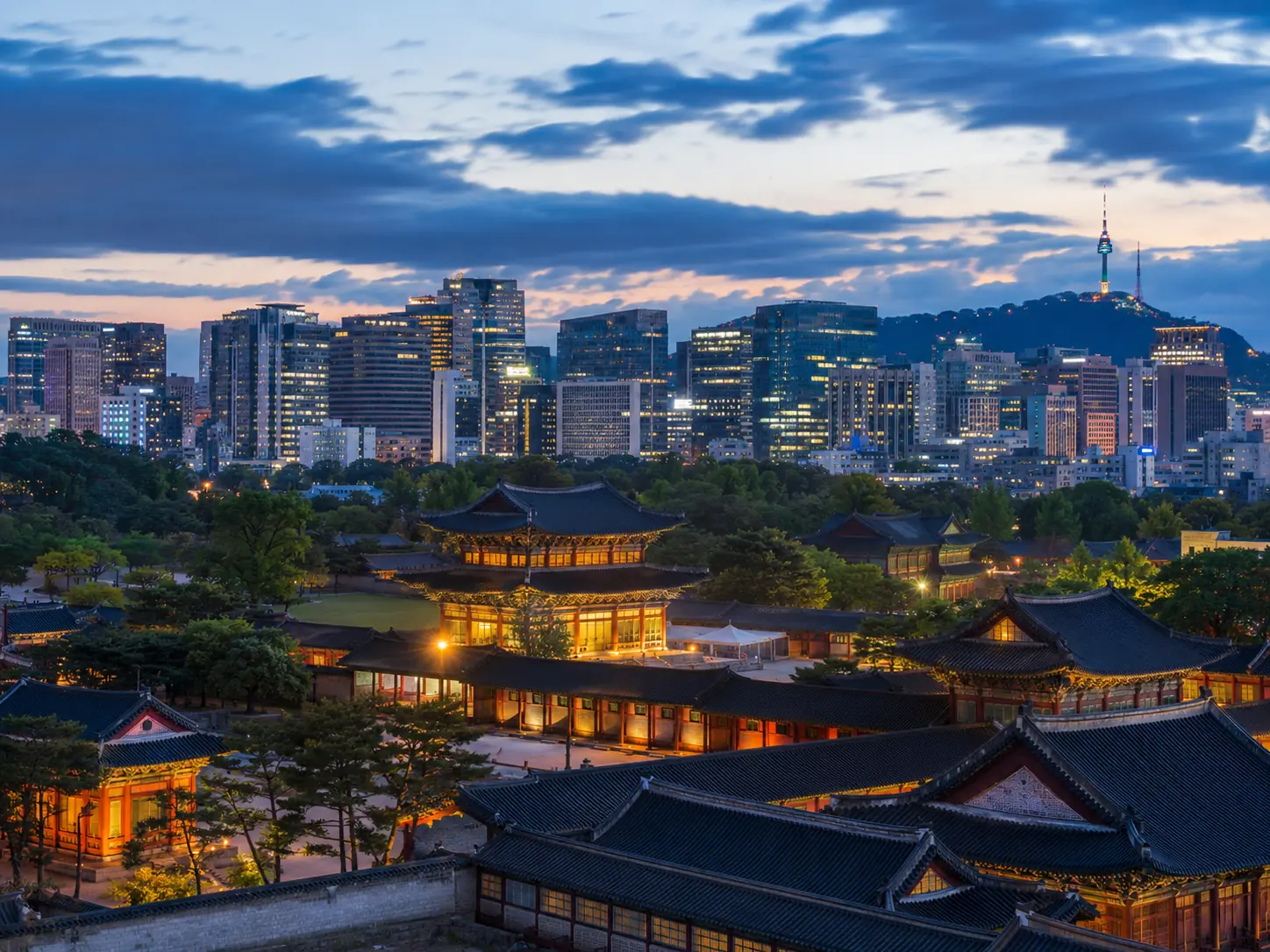
- Seoul is South Korea’s capital and largest metropolitan center.
- Korean is the country’s principal language.
- Korean is written primarily with the Hangeul alphabet.
- The South Korean currency is the won.
- The country uses the international abbreviation ROK in many official contexts.
- South Korea has nine provinces plus several special and metropolitan administrative regions.
- Jeju is a self-governing island province.
- South Korea’s national flag is called the Taegeukgi.
- The national anthem is called Aegukga.
- Korea.net provides an official overview of the country’s geography, language, government, and culture.
A mountainous peninsula
- Mountains cover a large portion of South Korea’s landscape.
- Much of the highest terrain lies toward the east.
- Broader plains and agricultural areas are more common in the west and southwest.
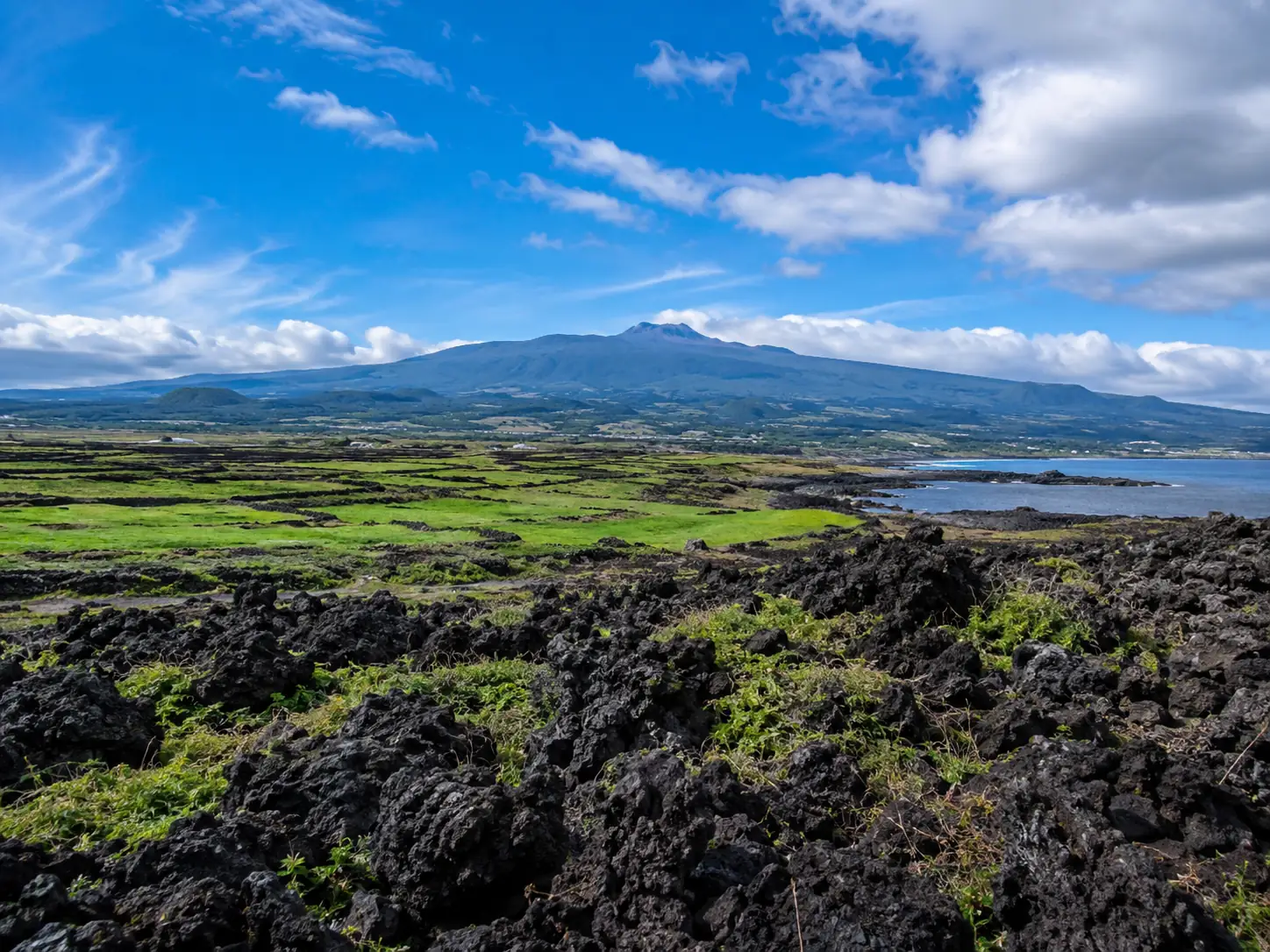
- Hallasan is South Korea’s highest mountain.
- Hallasan rises to 1,947 meters, or 6,388 feet.
- It forms the center of Jeju Island.
- Hallasan is a shield volcano.
- Jeju itself was shaped largely by volcanic activity.
- The Han River flows through Seoul.
- The Nakdong River is South Korea’s longest major river.
- The country has a deeply indented coastline with many islands.
- The southwest coast is especially famous for tidal flats and island clusters.
- South Korea experiences four distinct seasons.
- Summers are often hot, humid, and influenced by monsoon rainfall.
- Winters can be cold and dry, especially away from the southern coast.
Jeju Island is unlike mainland Korea
- Jeju is South Korea’s largest island.
- It lies south of the Korean Peninsula.
- The island’s volcanic landscape includes lava tubes and parasitic cones.
- UNESCO recognizes Jeju Volcanic Island and Lava Tubes as a World Heritage property.
- Hallasan contains a summit crater.
- Jeju’s numerous small volcanic cones are called oreum.
- The island has a milder climate than much of mainland South Korea.
- Jeju is famous for citrus fruit.
- Stone walls built from dark volcanic rock are common in the landscape.
- Traditional Jeju houses were designed for strong island winds.
- Haenyeo are Jeju women divers who traditionally harvest seafood without breathing apparatus.
- The culture of Jeju haenyeo is recognized by UNESCO as intangible cultural heritage.
- Haenyeo knowledge includes diving, weather, tides, marine ecology, and community cooperation.
- Jeju also has its own distinctive dialect and local cultural traditions.
- The island is one of South Korea’s most popular domestic vacation destinations.
Korean history reaches back thousands of years
- People have inhabited the Korean Peninsula since prehistoric times.
- Ancient Korean history includes kingdoms such as Goguryeo, Baekje, and Silla.
- These are commonly called the Three Kingdoms.
- Silla eventually unified much of the peninsula in the seventh century.
- Balhae existed farther north during part of the same broad era.
- The Goryeo dynasty began in 918.
- The English word Korea ultimately derives from the name Goryeo.
- Goryeo was famous for elegant celadon ceramics.
- The Joseon dynasty began in 1392.
- Joseon ruled for more than five centuries.
- Confucian political and social ideas became deeply influential during Joseon.
- Seoul became the Joseon capital in the late 14th century.
- Many royal palaces and city gates in modern Seoul trace their roots to Joseon.
- The Korean Empire was proclaimed in 1897.
- Japan formally annexed Korea in 1910 and ruled the peninsula until 1945.
Division and the Korean War
- Japanese colonial rule ended after Japan’s surrender in World War II.
- The Korean Peninsula was then divided into Soviet and American occupation zones.
- The dividing line was set near the 38th parallel.
- Separate governments emerged in north and south in 1948.
- The Republic of Korea was established in the south.
- The Democratic People’s Republic of Korea was established in the north.
- The Korean War began in June 1950 when North Korean forces invaded South Korea.
- United Nations forces fought mainly alongside South Korea.
- China entered the war in support of North Korea.
- The fighting devastated cities, infrastructure, and families across the peninsula.
- An armistice agreement was signed in July 1953.
- The armistice stopped large-scale fighting but did not create a formal peace treaty.
- The Korean Demilitarized Zone, or DMZ, separates the two states.
- The DMZ is about 4 kilometers, or 2.5 miles, wide along much of its length.
- Families separated by the division became one of the conflict’s most enduring human tragedies.
Hangeul was deliberately designed
- Hangeul is the Korean alphabet.
- It was created during the reign of King Sejong the Great.
- The new script was promulgated in the 15th century.
- Its original name was Hunminjeongeum.
- That name means roughly “proper sounds for instructing the people.”
- Before Hangeul, educated Koreans primarily wrote using Classical Chinese characters.
- King Sejong wanted a writing system ordinary Koreans could learn more easily.
- Basic consonant shapes reflect features of how speech sounds are produced.
- Vowel forms were designed from a small set of symbolic strokes.
- Letters are grouped into square-looking syllable blocks.
- Each block represents a spoken syllable.
- Hangeul combines alphabetic logic with visually compact syllable units.
- South Korea celebrates Hangeul Day on October 9.
- The original Hunminjeongeum manuscript is listed in UNESCO’s Memory of the World Register.
- Korea’s official tourism service calls Hangeul one of the country’s proudest cultural assets.
Kimchi is a category, not one recipe
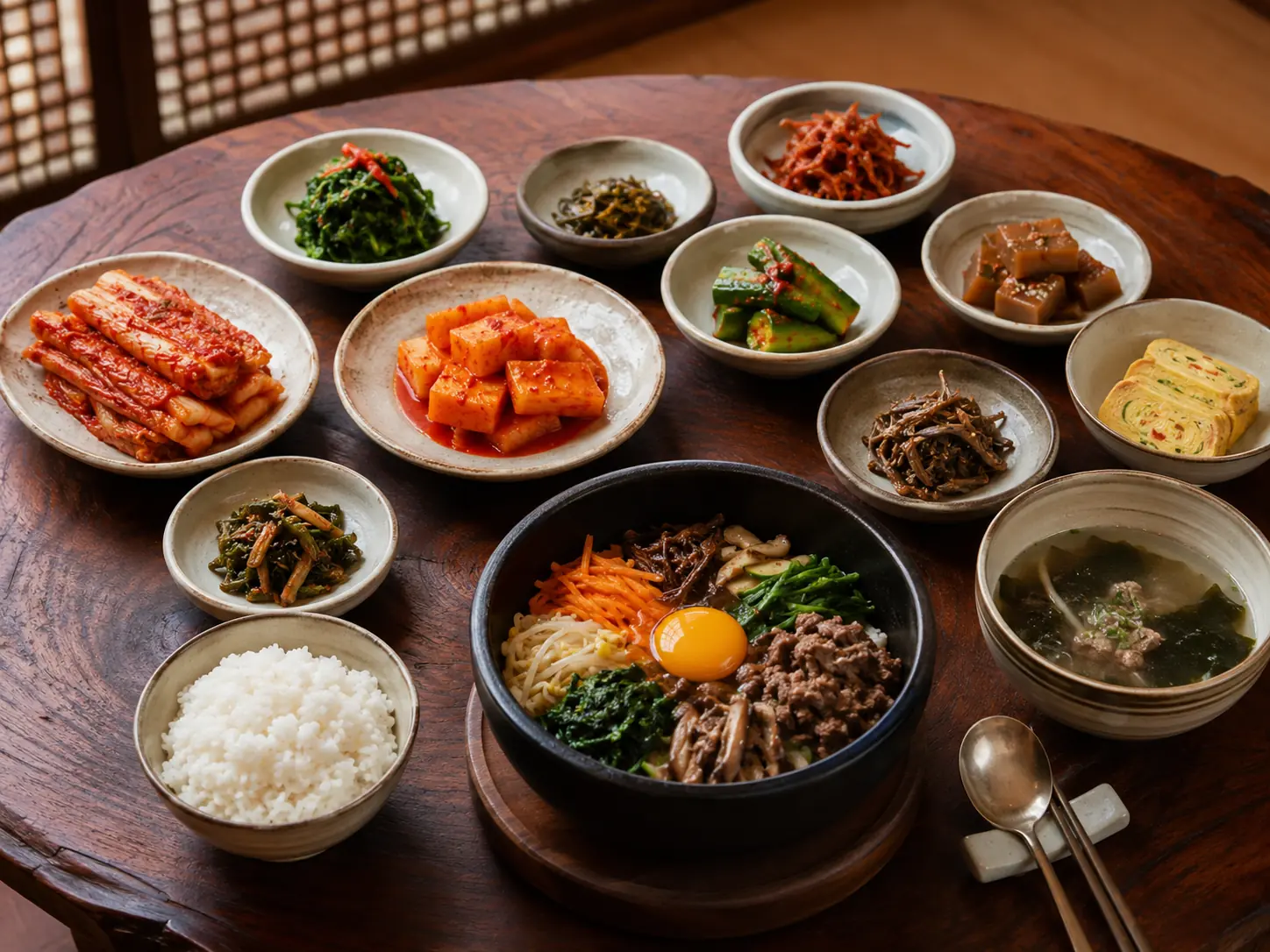
- Kimchi refers to a broad family of fermented and seasoned vegetable dishes.
- Napa-cabbage kimchi is internationally famous but is only one type.
- Radish is another common kimchi ingredient.
- Cucumber kimchi is popular in warmer seasons.
- Some kimchi is spicy and bright red.
- Other traditional varieties contain little or no red chili.
- Korean chili peppers arrived through global crop exchange after contact with the Americas.
- Salt helps draw water from vegetables and shape fermentation conditions.
- Lactic-acid bacteria drive much of kimchi fermentation.
- Garlic, ginger, scallions, fish sauce, and salted seafood may contribute flavor depending on recipe.
- Kimjang is the tradition of preparing and sharing large quantities of kimchi for winter.
- UNESCO added kimjang to its Representative List of Intangible Cultural Heritage in 2013.
- Kimjang traditionally brings families and communities together for collective food preparation.
- Specialized kimchi refrigerators are common in South Korean homes.
- Those appliances help control storage temperatures and preserve different fermented foods.
Korean food goes far beyond kimchi
- Bap is the Korean word commonly used for cooked rice and can also imply a meal.
- Banchan are small side dishes served with a Korean meal.
- Bibimbap combines rice with vegetables and other toppings, often mixed with gochujang.
- Gochujang is a fermented red chili paste.
- Doenjang is a fermented soybean paste.
- Bulgogi is thinly sliced marinated meat cooked over heat.
- Galbi refers to ribs and is associated with several popular preparations.
- Japchae is a dish of stir-fried glass noodles and vegetables.
- The noodles are commonly made from sweet-potato starch.
- Tteokbokki is a popular dish of chewy rice cakes in sauce.
- Korean fried chicken became internationally famous for crisp coatings and sauces.
- Samgyeopsal is grilled pork belly commonly eaten with wraps and condiments.
- Seaweed soup, or miyeok-guk, is traditionally eaten on birthdays.
- Temple cuisine emphasizes plant-based ingredients and Buddhist culinary traditions.
- Korean meals often balance rice, soup, fermented foods, vegetables, meat, seafood, and shared side dishes.
Tradition and modern culture mix constantly
- Hanbok is traditional Korean clothing recognized for flowing lines and distinctive silhouettes.
- Modern hanbok designers reinterpret traditional forms for contemporary wear.
- Hanok are traditional Korean houses built around regional climate and materials.
- Ondol is a traditional underfloor-heating system.
- Modern Korean apartments still commonly use heated floors inspired by ondol principles.
- Pansori is a traditional musical storytelling performance using a singer and drummer.
- UNESCO recognizes pansori as intangible cultural heritage.
- Arirang is one of Korea’s most famous folk-song traditions.
- Many regional versions of Arirang exist.
- UNESCO also recognizes Arirang as intangible cultural heritage.
- Hallyu means the Korean Wave of popular culture spreading internationally.
- K-pop, Korean dramas, films, beauty products, food, and online media all contribute to Hallyu.
- South Korean entertainment companies developed intensive trainee systems for many idol groups.
- Korean films and television have won major international awards and audiences.
- Traditional heritage and high-tech pop culture coexist rather than replacing one another.
Ten surprising South Korea facts
- The Korean alphabet was intentionally designed rather than slowly evolving from an older alphabet.
- The name Korea traces back to the medieval Goryeo dynasty.
- South Korea’s highest mountain sits on a volcanic island rather than the mainland.
- Jeju women divers traditionally harvest seafood without scuba tanks.
- Kimchi refrigerators are specialized appliances found in many homes.
- Traditional Korean floor heating influenced the way modern apartments are still heated.
- The Korean War ended with an armistice, not a formal peace treaty.
- South Korea’s globally famous spicy kimchi style depends partly on a chili crop originally domesticated in the Americas.
- Hangeul Day is a national observance celebrating an alphabet.
- For more Asian trivia, explore our Japan facts and Culture facts.

Quick South Korea FAQ
What is the capital of South Korea?
Seoul, a huge metropolitan city on the Han River.
What alphabet does South Korea use?
Korean is primarily written in Hangeul, a 15th-century alphabet created during the reign of King Sejong.
Is kimchi always cabbage?
No. Kimchi is a large family of fermented vegetable dishes that can use radish, cucumber, cabbage, and many other ingredients.
What is Hallyu?
Hallyu means the Korean Wave, the international spread of South Korean popular culture including music, television, film, food, beauty, and digital media.
Did the Korean War officially end?
Large-scale fighting stopped with the 1953 armistice, but no comprehensive peace treaty replaced it, so the armistice remains central to the peninsula’s political situation.

Ellie is the owner and sole author of Fun Facts, combining her mechanical engineering background with years of research-driven writing to deliver facts you can trust. Every article is thoroughly fact-checked and routinely updated as new science and sources emerge to keep information accurate and current. Her mission is to make learning delightful while upholding high standards of reliability and transparency.