
William Shakespeare left behind no diary, no verified personal letters, and no recording of his voice, yet his plays are performed more than four centuries after his death. Between the surviving documents and theatrical legends lies a wonderfully strange life full of lost years, crowded playhouses, royal patrons, a burned-down Globe, 154 sonnets, odd spellings, and one famously “second-best” bed. These 145 facts separate what historians know from what theater folklore loves to repeat.
Shakespeare basics
- William Shakespeare was an English playwright, poet, and actor.
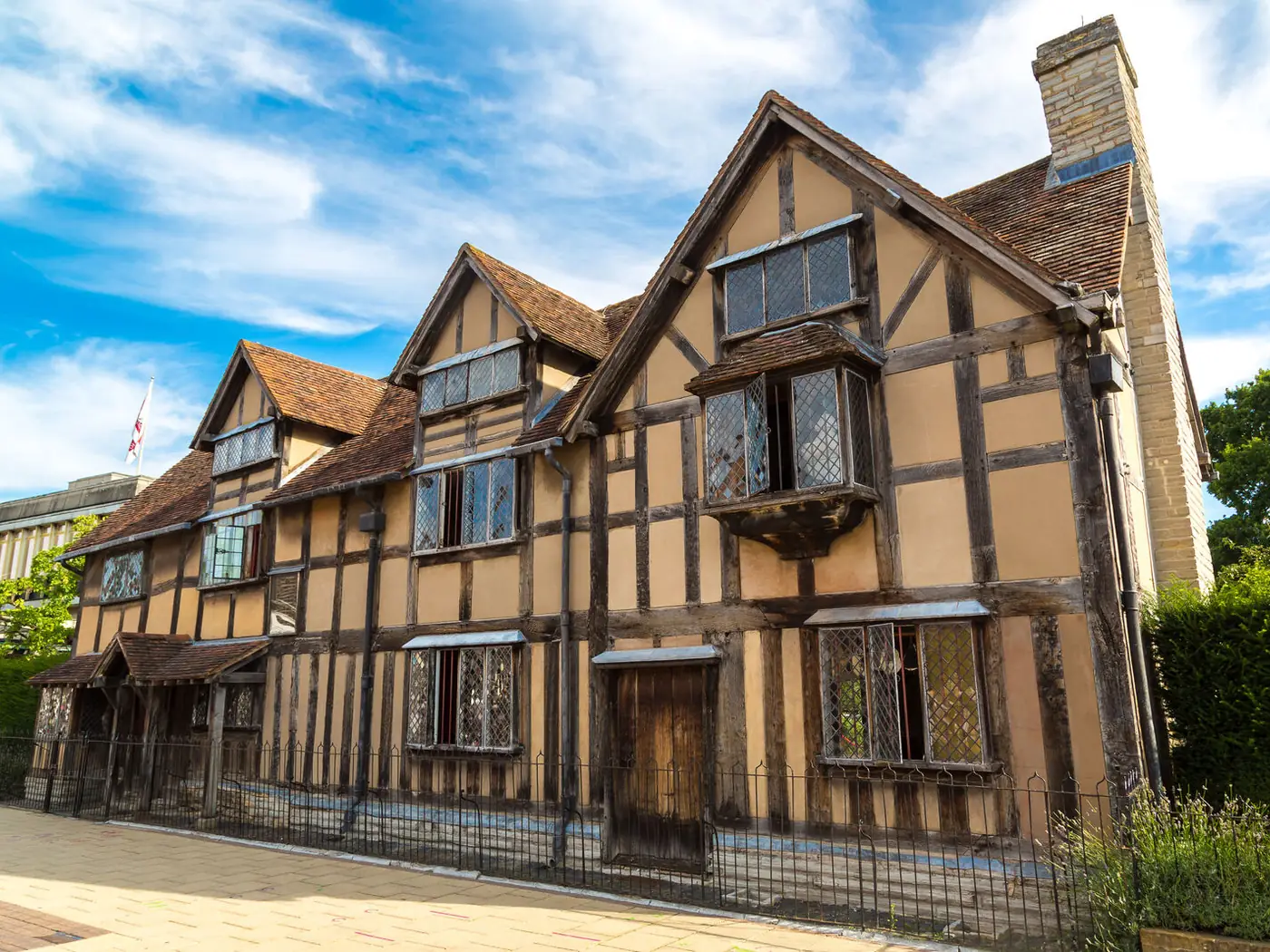
- He was born in Stratford-upon-Avon in Warwickshire.
- Shakespeare was baptized on April 26, 1564.
- His exact birth date is not recorded.
- April 23 is traditionally celebrated as his birthday.
- His father was John Shakespeare.
- John worked in trades including glove making and leather goods.
- Shakespeare’s mother was Mary Arden.
- Mary came from a local landowning family.
- William was one of eight children born to John and Mary.
- Several of the Shakespeare children died young.
- Shakespeare grew up during the reign of Elizabeth I.
- He later worked under James I as well.
- He became one of the most influential writers in the English language.
- His surviving works include plays, sonnets, and longer narrative poems.
School and early life
- No surviving school register proves exactly where Shakespeare studied.
- He is generally believed to have attended Stratford’s grammar school.
- A grammar-school education emphasized Latin language and literature.
- Students translated and imitated classical authors.
- Shakespeare’s plays reveal deep familiarity with Roman history and classical stories.
- He did not attend a university.
- That later gave rival writers an easy target for class-based criticism.
- Playwright Robert Greene famously mocked an “upstart crow” in 1592.
- Scholars generally connect Greene’s attack with Shakespeare.
- Shakespeare’s father held several civic offices in Stratford.
- John Shakespeare eventually served as bailiff, roughly comparable to a mayor.
- The family later experienced financial difficulties.
- William would have grown up around market life, trades, church, local government, and traveling performers.
- Professional acting companies visited provincial towns during Shakespeare’s youth.
- The exact event that inspired him to pursue theater is unknown.
Marriage and children
- Shakespeare married Anne Hathaway in 1582.
- William was 18 years old.
- Anne was about eight years older than William.
- She came from Shottery near Stratford.
- The marriage was arranged quickly because Anne was already pregnant.
- Their daughter Susanna was baptized in May 1583.
- Twins Hamnet and Judith were baptized in February 1585.
- Hamnet was Shakespeare’s only son.
- Hamnet died in 1596 at age 11.
- The cause of Hamnet’s death is unknown.
- Scholars have long discussed possible echoes of grief in Shakespeare’s later writing.
- No document proves that Hamlet was directly named for or inspired by Hamnet.
- Hamnet and Hamlet were related forms of the same name in Shakespeare’s period.
- Susanna later married physician John Hall.
- Judith later married Thomas Quiney.
The mysterious lost years
- Shakespeare disappears from many surviving records after the twins’ baptism in 1585.
- He reappears clearly in London’s theatrical world by 1592.
- This gap is often called Shakespeare’s lost years.
- Historians do not know exactly what he did during the entire period.
- Later stories claim he worked as a schoolmaster.
- Another legend says he fled Stratford after poaching deer.
- The deer-poaching story comes from sources written long after his death.
- Some theories imagine him traveling with acting companies.
- Others place him in legal, clerical, or household work.
- No single theory has enough evidence to settle the mystery.
- The missing record has encouraged endless fictional biographies.
- By 1592, Shakespeare was successful enough to provoke professional jealousy.
- He was working as both actor and playwright.
- London offered a booming commercial theater industry.
- The lost years remain mysterious because ordinary lives produced fewer surviving documents than royal ones.
Shakespeare the actor and shareholder
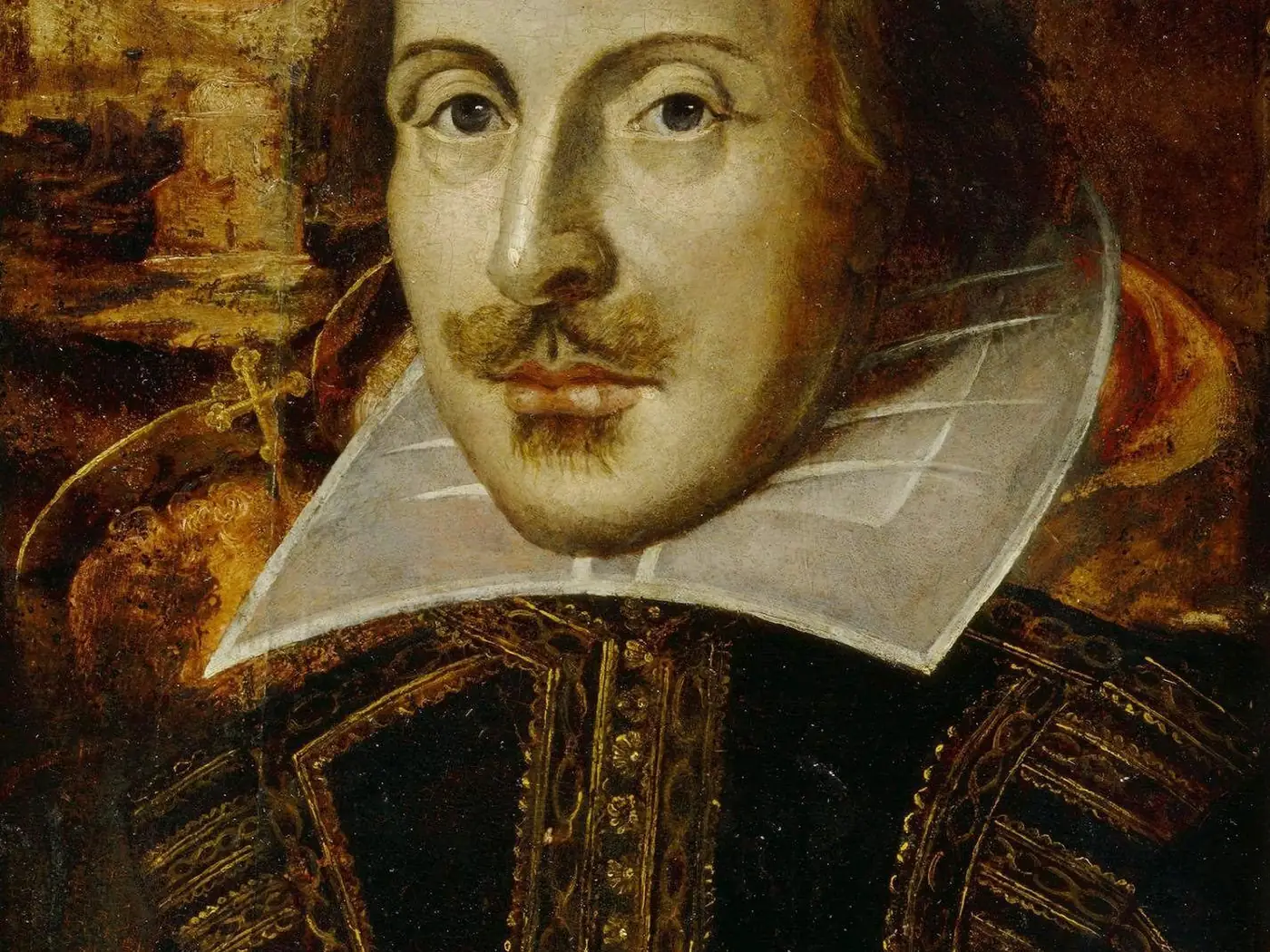
- Shakespeare did not earn money only by selling scripts.
- He was an actor in a professional theater company.
- He also became a shareholder in that company.
- The company was called the Lord Chamberlain’s Men under Elizabeth I.
- It formed in 1594.
- Shakespeare became a central writer for the troupe.
- Richard Burbage was one of its star actors.
- Burbage likely originated leading roles including Hamlet, Othello, Lear, and Richard III.
- In 1603, James I became the company’s royal patron.
- The troupe was renamed the King’s Men.
- Royal patronage increased the company’s prestige.
- The King’s Men performed at court as well as public theaters.
- Shakespeare appears in surviving cast lists.
- Tradition says he played the Ghost in Hamlet, though hard evidence is limited.
- His business ownership helped him become financially successful.
The Globe Theatre
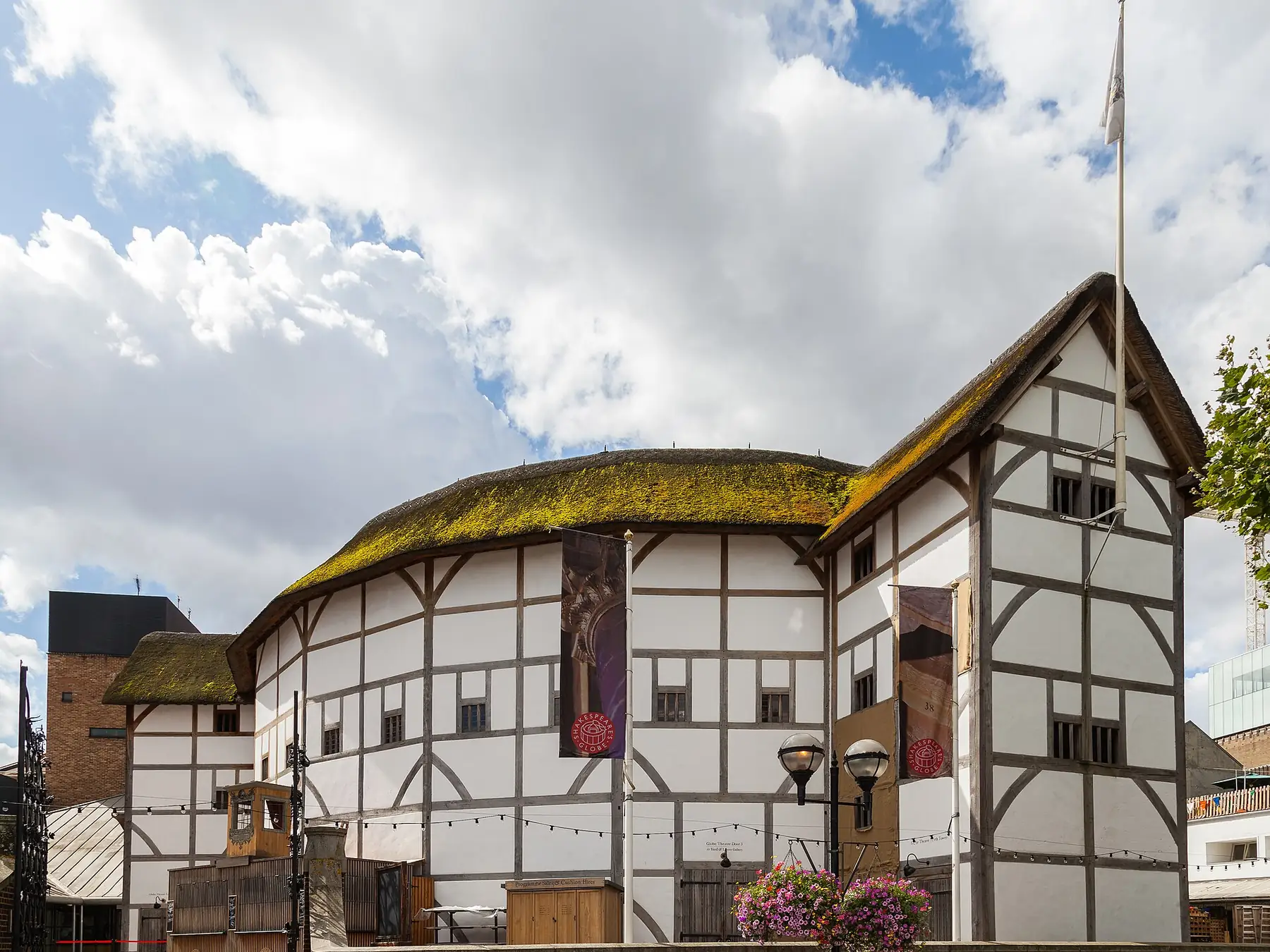
- The Globe Theatre opened in London in 1599.
- It was built by members of Shakespeare’s company.
- Timbers from an earlier theater called The Theatre were reused in its construction.
- The Globe stood south of the River Thames.
- Its central yard was open to the sky.
- Standing spectators in the yard paid cheaper admission.
- They are often called groundlings in modern discussions.
- Covered galleries offered more expensive seating.
- Performances usually took place in daylight.
- The stage projected into the audience area.
- Little scenery was needed because dialogue helped establish location.
- The first Globe burned down in 1613.
- A theatrical cannon effect during Henry VIII ignited the thatched roof.
- No deaths are known from the fire.
- The Globe was rebuilt and reopened the following year.
Shakespeare’s plays
- Shakespeare wrote comedies, histories, tragedies, and genre-blending plays.
- His exact play count depends partly on how scholars treat collaborations.
- Modern editions commonly include around 38 plays.
- Romeo and Juliet is one of his best-known tragedies.
- Hamlet is his longest play by many common text measures.
- Macbeth is among his shortest tragedies.
- A Midsummer Night’s Dream blends romance, comedy, magic, and theater jokes.
- King Lear centers on family, power, aging, and catastrophic misjudgment.
- Othello explores jealousy, manipulation, trust, and race.
- The Tempest is one of the later plays written largely by Shakespeare.
- Shakespeare frequently borrowed plots from chronicles, poems, translations, and earlier stories.
- Borrowing plots was normal Renaissance practice rather than literary theft in the modern sense.
- His innovation often lies in character, language, structure, and transformation of sources.
- Some plays were collaborative works with other playwrights.
- Modern scholarship increasingly recognizes collaboration as a normal feature of Shakespeare’s theater world.
Sonnets and famous language
- A collection of 154 Shakespeare sonnets was published in 1609.
- Most use a 14-line form now called the Shakespearean sonnet.
- The usual rhyme scheme is ABAB CDCD EFEF GG.
- The final rhyming couplet often turns or sharpens the poem’s idea.
- The sonnets address themes including love, beauty, time, jealousy, mortality, and poetry.
- Scholars debate the identities behind figures such as the Fair Youth and Dark Lady.
- No consensus identifies them with certainty.
- Shakespeare’s vocabulary was extremely large.
- He used many words that were rare, new, or newly fashionable in print.
- Popular lists often claim Shakespeare personally invented thousands of English words.
- That claim is too simplistic because surviving texts cannot prove who first spoke a word.
- Shakespeare did help popularize many words and expressions.
- Modern English speakers still quote phrases from his plays without realizing it.
- His language blends formal rhetoric with jokes, slang, insults, puns, and invented compounds.
- Wordplay is one reason Shakespeare can be difficult to translate without losing multiple meanings.
The First Folio saved many plays
- Shakespeare died in 1616.
- Many plays had been printed individually during his lifetime.
- Others had never appeared in print.
- In 1623, colleagues John Heminges and Henry Condell published a collected edition.
- The book is known as the First Folio.
- Its formal title begins Mr. William Shakespeare’s Comedies, Histories, & Tragedies.
- The First Folio contains 36 plays.
- About half had not previously been printed.
- Without the Folio, works such as Macbeth and Julius Caesar might have been lost.
- Printing a huge folio volume was expensive and technically demanding.
- Different surviving copies contain small printing variations.
- Typesetters corrected pages while printing was already underway.
- The engraved title portrait was made by Martin Droeshout.
- Ben Jonson praised the portrait’s likeness in a poem printed with the book.
- The Folger Shakespeare Library holds the world’s largest collection of First Folios.
Ten surprising Shakespeare facts
- Shakespeare’s actual birthday is unknown.
- He spent several important years almost completely missing from surviving records.
- He became wealthy partly because he owned a share of his theater company.
- The Globe literally burned down because of a stage cannon effect.
- Half the plays in the First Folio had not been printed before that book appeared.
- Claims that Shakespeare “invented thousands of words” oversimplify how language history works.
- His famous “second-best bed” bequest to Anne may not have been the insult modern readers imagine.
- No verified recording, diary, or personal letter lets us hear Shakespeare explain his own plays.
- The authorship conspiracy theories have not displaced the strong documentary evidence identifying Shakespeare as the writer.
- For more British history, explore our United Kingdom facts and History facts.
Quick Shakespeare FAQ
When was Shakespeare born?
His exact birth date is unknown. He was baptized on April 26, 1564, and April 23 is traditionally celebrated as his birthday.
How many plays did Shakespeare write?
Modern collections usually include around 38 plays, but the exact number depends on how scholars count collaborations and disputed works.
Did Shakespeare invent thousands of words?
Not in the simple way the claim is often presented. His works contain early recorded uses of many words, but surviving documents cannot prove he personally created every one.
Why is the First Folio important?
The 1623 collection preserved 36 plays, including roughly half that had never been printed before. Several masterpieces might otherwise have disappeared.
Did Shakespeare leave his wife only his second-best bed?
His will specifically mentions the second-best bed, but Anne also had legal marital rights. Historians debate the bequest’s meaning, and it cannot safely be treated as a proven insult.

Ellie is the owner and sole author of Fun Facts, combining her mechanical engineering background with years of research-driven writing to deliver facts you can trust. Every article is thoroughly fact-checked and routinely updated as new science and sources emerge to keep information accurate and current. Her mission is to make learning delightful while upholding high standards of reliability and transparency.