
The United Kingdom packs four countries, thousands of islands, ancient castles, two giant parliamentary chambers, more accents than many visitors expect, and enough quirky traditions to fill a royal carriage. It also gets confused constantly with England, Great Britain, and the British Isles. These 145 UK facts untangle the geography while exploring history, government, nature, inventions, food, sports, language, transport, and culture.
United Kingdom basics
- The country’s full name is the United Kingdom of Great Britain and Northern Ireland.
- It is commonly shortened to the United Kingdom or UK.
- The UK contains England, Scotland, Wales, and Northern Ireland.
- London is the capital of both England and the United Kingdom.
- Edinburgh is Scotland’s capital.
- Cardiff is Wales’s capital.
- Belfast is Northern Ireland’s capital.
- The UK lies off the northwestern coast of mainland Europe.
- It includes the large island of Great Britain and part of the island of Ireland.
- The UK also includes many smaller islands.
- The Atlantic Ocean lies to the west and north.
- The North Sea lies east of Great Britain.
- The English Channel separates southern England from northern France.
- The Irish Sea separates much of Great Britain from Ireland.
- The UK uses the pound sterling as its currency.
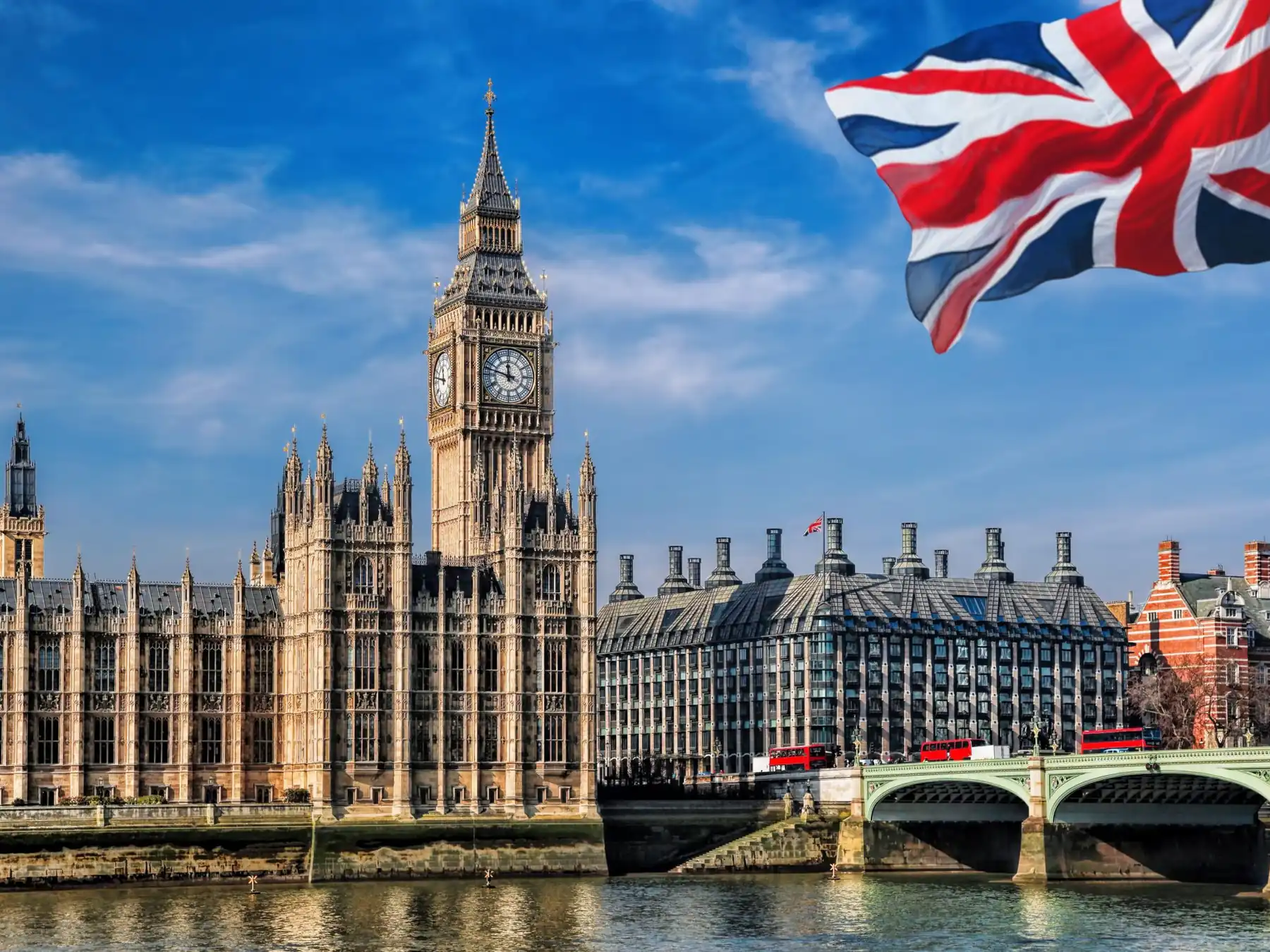
UK, Great Britain, and England are different
- England is only one part of the United Kingdom.
- Great Britain is a geographic island, not the full UK.
- Great Britain contains England, Scotland, and Wales.
- Northern Ireland is part of the UK but not part of Great Britain.
- The word Britain is sometimes used informally for the United Kingdom.
- That informal usage can create confusion in precise geographic discussions.
- The British Isles is a geographic term for a larger island group.
- The British Isles include Great Britain, Ireland, and many smaller surrounding islands.
- The Republic of Ireland is not part of the United Kingdom.
- The Isle of Man is not part of the United Kingdom either.
- The Channel Islands are also not part of the UK.
- The Isle of Man and Channel Islands are Crown Dependencies.
- Crown Dependencies govern themselves in many domestic matters.
- The UK government is responsible for certain international and defense matters for Crown Dependencies.
- Using the correct term instantly makes British geography much easier to understand.
The geography is surprisingly varied
- England contains rolling lowlands, uplands, moors, cliffs, wetlands, and mountain districts.
- Scotland contains most of the UK’s highest mountains.
- Ben Nevis is the highest mountain in the UK.
- Its summit reaches 1,345 meters, or 4,413 feet.
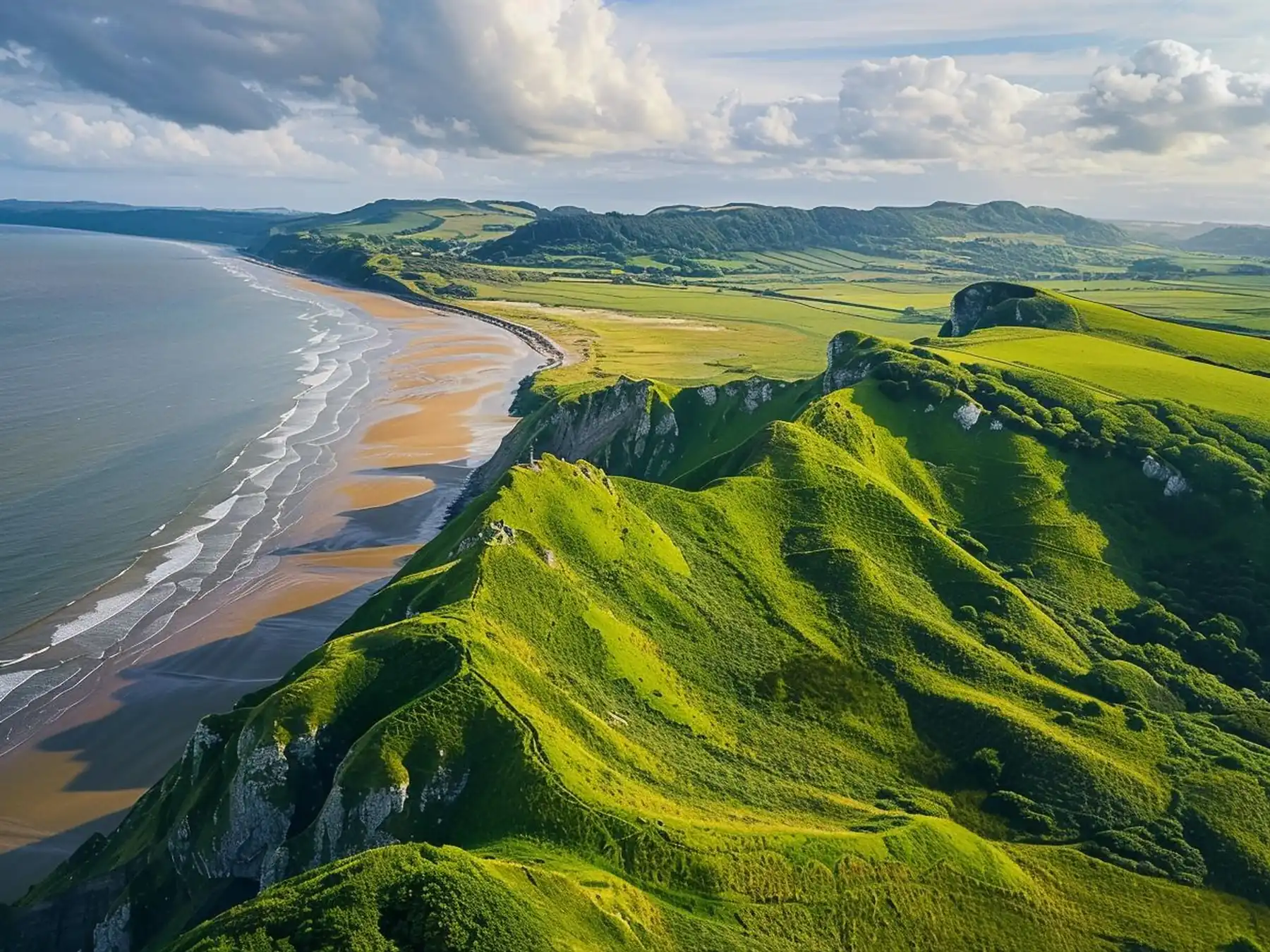
- Wales is famous for rugged mountains and a deeply indented coastline.
- Snowdon, or Yr Wyddfa, is the highest mountain in Wales.
- Northern Ireland includes mountains, glens, farmland, coast, and large freshwater lakes.
- Lough Neagh is the largest freshwater lake in the UK by surface area.
- The River Severn is the longest river in the United Kingdom.
- It begins in Wales and flows through western England.
- The River Thames flows through London.
- The Thames has been central to London’s trade and growth for centuries.
- The UK coastline is extremely long relative to the country’s area.
- No location in Great Britain is extremely far from the sea by continental standards.
- Glaciers shaped many British valleys and lake landscapes during the Ice Ages.
The UK has thousands of islands
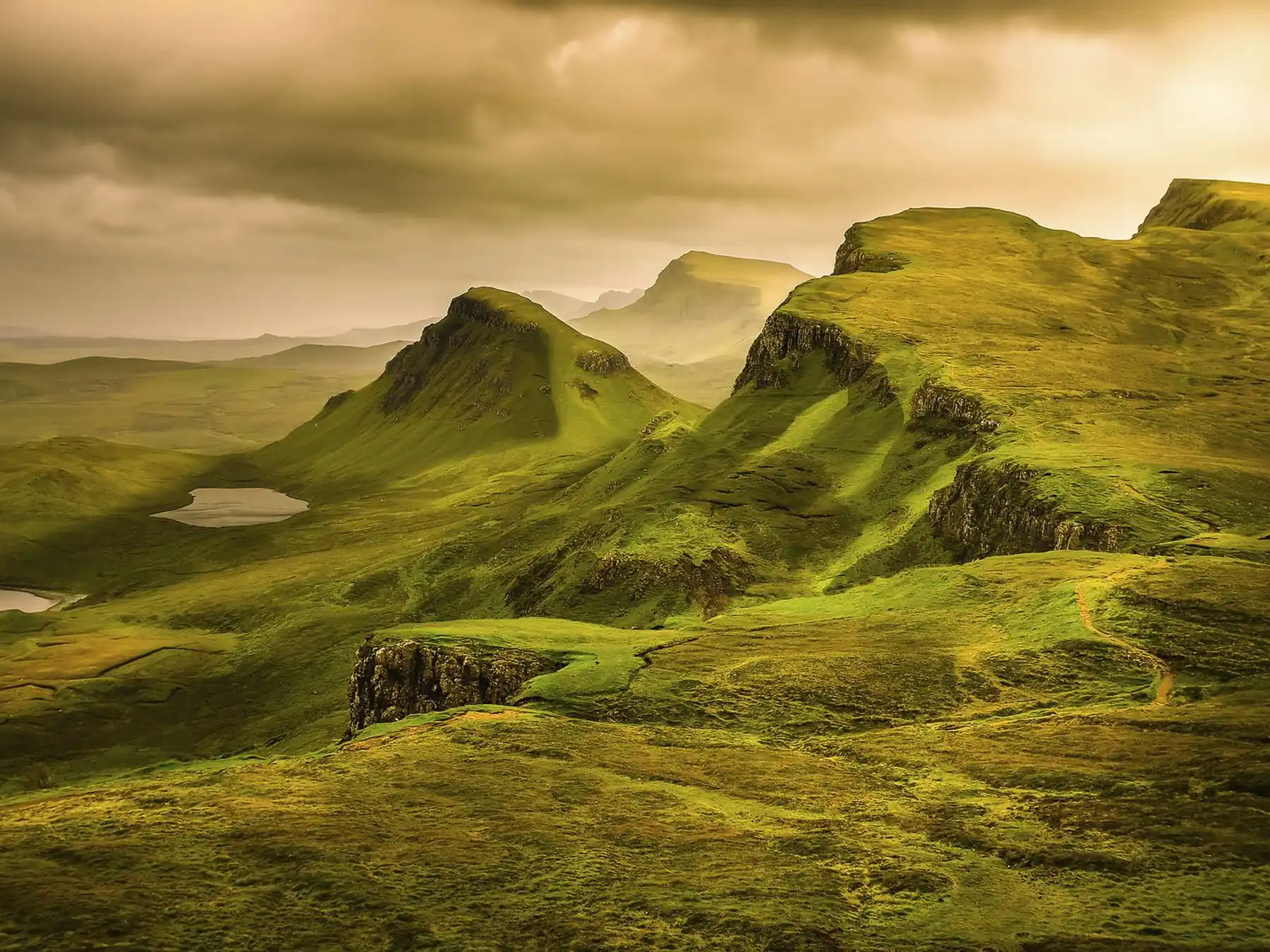
- Scotland contains hundreds of offshore islands.
- The Hebrides lie off Scotland’s west coast.
- The Inner and Outer Hebrides form separate island groups.
- Skye is one of the best-known Inner Hebrides islands.
- Lewis and Harris form one large island despite having two traditional names.
- The Orkney Islands lie north of mainland Scotland.
- The Shetland Islands lie even farther north.
- Shetland is closer to Norway than London is.
- The Isle of Wight lies off England’s south coast.
- Anglesey, or Ynys Môn, lies off northwest Wales.
- Causeways and bridges connect some islands directly to the mainland.
- Others depend heavily on ferries or aircraft.
- Island isolation helped preserve distinctive languages, dialects, music, and traditions.
- Many seabird colonies thrive on remote British cliffs and islands.
- Island geography gives the UK a maritime identity far larger than its land area suggests.
A very condensed UK history
- People have lived in the British Isles since prehistoric times.
- Stonehenge was built in stages beginning more than 4,000 years ago.
- The Roman conquest of Britain began in AD 43.
- Roman rule never permanently conquered all of modern Scotland.
- Hadrian’s Wall marked a major frontier of Roman Britain.
- Roman rule ended in Britain during the early fifth century.
- Anglo-Saxon kingdoms later developed across much of England.
- Viking raids began striking Britain in the late eighth century.
- Vikings eventually settled large areas of England and parts of Scotland and Ireland.
- William the Conqueror defeated King Harold II at Hastings in 1066.
- The Norman Conquest transformed English landholding, government, architecture, and language.
- England and Wales became politically integrated through centuries of conquest and legislation.
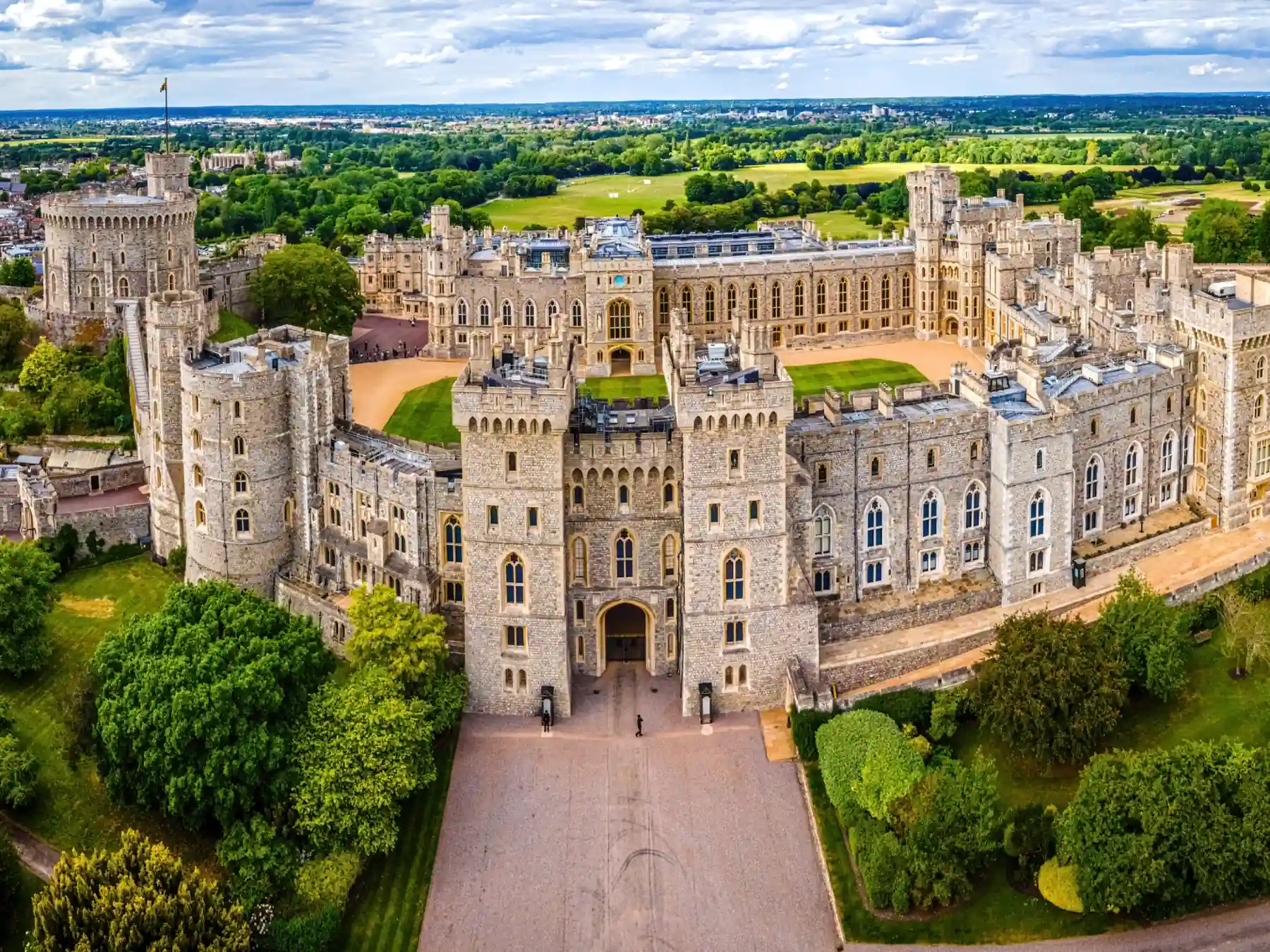
- The crowns of England and Scotland were united under James VI and I in 1603.
- The Acts of Union created the Kingdom of Great Britain in 1707.
- The current United Kingdom evolved through later union, partition, and constitutional change.
Parliament and monarchy
- The United Kingdom is a constitutional monarchy.
- It is also a parliamentary democracy.
- The monarch serves as head of state.
- The prime minister heads the government.
- The UK Parliament meets at the Palace of Westminster in London.
- Parliament has two chambers.
- The House of Commons is the elected chamber.
- The House of Lords is the unelected second chamber.
- Members of the House of Commons are called MPs.
- General elections choose MPs for parliamentary constituencies.
- The government must retain the confidence of the House of Commons.
- Scotland, Wales, and Northern Ireland have devolved legislatures or institutions.
- Devolution gives those nations authority over specified domestic policy areas.
- England does not have a single devolved national parliament equivalent to Scotland’s.
- The UK Parliament’s official guide to how Parliament works explains the constitutional structure.
Languages and accents
- English is the dominant language across the United Kingdom.
- Welsh remains a living Celtic language.
- Welsh and English have official status in Wales.
- Scottish Gaelic is another Celtic language spoken especially in parts of Scotland.
- Scots is a Germanic language or language variety with a long literary tradition.
- Irish is spoken by communities in Northern Ireland.
- Ulster Scots is also recognized in Northern Ireland.
- Cornish is a revived Celtic language from Cornwall.
- British English itself contains enormous regional variation.
- A Liverpool accent is very different from a Newcastle accent.
- Glasgow, Belfast, Cardiff, Birmingham, London, and rural communities all have distinctive speech patterns.
- Received Pronunciation is only one British accent, not the way all British people speak.
- British and American English differ in vocabulary, spelling, pronunciation, and usage.
- A “biscuit” in Britain usually overlaps with what Americans call a cookie.
- A British “holiday” commonly means what Americans call a vacation.
Food and drink
- Fish and chips became a famous British working-class meal during the 19th century.
- Traditional fish choices include cod and haddock.
- British chips are thicker than typical American french fries.
- A full English breakfast can include eggs, bacon, sausage, beans, mushrooms, tomatoes, and toast.
- Scottish breakfast traditions often add regional items such as tattie scones.
- Welsh rarebit is toasted bread covered with a savory cheese sauce.
- Despite its name, Welsh rarebit contains no rabbit.
- Sunday roast traditionally combines roasted meat, potatoes, vegetables, gravy, and accompaniments.
- Yorkshire pudding is a baked batter dish rather than a sweet dessert.
- Tea became deeply embedded in British social life through empire and global trade.
- Afternoon tea is different from simply drinking a cup of tea in the afternoon.
- It traditionally includes tea with small sandwiches, scones, cakes, or pastries.
- Scotland is famous for whisky spelled without the second “e.”
- British pubs have long served as neighborhood social spaces as well as drinking establishments.
- Regional British food is much more varied than the stereotype of fish and chips suggests.
Sports, inventions, and culture
- Modern association football rules were codified in England during the 19th century.
- Wimbledon is the oldest major tennis tournament.
- Golf developed in Scotland into its recognizable modern form.
- Rugby football takes its name from Rugby School in England.
- Cricket developed in England and spread throughout the British Empire.
- The Industrial Revolution began in Britain during the 18th century.
- James Watt’s steam-engine improvements helped transform industry and transport.
- Alexander Graham Bell was born in Scotland.
- Tim Berners-Lee, inventor of the World Wide Web, was born in London.
- British scientists played foundational roles in physics, chemistry, evolution, computing, and medicine.
- William Shakespeare became one of the world’s most influential playwrights.
- The Beatles formed in Liverpool.
- The BBC began regular radio broadcasting in the 1920s.
- The London Underground opened its first line in 1863.
- It became the world’s first underground passenger railway system.
Ten surprising UK facts
- Great Britain does not include Northern Ireland.
- The Isle of Man is not actually part of the United Kingdom.
- The UK contains four national capitals.
- Shetland sits geographically much closer to Scandinavia than many visitors expect.
- Welsh has official status and remains part of everyday public life in Wales.
- The famous British Yorkshire pudding is savory batter, not custard dessert.
- The world’s first underground passenger railway opened in London in 1863.
- Scotland uses “whisky,” while Irish whiskey usually includes an “e.”
- Britain’s accents can change dramatically across surprisingly short distances.
- For more regional trivia, explore our Ireland facts and Culture facts.
Quick United Kingdom FAQ
What countries make up the United Kingdom?
England, Scotland, Wales, and Northern Ireland.
Is Great Britain the same as the UK?
No. Great Britain is the island containing England, Scotland, and Wales. The United Kingdom also includes Northern Ireland.
What is the capital of the UK?
London. It is also the capital of England, while Edinburgh, Cardiff, and Belfast are the capitals of Scotland, Wales, and Northern Ireland.
Does the UK have a written constitution?
It does not have one single codified constitutional document. Its constitutional system draws from statutes, court decisions, conventions, treaties, and other sources.
What currency does the UK use?
The pound sterling, commonly written with the £ symbol.

Ellie is the owner and sole author of Fun Facts, combining her mechanical engineering background with years of research-driven writing to deliver facts you can trust. Every article is thoroughly fact-checked and routinely updated as new science and sources emerge to keep information accurate and current. Her mission is to make learning delightful while upholding high standards of reliability and transparency.