
Wales has more castles per square mile than almost anywhere in Europe, a living Celtic language, mountains carved by glaciers, a flag with a red dragon, a national sport played in roaring stadiums, and a patron saint celebrated with daffodils and leeks. It is one of the four countries of the United Kingdom but has its own devolved parliament, lawmaking powers, education traditions, literature, music, and identity. These 145 Wales facts explore Cardiff, Welsh language, castles, mountains, dragons, devolution, coal, rugby, music, food, national symbols, coastlines, and the history behind Cymru.
Wales basics
- Wales is one of the four constituent countries of the United Kingdom.
- Cardiff is its capital and largest city.
- Wales shares a land border with England.
- The Irish Sea lies to the north and west.
- The Bristol Channel lies to the south.
- The Welsh name for Wales is Cymru.
- Welsh is called Cymraeg.
- English and Welsh are both widely used in public life.
- Wales has its own devolved parliament, the Senedd.
- The Welsh Government handles many domestic policy areas.
- Wales has its own education system within the UK.
- Welsh law has developed increasingly distinct features since devolution.
- The red dragon is the central symbol on the Welsh flag.
- Wales is mountainous compared with much of England.
- The official Welsh Government describes itself as the devolved government for Wales.
Cymru and the Welsh language
- Welsh belongs to the Celtic language family.
- It is closely related to Breton and Cornish.
- Welsh is not a dialect of English.
- Its history reaches back to the Brittonic languages spoken in ancient Britain.
- The letter w can function as a vowel in Welsh.
- The letter y can also represent vowel sounds.
- Welsh uses the digraph ll for a distinctive voiceless lateral sound.
- Place names can look long to English speakers because Welsh builds words transparently from smaller elements.
- Llan commonly refers to a church or sacred enclosure in place names.
- Aber often refers to a river mouth or confluence.
- Welsh survived centuries of pressure from English-language institutions.
- The 19th-century Welsh Not became a symbol of punishment for speaking Welsh in some schools.
- Modern policy actively supports Welsh-language education and public services.
- The Welsh Government has a goal of reaching one million Welsh speakers by 2050.
- Welsh is visible on road signs, public buildings, television, radio, schools, and digital services throughout the country.
The red dragon has ancient roots
- The Welsh flag shows a red dragon on a green-and-white field.
- The dragon is called Y Ddraig Goch in Welsh.
- That means the Red Dragon.
- Dragon symbolism in Britain dates back many centuries.
- Medieval Welsh traditions connected a red dragon with the Britons.
- The story of a red dragon and white dragon appears in medieval legend.
- Geoffrey of Monmouth helped popularize the tale in the 12th century.
- The red dragon later became associated with Welsh rulers.
- Henry Tudor used a red dragon banner at the Battle of Bosworth in 1485.
- Henry became King Henry VII.
- The green-and-white colors are associated with the Tudor dynasty.
- The modern flag was officially recognized in its present form in 1959.
- Wales is the only UK country whose national flag does not appear within the Union Flag.
- That is because Wales had already been politically incorporated with England when the earlier union flags were designed.
- A mythical animal therefore represents a very real and persistent national identity.
Mountains shaped by ice
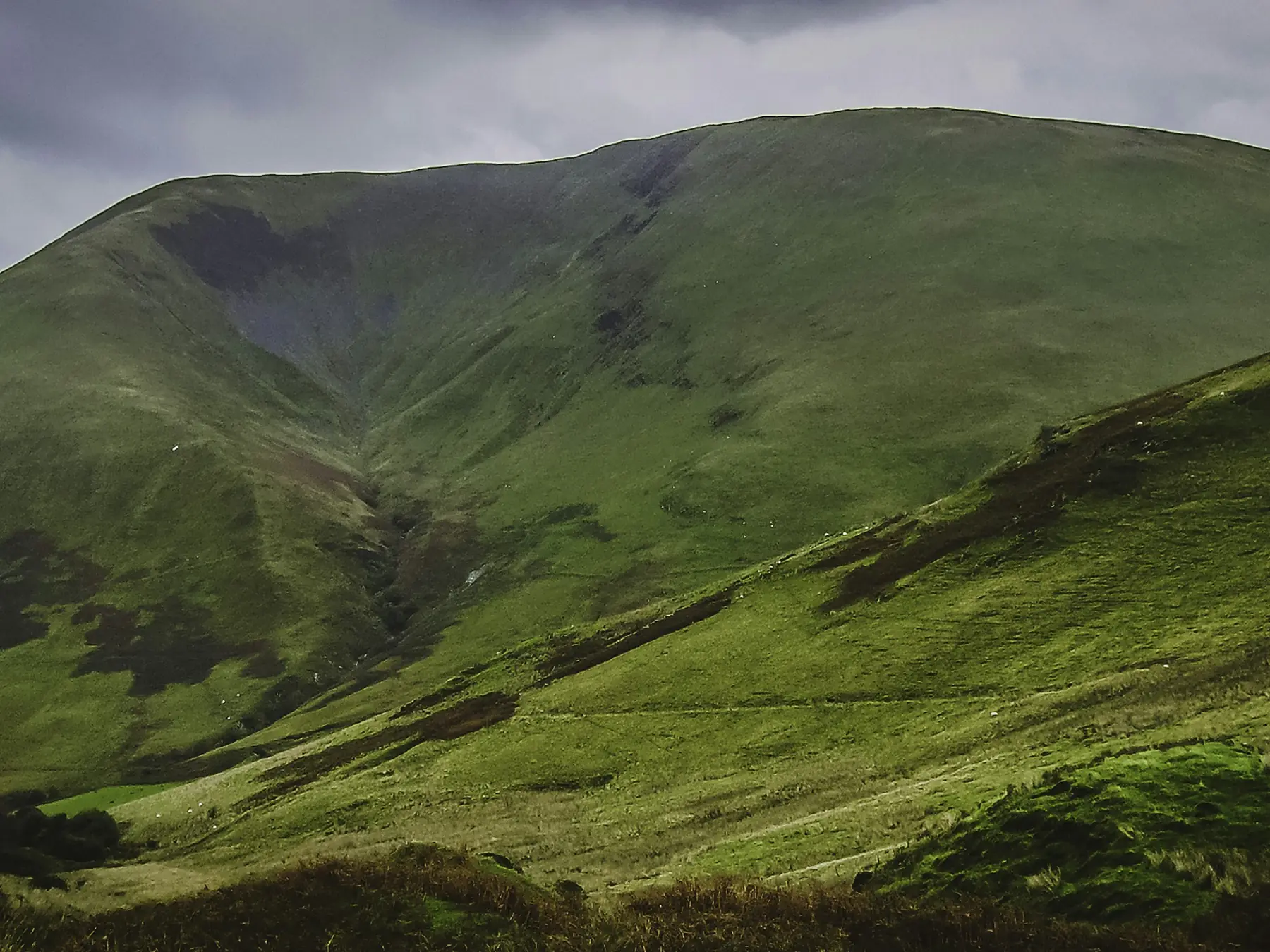
- Wales contains several mountain ranges.
- Eryri, also known in English as Snowdonia, contains the country’s highest peaks.
- Yr Wyddfa, also known as Snowdon, is the highest mountain in Wales.
- It rises to 1,085 meters.
- The Welsh name Yr Wyddfa is increasingly used officially.
- Glaciers carved many Welsh valleys during the last ice age.
- Cwm is the Welsh word for a mountain hollow or cirque.
- The English geological term cirque is often called a cwm in Welsh contexts.
- U-shaped valleys reveal former glacier movement.
- Sharp ridges and lakes also record glacial erosion.
- Pen y Fan is the highest peak in South Wales.
- It lies in Bannau Brycheiniog National Park.
- The park was formerly widely branded in English as Brecon Beacons National Park.
- Wales has three national parks.
- Its mountains are not extremely high globally, but steep relief and Atlantic weather can make them serious environments.
A land full of castles
- Wales contains hundreds of castle sites.
- Some were built by native Welsh rulers.
- Others were built by Norman and English conquerors.
- Edward I constructed a famous ring of castles after conquering Wales in the late 13th century.
- Caernarfon Castle is one of the most imposing.
- Conwy Castle is another major Edwardian fortress.
- Harlech Castle stands on a dramatic rocky site.
- Beaumaris Castle was never fully completed.
- The Castles and Town Walls of King Edward in Gwynedd form a UNESCO World Heritage property.
- Cardiff Castle combines Roman, Norman, medieval, and Victorian layers.
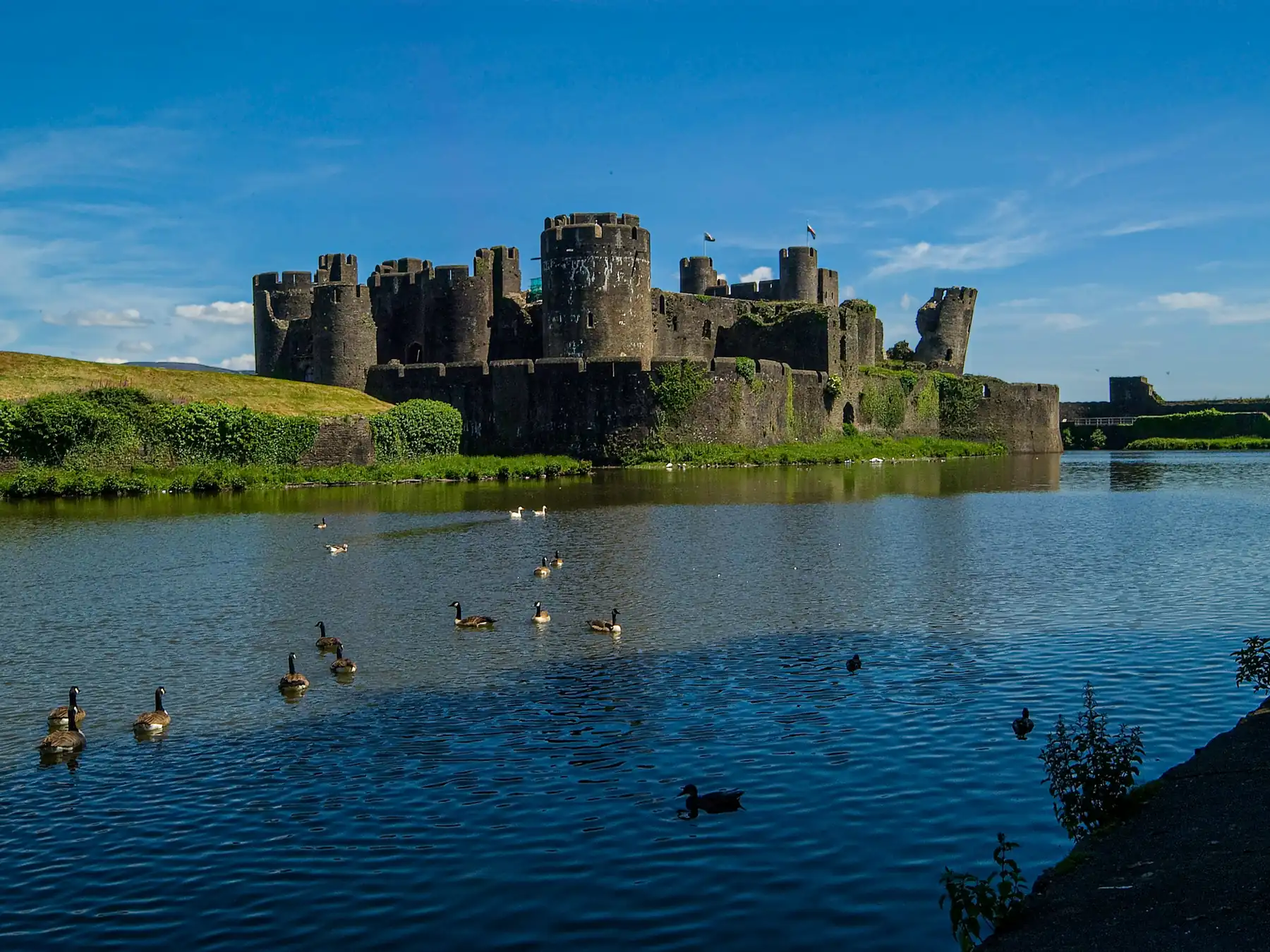
- Caerphilly Castle is one of Britain’s largest castles.
- Its leaning tower tilts more dramatically than many visitors expect.
- Castles were military structures but also symbols of political authority.
- The density of surviving fortifications reflects centuries of conflict over control of Wales.
- Calling Wales simply “the land of castles” is tourist shorthand, but the remarkable concentration is genuinely rooted in its contested history.
Wales and England became legally intertwined
- Medieval Wales consisted of multiple kingdoms and principalities.
- Princes of Gwynedd became especially powerful.
- Llywelyn ap Gruffudd was recognized as Prince of Wales in the 13th century.
- Edward I of England conquered the last independent Welsh principality.
- Llywelyn died in 1282.
- The English crown later used the title Prince of Wales for heirs apparent.
- Owain Glyndŵr led a major Welsh revolt beginning in 1400.
- He was proclaimed Prince of Wales by his supporters.
- His revolt eventually failed militarily.
- The Laws in Wales Acts of the 16th century integrated Wales more fully into the English legal and administrative system.
- Welsh parliamentary representation was established at Westminster.
- English became dominant in official legal administration.
- Welsh identity and language nevertheless survived.
- Wales did not disappear culturally merely because institutions were politically integrated.
- Modern devolution restored a distinct national legislature centuries later.
Devolution changed Welsh government
- Wales voted narrowly for devolution in a 1997 referendum.
- The Government of Wales Act 1998 created the National Assembly for Wales.
- The Assembly began work in 1999.
- Its initial powers were more limited than those of today’s Senedd.
- The Government of Wales Act 2006 separated the legislature and executive more clearly.
- Welsh voters approved expanded lawmaking powers in a 2011 referendum.
- The legislature later gained tax powers.
- The Wales Act 2017 established a reserved-powers model.
- Under that model, the Senedd can legislate unless a matter is specifically reserved to Westminster.
- The National Assembly changed its name to Senedd Cymru, or Welsh Parliament, in 2020.
- The Senedd makes laws in areas including health, education, transport, housing, and the environment within devolved competence.
- Defense and foreign affairs remain reserved to the UK level.
- Devolution is therefore substantial but not full independence.
- Welsh elections use a distinct democratic system.
- Modern Welsh government is one of the clearest institutional expressions of Wales as a political nation within the United Kingdom.
Coal transformed South Wales
- South Wales became one of the world’s major industrial regions during the 19th century.
- Coal mining expanded dramatically.
- Welsh steam coal was prized for ships.
- Iron and steel industries grew around coalfields.
- Merthyr Tydfil became an early industrial center.
- Cardiff grew into a major coal-exporting port.
- Barry Docks were built to handle enormous coal traffic.
- Industrial towns attracted workers from rural Wales and beyond.
- Mining shaped communities, politics, music, sport, and class identity.
- Coal mining was dangerous.
- Disasters killed many workers.
- The 1966 Aberfan disaster occurred when a colliery spoil tip collapsed onto a village.
- It killed 144 people, including 116 children.
- Deep coal mining declined sharply in the late 20th century.
- Former industrial landscapes now balance heritage, regeneration, and the economic consequences of deindustrialization.
Rugby, singing, and national culture
- Rugby union is one of Wales’s most important spectator sports.
- The Welsh Rugby Union was founded in 1881.
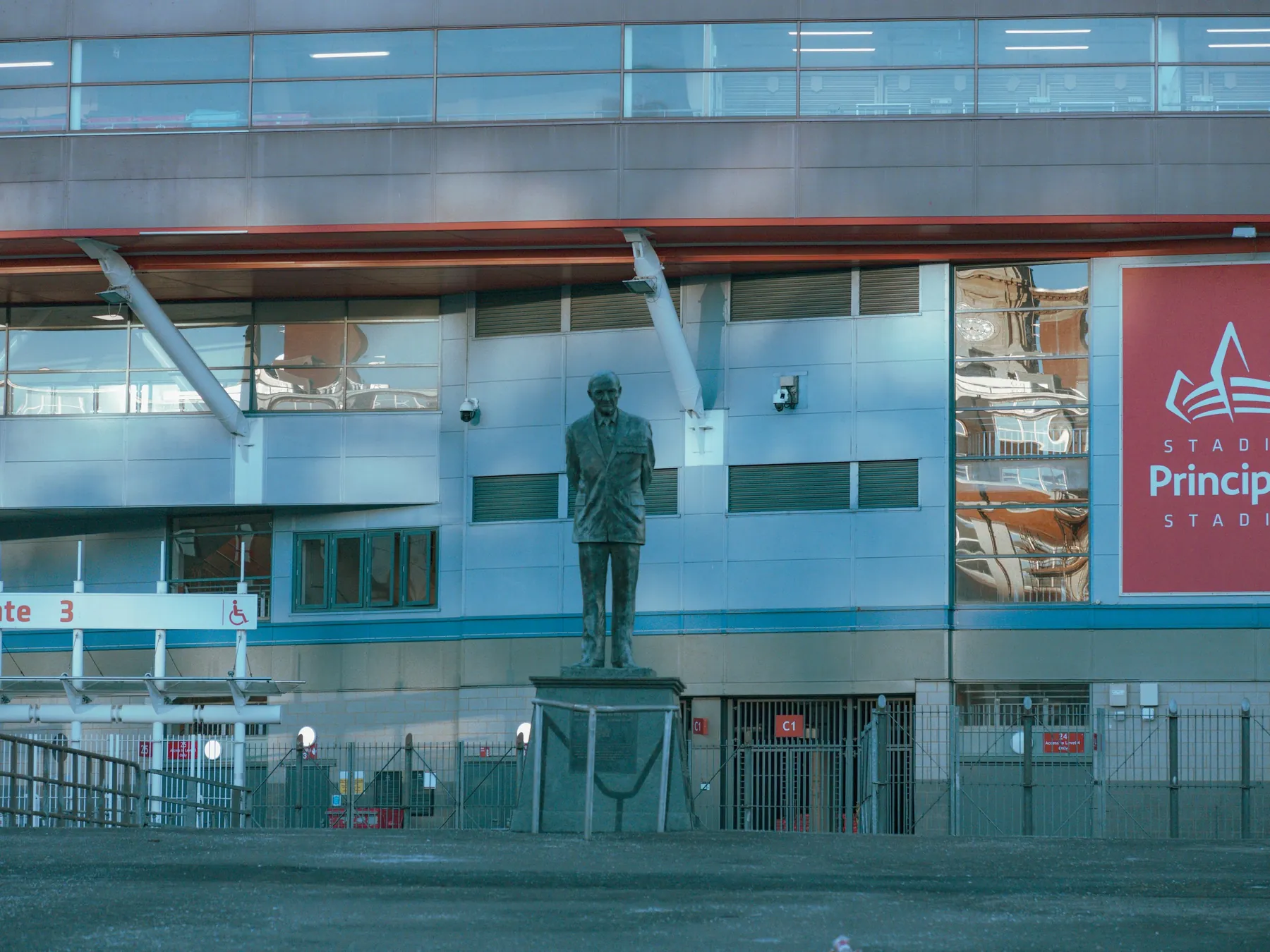
- The national team plays home matches at the Principality Stadium in Cardiff.
- Wales competes annually in the Six Nations Championship.
- Rugby became closely linked with industrial communities in South Wales.
- Football is also enormously popular.
- Wales qualified for its first FIFA World Cup in 1958.
- It returned to the World Cup in 2022.
- Wales has a strong choral tradition.
- Male voice choirs became particularly associated with mining communities.
- The national anthem is Hen Wlad Fy Nhadau, meaning Land of My Fathers.
- The song is traditionally sung in Welsh.
- The Eisteddfod is a major festival tradition celebrating poetry, music, performance, and language.
- The National Eisteddfod is conducted primarily through Welsh.
- Sport and song often merge at Welsh matches, making collective singing one of the most recognizable expressions of national identity.
Ten surprising Wales facts
- Wales’s national flag features a mythical red dragon.
- Welsh is a Celtic language, not a form of English.
- The letter w can be a vowel in Welsh.
- Wales has hundreds of castle sites from competing Welsh, Norman, and English powers.
- Its highest mountain is officially promoted increasingly by the Welsh name Yr Wyddfa.
- Wales regained a national legislature only in the modern devolution era.
- Cardiff’s rise was tied heavily to coal exports.
- The Welsh national anthem is commonly sung in Welsh at major sporting events.
- The daffodil and leek are both national symbols.
- For more UK trivia, explore our Scotland facts, England facts, and United Kingdom facts.
Quick Wales FAQ
What is the capital of Wales?
Cardiff, on the south coast.
Is Wales a country?
Yes. Wales is a constituent country of the United Kingdom with its own devolved parliament and government.
What language is spoken in Wales?
English is widely spoken and Welsh remains a living national language used in education, media, government, signage, and daily life.
What is Wales called in Welsh?
Cymru.
Why does Wales have a dragon on its flag?
The red dragon has deep roots in medieval British and Welsh legend and later became associated with Welsh rulers and national identity.

Ellie is the owner and sole author of Fun Facts, combining her mechanical engineering background with years of research-driven writing to deliver facts you can trust. Every article is thoroughly fact-checked and routinely updated as new science and sources emerge to keep information accurate and current. Her mission is to make learning delightful while upholding high standards of reliability and transparency.