
Scotland has ancient stone circles, medieval castles, volcanic city hills, hundreds of islands, whisky distilleries, golf courses, bagpipes, Gaelic traditions, dramatic Highlands, engineering inventions, and a national animal that does not actually exist. Its history includes independent kingdoms, wars with England, a shared monarchy, political union, industrial power, and modern devolution. These 145 Scotland facts explore Edinburgh, Glasgow, Highlands, islands, clans, Gaelic, castles, whisky, golf, inventions, Loch Ness, the unicorn, national symbols, and the complicated history behind tartan-covered stereotypes.
Scotland basics
- Scotland is one of the four constituent countries of the United Kingdom.
- Edinburgh is its capital.
- Glasgow is its largest city.
- Scotland occupies the northern part of Great Britain.
- It shares a land border with England.
- The Atlantic Ocean lies to the west and north.
- The North Sea lies to the east.
- Scotland includes hundreds of islands.
- Major island groups include the Hebrides, Orkney, and Shetland.
- English is the most widely spoken language.
- Scots is also spoken in many forms.
- Scottish Gaelic is a Celtic language with official recognition and revitalization efforts.
- Scotland has its own legal and education systems within the United Kingdom.
- The Scottish Parliament handles many devolved domestic matters.
- Scotland’s landscapes range from fertile Lowlands to some of Britain’s wildest mountains and coasts.
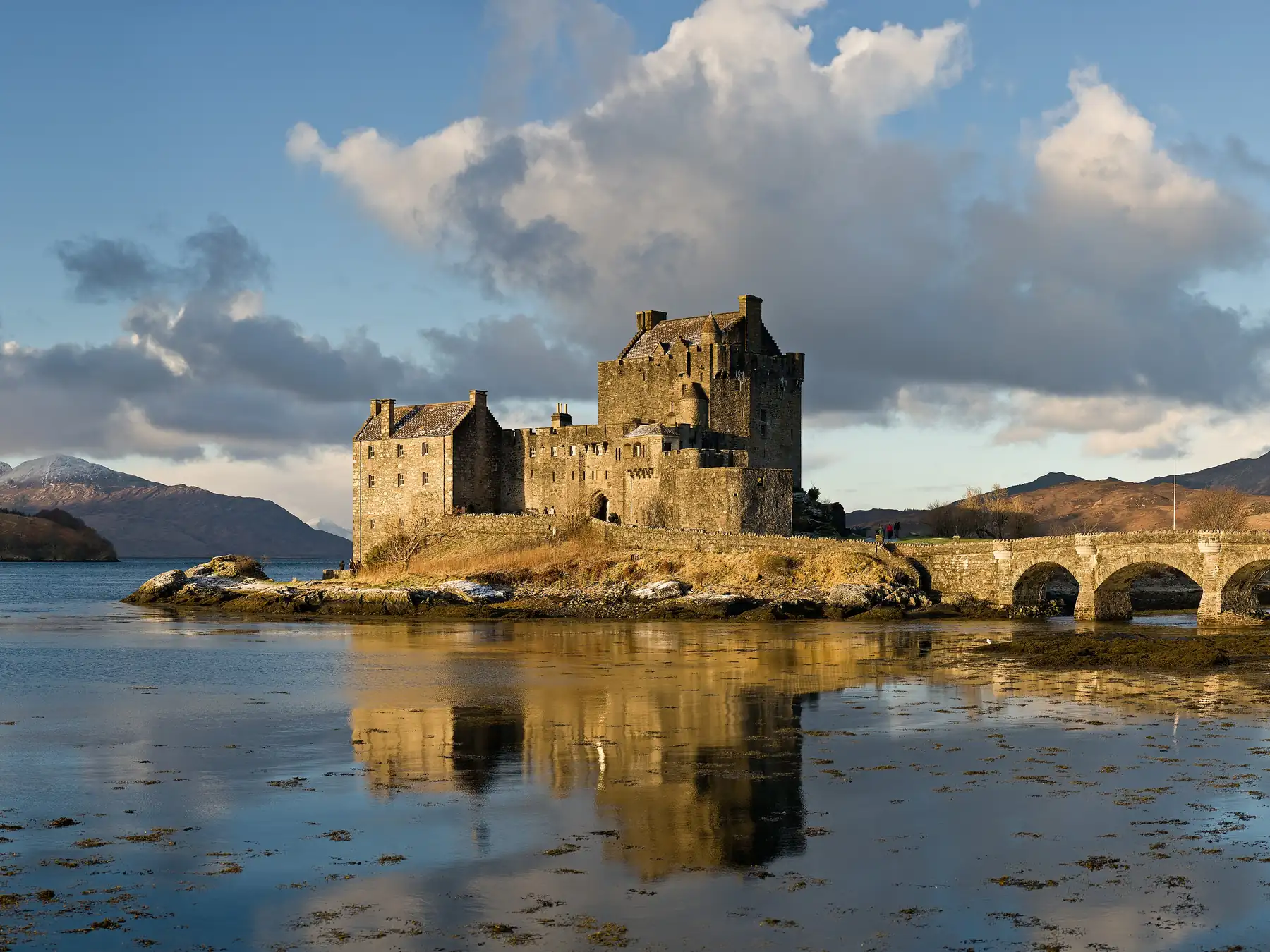
The Highlands were shaped by deep geology
- The Scottish Highlands contain ancient rocks.
- Some rocks in northwest Scotland are billions of years old.
- Mountain building folded and faulted the region over enormous timescales.
- Glaciers later carved deep valleys.
- Scottish valleys are commonly called glens.
- Long narrow lakes are called lochs.
- Loch Ness occupies part of the Great Glen.
- The Great Glen follows a major geological fault zone.
- Ben Nevis is the highest mountain in the United Kingdom.
- It rises to 1,345 meters.
- Ben Nevis is the remains of an ancient volcanic complex.
- Edinburgh Castle also sits on an extinct volcanic plug.
- Arthur’s Seat in Edinburgh is part of another ancient volcanic system.
- Scotland’s famous scenery is therefore a combination of volcanoes, tectonics, erosion, and repeated glaciation.
- The Highlands look timeless while actually recording some of Earth’s most violent geological history.
Hundreds of islands
- Scotland has more than 790 offshore islands by common geographic counts.
- Only a fraction are permanently inhabited.
- The Inner and Outer Hebrides lie off the west coast.
- Skye is one of the best-known Inner Hebridean islands.
- Lewis and Harris are geographically one island despite having two traditional names and regions.
- The Outer Hebrides are also called the Western Isles.
- Orkney lies north of the Scottish mainland.
- Shetland lies even farther north.
- Shetland is geographically closer to Norway than many people realize.
- Norse influence remains strong in Orkney and Shetland place names.
- The islands were under Norwegian and Danish-Norwegian rule for centuries.
- They became part of Scotland during the 15th century.
- Island communities developed distinctive dialects, music, crafts, farming, and fishing traditions.
- Ferries remain essential transportation.
- Scotland’s islands make its coastline extraordinarily long and ecologically diverse.
Ancient Scotland before Scotland
- Humans lived in Scotland thousands of years before the country existed politically.
- Skara Brae in Orkney is a remarkably preserved Neolithic settlement.
- It was occupied roughly 5,000 years ago.
- Its stone houses contain built-in furniture.
- Orkney also contains the Ring of Brodgar stone circle.
- Maeshowe is a large chambered tomb.
- These sites form part of the Heart of Neolithic Orkney UNESCO property.
- Roman armies invaded parts of what is now Scotland.
- Hadrian’s Wall was built in northern England rather than on the modern Scottish border.
- The Romans later built the Antonine Wall farther north.
- It crosses Scotland’s Central Belt.
- Roman sources described northern peoples including the Picts.
- The Picts left distinctive carved symbol stones.
- Gaelic-speaking Scots from Dál Riata established power in western Scotland.
- Medieval Scotland emerged from interactions among Picts, Gaels, Britons, Angles, Norse settlers, and others.
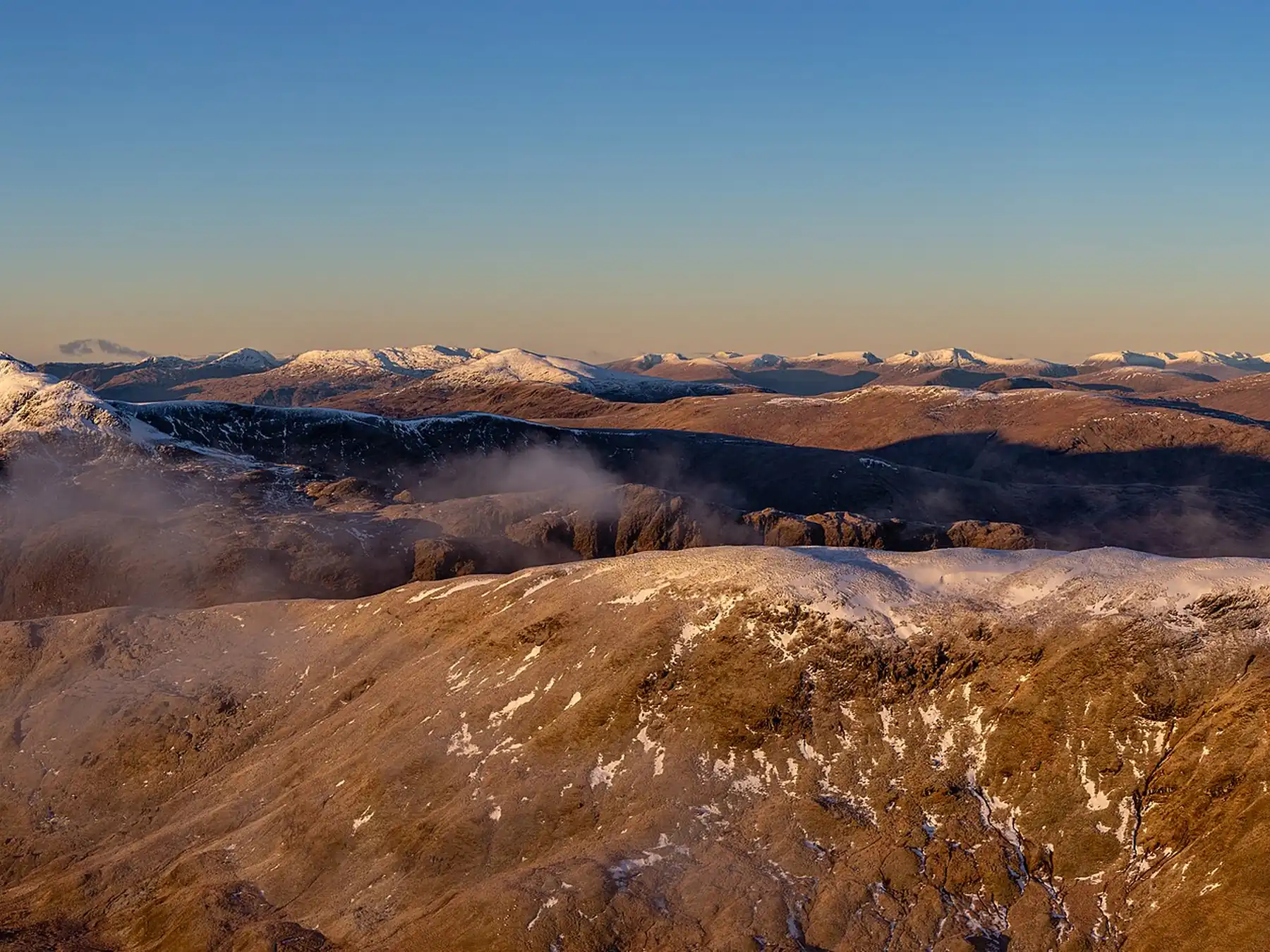
Wars of Independence
- Scotland and England were separate medieval kingdoms.
- A succession crisis drew English king Edward I deeply into Scottish politics.
- Wars of Scottish Independence followed.
- William Wallace became one of the best-known resistance leaders.
- He helped defeat an English army at the Battle of Stirling Bridge in 1297.
- Wallace was later captured and executed in London.
- Robert the Bruce became King of Scots in 1306.
- His forces defeated a larger English army at Bannockburn in 1314.
- The victory strengthened Scottish independence.
- The Declaration of Arbroath was sent to Pope John XXII in 1320.
- It argued for recognition of Scottish independence and Bruce’s kingship.
- England eventually recognized Scottish independence through the Treaty of Edinburgh-Northampton in 1328.
- Later conflicts continued between the kingdoms.
- Modern films often simplify or alter events dramatically.
- Scottish medieval history is more complicated than one heroic rebellion against one permanent enemy.
One crown, then one parliament
- Elizabeth I of England died without children in 1603.
- James VI of Scotland inherited the English throne.
- He became James I of England while remaining James VI of Scotland.
- This event is called the Union of the Crowns.
- Scotland and England still remained separate kingdoms with separate parliaments.
- Political union came more than a century later.
- The Acts of Union took effect in 1707.
- They created the Kingdom of Great Britain.
- The Scottish and English parliaments were replaced by a Parliament of Great Britain at Westminster.
- Scotland retained its distinct legal system.
- It also retained a distinct established church and education traditions.
- The union was controversial.
- Economic pressures, political strategy, security, and the failed Darien colonial scheme all influenced debate.
- A new devolved Scottish Parliament opened in 1999.
- Modern Scotland therefore combines membership in the United Kingdom with powerful institutions of its own.
Tartan and clans are more complicated than souvenir shops suggest
- Tartan is a woven pattern of crossing colored bands.
- Different tartans are now associated with clans, regions, organizations, and families.
- People in Scotland wore patterned wool long before modern clan-tartan systems.
- But the idea that every medieval clan always had one fixed official tartan is inaccurate.
- Many modern clan tartans were standardized or popularized during the 18th and 19th centuries.
- Highland dress was restricted after the Jacobite rising of 1745.
- The Dress Act of 1746 targeted aspects of Highland clothing.
- The restriction was repealed in 1782.
- Romantic interest in Highland culture grew afterward.
- King George IV’s 1822 visit to Edinburgh encouraged tartan pageantry.
- Sir Walter Scott helped organize the event.
- Victorian enthusiasm expanded clan-tartan associations.
- Kilts became powerful symbols of Scottish identity.
- Lowland Scots historically did not all dress like Highland clansmen.
- Modern tartan culture is authentic living tradition even though some supposedly ancient rules are much newer than people assume.
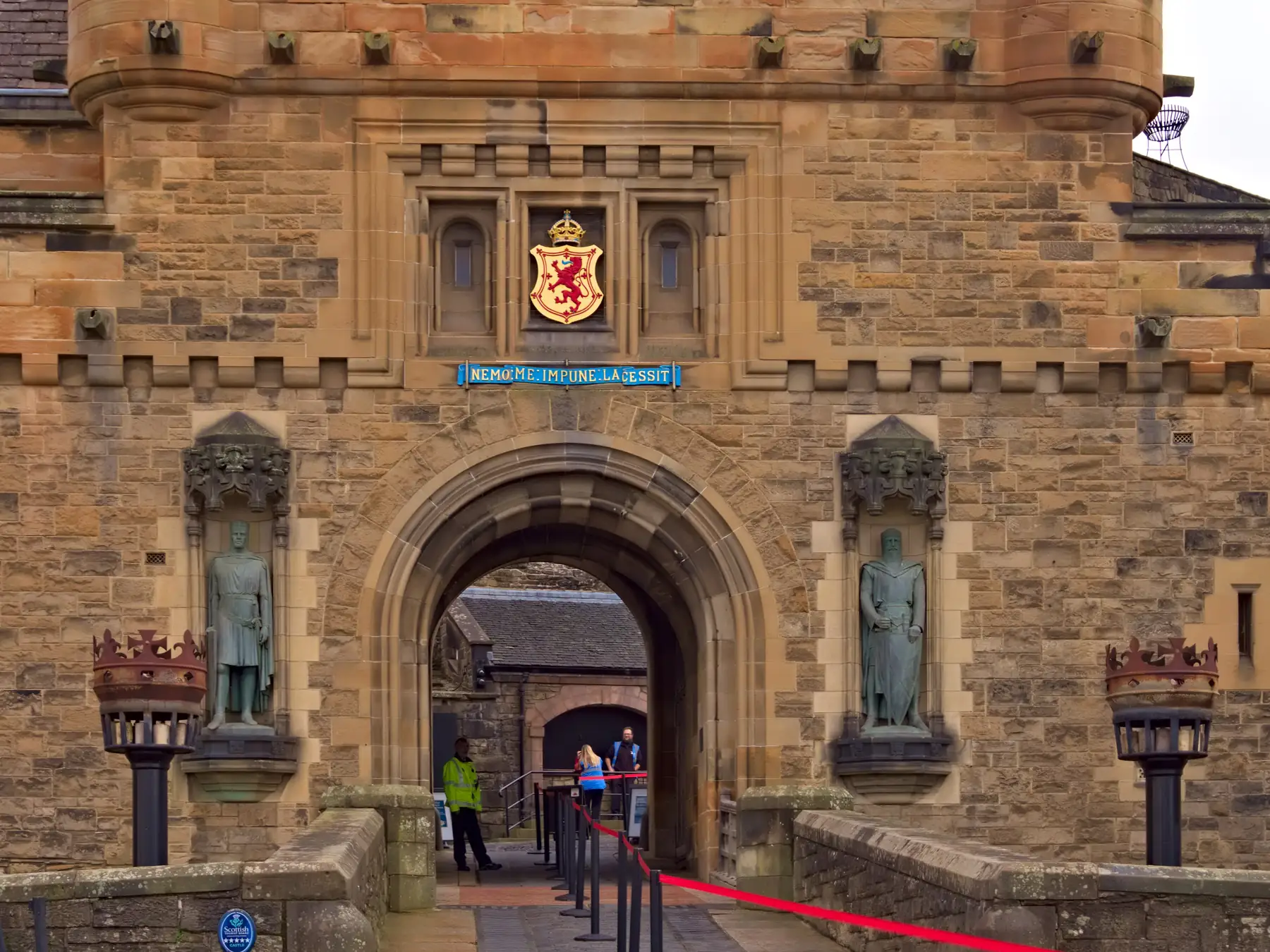
Whisky without the e
- Scotland is famous for Scotch whisky.
- Scottish spelling normally uses whisky without an e.
- Irish whiskey usually uses an e.
- Scotch whisky must meet legal production and aging requirements.
- It must be distilled and matured in Scotland.
- Scotch must mature in oak casks for at least three years.
- Single malt Scotch is made at one distillery from malted barley using pot stills.
- Single grain Scotch can use other grains and different still types.
- Blended Scotch combines whiskies from multiple distilleries or categories.
- Speyside contains a dense concentration of distilleries.
- Islay is famous for heavily peated smoky styles.
- Peat smoke can dry malted barley and contribute flavor compounds.
- Not all Scotch is smoky.
- Water, barley, yeast, still design, cask type, climate, and maturation all influence flavor.
- Whisky is one of Scotland’s most valuable exports.
Golf and other Scottish inventions
- Modern golf developed strongly in Scotland.
- St Andrews became one of the sport’s most influential centers.
- The Old Course helped establish 18 holes as the standard full round.
- Scottish engineer James Watt made crucial improvements to the steam engine.
- His name became the SI unit watt.
- Alexander Graham Bell was born in Edinburgh.
- He became central to telephone development after emigrating.
- John Logie Baird was a Scottish pioneer of mechanical television.
- Alexander Fleming was born in Ayrshire.
- He discovered penicillin’s antibacterial effect in London.
- James Clerk Maxwell was a Scottish physicist whose equations unified electricity and magnetism.
- Adam Smith was a major figure in economics and moral philosophy.
- David Hume became one of the Enlightenment’s most influential philosophers.
- Edinburgh was a major center of the Scottish Enlightenment.
- Scotland’s population is small compared with its influence on science, engineering, economics, literature, and technology.
Ten surprising Scotland facts
- Scotland’s national animal is the unicorn.
- Hadrian’s Wall is in England, not on the modern Scottish border.
- Edinburgh Castle stands on an extinct volcanic plug.
- Ben Nevis is the highest mountain anywhere in the United Kingdom.
- Scotland has more than 790 offshore islands by common counts.
- The Union of the Crowns in 1603 did not immediately merge Scotland and England into one country.
- That political union came in 1707.
- Many supposedly ancient clan tartan rules were standardized much later.
- Scotch whisky legally must mature in oak for at least three years.
- For more British trivia, explore our United Kingdom facts, England facts, and Culture facts.
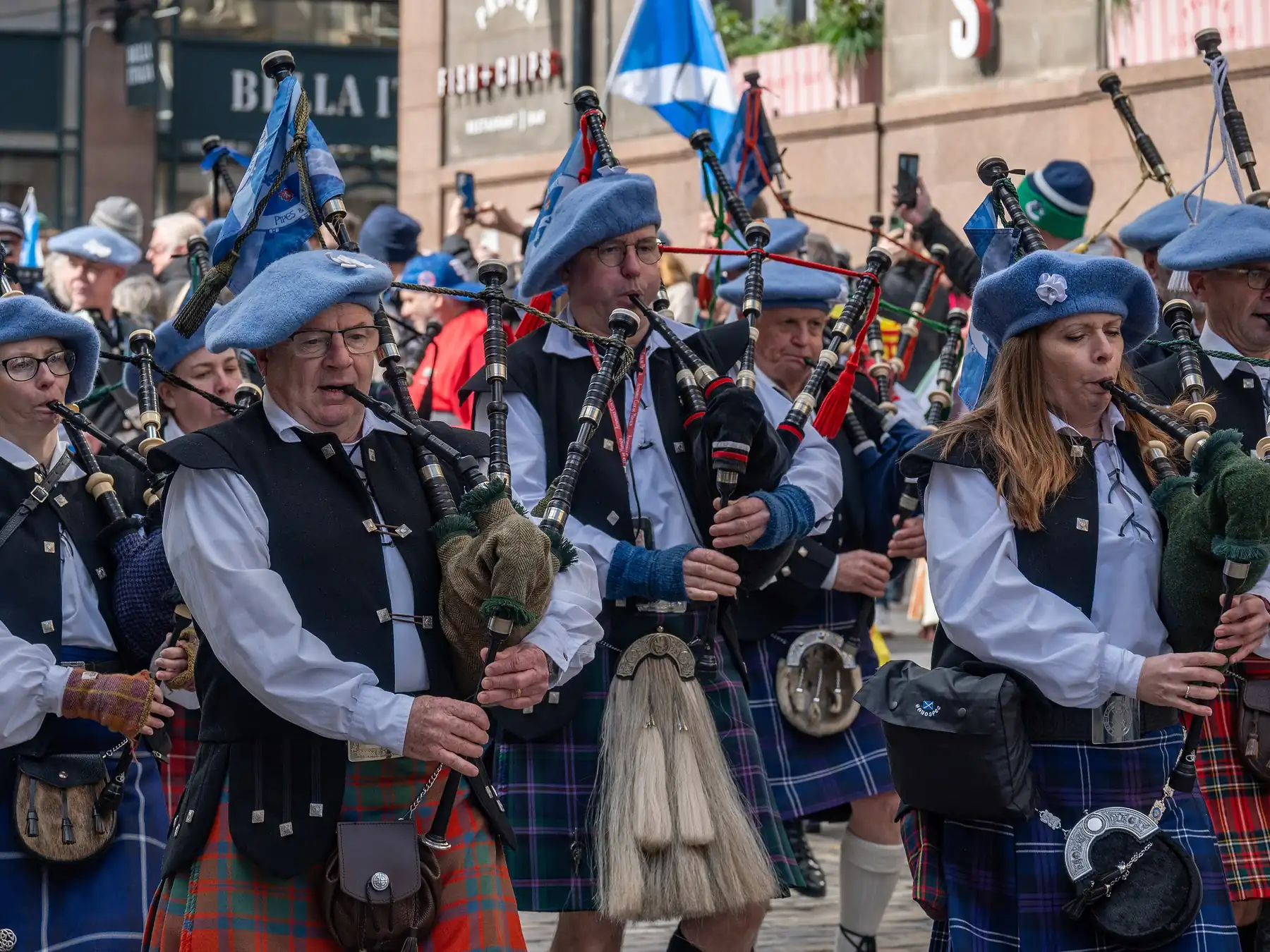
Quick Scotland FAQ
What is the capital of Scotland?
Edinburgh, while Glasgow is the country’s largest city.
Is Scotland a country?
Yes. Scotland is a constituent country of the United Kingdom with its own legal, education, and devolved political institutions.
What is Scotland’s national animal?
The unicorn, a mythical creature used in Scottish heraldry for centuries.
Did Scots invent golf?
Stick-and-ball games existed elsewhere, but the modern game developed most clearly in Scotland and Scottish courses and rules became globally influential.
Do all Scottish clans have ancient tartans?
Modern clan tartans are meaningful traditions, but many fixed clan-pattern associations were standardized or popularized in the 18th and 19th centuries rather than preserved unchanged from medieval times.

Ellie is the owner and sole author of Fun Facts, combining her mechanical engineering background with years of research-driven writing to deliver facts you can trust. Every article is thoroughly fact-checked and routinely updated as new science and sources emerge to keep information accurate and current. Her mission is to make learning delightful while upholding high standards of reliability and transparency.