
The Netherlands is famous for windmills, tulips, canals, bicycles, cheese, and paintings, but the country’s most remarkable story may be how much of it exists only because people learned to manage water on a gigantic scale. Dutch engineers built dikes, pumped lakes dry, reclaimed land from the sea, and created storm barriers that move. These 145 Netherlands facts explore Amsterdam, Holland, polders, water engineering, bicycles, monarchy, Dutch language, Golden Age history, art, tulips, cheese, windmills, trade, islands, and why “the Netherlands” and “Holland” are not technically the same thing.
Netherlands basics
- The Netherlands is a country in northwestern Europe.
- Its official capital is Amsterdam.
- The national government and parliament sit in The Hague.
- The Netherlands shares land borders with Belgium and Germany.
- The North Sea lies along its western and northern coast.
- Dutch is the principal national language.
- Frisian has official status in the province of Friesland.
- The Netherlands is a constitutional monarchy.
- Its parliament is called the States General.
- The country is a founding member of the European Union’s predecessor communities.
- It uses the euro.
- The Netherlands is densely populated.
- Large parts of the country are extremely flat.
- A substantial share of its land lies at or below sea level.
- Water management is therefore a basic condition of Dutch national life rather than a decorative tourist theme.
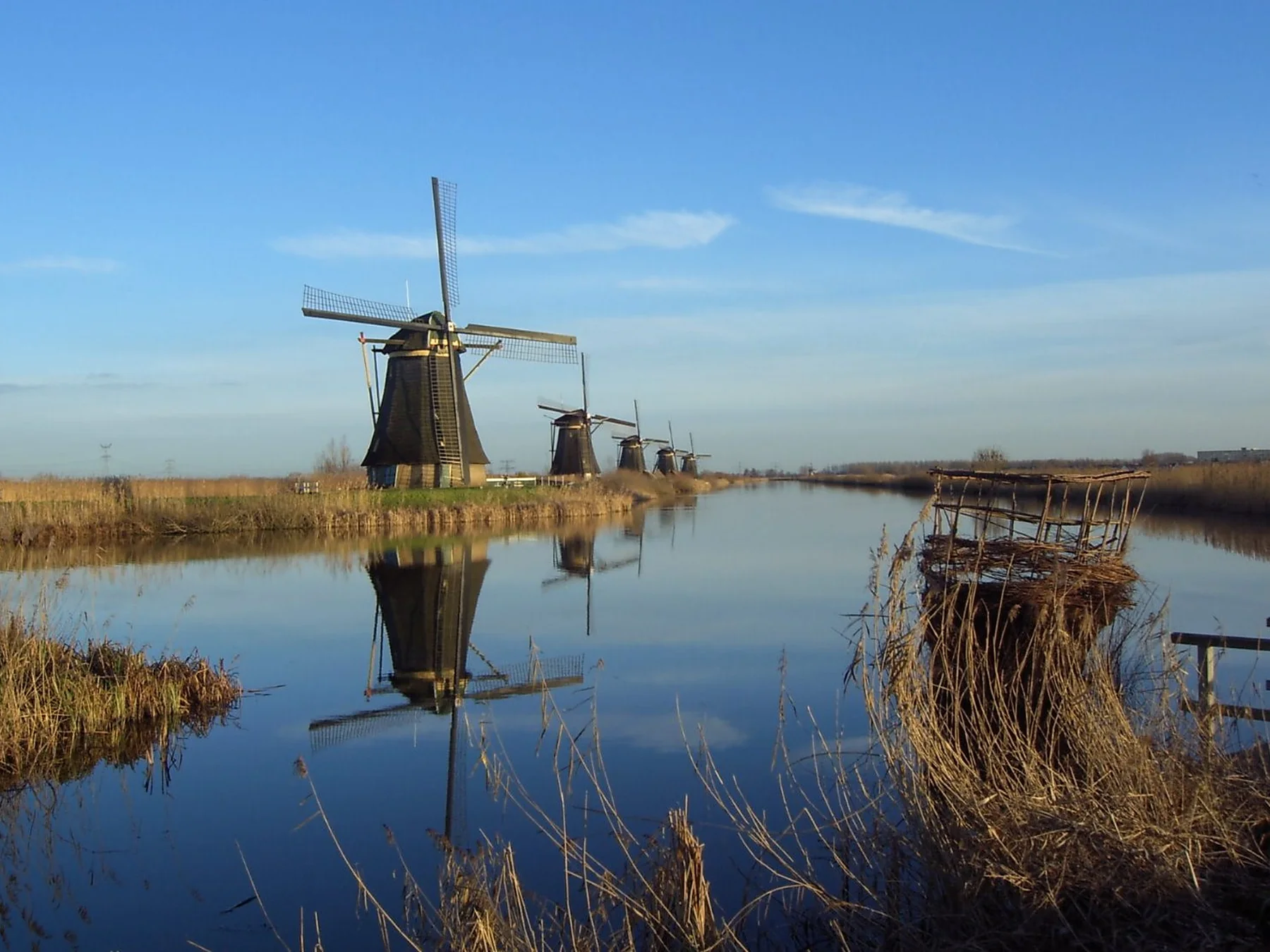
The Netherlands is not the same as Holland
- The Netherlands contains 12 provinces.
- North Holland is one province.
- South Holland is another.
- Together those two provinces make up the historical region commonly called Holland.
- Amsterdam is in North Holland.
- Rotterdam and The Hague are in South Holland.
- Many of the country’s largest cities therefore are in Holland.
- That helped the name Holland become internationally familiar.
- Calling the entire Netherlands Holland is common but geographically imprecise.
- People in provinces such as Limburg, Groningen, Friesland, or Gelderland do not live in Holland.
- The Dutch tourism board historically used Holland heavily in international marketing.
- Government branding shifted toward Netherlands in recent years.
- The adjective Dutch refers to the Netherlands and its people or language.
- Dutch does not come from the word Netherlands.
- The naming puzzle reflects centuries of changing political and linguistic history.
A country partly built from the sea
- Dutch communities have managed water for centuries.
- Dikes protect low land from rivers and sea.
- Drainage canals move excess water.
- Pumping stations transfer water to higher channels.
- A polder is low-lying land enclosed by dikes with an artificially controlled water level.
- Some polders were created by draining lakes or shallow coastal water.
- Windmills historically powered many drainage pumps.
- Modern pumps are usually electric or diesel-powered.
- Flevoland is a province created largely on reclaimed land.
- It includes former seabed from the Zuiderzee.
- The town of Lelystad is named after engineer Cornelis Lely.
- Lely championed enormous water-control plans.
- Reclaimed land supports farms, cities, roads, nature reserves, and airports.
- Schiphol Airport lies several meters below sea level.
- The Dutch landscape demonstrates that “natural coastline” and “human infrastructure” can become almost impossible to separate.
The Zuiderzee Works remade the map
- The Zuiderzee was a shallow inlet of the North Sea.
- Storm flooding repeatedly threatened communities around it.
- The Netherlands undertook a huge engineering project during the 20th century.
- The Afsluitdijk closed off the Zuiderzee from the North Sea in 1932.
- The dam is about 32 kilometers long.
- The enclosed water gradually became freshwater.
- It is now called the IJsselmeer.
- Large polders were drained behind the barrier.
- Those projects created major areas of new land.
- Flevoland emerged from this reclamation program.
- The project improved flood protection.
- It also transformed fisheries and ecosystems.
- Saltwater habitats became freshwater environments.
- Modern water management increasingly tries to balance safety with ecological restoration.
- The Netherlands literally redrew its national map through civil engineering.
The Delta Works protect the southwest
- A catastrophic North Sea flood struck the Netherlands in 1953.
- More than 1,800 people died in the country.
- Dikes failed across southwestern provinces.
- The disaster triggered the Delta Works.
- The project shortened the coastline requiring direct defense.
- Dams and barriers closed several tidal inlets.
- Not every estuary was permanently sealed.
- The Oosterscheldekering is a movable storm-surge barrier.
- Its gates normally remain open to allow tides and marine ecology.
- They can close during dangerous storm conditions.
- The Maeslantkering protects the Rotterdam region.
- Its two enormous movable gates swing into the waterway during severe storm surge.
- The gates are among the world’s largest moving structures.
- Dutch flood defenses are continually upgraded as sea level and river risks change.
- Water safety is an ongoing system, not a project the country finished once and forgot.
Bicycles dominate many streets
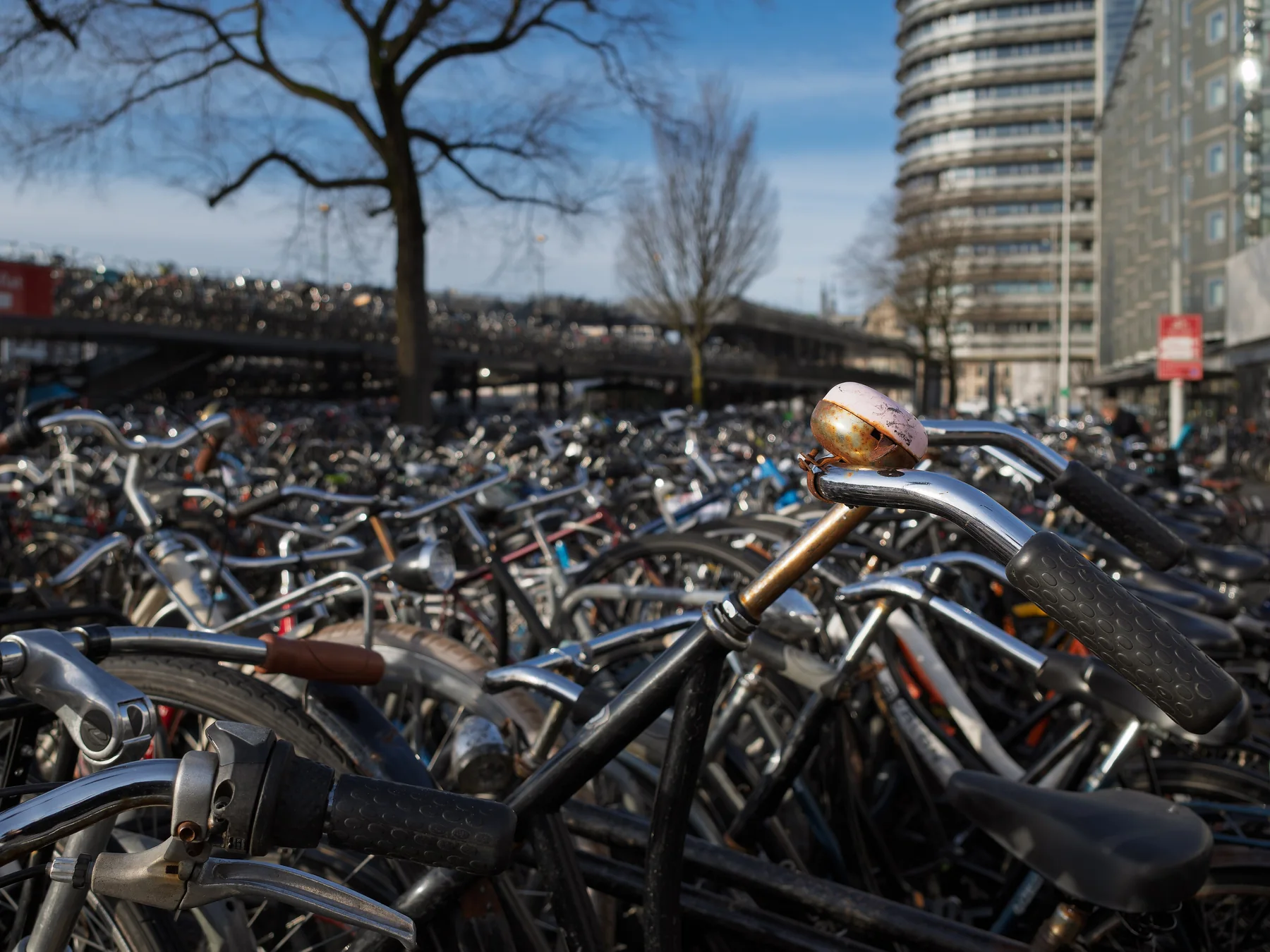
- The Netherlands has more bicycles than people by widely cited national estimates.
- Cycling is ordinary transportation rather than only sport or recreation.
- Children often cycle to school.
- Adults cycle to work, shops, train stations, and social activities.
- Protected bicycle paths are widespread.
- Many intersections have bicycle-specific signals and designs.
- Rail stations include enormous bicycle parking facilities.
- Utrecht built one of the world’s largest bicycle-parking garages.
- Dutch cycling culture was not inevitable.
- Car ownership grew strongly after World War II.
- Traffic deaths triggered public campaigns for safer streets.
- The 1970s oil crisis also increased interest in alternatives to cars.
- Government policy gradually expanded cycling infrastructure.
- Flat terrain helps but does not explain the entire success.
- The Dutch example shows that safe infrastructure can make cycling normal for children, older adults, commuters, and people wearing everyday clothes.
The Dutch Golden Age
- The Dutch Republic became a major global power during the 17th century.
- The period is often called the Dutch Golden Age.
- Amsterdam became an important center of trade and finance.
- The Dutch East India Company was founded in 1602.
- It is commonly known by its Dutch initials VOC.
- The company received broad state-backed powers.
- It traded across Asia.
- The Dutch West India Company operated in Atlantic regions.
- Dutch colonial expansion involved warfare, coercion, exploitation, and slavery as well as commerce.
- The Netherlands participated deeply in the transatlantic slave trade.
- Dutch colonial rule affected Indonesia, the Caribbean, South America, southern Africa, and other regions.
- Modern discussion increasingly examines the human costs behind Golden Age wealth.
- The Dutch government formally apologized for the Netherlands’ role in slavery in 2022.
- King Willem-Alexander personally apologized in 2023.
- Understanding Dutch prosperity requires holding artistic and commercial achievement together with colonial violence rather than treating them as separate stories.
Rembrandt, Vermeer, and Dutch art
- Rembrandt van Rijn was one of the Dutch Golden Age’s most famous artists.
- He was born in Leiden.
- He later worked in Amsterdam.
- The Night Watch is one of his best-known paintings.
- The painting’s common title is misleading because the scene is not actually a night scene.
- Darkened varnish helped create that impression over time.
- Johannes Vermeer worked in Delft.
- He produced a relatively small surviving body of paintings.
- Girl with a Pearl Earring is his most famous image.
- Vincent van Gogh was also Dutch, although he lived later in the 19th century.
- Van Gogh was born in Zundert.
- Amsterdam’s Rijksmuseum holds major Dutch masterpieces.
- The Van Gogh Museum holds the world’s largest collection of Van Gogh works.
- Mauritshuis in The Hague displays Girl with a Pearl Earring.
- Dutch museums make the country’s art history unusually visible in the same cities where much of it was created.
Tulips were imported, then became iconic
- Tulips are not originally native to the Netherlands.
- Wild tulips originated across regions of Central Asia and surrounding areas.
- They became highly prized in the Ottoman Empire.
- Tulips reached western Europe during the 16th century.
- They became fashionable among wealthy Dutch collectors.
- Rare bulbs generated speculative trading during the 1630s.
- This episode became known as Tulip Mania.
- Some contract prices reached extraordinary levels.
- The market collapsed in 1637.
- Popular retellings often exaggerate the event into a story where the entire Dutch economy collapsed.
- Modern historians view the scale and social impact more cautiously.
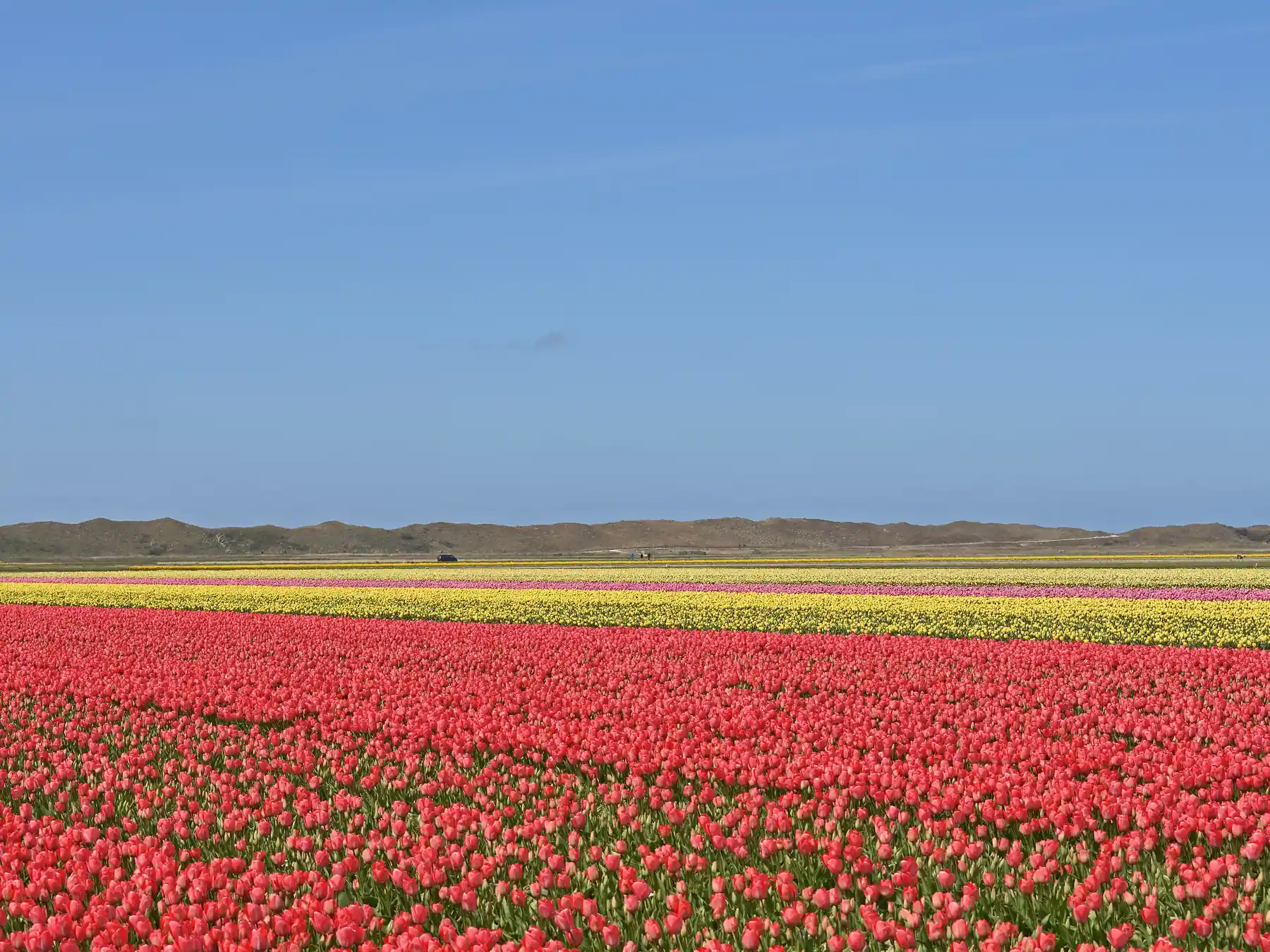
- Tulip cultivation nevertheless became a major Dutch horticultural industry.
- The Netherlands is now one of the world’s largest flower exporters.
- Keukenhof displays enormous spring flower plantings.
- The tulip became a national icon even though the flower itself arrived from far beyond northern Europe.
Ten surprising Netherlands facts
- Holland is only part of the Netherlands.
- The country’s capital is Amsterdam, but the government sits in The Hague.
- Large areas of Dutch land were created by draining water.
- Schiphol Airport lies below sea level.
- The Afsluitdijk turned a saltwater inlet into the freshwater IJsselmeer.
- Some Dutch storm barriers are enormous moving machines rather than ordinary fixed dams.
- The Netherlands has more bicycles than people by widely cited counts.
- The Night Watch is not actually a nighttime scene.
- Tulips came to the Netherlands from much farther east.
- For more European trivia, explore our upcoming Belgium facts and Culture facts.
Quick Netherlands FAQ
Is Holland the same as the Netherlands?
No. North Holland and South Holland are two of the Netherlands’ 12 provinces, although Holland is often used informally for the whole country.
What is the capital of the Netherlands?
Amsterdam. The national government, parliament, and many international institutions are based in The Hague.
How much of the Netherlands is below sea level?
A substantial portion is below sea level, while even more land is vulnerable to river or coastal flooding without extensive defenses.
Why are there so many bicycles?
Decades of safe infrastructure, compact cities, supportive policy, flat terrain, bicycle parking, and connections to public transit make cycling practical for everyday transportation.
Did Tulip Mania destroy the Dutch economy?
No. Prices for some tulip contracts became extraordinary and the speculative market collapsed, but popular stories often exaggerate its reach and economic consequences.

Ellie is the owner and sole author of Fun Facts, combining her mechanical engineering background with years of research-driven writing to deliver facts you can trust. Every article is thoroughly fact-checked and routinely updated as new science and sources emerge to keep information accurate and current. Her mission is to make learning delightful while upholding high standards of reliability and transparency.