
Cheese can be stretchy, crumbly, creamy, smoky, blue, wrinkled, washed, aged for years, or eaten almost fresh from the vat. It starts with milk, but tiny changes in microbes, moisture, salt, temperature, and time can create wildly different results. These 145 cheese facts explain the science, history, styles, nutrition, and wonderfully weird traditions hiding behind your next slice.
Cheese basics
- Cheese is a dairy food made by concentrating milk solids into curds.
- Most cheese begins with milk, starter cultures, a coagulant, and salt.
- Cow’s milk is the world’s most common cheesemaking milk.
- Goat, sheep, buffalo, and other mammal milks can also be made into cheese.
- Different animal milks have different proportions of fat, protein, minerals, and flavor compounds.
- Casein proteins are especially important to the structure of most cheeses.
- Cheesemaking separates much of the milk into solid curds and liquid whey.
- Curds retain much of the milk’s casein and fat.
- Whey contains water, lactose, whey proteins, minerals, and other dissolved components.
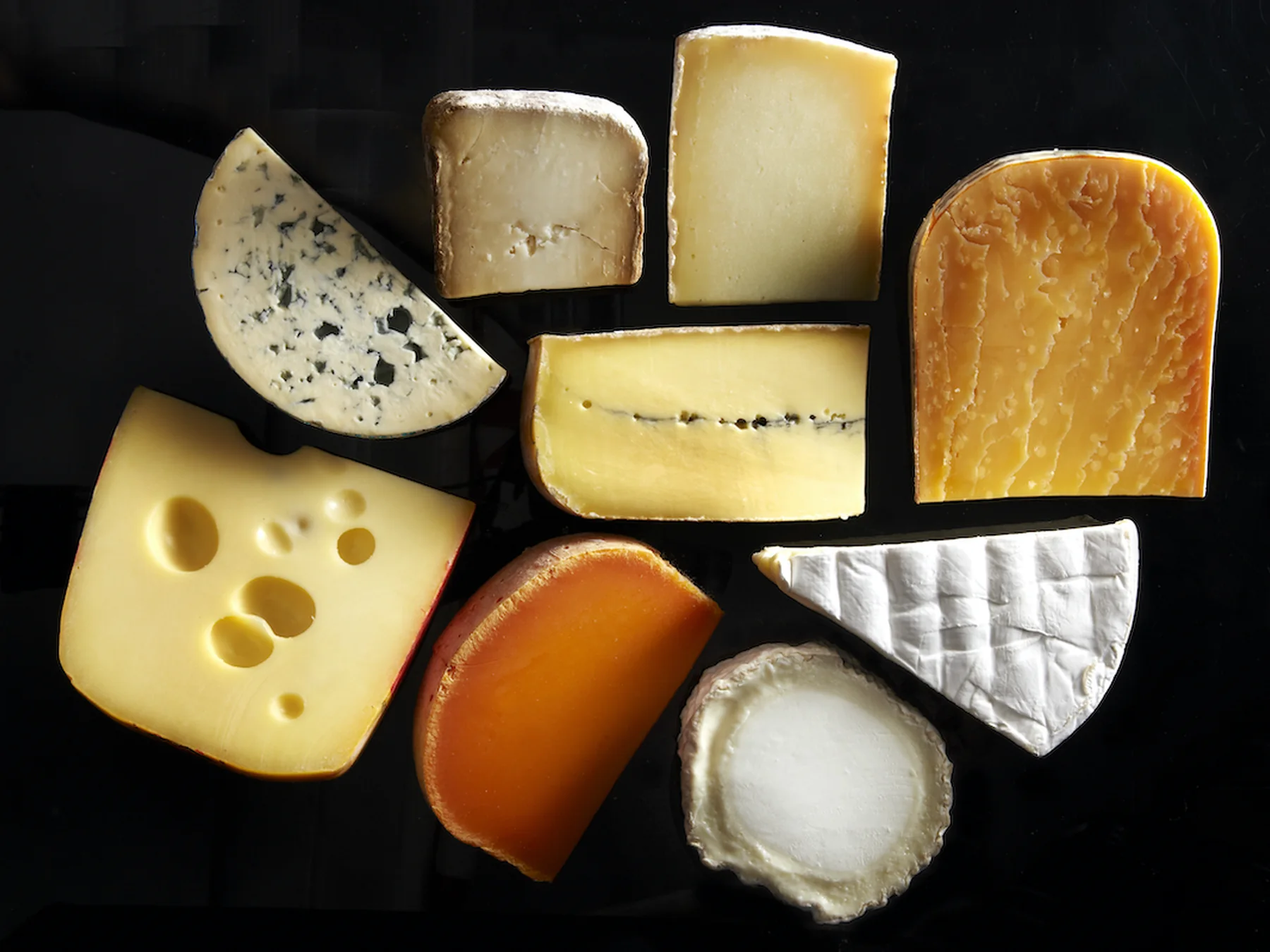
- Fresh cheeses are eaten with little or no aging.
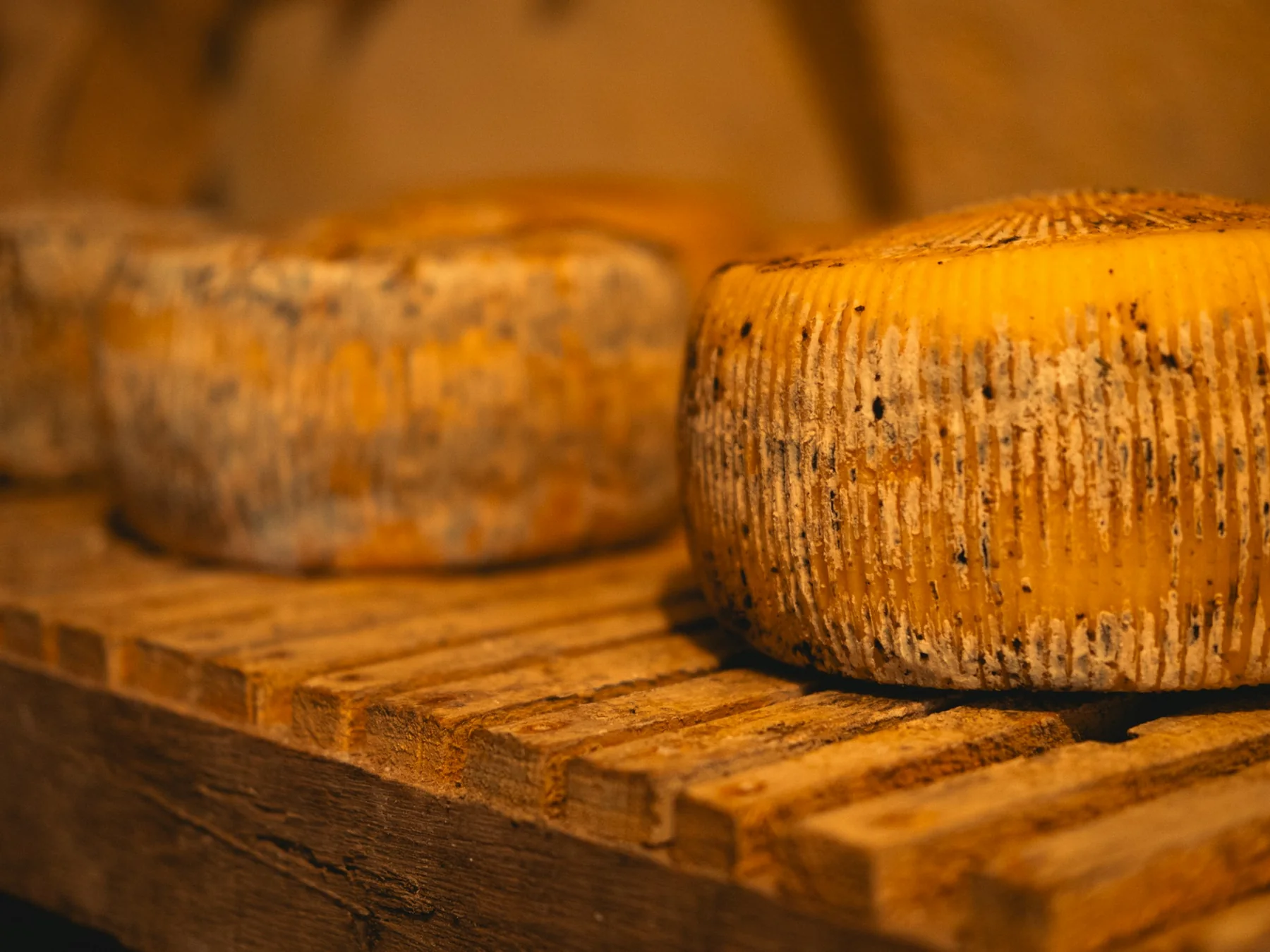
- Aged cheeses change over weeks, months, or even years.
- There is no single worldwide system for counting cheese varieties.
- Names may refer to a protected traditional cheese, a broad style, a brand, or a local variation.
- Moisture level is one of the biggest differences among cheese styles.
- Salt, acidity, microbes, aging, and moisture all help determine a cheese’s final texture and flavor.
How milk becomes cheese
- Starter bacteria convert some milk sugar, or lactose, into lactic acid.
- That acidification helps control texture, flavor, moisture, and unwanted microbes.
- Many cheeses use rennet or another enzyme to help coagulate milk.
- Rennet traditionally came from the stomach lining of young ruminant animals.
- Microbial and fermentation-produced coagulants are also widely used today.
- Acid alone can coagulate some fresh cheeses.
- Once milk coagulates, cheesemakers cut the gel into curds.
- Smaller curd pieces usually release whey more quickly than larger pieces.
- Heating and stirring curds can drive out additional moisture.
- Draining removes much of the whey from the curd mass.
- Some cheeses are pressed to expel whey and form a firm wheel or block.
- Other cheeses rely more on gravity and gentle draining.
- Salt can be mixed into curds, rubbed onto a surface, or added by brining.
- Salt seasons cheese while also influencing moisture, microbes, and enzyme activity.
- The exact sequence of cutting, heating, draining, salting, pressing, and aging creates distinctive styles.
The science of cheese flavor
- Cheese flavor changes as proteins, fats, and other compounds break down during aging.
- Proteolysis is the breakdown of proteins into smaller peptides and amino acids.
- Lipolysis is the breakdown of fats into fatty acids and other compounds.
- Both processes can create important aroma and flavor molecules.
- USDA researchers note that milk quality, processing, salt, enzymes, and chemical reactions all affect cheese flavor.
- Temperature during aging strongly affects microbial and enzyme activity.
- Humidity matters because a cheese rind can dry too quickly or remain too wet.
- Some cheeses are turned regularly so moisture and shape develop evenly.
- Some rinds are brushed, washed, pierced, rubbed, or inoculated during aging.
- Cheese caves and modern aging rooms are designed to control temperature and humidity.
- A cheese can keep changing after it leaves the cheesemaker if it remains biologically active.
- Very cold storage slows many aging reactions.
- Warm cheese usually releases aroma more readily than refrigerator-cold cheese.
- That is why many aged cheeses taste more expressive after warming slightly before serving.
- Cheese flavor is chemistry you can smell, taste, and feel.
Fresh and soft cheeses
- Ricotta is traditionally made from whey left over after other cheesemaking.
- The name ricotta roughly refers to being “recooked.”
- Cottage cheese consists of fresh curds with a mild flavor and high moisture content.
- Cream cheese is soft, spreadable, and made with a relatively high fat content.
- Mascarpone is an exceptionally rich Italian fresh dairy product used in desserts such as tiramisu.
- Queso fresco is a fresh, mild cheese associated with Mexican and other Latin American cuisines.
- Fresh mozzarella is stored with substantial moisture and is often packed in liquid.
- Mozzarella belongs to a family of stretched-curd cheeses called pasta filata.
- During pasta filata production, acidified curd is heated and stretched.
- Burrata looks like a mozzarella pouch but traditionally contains a creamy filling of stracciatella and cream.
- Feta is traditionally associated with Greece and is commonly aged in brine.
- Traditional Greek feta is made primarily from sheep’s milk, sometimes with goat’s milk added.
- Brie and Camembert develop edible white surface molds during ripening.
- Surface-ripened cheeses often soften from the rind inward.
- High-moisture cheeses generally spoil faster than very dry aged cheeses.
Cheddar, Swiss, Parmesan, and other firm cheeses
- Cheddar originated in the English village of Cheddar in Somerset.
- Cheddaring is a specific process in which curd slabs are stacked and turned to develop texture and acidity.
- Cheddar can range from mild and creamy to sharp, crumbly, and deeply savory.
- Orange cheddar is commonly colored with annatto or another approved coloring rather than naturally turning bright orange.
- White and orange cheddar can otherwise be made in very similar ways.
- Swiss-style cheeses are famous for holes called eyes.
- In classic Swiss-style cheese, gas made by bacteria helps create those eyes.
- Parmigiano Reggiano is a protected Italian cheese with tightly defined production rules.
- True Parmigiano Reggiano is produced in designated areas of Italy.
- Traditional Parmigiano Reggiano wheels are aged for at least 12 months before official inspection.
- Pecorino cheeses are made from sheep’s milk.
- The Italian word pecora means sheep.
- Gouda originated in the Netherlands and became one of the world’s best-known cheese styles.
- Aged Gouda can develop crunchy crystals and caramel-like flavors.
- Different firm cheeses grate, crumble, melt, and slice differently because their moisture and protein structures differ.
Blue, washed-rind, and mold-ripened cheeses
- Blue cheeses contain veins or pockets of mold that contribute strong flavors and aromas.
- Penicillium molds are used intentionally in many blue-cheese traditions.
- Cheesemakers often pierce blue cheeses to allow oxygen into the interior.
- That oxygen helps the desired blue mold grow along cracks and channels.
- Roquefort is a famous French blue cheese traditionally made from sheep’s milk.
- Gorgonzola is a celebrated Italian blue cheese.
- Stilton is a protected English blue-cheese name when produced under specified conditions.
- Washed-rind cheeses are repeatedly washed or rubbed with brine or another liquid while aging.
- Washing encourages surface microbes that can create orange or reddish rinds and powerful aromas.
- A very smelly rind does not necessarily mean the cheese itself tastes equally intense.
- Bloomy-rind cheeses grow a soft white surface covering.
- Many mold-ripened rinds are intentionally edible.
- Wax, cloth, leaves, and other coverings may also be used to protect cheeses during aging.
- Some traditional cheeses are wrapped or aged with plant materials that add aroma and protect the surface.
- The rind can act almost like its own miniature ecosystem.
Why cheese melts, stretches, or refuses to melt
- Cheese melting depends on moisture, fat, acidity, salt, age, and protein structure.
- Mozzarella is famous for stretching because its protein network can become long and elastic when heated.
- Low-moisture mozzarella is widely used on pizza because it melts well without releasing as much water as fresh mozzarella.
- Young cheeses often melt more smoothly than very old cheeses of the same family.
- Very aged cheeses can become more prone to separating or becoming oily when heated.
- Halloumi resists melting because its manufacturing process produces a heat-stable protein structure.
- That is why halloumi can be grilled or pan-fried while keeping its shape.
- Paneer also holds its shape during cooking.
- Acid-set cheeses such as paneer have a protein structure that behaves differently from rennet-coagulated melting cheeses.
- Processed cheese is engineered for consistent melting and texture.
- Emulsifying salts help keep fat and water mixed smoothly in processed cheese.
- A cheese sauce can turn grainy if proteins tighten and separate from fat and water.
- Gentle heat often gives smoother cheese sauces than aggressive boiling.
- Shredded cheese melts faster than a solid block because it has much more exposed surface area.
- Pre-shredded cheese may contain anti-caking ingredients that slightly change melting behavior.
Cheese nutrition and food safety
- Cheese commonly provides protein and calcium.
- Many cheeses also provide phosphorus, vitamin B12, and other nutrients.
- Cheese nutrition varies greatly by variety and serving size.
- Full-fat cheeses can contain substantial saturated fat.
- Many aged and brined cheeses contain significant sodium.
- Fresh cheeses often retain more lactose than long-aged hard cheeses.
- During aging, bacteria can consume much of the lactose remaining in curd.
- That means some aged cheeses contain very little lactose, although tolerance varies by person and product.
- Pasteurization heats milk for specified times and temperatures to kill harmful microorganisms.
- The FDA strongly supports pasteurization as an important food-safety measure for milk and dairy products.
- Raw milk can carry pathogens including Listeria, Salmonella, and pathogenic E. coli.
- Cheese made with pasteurized milk can still become contaminated after pasteurization if hygiene fails.
- Pregnant people and other high-risk groups receive special FDA guidance about certain soft cheeses and unpasteurized dairy.
- FDA’s raw milk safety guidance explains why pasteurization matters.
- Cheese should be stored according to the manufacturer’s instructions and discarded if safety is uncertain.
Cheese around the world
- Cheesemaking developed as a practical way to preserve valuable nutrients from milk.
- USDA researchers describe cheese as part of the human diet for thousands of years.
- Europe has an especially dense collection of historic regional cheese traditions.
- France is famous for soft-ripened, blue, goat, mountain, and washed-rind cheeses.
- Italy produces famous styles ranging from mozzarella and burrata to Parmigiano Reggiano and Gorgonzola.
- Switzerland is closely associated with Alpine cheeses designed historically for mountain dairying.
- The Netherlands is famous for Gouda and Edam.
- England gave the world cheese names including Cheddar, Stilton, and Red Leicester.
- Spain produces famous sheep, goat, and mixed-milk cheeses, including Manchego.
- India has a long tradition of fresh acid-set paneer.
- Mexico and Latin America have numerous fresh, melting, aged, and grating cheese traditions.
- The United States developed large-scale cheddar, cream cheese, processed cheese, and many regional artisan styles.
- Wisconsin is especially famous for cheesemaking in the United States.
- Cheese traditions travel with migrants, so many styles now thrive far beyond their original regions.
- Modern artisan cheesemakers frequently combine old techniques with local milk, microbes, climates, and creative experimentation.
Ten delightfully weird cheese facts
- Those crunchy crystals in some aged cheeses are usually harmless compounds formed naturally during maturation.
- Tyrosine crystals can contribute a pleasant crunch in long-aged cheeses such as Parmigiano Reggiano.
- Some cheeses are deliberately inoculated with molds that would be alarming on an ordinary forgotten sandwich.
- Cheese mites have historically been involved in the maturation of certain traditional cheeses.
- A rind can smell much stronger than the paste inside the cheese.
- Cheesemakers can influence texture simply by changing how small they cut the curd.
- The same basic ingredients can become a fresh mozzarella, firm cheddar, or crumbly aged cheese through radically different processing.
- Temperature changes not only how cheese melts but also how strongly you perceive its aroma.
- The liquid whey once treated as a byproduct can be turned into foods, ingredients, animal feed, and protein products.
- For more tasty trivia, explore our chocolate facts, coffee facts, and ice cream facts.

Quick cheese FAQ
How is cheese made?
Most cheese is made by acidifying milk, coagulating its proteins, separating curds from whey, salting the curds, and then either eating the cheese fresh or aging it under controlled conditions.
Why does Swiss cheese have holes?
In classic Swiss-style cheeses, specific bacteria produce carbon dioxide during ripening. Gas collects in weak areas of the curd and forms the holes called eyes.
Why is some cheddar orange?
Orange cheddar is typically colored with annatto or another food coloring. Cheddar does not naturally become vivid orange simply by aging.
Does aged cheese contain lactose?
Many long-aged cheeses contain very little lactose because much of it drains with whey or is consumed by bacteria. Exact amounts vary, so people with medical dietary restrictions should check reliable product information.
Is mold on cheese always bad?
No. Specific molds are deliberately used to make blue and bloomy-rind cheeses. Unplanned mold on a cheese that is not supposed to be mold-ripened is a different food-safety question.

Ellie is the owner and sole author of Fun Facts, combining her mechanical engineering background with years of research-driven writing to deliver facts you can trust. Every article is thoroughly fact-checked and routinely updated as new science and sources emerge to keep information accurate and current. Her mission is to make learning delightful while upholding high standards of reliability and transparency.