
Marie Curie won Nobel Prizes in two different sciences, discovered two elements, created mobile X-ray services during World War I, raised a future Nobel laureate, and worked with radioactive materials before anyone fully understood how dangerous they were. Her notebooks remain radioactive today. These 145 facts explore her childhood in occupied Poland, Paris years, discoveries, Nobel milestones, laboratory work, wartime radiology, family, health, and the scientific legacy behind one of history’s most famous names.
Marie Curie basics
- Marie Curie was a physicist and chemist.
- She was born Maria Salomea Skłodowska.
- Curie was born in Warsaw on November 7, 1867.
- Warsaw was then under Russian imperial rule.
- She grew up in a Polish family that valued education deeply.
- Her father taught mathematics and physics.
- Her mother ran a respected girls’ school.
- Marie was the youngest of five children.
- Her mother died when Marie was still a child.
- One of Marie’s sisters also died young.
- Curie later moved to Paris for university study.
- She became a French citizen while retaining a powerful Polish identity.
- She conducted pioneering research on radioactivity.
- Curie became the first woman to win a Nobel Prize.
- She remains one of the most famous scientists in history.
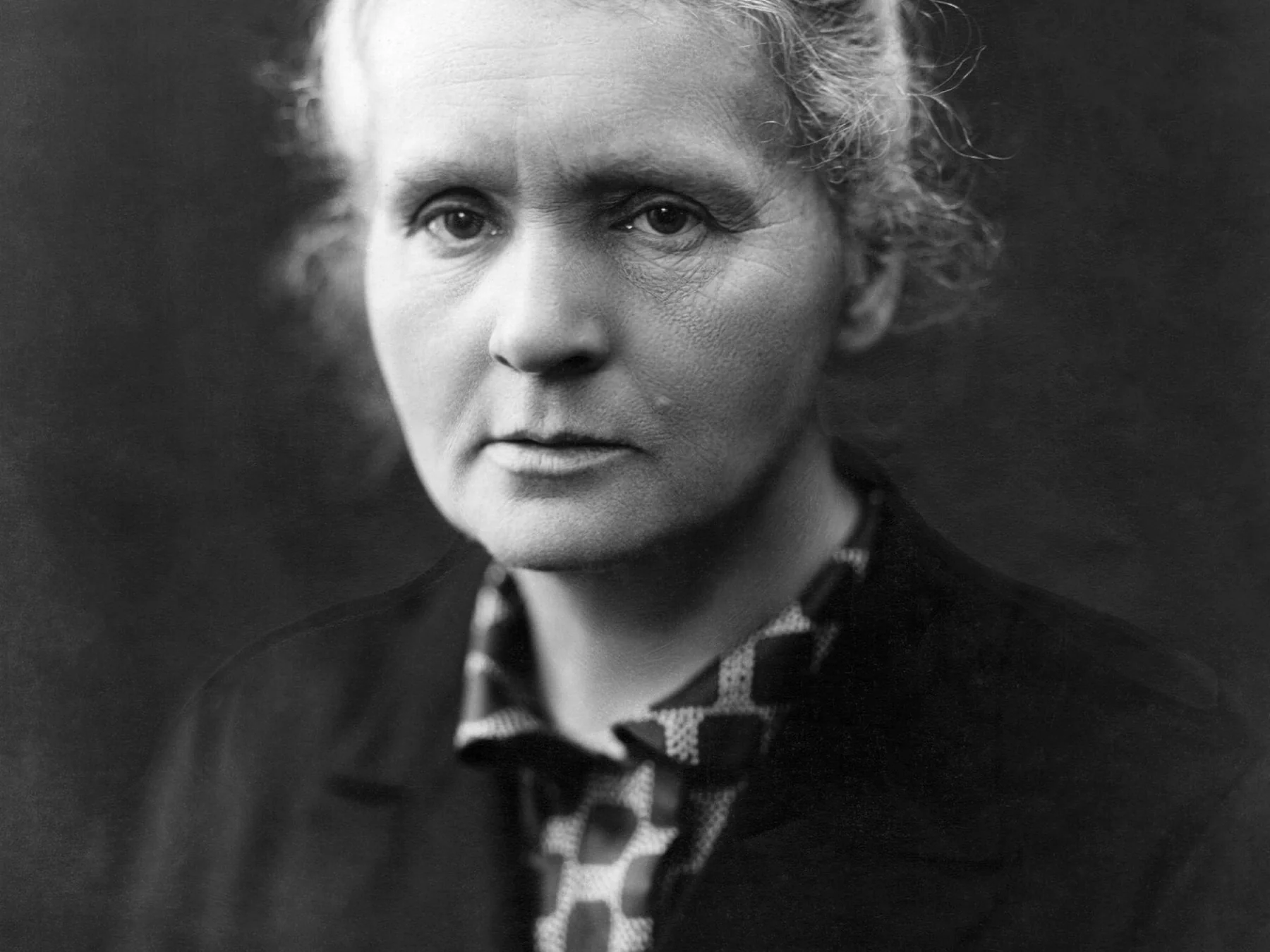
Education was difficult in partitioned Poland
- Women faced severe barriers to university education in Marie’s youth.
- Warsaw University did not admit women at the time.
- Marie participated in underground Polish educational activities.
- One informal institution became known as the Flying University.
- Classes moved among locations to avoid imperial restrictions.
- Marie and her sister Bronisława made a practical education pact.
- Marie worked to help finance Bronisława’s medical studies in Paris.
- Bronisława would then help Marie continue her own education.
- Marie worked as a governess for several years.
- During that time she continued studying mathematics and science independently.
- She eventually moved to Paris in 1891.
- In France she began using the name Marie.
- She enrolled at the Sorbonne, part of the University of Paris.
- Marie lived extremely frugally while studying.
- She earned degrees in physics and mathematics.
Marie meets Pierre Curie
- Marie met physicist Pierre Curie in Paris in 1894.
- Pierre was already known for important work in physics.
- He and his brother Jacques had studied piezoelectricity.
- Marie and Pierre married in 1895.
- They chose a practical civil ceremony rather than an elaborate wedding.
- Marie wore a dark blue outfit that could later serve as laboratory clothing.
- The couple shared a love of science and outdoor activity.
- They enjoyed bicycle trips together.
- Marie and Pierre had two daughters.
- Irène was born in 1897.
- Ève was born in 1904.
- Irène later became an important scientist herself.
- Ève became a writer, journalist, and humanitarian.
- Pierre increasingly joined Marie’s research on unusual uranium minerals.
- Their scientific partnership became one of the most famous collaborations in modern science.
Radioactivity becomes a new field
- Henri Becquerel discovered that uranium compounds emit penetrating radiation in 1896.
- Marie chose this mysterious phenomenon as a research subject.
- She measured electrical effects produced by uranium radiation.
- Curie showed that radiation strength depended on the amount of uranium present.
- This suggested the phenomenon came from atoms themselves rather than ordinary chemical reactions.
- Marie found that thorium compounds also emitted similar radiation.
- She introduced the term radioactivity for the phenomenon.
- The idea of atoms producing spontaneous radiation challenged older assumptions about matter.
- Marie examined the mineral pitchblende, now commonly called uraninite.
- Pitchblende was more radioactive than its known uranium content could explain.
- Curie inferred that unknown highly radioactive substances must be present.
- Pierre joined the investigation.
- The Curies used sensitive electrical measurements to track radioactivity during chemical separation.
- Radioactivity became their guide for finding materials too scarce to see directly.
- This approach helped create an entirely new field of atomic science.
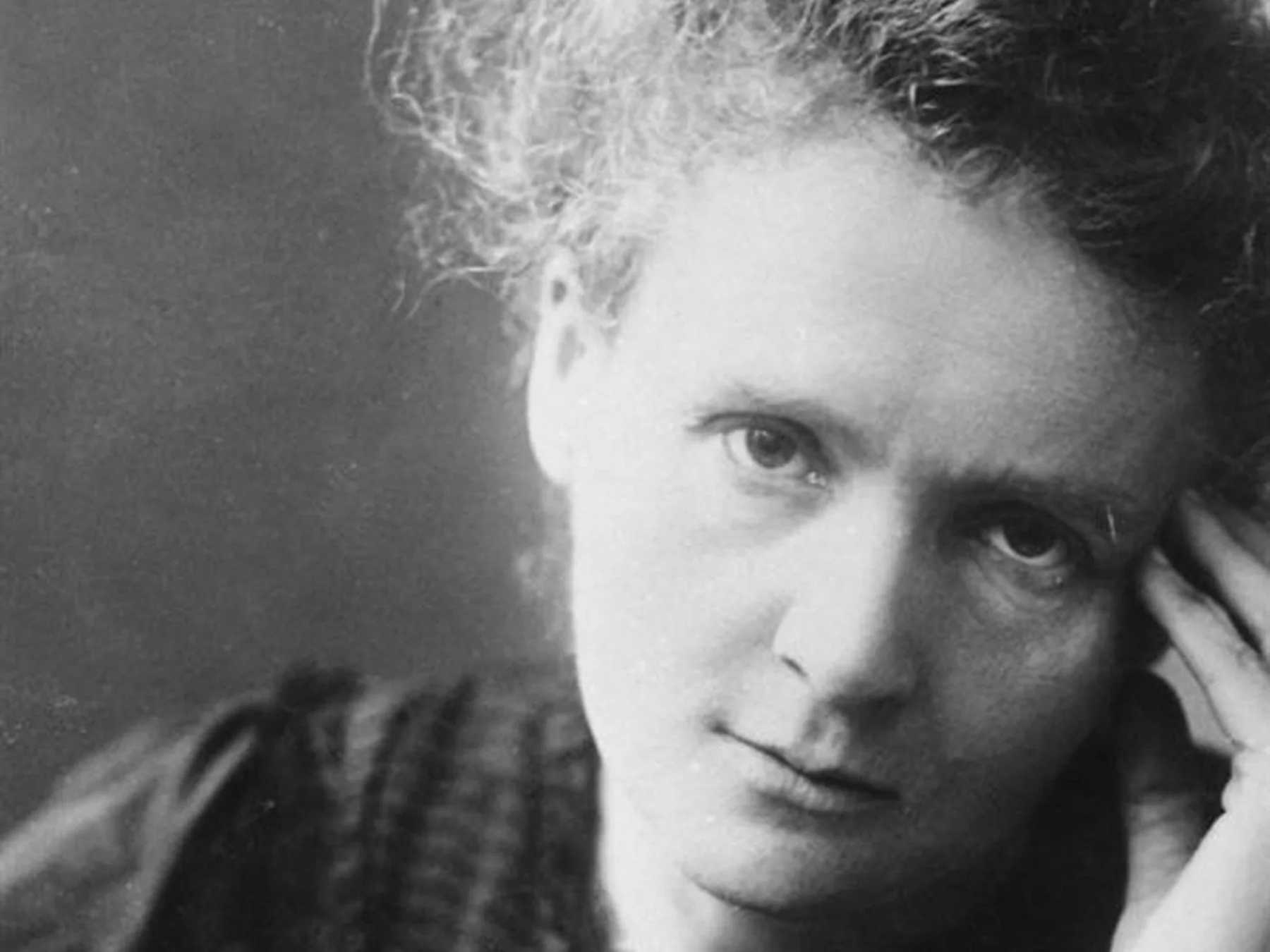
Polonium and radium
- Marie and Pierre Curie announced evidence for polonium in July 1898.
- Marie named polonium after Poland.
- Poland did not exist as an independent state when she chose the name.
- The element name therefore carried a political as well as scientific meaning.
- Polonium has the chemical symbol Po.
- The Curies announced evidence for radium later in 1898.
- Radium has the chemical symbol Ra.
- The name radium comes from a Latin root associated with rays.
- Pitchblende contained only tiny amounts of radium.
- The Curies processed enormous quantities of ore residues to concentrate it.
- Much of the early work occurred in primitive laboratory conditions.
- Marie stirred heavy boiling mixtures in large vessels.
- The work was physically exhausting.
- In 1902, Marie reported determining radium’s atomic weight with much greater precision.
- Institut Curie records preserve early Curies’ notes on radium’s atomic weight and chemical symbol.
Her first Nobel Prize
- The 1903 Nobel Prize in Physics recognized work on radiation phenomena.
- The prize was shared by Henri Becquerel, Pierre Curie, and Marie Curie.
- Marie became the first woman Nobel laureate.
- Her inclusion was not initially guaranteed.
- Historical accounts show that influential scientists intervened when early discussions risked excluding her.
- Pierre made clear that Marie’s contributions were essential.
- The Nobel award brought the Curies international fame.
- Fame also created unwanted public attention.
- Marie continued laboratory research rather than becoming primarily a celebrity.
- The prize money improved the family’s financial circumstances.
- Pierre received a professorship at the University of Paris.
- Marie continued working alongside him.
- The couple avoided patenting the radium-isolation process for personal profit.
- They believed scientific knowledge should remain available to researchers.
- The 1903 award established Marie Curie as a major scientific figure in her own right.
Pierre’s sudden death
- Pierre Curie died suddenly on April 19, 1906.
- He was struck by a horse-drawn vehicle on a rainy Paris street.
- Marie was devastated.
- She kept a private journal addressed to Pierre after his death.
- The University of Paris offered Marie Pierre’s professorial position.
- She accepted it.
- Marie became the first woman to teach as a professor at the Sorbonne.
- Her first lecture attracted enormous public attention.
- She began where Pierre’s previous course had ended rather than giving a ceremonial speech.
- Curie continued their shared scientific program.
- She also raised two young daughters.
- Her laboratory work increasingly focused on isolating and characterizing radium.
- She resisted pressure to let grief end her scientific career.
- Pierre’s death shifted Curie from one half of a famous scientific couple into an independent institutional leader.
- Her later achievements made clear that her research stature never depended solely on her husband.
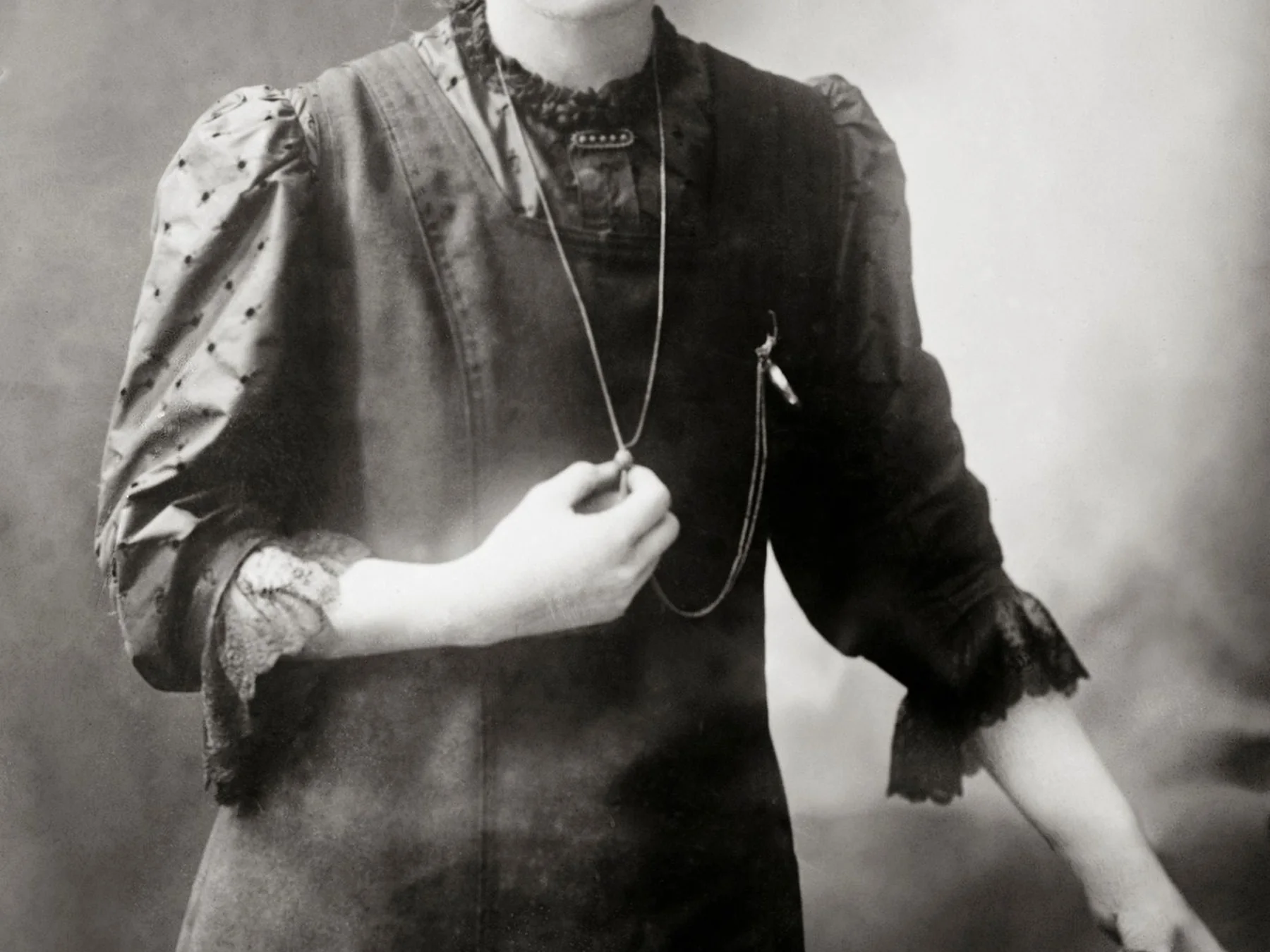
A second Nobel Prize
- Marie Curie received the Nobel Prize in Chemistry in 1911.
- The prize recognized her discovery of radium and polonium and her work on radium.
- She became the first person to win two Nobel Prizes.
- She also became the first person to win Nobel Prizes in two different scientific categories.
- Curie remains the only individual Nobel laureate awarded in both physics and chemistry.
- The second award arrived during a difficult public scandal involving Curie’s personal life.
- Some people pressured her not to attend the Nobel ceremony.
- Curie attended anyway.
- Her scientific work was evaluated independently from sensational newspaper coverage.
- The 1911 Nobel lecture described the discoveries of radium and polonium.
- Curie eventually obtained metallic radium with André-Louis Debierne.
- Her work helped establish radium as a measurable chemical element.
- The double Nobel achievement became one of science history’s most famous records.
- Curie’s Nobel medals later became part of her enduring public legacy.
- NobelPrize.org preserves detailed biographies and award documents for both of her prizes.
World War I and mobile X-rays
- World War I began shortly after the Radium Institute opened in Paris.
- Curie turned much of her attention toward wartime medical radiology.
- X-rays could help doctors locate bullets, shrapnel, and bone injuries.
- Many field hospitals lacked convenient radiology equipment.
- Curie helped develop mobile X-ray units installed in vehicles.
- These vehicles became popularly known as petites Curies, or little Curies.
- She learned practical automotive skills so she could operate in the field.
- Curie trained women as radiology technicians.
- Her daughter Irène assisted with wartime radiology work while still young.
- Curie also helped establish fixed radiology stations.
- The Musée Curie preserves X-ray images produced during Curie’s World War I work.
- Wartime X-ray exposure added to Curie’s lifetime radiation dose.
- Radiation protection was far less developed than it is today.
- Curie’s wartime work connected physics directly with lifesaving medical treatment.
- Her mobile-radiology program became one of the most practical chapters of her scientific career.
Ten surprising Marie Curie facts
- Curie named polonium for a Poland that did not yet exist as an independent state.
- She became the first woman professor at the Sorbonne after Pierre’s death.
- Marie Curie remains the only person to win Nobel Prizes in both physics and chemistry.
- Her daughter Irène Joliot-Curie later won a Nobel Prize too.
- The Curie family accumulated multiple Nobel awards across two generations.
- Marie’s laboratory notebooks remain radioactive enough to require protective storage and handling.
- Curie never fully understood the long-term biological danger of the substances she handled.
- She died in 1934 from aplastic anemia, with radiation exposure understood as a major cause.
- Marie and Pierre Curie were reinterred in the Panthéon in Paris in 1995.
- For more science history, explore our Isaac Newton facts and Albert Einstein facts.
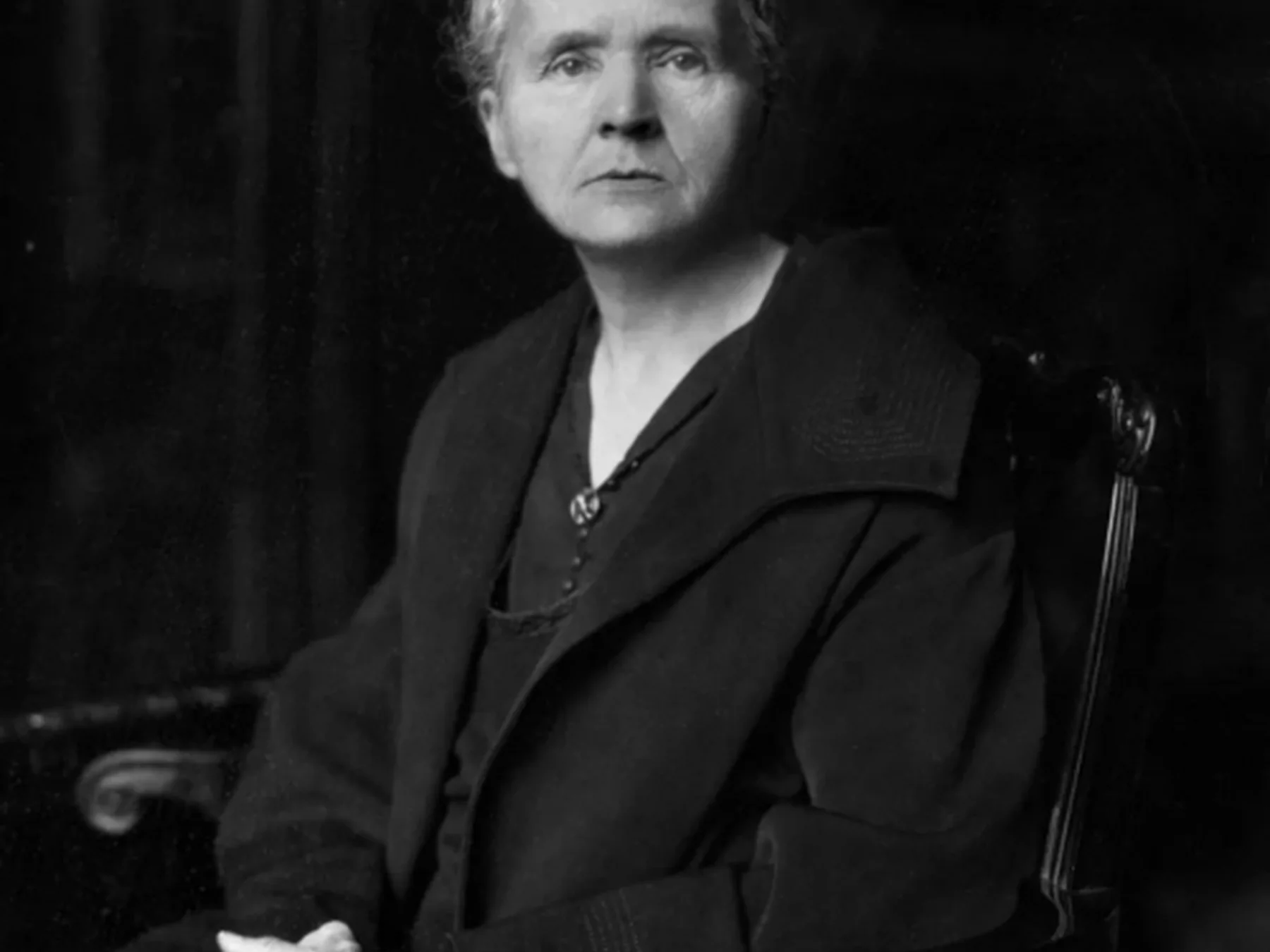
Quick Marie Curie FAQ
What did Marie Curie discover?
Marie and Pierre Curie identified the new elements polonium and radium while investigating unusually radioactive minerals.
How many Nobel Prizes did Marie Curie win?
Two. She shared the 1903 Nobel Prize in Physics and won the 1911 Nobel Prize in Chemistry.
Why did Marie Curie name polonium?
She named it after her native Poland, which was partitioned among empires and not an independent country at the time.
What were the little Curies?
They were mobile X-ray vehicles Curie helped develop during World War I so radiology could reach wounded soldiers closer to the front.
Why are Marie Curie’s notebooks radioactive?
Her papers and equipment were exposed repeatedly to radium and other radioactive materials at a time when radiation-safety practices were primitive.

Ellie is the owner and sole author of Fun Facts, combining her mechanical engineering background with years of research-driven writing to deliver facts you can trust. Every article is thoroughly fact-checked and routinely updated as new science and sources emerge to keep information accurate and current. Her mission is to make learning delightful while upholding high standards of reliability and transparency.