
Indonesia stretches across a vast tropical archipelago where orangutans live in rainforests, dragons roam dry islands, volcanoes tower above rice fields, hundreds of languages are spoken, and enormous cities sit beside ancient temples. It is the world’s largest island country and one of its most culturally diverse societies. These 145 Indonesia facts explore geography, Java, Sumatra, Bali, Borneo, Papua, volcanoes, wildlife, languages, religions, kingdoms, colonial history, independence, food, batik, temples, and the extraordinary challenge of connecting a nation spread across thousands of islands.
Indonesia basics
- Indonesia is a country in Southeast Asia and Oceania.
- It is the world’s largest archipelagic state by population and area.
- The country spans thousands of islands.
- Official counts vary as islands are surveyed and named.
- More than 17,000 islands are commonly cited.
- Major islands include Java, Sumatra, Sulawesi, and large parts of Borneo and New Guinea.
- Indonesia shares Borneo with Malaysia and Brunei.
- Its part of Borneo is called Kalimantan.
- Indonesia shares New Guinea with Papua New Guinea.
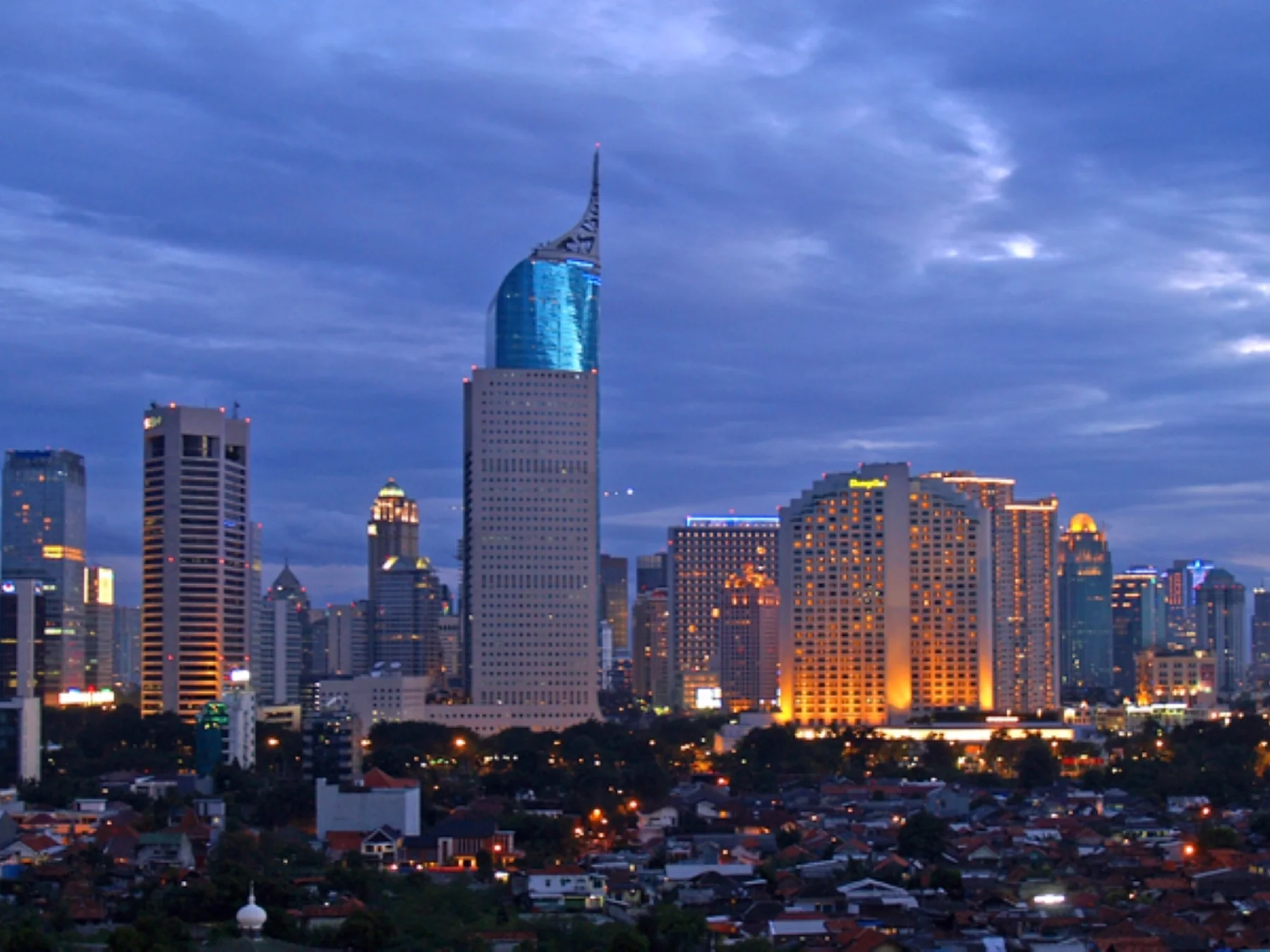
- Jakarta has long served as the national capital.
- Indonesia is developing Nusantara in East Kalimantan as a new national capital.
- The transition of capital functions is a multiyear process rather than one instant switch.
- Bahasa Indonesia is the national language.
- The currency is the Indonesian rupiah.
- Indonesia’s motto, Bhinneka Tunggal Ika, is commonly translated as Unity in Diversity.
An enormous island nation
- Indonesia stretches more than 5,000 kilometers from west to east.
- That distance spans several time zones.
- The country uses three official time zones.
- Sumatra lies near mainland Southeast Asia.
- Papua lies far to the east near the Pacific.
- Java is one of the world’s most densely populated large islands.
- A majority of Indonesians live on Java.
- Jakarta’s metropolitan region is one of the world’s largest urban areas.
- Many smaller Indonesian islands have only tiny populations.
- Some islands are uninhabited.
- Sea transportation remains essential.
- Ferries connect major islands.
- Domestic aviation is crucial because distances are enormous.
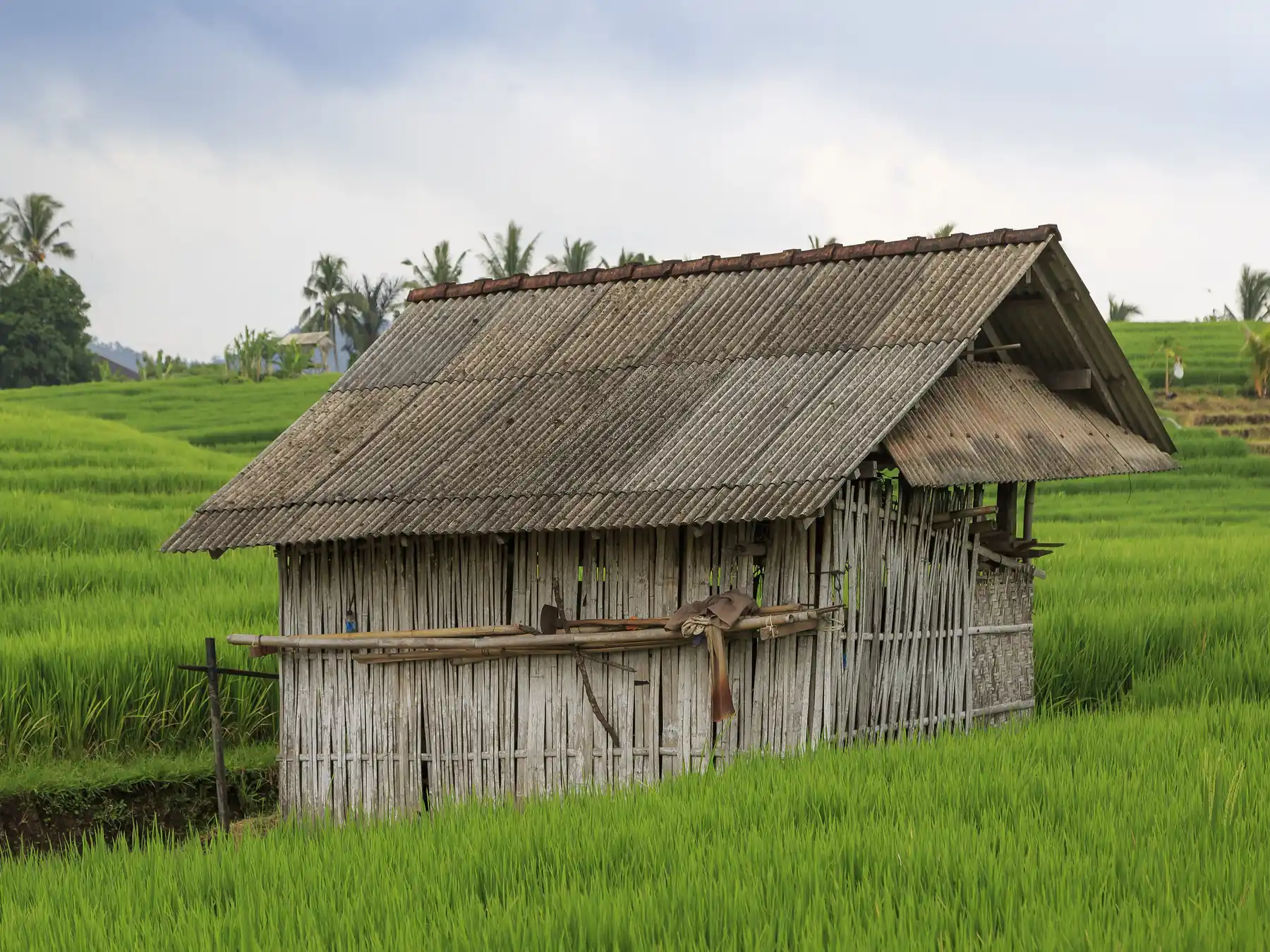
- Building roads, electricity, internet, schools, and healthcare across the archipelago is a major logistical challenge.
- Indonesia’s geography makes national unity an everyday engineering project as well as a political idea.
The Ring of Fire
- Indonesia sits along several active tectonic boundaries.
- It forms part of the Pacific Ring of Fire.
- The Indo-Australian Plate subducts beneath parts of the Sunda Plate.
- Other plate interactions complicate eastern Indonesia.
- The country contains more active volcanoes than almost any other nation.
- Volcanic arcs run through Sumatra and Java.
- Mount Merapi near Yogyakarta is one of Indonesia’s most active volcanoes.
- Krakatau lies in the Sunda Strait.
- Its catastrophic 1883 eruption generated huge explosions and tsunamis.
- Most of the old volcanic island collapsed.
- Anak Krakatau, meaning Child of Krakatau, later grew from the caldera.
- Mount Tambora erupted in 1815.
- Tambora’s eruption was one of the most powerful in recorded history.
- Its aerosols contributed to global cooling and the 1816 “Year Without a Summer.”
- Indonesia’s fertile volcanic soils support agriculture while the same geology creates constant hazard.
Earthquakes and tsunamis
- Indonesia experiences frequent earthquakes.
- Most are too small to cause major damage.
- Subduction-zone earthquakes can become extremely powerful.
- On December 26, 2004, a huge earthquake struck off northern Sumatra.
- It generated the Indian Ocean tsunami.
- Aceh province suffered catastrophic destruction.
- The tsunami killed more than 200,000 people across multiple countries.
- Indonesia experienced the largest share of deaths.
- The disaster transformed tsunami-warning systems around the Indian Ocean.
- Coastal communities now use evacuation routes and public education in high-risk areas.
- Undersea landslides and volcanic collapses can also generate tsunamis.
- Anak Krakatau’s partial collapse triggered a deadly Sunda Strait tsunami in 2018.
- Not every tsunami begins with a locally felt earthquake.
- Indonesia therefore monitors seismic, volcanic, and ocean hazards together.
- Living in the archipelago means adapting to a planet that is visibly still moving.
Hundreds of languages
- Indonesia is one of the most linguistically diverse countries on Earth.
- More than 700 languages are spoken.
- Javanese has the largest number of native speakers.
- Sundanese is another major regional language.
- Balinese, Madurese, Minangkabau, Bugis, Acehnese, and many others remain important.
- Papua contains especially high linguistic diversity.
- Bahasa Indonesia provides a shared national language.
- It developed from Malay.
- Malay had long served as a trade language across the archipelago.
- Nationalists deliberately chose Indonesian rather than making Javanese the national language.
- This helped avoid privileging the largest ethnic group’s mother tongue too completely.
- The Youth Pledge of 1928 declared commitment to one motherland, one nation, and one language: Indonesia.
- Most Indonesians grow up using more than one language or language variety.
- Regional languages remain central to family and local identity.
- Indonesia demonstrates how a national language can unify a multilingual society without replacing every local language.
Religious diversity
- Indonesia has the world’s largest Muslim population.
- Islam arrived gradually through trade, scholarship, politics, and conversion.
- Muslim sultanates became powerful in several regions.
- Indonesia is not officially an Islamic state.
- Its national philosophy is Pancasila.
- Pancasila includes belief in one supreme God among its principles.
- Christian communities are substantial in parts of eastern Indonesia and other regions.
- Bali has a Hindu-majority population.
- Balinese Hinduism developed distinctive local traditions.
- Buddhist and Confucian communities also form part of Indonesian religious life.
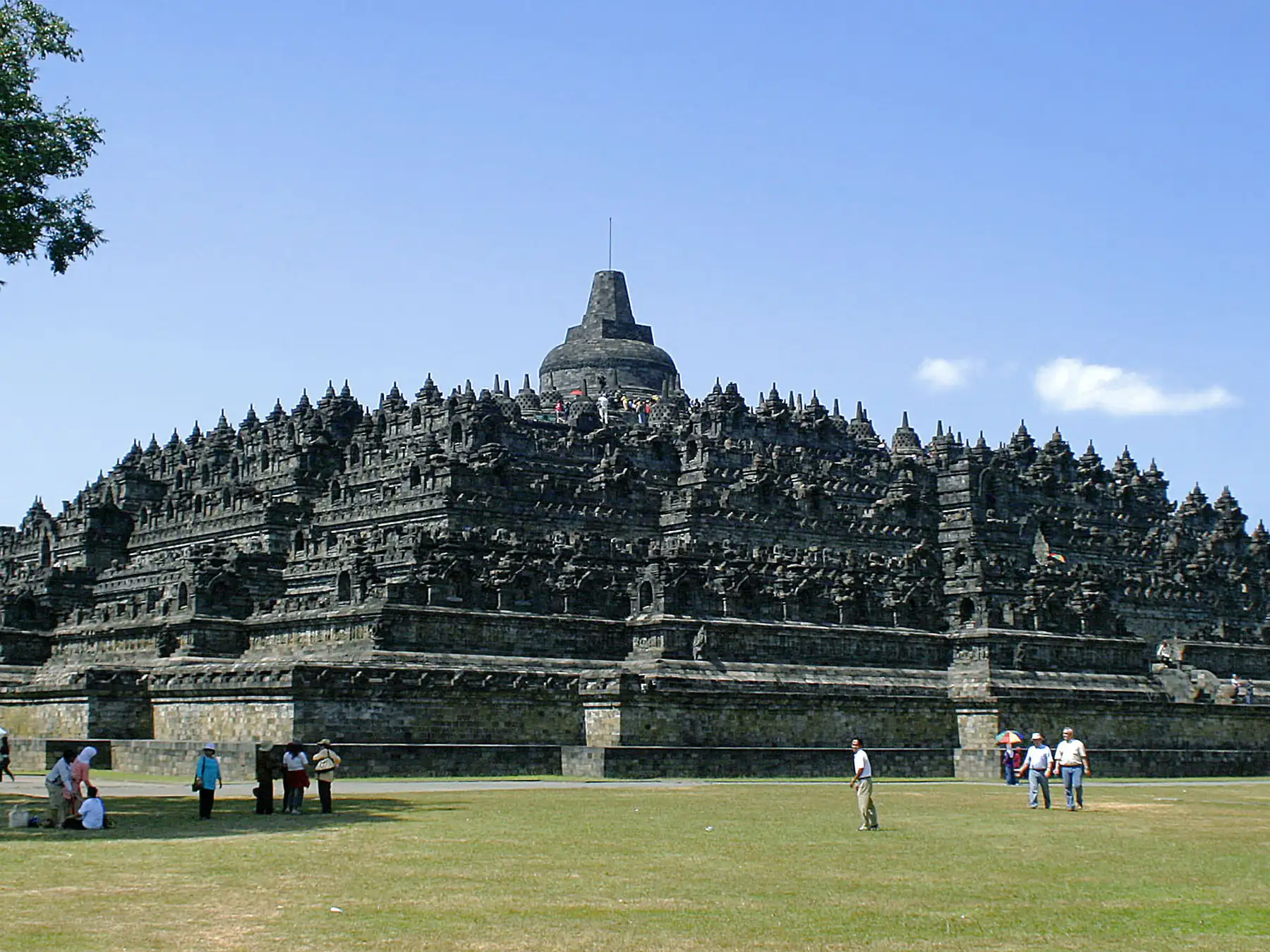
- Borobudur is the world’s largest Buddhist temple complex.
- It was built in central Java during the 8th and 9th centuries.
- Prambanan is a huge Hindu temple complex nearby.
- Both reflect powerful pre-Islamic Javanese kingdoms.
- Indonesia’s religious landscape records centuries of Indian Ocean trade and cultural exchange.
Colonial rule and independence
- European powers reached the Indonesian archipelago seeking spices.
- The Dutch East India Company became a dominant commercial and military force.
- It is commonly known as the VOC.
- The VOC controlled trade and territory through coercion as well as contracts.
- After the company collapsed, the Dutch state expanded colonial rule.
- The colony became known as the Dutch East Indies.
- Colonial plantations produced coffee, sugar, rubber, tea, and other commodities.
- Forced cultivation systems imposed heavy burdens on local populations.
- Indonesian nationalism grew during the early 20th century.
- Japan occupied the Dutch East Indies during World War II.
- Japanese occupation weakened Dutch colonial control while causing severe hardship.
- Sukarno and Mohammad Hatta proclaimed Indonesian independence on August 17, 1945.
- The Netherlands attempted to restore colonial rule.
- A four-year independence struggle followed.
- Dutch recognition of Indonesian sovereignty came in 1949 after international pressure and negotiation.
Wildlife found nowhere else
- Indonesia lies across major biogeographic boundaries.
- The Wallace Line separates many Asian and Australasian animal distributions.
- It is named after naturalist Alfred Russel Wallace.
- Wallace independently developed a theory of natural selection alongside Charles Darwin.
- Orangutans live naturally on Sumatra and Borneo.
- Indonesia therefore shares Bornean orangutan habitat with Malaysia.
- The Sumatran orangutan lives only on Sumatra.
- The Tapanuli orangutan was recognized as a distinct species in 2017.
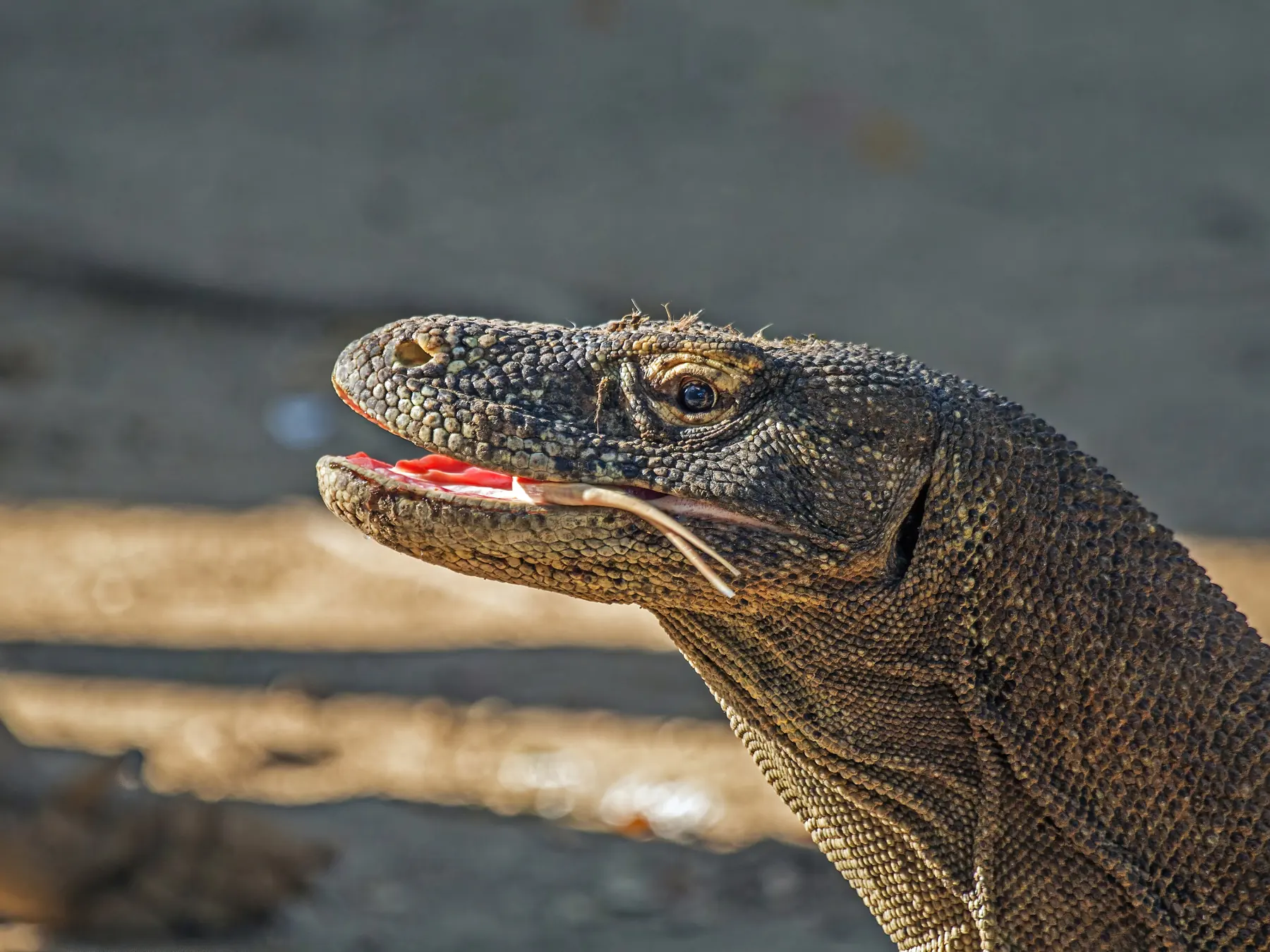
- Komodo dragons live naturally on a small group of Indonesian islands.
- They are the world’s largest living lizards.
- Babirusas are strange pig relatives found on Sulawesi and nearby islands.
- Anoas are small wild cattle native to Sulawesi.
- Birds-of-paradise occur in Papua.
- Indonesia’s coral reefs support extraordinary marine biodiversity.
- Deforestation, wildlife trade, mining, fires, agriculture, and climate change threaten many unique species.
Food, batik, and everyday culture
- Rice is a staple food across much of Indonesia.
- Nasi goreng is Indonesian fried rice.
- Mie goreng is fried noodles.
- Satay consists of skewered grilled foods served with sauces that vary regionally.
- Rendang developed in Minangkabau culture of West Sumatra.
- It slowly cooks meat with coconut milk and spices.
- Tempeh is a fermented soybean food strongly associated with Java.
- Rhizopus molds bind soybeans into a firm cake during fermentation.
- Sambal refers to a huge family of chile-based condiments.
- Indonesian food uses ingredients including coconut, lemongrass, galangal, turmeric, candlenut, tamarind, and many regional spices.
- Batik is a wax-resist textile-dyeing tradition.
- Indonesian batik is recognized by UNESCO as intangible cultural heritage.
- Gamelan ensembles use tuned gongs, metallophones, drums, and other instruments.
- Wayang puppet theater has deep traditions on Java and Bali.
- Indonesia’s culture cannot be reduced to Bali because each major island and ethnic group contributes distinct languages, foods, music, textiles, and ceremonies.
Ten surprising Indonesia facts
- Indonesia spans more than 17,000 islands by commonly cited official counts.
- Most Indonesians live on Java even though it is far from the country’s largest island.
- Indonesia has more than 700 living languages.
- The national language developed from Malay rather than the most widely spoken native language, Javanese.
- The 1815 Tambora eruption affected climate around the world.
- Indonesia has the world’s largest Muslim population but is not formally an Islamic state.
- Borobudur and Prambanan preserve huge Buddhist and Hindu monuments on the same island.
- Three different orangutan species live within Indonesia’s territory.
- Tempeh depends on mold fermentation.
- For more Southeast Asian trivia, explore our Vietnam facts, Philippines facts, and Culture facts.
Quick Indonesia FAQ
How many islands does Indonesia have?
More than 17,000 are commonly cited, although exact official totals vary as islands are surveyed, named, and defined.
What is Indonesia’s capital?
Jakarta has long been the capital, while Indonesia is developing Nusantara in East Kalimantan as a new capital through a phased transition.
What language do Indonesians speak?
Bahasa Indonesia is the national language, alongside more than 700 regional languages.
Is Bali a country?
No. Bali is an Indonesian province and island, famous for its Hindu-majority culture within the larger Indonesian republic.
Why does Indonesia have so many volcanoes?
It sits across active tectonic boundaries where plates collide and subduct, producing long volcanic arcs along the Ring of Fire.

Ellie is the owner and sole author of Fun Facts, combining her mechanical engineering background with years of research-driven writing to deliver facts you can trust. Every article is thoroughly fact-checked and routinely updated as new science and sources emerge to keep information accurate and current. Her mission is to make learning delightful while upholding high standards of reliability and transparency.