
NASCAR grew from southern stock-car racing into a national sport built around speedways, drafting, pit crews, engineering, colorful sponsors, family dynasties, and cars that only look like ordinary road models from a distance. Its history includes Daytona Beach sand races, moonshine legends, a meeting at a Florida hotel, 200-mph drafting packs, restrictor plates, stage racing, and safety innovations born from painful lessons. These 145 NASCAR facts explore Bill France, Daytona, stock cars, drafting, flags, pit stops, famous drivers, tracks, championships, safety, Next Gen cars, and the science of racing inches apart at enormous speed.
NASCAR basics
- NASCAR stands for National Association for Stock Car Auto Racing.
- It is a major American motorsports sanctioning organization.
- NASCAR was founded in 1948.
- Bill France Sr. was its principal founder.
- The organization grew from stock-car racing traditions in the American Southeast.
- NASCAR sanctions several national and regional series.
- The NASCAR Cup Series is its highest-profile championship.
- The Xfinity Series is another major national series.
- The Craftsman Truck Series races pickup-shaped competition vehicles.
- NASCAR events occur on ovals, superspeedways, short tracks, intermediate tracks, and road or street courses.
- Drivers race for individual championships.
- Teams compete with multiple cars under shared ownership.
- Manufacturers also compete for recognition.
- Modern NASCAR race cars are purpose-built competition machines rather than modified showroom cars.
- NASCAR’s official history traces its organization to a 1947 meeting in Daytona Beach and formal incorporation in 1948.
Stock-car racing before NASCAR
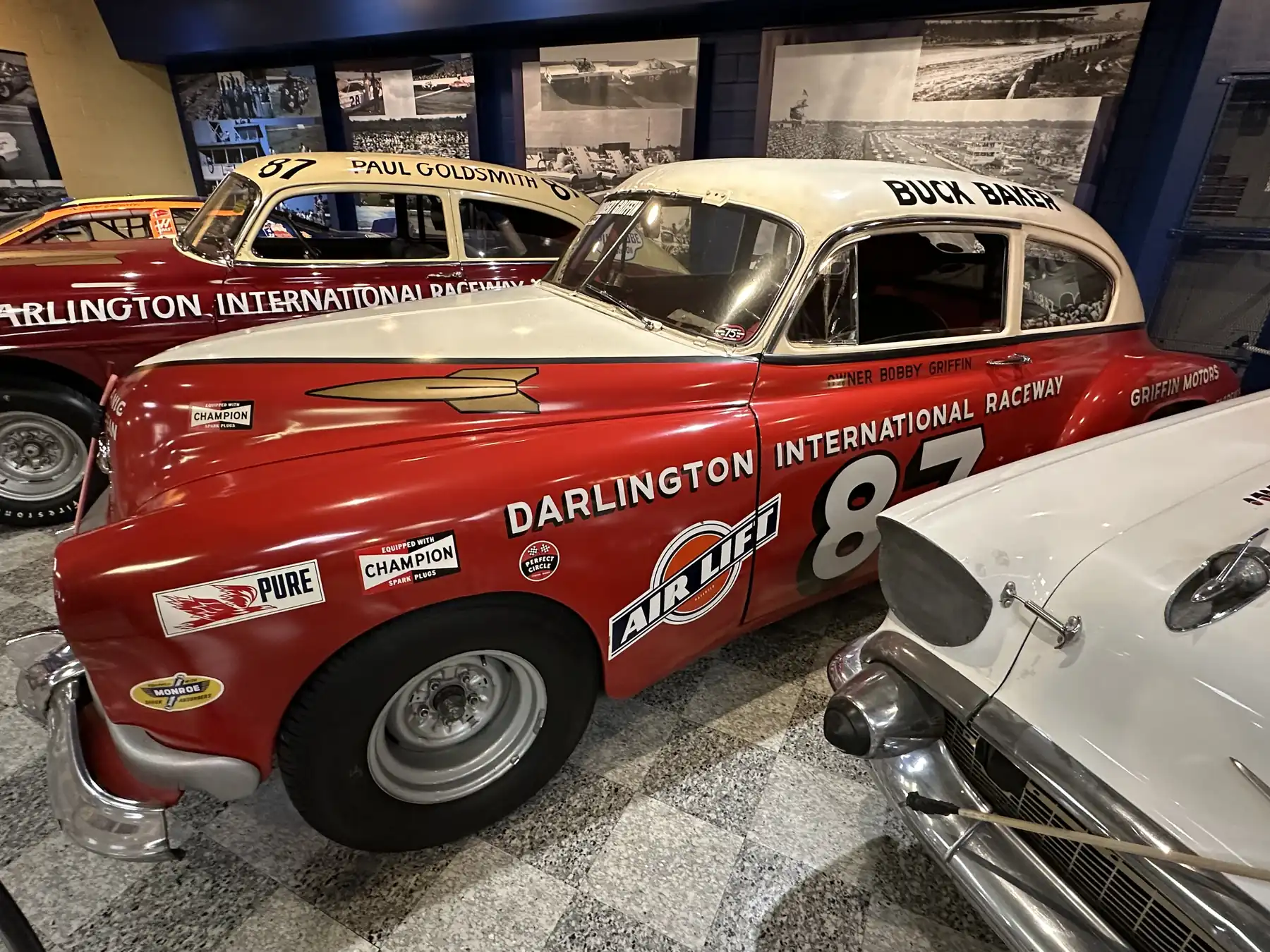
- Automobile racing existed in the American South long before NASCAR.
- Drivers raced modified production cars on dirt tracks and roads.
- Daytona Beach became famous for speed-record attempts.
- Its hard-packed sand created a natural racing surface.
- Stock-car races used sections of beach and public road.
- Moonshine transportation became part of NASCAR folklore.
- Illegal liquor drivers sometimes modified cars for speed and load capacity.
- Some moonshine runners did become racers.
- But NASCAR did not simply emerge because every early driver was a bootlegger.
- Racing involved promoters, mechanics, track owners, military veterans, businessmen, and professional drivers from many backgrounds.
- Rules differed between local events.
- Promoters sometimes failed to pay promised prize money.
- Drivers wanted reliable organization.
- Bill France believed one sanctioning body could standardize rules and purses.
- NASCAR emerged from a broader stock-car culture in which moonshine is one colorful piece rather than the entire origin story.
The Streamline Hotel meeting
- Bill France Sr. organized meetings in Daytona Beach in December 1947.
- Racing figures gathered at the Streamline Hotel.
- They discussed rules, classes, promotion, and organization.
- The name NASCAR was selected for the new sanctioning body.
- NASCAR was incorporated in February 1948.
- Different racing divisions existed from the beginning.
- One early division featured modified cars.
- Another was intended for more strictly stock production automobiles.
- The Strictly Stock division became the ancestor of today’s Cup Series.
- Its first season was 1949.
- Red Byron became the first Strictly Stock champion.
- Jim Roper won the first championship-series race at Charlotte Speedway after the apparent winner was penalized.
- Early NASCAR tracks were often dirt.
- Promoters gradually built larger paved speedways.
- A hotel conference helped turn loosely connected races into an enduring national sports organization.
Daytona International Speedway
- Bill France wanted a permanent high-speed track to replace Daytona’s beach-road course.
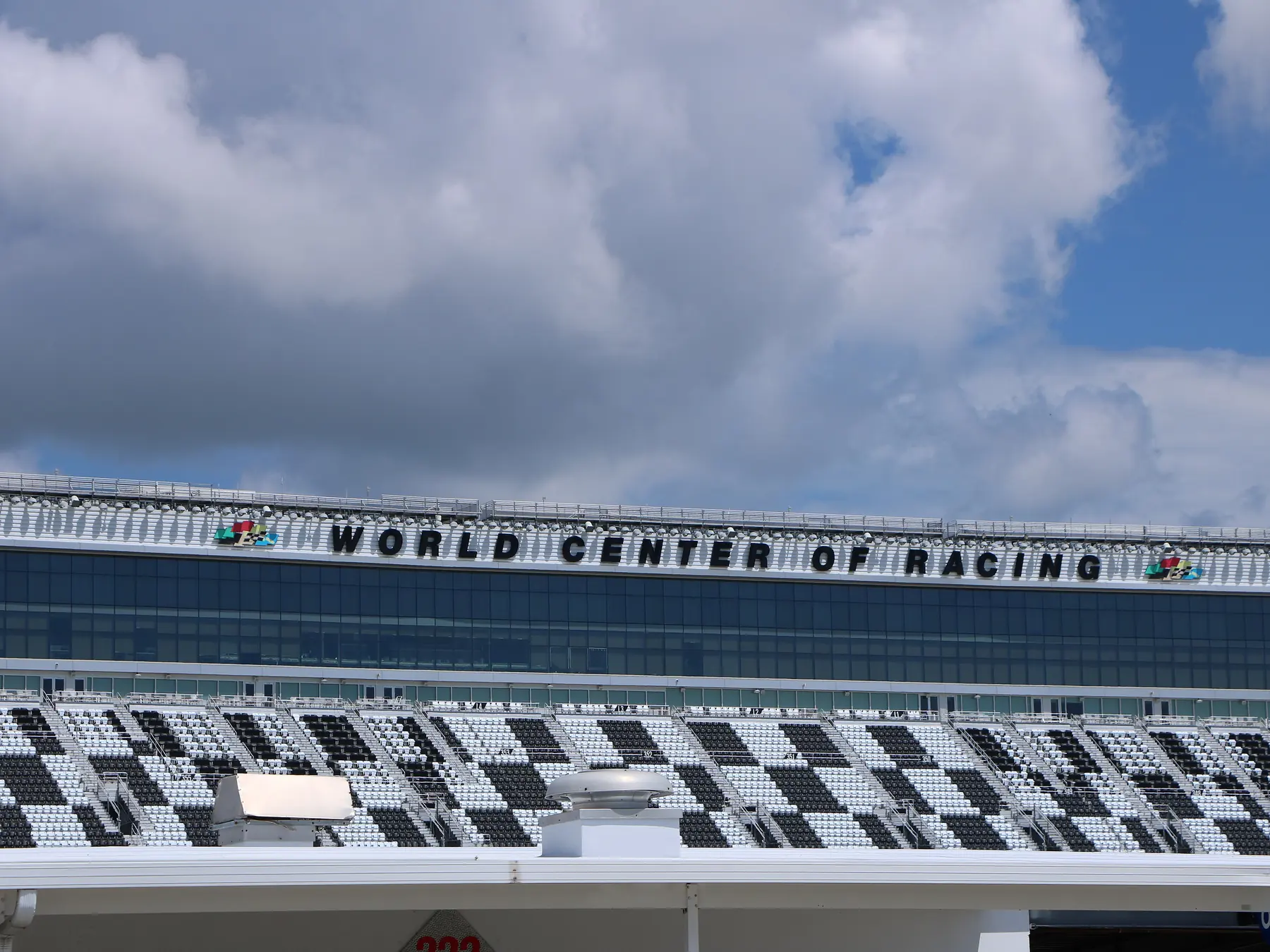
- Daytona International Speedway opened in 1959.
- The oval is 2.5 miles long.
- Its turns are banked at up to 31 degrees.
- Banking helps cars maintain high speed through corners.
- The first Daytona 500 took place in 1959.
- The finish was so close that officials needed photographs to determine the winner.
- Lee Petty was declared the winner.
- The Daytona 500 became NASCAR’s most famous race.
- Unlike many sports, NASCAR’s biggest event occurs near the beginning of the season.
- Daytona also hosts sports-car racing.
- The Rolex 24 at Daytona uses the speedway’s road-course layout.
- The enormous infield includes garages, camping, fan areas, and Lake Lloyd.
- Daytona’s high banking created a new kind of sustained stock-car speed.
- The speedway turned a beach-racing town into the symbolic home of NASCAR.
Drafting makes cars faster together
- A moving race car pushes air out of its way.
- This creates aerodynamic drag.
- A car following closely can enter the reduced-pressure wake behind another car.
- That can reduce its drag.
- The following car may therefore need less power to maintain the same speed.
- This technique is called drafting.
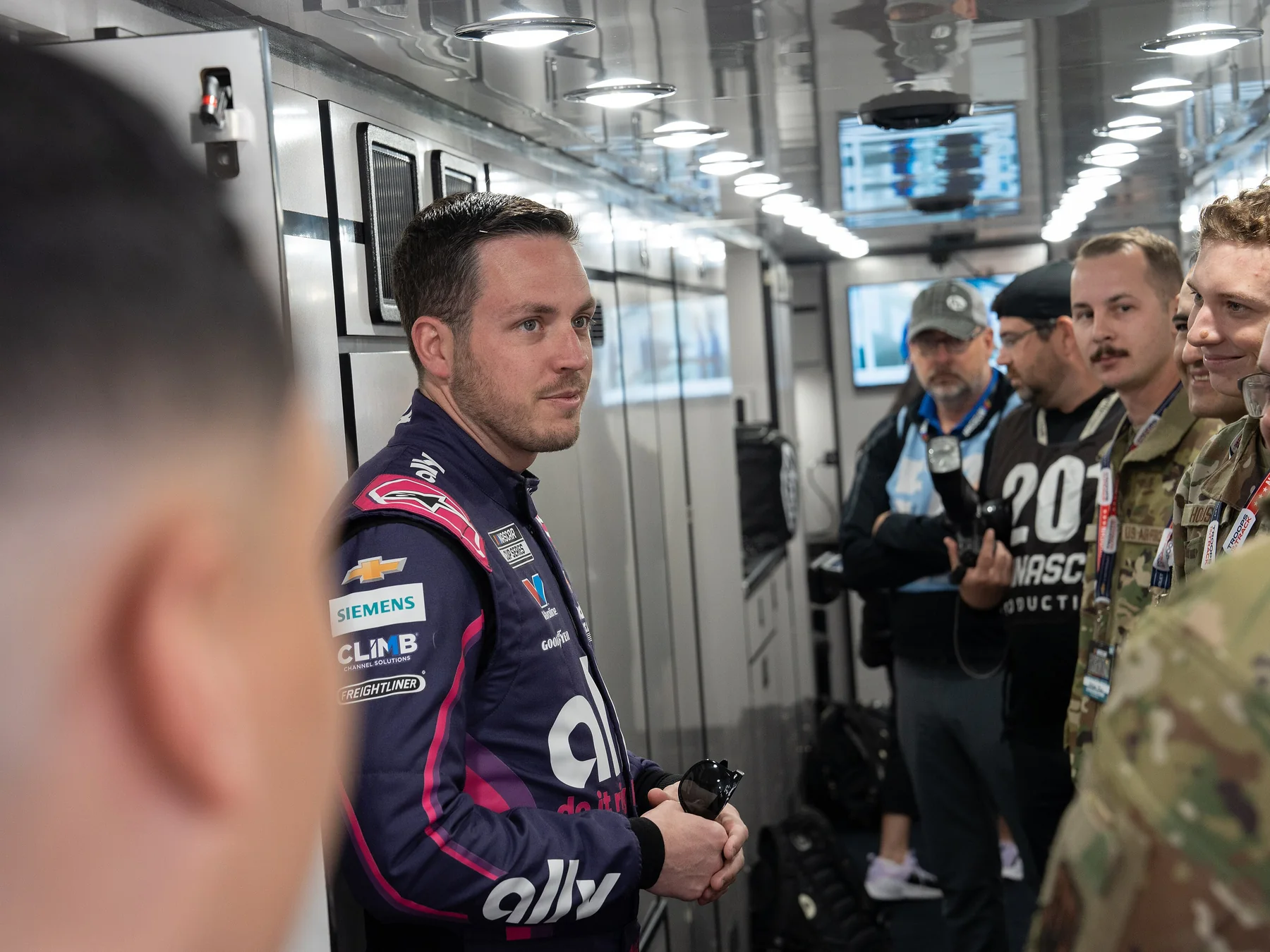
- At superspeedways, drafting becomes essential.
- Cars form long lines or packs.
- A trailing car can build momentum for a pass.
- Side drafting manipulates airflow beside another car.
- Cars can affect one another aerodynamically without physical contact.
- Drafting can also help the leading car in some configurations by changing wake pressure.
- Large packs create strategic alliances that can disappear instantly.
- A driver may push a rival for several laps because both cars benefit.
- Superspeedway racing is therefore cooperative aerodynamics wrapped inside direct competition.
Why Daytona and Talladega are different
- Talladega Superspeedway opened in Alabama in 1969.
- Its oval is 2.66 miles long.
- That makes it longer than Daytona.
- Both tracks produce extremely high speeds.
- NASCAR introduced horsepower-limiting measures after speeds became dangerously high.
- Restrictor plates were used for decades at Daytona and Talladega.
- The plates reduced airflow into engines and therefore power.
- Modern cars use different technical methods to limit output.
- Lower horsepower keeps maximum speeds within a more manageable range.
- It also makes drafting packs tighter.
- Tight packs can produce huge multi-car crashes.
- NASCAR fans call those crashes “the Big One.”
- Superspeedway strategy emphasizes track position, drafting partners, fuel, and avoiding accidents.
- Drivers often wait until late in a race to make aggressive moves.
- Daytona and Talladega look like simple ovals but create some of the sport’s most complicated aerodynamic racing.
Pit crews are athletes
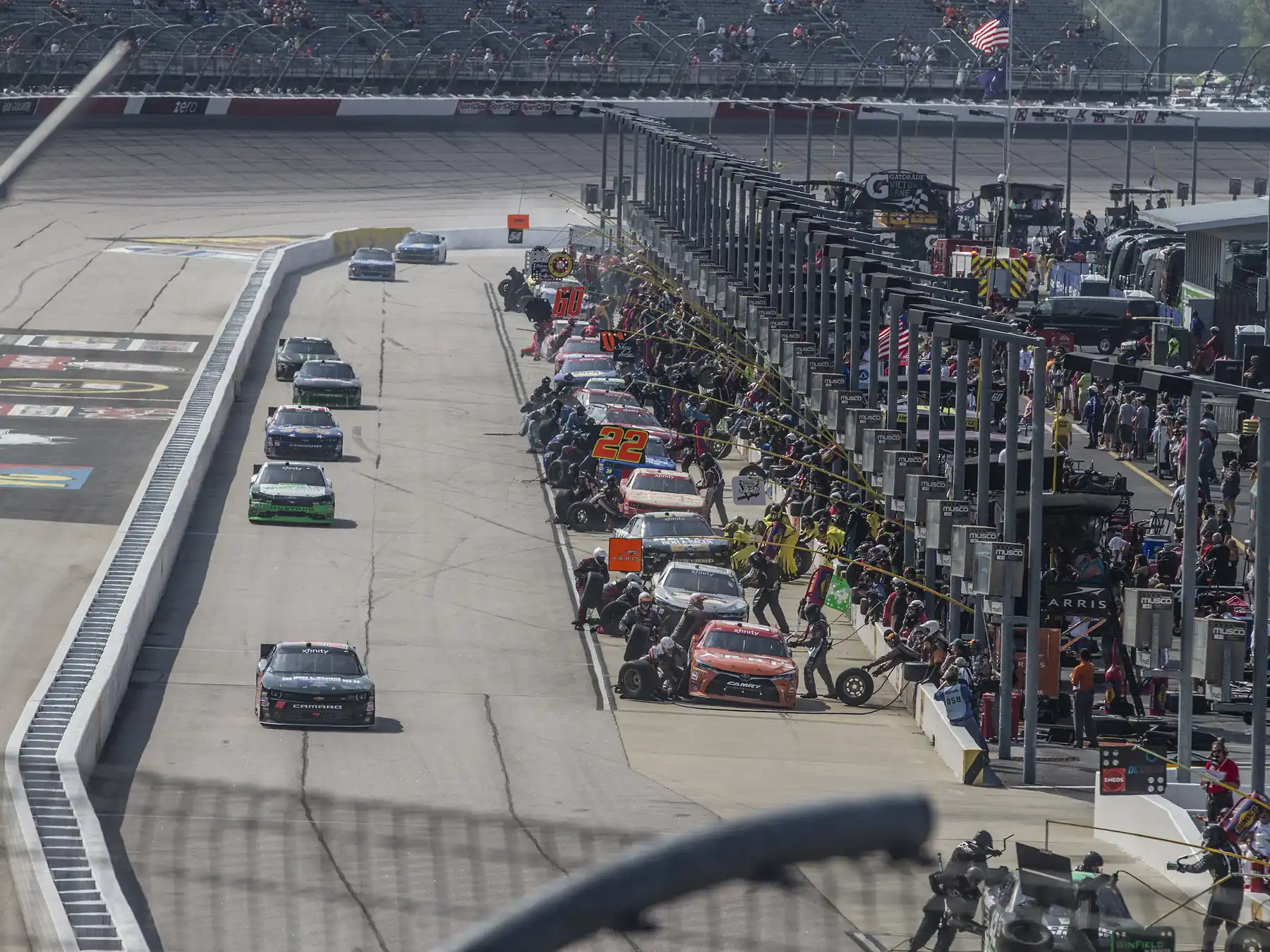
- NASCAR pit stops combine tire changes, fueling, adjustments, and repairs.
- Modern Cup cars use a single center-lock wheel nut.
- Older NASCAR generations used five lug nuts per wheel.
- The Next Gen car introduced the single-lug design.
- Pit crews train like specialized athletic teams.
- Members practice choreography repeatedly.
- Tire changers use high-powered wheel guns.
- Tire carriers move heavy wheels quickly.
- A jack operator raises the car.
- A fueler adds fuel through the refueling system.
- Only a limited number of crew members may work over the wall under the rules.
- Penalties apply for loose equipment, speeding, unsafe actions, or too many crew members.
- A fast pit stop can gain multiple track positions.
- A mistake can cost a race even when the car is fast.
- Modern NASCAR teams recruit and train former college athletes for pit-crew roles because speed, coordination, strength, and repeatability matter enormously.
Safety changed after tragedy
- NASCAR’s early decades involved significant driver danger.
- Race cars gradually gained stronger roll cages and fuel protection.
- Fire-resistant suits became standard.
- Window nets help keep drivers’ arms inside cars during crashes.
- Head-and-neck restraints reduce violent head movement.
- Dale Earnhardt died after a crash on the final lap of the 2001 Daytona 500.
- His death accelerated NASCAR safety reforms.
- The HANS device became mandatory.
- SAFER barriers spread to major tracks.
- SAFER stands for Steel and Foam Energy Reduction.
- The barrier absorbs crash energy rather than behaving like a rigid concrete wall.
- Seats and restraint systems improved.
- Cars gained more sophisticated crash structures.
- Track medical response and concussion protocols also evolved.
- Safety progress in motorsport often comes from analyzing failures no one wants repeated.
The Next Gen car
- NASCAR introduced its Next Gen Cup car in 2022.
- The design changed major mechanical traditions.
- It uses independent rear suspension.
- Older Cup cars used a solid rear axle.
- The Next Gen car uses a sequential transaxle.
- Its transmission is mounted toward the rear.
- It uses 18-inch wheels.
- The wheels use a single center-lock nut.
- A flat underbody and rear diffuser manage airflow beneath the car.
- Composite body panels replace traditional sheet-metal outer bodies in many areas.
- Teams use more standardized components.
- The goal includes reducing development costs and improving competition.
- Manufacturer bodies still carry styling cues from Chevrolet, Ford, and Toyota road cars.
- Underneath, the race machines are purpose-built and highly standardized.
- “Stock car” now describes a racing lineage more than a car a customer could buy from a dealership.
Ten surprising NASCAR facts
- NASCAR was organized through meetings at a Daytona Beach hotel.
- Moonshine runners are part of its history but not the entire origin story.
- The first Daytona 500 needed photographic review to determine its winner.
- Talladega is longer than Daytona.
- Drafting lets rival cars temporarily help each other go faster.
- Modern Cup cars use one wheel nut rather than five.
- Former college athletes are recruited for specialized pit crews.
- Dale Earnhardt’s 2001 death accelerated major safety changes.
- Today’s “stock cars” are purpose-built race machines, not modified showroom vehicles.
- For more racing trivia, explore our Formula 1 facts and sports facts.
Quick NASCAR FAQ
What does NASCAR stand for?
National Association for Stock Car Auto Racing.
Who founded NASCAR?
Bill France Sr. led the organization of NASCAR after meetings with racing figures in Daytona Beach in 1947.
When was NASCAR founded?
The organization was formally incorporated in 1948, and the championship division that became today’s Cup Series began in 1949.
What is drafting?
Following closely behind another car to take advantage of its aerodynamic wake and reduce drag, especially important at Daytona and Talladega.
Are NASCAR cars stock production cars?
No. Modern Cup cars are purpose-built race vehicles that use manufacturer styling cues but specialized racing chassis, safety systems, aerodynamics, and components.

Ellie is the owner and sole author of Fun Facts, combining her mechanical engineering background with years of research-driven writing to deliver facts you can trust. Every article is thoroughly fact-checked and routinely updated as new science and sources emerge to keep information accurate and current. Her mission is to make learning delightful while upholding high standards of reliability and transparency.