
Ice cream is the world’s favorite chilly treat, and every scoop hides a lot of history and science.
From cones and sundaes to gelato and sorbet, there’s a style for everyone.
Grab a spoon and explore these bite-size facts that make your next bowl, cone, or float even cooler.
Origins & definitions
- Ice cream is a frozen dessert made from milk or cream, sugar, and flavorings.
- Air is whipped in during churning to create a light texture called overrun.
- Most ice creams contain tiny ice crystals, fat droplets, and air bubbles held together by proteins.
- Many countries set a minimum milk fat for “ice cream,” often around 10%.
- Soft serve is ice cream served warmer with more air for a softer bite.
- Gelato uses more milk and less air, making it denser and silkier.
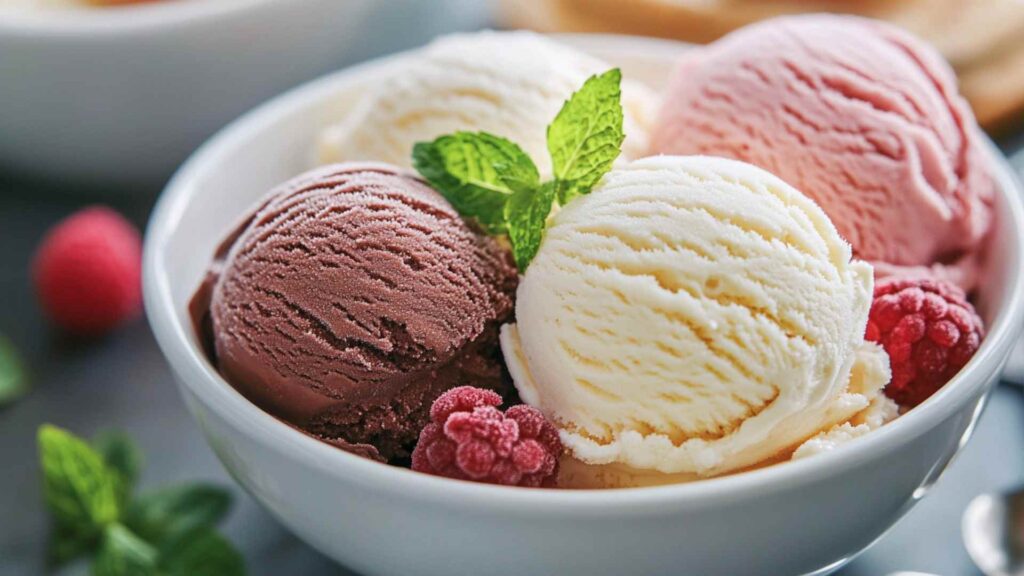
- Sorbet is dairy-free and made from fruit, sugar, and water.
- Sherbet usually includes fruit and a small amount of dairy.
- Granita is a coarse, flaky cousin made by scraping during freezing.
- Kulfi is a dense, slow-melting frozen dairy dessert from South Asia.
- Mochi ice cream wraps small scoops in chewy rice dough.
- Fried ice cream has a crispy shell created by quick frying a frozen scoop.
- Rolled ice cream is poured on a cold plate, scraped into curls, and served in a cup.
- Ice cream sandwiches pair frozen filling with cookies, wafers, or cake.
- The base for many ice creams is a cooked custard of milk, cream, sugar, and egg yolks.
- Philadelphia-style ice cream skips eggs and relies on dairy solids for body.
- No-churn recipes use whipped cream and condensed milk to mimic churned texture.
- Overrun can range from near zero in gelato to over 100% in airy styles.
Record-breakers & wow numbers
- A standard single scoop is about half a cup, or roughly 120 milliliters.
- Commercial ice cream is typically served at about −12 °C to −6 °C (10 °F to 21 °F).
- Home freezers hold ice cream near −18 °C (0 °F) to keep crystals small.
- Many packages list a serving as two-thirds of a cup, which is about 160 milliliters.
- Ice crystals larger than 50 micrometers can taste gritty to the tongue.
- Salt mixed with ice can drop the freezing bath to below −20 °C for hand-cranked makers.
- Dry ice can freeze ice cream so fast it billows fog as it sets.
- Liquid nitrogen at −196 °C freezes tiny crystals for ultra-smooth scoops.
- Lactose in dairy makes up about 4–5% of milk by weight.
- Overrun of 100% means one liter of mix becomes two liters of ice cream.
- Many cones hold between 10 and 20 grams of wafer before filling.
- A waffle cone can add roughly 100–160 calories depending on size.
- Toppings like nuts and syrups can multiply the energy in a serving.
- A well-tempered scoop should resist the spoon slightly before yielding.
- Large industrial freezers can freeze several liters per minute as the barrel scrapes the wall.
- Many ice cream trucks play music set around 120 beats per minute to catch attention.
Science & how it works
- Ice cream is a foam stabilized by fat, proteins, and tiny ice crystals.
- Churning breaks fat globules and lets them partially coalesce into a network.
- This fat network helps trap air bubbles and gives body and creaminess.
- Emulsifiers help fat droplets stick together during freezing.
- Stabilizers like guar gum or locust bean gum slow melting by holding water.
- Sugar lowers the freezing point so the mix stays scoopable.
- Too little sugar makes a hard, icy texture even at freezer temperatures.
- Too much sugar makes a slushy texture that never firms up.
- Milk proteins such as casein help keep air bubbles from popping.
- Smaller ice crystals give a smoother mouthfeel.
- Fast freezing creates smaller crystals than slow freezing.
- Temperature cycling in a warm freezer causes crystal growth and sandiness.
- Alcohol in flavorings can soften texture by depressing the freezing point.
- Fruit purées add acidity that can brighten flavors but may curdle milk if heated.
- Cocoa butter in chocolate can firm up a chocolate base as it cools.
- Vanilla flavor comes from hundreds of molecules, not just one compound.
- Caramelization and Maillard reactions add cooked flavors to browned mix-ins.
- Nuts stay crunchier when added at the end of churning rather than early.
- Ripple sauces are often added in thin streams to make streaks without dissolving.
- Swirl patterns form when semi-frozen mix folds over itself in the barrel.
- Overrun affects melting rate, with denser products often melting more slowly.
- Serving temperature changes flavor strength because cold dulls sweetness.
- Lids that seal tightly reduce freezer burn by limiting water loss.
- Freezer burn happens when surface ice sublimates and dries out the top.
History & culture
- People have chilled sweet drinks with snow and ice for thousands of years.
- Early frozen desserts were often flavored with fruit juices or syrups.
- Hand-cranked home freezers became common in the 19th century.
- Icehouses stored winter ice for summer use before mechanical refrigeration.
- Mechanical refrigeration in the 20th century made ice cream widely available.
- The edible ice cream cone rose to popularity in the early 1900s.
- Sundaes became a parlor treat with sauces, nuts, and whipped cream.
- Banana splits layer banana, ice cream, sauces, and cherries in a long dish.
- Ice cream trucks brought cold treats to neighborhoods in the mid-20th century.
- Many countries celebrate a national ice cream day during summer.
- Flavor contests and festivals highlight local dairy and fruit.
- Rolled ice cream stalls spread globally in the 2010s.
- Ice cream parlors often display flavors in metal pans called tubs.
- Spumoni layers different flavors and colors with nuts and candied fruit.
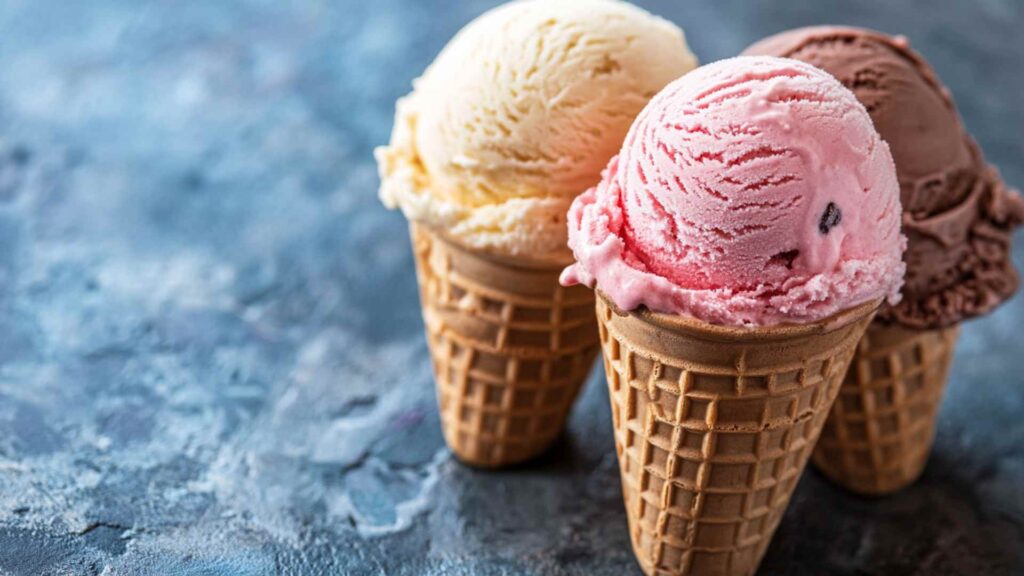
- Neapolitan packs chocolate, vanilla, and strawberry side by side.
- Dondurma from Türkiye is stretchy and chewy due to salep and mastic.
- A semifreddo is an Italian frozen mousse served partially frozen.
- Soft serve machines mix, freeze, and dispense continuously.
- A float combines ice cream with a carbonated drink in a tall glass.
- Thick milkshakes blend ice cream with milk for sipping through a straw.
- Affogato pours hot espresso over a scoop to create a hot-cold dessert.
- Snow ice shaves flavored blocks to create thin, fluffy ribbons.
- Baked Alaska insulates ice cream under browned meringue.
- Ice cream cakes stack layers of frozen dessert with cake or cookie crumbs.
Styles, types & global variations
- American-style ice cream tends to have higher fat and more overrun than gelato.
- French-style ice cream is typically egg-yolk custard based.
- Frozen custard includes egg yolks and is served fresh at a warmer temperature.
- Soft serve often uses a mix with emulsifiers and stabilizers for consistent flow.
- Sugar-free options replace sucrose with low-calorie sweeteners and bulking agents.
- Lactose-free versions use lactase enzyme to split lactose into simpler sugars.
- Vegan ice creams use bases like coconut, oat, almond, or soy drinks.
- High-protein pints add milk proteins to boost grams per serving.
- Light ice cream lowers fat while keeping body with stabilizers.
- No-sugar-added versions still contain natural sugars from milk or fruit.
- Fruit-first sorbets highlight seasonal berries, citrus, or tropical flavors.
- Paletas are Latin American frozen treats that can be milky or water-based.
- Falooda ice cream desserts layer noodles, basil seeds, and rose syrup.
- Halo-halo in the Philippines mixes shaved ice, sweet beans, fruits, and ice cream.
- A cassata combines ice cream with sponge cake and candied fruit.
- Thai coconut ice cream is often served with sticky rice and roasted peanuts.
- Ube ice cream uses purple yam for color and a nutty flavor.
- Matcha ice cream brings a grassy, tea-based taste and green hue.
- Black sesame ice cream offers a toasty, slightly bitter profile.
- Pistachio ice cream ranges from pale green to natural beige.
- Strawberry ice cream can use purée, pieces, or ripple for varied texture.
- Mint chip pairs a cooling mint base with chocolate bits that snap.
- Cookies and cream mixes chocolate cookie chunks into a vanilla-like base.
- Birthday cake flavor often uses sprinkles and cake-like aromas.
Ingredients, cones, toppings & serving
- Vanilla is one of the most popular flavors across many countries.
- Real vanilla flavor is extracted from cured orchid pods.
- Chocolate ice cream starts with cocoa or melted chocolate in the base.
- Fruit acids can curdle milk, so many fruit flavors are added after cooling.
- Nuts taste fresher when toasted before mixing into the churn.
- Swirls are easier to see in lighter-colored bases.
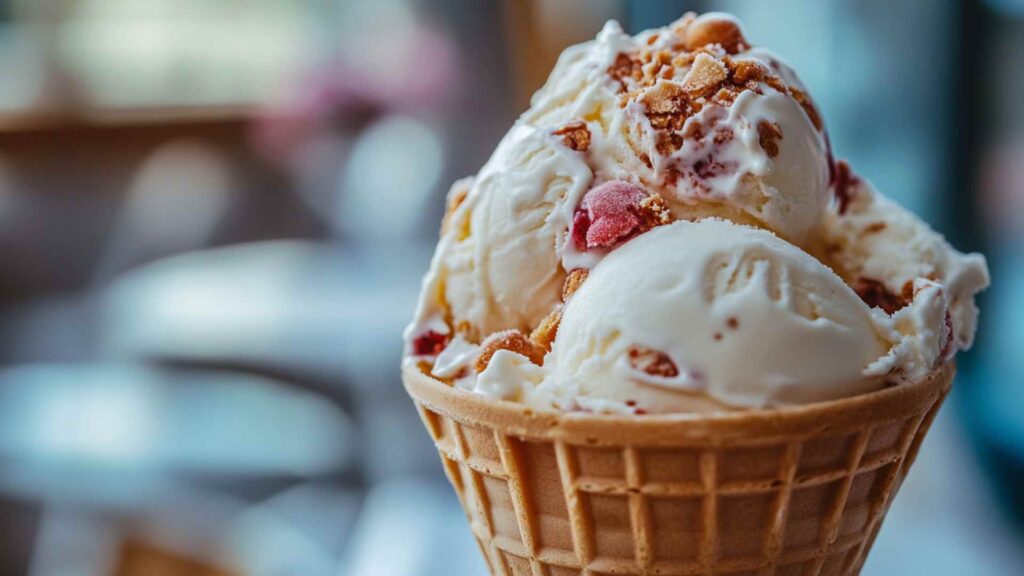
- Waffle cones are made from a batter cooked on a patterned iron.
- Sugar cones are darker and crisper than plain wafer cones.
- Cones should be stored dry to prevent sogginess.
- Bowls are better for very soft or heavily topped sundaes.
- Whipped cream adds volume mostly from air, not from cream alone.
- A cherry on top is a classic garnish for sundaes.
- Hot fudge thickens as it meets cold ice cream.
- Butterscotch sauce is cooked sugar with butter and dairy.
- Caramel sauce is made by browning sugar before adding cream.
- Fruit sauces are often stabilized with pectin for a glossy finish.
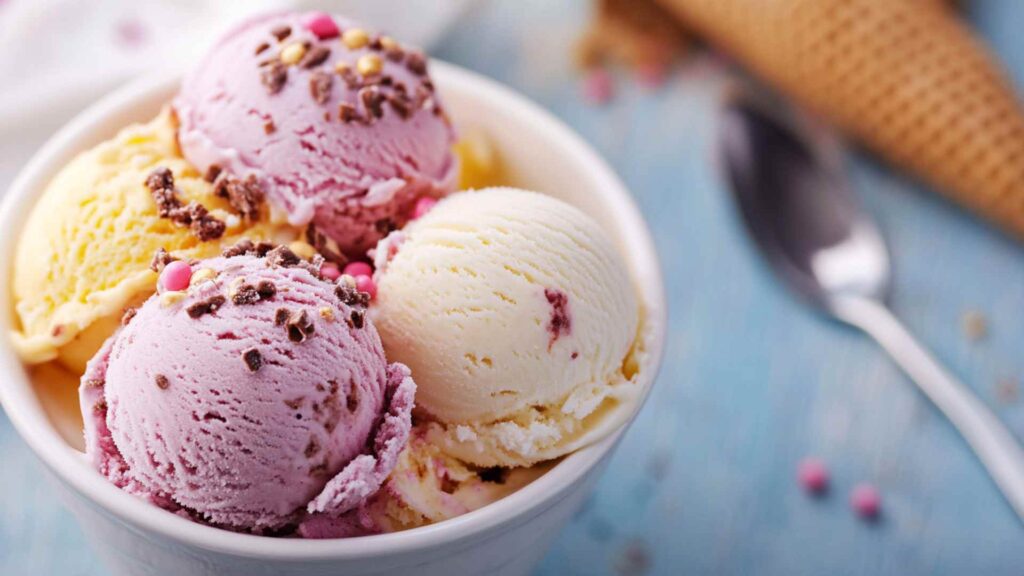
- Sprinkles add crunch but can bleed color into wet toppings.
- Crushed cookies or cones add a different crunch than nuts.
- A warm spoon helps make cleaner quenelle shapes.
- Pre-chilled bowls slow melting during long serving times.
Nutrition, health & safety
- Ice cream is energy-dense because it contains fat and sugar.
- Dairy-based ice cream provides calcium along with calories.
- Portion size makes a big difference in total energy intake.
- People with lactose intolerance may prefer lactose-free or dairy-free options.
- Food allergies to milk, nuts, or eggs require careful label reading.
- Cold foods can trigger a brief “brain freeze” when blood vessels react.
- Brain freeze often eases by warming the roof of the mouth with the tongue.
- Clean scoops and hands help prevent cross-contamination between flavors.
- Keeping ice cream below −18 °C limits crystal growth during storage.
- Once melted, re-freezing can make larger crystals and a coarse texture.
- Pregnancy-safe choices avoid raw eggs in homemade bases.
Pop culture & for kids: quick comparisons
- Two small scoops can look bigger than one large scoop because of more surface area.
- A metal scoop warms quickly in hot water and slides through easier.
- Ice cream tastes sweeter as it softens because aromas reach your nose better.
- Cones were designed to be edible holders that leave no dishes to wash.
- A slow lick melts a tunnel that can make scoops fall, so rotating the cone helps.
- Stacking flavors side by side in a cup helps keep colors from blending as fast.
- You can hear tiny bubbles pop if you press a soft serve cone close to your ear.
- Sharing a sampler flight lets you try more flavors without finishing a whole bowl.
Quick FAQ
Q: What is the difference between ice cream and gelato?
A: Ice cream usually has more fat and air, while gelato uses more milk, less air, and is served slightly warmer for a denser texture.
Q: Why does ice cream get icy in the freezer?
A: Warm-cold cycles let small crystals grow larger, so keep the tub cold and tightly sealed.
Q: How long does ice cream last in the freezer?
A: For best quality, enjoy within a few weeks after opening and keep it stored at or below −18 °C.
Q: Can you make ice cream without a machine?
A: Yes, you can whip cream with sweetened condensed milk or shake a sealed bag of mix inside a larger bag of ice and salt.
Q: What causes brain freeze and how do I stop it?
A: Rapid cooling of the palate triggers brief vessel changes, and pressing your tongue to the roof of your mouth usually helps it pass.

Ellie is the owner and sole author of Fun Facts, combining her mechanical engineering background with years of research-driven writing to deliver facts you can trust. Every article is thoroughly fact-checked and routinely updated as new science and sources emerge to keep information accurate and current. Her mission is to make learning delightful while upholding high standards of reliability and transparency.