
Tornadoes are nature’s fastest spinning storms, and they can appear with little warning.
This mega-list breaks down what they are, how they form, where they happen, and how to stay safe.
Keep it handy for storm season, science class, or pure curiosity, and share it with the weather fan in your life.
Origins & definitions
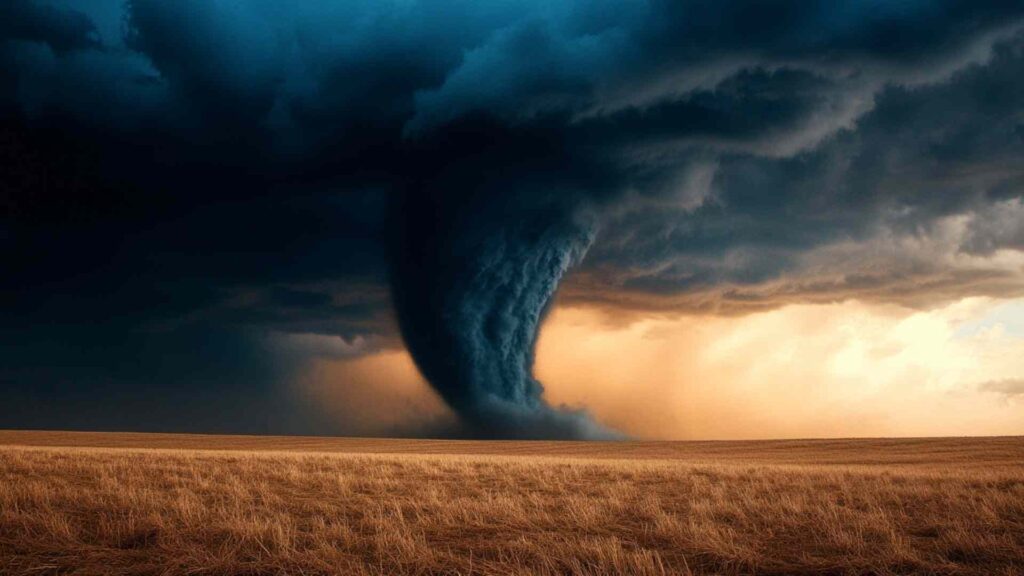
- A tornado is a rapidly rotating column of air that reaches from a cloud to the ground.
- A tornado becomes official when ground contact is confirmed by debris or dust, not just a funnel in the cloud.
- The visible funnel is made of tiny water droplets and dust, not the wind itself.
- Most tornadoes come from thunderstorms that rotate, called supercells.
- Some tornadoes form without supercells and are called landspouts.
- Tornadoes over water are called waterspouts.
- A funnel cloud is a rotating funnel aloft that has not reached the ground.
- A debris cloud at the surface can appear before the condensation funnel stretches down.
- The Enhanced Fujita (EF) scale rates tornado damage from EF0 to EF5.
- EF0 tornadoes cause light damage like broken branches and shallow roof loss.
- EF5 tornadoes tear strong homes off foundations and toss heavy cars.
- Most tornadoes are weak, with ratings of EF0 or EF1.
- Tornado paths are usually short, often just a few kilometers long.
- Tornado widths vary widely, from a few tens of meters to several kilometers.
- A multi-vortex tornado contains smaller whirls spinning inside the main circulation.
Record-breakers & wow numbers
- The widest tornado on record was about 4.2 km wide near El Reno, Oklahoma, in 2013.
- The deadliest tornado in world history struck Bangladesh in 1989 and killed about 1,300 people.
- The longest continuous tornado track in the United States occurred in 1925 and stretched about 352 km.
- Mobile Doppler radars have clocked tornado winds near 480–490 km/h (around 300 mph).
- Typical tornado wind speeds range from 105 km/h to over 322 km/h depending on the EF rating.
- A large tornado can loft debris tens of kilometers downwind.
- Tornado forward speeds vary from nearly stationary to over 100 km/h.
- Some tornadoes last less than 2 minutes, while rare ones persist for over an hour.
- Tornadoes have occurred on every continent except Antarctica.
- The United States reports the most tornadoes each year.
- Canada reports the second most tornadoes in North America.
- Tornadoes can fling straw into wooden boards by turning debris into high-speed projectiles.
- The pressure inside strong tornadoes can drop by tens of millibars.
- Tornado funnels can reach heights of several kilometers into the cloud base.
- The largest tornado outbreaks can produce hundreds of tornadoes over several days.
- Nocturnal tornadoes cause a higher share of deaths because people are asleep.
- Some tornadoes carve damage paths wider than a football field by more than ten times.
- Tornado debris has been carried over 150 km in extreme cases.
- The rumbling sound many people report comes from wind, debris, and structures vibrating.
- The costliest tornado disasters reach billions of dollars in damages in modern times.
Science: how tornadoes form
- Wind shear creates horizontal tubes of spinning air in a thunderstorm environment.
- Updrafts tilt this horizontal spin into the vertical, creating a rotating updraft.
- A rotating updraft inside a storm is called a mesocyclone.
- Air accelerates as it is stretched upward, increasing the spin like a skater pulling in arms.
- A rear-flank downdraft can wrap rain and cool air around the rotation.
- The clash of warm, moist air near the ground and cooler air aloft fuels strong updrafts.
- Tornado formation often happens near the boundary between inflow and downdraft.
- Not every rotating storm produces a tornado.
- Many landspouts form along wind-shift boundaries on sunny, unstable days.
- Waterspouts often start under growing cumulus clouds over warm water.
- Dust devils are different because they form from hot ground, not from storm clouds.
- A gustnado is a short-lived swirl along a storm’s gust front and is not a true tornado.
- Doppler weather radar detects rotation by measuring wind coming toward and away from the antenna.
- Dual-polarization radar can spot lofted debris using changes in returned signals.
- A tornado debris signature on radar is a strong clue that a tornado is on the ground.
- Hook-shaped radar echoes can indicate a rotating storm with a possible tornado.
- The life cycle of a tornado includes organizing, mature, and dissipating stages.
- Tornadoes often narrow and become rope-like as they weaken.
- Rain-wrapped tornadoes are hidden by heavy rain and are especially dangerous.
- Satellite tornadoes are smaller tornadoes that orbit a larger one.
- Anticyclonic tornadoes spin clockwise in the Northern Hemisphere and are uncommon.
- The Coriolis effect does not directly make a single tornado spin, but it influences storm environments.
- Hail and lightning are common around tornadic storms, but a tornado can occur with little rain.
- Forecasters use computer models and observations to estimate tornado risk hours to days ahead.
- Warning messages are issued when a tornado is seen or indicated by radar.

Where and when they happen
- In the United States, spring and early summer bring the most tornadoes on the Great Plains.
- The Southeast often sees tornadoes in late winter and spring, sometimes at night.
- Florida leads in waterspouts because of warm seas and frequent storms.
- Tornadoes also occur in Europe, especially from late spring to summer.
- Bangladesh and parts of eastern India experience strong tornadoes during the pre-monsoon season.
- Argentina and Uruguay see tornadoes in the humid Pampas region.
- South Africa records tornadoes mainly in the Highveld and eastern areas.
- Australia gets tornadoes most often from spring into summer.
- Tornadoes can hit big cities as well as rural areas.
- Mountains and rivers do not stop tornadoes.
- Rough terrain can disrupt low-level inflow and sometimes weakens a tornado.
- Urban heat and complex winds can create small-scale zones that affect storm behavior.
- Tornadoes can cross lakes and bays as waterspouts and continue on land.
- Many countries track tornadoes using national databases and volunteer reports.
- Population growth and better reporting have increased the number of reports over time.
- Some regions use the term “Dixie Alley” for a tornado-prone area in the Southeast.
- The Plains region is often called “Tornado Alley,” though risk exists far beyond it.
- The peak tornado hour is late afternoon to early evening, but they can occur at any time.
- The yearly peak month shifts by region, moving northward as warm air spreads in spring.
- Cold-season tornadoes can spin up along fast-moving squall lines.
Safety & preparation
- The safest place in a house is a small interior room on the lowest floor.
- Put as many walls as you can between you and the outside.
- Stay away from windows because flying glass can injure you.
- A sturdy table or workbench can protect you from falling debris.
- A basement or storm shelter offers the best protection in most homes.
- If you live in a mobile home, plan to reach a sturdy building when storms threaten.
- Never shelter under a highway overpass because winds can accelerate there.
- If you are driving and see a tornado, try to reach a sturdy building rather than stopping under bridges.
- If no shelter is nearby, lie flat in a low spot and protect your head from debris.
- Wearing a bicycle or sports helmet reduces head injury risk during tornadoes.
- Keep a go-bag with water, snacks, shoes, flashlights, and a whistle.
- A weather radio or phone alerts can wake you at night for warnings.
- Set your phone to allow emergency alerts even when it is in silent mode.
- Practice your shelter plan with family members before storm season.
- Pets should be brought inside and kept on a leash or in a carrier during warnings.
- In schools and offices, interior hallways on the lowest floor are preferred shelters.
- Large rooms with wide roofs, like gyms or warehouses, are more likely to fail in strong winds.
- After a tornado, watch for downed power lines and the smell of gas leaks.
- Use generators only outside and away from windows to avoid carbon monoxide.
- Do not try to outrun a fast-moving tornado in a city with traffic.
- If a warning is issued, act immediately because minutes matter.
- Keep important documents in a waterproof pouch in your shelter area.
- Closed-toe shoes protect your feet from nails and glass after the storm.
- Teach kids to cover their heads with pillows or cushions during sheltering.
- Keep a first aid kit and know basic bleeding control techniques.
Shapes, sounds & sights
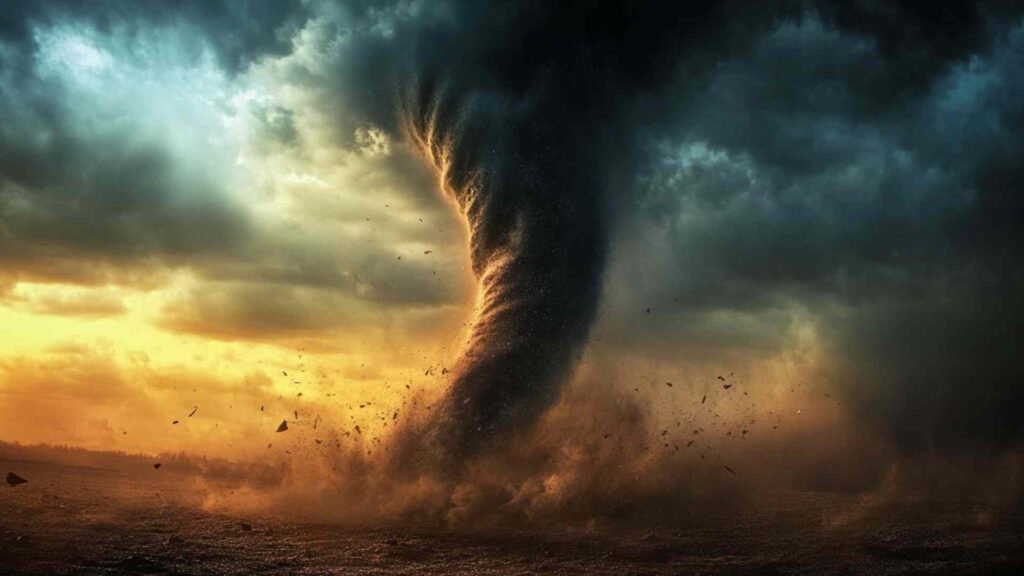
- Tornado shapes include rope, cone, stovepipe, wedge, and multi-vortex.
- A wedge tornado looks wider than it is tall and can be extremely powerful.
- A rope tornado is thin and sinuous, often seen as a tornado weakens.
- A cone tornado has a wide top that narrows toward the ground.
- Some tornadoes look white against dark clouds, while others look brown from dirt.
- Red or orange hues can appear when the funnel passes over clay or sunset light.
- At night, lightning flashes can briefly reveal a hidden tornado.
- The roar may sound like a freight train, but quiet tornadoes also occur.
- A debris ball on radar is a tight area of strong returns caused by lofted objects.
- The bottom of the funnel can skip and touch down in bursts along the path.
- Tornadoes can produce rapid pressure changes that make ears pop.
- Strong tornadoes can peel asphalt from roads in narrow streaks.
- Subvortices inside a wedge can leave narrow streaks of extreme damage.
- The rear-flank downdraft can feel suddenly cool and gusty before a tornado arrives.
- Greenish skies may appear before severe storms because of light scattering in rain and hail.
Names & etymology
- The word “tornado” likely comes from words meaning “to turn.”
- “Twister” is a common nickname for a tornado.
- A “tornado outbreak” is a series of tornadoes from multiple storms in a short time.
- An “outbreak sequence” spans several days with repeated rounds.
- A “tornado family” is a set of separate tornadoes produced by one storm.
- A “tornado emergency” is a rare, enhanced warning for a confirmed, life-threatening tornado.
- “Watch” means conditions are favorable for tornadoes.
- “Warning” means a tornado is happening or imminent.
- “PDS” stands for a particularly dangerous situation warning used in high-risk events.
- “Hook echo” describes a curved radar feature near a rotating storm.

Pop culture & fun extras
- A tornado famously sweeps Dorothy to Oz in a classic movie.
- Storm chasing is the practice of tracking storms to observe and study them.
- Small drones and instruments can be used to sample storm winds and temperatures.
- Schools sometimes hold tornado drills in spring.
- Many communities test sirens on a set day each week.
- Some museums display damaged items to teach about storm safety.
- Board games and video games often use spinning funnels as icons of chaos.
- Home builders in storm-prone areas may add safe rooms to new houses.
- Insurance policies often have specific deductibles for wind damage.
- Meteorology clubs teach students how to read radar images and forecasts.
For kids: quick comparisons
- A typical small tornado is about as wide as a city block.
- A fast tornado can move down a road faster than a car on the speed limit.
- The strongest tornado winds blow faster than a high-speed train.
- The loud roar of a big tornado can be louder than a rock concert up close.
- The tallest tornado funnels can reach higher than the world’s tallest skyscrapers.
Quick FAQ
What is the safest place to be during a tornado?
A small interior room on the lowest floor of a sturdy building is the safest spot.
How long do tornadoes usually last?
Most last less than 10 minutes, but a few can persist for over an hour.
Can tornadoes cross rivers or mountains?
Yes, tornadoes can cross rivers and climb over hills or ridges.
What does an EF rating mean?
The EF rating describes the level of damage a tornado causes, from EF0 to EF5.
What is the difference between a watch and a warning?
A watch means conditions are favorable, while a warning means a tornado is happening or imminent.

Ellie is the owner and sole author of Fun Facts, combining her mechanical engineering background with years of research-driven writing to deliver facts you can trust. Every article is thoroughly fact-checked and routinely updated as new science and sources emerge to keep information accurate and current. Her mission is to make learning delightful while upholding high standards of reliability and transparency.