
Our solar system is not just eight planets circling the Sun. It is a sprawling family of moons, dwarf planets, asteroids, comets, rings, dust, magnetic fields, icy worlds, and distant reservoirs extending far beyond Neptune. These 145 solar system facts tour everything from scorching Mercury to the heliosphere’s outer edge, while explaining the patterns that connect the worlds orbiting our star.
Solar system basics
- The solar system consists of the Sun and objects gravitationally bound to it.
- It formed about 4.6 billion years ago.
- The Sun contains more than 99% of the solar system’s mass.
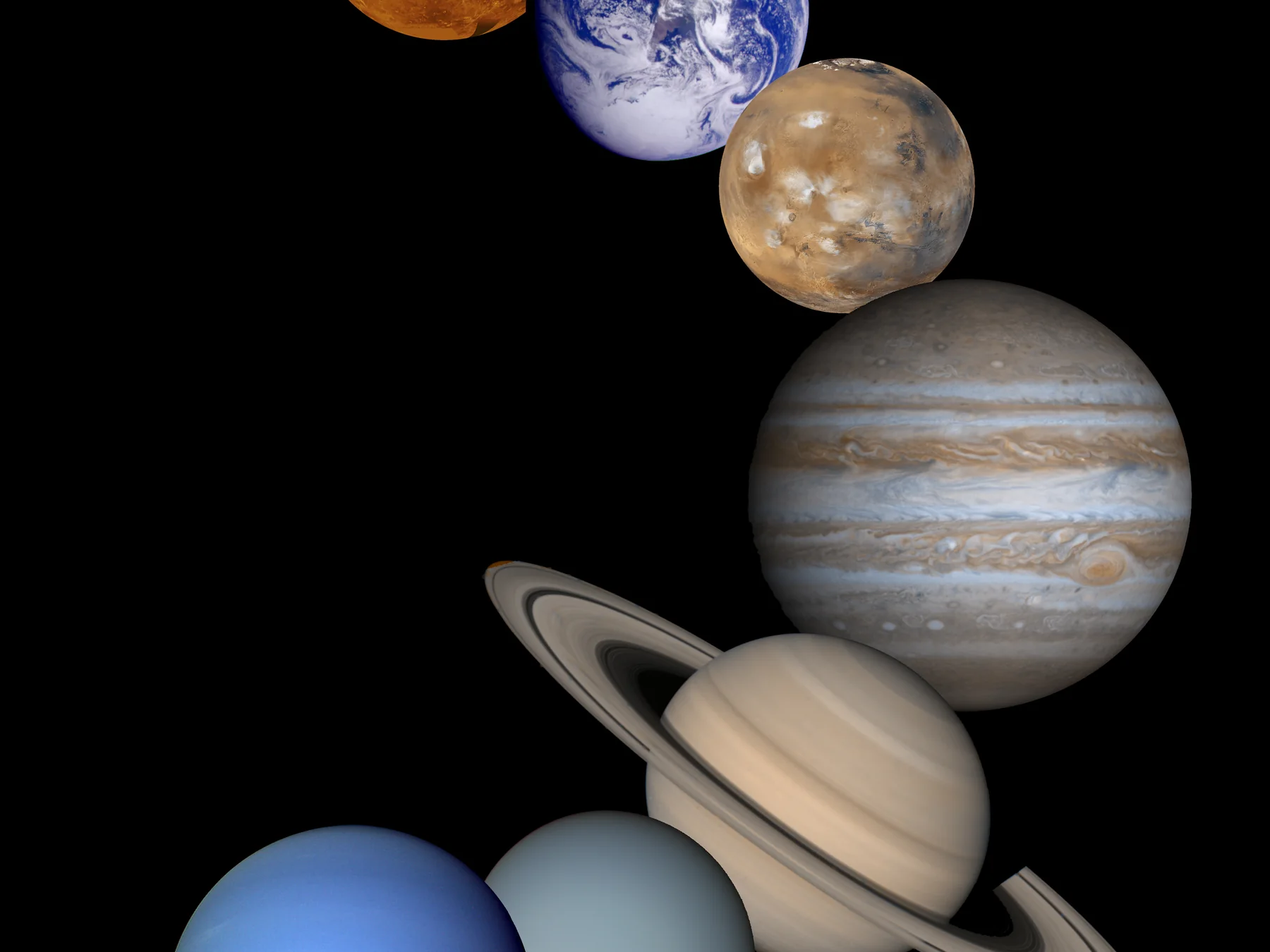
- Eight planets officially orbit the Sun.
- They are Mercury, Venus, Earth, Mars, Jupiter, Saturn, Uranus, and Neptune.
- The first four planets are rocky terrestrial worlds.
- The outer four are giant planets.
- Jupiter and Saturn are usually called gas giants.
- Uranus and Neptune are usually called ice giants.
- Planets orbit the Sun in the same general direction.
- Most major planetary orbits lie close to one broad plane.
- That plane reflects the flattened disk from which the planets formed.
- Most planets rotate in the same general direction too.
- Venus and Uranus are famous rotational exceptions.
- NASA provides a current overview on its Solar System Exploration pages.
The Sun runs the show
- The Sun is a star.
- It is classified as a G-type main-sequence star.
- The Sun’s gravity keeps planets and smaller bodies in orbit.
- Nuclear fusion powers the Sun.
- Hydrogen nuclei fuse into helium in the solar core.
- Fusion converts a small amount of mass into enormous energy.
- Sunlight takes about eight minutes to reach Earth.
- The Sun also emits a stream of charged particles called the solar wind.
- The solar wind helps create the heliosphere.
- The heliosphere is a vast bubble influenced by the Sun’s plasma and magnetic field.
- Solar activity includes sunspots, flares, and coronal mass ejections.
- Strong solar storms can disturb planetary magnetic environments.
- Earth’s auroras are one visible result of solar particles interacting with our planet.
- The Sun has been shining for about half its expected main-sequence lifetime.
- In several billion years it will expand into a red giant.
The four rocky planets
- Mercury is the closest planet to the Sun.
- Mercury is also the smallest planet.
- Venus is the hottest planet even though Mercury is closer to the Sun.
- Venus’s dense carbon-dioxide atmosphere creates an extreme greenhouse effect.
- Earth is the largest terrestrial planet.
- Earth is the only world currently known to host life.
- Earth has abundant stable liquid water at its surface.
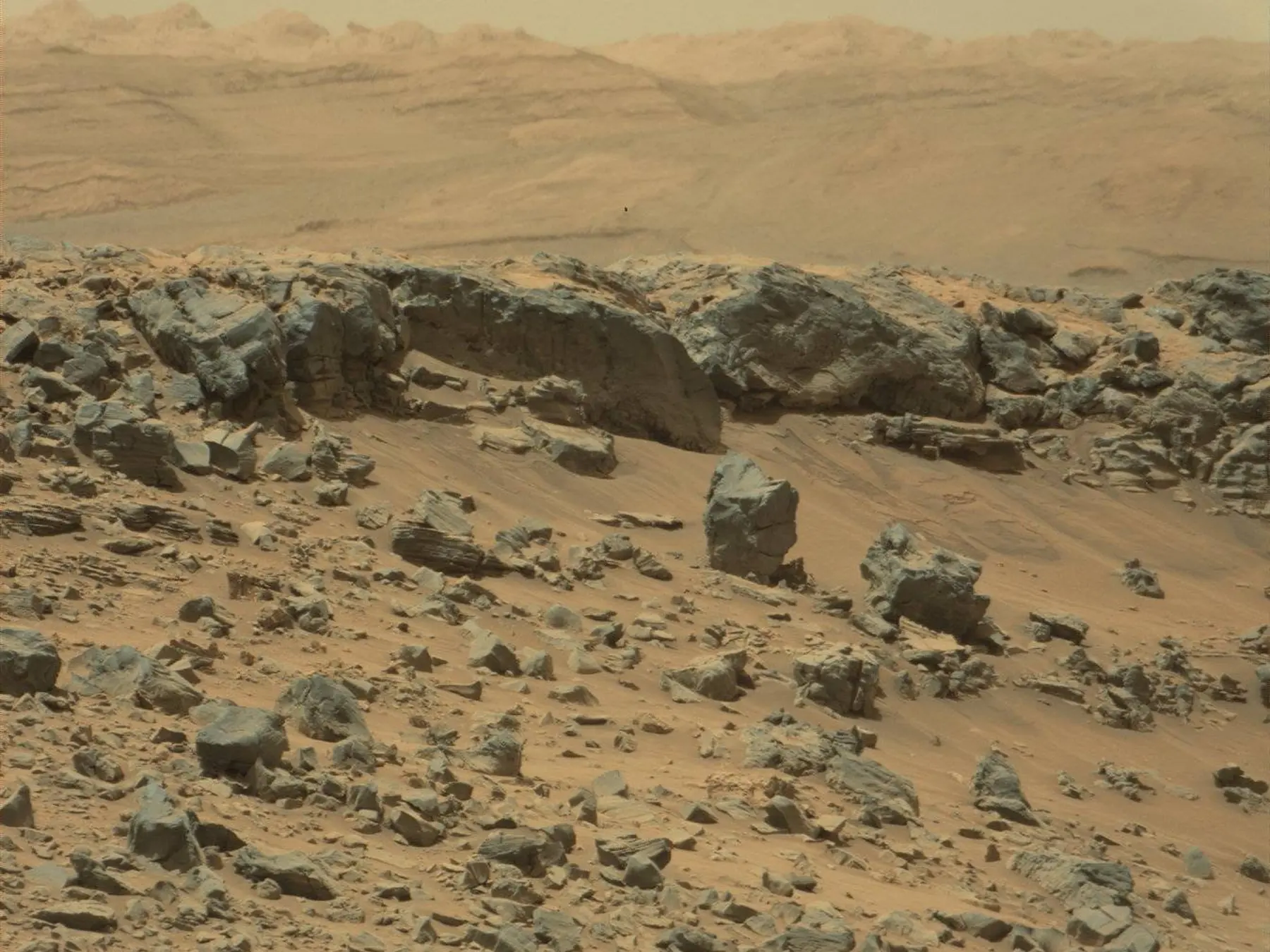
- Mars is roughly half Earth’s diameter.
- Mars has the largest known volcano in the solar system.
- The four inner planets all have solid surfaces.
- None of the rocky planets has a large ring system.
- Mercury and Venus have no moons.
- Earth has one natural moon.
- Mars has two small moons.
- The terrestrial planets are made largely of rock and metal.
The giant planets
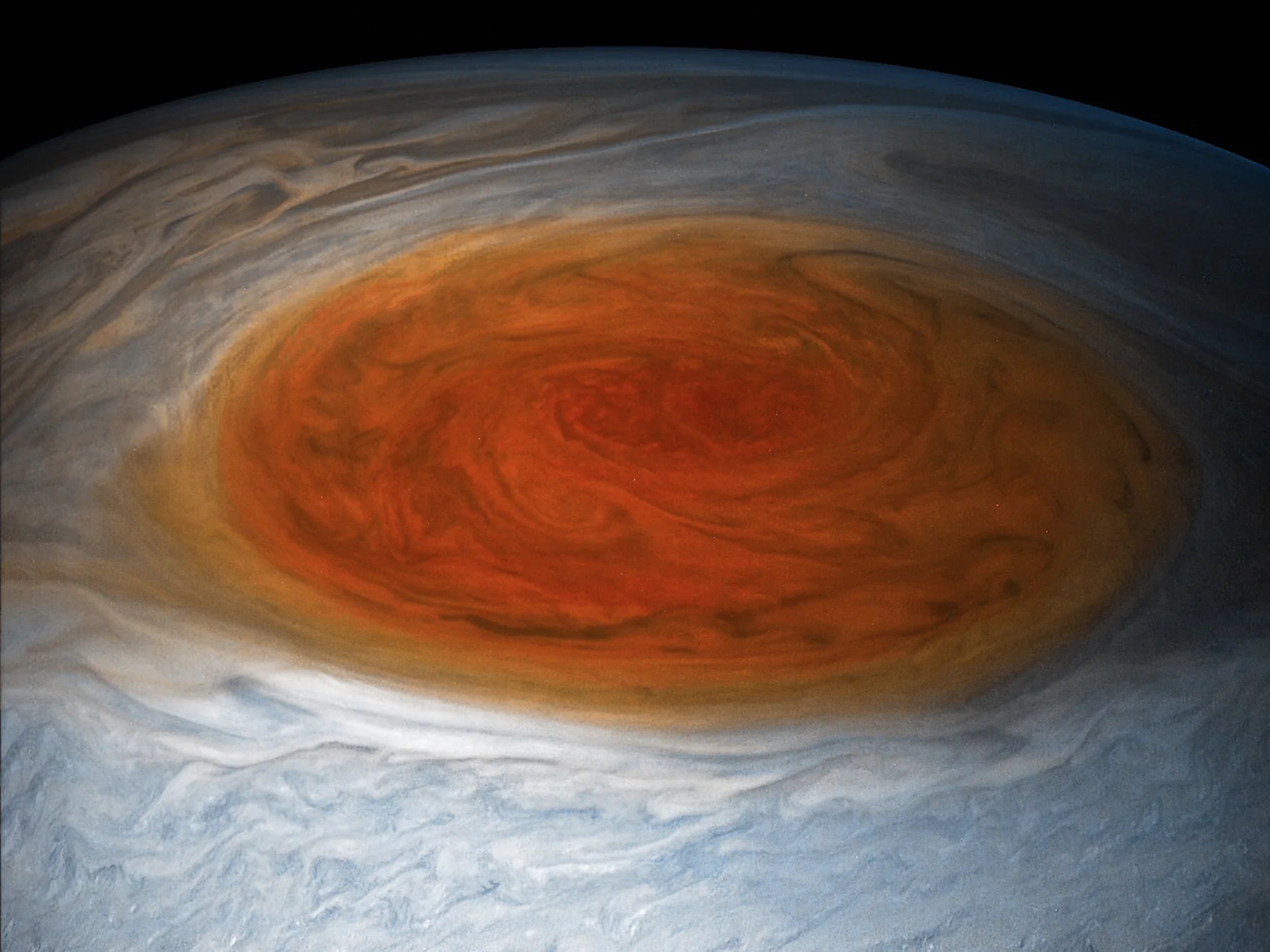
- Jupiter is the largest planet in the solar system.
- Jupiter contains more than twice the mass of all other planets combined.
- Saturn is the second-largest planet.
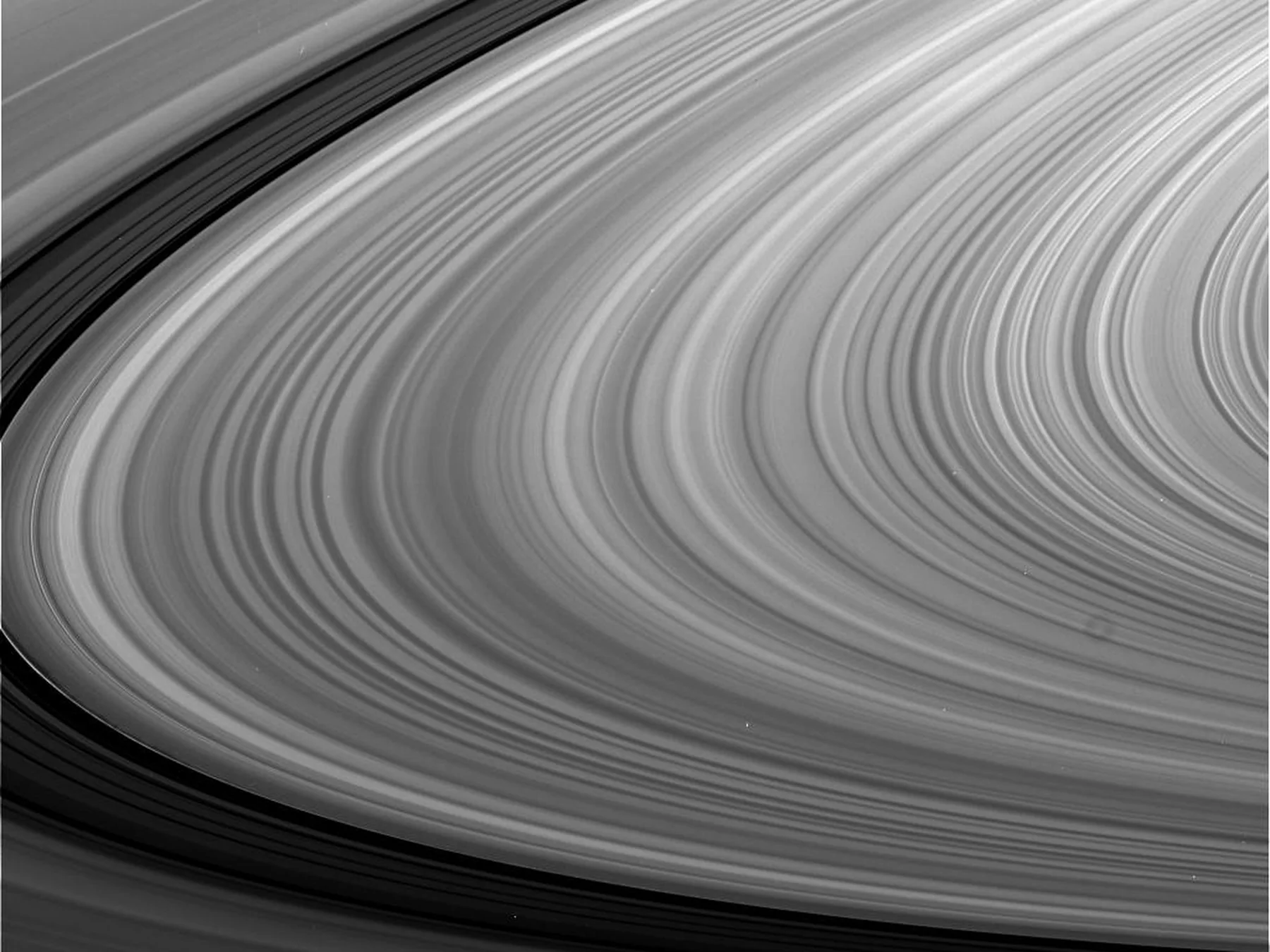
- Saturn’s bright ring system is the most visually spectacular around any planet.
- All four giant planets have rings.
- Jupiter’s rings are faint and dusty.
- Uranus has narrow dark rings.
- Neptune also has a faint ring system.
- Uranus rotates nearly on its side.
- Its axial tilt is about 98 degrees.
- Neptune is the farthest official planet from the Sun.
- Neptune has the fastest sustained winds measured on any planet.
- Giant planets do not have solid surfaces where a spacecraft could land normally.
- Pressure and temperature rise dramatically with depth inside them.
- The giant planets host large and diverse moon systems.
Dwarf planets
- A dwarf planet orbits the Sun and is massive enough to become roughly round.
- Unlike a planet, it has not cleared its orbital neighborhood.
- Dwarf planets are not moons.
- The International Astronomical Union officially recognizes several dwarf planets.
- Ceres is the only recognized dwarf planet in the main asteroid belt.
- Ceres was discovered in 1801.
- It was first called a planet.
- It was later grouped with asteroids.
- Pluto was discovered in 1930.
- Pluto was classified as a planet for 76 years.
- In 2006, the IAU adopted a formal planet definition that classified Pluto as a dwarf planet.
- Eris is another massive dwarf planet beyond Neptune.
- Haumea is an elongated rapidly rotating dwarf planet.
- Makemake is a bright dwarf planet in the Kuiper Belt.
- Other distant objects may eventually qualify as dwarf planets as scientists learn more about them.
Asteroids and the asteroid belt
- Most known asteroids orbit the Sun between Mars and Jupiter.
- This region is called the main asteroid belt.
- The asteroid belt is mostly empty space.
- Spacecraft can cross it without weaving through a packed obstacle course.
- Asteroids vary from tiny rocks to bodies hundreds of kilometers across.
- Many are leftovers from early solar-system formation.
- Jupiter’s gravity strongly influenced how the asteroid belt developed.
- Ceres contains a substantial fraction of the belt’s total mass.
- Vesta is one of the largest objects in the asteroid belt.
- NASA’s Dawn spacecraft orbited both Vesta and Ceres.
- Some asteroids orbit near Earth.
- These are called near-Earth asteroids when their orbits bring them into Earth’s neighborhood.
- Planetary-defense surveys search for potentially hazardous objects.
- NASA’s DART mission deliberately struck the asteroid moonlet Dimorphos in 2022.
- The impact successfully changed Dimorphos’s orbital period around its larger companion.
Comets and icy visitors
- Comets contain ice, dust, rock, and organic compounds.
- They are sometimes nicknamed dirty snowballs or icy dirtballs.
- When a comet approaches the Sun, its ice begins releasing gas.
- Gas and dust form a glowing atmosphere called a coma.
- Solar radiation and solar wind create comet tails.
- A comet can have both dust and ion tails.
- Comet tails generally point away from the Sun.
- This remains true even when a comet is traveling away from the Sun.
- Short-period comets often originate in the Kuiper Belt or related regions.
- Long-period comets are thought to come from the distant Oort Cloud.
- The Oort Cloud has not been directly imaged as a complete structure.
- Its existence is inferred from the orbits of long-period comets.
- Halley’s Comet returns to the inner solar system roughly every 76 years.
- People recorded appearances of Halley’s Comet long before recognizing them as one returning object.
- For more, explore our 145 comet facts.
The Kuiper Belt and beyond
- The Kuiper Belt lies beyond Neptune.
- It contains many icy bodies left from solar-system formation.
- Pluto is one of the best-known Kuiper Belt objects.
- The Kuiper Belt is a broad disk rather than a thin ring.
- Its objects occupy a range of tilted and eccentric orbits.
- Neptune’s gravity shapes many Kuiper Belt orbits.
- Pluto is locked in a 3:2 orbital resonance with Neptune.
- This resonance prevents Pluto from colliding with Neptune despite crossing inward of Neptune’s average orbital distance.
- The scattered disk extends farther outward and contains objects with highly elongated orbits.
- Eris belongs to the scattered-disk population.
- The hypothetical Oort Cloud may begin far beyond the Kuiper Belt.
- It may surround the solar system more like a distant spherical shell.
- The Sun’s gravitational influence extends far beyond the planets.
- Nearby stars and the Milky Way’s gravity can disturb extremely distant comet orbits.
- The true outer edge of the Sun’s gravitational domain is difficult to define as one sharp boundary.
Moons are worlds of their own
- Natural satellites orbit planets, dwarf planets, and even some asteroids.
- Ganymede, a moon of Jupiter, is the largest moon in the solar system.
- Ganymede is larger in diameter than Mercury.
- Saturn’s Titan has a dense atmosphere.
- Titan has lakes and seas of liquid methane and ethane.
- Jupiter’s Europa likely contains a salty ocean beneath its ice shell.
- Saturn’s Enceladus sprays water-rich plumes from fractures near its south pole.
- Jupiter’s Io is the most volcanically active world known.
- Neptune’s Triton orbits backward compared with Neptune’s rotation.
- Triton was probably captured from the outer solar system.
- Our Moon is unusually large relative to Earth compared with many planet-moon systems.
- Moons can raise tides and gravitationally flex one another.
- Tidal heating powers volcanic activity on Io.
- Tidal heating may help maintain subsurface oceans on icy moons.
- Some moons may be more promising places to search for habitable environments than their parent planets.
Ten surprising solar system facts
- The Sun holds more than 99% of the solar system’s total mass.
- Venus is hotter than Mercury even though Mercury is closer to the Sun.
- All four giant planets have rings.
- The asteroid belt is nothing like the crowded rock fields shown in many movies.
- Several moons are larger than some planets.
- One moon has seas, but they are made of hydrocarbons rather than water.
- A tiny moonlet became the target of humanity’s first successful planetary-defense deflection experiment.
- Pluto’s orbit crosses inward of Neptune’s average distance without creating collisions because of orbital resonance.
- The solar system extends far beyond Neptune and even beyond the Kuiper Belt.
- For broader cosmic trivia, explore our space facts and Science facts.
Quick solar system FAQ
How many planets are in the solar system?
Eight: Mercury, Venus, Earth, Mars, Jupiter, Saturn, Uranus, and Neptune.
Why is Pluto not a planet anymore?
The International Astronomical Union’s 2006 definition requires a planet to clear its orbital neighborhood. Pluto is round and orbits the Sun but does not meet that criterion, so it is classified as a dwarf planet.
What is the largest planet?
Jupiter. It is roughly 11 times wider than Earth and more massive than all the other planets combined twice over.
Where do comets come from?
Short-period comets are associated mainly with the Kuiper Belt and nearby populations, while long-period comets are thought to come from the distant Oort Cloud.
Where does the solar system end?
There is no single perfect boundary. The heliosphere marks the Sun’s plasma influence, while the Sun’s gravity extends much farther into regions such as the hypothetical Oort Cloud.

Ellie is the owner and sole author of Fun Facts, combining her mechanical engineering background with years of research-driven writing to deliver facts you can trust. Every article is thoroughly fact-checked and routinely updated as new science and sources emerge to keep information accurate and current. Her mission is to make learning delightful while upholding high standards of reliability and transparency.