
Crocodiles look like living dinosaurs, but that description is both right and wrong in fascinating ways. They are not dinosaurs, yet they belong to the same ancient archosaur family tree and have survived through enormous planetary changes. These 145 crocodile facts explore their jaws, teeth, hearts, senses, swimming, hunting, nests, babies, famous species, alligator differences, prehistoric relatives, and the surprising care crocodile mothers give their young.
Crocodile basics
- Crocodiles are large semiaquatic reptiles in the family Crocodylidae.
- They belong to the order Crocodylia.
- Crocodylia also includes alligators, caimans, and gharials.
- Crocodilians live naturally in warm regions of Africa, Asia, the Americas, and Australia.
- Most species live in freshwater rivers, lakes, swamps, and wetlands.
- Some crocodiles tolerate brackish or marine water extremely well.
- Crocodiles are ectothermic, meaning environmental heat strongly influences body temperature.
- They bask in sunlight to warm themselves.
- They enter water or shade to cool down.
- Crocodile bodies are covered with tough scales.
- Bony plates called osteoderms strengthen parts of the skin.
- Osteoderms can also participate in heat exchange and mineral storage.
- Crocodiles have long muscular tails.
- The tail provides most of the propulsion during swimming.
- On land, crocodiles can walk, belly-crawl, and make short rapid bursts.
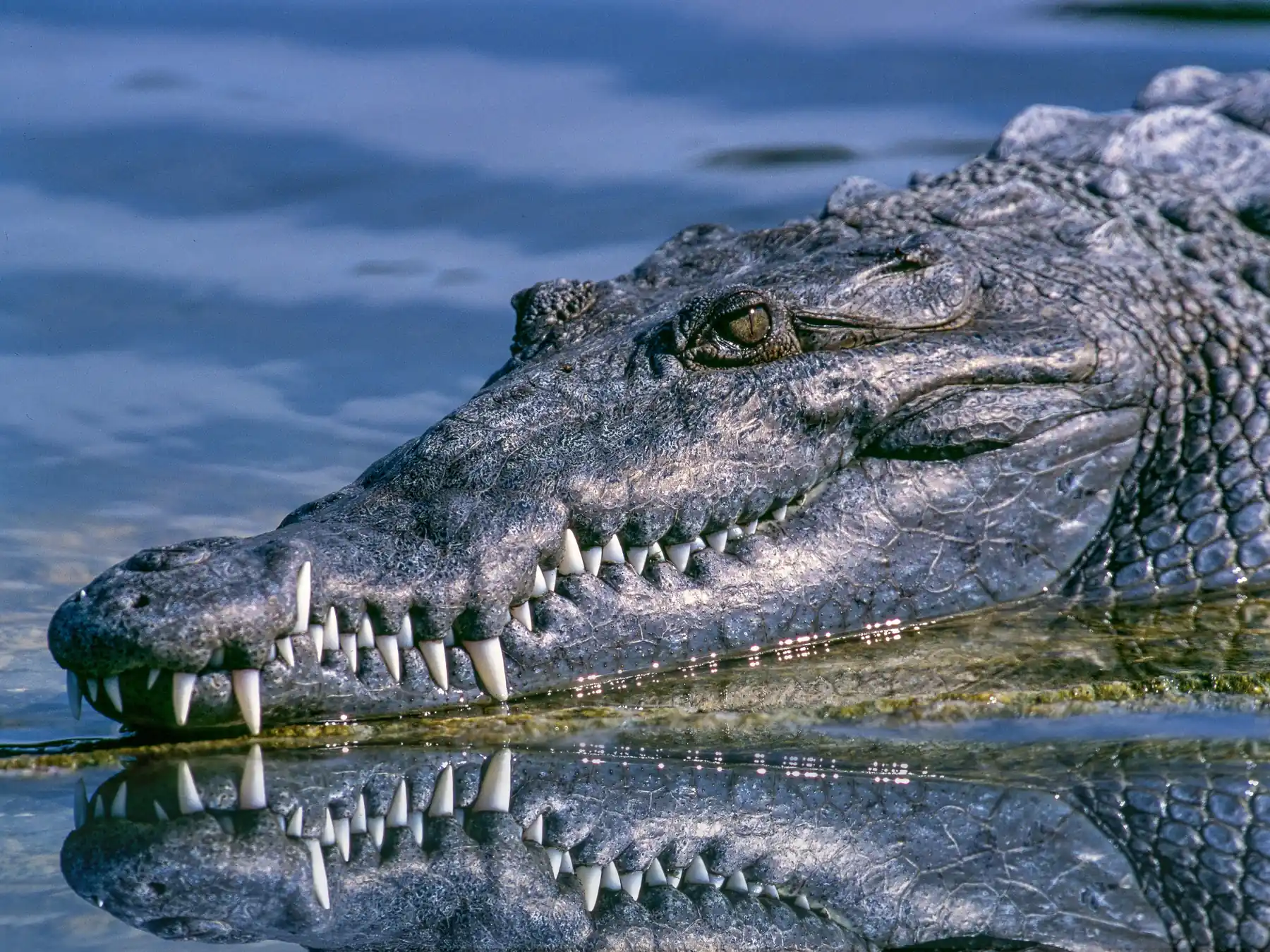
Crocodiles are not dinosaurs
- Crocodiles are often called living dinosaurs, but they are not dinosaurs.
- Both crocodilians and dinosaurs belong to the larger archosaur lineage.
- Birds are the living descendants of theropod dinosaurs.
- That makes birds evolutionarily closer to extinct dinosaurs than crocodiles are.
- Crocodilians are the closest living relatives of birds outside the bird lineage itself.
- The shared ancestors of crocodilians and birds lived more than 200 million years ago.
- Early crocodylomorph relatives had far more varied body shapes than modern crocodiles.
- Some ancient relatives were small and terrestrial.
- Others became enormous aquatic predators.
- Modern crocodilian body plans became established long before humans evolved.
- Crocodilians survived the mass extinction that ended the age of non-avian dinosaurs.
- That extinction occurred about 66 million years ago.
- Their survival likely involved aquatic habits, flexible diets, and low-energy lifestyles.
- Modern species are not unchanged fossils from the Mesozoic.
- They continue evolving like every other living lineage.
Those terrifying crocodile jaws
- Crocodiles can generate extremely powerful bite forces.
- Large saltwater crocodiles produce among the strongest measured bites of living animals.
- The jaw-closing muscles are far stronger than the jaw-opening muscles.
- This is why handlers can sometimes hold a crocodilian mouth closed with strong tape.
- Trying that with a wild animal would be extremely dangerous and irresponsible.
- Crocodile jaws are built primarily to seize and hold rather than chew.
- They commonly swallow chunks of food whole.
- Teeth are conical and designed for gripping slippery prey.
- Crocodiles replace teeth repeatedly throughout life.
- Each functional tooth can have replacement teeth developing beneath it.
- A crocodile may go through thousands of teeth over a long lifetime.
- Large prey can be torn apart using powerful body movements.
- The famous death roll twists the crocodile around its long body axis.
- Rolling can tear pieces from prey or help subdue a struggling animal.
- Several crocodilian species use rolling behavior.
Crocodiles are built for ambush
- A crocodile’s eyes and nostrils sit high on the skull.
- This lets most of the body remain submerged while the animal watches and breathes.
- Crocodiles can close their nostrils underwater.
- A transparent nictitating membrane protects each eye.
- External ear openings have movable flaps that close underwater.
- A muscular palatal valve blocks water from entering the throat.
- This lets a crocodile open its mouth underwater without immediately flooding its airway.
- Crocodiles can hold their breath for extended periods while resting underwater.
- Dive duration depends on activity, temperature, stress, and species.
- They can slow heart rate during dives.
- Crocodiles usually attack from short range rather than chasing prey for long distances.
- Camouflage makes their dark low profiles hard to notice in murky water.
- They can accelerate rapidly with strong tail strokes.
- Ambush hunting saves energy compared with constant pursuit.
- Patience is one of a crocodile’s most effective hunting tools.
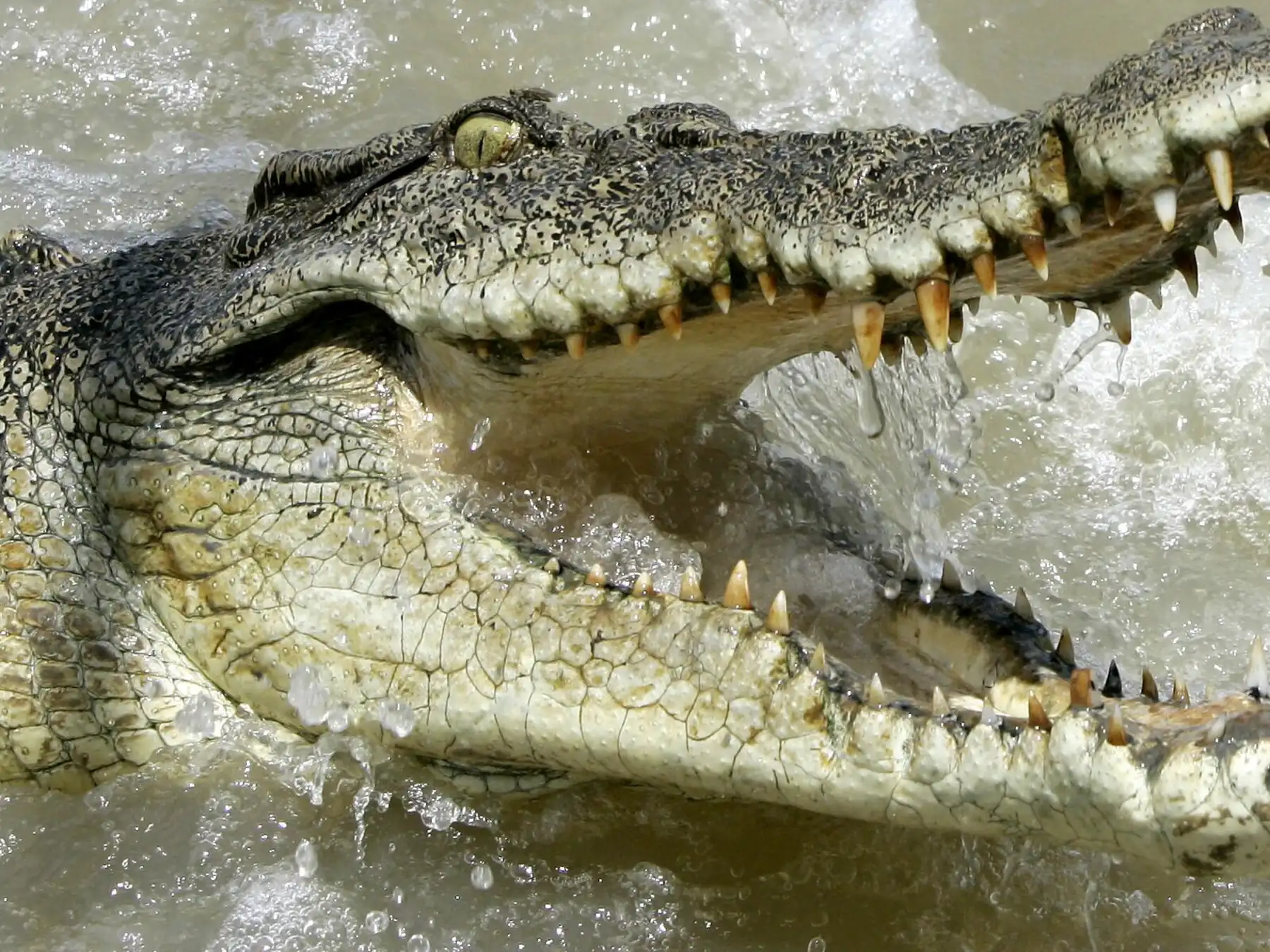
Their senses are surprisingly sophisticated
- Crocodiles have good vision.
- Their eyes are adapted for both daylight and low-light conditions.
- A reflective layer behind the retina improves sensitivity in dim light.
- This layer contributes to eye shine at night.
- Crocodiles also have good hearing.
- They communicate with grunts, hisses, bellows, and other sounds.
- Pressure-sensitive organs dot the skin around crocodile jaws.
- These integumentary sensory organs detect tiny disturbances in water.
- In some crocodilians similar sensory structures occur across much of the body.
- They can detect ripples caused by prey near the water surface.
- Hatchlings call from inside eggs before hatching.
- Those sounds help synchronize hatching and alert the mother.
- Crocodiles have a developed sense of smell.
- Chemical cues help them investigate food and surroundings.
- The Smithsonian’s reptile resources describe many crocodilian adaptations.
A four-chambered heart
- Crocodilians have four-chambered hearts.
- That heart structure resembles birds and mammals more than most other reptiles.
- They have two atria and two ventricles.
- Crocodilians also possess specialized blood-vessel connections that can redirect circulation.
- One unusual vessel connection is called the foramen of Panizza.
- These cardiovascular adaptations help regulate blood flow during diving.
- Crocodiles can remain inactive for long periods with relatively low energy use.
- Ectothermy lets them survive on fewer calories than similarly sized warm-blooded predators.
- A large crocodile does not need to eat every day.
- Digestion speeds up when body temperature is suitably warm.
- Crocodile stomach acid is extremely strong.
- It helps dissolve bones and tough animal tissue.
- Crocodiles sometimes swallow stones called gastroliths.
- The exact roles of gastroliths may include ballast and digestive assistance.
- Researchers continue studying how physiology supports long dives and infrequent feeding.
Crocodile nests and babies
- Female crocodiles lay eggs on land.
- Different species build mound nests or dig holes in sand and soil.
- A mother often remains near the nest while eggs develop.
- She may aggressively defend the nest from predators.
- Incubation temperature influences sex in crocodilians.
- This is called temperature-dependent sex determination.
- The temperature pattern producing males and females varies among crocodilian species.
- Hatchlings vocalize before emerging from their eggs.
- The mother may dig open the nest after hearing those calls.
- She can gently carry babies in her mouth.
- Her terrifying jaws can therefore become a carefully controlled nursery transport system.
- Young crocodiles often remain in groups near protective adults.
- Mothers can guard hatchlings for weeks or months.
- Despite parental care, many young crocodiles are eaten by fish, birds, reptiles, and mammals.
- High juvenile mortality is balanced by long adult lifespans and repeated reproduction.
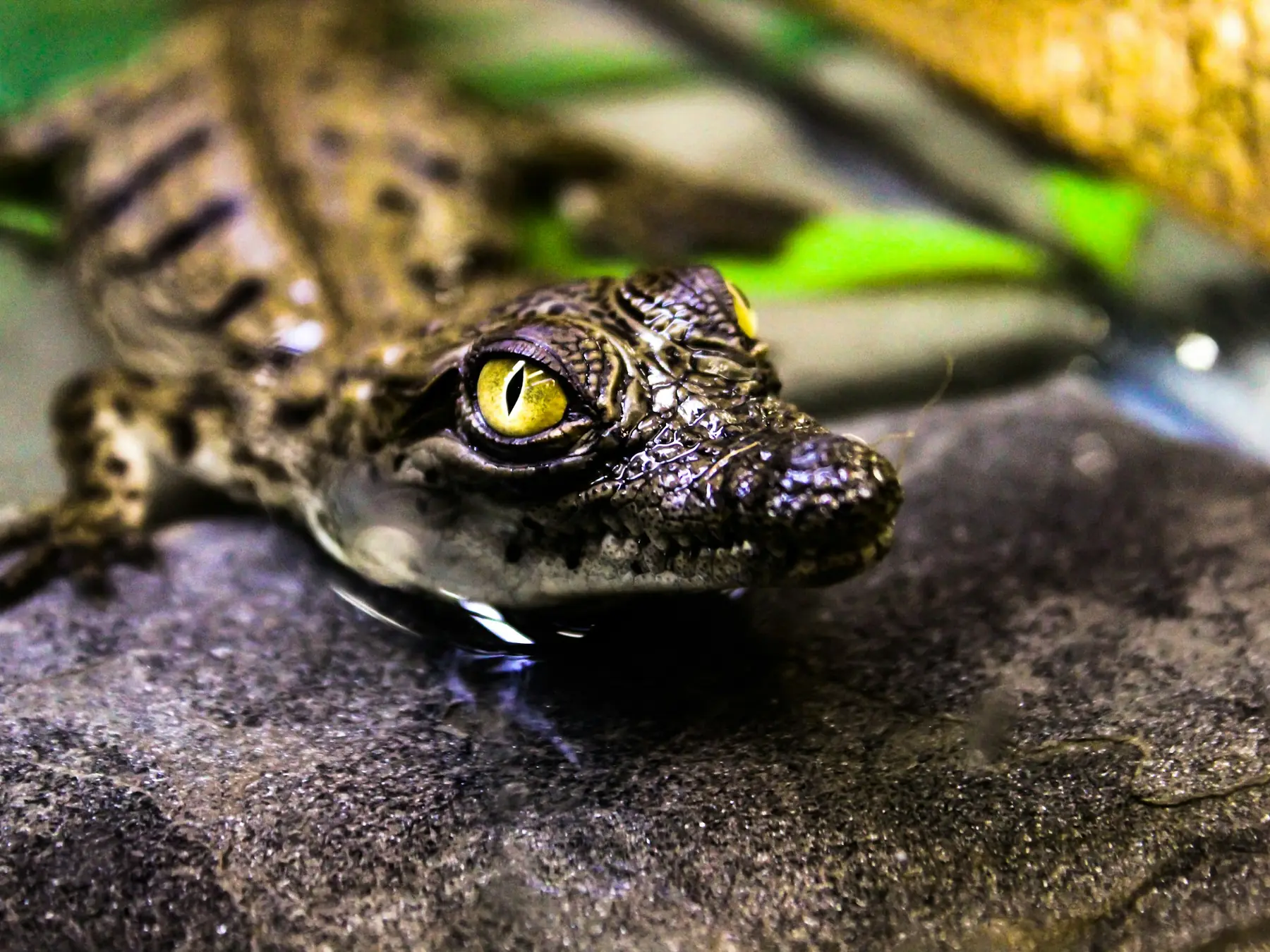
Famous crocodile species
- The saltwater crocodile is the largest living crocodilian.
- Large males can exceed 5 meters, or about 16 feet, in length.
- Exceptional individuals can grow even larger.
- Saltwater crocodiles live from eastern India through Southeast Asia to northern Australia.
- They tolerate seawater better than most crocodilians.
- Specialized salt glands on the tongue help remove excess salt.
- The Nile crocodile is one of Africa’s largest predators.
- It lives across parts of sub-Saharan Africa and Madagascar.
- The American crocodile occurs from southern Florida through the Caribbean and parts of Latin America.
- It often uses brackish coastal habitats.
- The freshwater crocodile lives in northern Australia.
- It is smaller and more narrow-snouted than the saltwater crocodile.
- The dwarf crocodile of Africa is among the smallest living crocodiles.
- The critically endangered Philippine crocodile has one of the most restricted populations.
- Species differ greatly in size, snout shape, habitat, behavior, and conservation status.
Crocodiles versus alligators
- Alligators and crocodiles belong to different crocodilian families.
- Alligators generally have broader U-shaped snouts.
- Many crocodiles have narrower V-shaped snouts.
- This shape rule is helpful but not perfect across every species.
- When an alligator closes its mouth, lower teeth are often less visible.
- In many crocodiles, the large fourth lower tooth remains visible when the mouth closes.
- Crocodiles generally have more functional salt glands than alligators.
- This helps many crocodiles tolerate saltwater environments better.
- American alligators mainly inhabit the southeastern United States.
- American crocodiles overlap with alligators in southern Florida.
- South Florida is one of the few places where crocodiles and alligators naturally live together.
- Caimans are more closely related to alligators than to true crocodiles.
- The gharial belongs to another distinct crocodilian lineage.
- Its extremely narrow snout is specialized for catching fish.
- For a full comparison, our upcoming Science facts collection will include alligators too.
Ten surprising crocodile facts
- Crocodiles are closer evolutionary relatives of birds than of lizards.
- They are not dinosaurs, even though both groups are archosaurs.
- A crocodile’s heart has four chambers.
- The terrifying jaws that crush prey can gently carry tiny hatchlings.
- Crocodile teeth are disposable and replaced again and again.
- Pressure sensors around the jaws can detect tiny water ripples.
- Baby crocodiles call to their mother before leaving the egg.
- Temperature during incubation helps determine whether hatchlings become male or female.
- Saltwater crocodiles possess tongue glands specialized for removing salt.
- A crocodile can look motionless for ages because ambush hunting rewards patience and energy conservation.
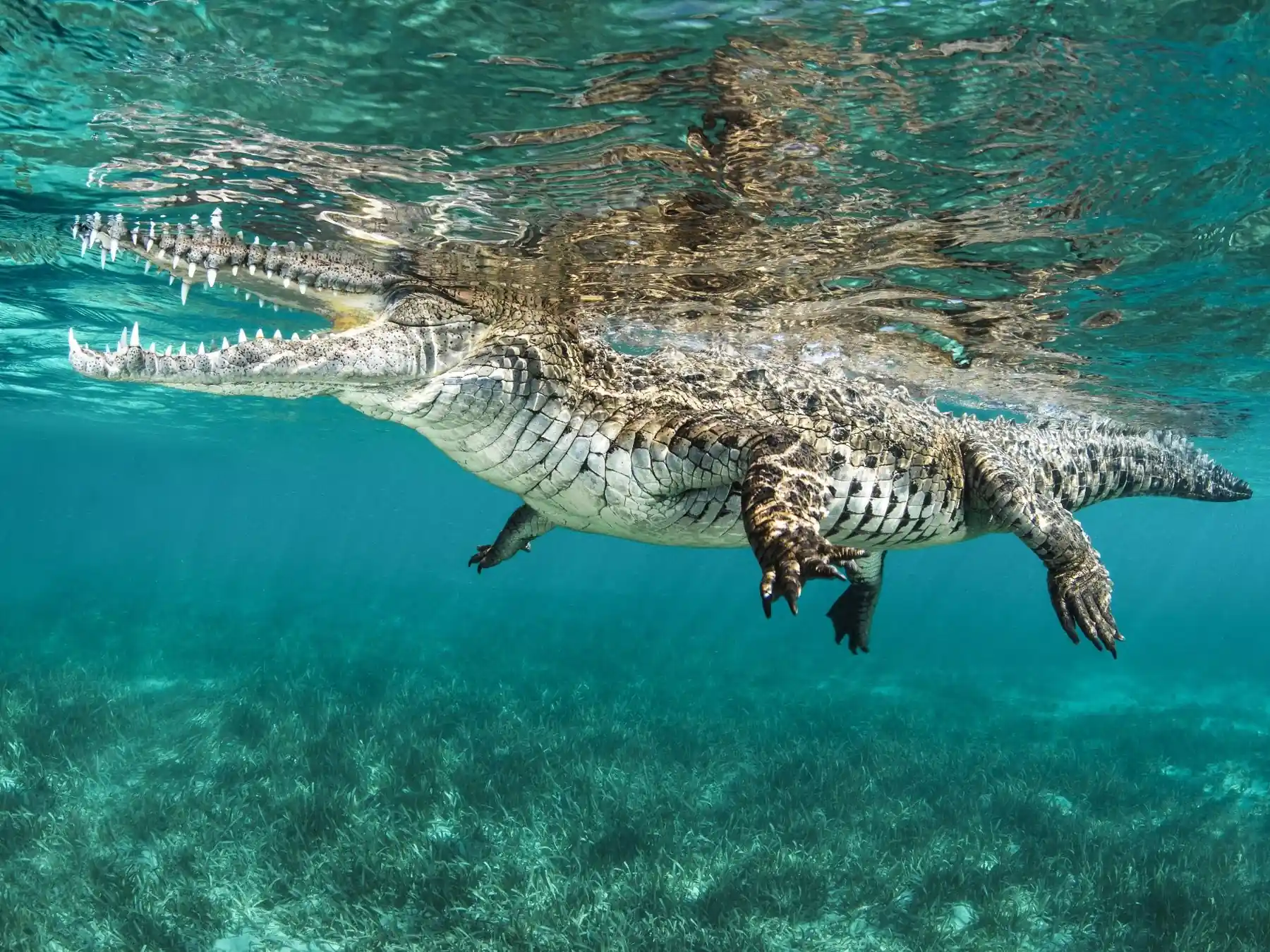
Quick crocodile FAQ
Are crocodiles dinosaurs?
No. Crocodiles and dinosaurs share ancient archosaur ancestors, but crocodiles belong to a separate branch. Birds are the living descendants of dinosaurs.
What is the largest crocodile?
The saltwater crocodile is the largest living crocodilian. Large adult males can exceed 5 meters, or about 16 feet.
How can you tell a crocodile from an alligator?
Crocodiles often have narrower snouts and a visible lower fourth tooth when the mouth closes, while alligators usually have broader snouts and hide most lower teeth.
Do crocodile mothers care for their babies?
Yes. Mothers guard nests, help hatchlings emerge, may carry them gently in their mouths, and often protect young after hatching.
Do crocodiles really swallow rocks?
Yes. Gastroliths occur in crocodilian stomachs. Researchers think they may help with ballast and possibly digestion, although their exact functions are still studied.

Ellie is the owner and sole author of Fun Facts, combining her mechanical engineering background with years of research-driven writing to deliver facts you can trust. Every article is thoroughly fact-checked and routinely updated as new science and sources emerge to keep information accurate and current. Her mission is to make learning delightful while upholding high standards of reliability and transparency.