Muscles let you walk, smile, and even breathe without thinking.
This kid-friendly guide packs quick, clear facts about how your muscular system works, grows, and stays strong.
From tiny fibers to powerful lifts, you’ll get simple science, cool comparisons, and fun extras you can share with friends and family.
Origins & definitions
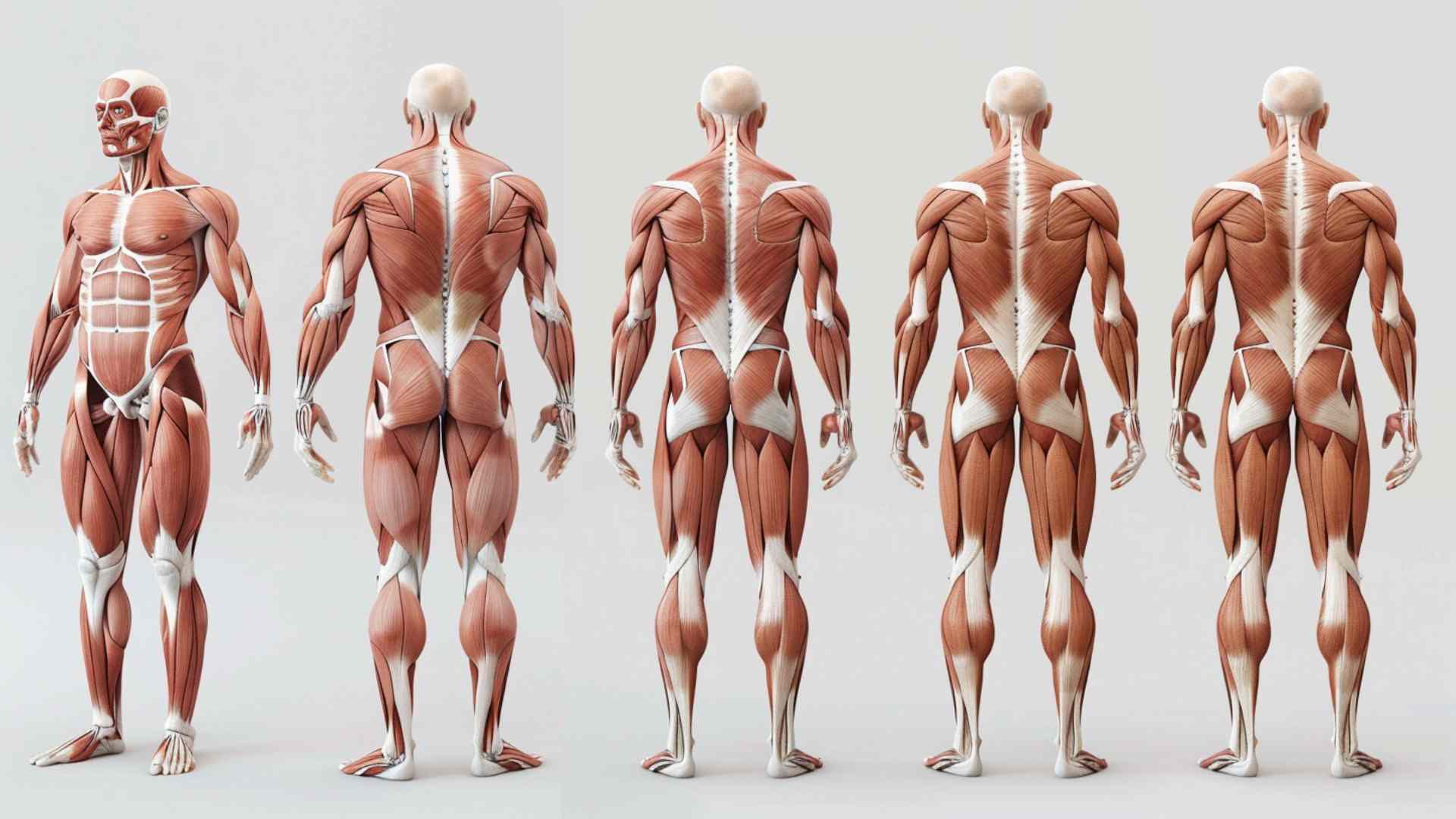
- The muscular system includes skeletal, cardiac, and smooth muscle tissues.
- Skeletal muscles attach to bones and make voluntary movements.
- Cardiac muscle is found only in the heart and works without conscious control.
- Smooth muscle lines hollow organs like intestines and blood vessels.
- Humans have over 600 named skeletal muscles depending on classification.
- In adults, muscle makes up roughly 30–40% of body mass.
- Muscles produce heat and help keep body temperature stable.
- A muscle cell is called a muscle fiber because it is long and threadlike.
- Muscle fibers group into bundles called fascicles.
- Fascicles bundle together to form a whole muscle.
- Tendons connect muscles to bones to transmit force across joints.
- Ligaments connect bone to bone, not muscle to bone.
- Each skeletal muscle typically has an origin and an insertion.
- Muscles often work in antagonistic pairs to control a joint.
- A motor unit includes one motor neuron and all the fibers it controls.
Record-breakers & wow numbers
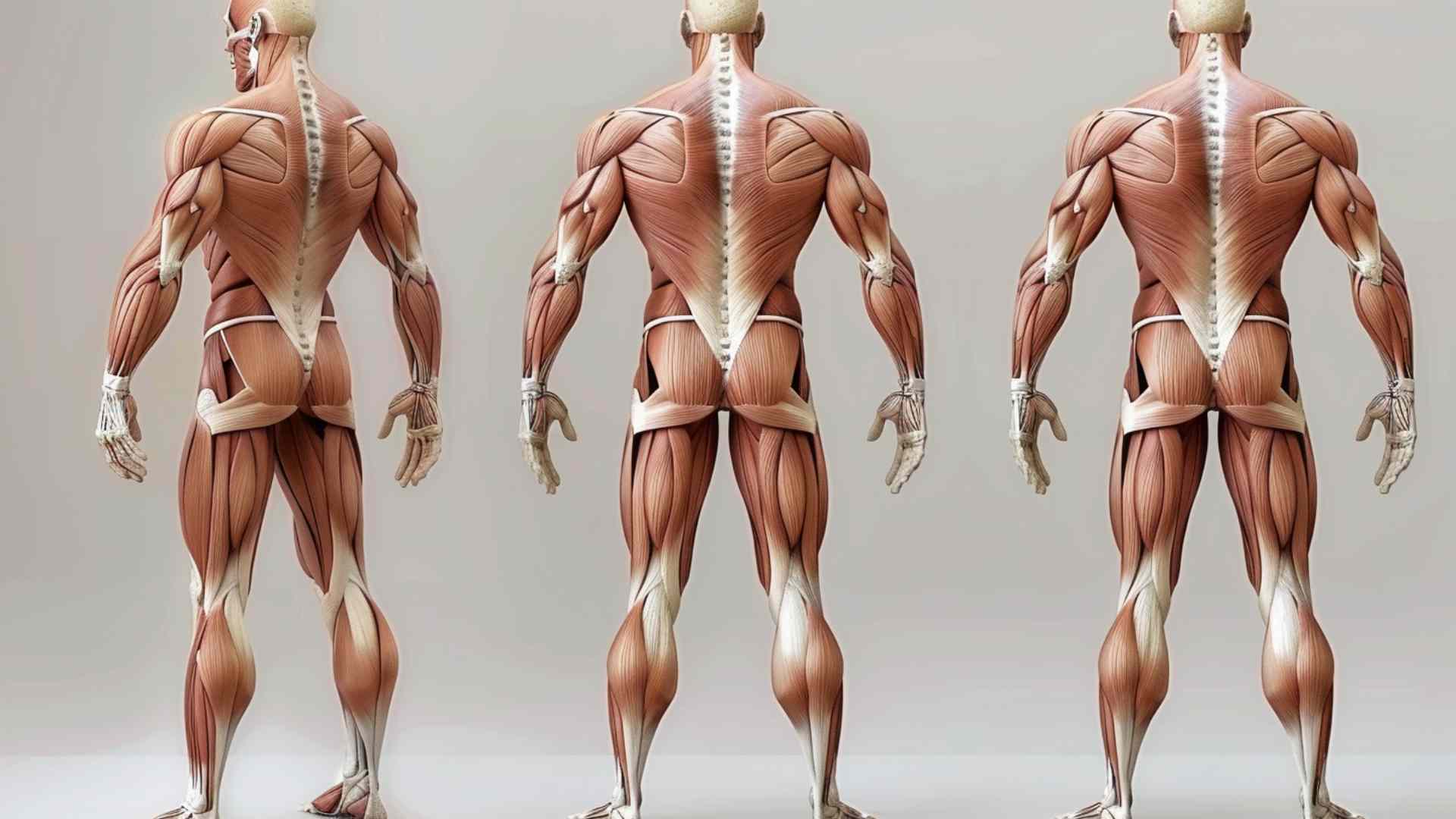
- The gluteus maximus is the largest single muscle by mass in most people.
- The sartorius is the longest muscle, running from hip to inner knee.
- The stapedius in the middle ear is among the smallest muscles in the body.
- The masseter can generate very high bite forces relative to its size.
- The uterus smooth muscle can exert strong force during labor.
- The eye’s extraocular muscles can contract very quickly to shift gaze.
- The heart’s cardiac muscle beats about 100,000 times per day on average.
- During hard exercise, active muscles can receive over 80% of cardiac output.
- Elite sprinters can produce ground forces several times body weight with each step.
- Skeletal muscle fibers can be about as thick as a human hair.
- The largest tendon in the body is the Achilles tendon.
- The tongue is a group of muscles rather than a single muscle.
- The diaphragm is the main muscle of breathing and works about 20,000 times per day.
- Muscles can pull but cannot push bones by themselves.
- Muscle tissue is about 75% water by mass.
- A single motor neuron can control from a few to thousands of muscle fibers.
- Fine control muscles like eye muscles have small motor units.
- Powerful muscles like the quadriceps have large motor units.
- At rest, muscles use energy mainly to maintain ion gradients and protein turnover.
- Shivering uses rapid tiny muscle contractions to make heat when you are cold.

Science & how it works
- The basic contractile unit of a muscle fiber is the sarcomere.
- Sarcomeres are built from thin actin filaments and thick myosin filaments.
- Myosin heads pull on actin to shorten the sarcomere during contraction.
- Calcium ions bind to troponin to move tropomyosin and expose actin sites.
- Electrical signals travel along the muscle fiber membrane called the sarcolemma.
- Invaginations of the sarcolemma called T-tubules carry the signal deep into the fiber.
- The sarcoplasmic reticulum releases calcium to start a contraction.
- ATP is needed for myosin to detach from actin and reset the cross-bridge.
- When ATP runs out, cross-bridges stay locked and cause rigor mortis after death.
- At the neuromuscular junction, a motor neuron releases a chemical signal to start a twitch.
- In most skeletal muscles, the signal molecule at the synapse is acetylcholine.
- An enzyme at the synapse quickly breaks down excess acetylcholine to end the signal.
- The fastest energy system uses stored ATP and creatine phosphate for a few seconds.
- Glycolysis makes ATP from glucose for short, hard efforts.
- Oxidative metabolism in mitochondria makes most ATP during longer activity.
- Muscles produce lactate during hard work and can reuse it as fuel later.
- Type I fibers contract slowly and resist fatigue well.
- Type IIa fibers are fast and fairly fatigue-resistant.
- Type IIx fibers are fast and fatigue quickly but produce high power.
- Humans have Type IIx fibers rather than Type IIb fibers seen in some animals.
- Strength depends on both muscle size and nervous system activation.
- The length-tension relationship shows muscles produce most force near mid-length.
- The force-velocity relationship shows faster shortening means less force.
- Eccentric contractions produce more force than concentric contractions.
- Isometric contractions create force without changing muscle length.
- Pennate muscles pack more fibers into a given area to increase force.
- Fusiform muscles favor longer fibers and higher shortening speed.
- Many muscles have multiple heads or parts that allow varied actions.
- Tendons store elastic energy that can aid running and jumping.
- Muscle fatigue can result from depleted fuel, ion changes, or reduced neural drive.
- Delayed onset muscle soreness peaks one to three days after a hard workout.
- That soreness is linked to microscopic damage and inflammation, not leftover acid.
- With training, muscle fibers add myofibrils and increase cross-sectional area.
- Satellite cells help repair fibers and add new nuclei during growth.
- After detraining, strength drops quickly at first due to neural changes more than size loss.

Anatomy & types
- The rotator cuff is a group of four shoulder muscles that stabilize the joint.
- The deltoid lifts the arm away from the body in abduction.
- The biceps brachii flexes the elbow and helps supinate the forearm.
- The triceps brachii extends the elbow to straighten the arm.
- The forearm flexors close the fingers and help grip objects.
- The forearm extensors open the fingers and extend the wrist.
- The quadriceps straighten the knee and include four major muscles.
- The hamstrings bend the knee and extend the hip during running.
- The gluteus medius helps keep the pelvis level during single-leg stance.
- The iliopsoas is a powerful hip flexor used when climbing stairs.
- The gastrocnemius and soleus together make the calf and point the toes.
- The tibialis anterior lifts the foot to clear the ground during walking.
- The erector spinae muscles help keep the spine upright against gravity.
- The rectus abdominis flexes the trunk and is the “six-pack” muscle.
- The external and internal obliques rotate and side-bend the trunk.
- The diaphragm separates chest and abdomen and drives inhalation.
- The intercostal muscles lift and expand the rib cage when you breathe in.
- The pelvic floor supports pelvic organs and helps control continence.
- The orbicularis oculi muscle closes the eyelids for blinking.
- The orbicularis oris encircles the mouth and helps form words and kisses.
Health, training & injury
- Progressive overload means gradually doing more work to stimulate muscle gains.
- Resistance training two to three days per week can increase strength in beginners.
- Muscles need rest days to repair and grow stronger after hard sessions.
- Sleep supports muscle recovery by releasing growth-related hormones at night.
- A warm-up with light movement and dynamic stretches prepares muscles to perform.
- Long static stretching is best saved for after exercise or separate sessions.
- Good form spreads load across joints and reduces injury risk during lifts.
- Balanced training includes pushing, pulling, hip hinging, squatting, and carrying patterns.
- Protein supplies amino acids needed to rebuild muscle tissue after workouts.
- Whole-body strength improves daily tasks like lifting, climbing, and carrying.
- Muscles adapt specifically to the type of stress you place on them.
- Eccentric training can build strength efficiently but may increase soreness at first.
- Overtraining can cause persistent fatigue, poor sleep, and falling performance.
- A muscle “strain” is a tear of muscle fibers that ranges from mild to severe.
- Tendinopathy involves tendon pain and load intolerance rather than acute tearing.
- Early gentle motion often helps tendons recover better than long immobility.
- Cramps during exercise often involve fatigued nerves sending extra signals to muscles.
- Staying hydrated and pacing intensity can help reduce cramp risk for some people.
- As people age, they slowly lose muscle mass and strength, a process called sarcopenia.
- Regular resistance training helps older adults maintain mobility and independence.
Names & etymology
- The word muscle comes from a Latin term that also meant “little mouse.”
- The gluteus maximus name means the greatest of the buttock muscles.
- The gluteus medius name means the middle buttock muscle.
- The gluteus minimus name means the smallest buttock muscle.
- The biceps name means two heads, referring to two origins.
- The triceps name means three heads from its three origins.
- The quadriceps name means four heads at the front of the thigh.
- The deltoid is named for its triangular shape like the Greek letter delta.
- The sartorius name links to tailors who once sat cross-legged, stretching this long muscle.
- The soleus is named after a sandal, reflecting its flat, broad shape.
For kids: quick comparisons
- Your calf muscles are like springs that help you bounce when you run.
- Your biceps work like a crane cable that bends the elbow to lift things.
- Your triceps act like a piston that pushes your arm straight.
- Your glutes are the big engines that power your jumps and climbs.
- Your hamstrings are like the back brakes that slow your leg when you sprint.
- Your quadriceps are like the front shocks that help you stand and kick.
- Your diaphragm is like a moving floor that pulls air into your lungs.
- Your abdominal muscles are like a corset that supports your spine.
- Your forearm muscles are like puppet strings that move your fingers.
- Your facial muscles are like paintbrushes that shape expressions on your face.
Pop culture & fun extras
- Muscle memory often means your nervous system relearns skills faster after a break.
- Beginners get stronger quickly because the nervous system learns to recruit more fibers.
- Trembling during a new exercise often shows your brain is still learning the pattern.
- Goosebumps happen when tiny skin muscles pull hair follicles upright.
- Hiccups involve a sudden diaphragm spasm followed by a closed voice box.
- A “charley horse” is a common name for a sudden muscle cramp.
- People naturally have small left-right strength differences due to dominance.
- Some muscles can be absent or split differently from person to person.
- Myostatin is a natural protein that helps limit how large muscles can grow.
- Resistance bands, bodyweight, and weights can all challenge muscles effectively.
- Carrying heavy grocery bags is a simple way to train grip and shoulder muscles.
- Smiling uses several facial muscles and naturally lifts your cheeks and eyes.
- Muscles do not turn into fat when you stop training because fat and muscle are different tissues.
- Healthy muscles help protect joints by controlling motion and absorbing forces.
- Even small daily choices like taking the stairs keep muscles active and ready.
Quick FAQ
What are the three types of muscle?
Skeletal, cardiac, and smooth muscle make up the human muscular system.
How many muscles are in the human body?
There are over 600 named skeletal muscles, with counts varying by how they are grouped.
Which muscle is the largest?
The gluteus maximus is generally the largest single muscle by mass.
Why do muscles get sore after exercise?
Soreness usually comes from tiny fiber damage and inflammation, especially after eccentric work.
Can you build muscle at any age?
Yes, people of all ages can gain strength and function with regular, safe resistance training.

Ellie is the owner and sole author of Fun Facts, combining her mechanical engineering background with years of research-driven writing to deliver facts you can trust. Every article is thoroughly fact-checked and routinely updated as new science and sources emerge to keep information accurate and current. Her mission is to make learning delightful while upholding high standards of reliability and transparency.