
The Beatles went from Liverpool clubs to stadium screams, studio experiments, global television broadcasts, psychedelic records, rooftop performances, and a catalog that permanently changed popular music. Their recording career as a famous four-piece lasted less than a decade, yet the band helped redefine songwriting, album production, youth culture, fashion, music videos, and what a rock group could do in a studio. These 145 Beatles facts explore John, Paul, George, Ringo, Liverpool, Hamburg, Beatlemania, Abbey Road, songwriting, recording tricks, albums, touring, breakup, and legacy.
Beatles basics
- The Beatles formed in Liverpool, England.
- The classic lineup was John Lennon, Paul McCartney, George Harrison, and Ringo Starr.
- Lennon and McCartney were the band’s principal songwriting partnership.
- George Harrison became an increasingly important songwriter too.
- Ringo Starr was the drummer in the classic lineup.
- The band’s manager was Brian Epstein.
- George Martin produced most of their recordings.
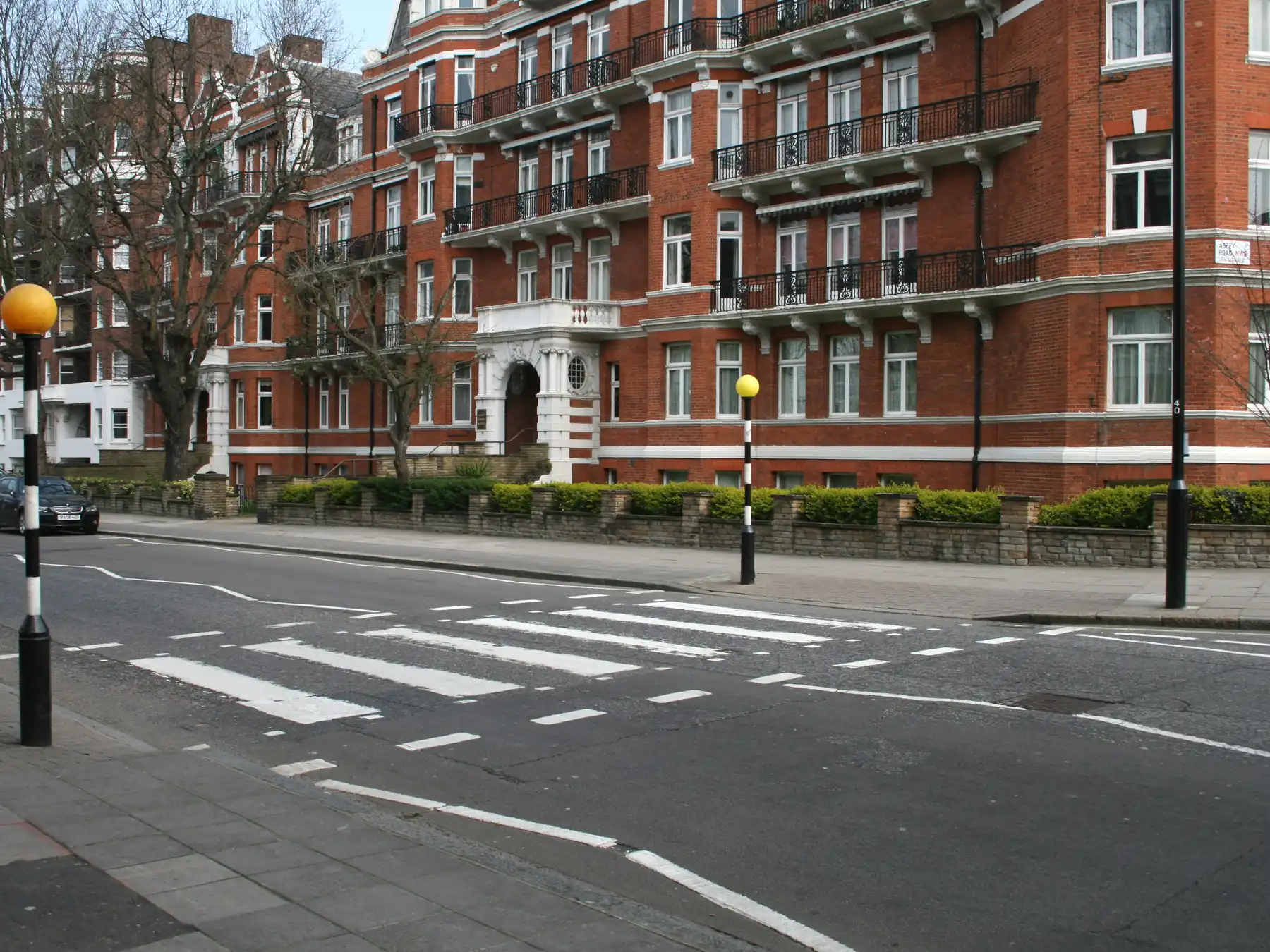
- EMI’s Abbey Road Studios became their main recording home.
- The Beatles released their first UK single in 1962.
- Their final album recorded as a group was Abbey Road.
- The final album released during the band’s original era was Let It Be in 1970.
- The Beatles stopped touring in 1966.
- They officially dissolved around 1970 amid business and personal disputes.
- All four members later pursued solo careers.
- The Recording Academy credits the Beatles with multiple Grammy Awards and a lasting transformation of popular music.
Before the Beatles
- John Lennon formed a skiffle group called the Quarry Men.
- Skiffle mixed folk, blues, jazz, and homemade-instrument traditions.
- Paul McCartney met Lennon at a church fête in 1957.
- McCartney impressed Lennon with his ability to play and remember songs.
- He soon joined the group.
- George Harrison was a school friend of McCartney.
- Harrison auditioned for Lennon while still a teenager.
- He joined despite Lennon initially considering him very young.
- The group used several names before settling on the Beatles.
- Names included Johnny and the Moondogs and the Silver Beatles.
- Stuart Sutcliffe played bass during an early period.
- Pete Best became the band’s drummer before Ringo Starr.
- The early lineup performed extensively in Liverpool and Hamburg.
- Long club sets forced the musicians to build stamina and a huge repertoire.
- The polished Beatles of television fame were built through years of noisy live work.
Hamburg was their musical boot camp
- The Beatles first traveled to Hamburg, West Germany, in 1960.
- They played clubs in the city’s St. Pauli entertainment district.
- Performances could last for hours each night.
- The band had to keep audiences interested through extremely long sets.
- They played rock and roll, rhythm and blues, standards, and pop songs.
- Hamburg strengthened their stage confidence.
- It also exposed them to international audiences and musicians.
- Stuart Sutcliffe stayed in Hamburg after leaving the group.
- He died in 1962 at age 21.
- The Beatles returned to Hamburg several times.
- Photographer Astrid Kirchherr became an important friend of the early band.
- Her portraits helped shape the visual record of their pre-fame period.
- The famous mop-top hairstyle developed through several influences rather than one single makeover.
- By the time the Beatles returned to Liverpool, they were far more experienced performers.
- Hamburg helped turn a promising teenage group into a professional live band.
Brian Epstein and George Martin
- Brian Epstein managed a Liverpool record shop before managing the Beatles.
- He became interested after hearing about the local band.
- Epstein watched them perform at the Cavern Club.
- He became their manager in 1962.
- Epstein encouraged a more polished stage presentation.
- The band adopted matching suits for many performances.
- Several record labels rejected the Beatles.
- Decca Records famously declined to sign them after an audition.
- EMI producer George Martin eventually offered a recording opportunity.
- Martin had a background in classical music and comedy records.
- His musical training became enormously useful in the studio.
- He could translate unusual band ideas into arrangements and recording techniques.
- Martin sometimes played keyboard parts on Beatles records.
- His collaboration with the band grew more experimental over time.
- The Beatles’ success depended on creative relationships around the four musicians, not only the four themselves.
Ringo joins just before the breakthrough
- Ringo Starr was born Richard Starkey.
- He grew up in Liverpool.
- Ringo played drums with Rory Storm and the Hurricanes.
- That band also performed in Hamburg.
- The Beatles therefore knew Ringo before he joined them permanently.
- Pete Best was dismissed as drummer in 1962.
- Ringo joined shortly afterward.
- Producer George Martin initially had concerns about drumming on an early session.
- Session drummer Andy White played on one version of “Love Me Do.”
- Different early releases therefore contain different drum performances.
- Ringo quickly became a core part of the band’s identity.
- His drumming favored musical feel and distinctive fills over showy soloing.
- He sang lead on selected Beatles tracks.
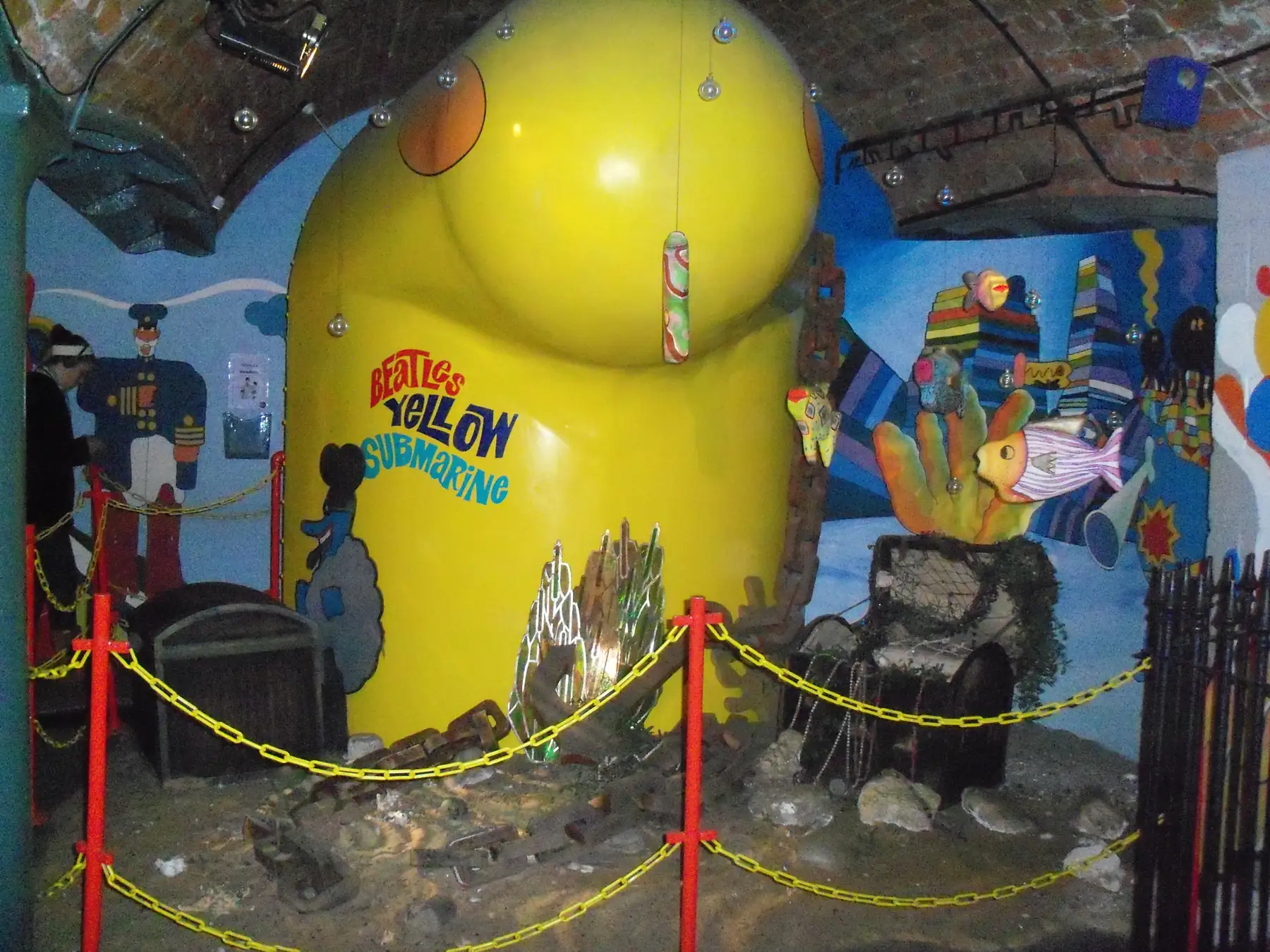
- Those include “With a Little Help from My Friends” and “Yellow Submarine.”
- Ringo also wrote or co-wrote Beatles songs including “Octopus’s Garden.”
Beatlemania explodes
- “Love Me Do” became the Beatles’ first UK single in 1962.
- “Please Please Me” followed and became a major breakthrough.
- Their first album was recorded with remarkable speed.
- Most of Please Please Me was completed during one long recording day in February 1963.
- John Lennon recorded the explosive vocal on “Twist and Shout” near the end while his voice was already strained.
- British fan excitement became known as Beatlemania.
- Screaming audiences could be so loud that the band struggled to hear itself onstage.
- Concert sound systems were primitive by modern stadium standards.
- The Beatles played the Royal Variety Performance in 1963.
- Lennon jokingly asked people in cheaper seats to clap and the rest to rattle their jewelry.
- The band’s hair and clothing became cultural symbols.
- Newspapers followed their every move.
- Merchandise appeared in enormous quantities.
- Beatlemania spread internationally before social media or streaming existed.
- Radio, records, television, newspapers, fan clubs, and touring created a synchronized global craze.
America changes everything
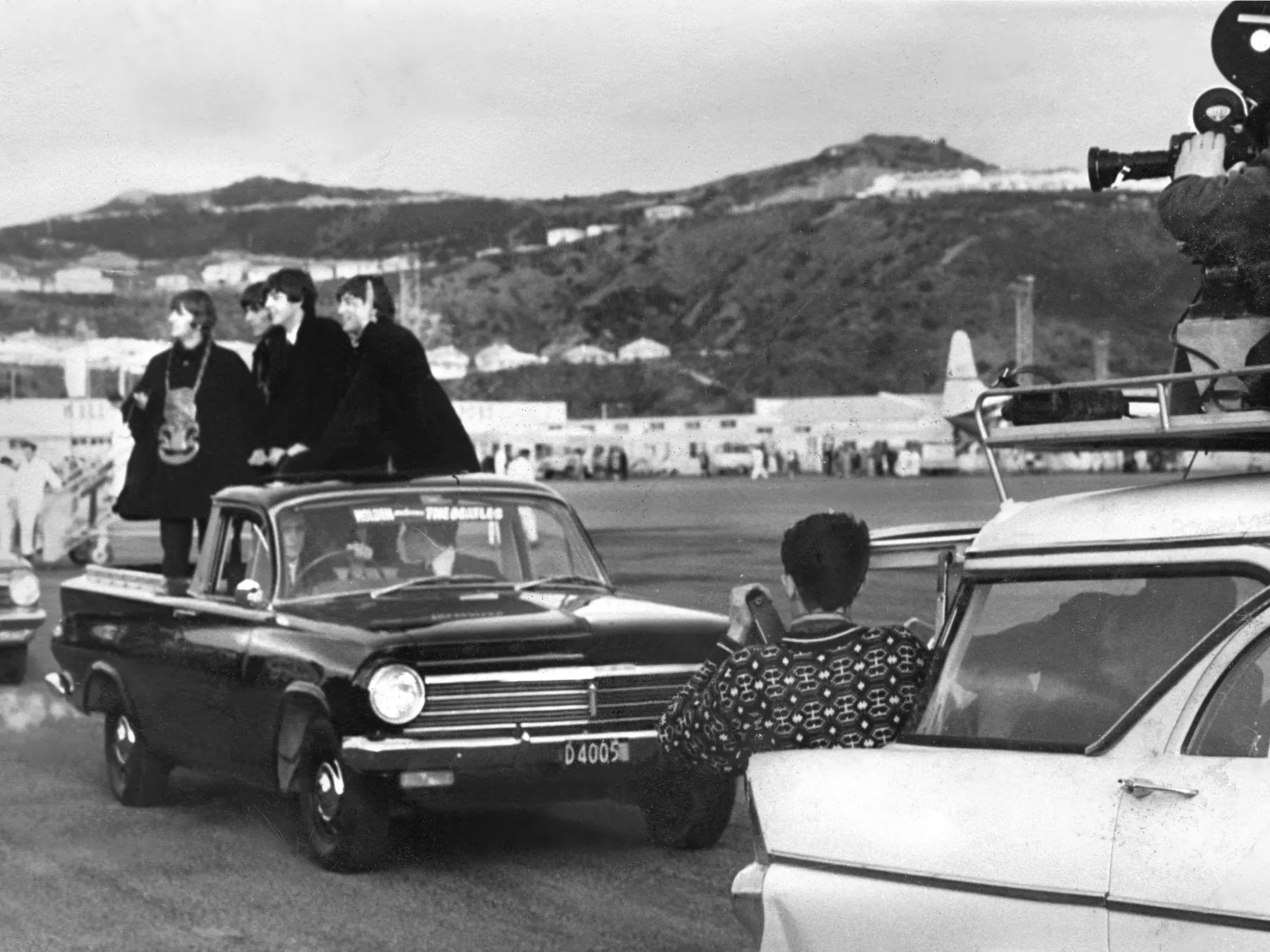
- The Beatles initially struggled to achieve comparable U.S. success.
- “I Want to Hold Your Hand” became their American breakthrough.
- The group arrived at New York’s John F. Kennedy Airport in February 1964.
- Thousands of fans greeted them.
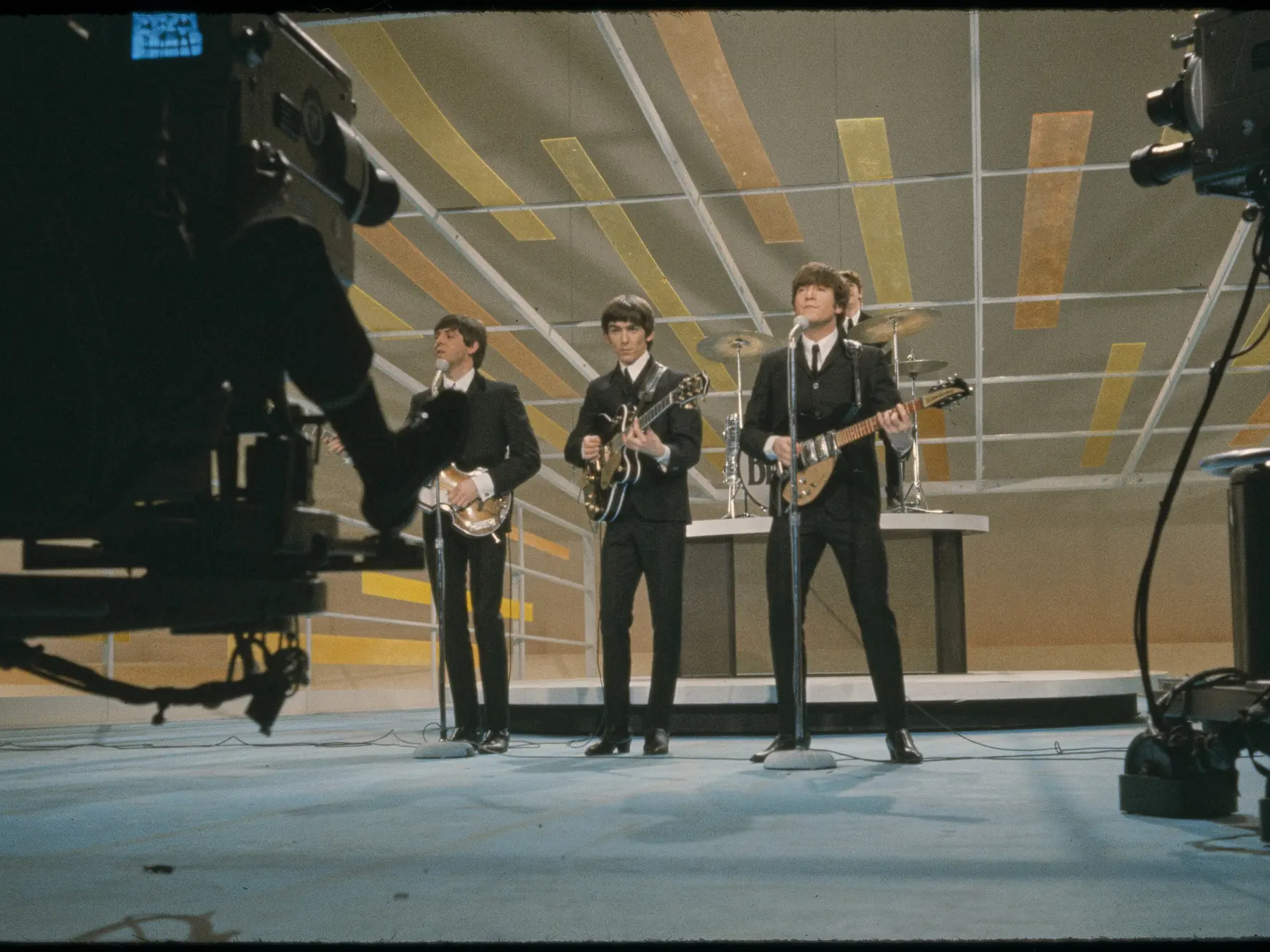
- Their first live appearance on The Ed Sullivan Show aired February 9, 1964.
- About 73 million viewers watched by commonly cited estimates.
- The performance became one of American television’s defining pop-culture moments.
- The Beatles soon dominated the U.S. singles chart.
- In April 1964, they held the top five positions on the Billboard Hot 100 simultaneously.
- No previous act had done that.
- Their success helped launch the broader British Invasion.
- British bands gained unprecedented access to American audiences.
- The Beatles toured the United States repeatedly.
- They played Shea Stadium in New York in 1965.
- The concert became an early landmark in large-scale stadium rock performance.
The studio becomes an instrument
- By the mid-1960s, Beatles recordings became increasingly difficult to reproduce live.
- The band used tape speed changes as creative effects.
- They reversed recorded sounds.
- They layered multiple instruments and voices through overdubbing.
- Automatic double tracking helped thicken vocals.
- Engineer Ken Townsend developed ADT at Abbey Road after Lennon disliked repeatedly recording double vocals.
- Tape loops became central to “Tomorrow Never Knows.”
- Indian instruments including sitar appeared on several songs.
- George Harrison studied Indian music seriously.
- “Strawberry Fields Forever” famously combines two performances recorded in different keys and tempos.
- George Martin and engineer Geoff Emerick helped make the edit work by changing tape speed.
- Sgt. Pepper’s Lonely Hearts Club Band expanded expectations for album production.
- The record used orchestration, sound effects, unusual instruments, and elaborate studio construction.
- Recording technology placed limits on track counts that required constant bouncing and planning.
- Constraints encouraged creative solutions rather than preventing experimentation.
They quit touring at their peak
- The Beatles’ final conventional paid concert took place at Candlestick Park in San Francisco in August 1966.
- Touring had become exhausting and sometimes dangerous.
- Audience noise made musical precision difficult.
- The band’s studio recordings had also become too complex to reproduce with their stage equipment.
- After touring ended, they concentrated on recording.
- This period produced Sgt. Pepper, the Magical Mystery Tour material, the White Album, and Abbey Road.
- Brian Epstein died in 1967.
- His death removed a major stabilizing business figure.
- The Beatles created Apple Corps as a business organization.
- Financial and management disagreements intensified.
- The Let It Be sessions were filmed extensively.
- The band performed unexpectedly on the roof of Apple’s London headquarters in January 1969.
- The rooftop performance was their final public live performance together.
- Police eventually brought the concert to an end after noise complaints.
- The rooftop show became one of rock history’s most famous improvised stages.
Ten surprising Beatles facts
- The Beatles’ classic lineup did not exist until shortly before their first hit single.
- They became professional performers partly by playing marathon club sets in Hamburg.
- Decca Records rejected them.
- Most of their first album was recorded in one day.
- They once occupied all five top positions on the Billboard Hot 100 at the same time.
- Their first Ed Sullivan Show performance drew an audience estimated at about 73 million.
- The Beatles stopped normal touring four years before the band officially ended.
- Abbey Road engineers invented or refined recording techniques specifically to satisfy Beatles ideas.
- The rooftop concert was their last public performance as a group.
- For more music trivia, explore our Elvis Presley facts and Michael Jackson facts.
Quick Beatles FAQ
Who were the four Beatles?
John Lennon, Paul McCartney, George Harrison, and Ringo Starr.
Where were the Beatles from?
Liverpool, England, although their formative live years also included repeated club residencies in Hamburg, Germany.
What was the Beatles’ first single?
“Love Me Do,” released in the United Kingdom in 1962.
When did the Beatles stop touring?
1966. Their final conventional paid concert was at Candlestick Park in San Francisco.
What was the Beatles’ last concert?
Their last public performance together was the unannounced January 1969 rooftop concert at Apple headquarters in London.

Ellie is the owner and sole author of Fun Facts, combining her mechanical engineering background with years of research-driven writing to deliver facts you can trust. Every article is thoroughly fact-checked and routinely updated as new science and sources emerge to keep information accurate and current. Her mission is to make learning delightful while upholding high standards of reliability and transparency.