
Elvis Presley did not invent rock and roll, but his voice, look, movement, television appearances, records, movies, and enormous celebrity helped turn it into a global phenomenon. His story runs from a two-room Mississippi house to Sun Studio, Graceland, the Army, Hollywood, Las Vegas, gospel recordings, jumpsuits, and one of music’s most recognizable images. These 145 facts explore Elvis’s childhood, first recordings, breakthrough, controversy, military service, movies, comeback, concerts, influences, awards, Graceland, and the myths surrounding the King of Rock and Roll.
Elvis basics
- Elvis Aaron Presley was born on January 8, 1935.
- He was born in Tupelo, Mississippi.
- His parents were Vernon and Gladys Presley.
- Elvis was born a twin.
- His identical twin brother, Jesse Garon Presley, was stillborn.
- The Presley family lived modestly during Elvis’s childhood.
- Elvis grew up around gospel, country, blues, and popular music.
- His family attended Assembly of God churches.
- Gospel singing became a lifelong musical influence.
- The Presleys moved to Memphis, Tennessee, in 1948.
- Elvis graduated from Humes High School in 1953.
- He worked ordinary jobs before becoming famous.
- His first commercial breakthrough came through Sun Records.
- Elvis became one of the most influential entertainers of the 20th century.
- Graceland’s official historical archive documents his life, recordings, films, military service, and concerts.
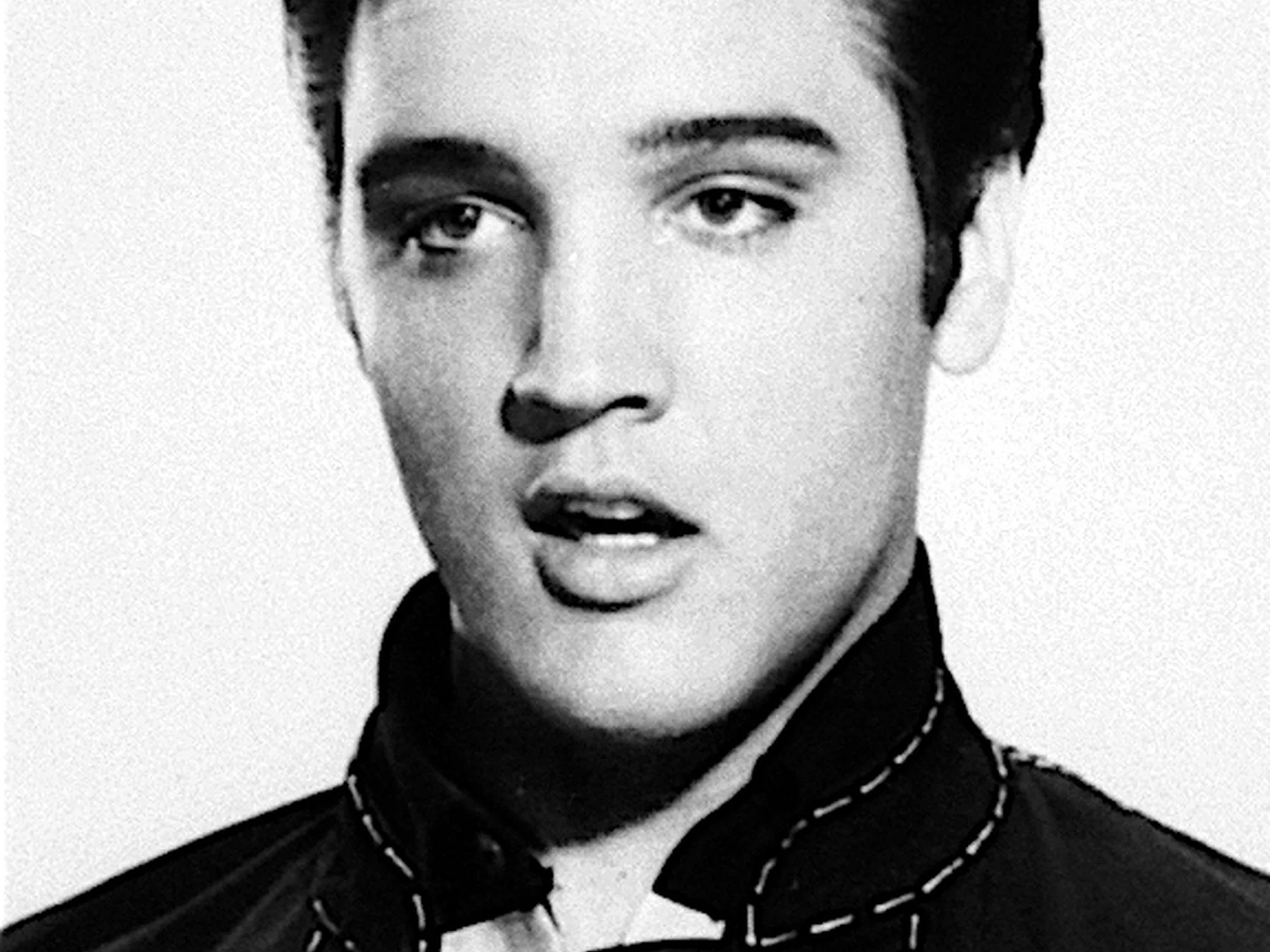
A childhood surrounded by music
- Elvis received a guitar as a child.
- He reportedly had wanted other gifts too, but the guitar became important.
- He listened to gospel groups closely.
- Black gospel and blues musicians in Mississippi and Memphis influenced his musical ear.
- Country radio also shaped his repertoire.
- Memphis placed Elvis near Beale Street’s thriving Black music culture.
- He listened across racial and genre boundaries common in southern music.
- Elvis did not create those musical traditions himself.
- His style emerged partly from combining and performing influences already developed by Black and white American musicians.
- He admired performers including B.B. King.
- Rhythm and blues records were central to his early listening.
- Southern gospel quartets influenced his vocal phrasing and harmony preferences.
- He also loved sentimental pop ballads.
- This broad listening explains why his later catalog never fit neatly into only one genre.
- Elvis recorded rock, country, blues, gospel, pop, Christmas music, and ballads.
Sun Studio and “That’s All Right”
- Sam Phillips founded Sun Records in Memphis.
- Phillips recorded Black blues musicians as well as emerging white performers.
- Elvis first visited the studio before he had a recording contract.
- He paid to make personal acetate recordings.
- Sun employees remembered his unusual voice.
- Phillips later paired Elvis with guitarist Scotty Moore and bassist Bill Black.
- During a 1954 session, Elvis began playing Arthur Crudup’s blues song “That’s All Right.”
- Moore and Black joined him.
- Phillips recognized something fresh in the spontaneous performance.
- Sun released “That’s All Right” as Elvis’s first commercial single.
- The flip side was a transformed version of Bill Monroe’s “Blue Moon of Kentucky.”
- The two sides combined blues and country influences.
- Local Memphis radio helped the record gain attention.
- Elvis began performing regionally with Moore and Black.
- The Sun period created the foundation for the sound later called rockabilly.
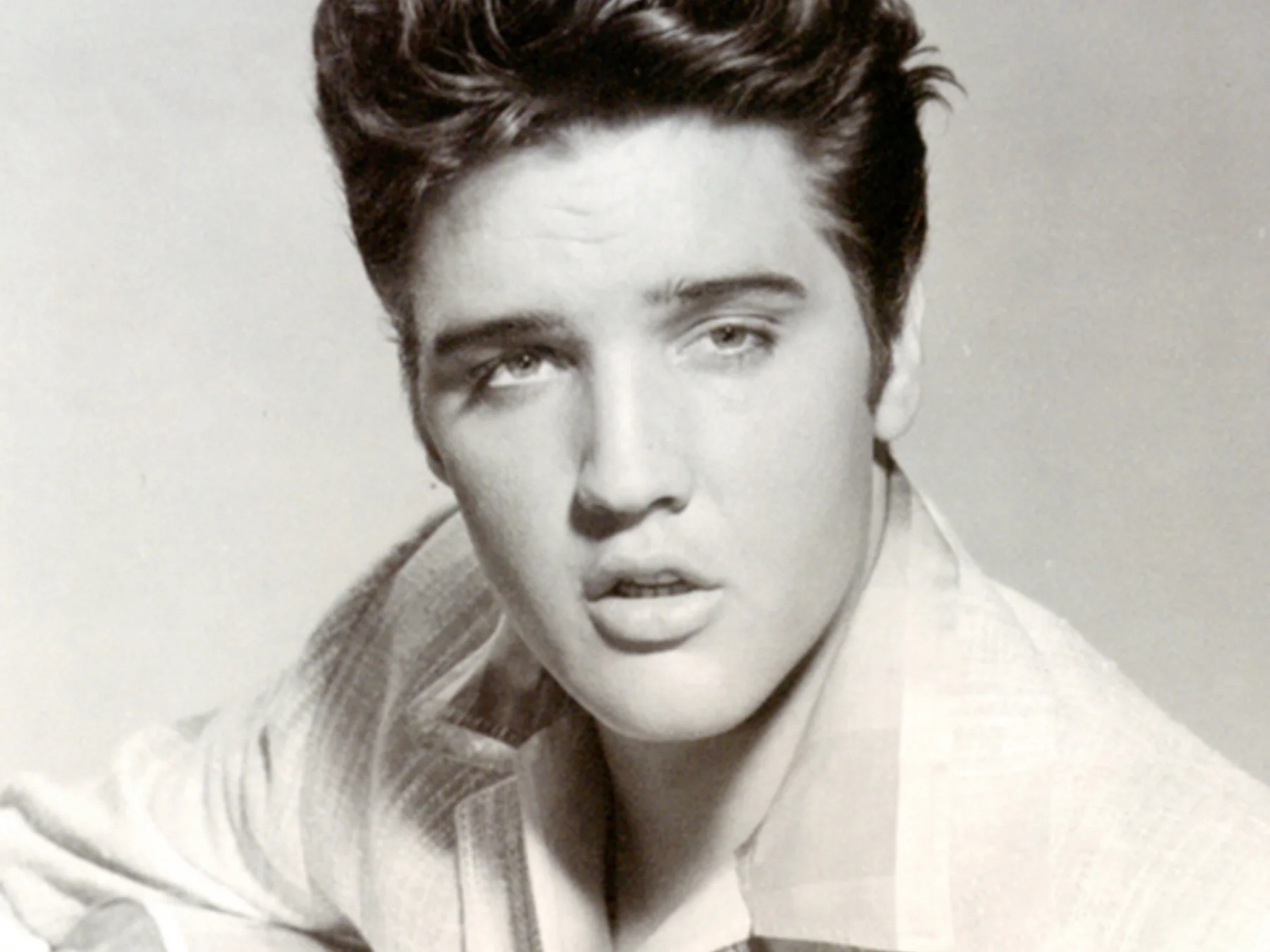
RCA makes Elvis a national star
- Elvis’s management shifted dramatically after Colonel Tom Parker became involved in his career.
- Parker was not actually a military colonel.
- His honorary title came from southern political culture.
- RCA Victor acquired Elvis’s recording contract from Sun in 1955.
- The deal was unusually large for an emerging artist at the time.
- RCA released “Heartbreak Hotel” in 1956.
- The song became Elvis’s first number-one pop hit in the United States.
- His first RCA album also became a major seller.
- Television accelerated his national fame.
- He appeared on programs including the Dorsey Brothers’ show and Milton Berle’s show.
- His hip movements shocked some older viewers.
- Other audiences found the performances thrilling.
- Criticism increased publicity rather than stopping his rise.
- Elvis soon became a national symbol of teenage culture and generational change.
- His fame expanded almost explosively during 1956.
Elvis on television
- Elvis’s television appearances were crucial to his early celebrity.
- Moving images let audiences experience his performance style rather than only his voice.
- His appearance on The Milton Berle Show in June 1956 drew intense reaction.
- Some critics considered his dancing indecent.
- The backlash led to more controlled television staging.
- On The Steve Allen Show, Elvis famously sang “Hound Dog” to a basset hound while wearing formal tails.
- The deliberately restrained bit frustrated some fans.
- Elvis later made several appearances on The Ed Sullivan Show.
- Sullivan had initially resisted booking him.
- Huge ratings changed that calculation.
- One Sullivan appearance was filmed mostly from the waist up.
- The censorship story became part of Elvis mythology.
- Television made his clothing, hair, expressions, and body movement central to pop stardom.
- Elvis showed that music celebrity in the television age was partly visual.
- His broadcasts became cultural events shared by millions of households at once.
Movies take over much of the 1960s
- Elvis wanted to become a serious film actor.
- His first movie was Love Me Tender in 1956.
- The movie’s title was changed to capitalize on his song of the same name.
- Elvis appeared in more than 30 feature films.
- Early films such as Jailhouse Rock and King Creole remain especially admired.
- Jailhouse Rock includes one of his most famous musical sequences.
- Elvis helped choreograph aspects of that performance.
- After military service, Hollywood became the dominant focus of his career.
- Many 1960s films followed a formula combining romance, travel, comedy, and songs.
- Soundtrack recording increasingly replaced adventurous standalone studio work.
- The movies often made money even when critics disliked them.
- Elvis became frustrated with repetitive scripts and musical material.
- Colonel Parker favored predictable contracts and profitable formulas.
- By the late 1960s, Elvis had spent years away from regular live concert performance.
- His eventual return to the stage was therefore a major artistic reset.
Elvis joins the Army
- Elvis was drafted into the U.S. Army.
- He entered active duty in March 1958.
- He chose to serve as a regular soldier rather than using celebrity for a special entertainment assignment.
- Elvis completed basic training at Fort Hood, Texas.
- He later served in West Germany.
- His mother Gladys died in August 1958 while he was in the Army.
- Her death devastated him.
- While stationed in Germany, Elvis met Priscilla Beaulieu.
- She was a teenager living there with her military family.
- Elvis earned promotion to sergeant.
- He received an honorable discharge in 1960.
- His return to civilian life was major news.
- RCA had prepared unreleased recordings to maintain his music presence while he served.
- Military service broadened his public acceptance among some older Americans.
- The two-year interruption did not end his celebrity.
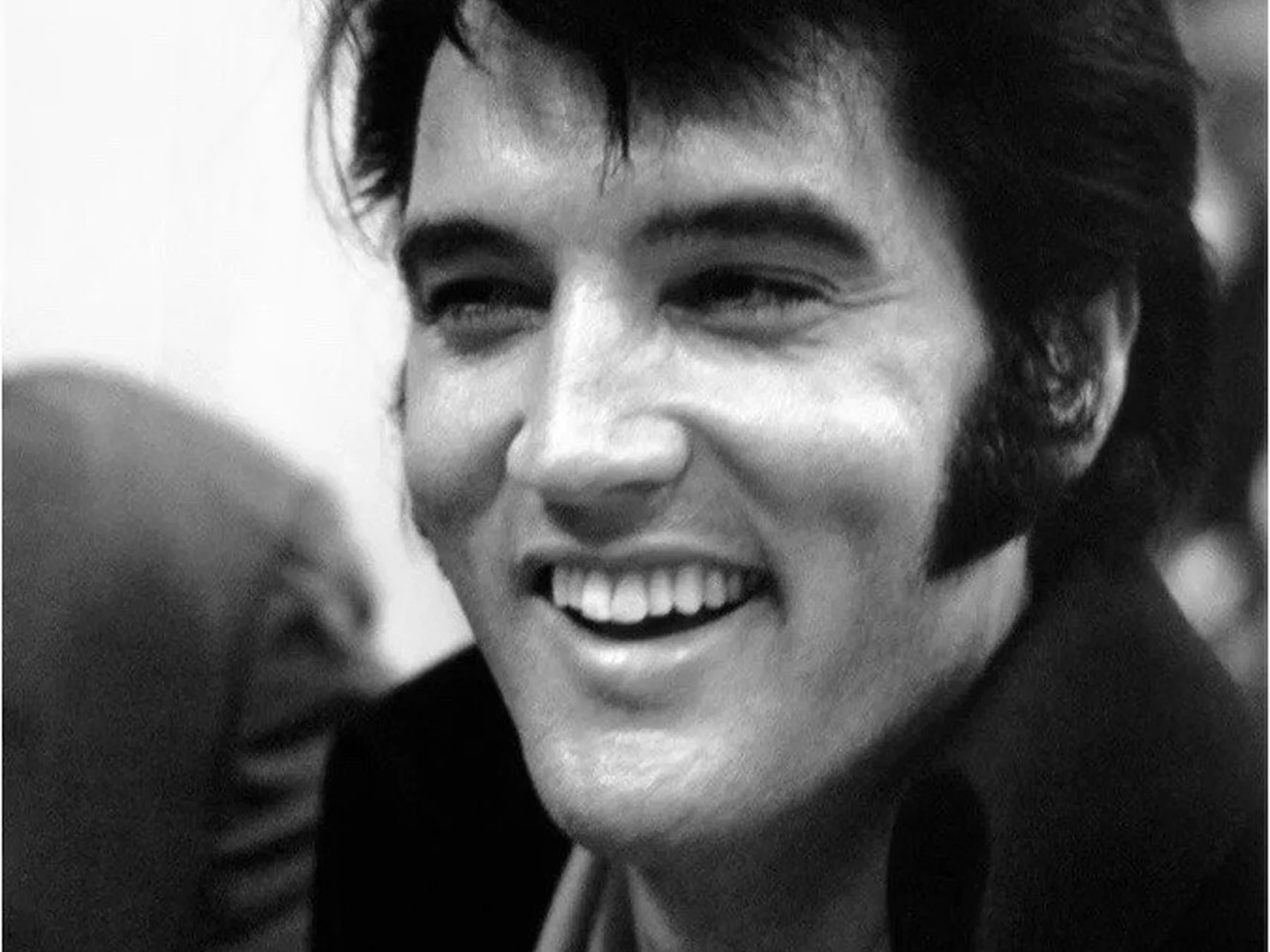
The 1968 Comeback Special
- Elvis returned to television in a major NBC special in 1968.
- The program is commonly called the ’68 Comeback Special.
- Its original title was simply Elvis.
- Producer-director Steve Binder pushed the show beyond a conventional Christmas special.
- Elvis performed in a famous black leather outfit.
- Some segments placed him in an intimate circle with musicians.
- Those performances recalled the energy of his early career.
- Elvis played guitar and joked naturally with the band.
- The special also included large staged production numbers.
- “If I Can Dream” closed the broadcast.
- The song reflected the turmoil and hopes of 1968.
- The special earned strong ratings.
- It restored Elvis’s image as a serious live performer.
- Successful recording sessions in Memphis followed.
- The comeback helped lead directly into the Las Vegas and touring era.
Las Vegas, jumpsuits, and the TCB era
- Elvis began a major Las Vegas engagement at the International Hotel in 1969.
- The hotel later became the Las Vegas Hilton.
- He performed with a large band, backup singers, and orchestra.
- The concerts mixed rock, ballads, gospel, country, and dramatic showpieces.
- Elvis adopted increasingly elaborate stage jumpsuits.
- The suits allowed freedom of movement while creating a distinctive silhouette.
- Designer Bill Belew created many famous costumes.
- High collars, capes, belts, rhinestones, and embroidered patterns became iconic.
- Elvis’s entourage became known as the Memphis Mafia.
- TCB stood for “Taking Care of Business.”
- Elvis used the TCB lightning-bolt logo on jewelry and personal items.
- He toured extensively across the United States during the 1970s.
- Aloha from Hawaii via Satellite aired in 1973.
- The concert was transmitted internationally using satellite technology.
- Elvis never performed a public concert outside the United States and Canada despite his global fame.
Ten surprising Elvis facts
- Elvis had an identical twin brother who was stillborn.
- Colonel Tom Parker was not a military colonel.
- Elvis did not invent rock and roll, a genre rooted heavily in Black American musical traditions.
- His first commercial single paired a blues song with a transformed bluegrass-country song.
- He served as an ordinary U.S. Army soldier at the height of fame.
- Elvis appeared in more than 30 feature films.
- The famous 1968 comeback special was officially titled simply Elvis.
- TCB stood for Taking Care of Business.
- Despite enormous international popularity, Elvis never gave a public concert outside the United States and Canada.
- For more music history, explore our Michael Jackson facts and History facts.
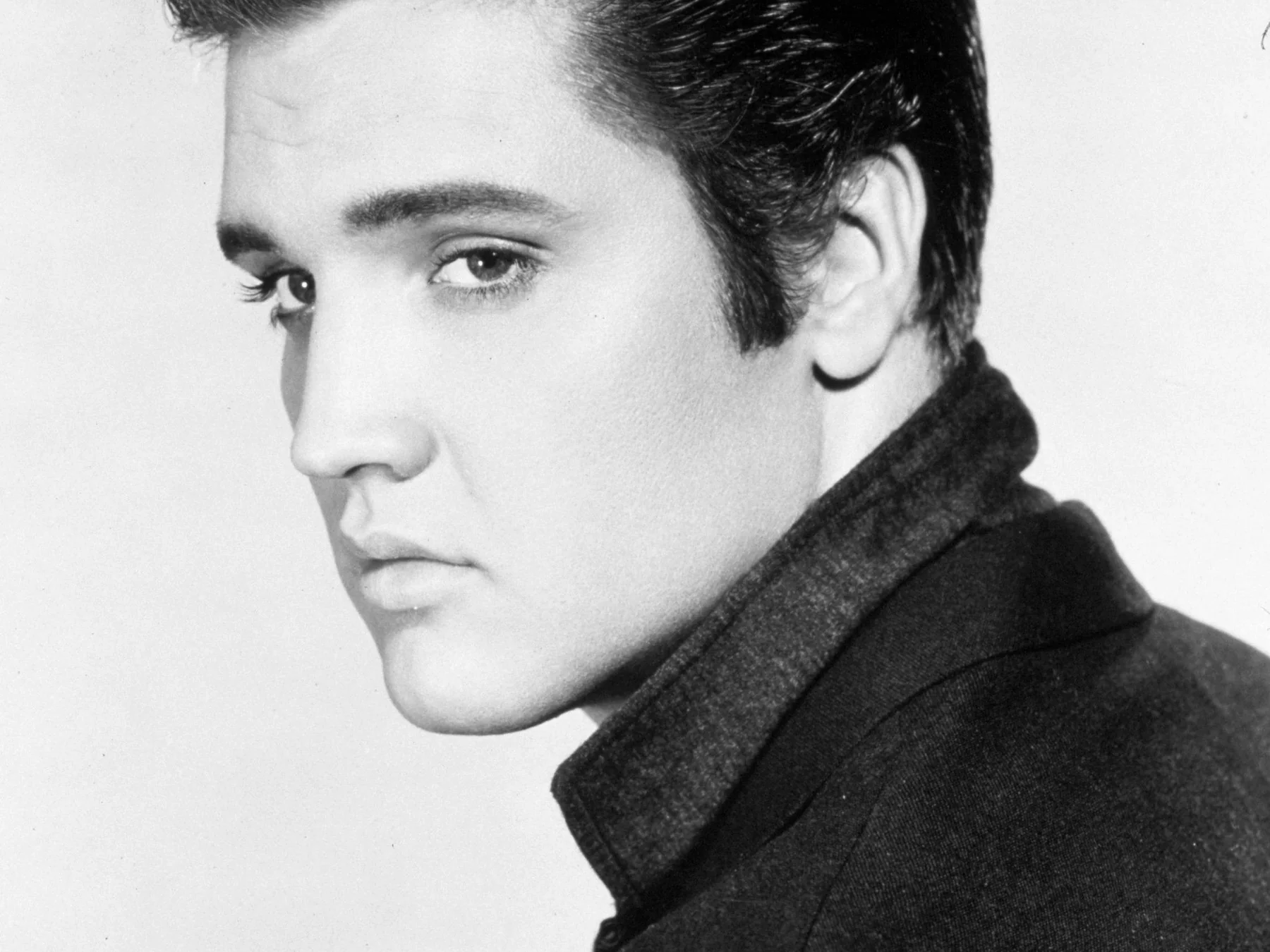
Quick Elvis Presley FAQ
When was Elvis Presley born?
January 8, 1935, in Tupelo, Mississippi.
What was Elvis’s first hit?
His first major national RCA hit was “Heartbreak Hotel” in 1956, while “That’s All Right” had launched his commercial recording career at Sun Records in 1954.
Did Elvis invent rock and roll?
No. Rock and roll developed from earlier Black rhythm and blues, gospel, country, and other American traditions. Elvis became an enormously influential interpreter and popularizer.
Did Elvis serve in the military?
Yes. He served in the U.S. Army from 1958 to 1960 and spent part of that service in West Germany.
Where is Elvis buried?
At Graceland in Memphis, Tennessee, where his grave is part of the Meditation Garden visited by fans.

Ellie is the owner and sole author of Fun Facts, combining her mechanical engineering background with years of research-driven writing to deliver facts you can trust. Every article is thoroughly fact-checked and routinely updated as new science and sources emerge to keep information accurate and current. Her mission is to make learning delightful while upholding high standards of reliability and transparency.