
Bats are the only mammals capable of true powered flight, and they are far more useful than their spooky reputation suggests. They pollinate plants, scatter seeds, eat enormous numbers of insects, navigate darkness with sound, and range from tiny nectar feeders to flying foxes with impressive wingspans. These 145 bat facts explore wings, echolocation, roosts, babies, hibernation, food, vampire bats, conservation, white-nose syndrome, caves, pollination, and the biology that makes bats unlike any other mammals.
Bat basics
- Bats are mammals in the order Chiroptera.
- Chiroptera means roughly hand-wing.
- Bats are the only mammals capable of sustained powered flight.
- Flying squirrels and sugar gliders glide but do not perform true powered flight.
- More than 1,400 bat species are known worldwide.
- Bats live on every continent except Antarctica.
- They occupy forests, deserts, caves, grasslands, cities, islands, and wetlands.
- Bat sizes vary enormously among species.
- Some weigh only a few grams.
- Large flying foxes can have wingspans exceeding a meter.
- Most bats are nocturnal or crepuscular.
- Not every bat spends daytime inside a cave.
- Many roost in trees, buildings, rock cracks, foliage, or hollow trunks.
- Bats are warm-blooded vertebrates with fur.
- The Smithsonian calls them one of the most diverse groups of mammals.
Bat wings are modified hands
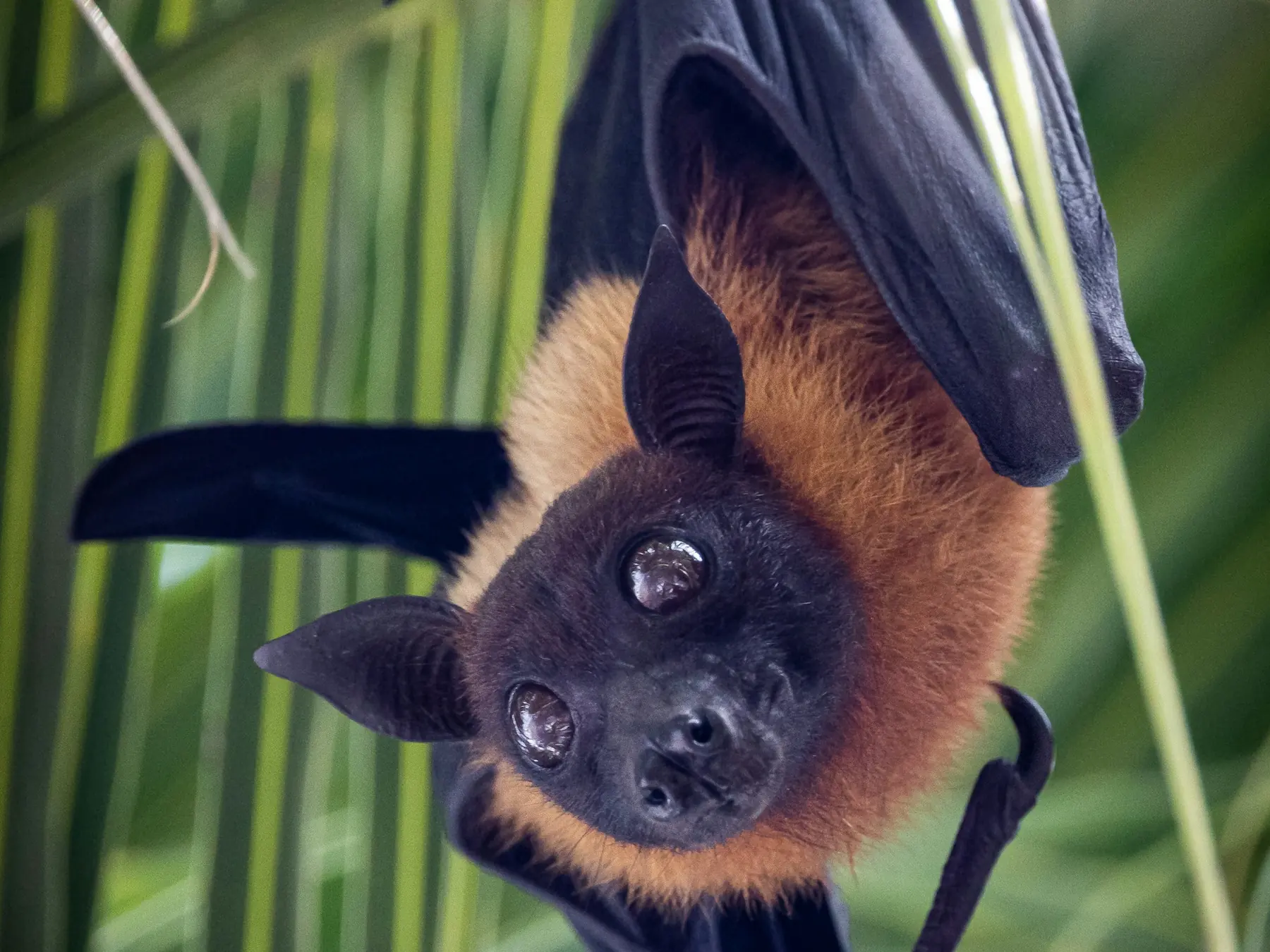
- A bat wing is supported by elongated arm and finger bones.
- The wing membrane stretches across those bones.
- This membrane is called the patagium.
- Bat thumbs remain relatively short and often end in claws.
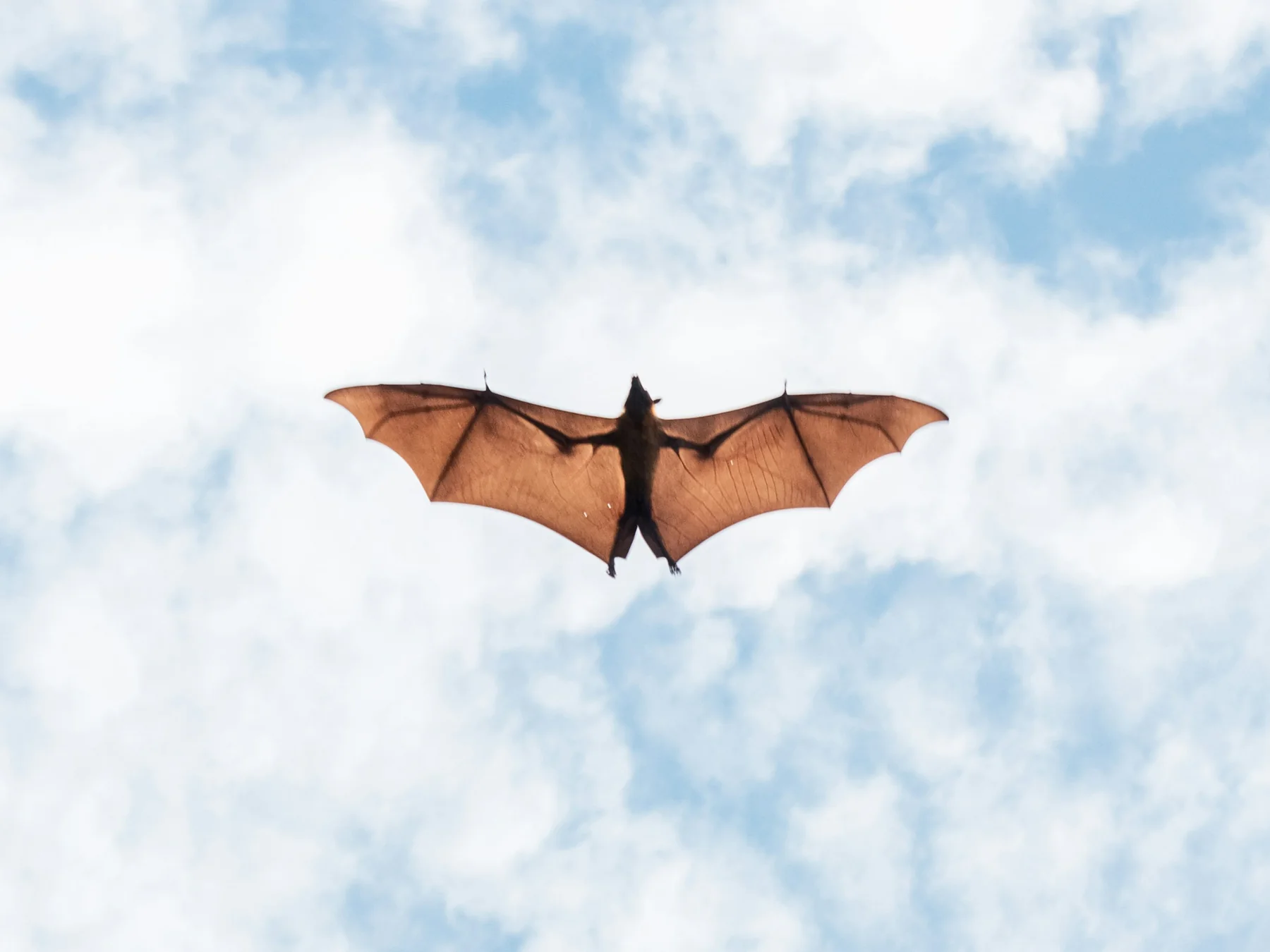
- The long fingers spread the wing surface like ribs in an umbrella.
- Bats can change wing shape during every flap.
- This flexibility gives them excellent maneuverability.
- Wing shape differs among species according to flight style.
- Long narrow wings favor efficient fast flight.
- Short broad wings support tight maneuvering in cluttered forests.
- Many insect-hunting bats can make rapid midair turns.
- Wing membranes contain blood vessels, nerves, muscles, and connective tissue.
- The membrane can heal after small injuries.
- Bats groom their wings carefully.
- Powered flight let bats exploit airborne food and habitats unavailable to most mammals.
How echolocation works
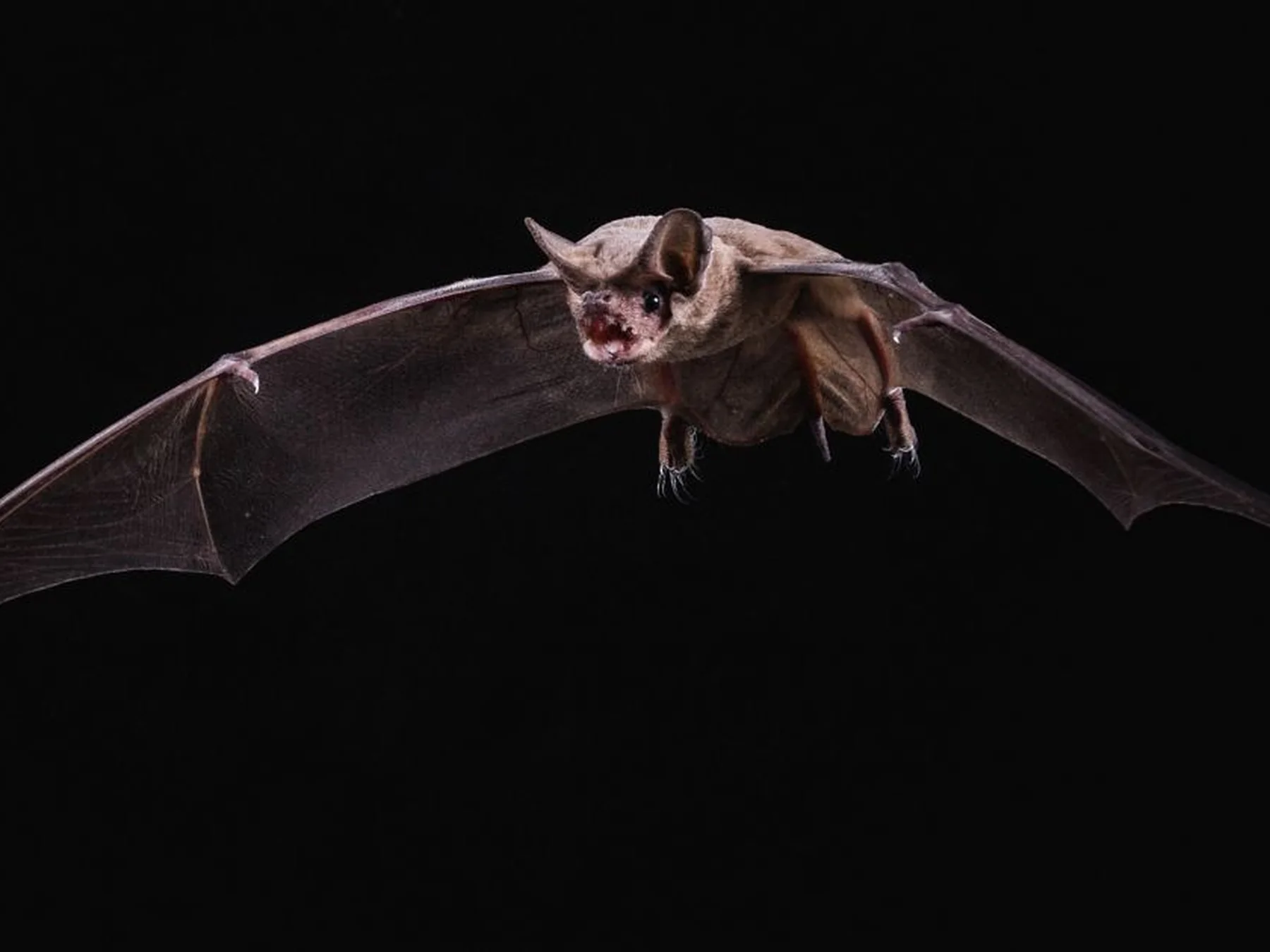
- Many bats navigate and hunt using echolocation.
- They emit high-frequency sound pulses.
- Those sounds bounce off objects.
- Returning echoes reveal distance, direction, size, texture, and movement.
- Much bat echolocation occurs above the range of human hearing.
- Special detectors can convert ultrasonic calls into audible or visible signals.
- Bats change call timing as they approach prey.
- Calls often become faster during the final pursuit.
- This rapid sequence is sometimes called a feeding buzz.
- Echolocation does not mean bats are blind.
- Bats can see.
- Many species have very useful low-light vision.
- Fruit bats often rely heavily on eyesight and smell.
- Some flying foxes do not use the same laryngeal echolocation common in many smaller bats.
- Different bat lineages evolved remarkably varied sensory strategies.
What bats eat
- Bat diets vary widely by species.
- Many bats eat insects.
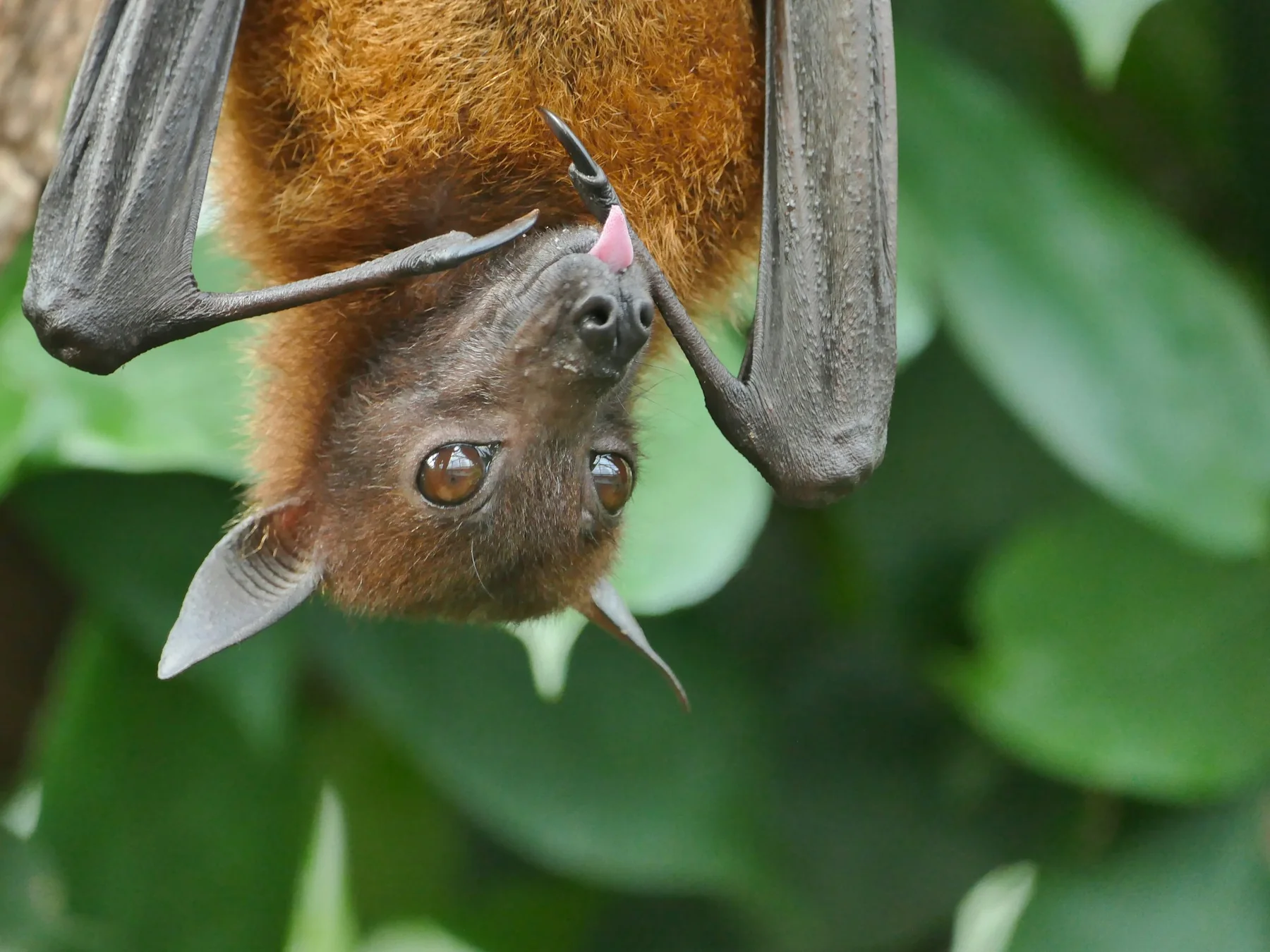
- Others eat fruit.
- Nectar and pollen feed many tropical species.
- Some bats catch fish.
- Others prey on frogs, rodents, birds, or smaller bats.
- A few species drink blood.
- Insect-eating bats can consume large quantities of moths, beetles, mosquitoes, and other arthropods.
- This natural pest control can benefit farms.
- Fruit-eating bats disperse seeds through forests.
- Seed dispersal can help regenerate disturbed tropical habitat.
- Nectar-feeding bats pollinate flowers.
- Plants pollinated by bats often open at night.
- Some produce strong scents and large amounts of nectar.
- Bats therefore perform ecosystem jobs ranging from predator to pollinator to seed carrier.
Bats pollinate foods people use
- Bat pollination is especially important in tropical and desert ecosystems.
- Agaves are famously pollinated by nectar-feeding bats.
- Agave plants are used to produce tequila and mezcal.
- Several cactus species depend partly on bats for pollination.
- Some bananas, mango relatives, and tropical fruits also benefit from bat pollination or seed dispersal.
- Durian flowers are pollinated by bats in parts of Southeast Asia.
- Flying foxes can travel long distances between flowering trees.
- This movement transfers pollen across large landscapes.
- Pollination maintains genetic exchange among plant populations.
- Habitat fragmentation can disrupt these bat-plant relationships.
- Protecting roosts can therefore help plant reproduction far from the roost itself.
- A single bat colony can affect ecological processes over broad areas.
- Not every crop depends directly on bats.
- Still, bat ecosystem services have substantial economic value.
- The Smithsonian emphasizes bats’ roles in pollination, seed dispersal, and insect control.
Vampire bats are real, but unusual
- Only three living bat species feed primarily on blood.
- All three vampire-bat species live in the Americas.
- The common vampire bat mainly feeds on mammals.
- Other vampire species specialize more on birds.
- Vampire bats do not usually suck blood through straw-like fangs.
- They make a small cut with sharp teeth.
- They lap flowing blood with the tongue.
- Their saliva contains compounds that help delay blood clotting.
- Heat-sensitive structures help common vampire bats locate warm blood-rich areas.
- Vampire bats can walk and hop unusually well on the ground.
- They can launch rapidly into flight from the ground.
- Blood is nutritionally unusual because it is rich in protein but low in many other nutrients.
- Vampire bats have specialized kidneys, digestion, and microbiomes.
- They may share regurgitated blood with hungry roostmates.
- That food sharing has made vampire bats important subjects in research on animal cooperation.
Bat babies and roost life
- A baby bat is commonly called a pup.
- Many bat species produce only one pup per pregnancy.
- Twins occur in some species.
- Slow reproduction makes bat populations vulnerable to adult mortality.
- Female bats may gather in maternity colonies.
- These warm communal roosts support pregnancy and nursing.
- Pups drink milk because bats are mammals.
- Mothers can recognize their own young among crowded colonies.
- Calls and scent help with recognition.
- Newborn pups cannot immediately fly.
- They cling to mothers or roost surfaces while developing.
- Some mothers carry small pups during foraging flights.
- Others leave them in nursery groups.
- Young bats practice flight as muscles and coordination develop.
- Long-lived adults combined with low birth rates create a life history very different from that of mice.
Hibernation and torpor
- Many bats reduce body temperature and metabolism to conserve energy.
- Short-term metabolic reduction is called torpor.
- Some temperate bats enter prolonged winter hibernation.
- During hibernation, heart rate can fall dramatically.
- Body temperature may approach the temperature of the roost.
- Stored body fat fuels winter survival.
- Waking from deep torpor requires substantial energy.
- Repeated disturbances can therefore deplete winter fat reserves.
- Caves and mines can provide stable cold conditions suitable for hibernation.
- Not every bat hibernates.
- Some migrate instead.
- Others live in climates where food remains available year-round.
- Some species combine migration with seasonal torpor.
- Climate change can alter insect availability and hibernation conditions.
- Bat winter strategies are carefully matched to local ecology.
White-nose syndrome
- White-nose syndrome is a devastating disease of hibernating bats.
- It is caused by the fungus Pseudogymnoascus destructans.
- The fungus grows on skin during cold hibernation conditions.
- It can appear as white fungal growth around the muzzle.
- The disease disrupts normal hibernation physiology.
- Infected bats wake too often and burn precious fat reserves.
- Mass mortality has occurred in North American bat colonies.
- The disease was first documented in New York during the 2000s.
- It spread rapidly across much of North America.
- Several species experienced enormous population declines.
- Scientists monitor caves and populations for disease spread.
- Researchers study treatments, vaccines, habitat management, and natural resistance.
- People entering caves can follow decontamination guidance to reduce accidental fungal transport.
- The U.S. Geological Survey conducts extensive white-nose syndrome research.
- The disease shows how slow-reproducing animals can struggle to recover from sudden high adult mortality.
Ten surprising bat facts
- Bats are the only mammals capable of true sustained powered flight.
- A bat wing is basically an extremely modified hand.
- Bats are not blind.
- Only three bat species drink blood.
- Some bats pollinate the agaves used for tequila.
- Vampire bats may share food with hungry companions.
- Many bats produce just one baby per year.
- Some bats lower body temperature dramatically to save energy.
- White-nose syndrome has killed millions of North American bats.
- For more nocturnal-animal trivia, explore our owl facts and Science facts.
Quick bat FAQ
Are bats blind?
No. Bats can see, and many species combine vision with echolocation, smell, and hearing.
Do all bats use echolocation?
No. Many do, especially insect-hunting species, but sensory strategies vary and some large fruit bats rely heavily on vision and smell.
Are bats dangerous?
Wild bats should never be handled because some can transmit rabies and other pathogens, but most bats avoid people and provide major ecological benefits.
What do bats eat?
Depending on species, insects, fruit, nectar, pollen, fish, frogs, small vertebrates, and in three species, blood.
Why are bats important?
They control insects, pollinate plants, disperse seeds, support forest regeneration, and form important links in food webs.

Ellie is the owner and sole author of Fun Facts, combining her mechanical engineering background with years of research-driven writing to deliver facts you can trust. Every article is thoroughly fact-checked and routinely updated as new science and sources emerge to keep information accurate and current. Her mission is to make learning delightful while upholding high standards of reliability and transparency.