
Otters are playful predators with sleek bodies, super-dense fur, and big personalities.
From river racers to kelp-forest guardians, these mammals pack science, surprises, and a lot of cute into one package.
Explore their species, skills, and secrets with 145 quick, kid-friendly facts you can read anywhere.
Origins & Definitions
- Otters are mammals in the weasel family Mustelidae, grouped in the subfamily Lutrinae.
- There are 13 living otter species worldwide.
- Otters live on every continent except Australia and Antarctica.
- Most otters are freshwater specialists, but two species are truly marine—the sea otter and the marine otter.
- Otters evolved from terrestrial mustelid ancestors that returned to the water.
- The word "holt" refers to an otter den or resting place.
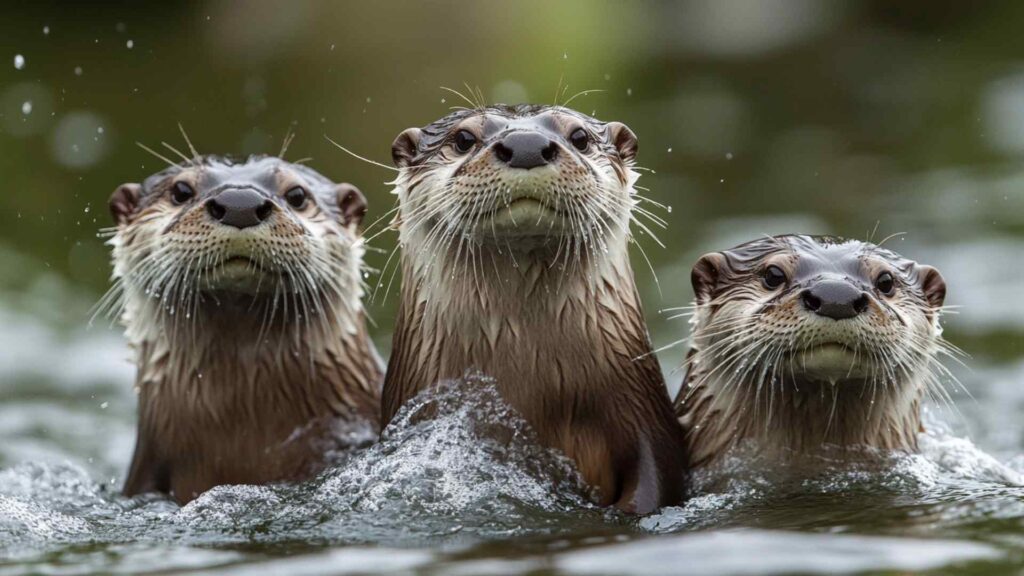
- A group of otters in the water is commonly called a "raft."
- On land, a playful group of otters is often called a "romp."
- Otters are carnivores that mainly eat fish and invertebrates.
- Otters are crepuscular or diurnal in many areas, being most active at dawn and dusk.
- Otters can close their ears and nostrils underwater to keep water out.
- Otters use webbed feet and streamlined bodies to swim efficiently.

Species & Diversity
- The North American river otter ranges across Alaska, Canada, and much of the United States.
- The Eurasian otter occurs from Ireland and Spain across Europe and Asia to Southeast Asia.
- The Asian small-clawed otter is the smallest otter, weighing as little as 2.7 kg.
- The giant otter is the longest otter, reaching up to 1.7 m from nose to tail.
- The sea otter lives in coastal North Pacific waters and spends most of its life at sea.
- The marine otter lives along the Pacific coast of South America and uses rocky shores.
- The smooth-coated otter has sleek fur and often forms large family groups in South and Southeast Asia.
- The African clawless otter lacks claws on most toes and has partially webbed forefeet.
- The spotted-necked otter is a sub-Saharan African species that favors clear, fish-rich lakes and rivers.
- The Congo clawless otter is a secretive Central African species living in swampy forests.
- The neotropical otter inhabits rivers from Mexico to Argentina.
- The southern river otter lives in Chile and Argentina and uses both rivers and coastal marshes.
Record-breakers & Wow Numbers
- Sea otter fur is the densest of any mammal, with up to 1,000,000 hairs per square inch (about 155,000 per cm²).
- Sea otters can eat 20–30% of their body mass each day to fuel their high metabolism.
- River otters can swim at speeds around 11 km/h when porpoising.
- Sea otters usually dive for 1–4 minutes, with maximum dives around 8 minutes.
- Giant otter groups can include up to 8–10 individuals cooperating to hunt and defend territory.
- A rafting group of sea otters can number in the hundreds in rich habitat.
- Sea otter body temperature stays near 38°C even in icy water.
- River otters may travel 10–20 km along a river in a day while foraging.
- A sea otter’s favorite rock can weigh more than 0.5 kg and rides in a skin pouch.
- Otter whiskers can detect tiny water ripples created by prey moving nearby.
- Asian small-clawed otters can pick up small objects with their sensitive, partially clawless fingers.
- Many otters can hold their breath for over 4 minutes during underwater searches.

Biology & Anatomy
- Otter bodies are long and flexible, reducing drag and helping them twist underwater.
- Powerful tails act like rudders and provide thrust in many river otter species.
- Sea otter hind feet are broad and flipper-like for efficient paddling at sea.
- Dense underfur traps insulating air while guard hairs repel water.
- Otters lack sweat glands on most of their bodies and rely on grooming to maintain fur.
- Sea otters have no blubber and depend on fur and food energy to stay warm.
- Otter noses, ears, and eyes are positioned high on the head for surface scanning.
- Vibrissae, or whiskers, are richly innervated sensors that read currents and textures.
- Otter lungs and blood store extra oxygen to support longer dives.
- Transparent nictitating membranes protect the eyes underwater in many species.
- Otter teeth are designed to grip slippery fish and crush hard-shelled prey.
- Sea otters often use flat stones as anvils to crack open clams and urchins.
- A loose fold of skin under each sea otter forearm forms a pocket for tools and snacks.
- Otter fur must be meticulously groomed to keep insulating air trapped between hairs.
- Sea otter pups are born with a fluffy coat that makes them float like corks.
- Otters can rotate their hind ankles to climb onto banks and scramble over obstacles.
- River otters close their nostrils with muscular valves while diving.
- Otters have relatively large brains for their body size compared with many other carnivores.
- Otter ears are small and rounded to streamline the head.
- Many otter species have scent glands near the tail used for marking.
- Sea otter forepaws are highly dexterous, enabling precise handling of small prey.
- Thick skin on the pads of otter feet protects them from rough riverbeds and rocky shores.
- Otter skeletons show shortened limb bones relative to body length to aid swimming.
- Sea otter kidneys process large volumes of seawater to maintain salt balance.
- Otter whiskers are sensitive enough to detect very slight changes in water flow created by moving prey.
- Sea otter molars are broad and flattened to crush hard shells.
- Otter eyes adapt quickly between air and water, giving useful vision in both media.
- Many otters show a paw preference, using one forepaw more often during feeding.
Behavior & Ecology
- Sea otters sometimes wrap themselves in kelp fronds to keep from drifting as they rest.
- River otters slide on mud or snow to travel quickly and for play.
- Otters communicate with chirps, whistles, growls, and huffs depending on context.
- Giant otters are especially vocal and use distinctive calls to coordinate group movements.
- Sea otters float on their backs to eat, groom, and nurse pups.
- River otters usually eat while treading water or on shore rather than on their backs.
- Otters mark latrines on banks or rocks to share messages through scent.
- Otters are skilled problem-solvers that learn new foraging tricks by watching others.
- Sea otters often specialize in particular prey types, such as crabs, clams, or urchins.
- Specialization can pass from mother to pup as the young copy foraging methods.
- Otter territories overlap, but core areas with dens and latrines are defended.
- Male sea otters typically hold larger home ranges than females.
- Otters reduce heat loss by keeping paws and tails out of cold water when resting.
- Otters shake and fluff their fur repeatedly to pump fresh air into the coat.
- Otter groups often rest together for safety from waves and predators.
- Sea otters sometimes carry pups on their chests while floating to keep them dry.
- River otters can climb onto ice floes and use cracks in winter rivers to access fish.
- Otter play, including wrestling and chasing, helps young develop hunting skills.
- Otters often cache extra prey in safe spots while they continue foraging.
- Sea otters can juggle small stones, a behavior likely linked to practice and play.
- Eurasian otters tend to be more nocturnal in areas with human activity.
- Smooth-coated otters have adapted to some city canals and reservoirs in Asia.
- Otters help control fish and invertebrate populations, shaping aquatic food webs.
- Sea otters keep sea urchins in check, allowing kelp forests to flourish.
- Healthier kelp forests provide habitat for many fish, crabs, and shellfish.
- Dense kelp can dampen waves and reduce coastal erosion in sheltered areas.
- Otters are prey for orcas and large sharks in the ocean.
- On land, otters may be taken by big cats, wolves, coyotes, or eagles, especially the young.
- Giant otters work as a team to mob predators like caimans and drive them away.
- Otters can learn to avoid gillnets after negative experiences, showing behavioral flexibility.

Diet & Hunting
- River otters mainly eat fish such as trout, perch, and catfish when available.
- Many otters supplement fish diets with crayfish, crabs, frogs, and aquatic insects.
- Sea otters consume clams, mussels, abalone, snails, crabs, and sea urchins.
- Sea otters dive to the seafloor, grab prey with their forepaws, and surface to eat.
- Otters use sensitive whiskers to detect struggling fish in cloudy water.
- River otters sometimes hunt cooperatively to herd fish into shallows.
- Giant otters can catch large prey, including sizable catfish.
- Asian small-clawed otters often forage along muddy banks for crabs and snails.
- Marine otters pick invertebrates from wave-washed rocks and kelp beds.
- Otters swallow small fish whole but chew hard-shelled prey thoroughly.
- Otters often eat several small meals across the day rather than one big feast.
- Sea otters sometimes bring an anvil stone to the surface to pound open shells on their chest.
Reproduction & Life Cycle
- Many otters use delayed implantation, so birth timing can be adjusted to good conditions.
- River otter pups are usually born in spring after a winter denning period.
- Typical river otter litters are two to three pups.
- Sea otter pups can be born at any time of year, with peaks varying by region.
- Newborn otters are blind and open their eyes after several weeks.
- Pups nurse on rich milk that helps them grow quickly in cold environments.
- Sea otter pups may stay with their mothers for six to twelve months.
- Otter fathers in some species help defend territory but mothers provide most childcare.
- Juvenile otters practice hunting with play before becoming independent.
- Sexual maturity arrives around two to five years depending on species.
- Wild otters commonly live 8–15 years, with longer lifespans in safe habitats.
- Older otters can lose teeth and shift to softer foods like worms or small fish.
Conservation & Threats
- Historic fur hunting drastically reduced sea otter numbers in the 18th and 19th centuries.
- Populations began to recover after hunting bans and legal protections were established.
- Translocation programs in the mid-20th century moved sea otters to restore former habitats.
- Many river otter populations have rebounded where waterways were cleaned up.
- Giant otters remain threatened by habitat loss, disturbance, and conflict with fishing.
- The marine otter faces risks from coastal development and bycatch in nearshore nets.
- Oil spills are especially dangerous for sea otters because fouled fur loses insulation.
- Some otters are vulnerable to diseases carried from land into waterways.
- Plastic pollution and discarded fishing gear can entangle or injure otters.
- Road crossings near rivers are a frequent source of mortality for river otters.
- International agreements restrict trade in otter pelts and parts.
- Community education and protected areas help secure safe habitat for otters.
Names, Etymology & Culture
- The English word "otter" traces back to Old English and older roots meaning "water."
- The sea otter’s scientific name is Enhydra lutris, combining Greek for "in water" and Latin for "otter."
- The North American river otter’s scientific name is Lontra canadensis.
- The Eurasian otter’s scientific name is Lutra lutra.
- The giant otter’s scientific name is Pteronura brasiliensis.
- The Asian small-clawed otter’s scientific name is Aonyx cinereus.
- A "spraint" is the field term for otter droppings used in scent marking.
- Throat patch patterns on giant otters are unique and can identify individuals.
- The giant otter is sometimes nicknamed the "river wolf" for its bold behavior.
- Otters regularly appear in folklore as clever, playful tricksters.
For Kids: Quick Comparisons
- Sea otters are built like floating teddy bears, while river otters are built like sleek torpedoes.
- A sea otter’s hind feet look like flippers, but a river otter’s tail does most of the swimming work.
- Sea otters carry their lunch and tools on their chest, but river otters usually eat on the shore.
- Giant otters are the longest, but sea otters are among the heaviest.
- The smallest otters are the Asian small-clawed otters, about the size of a housecat.
Quick FAQ
Q: How many otter species are there?
A: There are 13 living otter species around the world.
Q: Do sea otters have blubber?
A: No, sea otters rely on ultra-dense fur and a high-calorie diet instead of blubber.
Q: What do river otters eat?
A: River otters mainly eat fish, plus crayfish, crabs, frogs, and aquatic insects.
Q: How long can otters stay underwater?
A: Typical dives last 1–4 minutes, with some dives reaching about 8 minutes.
Q: Why are sea otters important to kelp forests?
A: By eating sea urchins, sea otters prevent overgrazing and help kelp forests thrive.

Ellie is the owner and sole author of Fun Facts, combining her mechanical engineering background with years of research-driven writing to deliver facts you can trust. Every article is thoroughly fact-checked and routinely updated as new science and sources emerge to keep information accurate and current. Her mission is to make learning delightful while upholding high standards of reliability and transparency.