
Indiana sits where the Midwest meets the Great Lakes, mixing small-town charm with big-city energy.
From sandy dunes to covered bridges and race cars, the Hoosier State packs a lot into a tidy rectangle.
Ready for a quick tour of the people, places, foods, and feats that make Indiana shine?
Origins & definitions
- Indiana became the 19th U.S. state on December 11, 1816.
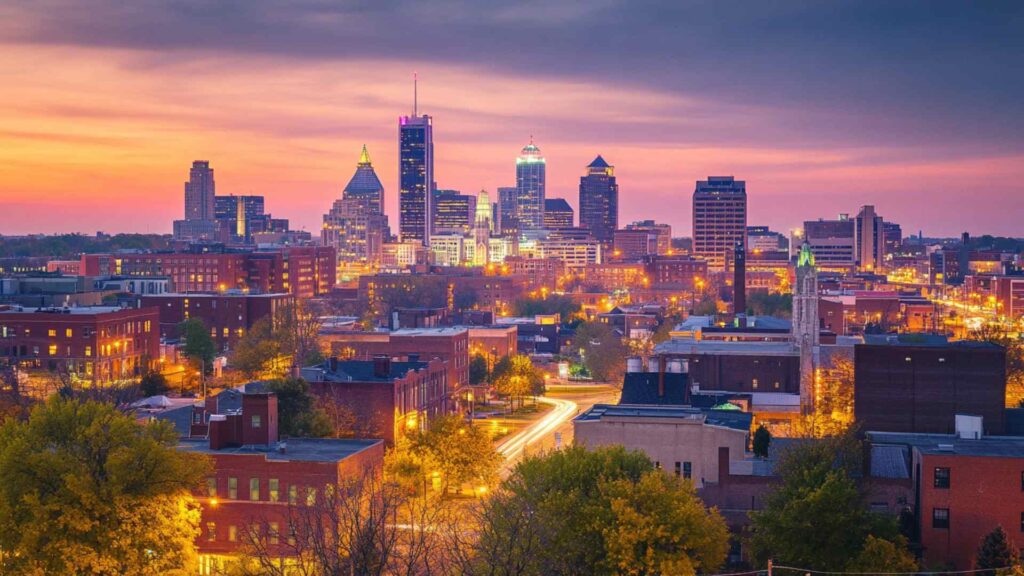
- The state’s capital and largest city is Indianapolis.
- Indiana’s nickname is the Hoosier State.
- Residents of Indiana are commonly called Hoosiers.
- The state motto is “Crossroads of America.”
- Indiana uses the postal abbreviation IN.
- The state flag features a torch and 19 stars.
- Those 19 stars represent Indiana’s place as the 19th state.
- The flag’s design was officially adopted in 1917.
- The state bird is the northern cardinal.
- The state flower is the peony.
- The state tree is the tulip tree (Liriodendron tulipifera).
- The state river is the Wabash River.
- The state stone is Indiana limestone.
- The state insect is Say’s firefly.
Geography & nature
- Indiana borders Michigan, Ohio, Kentucky, and Illinois.
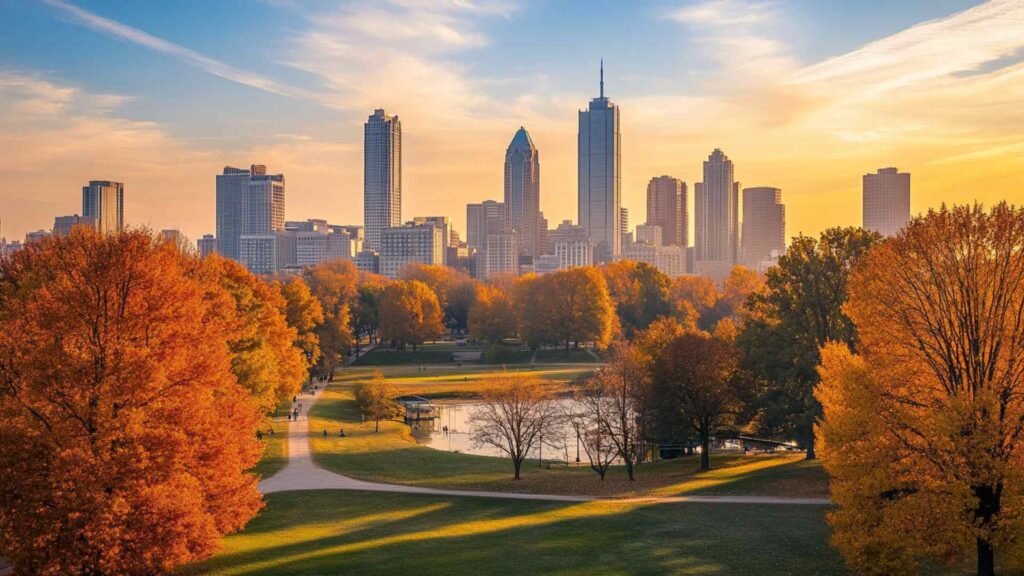
- A small corner of Indiana touches Lake Michigan in the northwest.
- The highest natural point is Hoosier Hill at 383 m (1,257 ft).
- The lowest point is along the Ohio River at about 97 m (320 ft).
- The Wabash River is the longest river entirely within Indiana.
- The White River flows through Indianapolis.
- Lake Wawasee is the largest natural lake in Indiana.
- Monroe Lake is the state’s largest reservoir.
- Indiana Dunes National Park protects shifting dunes on Lake Michigan.
- Indiana Dunes State Park sits within the national park’s boundary.
- Mount Baldy is a wandering dune near Michigan City.
- Glaciers once covered northern Indiana, leaving thick layers of till.
- Southern Indiana features karst landscapes with caves and sinkholes.
- Marengo Cave is a National Natural Landmark with showy formations.
- Bluespring Caverns offers underground boat tours on a subterranean river.
- Turkey Run State Park is famous for its sandstone gorges and ladders.
- Brown County State Park is Indiana’s largest state park.
- Clifty Falls State Park showcases waterfalls along the Ohio River bluffs.
- Pokagon State Park offers a fast toboggan run in winter.
- Hoosier National Forest sprawls across a patchwork of southern counties.
- The Ohio River forms Indiana’s entire southern boundary.
- The Kankakee River once flowed through a vast marsh in northwest Indiana.
- Sandhill cranes stage in large numbers at Jasper–Pulaski each autumn.
- The Indiana bat (Myotis sodalis) is a federally endangered species.
- Eastern hellbender salamanders live in clean stretches of the Blue River.
- Prickly pear cactus grows naturally on sunny dunes and sandy prairies.
- Lake-effect snow can blanket the northwest when cold winds cross Lake Michigan.
- Much of central Indiana sits on flat, fertile glacial plains.
- Southern hills and valleys create scenic vistas along the Ohio River.
- Indiana lies mostly in a humid continental climate with four distinct seasons.
History & milestones
- The name “Indiana” means “Land of the Indians.”
- Native nations including the Miami, Potawatomi, and Shawnee lived here.
- French traders founded Vincennes in the early 1700s.
- The Indiana Territory was created in 1800.
- Vincennes served as the first territorial capital.
- William Henry Harrison governed the territory before becoming U.S. president.
- The Battle of Tippecanoe was fought near present-day Lafayette in 1811.
- The 1816 constitution established Indiana as a free state.
- Indianapolis was laid out as the new capital in 1821.
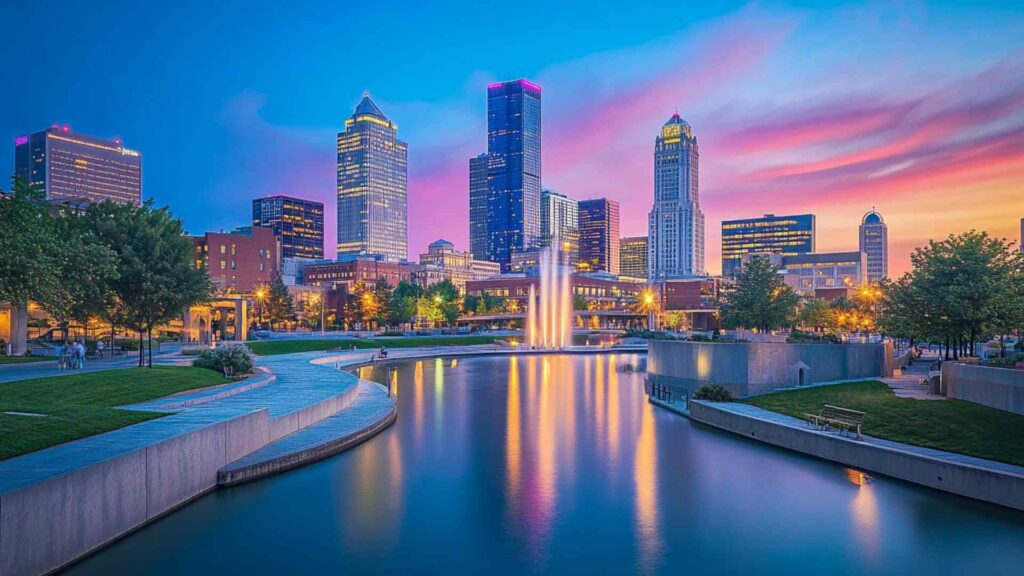
- The city’s downtown “Mile Square” follows a neat grid plan.
- The Wabash and Erie Canal once linked the Great Lakes to the Ohio River.
- The canal era faded as railroads spread across the state.
- A natural gas boom in the late 1800s fueled glass and manufacturing towns.
- The 1851 state constitution replaced the original 1816 document.
- Abraham Lincoln lived in southern Indiana from 1816 to 1830.
- The Levi and Catharine Coffin House sheltered freedom seekers on the Underground Railroad.
- The University of Notre Dame was founded near South Bend in 1842.
- Purdue University opened in West Lafayette in 1869.
- Indiana University traces its roots to 1820 in Bloomington.
- Vincennes University is among Indiana’s oldest public institutions, founded in 1801.
- The Indianapolis Motor Speedway opened in 1909.
- The first Indianapolis 500 ran in 1911.
- Ray Harroun used a rearview mirror in the 1911 race instead of a riding mechanic.
- The “Yard of Bricks” marks the speedway’s start–finish line.
- The Soldiers and Sailors Monument on Monument Circle was dedicated in 1902.
- Bosse Field in Evansville opened in 1915 for professional baseball.
- The West Baden Springs Hotel once boasted one of the world’s largest free-span domes.
- Indiana shifted from mostly rural to increasingly industrial during the 1900s.
- Steel mills rose along the Lake Michigan shore in the Calumet Region.
- Statewide daylight saving time began in Indiana in 2006.
- The Great Blizzard of 1978 shut down roads and schools across the state.
- Indianapolis hosted Super Bowl XLVI in 2012.
- The Big Four Bridge now links Jeffersonville and Louisville as a pedestrian path.
- The Indiana State Fair has been a tradition since the 1850s.
- Parke County celebrates historic spans during an annual Covered Bridge Festival.
People, culture & arts
- The origin of the word “Hoosier” remains uncertain with several competing theories.
- Sugar cream pie is widely known as “Hoosier Pie.”
- Breaded pork tenderloin sandwiches are a beloved Indiana staple.
- Persimmon pudding is a sweet specialty in southern Indiana.
- Orville Redenbacher developed famous popcorn varieties after work in northwest Indiana.
- Valparaiso hosts a popcorn festival each year honoring a local popcorn pioneer.
- The Children’s Museum of Indianapolis ranks among the largest children’s museums in the world.
- The Eiteljorg Museum in Indianapolis highlights Native and Western art.
- Conner Prairie near Fishers is a living history park with interactive exhibits.
- Columbus, Indiana is famous for modern architecture by leading designers.
- The Golden Dome at Notre Dame is a recognizable campus landmark.
- Bloomington has a lively music scene and nearby limestone quarries.
- South Bend blends manufacturing heritage with university culture.
- French Lick and West Baden grew around mineral springs and grand hotels.
- The town of Santa Claus answers thousands of letters to Santa each year.
- Shipshewana showcases Amish culture with shops, auctions, and buggy traffic.
- Kurt Vonnegut Jr. was born in Indianapolis and wrote celebrated novels.
- Booth Tarkington, a two-time Pulitzer winner, lived in Indianapolis.
- The Jackson family began performing in Gary before rising to national fame.
- John Mellencamp, a rock singer-songwriter, hails from Seymour.
Economy & innovation
- Indiana’s economy blends manufacturing, agriculture, logistics, and life sciences.
- Corn and soybeans are the state’s top field crops by acreage.
- The state ranks high in hogs, eggs, and turkeys within U.S. agriculture.
- Limestone from southern Indiana has been used in landmark buildings across America.
- Northern Indiana is a hub for steelmaking and port activity on Lake Michigan.
- Elkhart is often called the RV Capital of the World.
- The Elkhart–Goshen area produces a large share of recreational vehicles in the United States.
- Automakers and suppliers operate plants along major interstates across the state.
- Indianapolis serves as a central logistics hub due to intersecting highways.
- The Indiana Toll Road carries cross-country traffic across the northern tier.
- Ethanol plants turn Indiana corn into biofuel and animal feed.
- Purdue University is nicknamed the Cradle of Astronauts for its many space alumni.
- Amelia Earhart worked with Purdue in the 1930s to support women in aviation.
- Technology parks and innovation districts have grown near major universities.
- A statewide community college network helps train the manufacturing workforce.

Sports & pop culture
- Basketball is woven into state identity and is often called Hoosier Hysteria.
- Indiana had a single-class high school basketball tournament until 1997.
- The 1954 “Milan Miracle” inspired the movie “Hoosiers.”
- The Indiana Pacers play professional basketball in the NBA.
- The Indiana Fever compete in the WNBA and have won a league championship.
- The Indianapolis Colts play professional football in the NFL.
- The Colts moved to Indianapolis in 1984.
- Lucas Oil Stadium hosts football games, concerts, and major events downtown.
- The NCAA national office is headquartered in Indianapolis.
- Indianapolis has hosted multiple NCAA Final Fours for men’s and women’s basketball.
- The Indy 500 tradition calls for the winning driver to drink milk in victory lane.
- The speedway complex includes a golf course with holes inside the oval.
- The Brickyard 400 brought top-level stock car racing to the speedway in the 1990s.
- The NHRA U.S. Nationals drag race takes place near Indianapolis each Labor Day week.
- The Little 500 bicycle race began at Indiana University in 1951.
- The Monumental Marathon draws runners to Indianapolis streets each fall.
- Fort Wayne fields professional teams and a highly rated children’s zoo.
- South Bend is home to a storied college football program at Notre Dame.
- Baseball history lives on at Bosse Field with classic grandstand charm.
- Minor league and collegiate summer teams dot cities and towns across the state.
Names & etymology
- The word “Indiana” combines “Indian” with the territorial suffix “-ana,” meaning “land of.”
- “Indianapolis” blends “Indiana” with the Greek “polis,” meaning “city.”
- The nickname “Crossroads of America” reflects the state’s web of highways and rail lines.
- “Calumet” in northwest Indiana comes from a French term for a ceremonial pipe.
- “Wabash” likely derives from a Miami-Illinois word describing a white limestone riverbed.
For kids: quick comparisons
- If Indiana were a square, it would be a little taller than it is wide.
- You can drive from the Ohio River to Lake Michigan in about half a day with good traffic.
- The state’s tallest point, Hoosier Hill, is lower than many city skyscrapers.
- A lakeshore sand dune can be taller than a 10-story building.
- The Indianapolis Motor Speedway oval is so big that entire neighborhoods could fit inside its infield.
Quick FAQ
What is Indiana known for?
Indiana is known for the Indianapolis 500, high school basketball, scenic dunes, covered bridges, limestone, and hearty Hoosier foods.
Why are people from Indiana called Hoosiers?
No single answer is proven, and the nickname likely grew from folk usage in the 1800s.
What is the capital of Indiana?
The capital is Indianapolis.
When did Indiana become a state?
Indiana became a state on December 11, 1816.
What is the tallest point in Indiana?
The tallest point is Hoosier Hill at 383 m (1,257 ft).
What food is Indiana famous for?
Indiana is famous for sugar cream pie, breaded pork tenderloin sandwiches, and popcorn.

Ellie is the owner and sole author of Fun Facts, combining her mechanical engineering background with years of research-driven writing to deliver facts you can trust. Every article is thoroughly fact-checked and routinely updated as new science and sources emerge to keep information accurate and current. Her mission is to make learning delightful while upholding high standards of reliability and transparency.