
Chickens are more amazing than they get credit for.
From glowing colors you can’t see to record-breaking egg days, these birds pack science, history, and charm into one feathery package.
Dive into this kid-friendly guide to meet the chicken’s world... smart, social, and full of surprises.
Origins & definitions
- Chickens are domesticated descendants of the red junglefowl from Southeast Asia.
- Domestication began at least 3,000 years ago and likely much earlier.
- The scientific name for the domestic chicken is Gallus gallus domesticus.
- A male chicken is called a rooster.
- A female adult chicken is called a hen.
- A young female is called a pullet.
- A young male is called a cockerel.
- A baby chicken is called a chick.
- A group of chickens is called a flock.
- Chickens belong to the bird order Galliformes, which also includes turkeys and quail.
- Most chickens are ground-dwelling birds that fly only short distances.
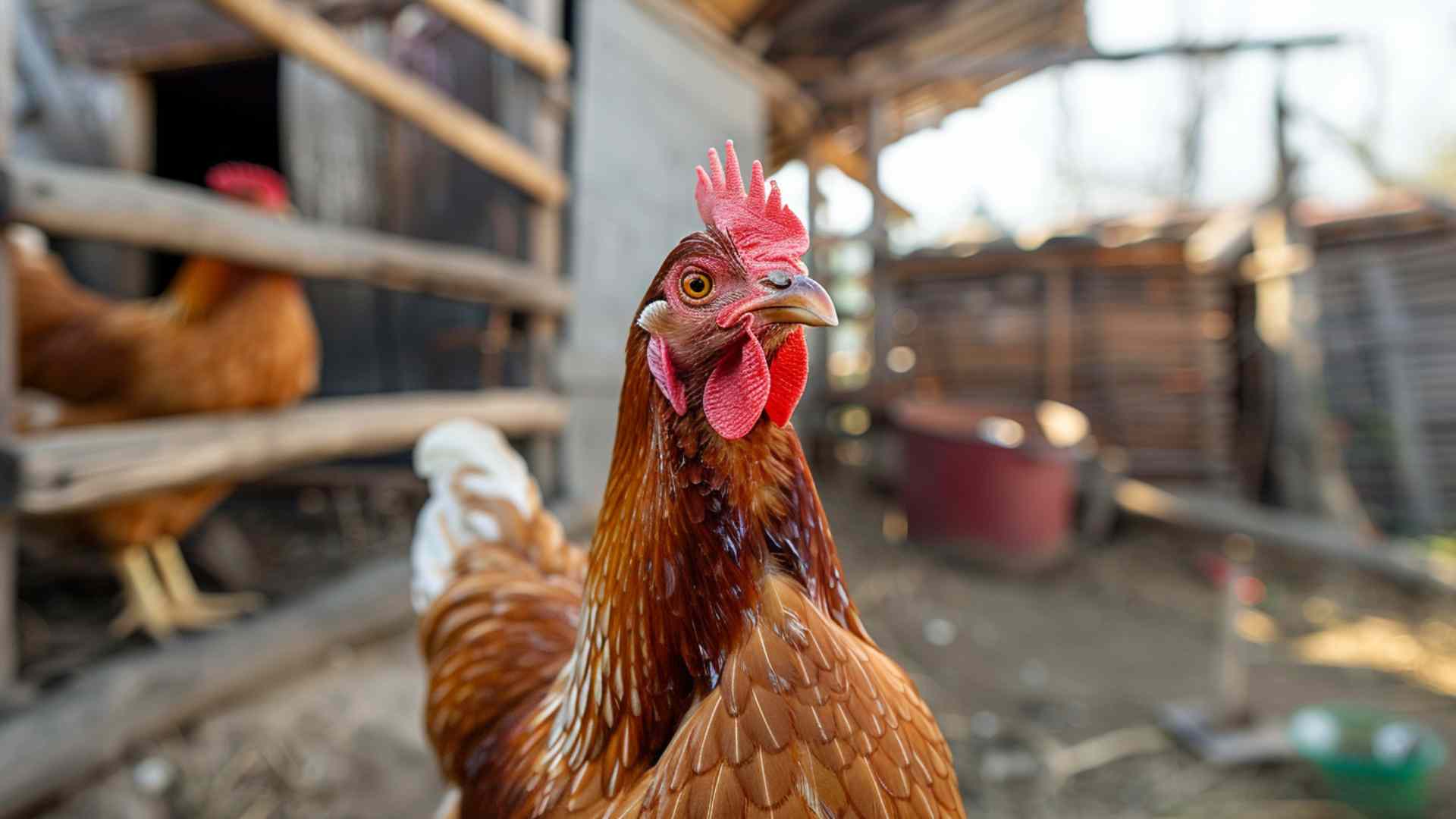
- The fleshy crest on a chicken’s head is called a comb.
- The two fleshy lobes that hang below the beak are called wattles.
- The hard, pointed growths on a rooster’s legs are called spurs.
- Long neck feathers are called hackles and longer back feathers on roosters are called saddle feathers.
Record-breakers & wow numbers
- Estimates suggest 28–34 billion chickens are alive worldwide at any given time as of 2024.
- Some large breeds can weigh over 5 kg (about 11 lb).
- Tiny true bantam breeds can weigh under 600 g (about 1.3 lb).
- A chicken can sprint at roughly 14 km/h (about 9 mph).
- The longest recorded chicken flight lasted about 13 seconds.
- The farthest recorded chicken flight traveled roughly 90 meters.
- High-producing hens can lay over 300 eggs in a year.
- A hen can occasionally lay two eggs in a single day.
- One of the largest chicken eggs on record weighed nearly 340 g (about 12 oz).
- A typical medium chicken egg weighs around 60 g (about 2.1 oz).
- A rooster’s crow can reach around 130 decibels right at the beak.
- Chickens can detect light flicker over 100 Hz, which looks steady to humans.
- A chicken’s resting heart rate often falls around 250–300 beats per minute.
- The average incubation time for chicken eggs is about 21 days.
- With good care, some chickens live 10 years or more.

Biology & anatomy
- Chickens have a third eyelid called a nictitating membrane that sweeps sideways.
- Chickens see ultraviolet light, giving them a richer color world than humans.
- Chickens do not have teeth and use a muscular gizzard to grind food.
- Small stones called grit help the gizzard mash tough feed.
- The crop is a storage pouch in the throat that holds food before digestion.
- Combs and wattles help chickens release body heat.
- A chicken’s normal body temperature is about 40–42°C (104–107°F).
- Many chicken bones are pneumatic and connect to the bird’s air sacs.
- The preen gland near the tail provides oil for feather care.
- Molting is the seasonal shedding and regrowth of feathers.
- Hens usually have only one functional ovary, the left one.
- Roosters have internal testes and no external penis.
- Chicken mating involves a brief cloacal contact known as the cloacal kiss.
- Hens can store sperm in tiny tubules for days after mating.
- Eggshells are made mostly of calcium carbonate.
- An eggshell contains thousands of microscopic pores for gas exchange.
- Yolk color depends mainly on pigments from the hen’s diet.
- Ear lobe color often predicts eggshell color, with notable exceptions.
- Chickens have very flexible necks with about 14 cervical vertebrae.
- A rooster’s neck and saddle feathers are pointed while a hen’s are usually rounded.
Behavior & communication
- Chickens use over 20 distinct calls to communicate.
- A crow can signal territory, status, and sometimes changes in light.
- Hens cluck softly to guide chicks to food and safety.
- Alarm calls differ for aerial predators versus ground threats.
- Flocks organize themselves with a social ladder called the pecking order.
- High-ranking birds get first access to food, water, and preferred roosts.
- Dust bathing helps chickens clean feathers and control parasites.
- Sunbathing spreads feathers for warmth and feather care.
- In natural settings, chickens spend hours each day foraging.
- Chickens scratch the ground with their feet to uncover seeds and insects.
- Chickens prefer to sleep off the ground on perches called roosts.
- Chickens can learn and remember up to about 100 individual faces.
- Chickens remember good or bad experiences with people and places.
- Newly hatched chicks imprint on a moving caregiver within hours.
- A broody hen stops laying and sits to incubate eggs.
- Roosters perform tidbitting, a dance and call to invite hens to food.
- Body postures like wing-dropping and feather-ruffling signal social messages.
- Gentle pecking and preening can be friendly grooming between flockmates.
- Chickens prefer to sleep near familiar flockmates for safety.
- Experiments show chickens can solve simple puzzles and learn rules.

Eggs & reproduction
- Many hens begin laying eggs between 18 and 24 weeks of age.
- Egg output often peaks in the first laying year for many hens.
- Day length controls laying hormones through the eyes and brain.
- Hens do not need a rooster to lay eggs.
- Fertile eggs require mating with a rooster before laying.
- The shell forms in the uterus and takes roughly 20 hours.
- The final layer on an egg is a protective coating called the cuticle or bloom.
- Freshly laid eggs are warm and cool to room temperature within minutes.
- Double-yolk eggs happen when two yolks are released close together.
- Small blood spots come from tiny vessel breaks during ovulation.
- The chalaza are twisted cords that keep the yolk centered.
- Candling shines light through an egg to check development and quality.
- Turning eggs during incubation prevents the embryo from sticking to the shell.
- Developing chicks breathe through the shell’s pores.
- A temporary egg tooth on the beak helps chicks pip and hatch.
- Newly hatched chicks absorb the last of the yolk to fuel their first day.
- Chicks can peep to each other before hatching and hatch close together.
- Sperm stored in the hen can keep eggs fertile for several days.
- Eggshell colors include white, brown, blue, green, and speckled patterns.
- Leaving the bloom intact helps unwashed eggs stay fresh longer.
Breeds & diversity
- Selective breeding has created hundreds of recognized chicken breeds.
- Bantams are miniature chickens that are either true bantams or mini versions of large breeds.
- Dual-purpose breeds are raised for both meat and eggs.
- Broiler chickens are bred for rapid growth and high meat yield.
- Layer strains are bred for efficient egg production and feed use.
- Heritage breeds preserve older genetic lines and traits.
- Silkies have fluffy feathers that lack the usual hooking barbs.
- Orpingtons are often calm and well-suited to backyard flocks.
- Leghorns are famous for high white-egg production.
- Rhode Island Reds are hardy birds that often lay brown eggs.
- Araucanas and related lines are known for blue eggshells.
- Marans are known for especially dark chocolate-brown eggs.
- Brahmas are large birds with feathered legs and gentle temperaments.
- Polish chickens grow a dramatic head crest that can limit vision.
- Naked Neck chickens naturally have a bare neck and fewer feathers.
- Ayam Cemani chickens display black plumage, black skin, and dark tissues.
- Phoenix and Yokohama roosters can grow exceptionally long tail feathers.
- Game-type breeds were originally selected for strength and agility.
- Easter Eggers are mixed-origin layers that produce a range of egg colors.
- Many modern layers have reduced broody instincts due to selection.
History & culture
- Chickens spread across continents alongside ancient trade and travel.
- Chickens became common in the Americas after the 1500s with European voyages.
- Village life long used cockcrow as a natural morning signal.
- Rooster-shaped weather vanes became popular roof ornaments in many regions.
- Chicken bones help archaeologists trace diet and trade routes.
- In many cultures, cockerels appear in ceremonies, art, and folklore.
- The English word “chicken” traces back to Old English roots.
- The term “hen party” is used in some places for a women’s celebration.
- Phrases like “don’t count your chickens before they hatch” appear in common proverbs.
- Chickens are one of the 12 animals honored in the East Asian zodiac cycle.
For kids: quick comparisons
- A chicken’s brain is roughly the size of a walnut.
- Many adult chickens stand about 40–50 cm tall.
- A typical chicken eggshell is about 0.3 mm thick.
- Chicks can grow from hatch to adult size in about 5–6 months.
- A backyard hen may drink around 200–400 ml of water per day depending on heat.
- A chicken’s resting heart beats much faster than a human’s.
- Chickens can hear higher pitches than most humans can.
- With eyes on the sides, a chicken’s field of view can approach 300 degrees.
- A rooster’s spur can grow several centimeters long.
- A chicken’s foot has four toes, with three facing forward and one facing back.
Pop culture & fun extras
- The classic joke “Why did the chicken cross the road?” dates to the 19th century.
- Many cities allow backyard hens under local rules and limits.
- Some keepers set up small agility courses to enrich their chickens’ lives.
- Many chickens enjoy gentle petting and will sit calmly on a lap.
- Chickens can learn to come when called if treats are consistent.
Care & welfare
- Clean, dry bedding in the coop helps keep birds healthy.
- Each chicken should have about 20–30 cm of perch space to roost comfortably.
- Good ventilation removes moisture and ammonia from the coop.
- Predator-proof latches and wire help protect flocks at night.
- A dry dust bath of sand and soil supports natural grooming.
- A balanced ration provides grains, protein, vitamins, and minerals.
- Chickens without natural grit access need added grit to digest food.
- Fresh, unfrozen water should be available at all times.
- Shade, airflow, and cool water help chickens handle summer heat.
- Regular health checks can spot mites, bumblefoot, or overgrown beaks early.
Quick FAQ
Q: How long do chickens live?
A: Many backyard chickens live 5–8 years, and some live over 10 with excellent care.
Q: How old are hens when they start laying?
A: Many start between 18 and 24 weeks, depending on breed and season.
Q: Do you need a rooster for eggs?
A: No, hens lay unfertilized eggs without a rooster.
Q: How many eggs can a hen lay in a year?
A: High-producing hens can lay 250–300 eggs per year under ideal conditions.
Q: Why are some egg yolks darker?
A: Darker yolks usually come from diets higher in natural pigments.

Ellie is the owner and sole author of Fun Facts, combining her mechanical engineering background with years of research-driven writing to deliver facts you can trust. Every article is thoroughly fact-checked and routinely updated as new science and sources emerge to keep information accurate and current. Her mission is to make learning delightful while upholding high standards of reliability and transparency.