
American bison look like lumbering tanks until they sprint, jump, swim, plow through snow, or spin toward something that got too close. Their near-destruction reshaped Indigenous nations and prairie ecosystems, while their recovery became one of North America's most famous conservation stories, although “recovered” does not mean the old herds simply came back unchanged.
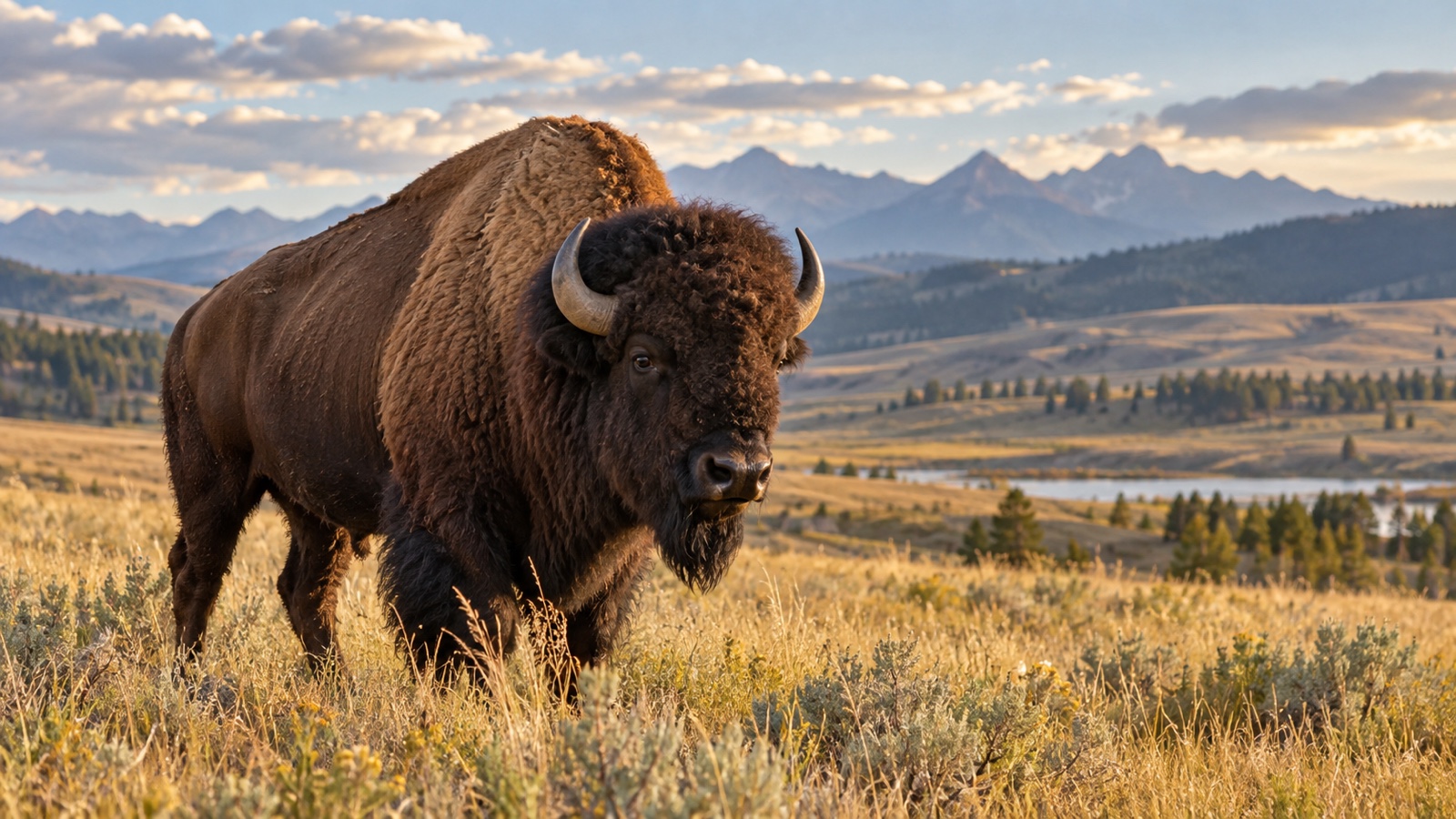
American bison are North America's largest land mammals
- The American bison's scientific name is Bison bison.
- American bison are native to North America.
- They are the continent's heaviest living wild land mammals.
- Large adult bulls can weigh around 2,000 pounds or more.
- Cows are substantially smaller than bulls.
- The shoulder hump is built from tall vertebral spines and powerful muscles.
- That muscular hump supports the enormous head and neck.
- The front half of the body is much heavier than the hindquarters.
- Bison have short curved horns in both sexes.
- Horn size and shape change with age and sex.
- The shaggy forequarters contrast with shorter hair over the rump.
- A dense winter coat protects bison in severe cold.
- Bison shed large patches of winter hair in spring.
- The shedding process can make them look spectacularly unkempt.
- Two major forms are commonly recognized: plains bison and wood bison.
- Wood bison tend to be larger and have somewhat different body proportions.
- Plains bison historically dominated much of the Great Plains.
- Wood bison live mainly in boreal and northern regions of Canada and Alaska.
- Bison are members of the cattle family Bovidae.
- The body looks prehistoric because, frankly, subtlety was never part of the design brief.
Bison and buffalo are not exactly the same thing
- American bison are commonly called buffalo in North America.
- The word buffalo has centuries of historical use on the continent.
- Scientifically, American bison belong to the genus Bison.
- True buffalo include African buffalo and Asian water buffalo in different genera.
- Calling an American bison a buffalo is therefore common historical English but not precise zoological terminology.
- Indigenous nations have their own names for bison in many languages.
- The familiar English term “buffalo” appears in place names across North America.
- Buffalo, New York, is one famous example, although the exact origin of the city's name is debated.
- Buffalo Bill Cody's nickname also reflects the older usage.
- The U.S. National Park Service generally uses “bison” for the animal.
- Scientists distinguish bison from domestic cattle.
- Bison and cattle can hybridize.
- Hybrid animals have historically been called cattalo or beefalo in different breeding contexts.
- Some modern conservation herds contain small amounts of cattle ancestry.
- Other herds have been managed to preserve detectable genetic integrity from cattle introgression.
- Genetic management is complicated because historic bottlenecks left very few founding animals.
- Wood bison and plains bison can also interbreed.
- Conservation programs often manage the two forms separately.
- Common names are shaped by culture and history as much as taxonomy.
- If you correct every person who says buffalo, at least bring enough snacks for the very long conversation that follows.
They can run around 35 miles per hour
- Bison can sprint roughly 35 miles per hour.
- They accelerate much faster than their size suggests.
- Bison can pivot rapidly.
- They can jump over surprisingly high obstacles.
- They also swim.
- Herds can cross rivers and streams.
- Long hair and large bodies do not make bison slow-moving livestock.
- Wild bison may charge when people approach too closely.
- Yellowstone regularly warns visitors to remain at least 25 yards from bison.
- More distance is needed when an animal changes behavior because of your presence.
- Bison injuries to park visitors occur when people underestimate their speed and space needs.
- A raised tail can signal agitation or imminent movement, although context matters.
- Pawing the ground may be part of an aggressive display.
- Head swinging and bluff charges can precede contact.
- Cows become particularly defensive around calves.
- Bulls become more aggressive during the breeding season.
- Vehicles do not make people invisible to bison.
- Animals can damage cars that crowd roads or block movement.
- Wildlife jams are safest when drivers stay patient and allow the herd to pass.
- A 2,000-pound animal moving 35 miles per hour is not a fluffy photo opportunity with poor manners; it is physics.
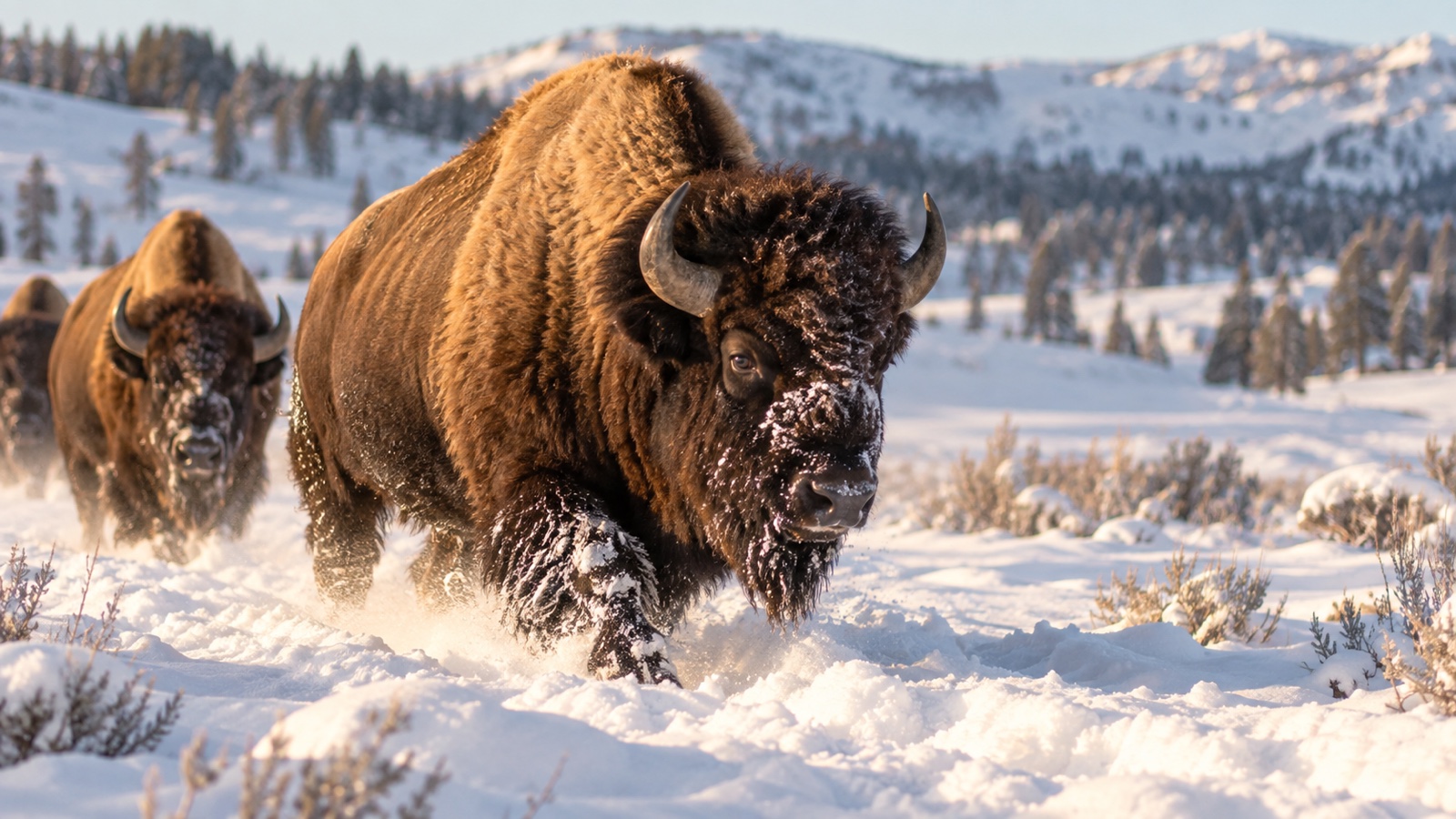
The hump and head help bison bulldoze through winter snow
Bison survive Great Plains winters without barns, heated water buckets, or anyone bringing them a coat. Their dense fur, low metabolism, body size, behavior, and immensely strong neck let them conserve heat and sweep snow away from buried grasses.
- Bison remain outdoors through severe winter weather.
- The winter coat contains coarse guard hairs and dense insulating underfur.
- Hair on the head and shoulders becomes especially thick.
- Bison often face into storms rather than turning away.
- The heavy front coat protects the most exposed end of the body.
- A thick hide and large body reduce relative heat loss.
- Bison lower their metabolism during winter.
- They can survive on lower-quality forage than during the growing season.
- Snow can bury grasses deeply.
- Bison swing the massive head from side to side to clear snow.
- The shoulder hump provides muscle power for this sweeping motion.
- They then graze exposed vegetation.
- Hooves can also disturb snow and crust.
- Deep snow affects travel routes and energy use.
- Animals may favor windswept ridges where snow is thinner.
- Geothermal areas in Yellowstone can alter local snow depth and plant access.
- Bison tolerate temperatures far below 0°F.
- Freezing weather is often less stressful than extreme summer heat.
- Wallows and shade become important during hot months.
- The same head used in dramatic rut fights is also a giant biological snow shovel, which feels pleasantly efficient.
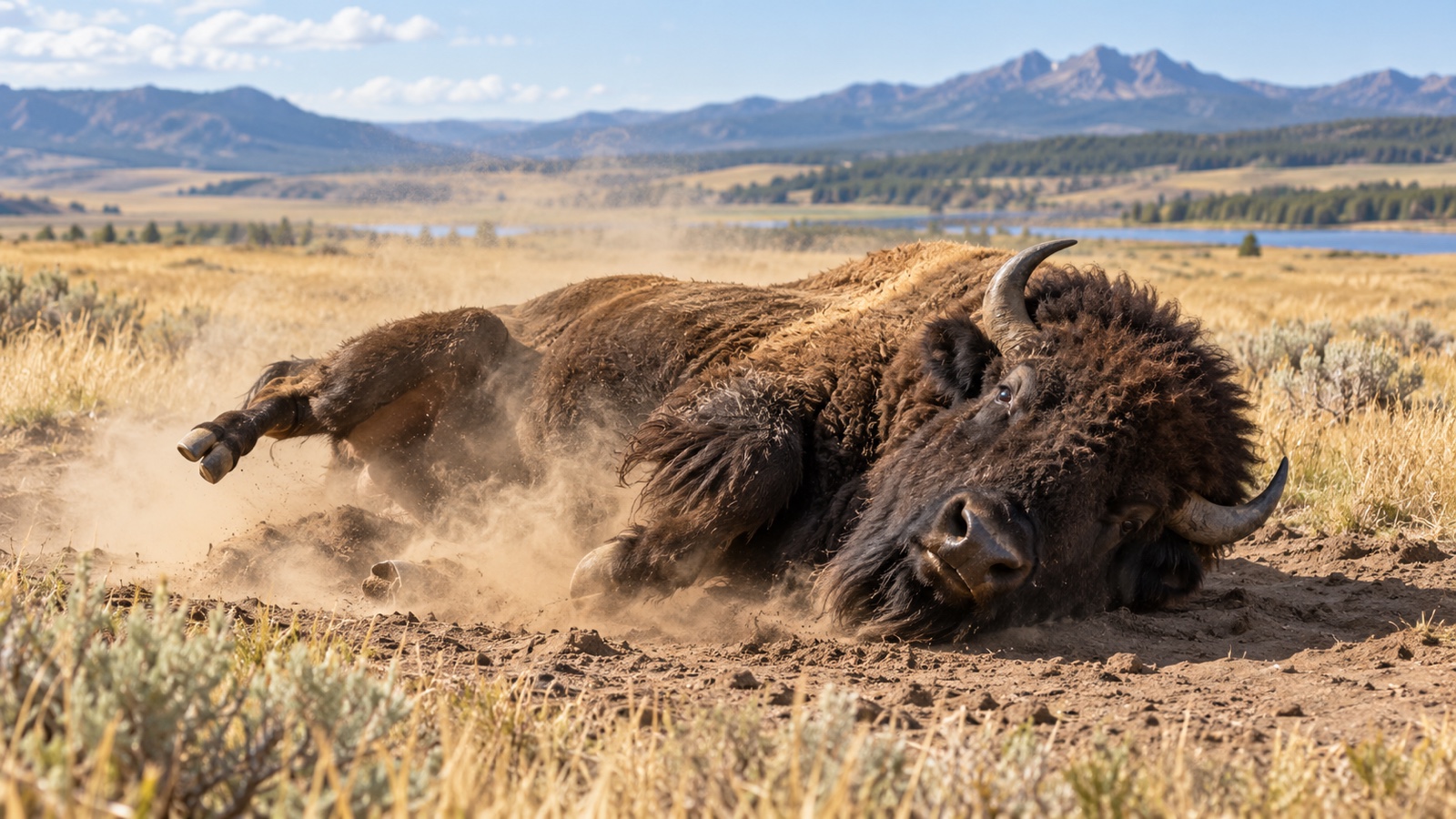
Bison wallows create miniature ecosystems
- Bison frequently roll in shallow depressions called wallows.
- Wallows help with grooming.
- Rolling can dislodge loose hair.
- Dust and mud may help reduce biting insects.
- Bulls wallow especially often during the rut.
- Repeated rolling removes vegetation from the depression.
- Hooves compact and disturb the soil.
- Some wallows persist for years.
- Rainwater can collect in old wallows.
- Temporary pools provide habitat for aquatic insects and amphibians.
- Different plants can colonize the disturbed soil.
- Wallows therefore increase small-scale habitat diversity across prairie.
- Bison grazing also changes grass height and plant competition.
- They tend to graze some patches repeatedly.
- Prairie dogs and bison can influence each other's habitat use.
- Short-grazed areas may attract animals that prefer open visibility.
- Bison dung returns nutrients to soil.
- Dung beetles and other invertebrates use bison feces.
- Carcasses provide food for scavengers when animals die.
- A bison does not need to intentionally “help biodiversity” for one dusty roll to become someone else's pond.
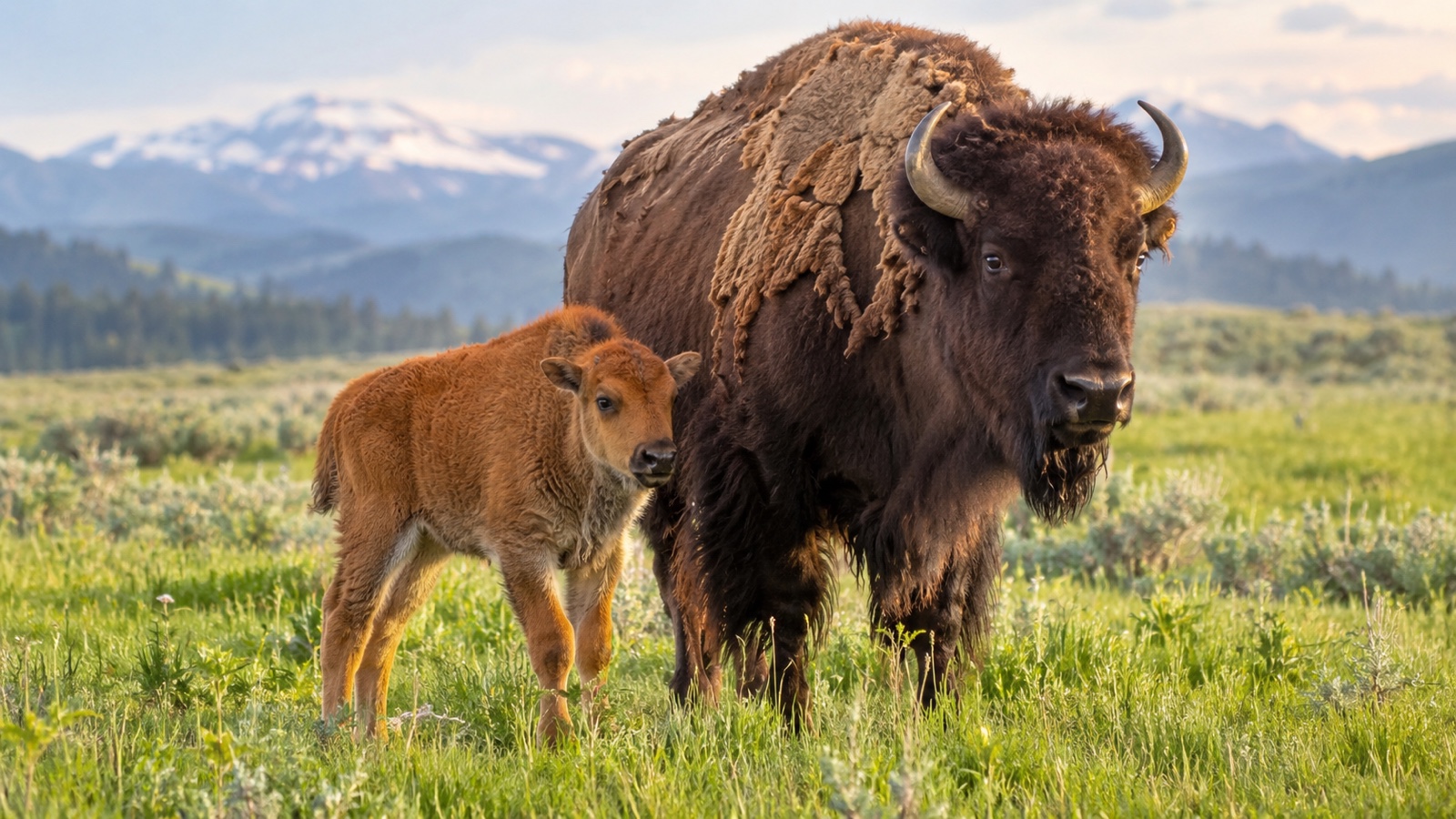
Calves are orange-red before turning brown
Newborn bison calves look almost like they belong to a different species because the coat starts reddish orange instead of dark brown. Park visitors often call them “red dogs,” and the nickname makes much more sense the first time you see one wobbling through spring grass beside a huge dark cow.
- Bison calves are usually born in spring.
- Females generally give birth to one calf.
- Twin births are rare.
- Gestation lasts about nine months.
- Newborn calves have reddish or orange-brown coats.
- The nickname “red dog” is commonly used in Yellowstone.
- The calf can stand soon after birth.
- Young begin following the mother quickly.
- Cows defend calves aggressively.
- Calves nurse for many months.
- They begin grazing while still nursing.
- The reddish coat gradually darkens.
- Small horns begin developing as calves grow.
- Female bison can remain with mixed cow-calf groups.
- Adult bulls often spend much of the year in smaller bachelor groups or alone.
- The breeding season is called the rut.
- The rut generally peaks in summer.
- Bulls bellow loudly during the rut.
- They wallow, scent mark, posture, and fight over breeding opportunities.
- A spring calf starts life looking cinnamon colored and by summer is watching adult males turn the prairie into a very loud dating show.
History, conservation and 25 final bison facts
- Tens of millions of bison once lived across North America before European-American expansion.
- Exact precolonial population estimates vary.
- Bison were foundational to the food systems, material culture, trade, ceremony, and identity of many Indigenous nations.
- Plains peoples used bison for meat, hides, sinew, bone, tools, shelter materials, and other necessities.
- Indigenous hunting systems managed bison long before commercial hide hunting arrived.
- During the 19th century, market hunting killed bison on an industrial scale.
- Railroads increased hunter access and hide transport.
- U.S. military and federal policies also treated bison destruction as a way to undermine Plains Indigenous resistance and food security.
- By the late 1800s, wild plains bison were reduced to only a tiny remnant.
- Private ranchers, Indigenous communities, conservationists, and government programs all played roles in preventing extinction.
- Yellowstone protected one of the last free-ranging wild populations.
- Today's bison number in the hundreds of thousands when commercial herds are included.
- Most modern bison live behind fences or under managed ownership.
- Only a small fraction live as conservation herds with strong ecological roles and substantial freedom of movement.
- Tribal nations are restoring bison to Indigenous lands across North America.
- Those projects can support food sovereignty, cultural renewal, education, and grassland restoration.
- InterTribal Buffalo Council member tribes manage tens of thousands of bison collectively.
- Yellowstone bison sometimes leave park boundaries in winter.
- Management outside the park has been controversial because of livestock-disease concerns, land access, and hunting policy.
- Brucellosis can infect bison, elk, and cattle.
- Documented transmission risk from wild elk to cattle has historically been more important than confirmed bison-to-cattle transmission.
- The American bison became the U.S. national mammal in 2016.
- Bison appear on state seals, coins, sports logos, road names, and countless cultural symbols.
- Their recovery is a conservation success but does not erase the ecological and human consequences of the 19th-century slaughter.
- After 145 facts, bison look less like relics of an old West postcard and more like living prairie engineers whose future is inseparable from Indigenous sovereignty, grassland conservation, and giving a two-thousand-pound animal enough room to be wild.
Quick FAQ
Q: Is a bison the same thing as a buffalo?
A: “Buffalo” is a long-standing North American common name, but zoologically American bison belong to the genus Bison and differ from true African and Asian buffalo.
Q: How fast can a bison run?
A: About 35 miles per hour for short distances, which is far faster than a human can outrun safely.
Q: Why do bison have a hump?
A: Tall vertebral spines and powerful muscles form the hump, supporting the huge head and helping bison sweep snow aside to reach winter grass.
Q: Are bison endangered?
A: The species is no longer near extinction, but most bison are commercially managed. Ecologically functional, genetically managed conservation herds remain a much smaller part of the total population.
Q: What is a baby bison called?
A: A baby is a calf. Newborn Yellowstone calves are often nicknamed red dogs because of their reddish coats.

Ellie is the owner and sole author of Fun Facts, combining her mechanical engineering background with years of research-driven writing to deliver facts you can trust. Every article is thoroughly fact-checked and routinely updated as new science and sources emerge to keep information accurate and current. Her mission is to make learning delightful while upholding high standards of reliability and transparency.