
“Deer” sounds like one familiar backyard animal until you meet the family. It includes tiny pudu, giant moose, bugling elk, swimming water deer, barking muntjac, Arctic reindeer, tropical species, antler giants, antlerless species, and animals whose survival strategies range from hiding motionless in grass to migrating farther than some humans drive on vacation.
The deer family is much bigger than white-tailed deer
- True deer belong to the family Cervidae.
- More than 50 living deer species are recognized.
- Deer occur naturally across much of North America, South America, Europe, and Asia.
- They also occur naturally in a small part of North Africa.
- Humans introduced deer to Australia, New Zealand, and other places outside their native ranges.
- White-tailed deer are native to the Americas.
- Mule deer are native to western North America.
- Elk, also called wapiti, are large deer native to North America and eastern Asia.
- Moose are the largest living deer species.
- Reindeer and caribou are the same species.
- Red deer are widespread across Europe and parts of Asia.
- Roe deer are smaller European and Asian deer.
- Muntjacs are small Asian deer.
- Pudu species in South America are among the world's smallest deer.
- Water deer are unusual deer native to China and Korea.
- Male water deer have long canine teeth but no antlers.
- Musk deer are not true deer despite their common name.
- Mouse-deer are also not true deer.
- Deer are even-toed ungulates.
- The word deer hides an entire mammal family ranging from house-dog size to “please compare this animal with your SUV.”
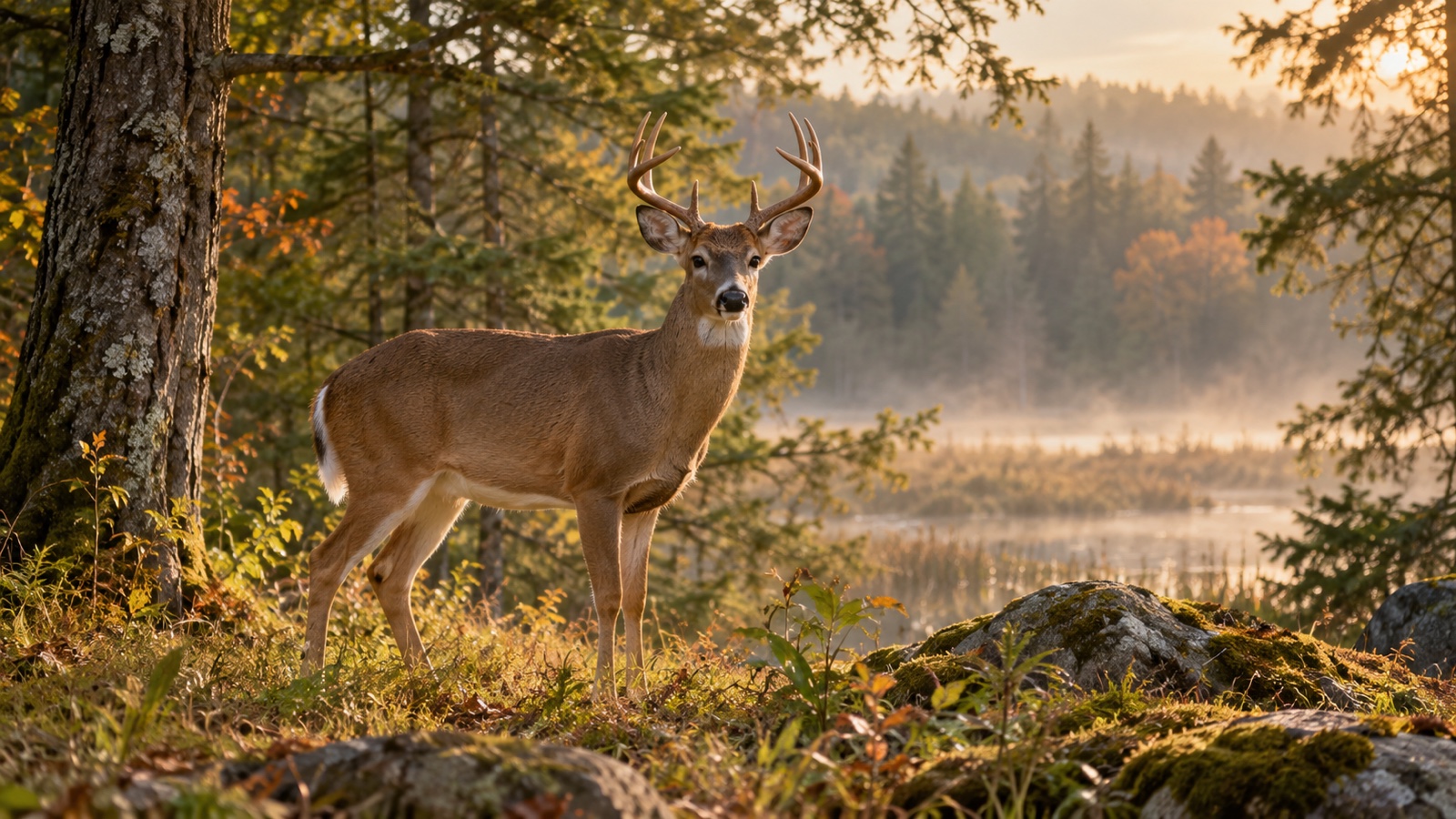
Antlers are living bone that gets rebuilt every year
- Antlers are made of bone.
- They are different from permanent horns.
- Most male deer grow and shed antlers annually.
- Female reindeer are a famous exception because many females also grow antlers.
- Some deer species lack antlers entirely.
- New antlers grow from permanent skull structures called pedicles.
- Growing antlers are covered with velvet.
- Velvet supplies blood, oxygen, and nutrients to the rapidly growing bone.
- Antlers are among the fastest-growing bones in mammals.
- Growth rate varies with species, age, nutrition, and season.
- As breeding season approaches, antlers mineralize and harden.
- The velvet then dries and is rubbed away.
- Hard antlers are used for display and fighting.
- Hormonal changes after the rut lead to antler shedding.
- Special cells weaken the connection between antler and pedicle.
- Shed antlers are called sheds.
- Rodents often gnaw discarded antlers for calcium and other minerals.
- Finding a shed does not mean a deer died.
- A new antler set begins growing the following season.
- Deer grow a branched bone weapon, use it for dating season, throw it away, and repeat the project annually without complaining about construction costs.
Deer have excellent noses, huge ears and unusual eyes
- Smell is one of a deer's most important senses.
- A large nasal cavity contains extensive odor-detecting tissue.
- Deer use scent to find food and detect predators.
- They also use scent in social and reproductive communication.
- Many deer have scent glands on the legs, head, or feet.
- White-tailed deer have several prominent gland areas used in chemical signaling.
- Deer ears can rotate independently.
- Large mobile ears help pinpoint sounds.
- Eye placement on the sides of the head creates a wide field of view.
- That broad view helps detect approaching predators.
- Deer have less binocular overlap than forward-eyed predators.
- They are especially sensitive to movement.
- Deer vision is adapted for dawn, dusk, and low-light conditions.
- They see color differently from humans.
- Deer are relatively insensitive to long red wavelengths.
- Blue wavelengths can appear especially conspicuous.
- That is one reason some hunting clothing is designed with deer visual biology in mind.
- Deer can detect ultraviolet wavelengths better than humans in some conditions.
- Vision, hearing, and smell work together as an early-warning system.
- Sneaking up on an animal with panoramic motion detection, rotating satellite-dish ears, and a powerful nose is harder than television makes it look.
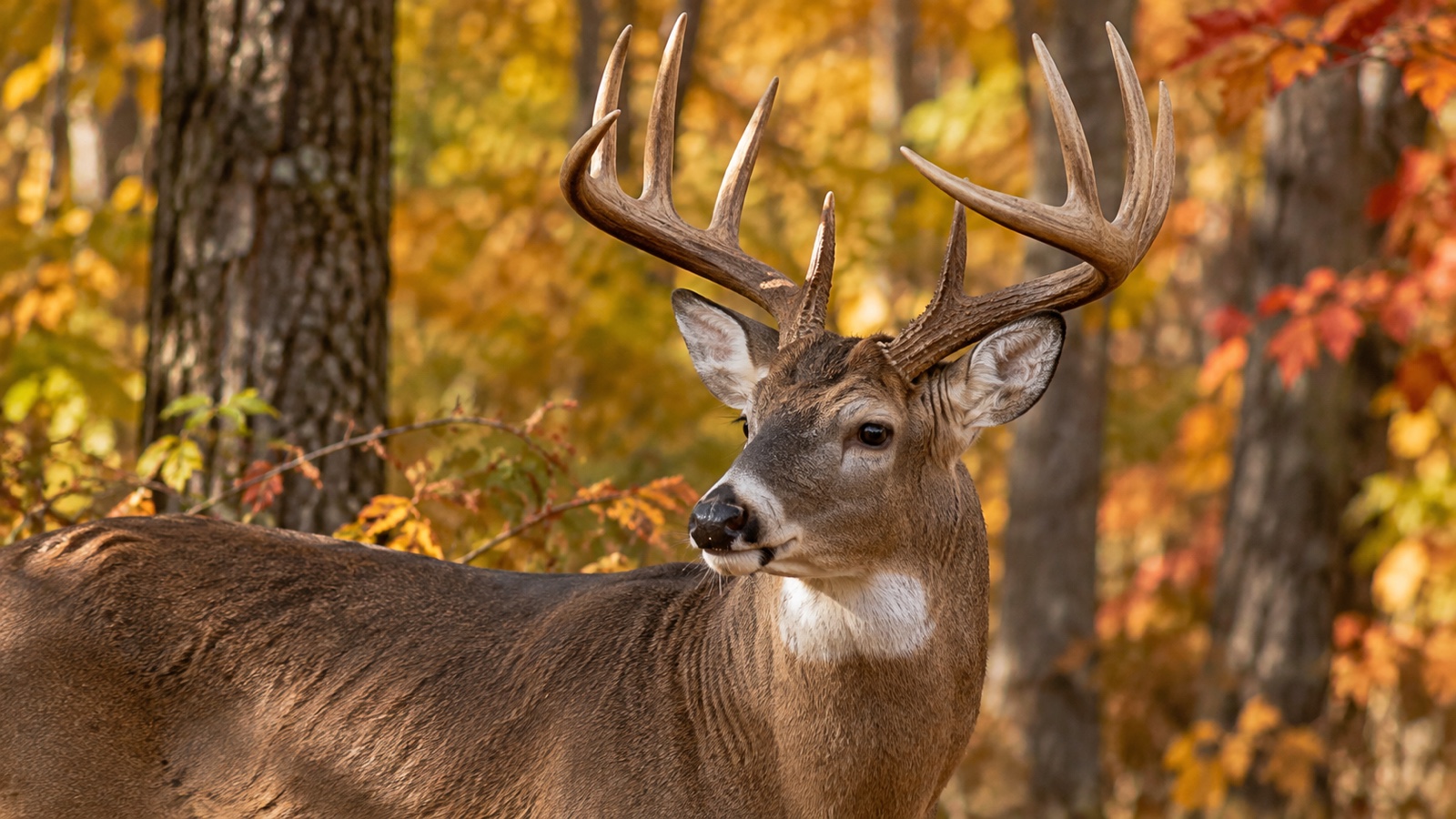
Deer chew cud with a four-chambered stomach
Deer can live on leaves, twigs, buds, grasses, acorns, and plants humans could never turn into dinner because microbes do part of the digestive work. Their stomach has four chambers, and food gets fermented, regurgitated, rechewed, swallowed, and processed again.
- Deer are herbivores.
- Most are browsers, grazers, or flexible combinations of both.
- Browsers eat leaves, shoots, twigs, shrubs, and woody plants.
- Grazing species consume more grasses.
- White-tailed deer change diet dramatically with season.
- Acorns can become important autumn food.
- Deer may eat fruit and agricultural crops when available.
- The stomach has four chambers.
- Those chambers are the rumen, reticulum, omasum, and abomasum.
- Microbes in the rumen ferment cellulose-rich plant material.
- Fermentation creates fatty acids the deer can use for energy.
- Partly digested food is regurgitated as cud.
- The deer rechews cud to break plant fibers into smaller pieces.
- Food then moves through the digestive system again.
- The abomasum functions most like a familiar acid-producing mammal stomach.
- Gut microbes also supply important nutrients.
- Sudden diet changes can disrupt rumen microbes.
- Feeding wild deer inappropriate human foods can cause digestive problems.
- Artificial feeding can also concentrate deer and increase disease transmission.
- A deer can turn a woody twig into usable calories because it is basically carrying a fermentation company around in its abdomen.
Fawns use camouflage and stillness instead of running with mom all day
- Young deer are commonly called fawns.
- Female deer are often called does.
- Adult males may be called bucks or stags depending on species.
- Many deer species give birth in spring or early summer.
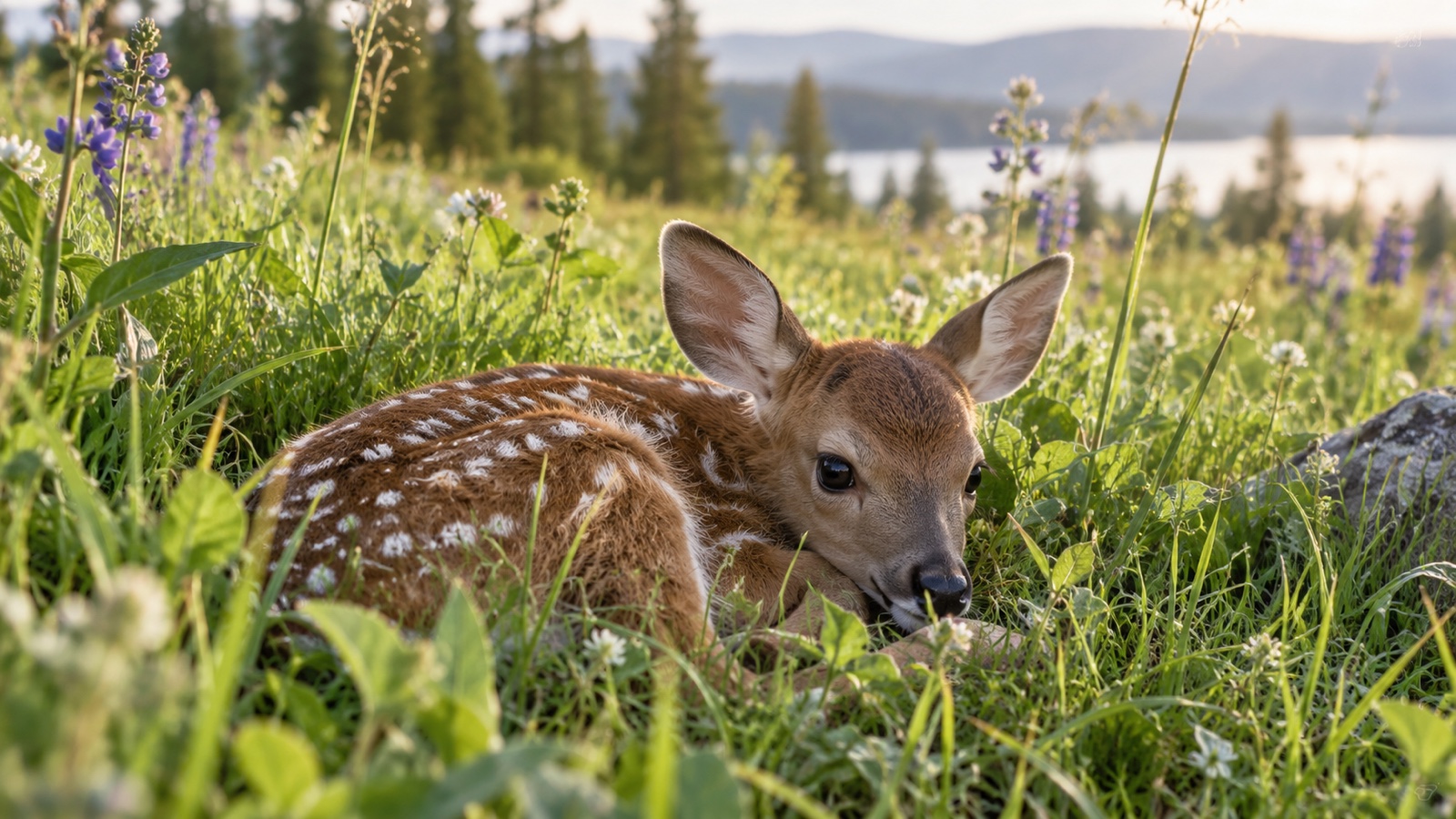
- Newborn white-tailed fawns have white spots.
- The spots break up the outline in dappled vegetation.
- Very young fawns spend long periods lying quietly alone.
- The mother stays away for much of the day to avoid attracting predators.
- She returns periodically to nurse.
- A hidden fawn that appears alone is usually not abandoned.
- Picking up a healthy resting fawn can separate it from its mother.
- Wildlife rehabilitators recommend leaving healthy fawns where they are unless there is clear evidence of injury or orphaning.
- Newborn fawns have relatively little scent compared with older deer.
- Stillness is one of their main early defenses.
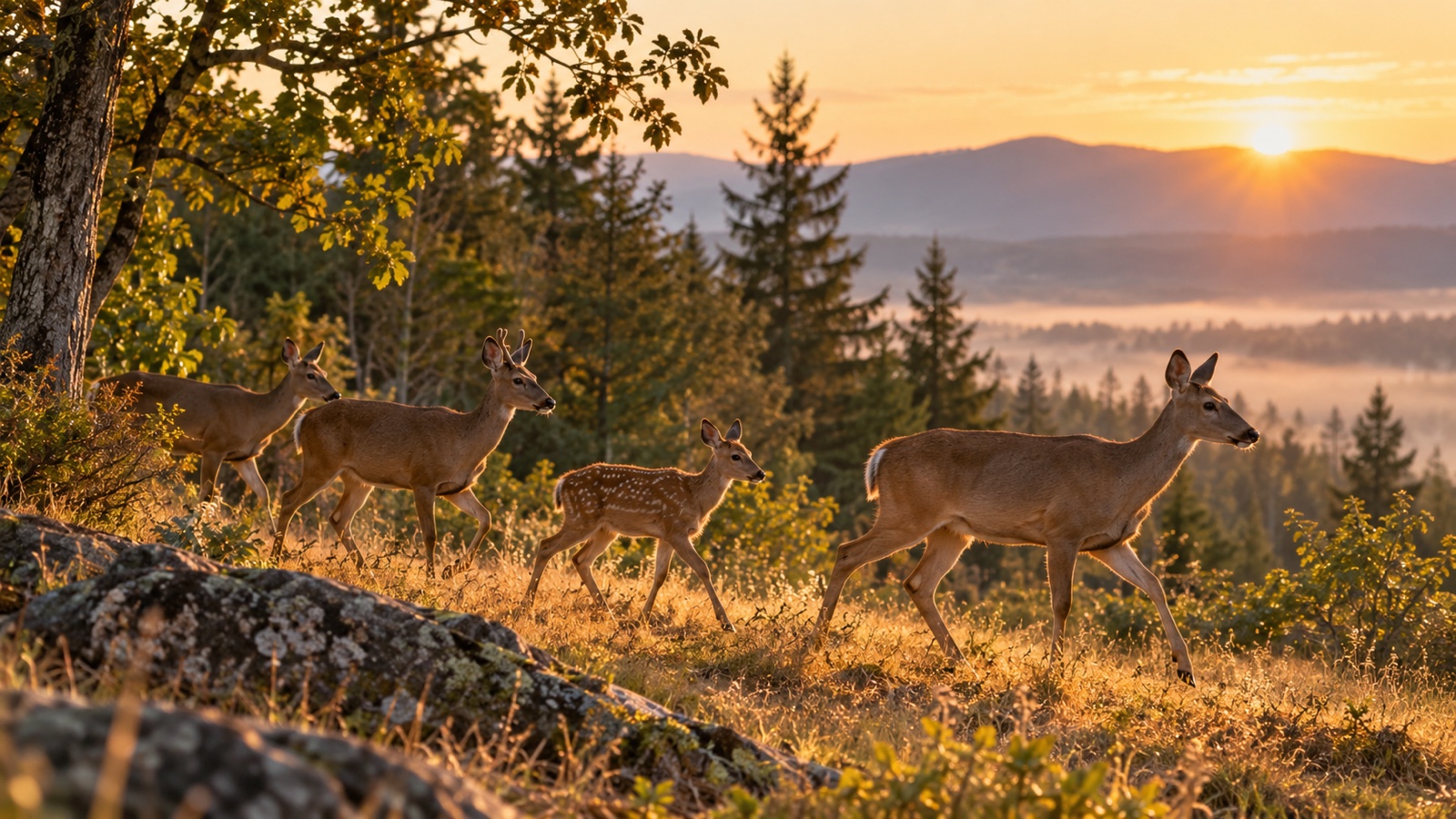
- As legs strengthen, fawns begin following their mothers more often.
- They learn feeding areas and escape routes.
- Spots fade as the juvenile coat changes.
- Twins are common in well-nourished white-tailed deer.
- Triplets occur under favorable conditions.
- A motionless fawn in tall grass is not waiting for a rescue; it is executing the plan exactly as designed.
The rut changes behavior, movement and risk
Breeding season turns many normally cautious male deer into distracted travelers carrying hard antlers and elevated testosterone. The exact timing differs by species and latitude, but rut behavior can include scraping, rubbing, scent marking, vocalizing, chasing females, fighting rivals, and crossing roads at terrible moments.
- The breeding season of deer is commonly called the rut.
- Rut timing is influenced by species, latitude, and day length.
- White-tailed deer in much of northern North America rut in fall.
- Male hormone levels rise before the rut.
- Bucks rub antlers and forehead glands on saplings.
- They scrape leaves from the ground and scent-mark exposed soil.
- Urine and glandular secretions provide chemical information.
- Bucks travel more while searching for receptive females.
- That increased movement raises vehicle-collision risk.
- Rival males compare body and antler size before fighting.
- Many encounters end without serious combat.
- Matched rivals can lock antlers and push violently.
- Rarely, antlers become permanently tangled.
- Stags and elk use loud calls during breeding season.
- Red deer males roar.
- Elk bulls bugle.
- Reindeer males also fight with antlers.
- Male body condition often drops during the rut because feeding decreases while activity rises.
- Winter begins soon after rut for many northern species.
- Dating season followed immediately by food scarcity is biologically efficient and emotionally rude.
Migration, cities and 25 final deer facts
- Some deer migrate seasonally between summer and winter ranges.
- Mule deer can travel long distances along traditional migration corridors.
- Reindeer undertake some of the longest migrations of any land mammal.
- Other deer live within small home ranges year-round.
- Habitat fragmentation can cut migration routes.
- Wildlife overpasses and underpasses help deer cross highways more safely.
- Fencing can guide animals toward those crossings.
- Vehicle collisions kill large numbers of deer and injure people every year.
- Drivers are safest when slowing in deer habitat at dusk and dawn.
- If one deer crosses a road, others may follow.
- White-tailed deer thrive in many suburban landscapes.
- Edges between woods, lawns, gardens, and fields create abundant food.
- High deer densities can suppress forest regeneration.
- Deer browsing can change which plant species survive.
- Ticks may benefit from abundant deer as hosts for adult stages.
- Deer do not directly infect humans with Lyme disease bacteria, but they support adult blacklegged ticks and influence tick ecology.
- Chronic wasting disease affects deer, elk, moose, and related cervids.
- It is caused by abnormal proteins called prions.
- There is no vaccine or cure for chronic wasting disease.
- Wildlife agencies use surveillance and harvest management to track its spread.
- Deer are prey for wolves, cougars, bears, coyotes, lynx, and other predators depending on region.
- Predators often take young, old, injured, or vulnerable animals, but healthy adults can also be killed.
- Humans have hunted deer for food and materials for tens of thousands of years.
- Modern deer management involves hunting, habitat, predators, disease, agriculture, vehicles, and public tolerance.
- After 145 facts, “deer” stops meaning one animal at the edge of a road and becomes a global family of antler growers, cud chewers, migrants, tiny forest deer, giant moose, tropical specialists, and suburban opportunists.
Quick FAQ
Q: Are moose and elk deer?
A: Yes. Both belong to the deer family Cervidae.
Q: Do all deer have antlers?
A: No. Most male deer species grow antlers, but species such as water deer lack them, and female reindeer are unusual because many grow antlers too.
Q: Are antlers horns?
A: No. Antlers are bone and are normally grown and shed annually. Horns have a different structure and are usually permanent.
Q: Should I rescue a fawn lying alone?
A: Usually no. Healthy young fawns are intentionally left hidden while the mother feeds nearby. Contact a wildlife professional only if the animal is clearly injured or truly orphaned.
Q: Why do deer chew cud?
A: Their four-chambered digestive system uses microbial fermentation, and rechewing cud helps break tough plant fibers down further.

Ellie is the owner and sole author of Fun Facts, combining her mechanical engineering background with years of research-driven writing to deliver facts you can trust. Every article is thoroughly fact-checked and routinely updated as new science and sources emerge to keep information accurate and current. Her mission is to make learning delightful while upholding high standards of reliability and transparency.