
Hot dogs are one of those foods that look simple until you ask what counts as one. Is it the sausage, the bun, the whole sandwich, the toppings, or the regional rules that will get someone from Chicago very upset if you reach for ketchup?
A hot dog starts with a cooked sausage
- A hot dog is a type of fully cooked sausage.
- It is commonly made from beef, pork, poultry, or combinations.
- All-beef hot dogs contain beef as the meat component.
- Turkey and chicken versions are also common.
- Hot-dog meat is finely ground or emulsified.
- Fat is dispersed through the meat mixture.
- Salt helps extract muscle proteins.
- Those proteins help bind water and fat.
- Seasonings vary by manufacturer.
- Garlic, paprika, mustard, and pepper are common flavor notes.
- Curing salts are used in many hot dogs.
- Nitrite contributes color, flavor, and food safety.
- Some products use celery-derived nitrite sources.
- Those still create similar curing chemistry.
- Hot dogs are cooked during manufacturing.
- Consumers usually reheat them before serving.
- Natural casings can create a snappy bite.
- Skinless hot dogs are cooked in removable casings.
- The casing is peeled away after cooking.
- The hot dog's smooth texture is basically meat proteins engineered to hold water, fat, and seasoning in one neat cylinder.
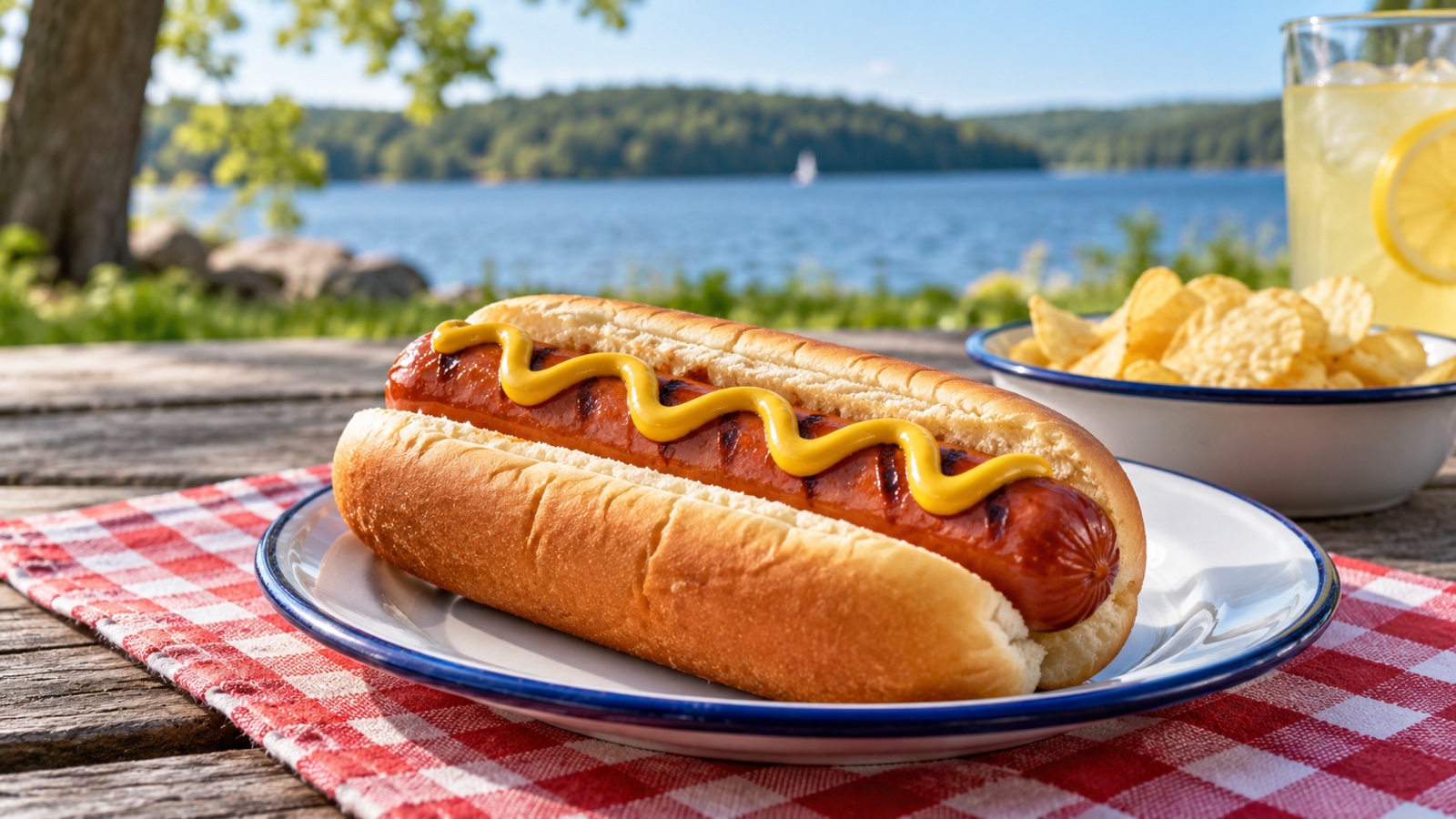
The name has German sausage roots and American slang
- Hot dogs are related to European frankfurter and wiener sausages.
- Frankfurter refers to Frankfurt, Germany.
- Wiener refers to Vienna, called Wien in German.
- German-speaking immigrants brought sausage traditions to the United States.
- Sausages served in rolls became popular street food.
- The phrase hot dog was in American use by the late 19th century.
- The exact origin of the nickname is debated.
- Stories crediting one cartoonist with inventing the term are not well supported.
- Dachshund jokes were associated with sausages at the time.
- “Dog” was also slang connected with sausage suspicions.
- Street vendors helped spread the food in American cities.
- Coney Island became strongly associated with hot dogs.
- Nathan's Famous opened at Coney Island in 1916.
- Hot dogs also became tied to baseball parks.
- Easy handheld eating made them ideal stadium food.
- Railroad stations and fairs helped spread them nationally.
- Industrial meat processing made production cheaper.
- Refrigeration improved distribution.
- Packaged buns made home serving convenient.
- Hot dogs became American enough that their European ancestry now surprises people.
Regional hot dogs have their own rule books
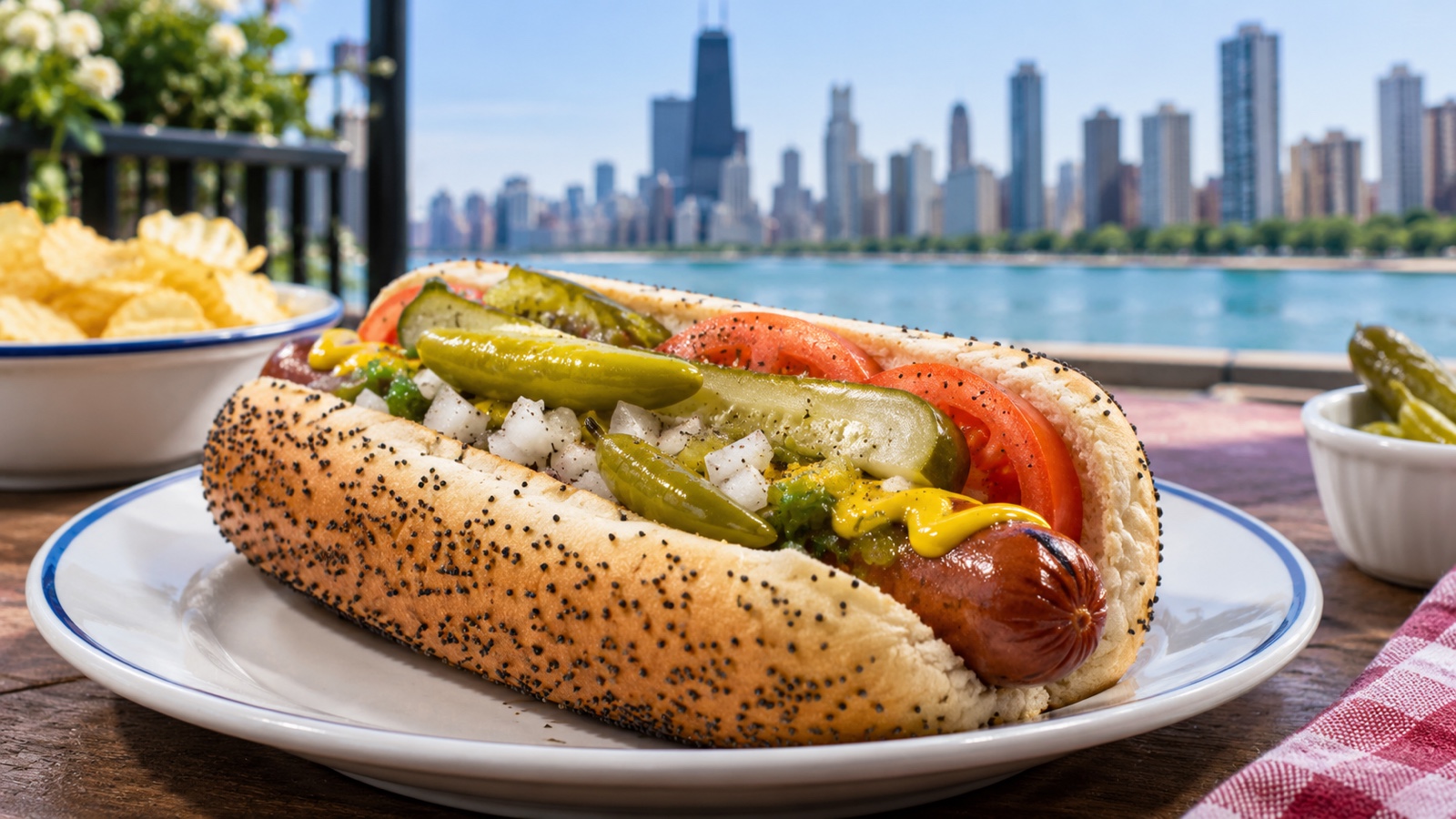
- A Chicago-style hot dog is famously loaded with toppings.
- It commonly uses an all-beef frankfurter.
- A poppy-seed bun is traditional.
- Yellow mustard is standard.
- Bright green relish is common.
- Chopped onion adds sharpness.
- Tomato wedges add acidity.
- A pickle spear adds crunch.
- Sport peppers add heat.
- Celery salt finishes the classic version.
- Ketchup is famously discouraged by Chicago tradition.
- A New York-style hot dog often uses mustard and sauerkraut.
- Onion sauce is another New York topping.
- Detroit Coney dogs typically include meat chili, mustard, and onion.
- Cincinnati cheese coneys add chili and shredded cheese.
- Sonoran hot dogs are wrapped in bacon.
- They are commonly topped with beans, onion, tomato, sauces, and chiles.
- Seattle-style hot dogs are known for cream cheese.
- West Virginia slaw dogs combine chili and coleslaw.
- A hot dog stops being one standardized food almost immediately after you cross a regional border.
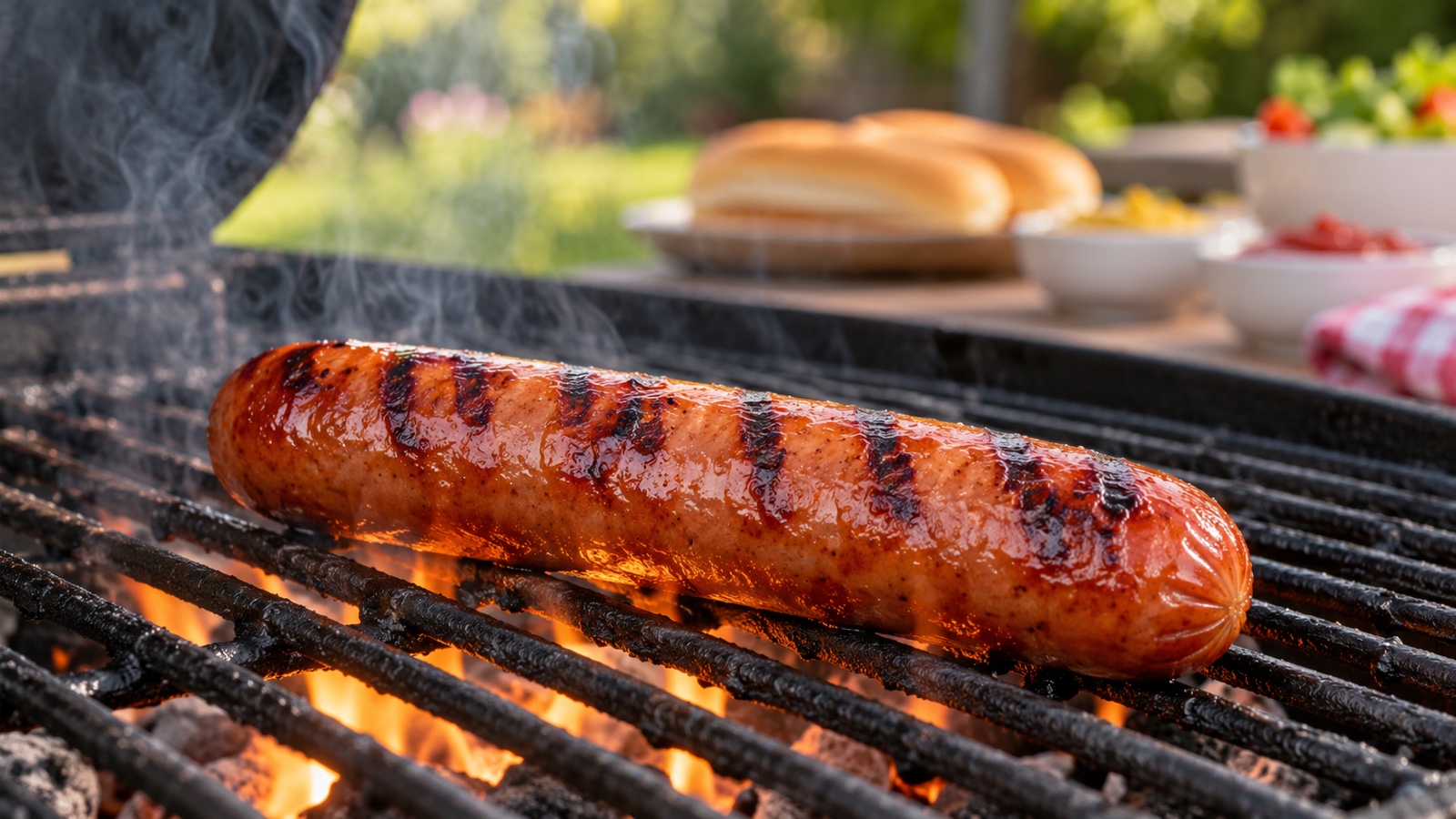
Grilling changes flavor through browning
- Hot dogs are already fully cooked before grilling in most U.S. products.
- Grilling mainly reheats and browns them.
- High heat creates roasted surface flavors.
- The Maillard reaction contributes to browning.
- Open flames can create smoky aromas.
- Scoring the surface increases browned area.
- Deep cuts can also release juices.
- Rolling hot dogs frequently promotes even browning.
- Charcoal produces different smoke compounds from gas grills.
- Gas grills provide easier temperature control.
- Boiling keeps the surface soft.
- Steaming also produces a soft casing.
- Pan frying creates strong surface browning.
- Air fryers can crisp hot dogs quickly.
- Microwaving is fast but produces little browning.
- Hot-dog rollers keep sausages warm and rotating.
- Rollers are common in convenience stores.
- Overcooking can split the casing.
- Split hot dogs lose more moisture.
- The grill is not making the hot dog safe from rawness so much as making an already cooked sausage taste more exciting.
The bun is almost as important as the sausage
- Hot-dog buns are elongated soft rolls.
- Side-split buns open from the side.
- Top-split buns open along the top.
- New England-style buns are often top split.
- Their flat sides toast well with butter.
- Steamed buns are common at ballparks.
- Steam makes buns soft and flexible.
- Toasting creates a stronger structure.
- Toasted buns resist soggy toppings better.
- Poppy seeds are traditional on Chicago buns.
- Potato buns add softness and slight sweetness.
- Brioche buns are richer and sweeter.
- Gluten-free buns are widely available.
- Lettuce wraps are sometimes used instead of bread.
- Some hot dogs are served on sliced bread.
- Corn dogs replace the bun with cornmeal batter.
- The battered sausage is deep fried.
- Mini corn dogs are bite-size versions.
- Pretzel buns create a chewier variation.
- A hot-dog bun's main job is holding a slippery cylinder and several unstable toppings without becoming a structural disappointment.
Hot dogs became intertwined with baseball and contests
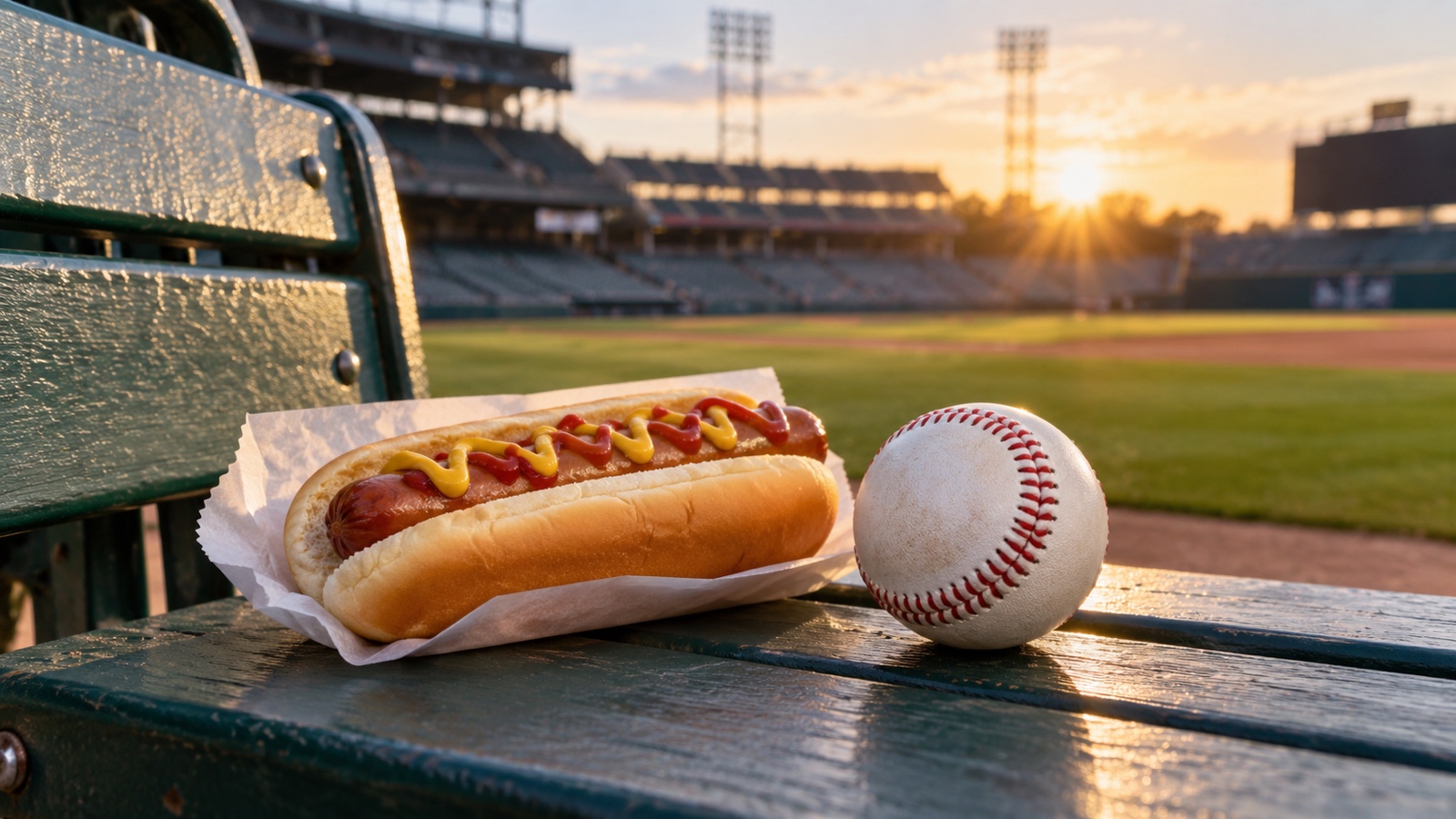
- Hot dogs have been sold at baseball games for generations.
- The association became a major part of American food culture.
- They are easy to eat without utensils.
- They are inexpensive relative to many stadium foods.
- Baseball promotions often feature dollar hot-dog nights.
- Hot-dog eating contests became popular spectacles.
- Nathan's Famous contest is held at Coney Island.
- Modern competitive eating uses short timed events.
- Contestants often dunk buns in liquid.
- This makes bread easier to swallow quickly.
- Competitive eating carries choking and health risks.
- It should not be copied casually.
- Hot dogs also appear at county fairs.
- They are common at backyard cookouts.
- July is especially associated with hot-dog consumption in the United States.
- Independence Day cookouts contribute heavily.
- Hot dogs are common camping foods.
- They can be roasted on sticks over campfires.
- Spiral-cut hot dogs create more surface area.
- Few foods move as comfortably between ballparks, gas stations, weddings, campfires, and backyard grills.
Food safety, nutrition and 25 final hot-dog facts
- Hot dogs should be kept refrigerated before cooking.
- Opened packages have shorter storage lives than sealed ones.
- Cooked hot dogs should not sit at room temperature for long periods.
- Pregnant people and others at high risk for listeriosis are advised to reheat deli meats and hot dogs until steaming hot.
- Listeria can grow at refrigerator temperatures.
- Hot dogs are common choking hazards for young children.
- Round coin-shaped slices are especially risky.
- Cutting lengthwise and into small pieces reduces choking risk.
- Hot dogs can be high in sodium.
- They can also be high in saturated fat depending on formulation.
- Lean poultry versions may contain less fat.
- Plant-based hot dogs use soy, pea protein, wheat gluten, or other ingredients.
- Plant-based does not automatically mean low sodium.
- Nutrition labels vary widely by brand.
- Mustard adds strong flavor with relatively few calories.
- Ketchup contributes sugar and acidity.
- Relish adds sweetness and crunch.
- Sauerkraut contributes acidity and fermented flavor.
- Raw onions provide sulfur compounds that create sharp aroma.
- Cheese sauce increases saturated fat and sodium.
- Hot-dog packages often contain eight or ten sausages.
- Bun packages do not always match sausage counts, a classic grocery-store annoyance.
- “Frankfurter” and “wiener” are regulated product names in U.S. meat standards.
- Hot dogs can legally contain several meat species when accurately labeled.
- After 145 facts, the hot dog feels less like mystery meat and more like sausage science, immigrant food history, regional identity, stadium culture, and condiment diplomacy in a bun.

Ellie is the owner and sole author of Fun Facts, combining her mechanical engineering background with years of research-driven writing to deliver facts you can trust. Every article is thoroughly fact-checked and routinely updated as new science and sources emerge to keep information accurate and current. Her mission is to make learning delightful while upholding high standards of reliability and transparency.