
New Hampshire fits mountains, lakes, Atlantic shoreline, covered bridges, presidential politics, maple sugarhouses, and a state motto that sounds like it should be yelled before an action movie. The Granite State is small, stubbornly distinctive, and much more than a scenic drive between Massachusetts and Maine.
New Hampshire basics from the Granite State
- New Hampshire became the ninth U.S. state on June 21, 1788.
- Its ratification made the U.S. Constitution effective under the document’s original nine-state requirement.
- Concord is the state capital.
- Manchester is New Hampshire’s largest city.
- New Hampshire has 10 counties.
- The postal abbreviation is NH.
- The official nickname is the Granite State.
- Granite quarrying was historically important to the state.
- The state motto is “Live Free or Die.”
- The phrase comes from a toast written by Revolutionary War General John Stark.
- New Hampshire borders Maine, Massachusetts, and Vermont.
- It also borders Quebec, Canada.
- The Atlantic Ocean touches a short section of southeastern New Hampshire.
- New Hampshire has the shortest ocean coastline of any U.S. coastal state.
- Its coast is only about 18 miles long.
- The entire state uses Eastern Time.
- New Hampshire is one of the six New England states.
- It has no general state sales tax.
- It also does not levy a broad tax on wage income.
- “Live Free or Die” is an unusually intense way to introduce tax-free shopping and mountain scenery.
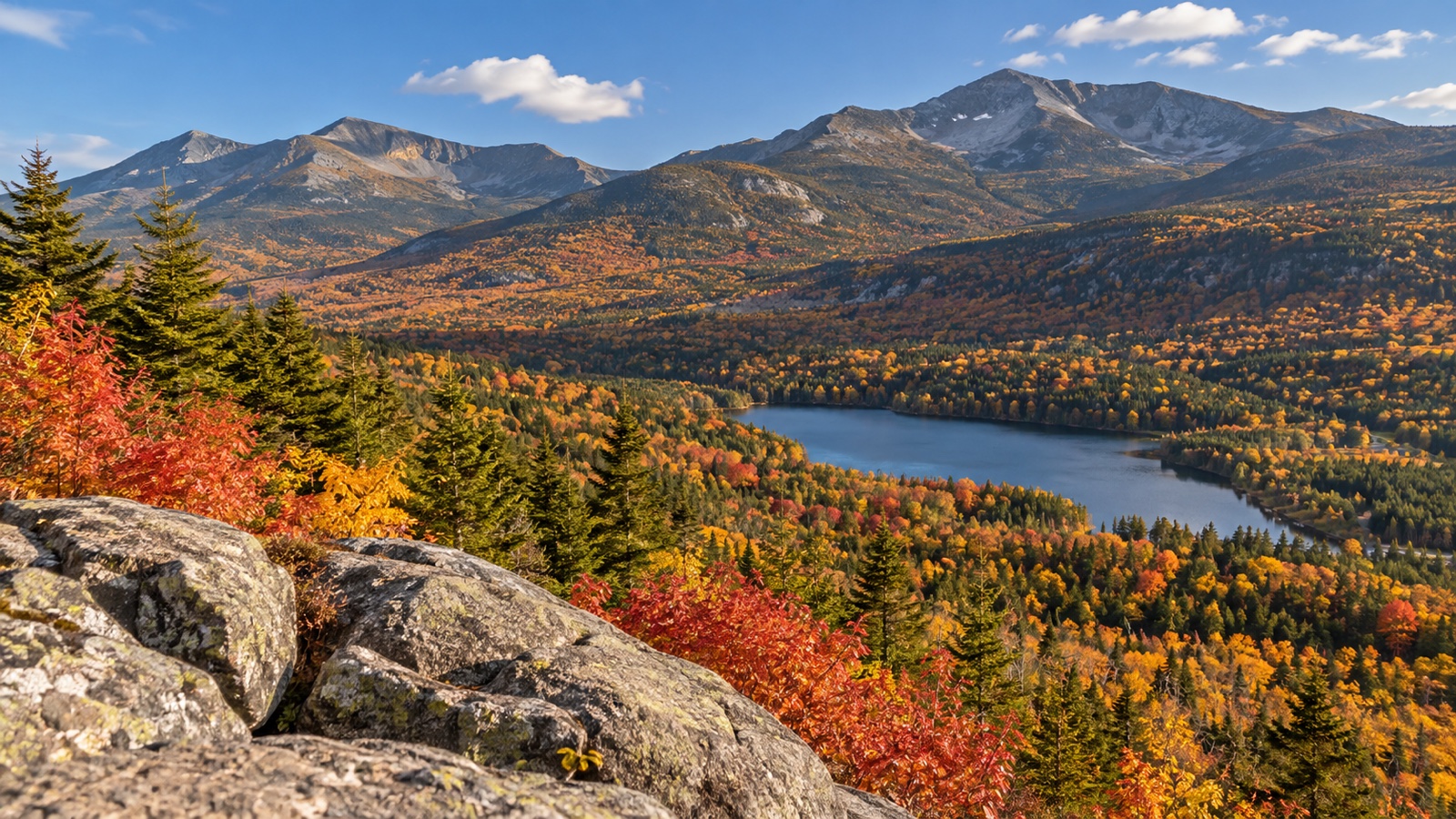
The White Mountains are the state’s dramatic backbone
- The White Mountains cover much of north-central New Hampshire.
- They are part of the northern Appalachian Mountains.
- Mount Washington is New Hampshire’s highest point.
- It rises 6,288 feet above sea level.
- Mount Washington is the highest peak in the northeastern United States.
- The summit is famous for severe and rapidly changing weather.
- A wind gust of 231 mph was measured there in 1934.
- For decades, that was the highest surface wind speed directly measured by humans.
- Higher wind gusts have since been recorded elsewhere during tropical cyclones.
- The Mount Washington Observatory operates weather instruments near the summit.
- The Mount Washington Auto Road reaches the summit by car.
- The Mount Washington Cog Railway climbs the mountain on a steep rack railway.
- The railway began carrying passengers in the 19th century.
- The Presidential Range includes peaks named for U.S. presidents and other public figures.
- Mount Adams is the second-highest peak in the range.
- Franconia Notch cuts through the western White Mountains.
- The Appalachian Trail passes through New Hampshire.
- Its White Mountain sections are among the trail’s most rugged.
- Tree line occurs at a relatively low elevation in the White Mountains because of harsh climate.
- New Hampshire mountains do not need western-state elevation to produce genuinely alpine weather.
The Old Man of the Mountain still represents New Hampshire
- The Old Man of the Mountain was a natural granite profile in Franconia Notch.
- Viewed from the correct angle, cliff ledges resembled a human face.
- The formation became one of New Hampshire’s most beloved symbols.
- It appeared on signs, license plates, coins, and state imagery.
- The profile formed through natural erosion and rock fracturing.
- Engineers spent decades trying to stabilize the fragile ledges.
- Cables and other supports were installed as cracks widened.
- The formation collapsed during the night of May 3, 2003.
- The collapse was caused by natural weathering and structural failure.
- New Hampshire residents mourned the loss of the landmark.
- The Old Man remains on the reverse of the New Hampshire state quarter.
- It also remains on some state symbols despite no longer physically existing.
- A memorial viewing area now helps visitors understand the original profile.
- Steel-profile sculptures can recreate the face visually from a designated viewpoint.
- Nathaniel Hawthorne referenced a similar rock profile in his story “The Great Stone Face.”
- The story helped connect the landscape with New England literature.
- The Profile Lake area sits below the former formation.
- Franconia Notch State Park protects the surrounding landscape.
- The Old Man demonstrates how a geological accident can become part of a state’s emotional identity.
- New Hampshire lost the face but absolutely refused to update the branding.
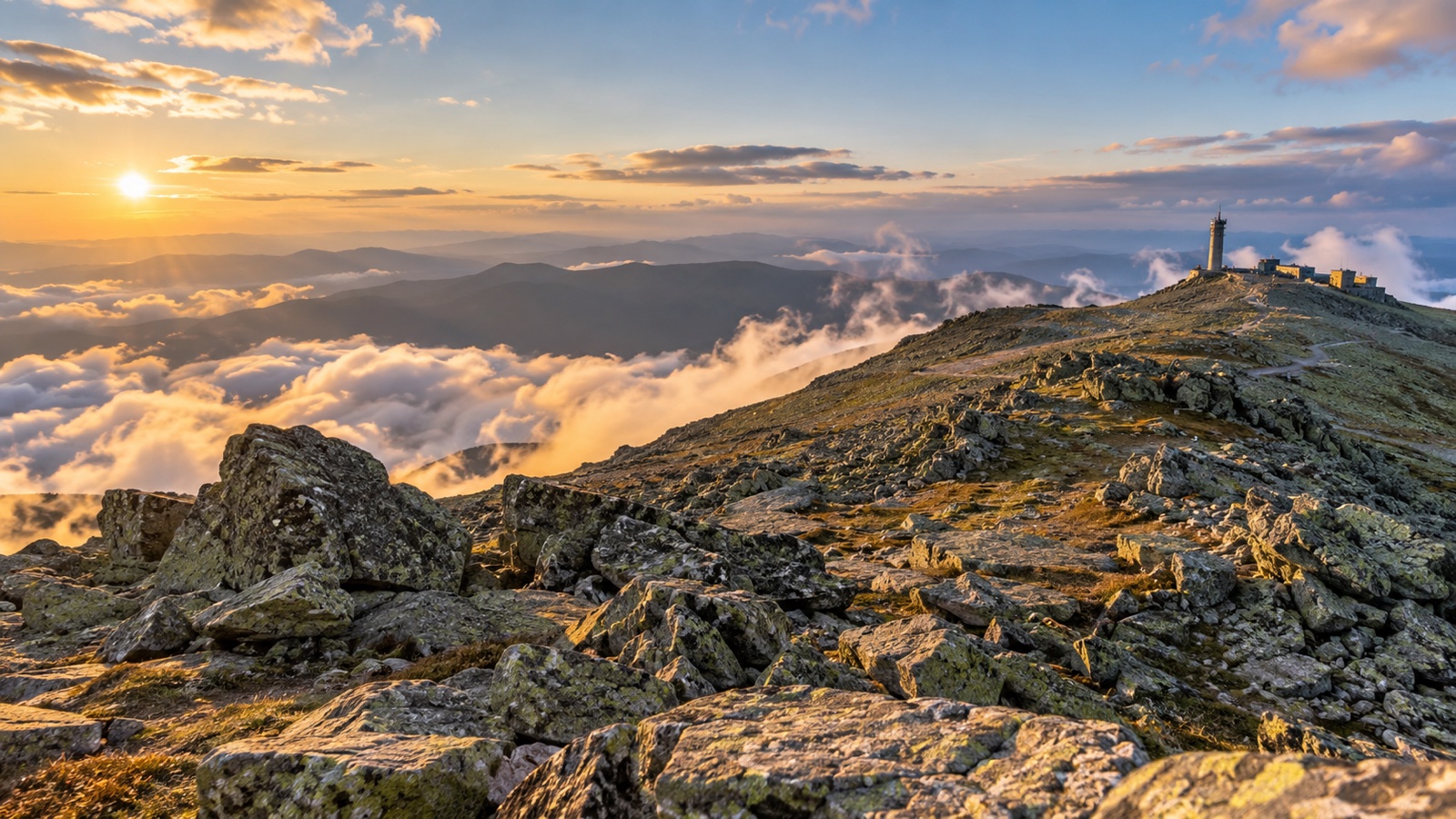
Lakes, forests & a very short seacoast
New Hampshire’s landscape changes fast. You can move from rocky Atlantic shoreline to lake country to high mountain passes in a few hours, which explains why the state can sell beach weekends, leaf-peeping drives, ski trips, and lake cabins without changing its license plate.
- Lake Winnipesaukee is the largest lake entirely within New Hampshire.
- It covers more than 70 square miles.
- The lake contains hundreds of islands.
- The Lakes Region is a major summer recreation destination.
- Squam Lake lies west of Winnipesaukee.
- The movie “On Golden Pond” was filmed around Squam Lake.
- New Hampshire has thousands of lakes and ponds.
- Forests cover most of the state.
- Northern New Hampshire is especially heavily forested.
- White Mountain National Forest extends into western Maine as well as New Hampshire.
- New Hampshire is famous for colorful autumn foliage.
- Maples contribute bright red and orange colors.
- Birches and aspens add yellow tones.
- Fall color timing changes with elevation, latitude, temperature, and weather.
- The northern part of the state generally reaches peak foliage before southern areas.
- Hampton Beach is one of New Hampshire’s best-known Atlantic beaches.
- Portsmouth is a historic seaport near the Maine border.
- The Isles of Shoals sit offshore in both New Hampshire and Maine waters.
- The Piscataqua River forms part of the Maine-New Hampshire border.
- A state with 18 miles of ocean still managed to build a serious seacoast personality.
Colonial history, independence & the presidential primary
- Abenaki peoples lived throughout the region long before English colonization.
- English settlements developed along the seacoast during the 17th century.
- New Hampshire was named for Hampshire in southern England.
- Portsmouth became one of the colony’s major ports.
- The colony’s economy included timber, fishing, shipbuilding, and trade.
- New Hampshire delegates participated in the American Revolution.
- The state adopted its own constitution in January 1776.
- That was months before the Declaration of Independence.
- The current New Hampshire constitution traces to a revised constitution adopted in 1784.
- New Hampshire was the decisive ninth state to ratify the U.S. Constitution.
- Franklin Pierce was born in Hillsborough, New Hampshire.
- He became the 14th president of the United States.
- New Hampshire holds the first presidential primary in the traditional U.S. nomination calendar.
- Iowa historically held caucuses before the New Hampshire primary, making “first” depend on the type of contest.
- New Hampshire law seeks to keep its primary before similar contests.
- The primary has outsized media attention because of its early timing.
- Candidates spend enormous amounts of time campaigning in diners, town halls, and small communities.
- New Hampshire’s electorate is much smaller and less diverse than the United States as a whole.
- That has fueled recurring debates about its early role in presidential nominations.
- Nothing says small-state political influence like making national candidates learn the names of every diner booth.
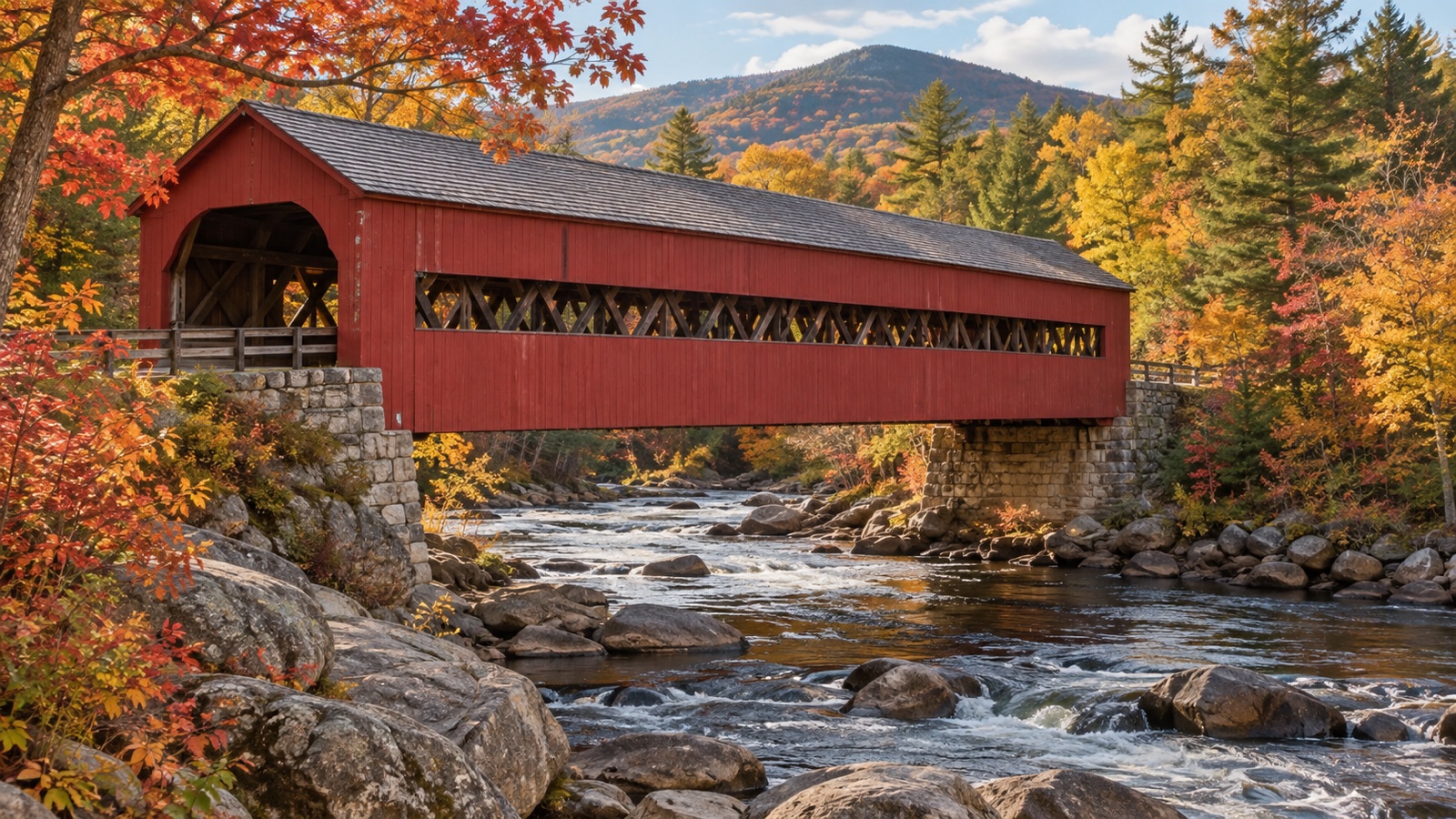
Covered bridges, mills & New Hampshire inventions
The covered bridge is the architectural version of New Hampshire’s whole vibe: practical engineering that accidentally became picturesque. The roof and walls were built mainly to protect the wooden bridge structure from weather, not to create charming postcard tunnels for fall photographers.
- New Hampshire preserves dozens of historic covered bridges.
- Covering a wooden bridge protects structural timbers from rain, snow, and sun.
- That protection can greatly extend a bridge’s usable life.
- The Cornish-Windsor Covered Bridge crosses the Connecticut River into Vermont.
- It is one of the longest wooden covered bridges in the United States.
- The Connecticut River forms most of New Hampshire’s western border.
- The official state boundary generally follows the Vermont bank rather than the river’s center.
- Manchester became a major textile-manufacturing center during the Industrial Revolution.
- The Amoskeag Manufacturing Company operated enormous mills along the Merrimack River.
- At its peak, the mill complex was among the largest textile operations in the world.
- Nashua also developed around water-powered industry.
- Waterfalls and river drops provided useful energy before widespread electric power.
- Levi Hutchins of Concord built an early mechanical alarm clock in 1787.
- His clock was designed to ring at 4 a.m.
- Hutchins did not patent or mass-produce it.
- Earl Tupper, inventor of Tupperware, was born in Berlin, New Hampshire.
- H. H. Holmes, one of America’s most notorious 19th-century criminals, was born in Gilmanton.
- Poet Robert Frost lived and worked for years in New Hampshire.
- Several of Frost’s homes in the state are preserved.
- The state inspired enough poetry to almost make a 4 a.m. alarm clock seem forgivable.
Maple syrup, skiing & 25 final New Hampshire facts
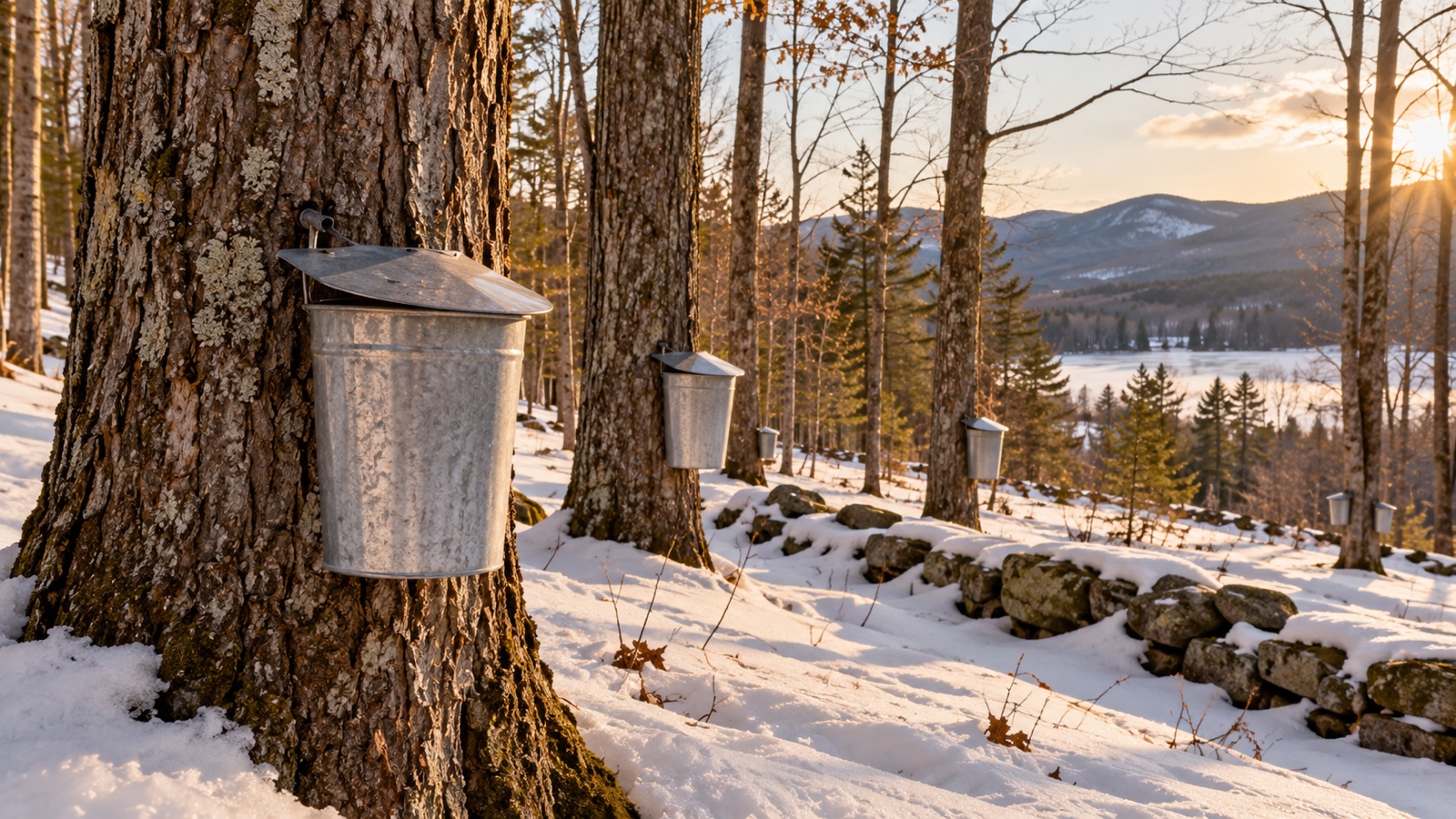
- New Hampshire produces maple syrup from sugar maple sap.
- Sap runs best during late winter and early spring freeze-thaw cycles.
- It takes many gallons of sap to produce one gallon of finished syrup.
- Maple sugarhouses are a familiar spring sight in rural parts of the state.
- New Hampshire has a long downhill-skiing tradition.
- Cannon Mountain operates a major ski area in Franconia Notch.
- The first passenger aerial tramway in North America opened at Cannon Mountain in 1938.
- Bretton Woods is another major New Hampshire ski area.
- The 1944 Bretton Woods Conference took place at the Mount Washington Hotel.
- The conference helped establish the International Monetary Fund and World Bank system.
- The New Hampshire Motor Speedway hosts major auto-racing events.
- Laconia Motorcycle Week traces its history to events beginning in the early 20th century.
- The state flower is the purple lilac.
- The state tree is the white birch.
- The state bird is the purple finch.
- The white-tailed deer is the state animal.
- The spotted newt is the state amphibian.
- New Hampshire has no general sales tax.
- Liquor sales through state-run stores are a notable source of state revenue.
- Large state liquor stores sit along major highways near state borders.
- Dartmouth College is located in Hanover.
- Dartmouth was founded in 1769.
- It is one of the Ivy League universities.
- Hanover lies along the Connecticut River opposite Vermont.
- After 145 facts, New Hampshire feels like a state designed by someone who wanted mountains, politics, tax quirks, maple syrup, and exactly enough coastline to keep everyone guessing.
Quick FAQ
Q: What is New Hampshire famous for?
A: The White Mountains, Mount Washington, fall foliage, lakes, presidential primaries, covered bridges, maple syrup, tax-free shopping, and the “Live Free or Die” motto.
Q: What is the capital of New Hampshire?
A: Concord is the capital, while Manchester is the largest city.
Q: What happened to the Old Man of the Mountain?
A: The famous natural granite profile collapsed on May 3, 2003 after centuries of weathering and cracking.
Q: Does New Hampshire have sales tax?
A: It has no general state sales tax, although certain specific taxes and fees still apply.
Q: Why is Mount Washington famous?
A: It is the highest peak in the northeastern United States and is renowned for extreme, rapidly changing weather.

Ellie is the owner and sole author of Fun Facts, combining her mechanical engineering background with years of research-driven writing to deliver facts you can trust. Every article is thoroughly fact-checked and routinely updated as new science and sources emerge to keep information accurate and current. Her mission is to make learning delightful while upholding high standards of reliability and transparency.