
Malaysia is one country split between two landmasses, which already makes the map more interesting than average. Add ancient rainforests, orangutans, skyscrapers, street food, coral islands, cave temples, tea hills, hornbills, royal traditions, and enough noodle dishes to derail my lunch plans, and the trivia gets good quickly.
Malaysia is divided between the Malay Peninsula and Borneo
- Malaysia is a Southeast Asian country made up of two main geographic regions.
- Peninsular Malaysia occupies the southern part of the Malay Peninsula.
- East Malaysia occupies part of the island of Borneo.
- The South China Sea separates the two regions by hundreds of miles.
- Malaysia shares the Malay Peninsula with Thailand.
- East Malaysia shares land borders with Indonesia and Brunei.
- Kuala Lumpur is Malaysia’s national capital and largest city.
- Putrajaya is the federal administrative center.
- The country has 13 states.
- It also has three federal territories.
- The federal territories are Kuala Lumpur, Putrajaya, and Labuan.
- The national currency is the Malaysian ringgit.
- Malaysia uses Malaysian Standard Time.
- The country is eight hours ahead of Coordinated Universal Time.
- Malaysia does not use Daylight Saving Time.
- The national flag is called Jalur Gemilang, meaning “Stripes of Glory.”
- Its 14 stripes represent the states and federal government in the national federation.
- The crescent is associated with Islam.
- The 14-point star is called the federal star.
- I like a country where learning the basic map requires crossing an entire sea before you finish the sentence.
Tropical weather keeps the country green
- Malaysia lies close to the equator.
- The climate is tropical, warm, and humid throughout the year.
- Temperatures vary more with elevation than with season.
- Mountain areas can be much cooler than coastal cities.
- Rain falls in every month.
- Seasonal monsoon winds change rainfall patterns through the year.
- The Northeast Monsoon often brings heavy rain to the east coast of Peninsular Malaysia.
- Parts of Sabah and Sarawak also receive intense monsoon rainfall.
- The Southwest Monsoon is generally drier in many areas.
- Thunderstorms are common because warm moist air fuels convection.
- Flooding can occur during periods of prolonged heavy rain.
- Kuala Lumpur receives substantial rainfall despite its dense urban development.
- Malaysia has no temperate winter season.
- Day length stays relatively consistent because the country is close to the equator.
- High humidity can make temperatures feel hotter than the thermometer suggests.
- The Cameron Highlands are cooler because they sit at high elevation.
- Tea plantations thrive in the highland climate.
- Mossy forests grow on cool wet mountain ridges.
- Climate change is increasing concerns about heat, flooding, sea-level rise, and rainfall extremes.
- Malaysia can deliver rainforest humidity and sweater weather on the same vacation if you drive uphill far enough.
The country formed through a complicated modern history
- The Malay Peninsula sat along important maritime trade routes for centuries.
- Indian, Chinese, Arab, Malay, and other traders connected its ports with wider Asian networks.
- The Malacca Sultanate became a powerful trading state during the 15th century.
- Malacca controlled a strategic point along the Strait of Malacca.
- Portuguese forces captured Malacca in 1511.
- The Dutch took control of Malacca in 1641.
- British influence expanded dramatically during the 18th and 19th centuries.
- Penang, Malacca, and Singapore became part of the British Straits Settlements.
- British colonial rule encouraged large-scale tin mining and rubber cultivation.
- Chinese and Indian migration increased during the colonial period.
- Japanese forces occupied Malaya and Borneo during World War II.
- The occupation ended with Japan’s surrender in 1945.
- The Federation of Malaya became independent from Britain in 1957.
- Malaysia was formed in 1963.
- The new federation initially included Malaya, Sabah, Sarawak, and Singapore.
- Singapore left Malaysia in 1965.
- Brunei considered joining the federation but ultimately did not.
- Malaysia’s modern borders therefore reflect colonial history, local politics, and regional negotiations.
- The country has developed rapidly since independence.
- Its history makes more sense when you stop treating “Malaysia” as though the modern federation has existed unchanged for centuries.
Malaysia is one of the world’s great biodiversity countries
Malaysia’s wildlife list reads like somebody kept adding animals after the page looked full. Orangutans, elephants, sun bears, clouded leopards, hornbills, tapirs, proboscis monkeys, sea turtles, flying snakes, and enormous flowers all occur within its forests or waters.
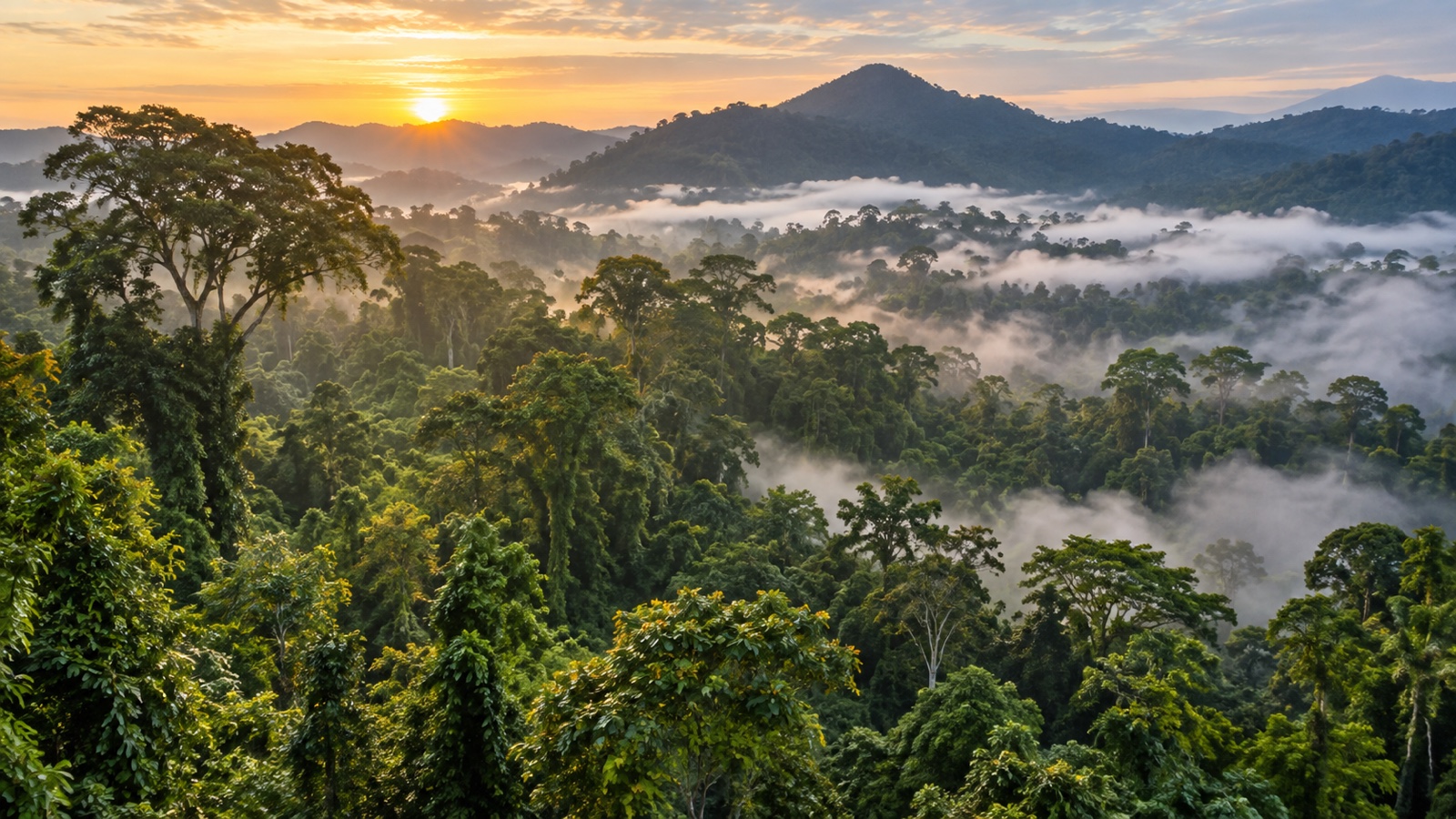
- Malaysia contains some of the world’s oldest tropical rainforests.
- Rainforests occur on both the peninsula and Borneo.
- Borneo is the world’s third-largest island.
- Malaysia shares Borneo with Indonesia and Brunei.
- Bornean orangutans live in Sabah and Sarawak.
- Orangutans spend much of their lives in trees.
- Their name comes from Malay and Indonesian words meaning “person of the forest.”
- Malayan tigers live on the Malay Peninsula.
- The Malayan tiger is critically endangered.
- Asian elephants occur in Peninsular Malaysia and Borneo.
- Borneo’s elephants are sometimes called Bornean pygmy elephants, though they are still large animals.
- Malayan tapirs have a distinctive black-and-white body pattern.
- Sun bears are the smallest living bear species.
- Proboscis monkeys are native to Borneo.
- Adult males have famously large noses.
- Rhinoceros hornbills are among Malaysia’s spectacular forest birds.
- Rafflesia flowers occur in Malaysia and can produce enormous individual blooms.
- Some Rafflesia species smell like rotting meat to attract pollinating flies.
- Deforestation and habitat fragmentation threaten many Malaysian species.
- Malaysia’s wildlife is a strong argument for never describing tropical forest as “empty land.”
Malay, Chinese, Indian & Indigenous cultures overlap without becoming identical
- Malaysia is culturally and ethnically diverse.
- Ethnic Malays form the largest single population group.
- Malaysian Chinese communities have deep roots in the country.
- Malaysian Indians include Tamil, Punjabi, Malayali, Telugu, Sikh, and other communities.
- Sabah and Sarawak are home to numerous Indigenous peoples.
- The Iban are one of the largest Indigenous groups in Sarawak.
- Kadazan-Dusun communities are prominent in Sabah.
- Orang Asli is a collective term for diverse Indigenous peoples of Peninsular Malaysia.
- Those communities have distinct languages and traditions rather than one single culture.
- Malay is the national language.
- English is widely used in business and education.
- Mandarin, Cantonese, Hokkien, Tamil, Iban, Kadazan-Dusun, and many other languages are spoken.
- Islam is the religion of the federation.
- Buddhism, Christianity, Hinduism, Sikhism, Taoism, and other traditions are also practiced.
- Hari Raya Aidilfitri marks the end of Ramadan for Muslims.
- Chinese New Year is a major national celebration.
- Deepavali is a public holiday and important Hindu celebration.
- Christmas is also a public holiday.
- Gawai Dayak is celebrated in Sarawak.
- Malaysia’s holiday calendar makes keeping track of food invitations a highly rewarding civic skill.
Malaysian food is a map you can eat
Trying to name one “Malaysian cuisine” is like naming one national playlist and pretending nobody gets another genre. Malay, Chinese, Indian, Peranakan, Indigenous, regional, Muslim, Hindu, and local street-food traditions overlap constantly while keeping their own histories.
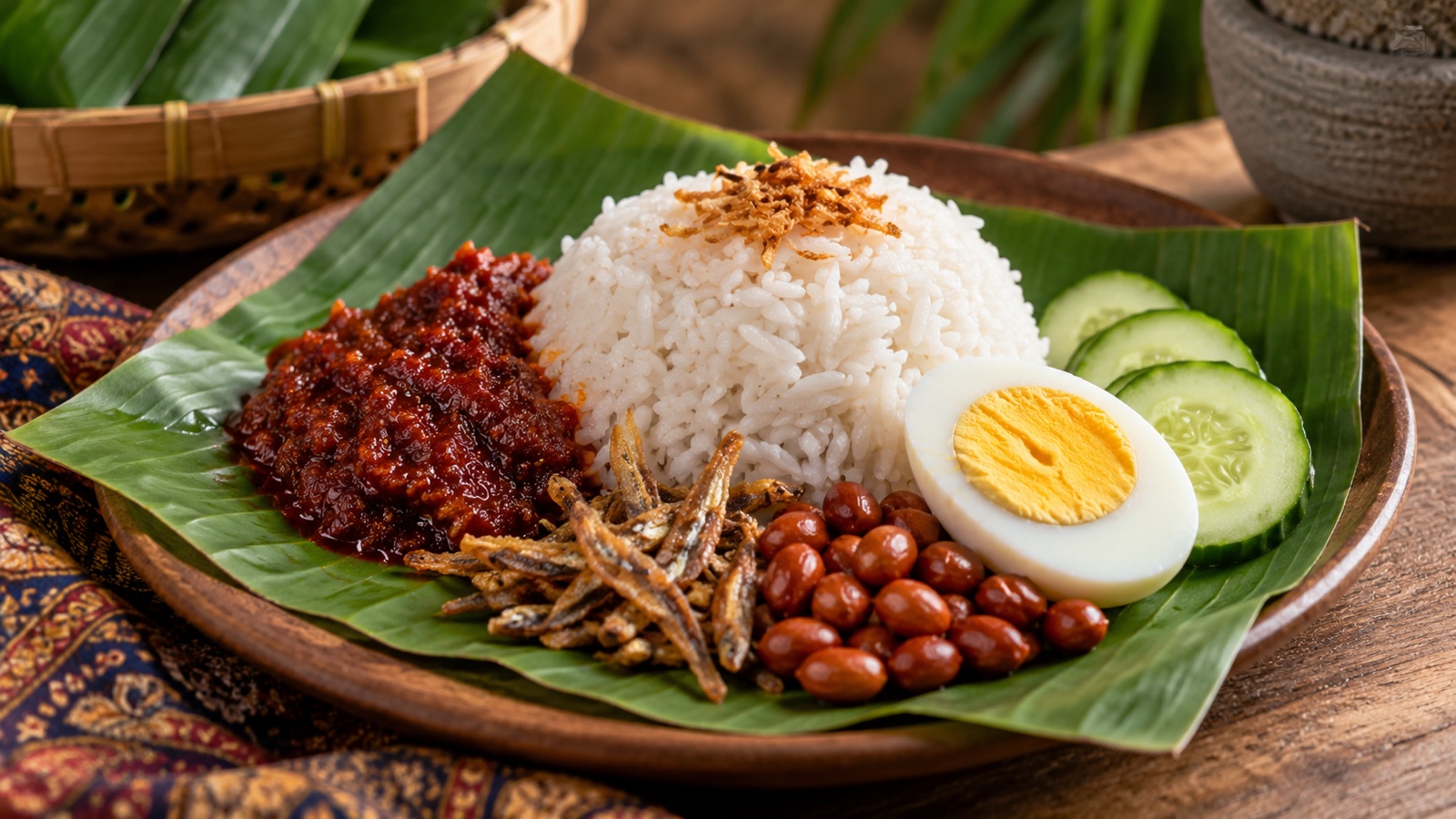
- Nasi lemak is often described as Malaysia’s national dish.
- It centers on rice cooked with coconut milk and pandan.
- Common accompaniments include sambal, peanuts, anchovies, cucumber, and egg.
- Rendang is a slow-cooked spiced meat dish popular in Malaysia and neighboring Indonesia.
- Satay consists of grilled skewered meat served with sauce and accompaniments.
- Roti canai is a flaky griddled flatbread.
- It is commonly eaten with dhal or curry.
- Char kway teow is a stir-fried flat rice noodle dish associated especially with Penang.
- Penang assam laksa uses a tangy fish-based broth.
- Curry laksa uses a richer coconut-based broth.
- Hainanese chicken rice is popular in Malaysia as well as Singapore.
- Nasi kandar developed through Indian Muslim food traditions in Penang.
- Banana-leaf rice is associated with South Indian Malaysian dining.
- Teh tarik is sweet pulled milk tea.
- Pouring the tea between containers creates foam and helps cool it.
- Durian is famously loved and hated for its powerful smell.
- Malaysia grows multiple prized durian varieties.
- Musang King is one internationally famous cultivar.
- Night markets called pasar malam sell snacks, meals, fruit, clothing, and household goods.
- A Malaysian food trip can make “three meals a day” feel like a completely unnecessary restriction.
Cities, caves, islands & 25 final Malaysia facts
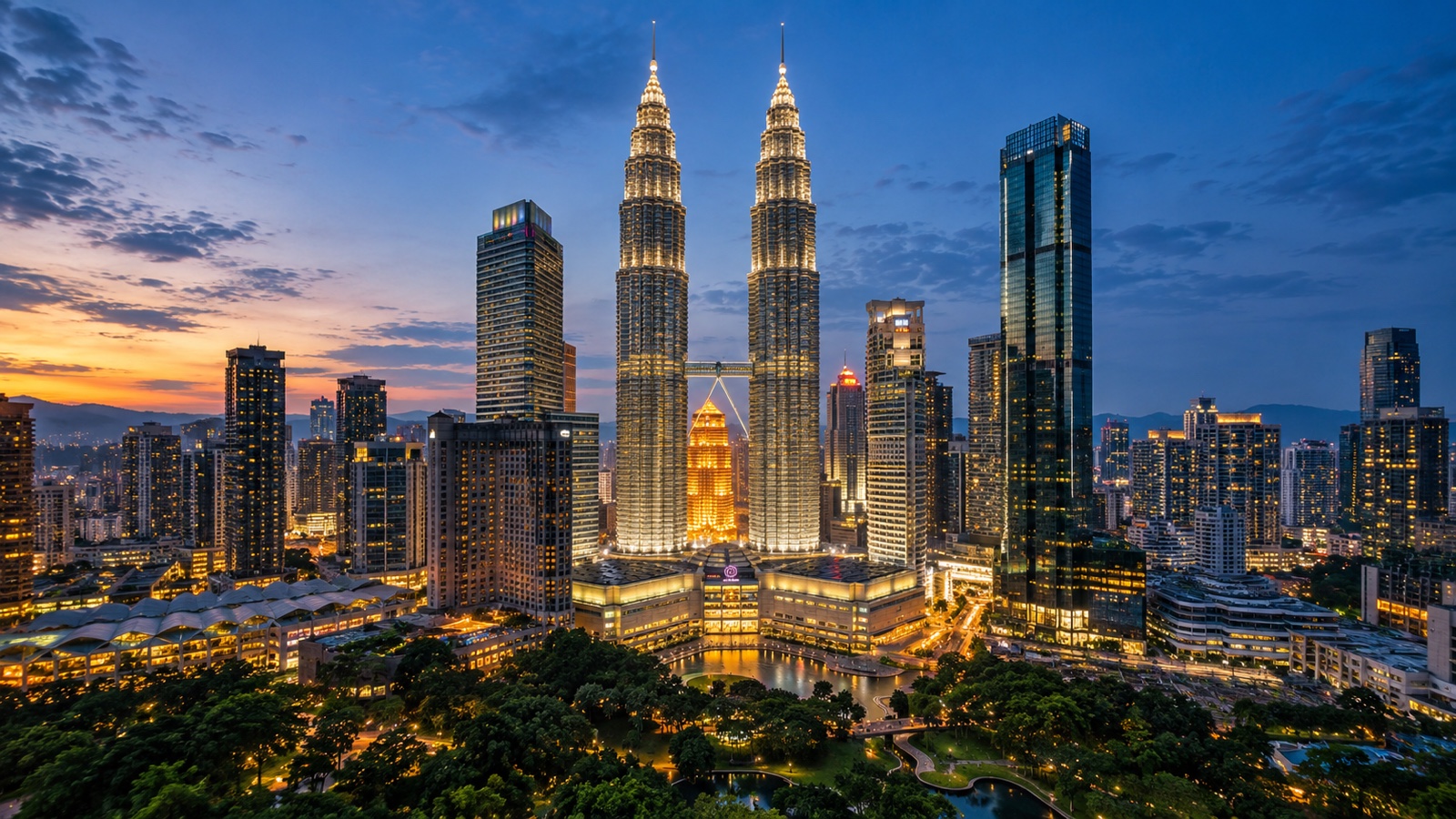
- The Petronas Twin Towers became an international symbol of Kuala Lumpur.
- They were the world’s tallest buildings from 1998 until 2004.
- A skybridge connects the two towers.
- Merdeka 118 is now taller than the Petronas Towers.
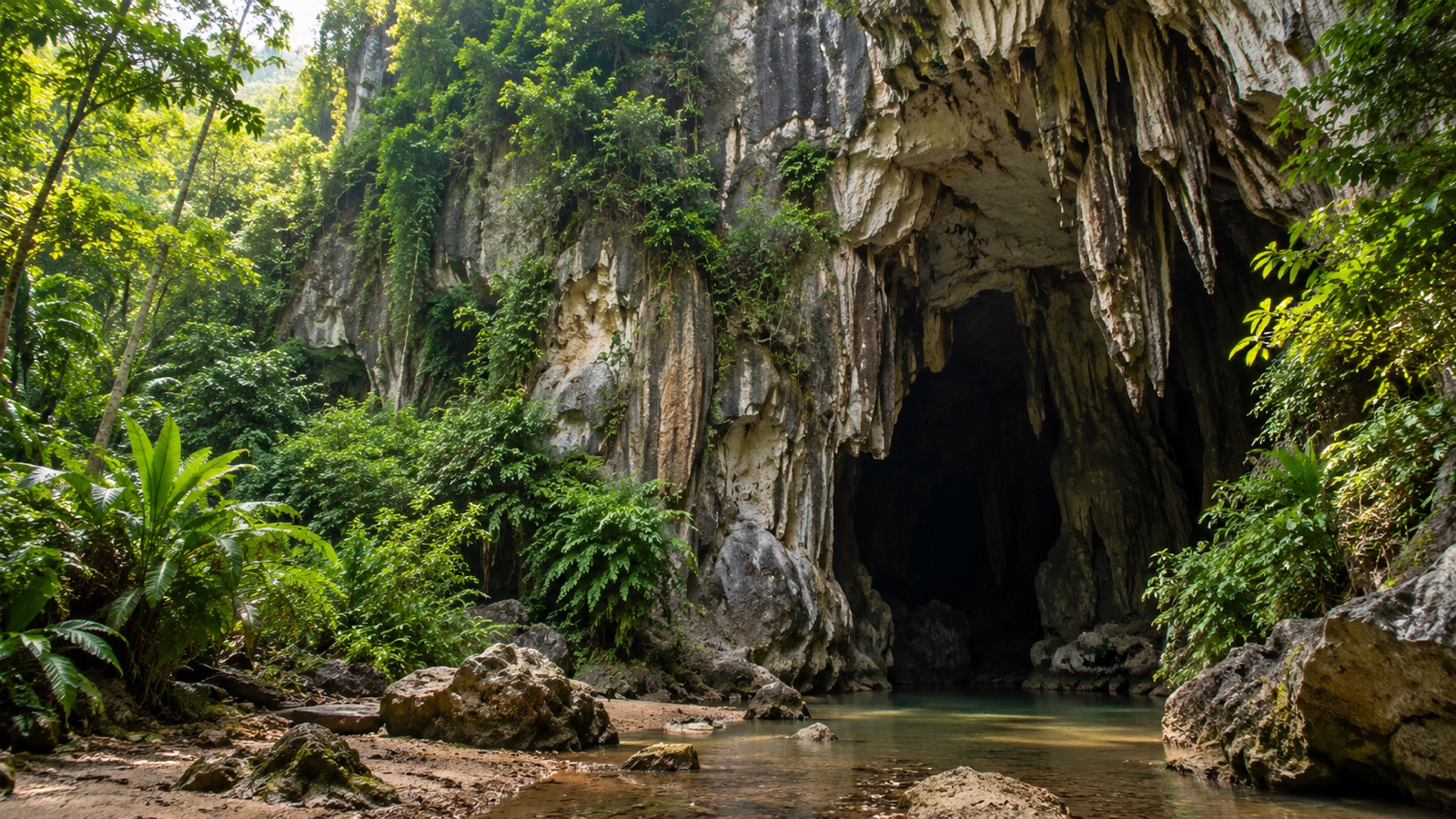
- Batu Caves sits just north of Kuala Lumpur.
- The limestone cave complex contains important Hindu temples.
- A huge golden statue of Lord Murugan stands near the main staircase.
- Thaipusam draws large crowds to Batu Caves.
- George Town, Penang, is a UNESCO World Heritage city.
- Its historic center reflects Malay, Chinese, Indian, British, and other influences.
- Melaka’s historic core is also UNESCO-listed with George Town under a shared heritage designation.
- Langkawi is an island group off northwestern Peninsular Malaysia.
- Tioman Island lies off the peninsula’s east coast.
- Sabah includes Mount Kinabalu.
- Mount Kinabalu rises 13,435 feet above sea level.
- It is one of Southeast Asia’s highest major peaks.
- Gunung Mulu National Park in Sarawak contains enormous caves and limestone formations.
- Sarawak Chamber is one of the world’s largest known cave chambers by area.
- Malaysia has a rotating constitutional monarchy.
- The federal king is selected from among hereditary rulers of nine Malay states.
- The ruler generally serves a five-year term.
- Formula 1 raced at Sepang International Circuit for many years, though the Malaysian Grand Prix is no longer on the current F1 calendar.
- Badminton is one of Malaysia’s most popular sports.
- Lee Chong Wei became one of the country’s most celebrated athletes.
- After 145 facts, Malaysia feels like two halves of a map held together by food, trade, tropical weather, and a remarkable amount of biodiversity.
Quick FAQ
Q: Is Malaysia one continuous piece of land?
A: No. Peninsular Malaysia and East Malaysia on Borneo are separated by the South China Sea.
Q: What is the capital of Malaysia?
A: Kuala Lumpur is the national capital, while Putrajaya serves as the federal administrative center.
Q: What is Malaysia famous for?
A: Tropical rainforests, orangutans, Kuala Lumpur, Penang food, beaches and islands, Mount Kinabalu, multicultural traditions, palm oil, electronics, and major shipping routes.
Q: What language is spoken in Malaysia?
A: Malay is the national language, while English, Chinese varieties, Tamil, Iban, Kadazan-Dusun, and many other languages are widely used.
Q: Does Malaysia have a king?
A: Yes. Malaysia has a rotating constitutional monarchy in which the federal king is selected from among rulers of nine Malay states.

Ellie is the owner and sole author of Fun Facts, combining her mechanical engineering background with years of research-driven writing to deliver facts you can trust. Every article is thoroughly fact-checked and routinely updated as new science and sources emerge to keep information accurate and current. Her mission is to make learning delightful while upholding high standards of reliability and transparency.