
Cricket can last three hours or five days, reward a batter for hitting the ball out of the stadium, and make one legal delivery look completely different depending on spin, seam, swing, pace, pitch, weather, and field placement. Its vocabulary is just as distinctive: googly, yorker, silly point, duck, maiden, wicket, and nightwatcher. These 145 cricket facts explore history, laws, formats, batting, bowling, fielding, records, equipment, tactics, and World Cups.
Cricket basics
- Cricket is a bat-and-ball sport played between two teams.
- A standard team has 11 players.
- The action centers on a rectangular pitch in the middle of a larger field.
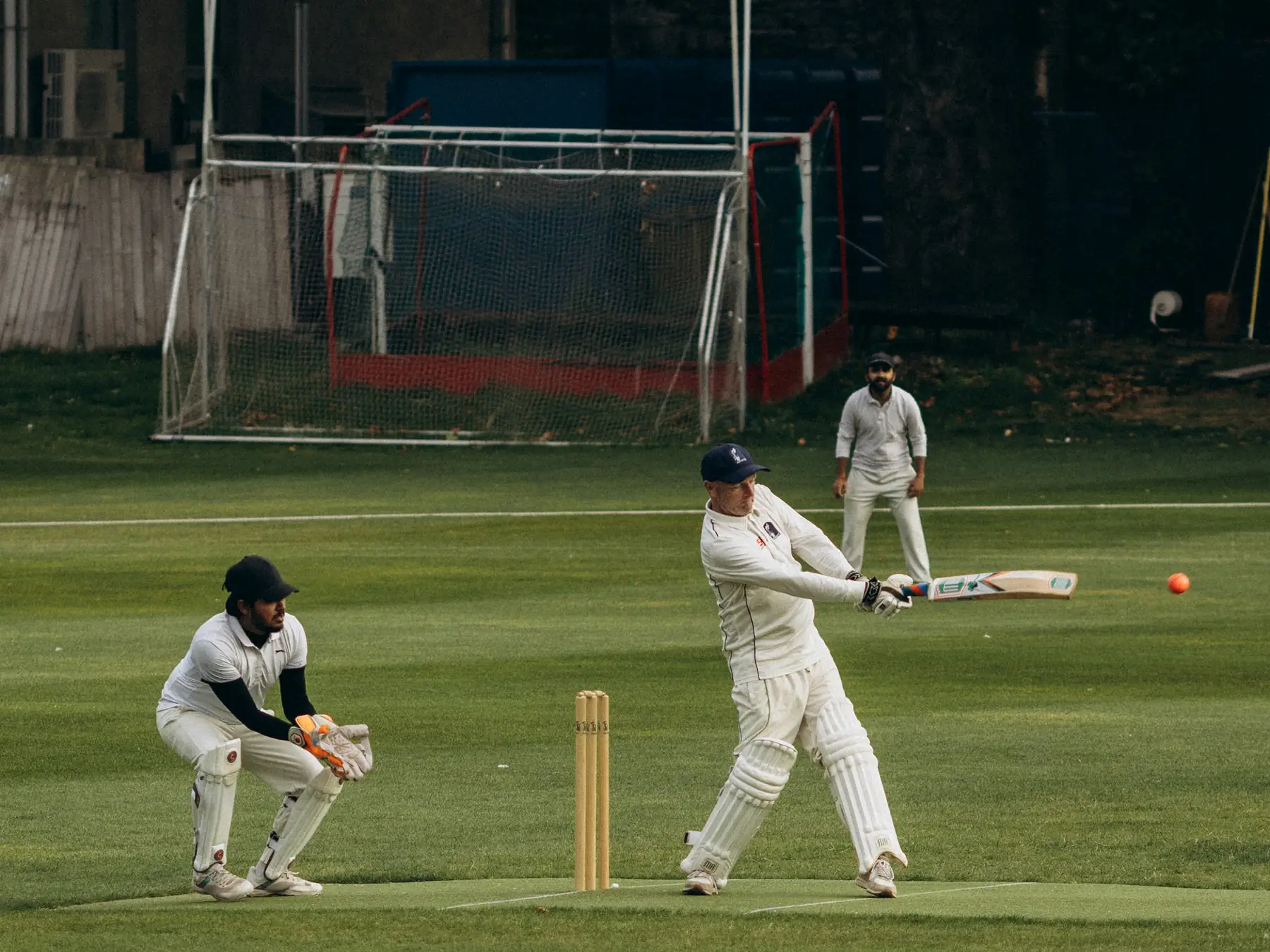
- A wicket stands at each end of the pitch.
- Each wicket consists of three stumps topped by two bails.
- One team bats while the other bowls and fields.
- Batters score runs.
- The fielding team tries to dismiss batters and limit runs.
- Two batters are on the field together during ordinary play.
- A bowler delivers the ball with a straightened-arm action governed by cricket law.
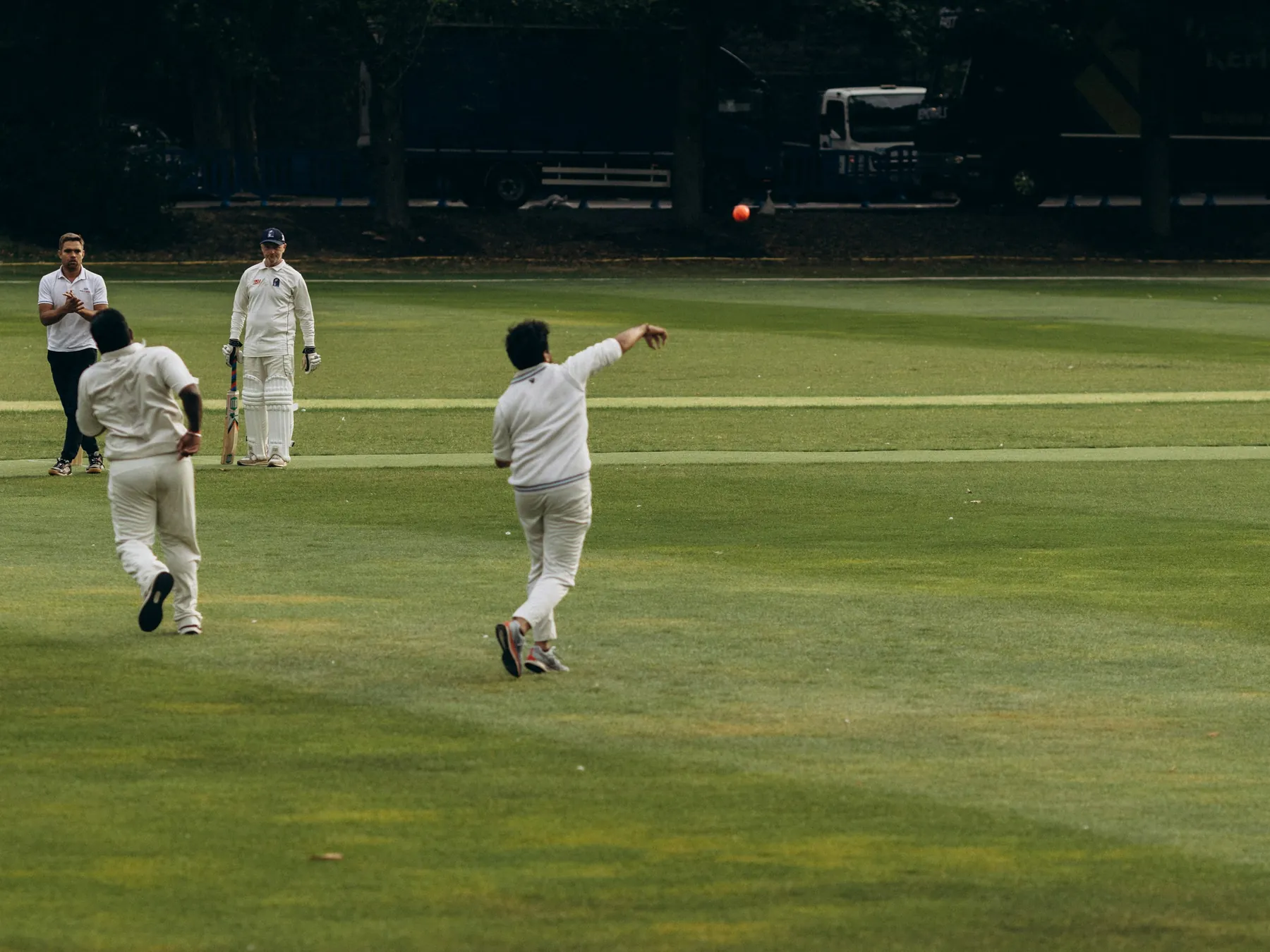
- Six legal balls normally make one over.
- A different bowler delivers the next over from the opposite end.
- Cricket has several major formats.
- International formats include Tests, One Day Internationals, and Twenty20 Internationals.
- The International Cricket Council publishes playing conditions for international cricket.
Cricket is centuries old
- Cricket developed in England.
- Its precise invention date is unknown.
- The ICC notes a scholarly consensus that early cricket may have been played by children in southeast England.
- The first known reference to cricket as an adult sport dates to 1611.
- A dictionary from the same year described cricket as a boys’ game.
- Village cricket expanded during the 17th century.
- Wealthy patrons began organizing stronger teams.
- Professional players appeared early in the game’s development.
- The Hambledon Club became an important center of cricket during the 18th century.
- Marylebone Cricket Club was founded in 1787.
- MCC became the traditional guardian of the Laws of Cricket.
- Lord’s Cricket Ground in London became known as the Home of Cricket.
- International cricket grew alongside the British Empire.
- Local communities transformed cricket into distinct national sporting cultures.
- Modern cricket is global even though its formal rules were codified in England.
The pitch and wickets
- The cricket pitch is 22 yards long.
- That equals one chain in an old British measurement system.
- The pitch is 10 feet wide under the Laws.
- Creases are painted near each wicket.
- The popping crease helps determine whether a batter is safely in their ground.
- The bowling crease passes through the stumps.
- Return creases limit aspects of the bowler’s delivery position.
- A wicket is 28 inches high.
- The three stumps together are nine inches wide.
- Bails sit in grooves on top of the stumps.
- A wicket can be broken even if a bail does not fly far.
- Modern professional stumps sometimes contain lights and electronics for television and officiating.
- The pitch surface changes during a match.
- Drying, cracks, grass, moisture, and wear all affect ball behavior.
- In Test cricket, the same central pitch generally has to survive up to five days of play.
How runs are scored
- Batters can score by running between the wickets.
- Both batters must make their ground safely for a completed run.
- They can run multiple times on one ball.
- A ball reaching the boundary after touching the ground normally scores four runs.
- A ball clearing the boundary on the full normally scores six.
- Batters do not need to run after a boundary.
- Extras are runs not credited to the striker’s batting score.
- Extras include wides.
- They also include no-balls.
- Byes can be scored when the ball passes the bat and body without contact.
- Leg byes can arise after the ball hits the batter’s body under the relevant conditions.
- Penalty runs can be awarded for certain infringements.
- An overthrow can add extra runs.
- A team’s total score combines batter runs and extras.
- Cricket scoring therefore records both individual achievement and team-level events.
Ways to get out
- Bowled occurs when a legal delivery breaks the striker’s wicket.
- Caught occurs when a fielder catches a hit ball before it touches the ground.
- Leg before wicket is usually abbreviated LBW.
- LBW can dismiss a batter when the body illegally prevents a ball that satisfies specific trajectory conditions from hitting the wicket.
- Run out occurs when the wicket is put down while a batter is out of their ground during a running situation.
- Stumped is a wicketkeeper dismissal involving a batter out of their ground under specific conditions.
- Hit wicket occurs when a batter breaks their own wicket in circumstances covered by the law.
- Obstructing the field can dismiss a batter for willfully interfering with the fielding side.
- Timed out applies when a new batter fails to be ready within the required time.
- Rare dismissal laws create famous trivia because many players never see them in an entire career.
- A batter can retire under different circumstances.
- Retired hurt is not the same as being dismissed.
- Most wickets at high levels come from catches, bowled dismissals, LBW, or run outs.
- The wicketkeeper participates in catches, stumpings, and run outs.
- One word, wicket, can mean the stumps, a dismissal, or sometimes the pitch in casual speech.
Fast bowling, swing, and seam
- Fast bowlers generate speed through a run-up, body rotation, and arm action.
- Elite pace bowlers can exceed 150 kilometers per hour.
- A yorker lands very close to a batter’s feet or the popping crease.
- A bouncer rises sharply toward the batter after pitching short.
- A slower ball disguises reduced pace to disrupt timing.
- Swing bowling makes the ball curve through the air.
- Bowlers and fielders preserve one side of the ball differently from the other under legal conditions.
- Airflow around the seam and surfaces can create lateral movement.
- Conventional swing usually occurs with a relatively newer ball.
- Reverse swing can occur with an older ball at high speed under suitable conditions.
- Seam bowling uses the raised seam to create movement after the ball hits the pitch.
- A ball can swing through the air and seam off the pitch on the same delivery.
- Cloud cover is often said to increase swing, but atmospheric relationships are more complicated than a simple cloudy-equals-swing rule.
- Pitch moisture and grass strongly influence seam movement.
- Fast bowling combines physics, athleticism, deception, and careful management of the ball’s condition.
Spin bowling
- Spin bowlers prioritize rotation and deception over maximum speed.
- Off spin turns in one characteristic direction for a right-handed bowler.
- Leg spin turns the opposite way under conventional technique.
- A leg-spinner’s googly turns the opposite direction from the expected leg break.
- The googly is delivered with a disguised wrist action.
- An off-spinner can bowl variations such as an arm ball.
- The doosra is a delivery intended to turn opposite to a conventional off break.
- Spin bowlers vary flight.
- They also vary speed.
- They change release angle and trajectory.
- Dip can make the ball fall sooner than the batter expects.
- Drift can move a spinning ball sideways through the air before it pitches.
- Worn Test pitches often give spin bowlers more grip later in a match.
- Footmarks created by fast bowlers can become useful rough areas for spin.
- A slow ball can be harder to hit than a fast one when the batter misreads its rotation and flight.

Test cricket can last five days
- Test cricket is the longest major international format.
- Most Tests are scheduled for up to five days.
- Each team normally has two innings.
- An innings ends when ten wickets fall, a captain declares, or another ending condition is reached.
- A team does not need to lose all 20 possible wickets to win.
- A captain can declare an innings closed strategically.
- Tests can end in a draw if time expires without a winner.
- A draw is different from a tie.
- A tied Test means both teams finish level after all innings are completed.
- Tied Tests are extremely rare.
- The follow-on can require a team batting far behind to bat again immediately.
- Captains decide whether to enforce the follow-on when eligible.
- The red cricket ball is traditional in daytime Tests.
- Day-night Tests commonly use a pink ball for visibility under lights.
- Test cricket rewards patience and long-term strategy in a way shorter formats cannot completely reproduce.
ODIs and T20 changed the sport
- One Day Internationals normally give each side a maximum of 50 overs.
- ODIs developed during the 20th century.
- The first men’s Cricket World Cup was held in 1975.
- Early World Cup matches used 60 overs per side.
- The 50-over standard became established later.
- Twenty20 cricket gives each side a maximum of 20 overs.
- The format was introduced in English county cricket in 2003.
- The first women’s Twenty20 International was played in 2004.
- The first men’s T20 International followed in 2005.
- The inaugural men’s T20 World Cup was held in 2007.
- India won that tournament.
- T20 encouraged aggressive batting and specialized bowling variations.
- Franchise leagues created new global player markets.
- The Indian Premier League became one of world sport’s most valuable competitions.
- Cricket now supports different formats without requiring fans or players to choose only one.
Ten surprising cricket facts
- A cricket pitch is exactly 22 yards long, equivalent to one old surveying chain.
- One word, wicket, can describe both the stumps and a batter’s dismissal.
- A Test match can last five days and still legally end with no winner.
- A draw and a tie are completely different results in cricket.
- The googly is designed to spin the opposite way from a leg-spinner’s normal delivery.
- Twenty20 cricket was first played in English county competition in 2003.
- The first international T20 match was a women’s game, not a men’s game.
- A six is scored when the ball clears the boundary without bouncing inside the field.
- The ICC maintains different playing conditions for Tests, ODIs, and T20Is.
- For more sports trivia, explore our baseball facts, rugby facts, and Olympics facts.

Quick cricket FAQ
How many players are on a cricket team?
Eleven players per side in standard cricket.
How long is a cricket pitch?
Twenty-two yards, or about 20.12 meters, between the wickets.
What is an over?
A sequence of six legal deliveries bowled by one bowler from one end of the pitch.
What is the difference between Test and T20 cricket?
Tests can last up to five days with two innings per team, while T20 gives each side a maximum of 20 overs and usually finishes in about three hours.
What is LBW?
Leg before wicket, a dismissal law that can apply when the batter’s body illegally prevents a delivery from striking the wicket under specified conditions.

Ellie is the owner and sole author of Fun Facts, combining her mechanical engineering background with years of research-driven writing to deliver facts you can trust. Every article is thoroughly fact-checked and routinely updated as new science and sources emerge to keep information accurate and current. Her mission is to make learning delightful while upholding high standards of reliability and transparency.