
Star Wars began as a risky 1977 space fantasy with models, puppets, matte paintings, motion-control cameras, strange alien sounds, and a studio that worried audiences might not understand it. It became a sprawling universe of films, television, games, books, toys, theme parks, and some of cinema’s most influential visual effects. These 145 Star Wars facts explore George Lucas, the original trilogy, lightsabers, droids, Darth Vader, the Force, Industrial Light & Magic, sound design, prequels, sequels, and behind-the-scenes movie magic.
Star Wars basics
- Star Wars was released in the United States on May 25, 1977.
- The film was written and directed by George Lucas.
- It was later retitled Star Wars: Episode IV – A New Hope.
- The original theatrical release did not initially emphasize the Episode IV subtitle the way later releases did.
- Lucasfilm produced the movie.
- 20th Century Fox distributed it.
- The story takes place “a long time ago in a galaxy far, far away.”
- Luke Skywalker is the original film’s young hero.
- Princess Leia Organa is a Rebel leader.
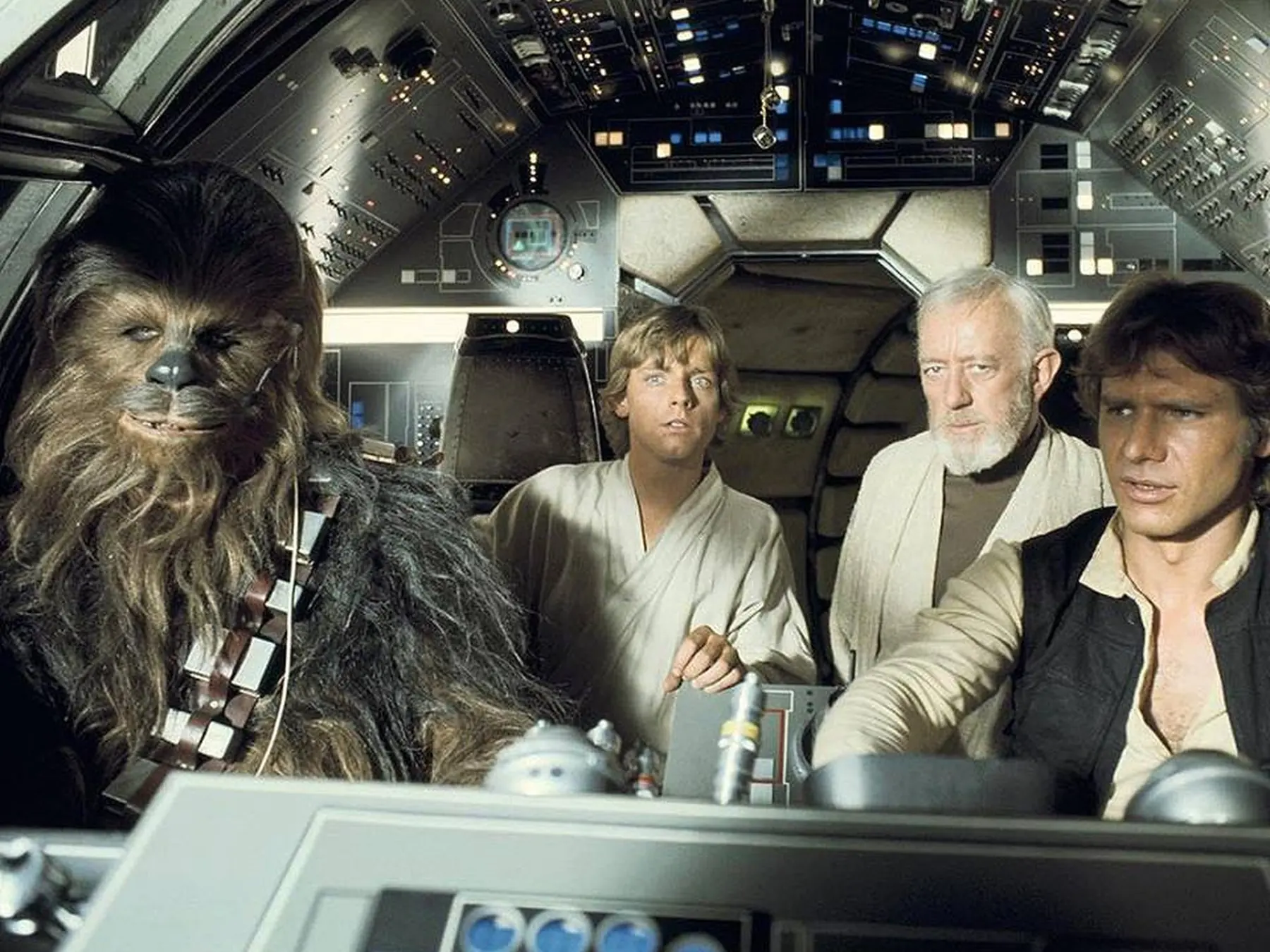
- Han Solo is a smuggler who pilots the Millennium Falcon.
- Obi-Wan Kenobi introduces Luke to the Force.
- Darth Vader became one of cinema’s most famous villains.
- R2-D2 and C-3PO appear in the opening film.
- John Williams composed the famous orchestral score.
- Star Wars blended science-fiction imagery with myth, fantasy, war movies, serial adventures, westerns, and samurai-film influences.
George Lucas builds a new galaxy
- George Lucas had previously directed THX 1138 and American Graffiti.
- American Graffiti became a major success in 1973.
- Lucas wanted to make an adventure in the spirit of old movie serials.
- He had explored adapting Flash Gordon before developing his own space story.
- Early Star Wars drafts were radically different from the finished film.
- Character names and roles changed repeatedly.
- The name Luke Starkiller appeared in development before Luke Skywalker.
- The Force also evolved across drafts.
- Lucas drew from Joseph Campbell’s writing about mythology.
- Akira Kurosawa’s films influenced Star Wars storytelling and visual ideas.
- The Hidden Fortress is frequently discussed as one important influence.
- World War II aerial-combat films influenced space-battle editing.
- Western films influenced frontier locations and outlaw characters.
- Lucas combined these sources rather than copying one simple template.
- The result felt familiar enough to understand but visually unlike most 1970s studio science fiction.
Industrial Light & Magic had to invent new tools
- Lucas created Industrial Light & Magic to produce Star Wars visual effects.
- The company is commonly abbreviated ILM.
- Motion-control photography became crucial to the space battles.
- A motion-control camera can repeat precisely programmed movements.
- This lets separately photographed model elements match during compositing.
- Miniature spacecraft were filmed against controlled backgrounds.
- The Death Star trench battle combined miniatures, models, optical compositing, explosions, and cockpit footage.
- Artists built highly detailed physical spaceship models.
- Modelmakers used parts from commercial plastic kits to add mechanical detail.
- That detailing technique became known as kitbashing.
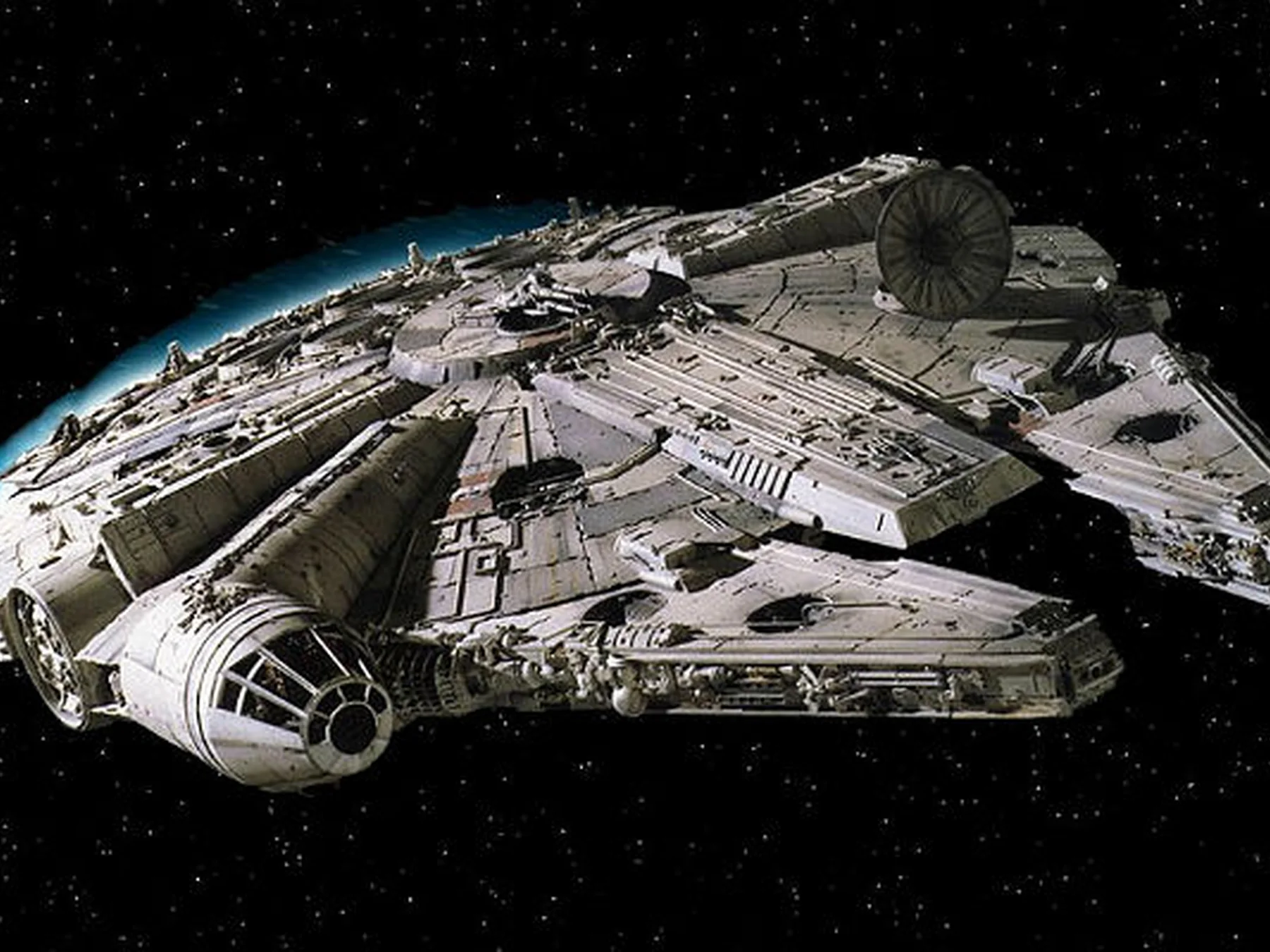
- The Millennium Falcon’s weathered surfaces helped make the fictional universe feel used rather than pristine.
- Matte paintings extended physical sets into enormous environments.
- Optical printers combined multiple film elements before digital compositing existed.
- ILM later became one of the most influential visual-effects companies in cinema.
- Star Wars forced effects artists to solve problems existing studio systems were not built to handle.
Star Wars sound is full of unexpected sources
- Sound designer Ben Burtt created many signature Star Wars sounds.
- The lightsaber hum combines several real-world electrical and mechanical sounds.
- Burtt used the hum of old projector equipment as part of the effect.
- Moving a microphone near a television speaker helped create the changing lightsaber swoosh.
- R2-D2’s voice combines electronic tones with Burtt’s own vocalizations.
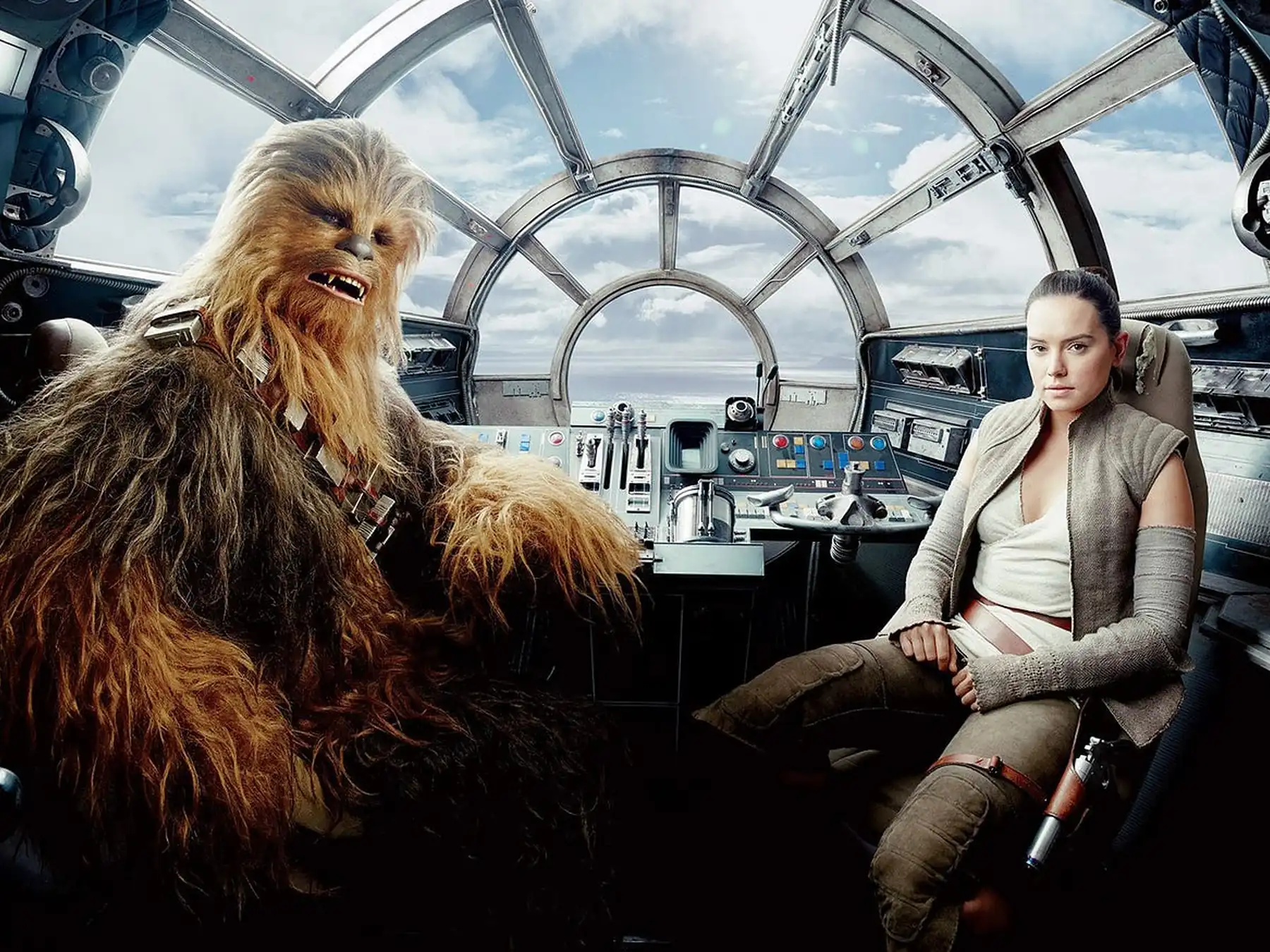
- Chewbacca’s voice blends recordings from multiple animals.
- Bear sounds contributed strongly to Chewbacca’s roar.
- Other animal recordings added emotional variety.
- TIE fighter screams came from modified real-world sound recordings.
- Darth Vader’s breathing became central to his presence before he even speaks.
- James Earl Jones provided Vader’s deep speaking voice.
- David Prowse physically portrayed Vader in much of the original trilogy.
- Different performers therefore combined to create one character.
- Star Wars helped establish sound design as a celebrated creative craft.
- Many sounds became recognizable even when heard without any accompanying image.
Lightsabers are movie magic
- Lightsabers are fictional energy-blade weapons used by Jedi and Sith.
- The original props used physical handles and practical blade rods during filming.
- Early effects teams added glowing blade effects optically.
- Reflective material helped some original rods interact with set lighting.
- Later movies used different practical blades and digital effects.
- Actors still need physical choreography to make fictional blades feel heavy and dangerous.
- Lightsaber colors became increasingly important to character identity.
- Luke’s first lightsaber appears blue.
- Darth Vader uses a red blade.
- Luke later constructs a green lightsaber.
- Mace Windu famously uses a purple lightsaber.
- Samuel L. Jackson requested a distinctive purple blade.
- Lightsaber combat styles in later films drew from fencing, martial arts, and stunt choreography.
- The weapon’s impossible design works because sound, light, performance, editing, and story all reinforce the illusion.
- The lightsaber became one of the most recognizable fictional objects ever created.
Darth Vader is a team effort
- Darth Vader was portrayed by multiple performers.
- David Prowse wore the Vader suit through much of the original trilogy.
- James Earl Jones provided the speaking voice.
- Bob Anderson performed some lightsaber-fighting work in later original-trilogy scenes.
- Sebastian Shaw portrayed the unmasked Anakin Skywalker in the original version of Return of the Jedi.
- Hayden Christensen later portrayed Anakin in the prequel trilogy.
- Christensen has also returned to the role in later television projects.
- Vader’s helmet was designed to evoke both futuristic technology and threatening military imagery.
- His breathing tells audiences when he is nearby.
- The famous reveal about Luke’s parentage occurs in The Empire Strikes Back.
- The line is often misquoted as “Luke, I am your father.”
- Vader actually says, “No, I am your father.”
- Secrecy around the reveal was tightly managed during production.
- Alternative dialogue was reportedly used during filming to conceal the twist.
- Vader’s combination of voice, costume, physical performance, and story made him larger than any one actor.
The original trilogy grows darker
- The Empire Strikes Back premiered in 1980.
- Irvin Kershner directed the film.
- Lucas financed much of the production independently.
- The film introduced Yoda.
- Yoda was originally performed as a puppet by Frank Oz.
- The puppet required multiple performers and complex coordination.
- Hoth sequences were filmed partly in Norway.
- AT-AT walkers were brought to life using stop-motion animation.
- Return of the Jedi followed in 1983.
- Richard Marquand directed it.
- Jabba the Hutt was created as a massive practical puppet.
- Several operators worked inside and around the Jabba puppet.
- Ewoks inhabit the forest moon of Endor.
- California redwood forests supplied important Endor locations.
- The trilogy ended with the defeat of the second Death Star and Vader’s redemption.
Prequels push digital filmmaking
- George Lucas returned to direct the prequel trilogy.
- The Phantom Menace premiered in 1999.
- Attack of the Clones followed in 2002.
- Revenge of the Sith concluded the trilogy in 2005.
- The films trace Anakin Skywalker’s transformation into Darth Vader.
- The prequels used extensive computer-generated environments and characters.
- Jar Jar Binks became an early major motion-capture-influenced digital character.
- Ahmed Best performed Jar Jar physically and vocally.
- Attack of the Clones was a landmark in large-scale digital cinematography.
- Lucas strongly promoted digital cameras and digital projection.
- The prequels expanded Jedi, Republic, Senate, and Clone Wars lore.
- They introduced new worlds including Naboo, Kamino, and Geonosis.
- John Williams returned to compose their music.
- Prequel-era visual effects helped accelerate Hollywood’s shift toward digital production.
- Technology that was controversial in the early 2000s later became industry standard.
Disney buys Lucasfilm
- The Walt Disney Company acquired Lucasfilm in 2012.
- The deal was valued at roughly $4 billion.
- George Lucas sold his company and stepped back from controlling future films.
- Disney announced a new sequel trilogy.
- The Force Awakens premiered in 2015.
- The Last Jedi followed in 2017.
- The Rise of Skywalker arrived in 2019.
- Disney-era films also expanded standalone stories.
- Rogue One dramatized the theft of the original Death Star plans.
- Streaming television became a major new Star Wars format.
- The Mandalorian debuted with Disney+ in 2019.
- The production used a large LED-volume system for many virtual environments.
- Industrial Light & Magic developed the StageCraft workflow around real-time digital sets.
- The approach allowed actors and cameras to see many environments during filming rather than imagining green-screen backgrounds.
- Star Wars once again helped popularize a major visual-effects production method.
Ten surprising Star Wars facts
- The first Star Wars film was not originally released with “Episode IV” displayed the way fans now know it.
- Luke Skywalker was once called Luke Starkiller during development.
- The Millennium Falcon’s battered appearance helped create the idea of a “used future.”
- Chewbacca’s voice is a mixture of several animal recordings.
- Darth Vader’s famous father line is routinely misquoted.
- The original Yoda was a puppet, not a digital character.
- AT-AT walkers were animated partly with stop-motion models.
- Samuel L. Jackson personally pushed for Mace Windu’s purple lightsaber.
- Star Wars helped drive both analog visual-effects innovation in the 1970s and virtual-production innovation decades later.
- For more franchise trivia, explore our Disney facts and entertainment and tech facts.
Quick Star Wars FAQ
When did the first Star Wars movie come out?
May 25, 1977, in the United States.
Who created Star Wars?
George Lucas, working with enormous teams of actors, designers, editors, modelmakers, sound artists, composers, and visual-effects specialists.
What was the first Star Wars movie called?
It was released simply as Star Wars. The Episode IV – A New Hope subtitle became part of later releases.
Who voiced Darth Vader?
James Earl Jones provided Vader’s iconic speaking voice, while David Prowse physically portrayed the character for much of the original trilogy.
Who owns Star Wars now?
Lucasfilm owns and produces Star Wars as part of The Walt Disney Company, which acquired Lucasfilm in 2012.

Ellie is the owner and sole author of Fun Facts, combining her mechanical engineering background with years of research-driven writing to deliver facts you can trust. Every article is thoroughly fact-checked and routinely updated as new science and sources emerge to keep information accurate and current. Her mission is to make learning delightful while upholding high standards of reliability and transparency.