
Zebras are not simply horses wearing black-and-white pajamas. Their stripes differ from one animal to another, their social systems vary by species, and scientists have tested competing ideas about why those stripes evolved. Zebras can kick powerfully, migrate across huge African landscapes, sleep standing up, and communicate with ears, calls, posture, and scent. These 145 facts explore the three zebra species, stripes, foals, herds, migration, digestion, predators, conservation, and what research says about their famous pattern.
Zebra basics
- Zebras are African mammals in the horse family Equidae.
- They belong to the same family as horses and donkeys.
- Three living zebra species are generally recognized.
- They are plains zebra, mountain zebra, and Grévy’s zebra.
- Plains zebras are the most widespread.
- Grévy’s zebras are the largest living wild equids.
- Mountain zebras are adapted to rugged dry landscapes.
- Every zebra has black-and-white striping.
- Stripe patterns differ among species.
- Individual patterns also vary.
- Zebras are herbivores.
- They mainly eat grasses but can browse other vegetation.
- Zebras are native to sub-Saharan Africa.
- They occupy grasslands, savannas, shrublands, and some mountainous areas.
- The Smithsonian National Zoo describes zebras as highly social equids shaped by open African habitats.
Three zebra species
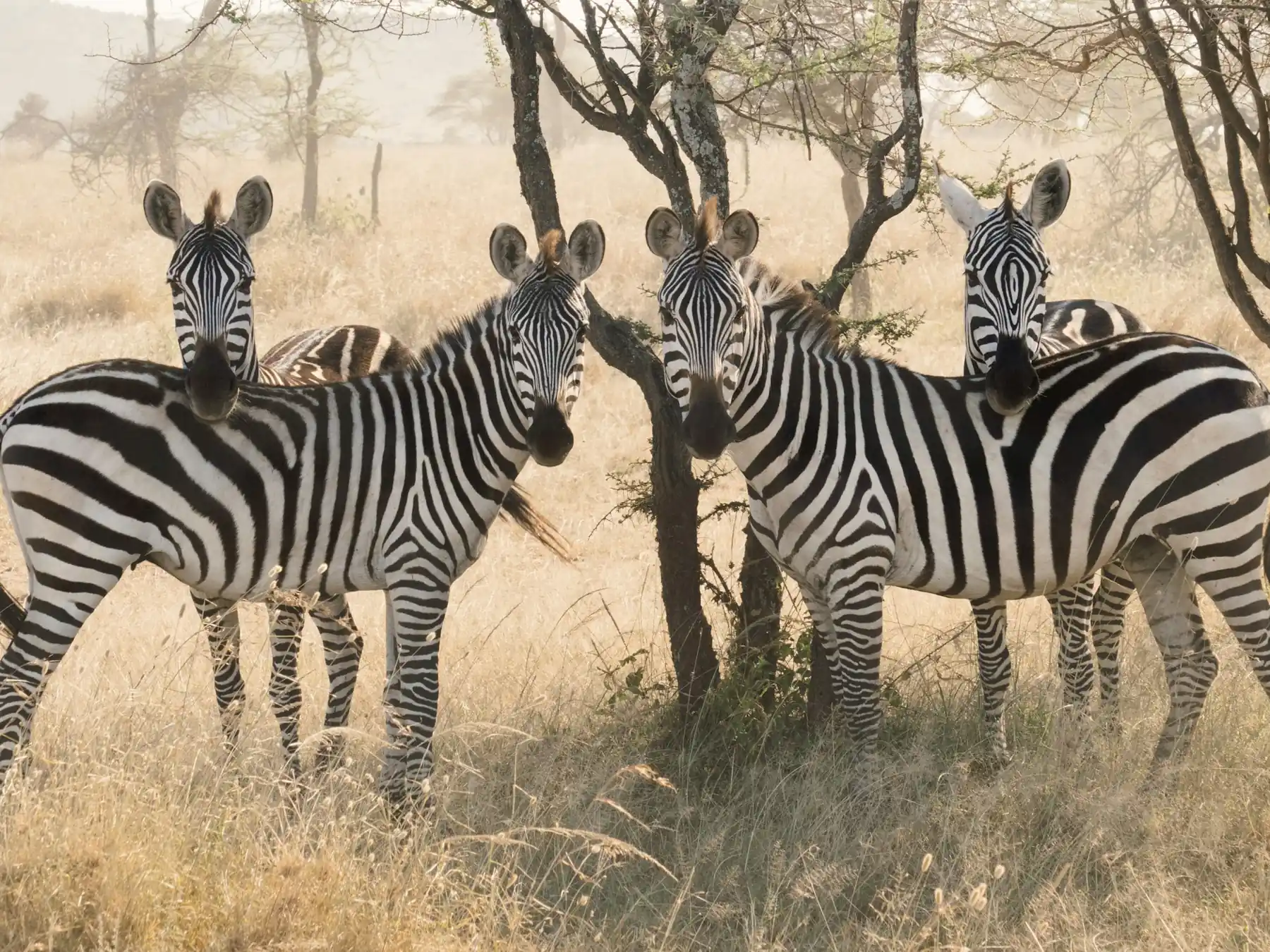
- Plains zebra scientific name is Equus quagga.
- Grévy’s zebra is Equus grevyi.
- Mountain zebra is Equus zebra.
- Plains zebras have relatively broad stripes.
- Some plains-zebra populations show faint shadow stripes between darker bands.
- Grévy’s zebras have narrow closely spaced stripes.
- Their white belly is less heavily striped.
- Grévy’s zebras have very large rounded ears.
- Mountain zebras often show a grid-like rump pattern.
- They also have a noticeable fold of skin under the throat called a dewlap.
- Cape mountain zebra and Hartmann’s mountain zebra are recognized subspecies.
- Species differ in social organization as well as appearance.
- Plains and mountain zebras commonly form stable family groups.
- Grévy’s zebras use a looser territorial social system.
- Calling all zebras one identical herd animal hides major biological differences.
Are zebras black with white stripes?
- The familiar “black or white underneath?” question is more complicated than it sounds.
- Zebra skin is generally dark beneath the coat.
- Hair grows with black or white pigmentation depending on follicle development.
- White stripes are areas where pigment production is suppressed in the hair.
- Embryonic stripe patterns form before birth.
- Different genes control pigment-cell development and hair coloration.
- A zebra’s entire visible coat pattern is therefore genetically organized.
- Each individual’s exact stripe arrangement is unique enough for researchers to use in identification.
- Computer vision can help match photographs by stripe pattern.
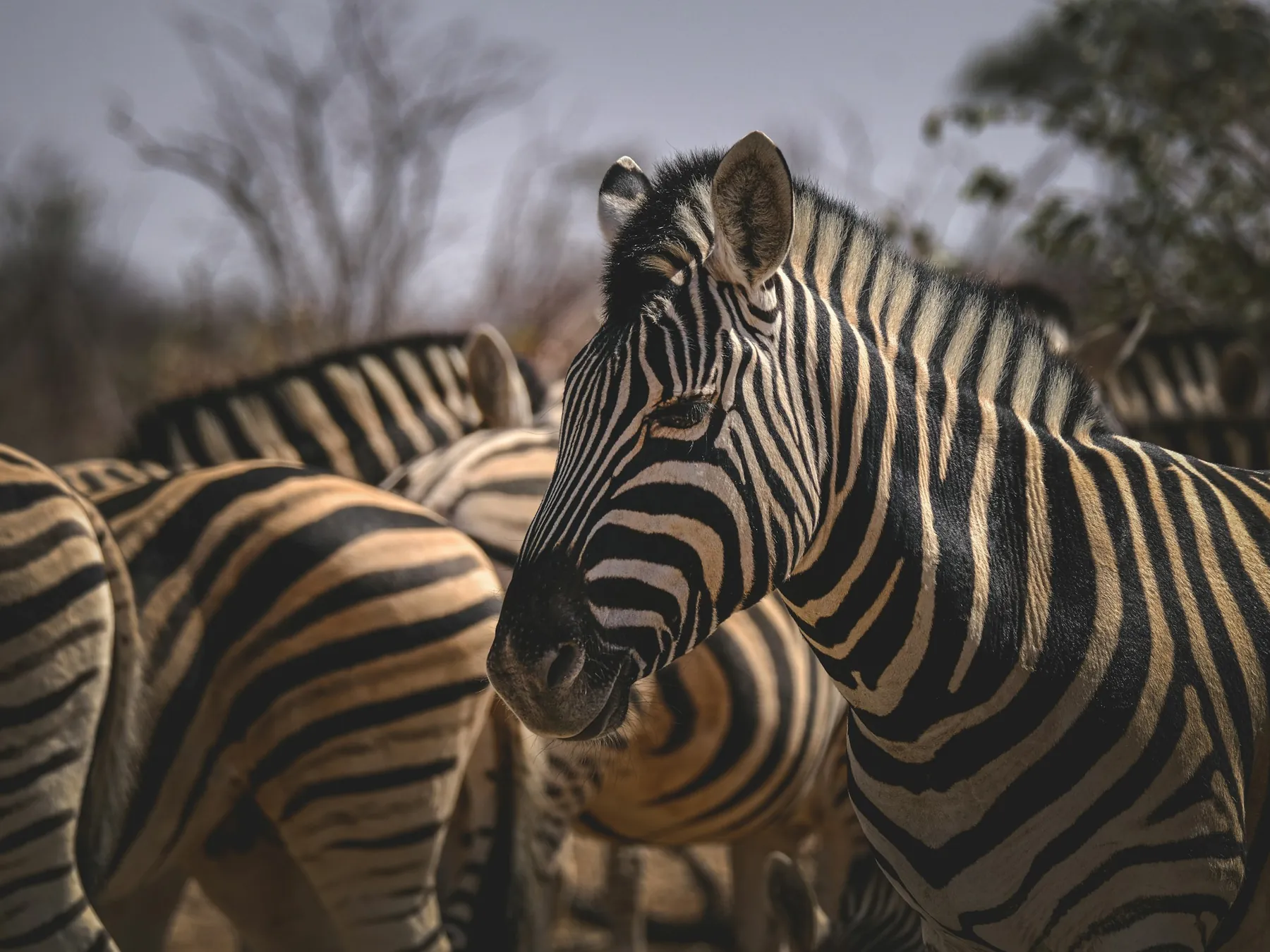
- Stripes continue across much of the mane.
- Zebra manes stand upright rather than falling long to one side like many domestic horses.
- The tail has longer hair toward its end.
- Newborn foals may look brownish and cream rather than stark black and white.
- Coat color typically darkens as a foal matures.
- “Black with white stripes” is a useful shorthand but not a complete developmental explanation.
Why do zebras have stripes?
- Scientists have proposed several hypotheses for zebra stripes.
- Ideas include camouflage, social recognition, cooling, predator confusion, and biting-fly protection.
- No single explanation was accepted simply because it sounded plausible.
- Researchers compared striping with habitat, climate, predators, and insect distributions.
- Evidence strongly supports a role in reducing attacks from biting flies.
- Horseflies and tsetse flies can transmit disease.
- Experiments show flies have difficulty landing successfully on striped surfaces.
- Striped coats appear to disrupt the final visual guidance used before landing.
- Studies with striped coverings on domestic horses also reduced fly landings.
- The mechanism is still studied.
- Stripes may have more than one evolutionary effect.
- Temperature and social benefits have not disappeared from research discussion entirely.
- Predator camouflage seems less obvious because zebras often stand in open landscapes.
- A moving group of stripes can create complex visual patterns.
- Modern zebra science is a good reminder that famous animal questions can require decades of experiments rather than one clever guess.
Zebra families
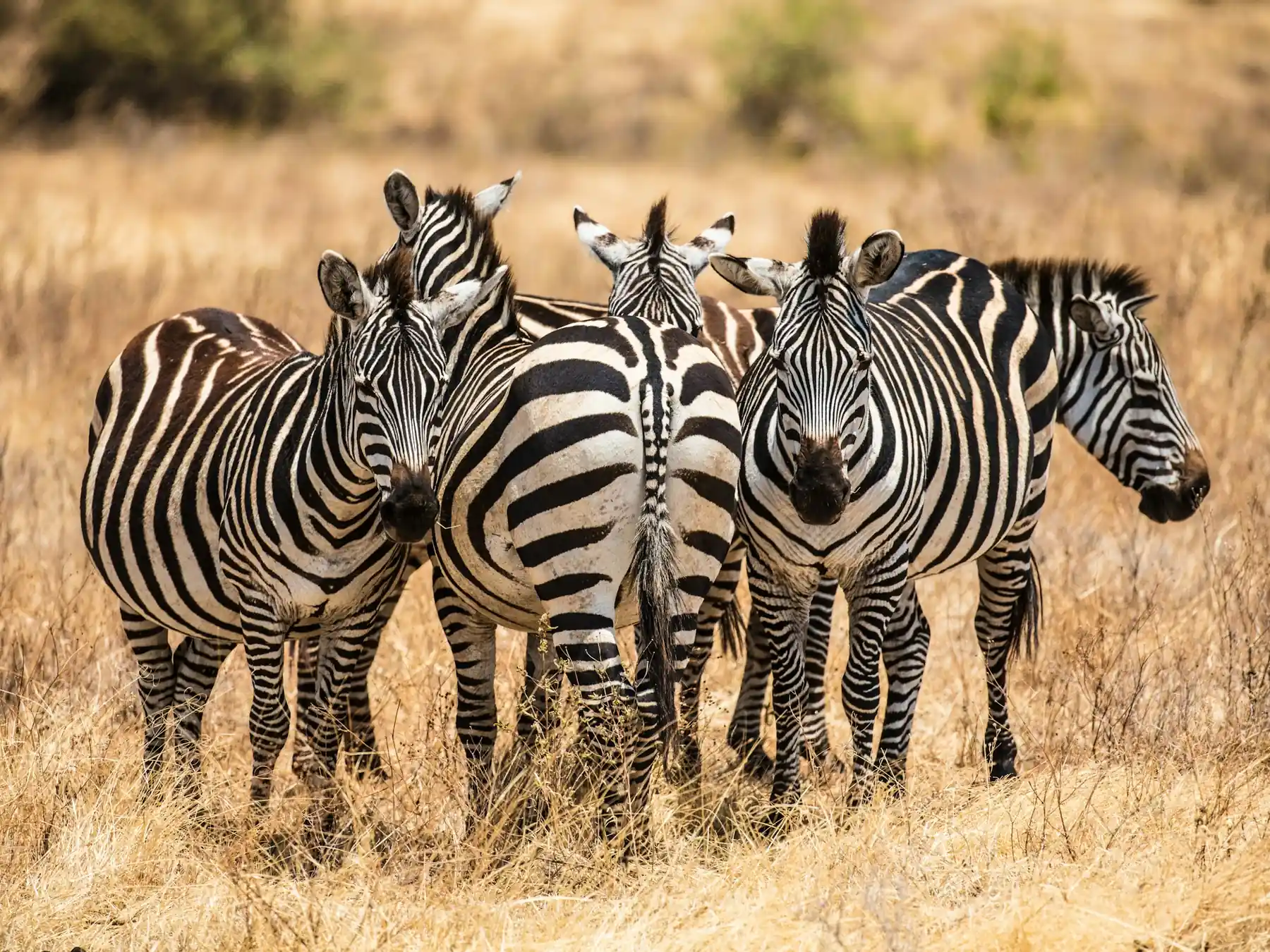
- Plains zebras commonly live in family units called harems.
- A harem often contains one adult stallion and several mares with young.
- These relationships can remain stable for years.
- Several family groups can join into large herds.
- Unattached males may form bachelor groups.
- Mountain zebras show broadly similar stable family systems.
- Grévy’s zebra society is less harem-based.
- Adult Grévy’s males can defend territories.
- Females move through territories according to water, forage, and reproductive condition.
- Zebras groom one another socially.
- Mutual grooming can strengthen bonds.
- Animals use lips and teeth to scratch hard-to-reach areas on companions.
- Ears reveal attention, mood, and aggression.
- Flattened ears can signal threat.
- Social life varies enough that researchers should never assume one zebra species represents them all.
Foals can move quickly after birth
- A baby zebra is called a foal.
- Females usually give birth to one foal at a time.
- Twin births are rare.
- Zebra pregnancy lasts roughly a year, varying by species.
- Foals can stand relatively soon after birth.
- They begin walking and running quickly.
- Rapid mobility is important in landscapes with large predators.
- Foals recognize and follow their mothers.
- Mothers may temporarily keep other zebras at a distance after birth.
- This gives the foal time to learn the mother’s appearance, smell, and voice.
- Foals nurse on milk.
- They begin nibbling vegetation while still nursing.
- Young zebras remain vulnerable to lions, hyenas, wild dogs, and other predators.
- Family adults can defend young with kicks and coordinated movement.
- Surviving the first months requires both speed and social protection.
Built for grass
- Zebras are hindgut fermenters.
- Microbes in the cecum and large intestine help digest plant fiber.
- This differs from the foregut fermentation of cattle and sheep.
- Zebras can process large quantities of relatively coarse grass.
- They may feed for many hours each day.
- Strong incisors crop vegetation.
- Large cheek teeth grind fibrous plant material.
- Teeth experience heavy wear throughout life.
- Grass contains silica and may carry abrasive dust.
- Zebra teeth continue erupting for much of life to compensate for wear.
- Plains zebras can graze taller rougher grass before some other herbivores arrive.
- Their feeding can open access to shorter higher-quality growth for other species.
- Mixed herds with wildebeest can therefore exploit grasslands differently.
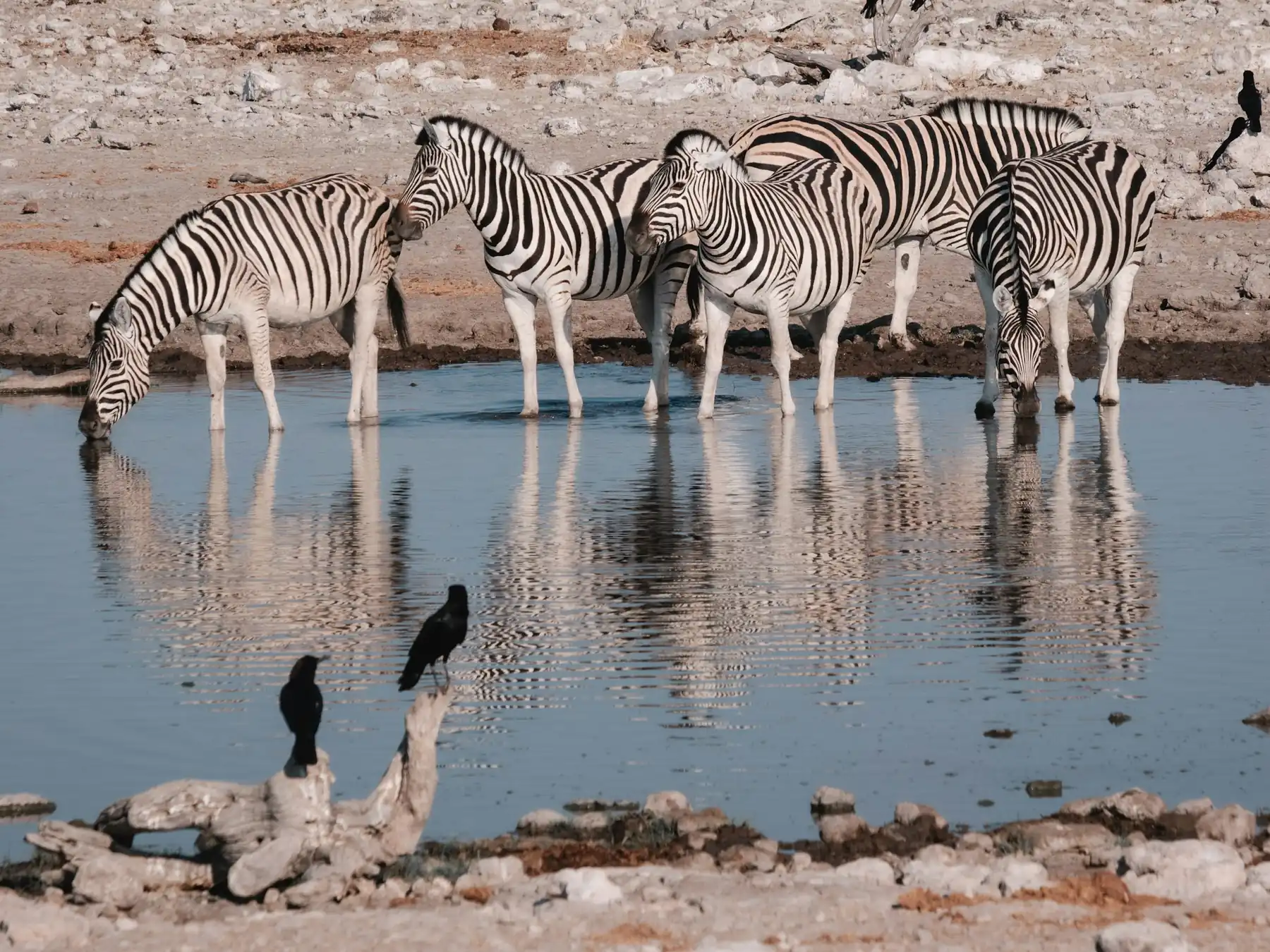
- Water availability strongly affects movements.
- Grévy’s zebras can tolerate longer periods between drinking than some plains-zebra populations.
Migration and predators
- Some plains zebras participate in enormous seasonal migrations.
- They often travel with wildebeest and other grazers.
- The Serengeti-Mara ecosystem supports one of Earth’s most famous large-mammal migrations.
- Zebras move in response to rainfall, grass growth, and water.
- Other zebra populations migrate across Botswana and Namibia.
- Some routes cover hundreds of kilometers.
- Fences can block traditional migration pathways.
- Predators include lions, spotted hyenas, crocodiles, African wild dogs, and leopards.
- Zebras rely on vigilance and speed.
- Powerful kicks can seriously injure attackers.
- Herds provide many eyes and ears for detecting danger.
- Foals and weakened adults are especially vulnerable.
- River crossings can expose migrating zebras to crocodiles.
- Predation is a natural ecological force rather than evidence that a herd has failed.
- Migration keeps zebras connected to shifting seasonal resources across huge landscapes.
Conservation
- Zebra conservation status differs by species.
- Plains zebras remain the most numerous.
- Grévy’s zebras have experienced severe historical declines.
- Habitat loss and competition for water affect them.
- Livestock can compete with wildlife in dry regions.
- Hunting also contributed to past declines.
- Mountain zebras were once heavily persecuted.
- Conservation areas helped Cape mountain zebra numbers recover from extremely low levels.
- Drought remains a major threat in arid habitats.
- Climate change can intensify water stress.
- Wildlife corridors protect seasonal movement routes.
- Community-based conservation can align pastoral livelihoods with wildlife protection.
- Monitoring individual stripe patterns helps estimate populations.
- Protected areas alone are not enough when zebras migrate beyond park boundaries.
- Maintaining connected landscapes is central to long-term zebra survival.
Ten surprising zebra facts
- There are three living zebra species, not one.
- Researchers can identify individual zebras by unique stripe patterns.
- Strong experimental evidence suggests stripes help reduce biting-fly landings.
- Grévy’s zebras have a different social system from plains zebras.
- Foals can stand and move shortly after birth.
- Zebras digest plants more like horses than cows.
- Some zebras travel hundreds of kilometers on seasonal migrations.
- A zebra kick can be a serious defensive weapon.
- Newborn stripes may look brown and cream before darkening.
- For more striped-cat trivia, explore our tiger facts and animal facts.
Quick zebra FAQ
Why do zebras have stripes?
Multiple ideas have been tested, but some of the strongest experimental evidence supports protection from biting flies by disrupting their landing behavior.
How many zebra species are there?
Three living species: plains zebra, mountain zebra, and Grévy’s zebra.
Are zebras black with white stripes?
The skin is generally dark, while hair follicles produce black or white hairs according to developmental pigment patterns. The simple phrase is therefore only shorthand.
Can zebras be domesticated like horses?
Individual zebras can be trained, but the species were not domesticated through thousands of years of selective breeding like horses and can be more reactive and difficult to manage.
Where do zebras live?
Native populations occur in sub-Saharan Africa across grasslands, savannas, shrublands, and mountainous habitats depending on species.

Ellie is the owner and sole author of Fun Facts, combining her mechanical engineering background with years of research-driven writing to deliver facts you can trust. Every article is thoroughly fact-checked and routinely updated as new science and sources emerge to keep information accurate and current. Her mission is to make learning delightful while upholding high standards of reliability and transparency.