
Pasta is not one food so much as an enormous family of shapes, doughs, sauces, fillings, and regional traditions. Italy alone has hundreds of named forms, from tiny soup pasta to stuffed parcels and long ribbons, while noodles evolved independently in other parts of the world. These 145 pasta facts explore its real history, the Marco Polo myth, durum wheat, gluten, dried versus fresh pasta, shapes, sauces, cooking science, regional classics, filled pasta, and why properly salted boiling water changes far more than flavor.
Pasta basics
- Pasta is a broad family of foods made from dough and shaped before cooking.
- Italian dried pasta is commonly made from durum wheat semolina and water.
- Fresh pasta often uses softer wheat flour and eggs.
- Recipes vary by region and pasta style.
- Pasta can be long, short, flat, tubular, twisted, ridged, stuffed, or tiny enough for soup.
- Many shapes were designed to interact differently with sauces.
- Some pasta is dried for long storage.
- Other pasta is cooked soon after shaping.
- Pasta is normally boiled in water.
- Some pasta dishes finish cooking directly in sauce.
- Baked pasta combines boiling with oven cooking.
- Filled pasta encloses cheese, meat, vegetables, squash, seafood, or other ingredients.
- Pasta is deeply associated with Italian cuisine.
- Noodle traditions also developed independently across Asia and other regions.
- The existence of Chinese noodles does not mean all Italian pasta was simply copied from China.
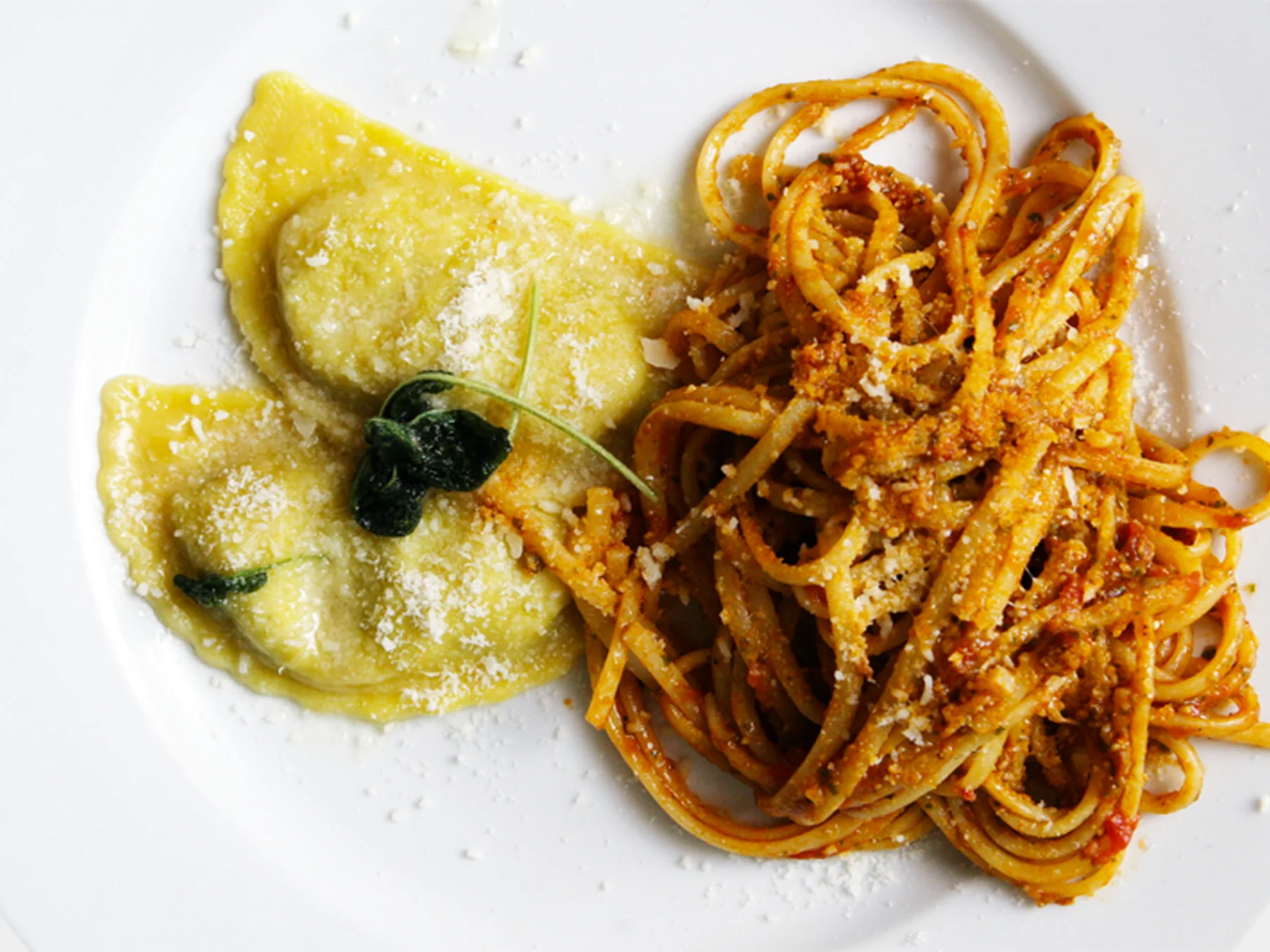
Marco Polo did not introduce pasta to Italy
- A famous myth says Marco Polo brought pasta from China to Italy.
- The story is not supported by the historical timeline.
- Pasta-like foods existed in Italy before Marco Polo returned from Asia.
- Medieval Italian records describe dried pasta products.
- Arab and Mediterranean food traditions also influenced pasta development.
- Sicily became an important early center for dried-pasta production.
- A 12th-century geographer described a Sicilian town producing and exporting dried pasta.
- Drying made pasta especially useful for trade and travel.
- Durum wheat thrives in warm Mediterranean climates.
- Its strong gluten properties work well for dried shapes.
- Italian pasta therefore emerged through agricultural, regional, and commercial history.
- Asian noodle traditions are ancient and enormously diverse too.
- Different societies learned that flour and water could become shelf-stable or freshly cooked noodles.
- Food history rarely needs one explorer to explain similar techniques in multiple cultures.
- The Marco Polo story survives because it is simple and memorable, not because it is the best-supported history.
Durum wheat makes dried pasta special
- Durum is a hard wheat species.
- Semolina is a coarse flour milled from durum wheat.
- Its yellow color comes partly from natural carotenoid pigments.
- Durum contains proteins that form strong gluten.
- Gluten gives dough elasticity and structure.
- Dried pasta dough is typically much firmer than bread dough.
- Low water content helps shaped pasta hold crisp details.
- Industrial pasta presses force dough through dies.
- Different die openings create different shapes.
- Bronze dies create a rougher pasta surface than very smooth Teflon-type dies.
- That roughness can help sauce cling.
- Freshly extruded pasta is then dried under controlled temperature and humidity.
- Drying too quickly can crack pasta.
- Drying too slowly can create other quality problems.
- A shelf-stable box of pasta is the final result of carefully controlled flour, water, pressure, shape, and drying.
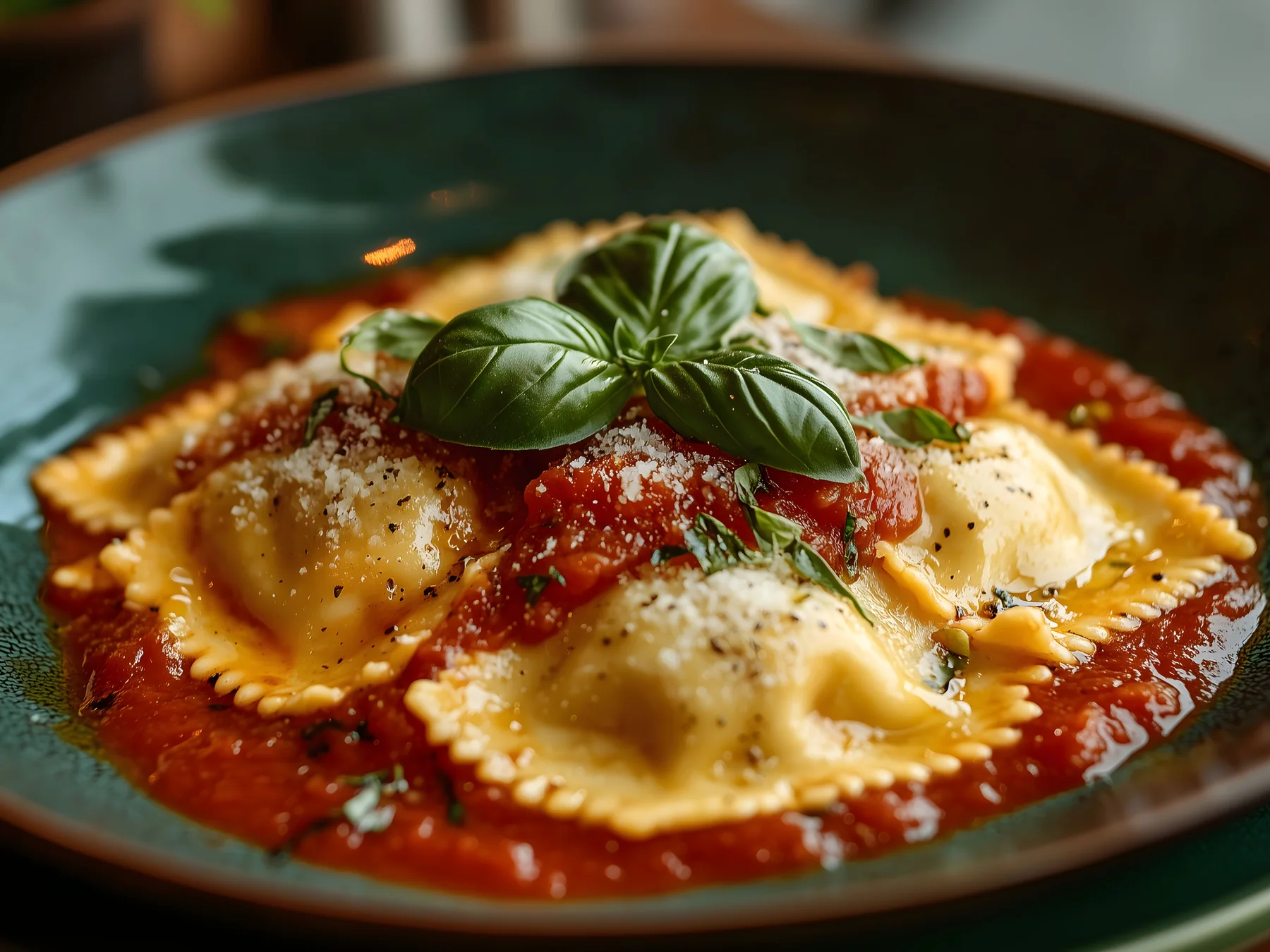
Fresh pasta is a different category
- Fresh pasta is not automatically better than dried pasta.
- The two styles suit different dishes.
- Northern Italian fresh pastas commonly use eggs.
- Egg yolks add fat, color, emulsifiers, and flavor.
- Whole eggs add water and protein too.
- Fresh dough is kneaded to develop gluten.
- Resting lets moisture spread through the flour.
- Resting also makes the dough easier to roll.
- Pasta machines progressively thin sheets between rollers.
- A rolling pin can produce excellent fresh pasta without a machine.
- Tagliatelle and fettuccine are cut from sheets.
- Lasagne sheets are another fresh-pasta form.
- Filled pasta requires dough flexible enough to seal without tearing.
- Fresh pasta cooks much faster than thick dried pasta.
- Dried spaghetti and fresh tagliatelle are not substitutes in every traditional sauce.
Pasta shapes are functional
- Spaghetti means little strings.
- Linguine means little tongues.
- Farfalle means butterflies.
- Orecchiette means little ears.
- Conchiglie resemble shells.
- Penne are cut into short tubes with angled ends.
- Rigatoni are larger tubes, usually with ridges.
- Bucatini are long strands with hollow centers.
- Fusilli use twisted or spiral forms.
- Radiatori resemble small radiators.
- Ridged pasta can trap sauce along its grooves.
- Tubes can hold sauce and small ingredients inside.
- Cups and folds capture bits of vegetables, meat, or cheese.
- Long smooth strands work well with emulsified and oil-based sauces.
- Shape choice is culinary engineering disguised as vocabulary practice.
What al dente actually means
- Al dente literally means “to the tooth.”
- It describes pasta cooked until tender but still pleasantly firm.
- It does not mean raw flour should remain in the center.
- Water penetrates pasta from the exterior inward.
- Heat gelatinizes starch granules.
- Proteins form a network that helps hold the structure together.
- Overcooking weakens the structure and makes pasta softer.
- Cooking time depends on shape, thickness, flour, drying, and final preparation.
- Package timing is a useful starting point rather than a universal physical law.
- Pasta can be removed early if it will finish in hot sauce.
- Residual heat continues cooking briefly.
- A firmer core can help pasta survive final tossing without becoming mushy.
- Fresh egg pasta often aims for a different tenderness than dried durum pasta.
- Baked pasta may intentionally be undercooked before entering the oven.
- The desired texture depends on the specific dish, not a blanket rule that every noodle must feel identical.
Pasta water is a sauce ingredient
- Boiling pasta releases starch into cooking water.
- That cloudy water can help sauces emulsify.
- Starch slightly thickens the liquid phase.
- It helps water and fat stay dispersed during vigorous tossing.
- This is especially useful for cheese, butter, and olive-oil sauces.
- Cacio e pepe relies heavily on careful cheese, pepper, pasta water, and temperature control.
- Carbonara uses egg and cheese rather than cream in the classic Roman style.
- Too much heat can scramble carbonara eggs.
- Starchy water helps adjust sauce consistency.
- Salt in the cooking water seasons pasta internally as water is absorbed.
- Water does not need to taste literally as salty as the sea.
- Seawater contains far more salt than most pleasant pasta water.
- Adding oil to boiling water does little to stop pasta from sticking once submerged.
- Stirring during the first minutes is more useful.
- Saving a cup of cooking water before draining is one of the simplest ways to improve many pasta sauces.
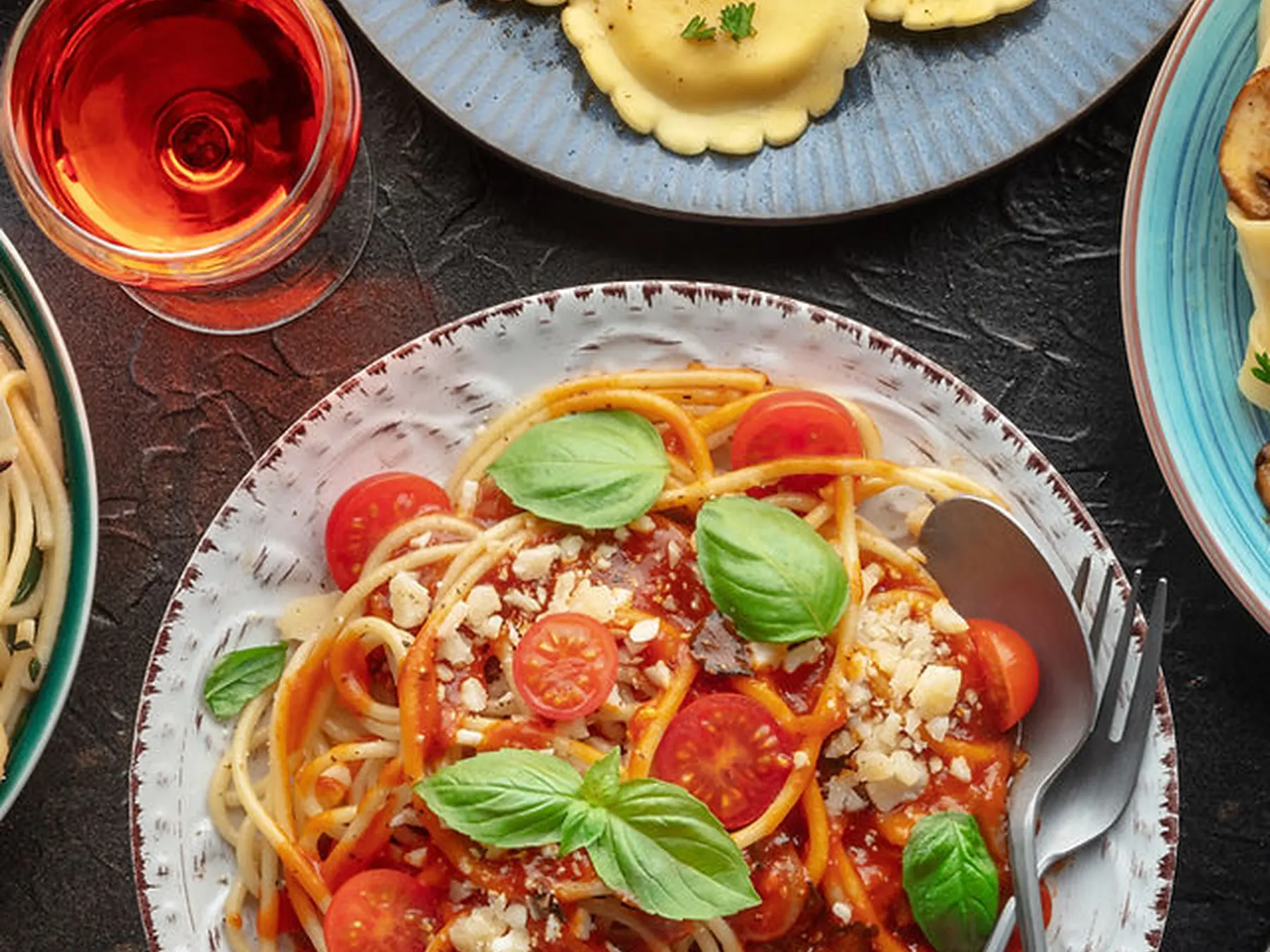
Famous Italian pasta traditions
- Spaghetti alla carbonara is strongly associated with Rome.
- Classic modern carbonara commonly uses guanciale, egg, Pecorino Romano, and black pepper.
- Amatriciana combines tomato, guanciale, and pecorino.
- Cacio e pepe means cheese and pepper.
- Gricia resembles an ancestor or relative of amatriciana without tomato.
- These four dishes are often grouped as famous Roman pasta classics.
- Tagliatelle al ragù is associated with Bologna and Emilia-Romagna.
- The Bologna tradition pairs ragù with broad fresh pasta rather than making “spaghetti bolognese” its defining form.
- Pesto alla Genovese is associated with Liguria.
- Traditional pesto uses basil, pine nuts, garlic, hard cheese, olive oil, and salt.
- Orecchiette with broccoli rabe is strongly associated with Puglia.
- Pasta alla Norma is associated with Sicily.
- Its ingredients commonly include tomato, eggplant, basil, and ricotta salata.
- Pasta e fagioli combines pasta and beans in many regional versions.
- Italian pasta traditions are intensely local, and national restaurant menus capture only a fraction of them.
Filled and baked pasta
- Ravioli are filled pasta parcels in many regional shapes and recipes.
- Tortellini are small ring-shaped filled pasta associated with Emilia-Romagna.
- Tortelloni are generally larger than tortellini.
- Agnolotti are associated especially with Piedmont.
- Cappelletti means little hats and describes a stuffed pasta shape.
- Fillings can include meat, ricotta, greens, squash, potatoes, seafood, or other foods.
- Seams must be sealed carefully to stop filling from leaking into boiling water.
- Too much trapped air can make filled pasta burst or float awkwardly.
- Lasagna is both a pasta shape and the name of layered baked dishes.
- Lasagna traditions vary by region.
- Lasagne alla Bolognese commonly uses ragù, béchamel, and pasta sheets.
- Cannelloni are tubes designed for filling and baking.
- Baked ziti is an Italian American pasta tradition.
- Macaroni and cheese belongs to a long family of pasta-and-cheese dishes.
- Filled and baked forms show that pasta can function as wrapper, layer, tube, structural frame, and sauce carrier.
Ten surprising pasta facts
- Marco Polo did not introduce pasta to Italy from China.
- Sicily was producing and exporting dried pasta before Marco Polo was born.
- Fresh pasta is not inherently superior to dried pasta.
- Three-dimensional pasta shapes are designed to manage sauce differently.
- Al dente means “to the tooth.”
- The cloudy water most people pour down the drain can be one of the most useful sauce ingredients.
- Traditional Roman carbonara does not require cream.
- Spaghetti Bolognese is far more international than the classic Bologna pairing of ragù with tagliatelle.
- The word lasagna can refer to both the pasta and the finished layered dish.
- For more Italian trivia, explore our Italy facts and Food facts.
Quick pasta FAQ
Did Marco Polo bring pasta to Italy?
No. Italian and Sicilian pasta traditions are documented before Marco Polo’s return from Asia, and noodles developed through several independent food traditions.
What is dried pasta made from?
Classic Italian dried pasta commonly uses durum-wheat semolina and water.
What does al dente mean?
Literally “to the tooth,” describing pasta cooked through while retaining a pleasant firm bite.
Why save pasta water?
It contains dissolved starch that helps thicken, loosen, and emulsify sauces while also carrying seasoning.
Should you put oil in pasta water?
It is generally unnecessary. Stirring during the first part of cooking is more effective for preventing sticking, while reserved starchy water is better used in the sauce.

Ellie is the owner and sole author of Fun Facts, combining her mechanical engineering background with years of research-driven writing to deliver facts you can trust. Every article is thoroughly fact-checked and routinely updated as new science and sources emerge to keep information accurate and current. Her mission is to make learning delightful while upholding high standards of reliability and transparency.