
Minecraft looks simple because almost everything is made of blocks, but underneath those cubes is procedural world generation, redstone logic, survival systems, hidden math, community-made mods, speedrunning tricks, and a development history that began with one programmer in 2009. These 145 Minecraft facts explore mobs, dimensions, crafting, famous bugs, the accidental Creeper, Java and Bedrock editions, music, commands, seeds, and why a deliberately blocky game became a creative universe.
Minecraft basics
- Minecraft is a sandbox video game built around blocks and player-created goals.
- Players can gather resources, build structures, explore, fight, farm, and automate systems.
- The game does not require every player to follow one fixed story.
- Most ordinary blocks occupy a one-by-one-by-one grid space.
- The world is generated procedurally from mathematical rules and a seed.
- A seed is a value used to initialize world generation.
- Using the same seed and compatible game version can reproduce similar terrain.
- World generation still depends on edition and version.
- Minecraft has day and night cycles.
- A full ordinary in-game day lasts about 20 real-world minutes.
- Hostile mobs commonly become more dangerous at night or in dark areas.
- Players have health and, in survival modes, hunger systems.
- Experience points can be used with enchanting mechanics.
- Items can wear out through durability systems.
- The game combines exploration, construction, survival, combat, and simulation.
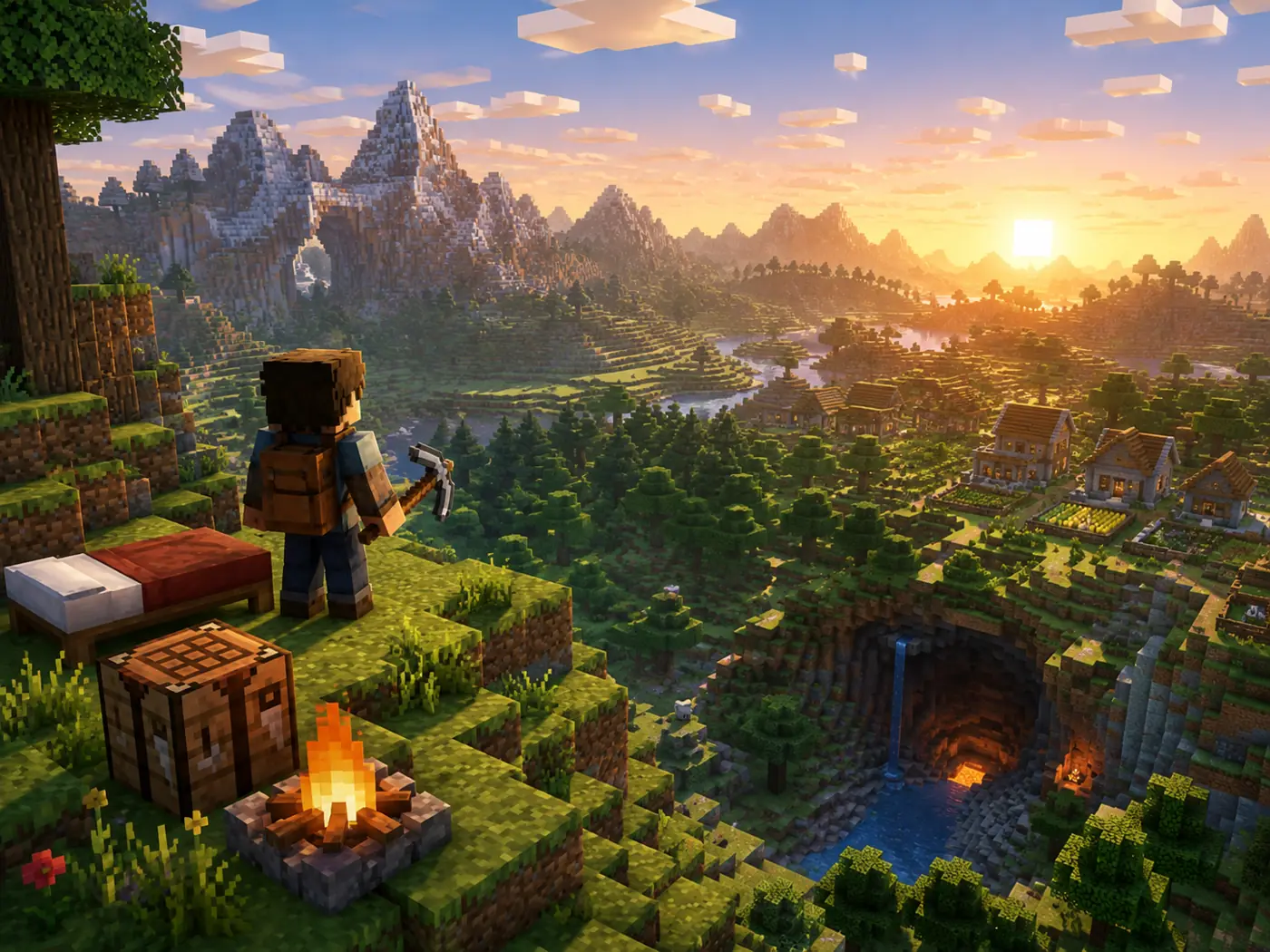
Minecraft began in 2009
- Swedish programmer Markus Persson began creating Minecraft in 2009.
- Persson is widely known by the nickname Notch.
- Early Minecraft drew inspiration from games including Infiniminer.
- Persson publicly released an early version in May 2009.
- Players could buy the game while development was still continuing.
- This early-access-like model funded further development.
- Mojang was formed around the growing game.
- Jens Bergensten later became a lead developer.
- He is widely known online as Jeb.
- Minecraft reached its formal 1.0 release in November 2011.
- The release was celebrated at the first Minecon in Las Vegas.
- Minecraft kept receiving major updates after its official release.
- The game therefore never became a frozen finished product in 2011.
- Community feedback shaped many features over time.
- Its development history mirrors the broader rise of continuously updated video games.
Microsoft buys Mojang
- Microsoft announced plans to buy Mojang in 2014.
- The purchase price was about $2.5 billion.
- The acquisition included the Minecraft franchise.
- Markus Persson left Mojang after the sale.
- Mojang continued developing Minecraft under Microsoft ownership.
- Minecraft remained available on platforms made by Microsoft competitors.
- This cross-platform reach became one of the franchise’s defining strengths.
- Microsoft expanded Minecraft into education, merchandise, spin-offs, and licensing.
- Mojang later adopted the name Mojang Studios.
- The main game continued receiving free content updates for existing owners on supported editions.
- Minecraft became a flagship example of a long-lived game platform.
- Its value comes partly from the player community rather than only built-in content.
- Mods, servers, maps, skins, videos, and tutorials extend the ecosystem.
- The acquisition happened only about five years after the first public version.
- Few games have grown from tiny indie projects to multibillion-dollar franchises that quickly.
Survival and Creative mode
- Survival mode requires players to collect resources and manage danger.
- Players begin without a huge inventory of building materials.
- Tools improve resource gathering speed.
- Different tool materials have different durability and performance.
- Food restores hunger rather than functioning only as decoration.
- Sleeping in a bed can skip most of the night under normal conditions.
- A bed also sets a player’s respawn point in the Overworld.
- Using a bed in some other dimensions can cause an explosion.
- Creative mode gives players broad access to blocks and items.
- Creative players can fly.
- They are not required to gather ordinary building materials.
- Creative mode became a major digital construction tool.
- Adventure mode restricts some block interactions for custom maps.
- Spectator mode lets players observe worlds without ordinary physical interaction.
- Hardcore mode traditionally uses maximum difficulty and permanent-death-style rules.
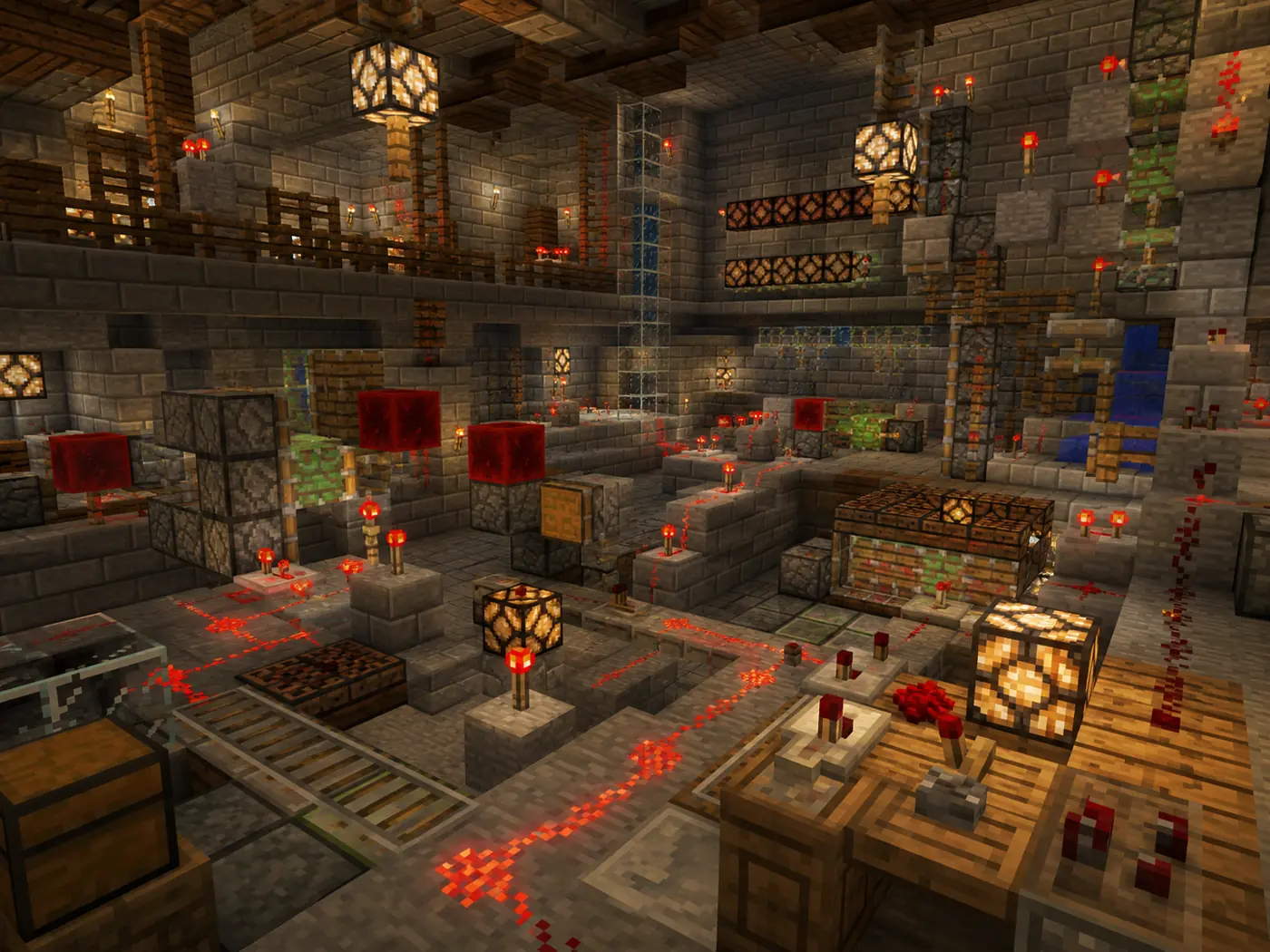
The Creeper was an accident
- The Creeper is one of Minecraft’s most recognizable enemies.
- It approaches players quietly before beginning an explosive countdown.
- Creepers can damage players, mobs, and nearby blocks.
- The creature originated from a coding mistake while Persson was creating a pig model.
- Incorrect model dimensions produced a tall awkward creature.
- Persson liked the strange shape and turned it into a new monster.
- The green texture helped the mob blend into classic grassy terrain.
- Creepers do not have arms.
- They have four short legs beneath a tall body.
- A Creeper struck by lightning can become a charged Creeper.
- Charged Creepers produce more powerful explosions.
- Specific charged-Creeper kills can cause certain mobs to drop decorative heads.
- Cats can scare Creepers away.
- Creeper faces became part of Minecraft logos and merchandise.
- One accidental modeling error produced one of gaming’s most famous silhouettes.
Zombies, skeletons, and other mobs
- Minecraft calls its moving creatures and characters mobs.
- The word comes from “mobile entity.”
- Zombies are hostile humanoid mobs.
- Skeletons attack using bows.
- Spiders can climb many vertical surfaces.
- Endermen are tall teleporting mobs.
- Looking directly at an Enderman can provoke it.
- Endermen can pick up and move certain blocks.
- Slimes split into smaller slimes when larger forms are defeated.
- Witches throw potion effects.
- Villagers live in generated villages and can trade with players.
- Villager professions influence available trades.
- Iron golems can defend villages.
- Passive animals provide food, materials, transport, or companionship.
- Minecraft mobs mix fantasy creatures with simplified versions of real animals.
The Nether and the End
- The ordinary Minecraft world is called the Overworld.
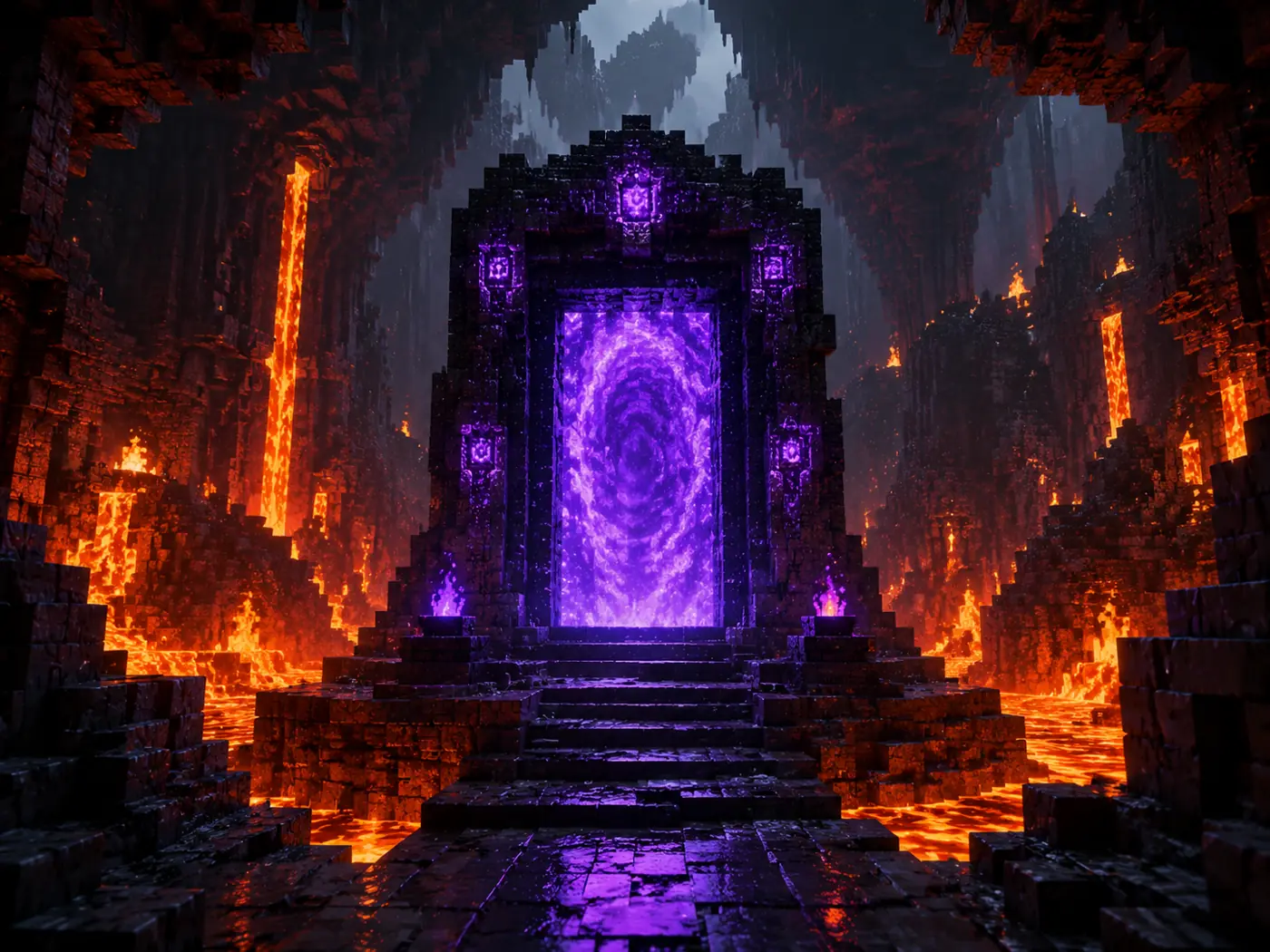
- The Nether is a fiery alternate dimension.
- Players commonly reach it through obsidian portals.
- Water behaves differently in the Nether and normally evaporates instantly when placed.
- One block of horizontal travel in the Nether corresponds to eight blocks in the Overworld.
- This makes Nether tunnels useful for long-distance transportation.
- Nether fortresses contain resources important for game progression.
- Blazes provide blaze rods.
- Blaze powder is used in brewing and crafting Eyes of Ender.
- The End is another major dimension.
- Players commonly reach it through an activated stronghold portal.
- The Ender Dragon is the game’s famous final-boss-style encounter.
- Defeating the dragon triggers an end poem and credits sequence.
- The game can continue indefinitely after the dragon is defeated.
- Outer End islands contain End cities and other late-game resources.
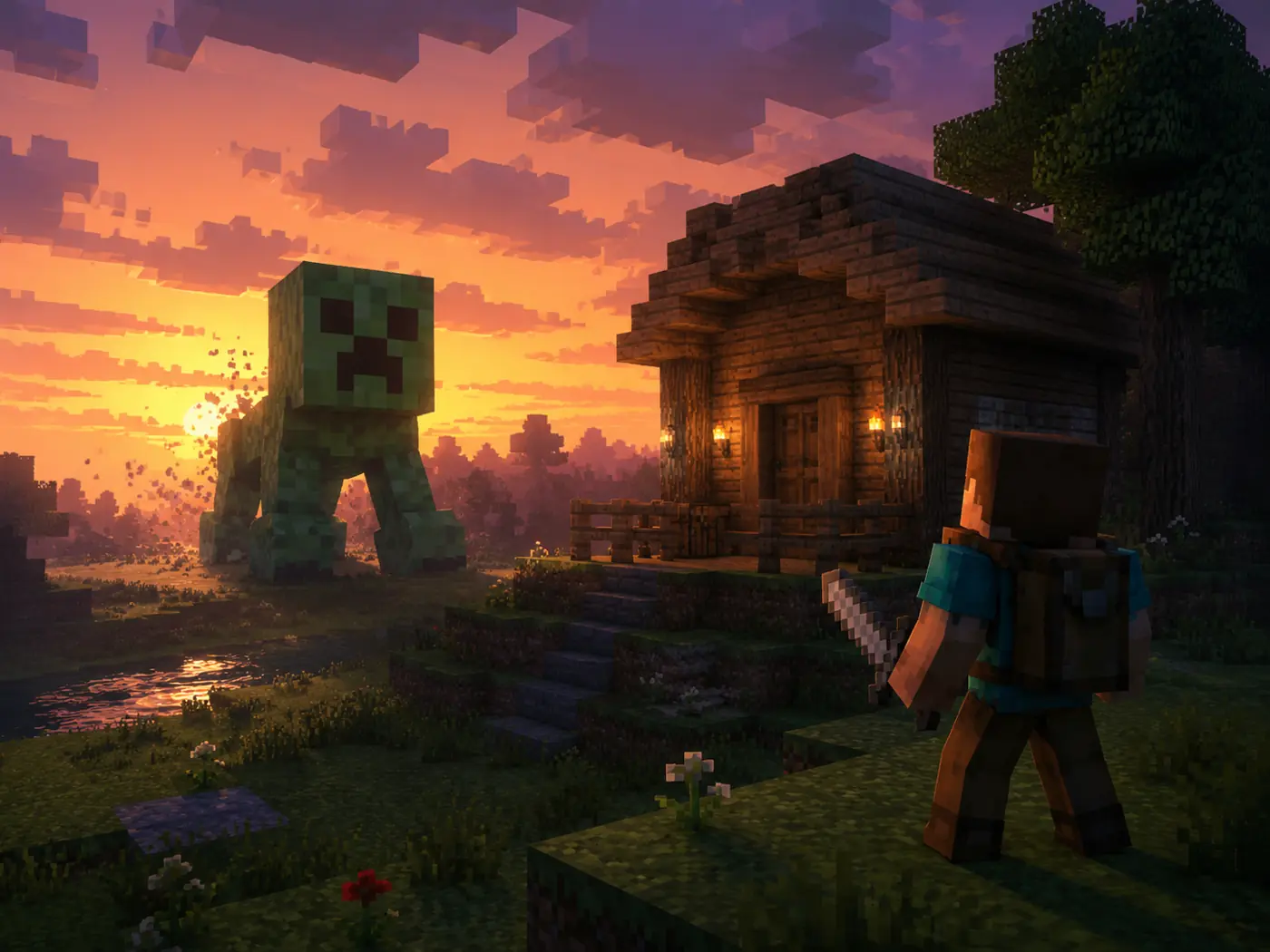
Redstone is Minecraft engineering
- Redstone lets players build powered mechanisms.
- Redstone dust carries signals across blocks.
- Levers, buttons, pressure plates, and observers can provide inputs.
- Redstone torches can act as power sources and logical inverters.
- Repeaters strengthen and delay signals.
- Comparators perform more advanced signal functions.
- Pistons push blocks.
- Sticky pistons can pull many blocks back too.
- Players combine components into logic gates.
- Logic gates can perform operations similar to digital electronics.
- Redstone builders have created calculators inside Minecraft.
- Some have built functional small computers.
- Others create automated farms, doors, clocks, sorting systems, and games.
- Complex redstone machines emerge from a relatively small set of simple rules.
- That makes Minecraft a playful introduction to concepts behind computers and digital logic.
Mods, servers, and community creativity
- Minecraft Java Edition has a large tradition of player-created modifications.
- Mods can add blocks, creatures, technology, interfaces, dimensions, and entirely new systems.
- Mod loaders and community tools make large mod ecosystems possible.
- Resource packs can change textures, models, sounds, and other presentation elements.
- Adventure maps use built environments and commands to create custom experiences.
- Multiplayer servers can host survival worlds, minigames, roleplay, competitions, and economies.
- Server plugins can modify gameplay without requiring every player to install the same client mod.
- Some communities have maintained persistent worlds for many years.
- Minecraft YouTube videos became a major online entertainment genre.
- Let’s Plays helped teach millions of players how the game worked.
- Speedrunners compete to complete specific objectives as quickly as possible.
- Random seeds make speedrunning partly about adaptation as well as memorization.
- Minecraft Education adapts game systems for classroom learning.
- Teachers have used Minecraft for history, coding, architecture, science, and collaborative projects.
- The game’s greatest feature may be that players continually invent purposes the developers never prescribed.
Ten surprising Minecraft facts
- The Creeper exists because of an accidental pig-modeling mistake.
- A Minecraft day lasts only about 20 real-world minutes.
- Beds can explode outside the dimension where players normally sleep.
- The Nether can function as a high-speed transportation shortcut.
- Players have built working calculators and computers using redstone.
- Minecraft was sold to players years before its formal 1.0 release.
- Microsoft bought Mojang for about $2.5 billion only five years after the first public version.
- The Ender Dragon does not actually end the playable world.
- A single world seed can encode the starting recipe for an enormous generated landscape.
- For more gaming trivia, explore our video-game facts and Tech facts.
Quick Minecraft FAQ
Who created Minecraft?
Swedish programmer Markus Persson, known as Notch, began the project in 2009. Mojang later grew around the game and continued development.
When did Minecraft officially release?
Minecraft reached version 1.0 in November 2011, although people had been buying and playing development versions since 2009.
Why are Creepers shaped that way?
The original model came from an error while Markus Persson was working on a pig. He liked the strange tall shape and turned it into a new monster.
What does redstone do?
Redstone provides a programmable-like power and signal system for mechanisms, allowing players to build doors, clocks, farms, logic gates, calculators, and complex machines.
Did Microsoft create Minecraft?
No. Mojang created it independently. Microsoft acquired Mojang and the Minecraft franchise in 2014 for about $2.5 billion.

Ellie is the owner and sole author of Fun Facts, combining her mechanical engineering background with years of research-driven writing to deliver facts you can trust. Every article is thoroughly fact-checked and routinely updated as new science and sources emerge to keep information accurate and current. Her mission is to make learning delightful while upholding high standards of reliability and transparency.