
Alligators can survive cold snaps with their snouts frozen above ice, build wetland ponds that help other wildlife, replace worn-out teeth again and again, and make water dance across their backs when they bellow. They look similar to crocodiles, but their biology and habitats tell a different story. These 145 alligator facts explore species, jaws, senses, nests, babies, gator holes, conservation, and the details that separate a gator from a croc.
Alligator basics
- Alligators are crocodilians in the genus Alligator.
- Two living alligator species survive today.
- They are the American alligator and Chinese alligator.
- The American alligator’s scientific name is Alligator mississippiensis.
- The Chinese alligator is Alligator sinensis.
- Alligators belong to the family Alligatoridae.
- Caimans belong to the same broader family.
- True crocodiles belong to a different family called Crocodylidae.
- Alligators are reptiles.
- They are semiaquatic and spend much of their lives in or near water.
- American alligators are native to the southeastern United States.
- Chinese alligators are native to eastern China.
- Both species are ectothermic.
- Environmental heat strongly affects their body temperature and activity.
- Alligators warm by basking and cool by entering water or shade.
American alligator habitat
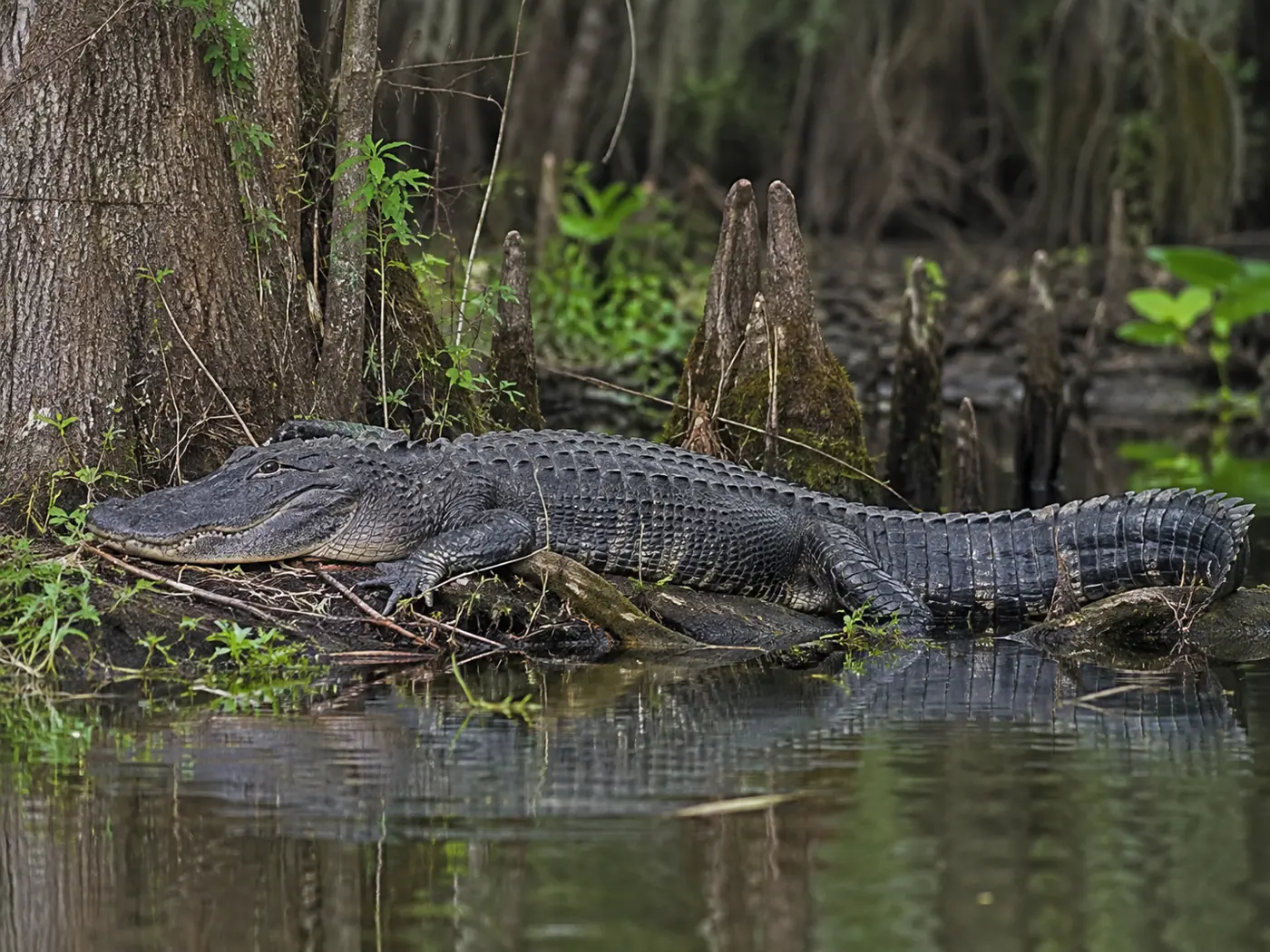
- American alligators live in wetlands across the southeastern United States.
- Habitats include swamps, marshes, lakes, rivers, ponds, and canals.
- They strongly favor freshwater.
- Alligators can tolerate brackish water for limited periods.
- They are less adapted to saltwater than many true crocodiles.
- Alligator salt glands are less effective at removing excess salt.
- South Florida is unusual because American alligators and American crocodiles overlap naturally.
- Alligators range as far north as parts of North Carolina.
- They also occur westward into Texas.
- Louisiana and Florida support especially large populations.
- Wetland water levels influence alligator movement and nesting.
- Drought can concentrate animals around remaining water.
- Floods can open new travel routes between habitats.
- Human-made ponds and canals can become alligator habitat.
- Living near suitable water in alligator country means people must treat even suburban ponds as wildlife habitat.
How alligators differ from crocodiles
- Alligator snouts are usually broader and more U-shaped than crocodile snouts.
- Many crocodiles have narrower V-shaped snouts.
- The shape comparison is useful but not perfect across every species.
- When an alligator closes its mouth, most lower teeth fit inside the upper jaw.
- The large fourth lower tooth is usually hidden.
- In many crocodiles, that lower tooth remains visible.
- Adult American alligators are usually very dark gray or nearly black.
- Many crocodiles appear lighter olive, tan, or gray.
- Alligators tolerate cold conditions better than most tropical crocodile species.
- Crocodiles generally possess more functional salt-excreting tongue glands.
- This makes true crocodiles better suited to extended marine conditions.
- Both groups have powerful jaws and similar ambush-predator body plans.
- Both provide substantial parental care for reptiles.
- Both replace teeth throughout life.
- For a full comparison, explore our 145 crocodile facts.
Alligator jaws and teeth
- Alligator jaws can close with tremendous force.
- Large adults can generate bite forces measured in the thousands of pounds.
- Closing muscles are much stronger than jaw-opening muscles.
- The teeth are conical rather than flat chewing teeth.
- They are designed mainly to seize and hold prey.
- Alligators often swallow smaller prey whole.
- Large food can be torn apart with shaking or rolling movements.
- Alligators perform the crocodilian death roll.
- Teeth wear down or break during feeding.
- Replacement teeth develop beneath active teeth.
- An alligator can replace individual teeth many times.
- Over a lifetime, this can amount to thousands of replacement teeth.
- The mouth contains roughly 70 to 80 functional teeth depending on individual and position.
- Alligators do not chew food like humans.
- Powerful stomach acids continue breaking down swallowed bones and tissue.
Built to disappear in water
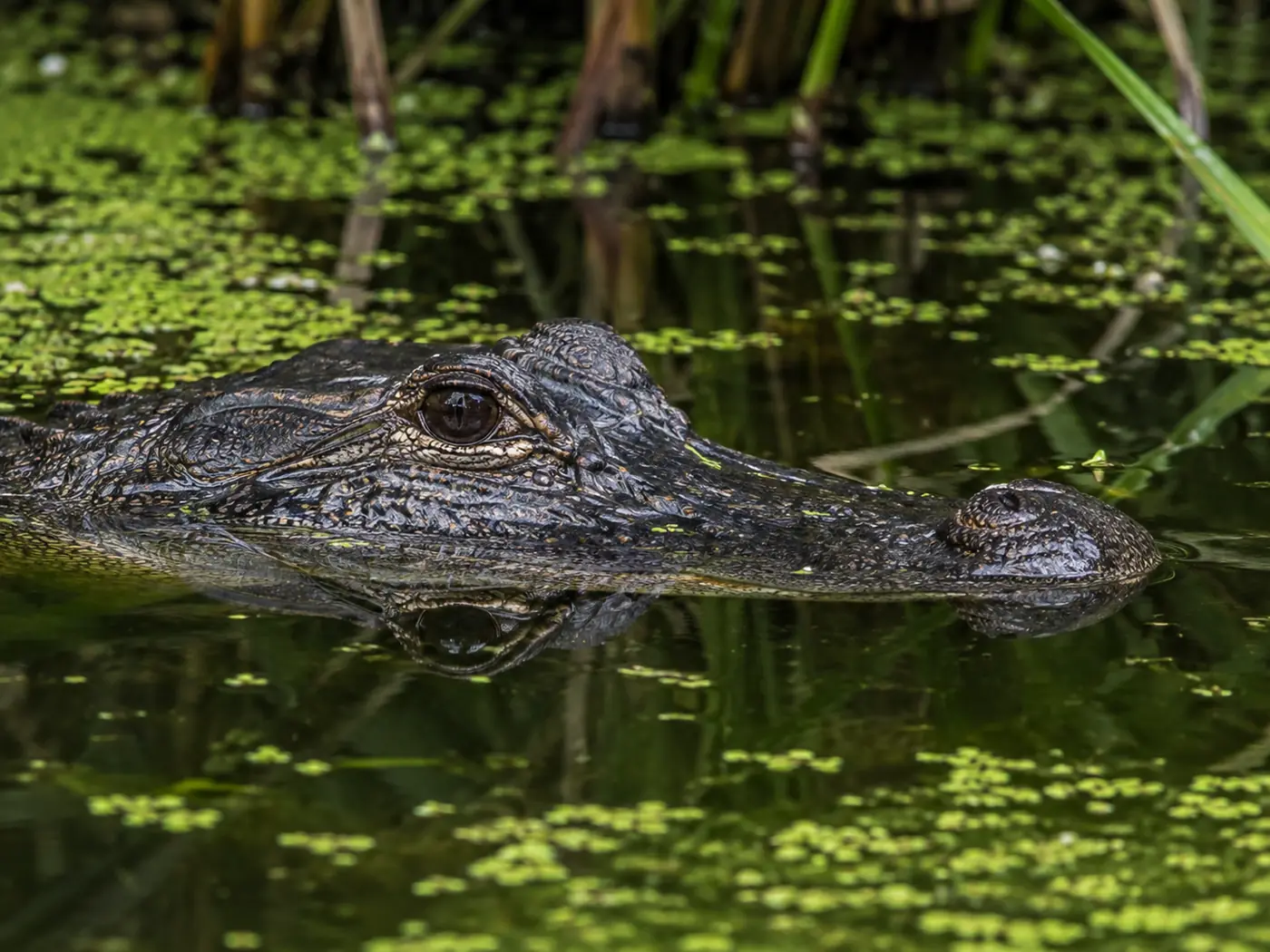
- An alligator’s eyes and nostrils sit high on its skull.
- This lets most of the body remain hidden underwater.
- Nostrils close when the animal submerges.
- Ear openings also have protective flaps.
- A transparent nictitating membrane protects the eyes underwater.
- The tail supplies most swimming power.
- Alligators sweep their tails from side to side.
- They can swim quietly with only eyes and nostrils exposed.
- A palatal valve helps keep water out of the throat.
- This lets an alligator hold prey underwater without flooding the airway.
- Alligators can stay submerged for extended periods when resting.
- Dive time becomes shorter during vigorous activity.
- They can slow their heart rate underwater.
- Alligators can sink quietly by controlling lung volume and body position.
- Stillness and camouflage make them exceptionally effective ambush predators.
They sense tiny water movements
- Small dark spots around an alligator’s jaws are sensory organs.
- They are called integumentary sensory organs.
- These structures detect tiny pressure changes in water.
- Ripples from swimming prey can therefore reveal location.
- Alligators also have strong low-light vision.
- A reflective eye layer creates noticeable eye shine at night.
- Wildlife researchers can spotlight wetlands and count glowing alligator eyes.
- Alligators have good hearing.
- They communicate through hisses, grunts, bellows, and other sounds.
- Young hatchlings make high-pitched calls.
- Those calls help maintain contact with the mother.
- Adult males produce deep bellows during courtship season.
- Bellowing can make water droplets visibly dance above the animal’s back.
- The vibration phenomenon is sometimes called a water dance.
- Alligator communication is much richer than the silent-monster image suggests.
Alligator holes help whole ecosystems
- American alligators can act as ecosystem engineers.
- They excavate depressions commonly called alligator holes.
- Alligators clear mud and vegetation using snouts, tails, and bodies.
- The holes can hold water when surrounding wetlands dry seasonally.
- Fish may become concentrated in these remaining pools.
- Birds, turtles, snakes, and mammals can also use the water.
- Alligators gain reliable aquatic refuges from their own engineering.
- Other animals gain drought refuges too.
- This means a top predator can physically create valuable habitat.
- Gator holes are especially important in wetlands such as the Everglades.
- Repeated alligator activity can alter local vegetation patterns.
- Nesting also disturbs and moves plant material.
- Alligator trails create small pathways through dense marsh vegetation.
- The species affects ecosystems through behavior as well as predation.
- Removing a major ecosystem engineer can therefore cause effects beyond simply changing prey numbers.
Nests, eggs, and babies
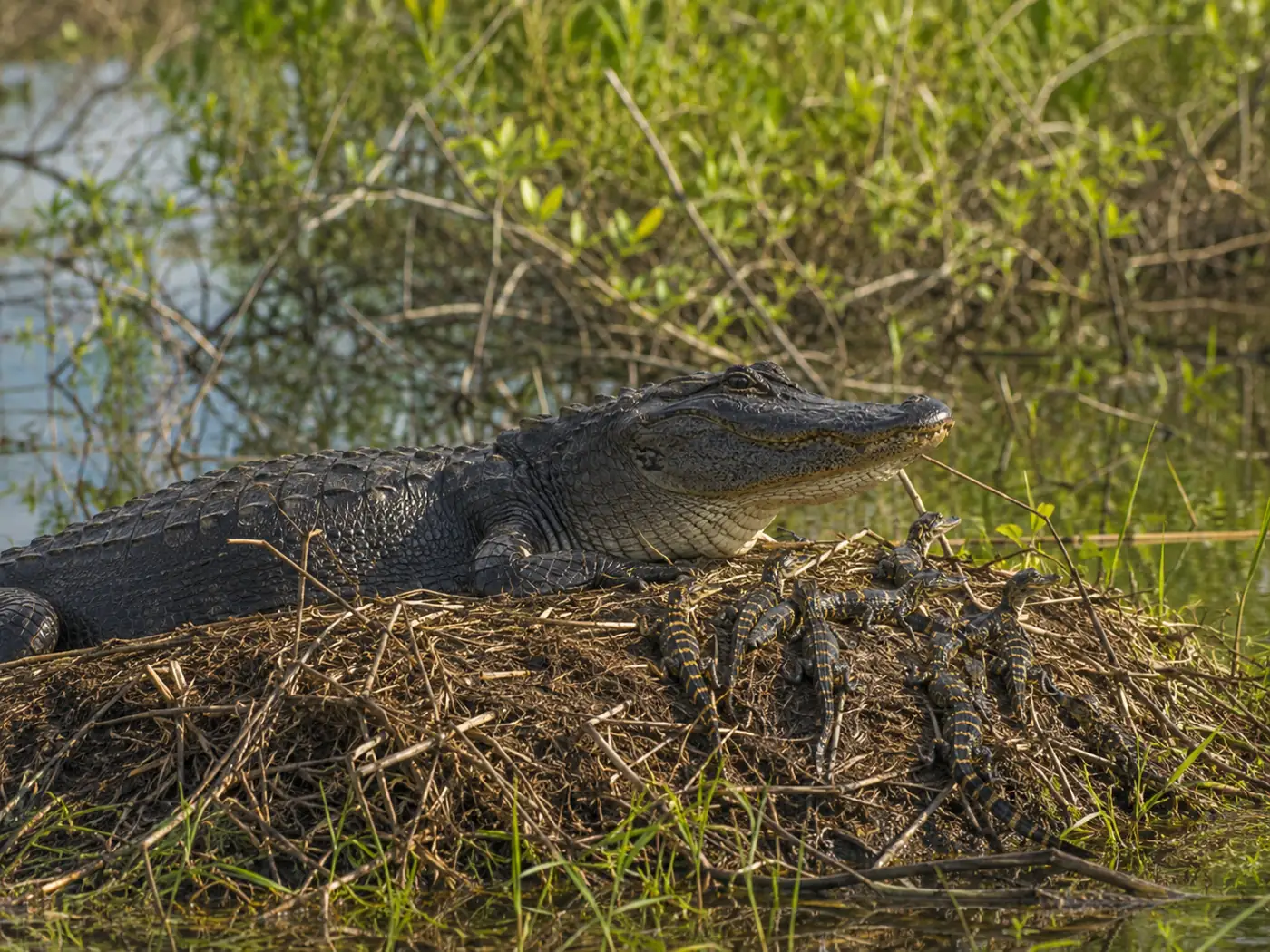
- Female American alligators build mound nests from vegetation and mud.
- Decomposing vegetation produces heat inside the nest.
- The female lays dozens of eggs in a nest chamber.
- She remains nearby and guards the mound.
- Raccoons and other predators can raid unguarded nests.
- Incubation temperature affects hatchling sex.
- Intermediate warm temperatures tend to produce more males in American alligators.
- Cooler and hotter incubation ranges produce more females.
- Hatchlings call from inside their eggs when ready to emerge.
- The mother may uncover the nest in response.
- She can carry hatchlings gently in her jaws.
- Baby alligators have bright yellow stripes.
- The stripes provide camouflage among marsh vegetation and reflections.
- Young alligators often stay near their mother for extended periods.
- Maternal protection is unusually developed compared with many reptiles.
Cold-weather alligator tricks
- Alligators live farther north than many people expect.
- Cold weather dramatically slows their metabolism.
- During winter they can enter a low-activity state often described as brumation.
- They may shelter in water, burrows, or protected banks.
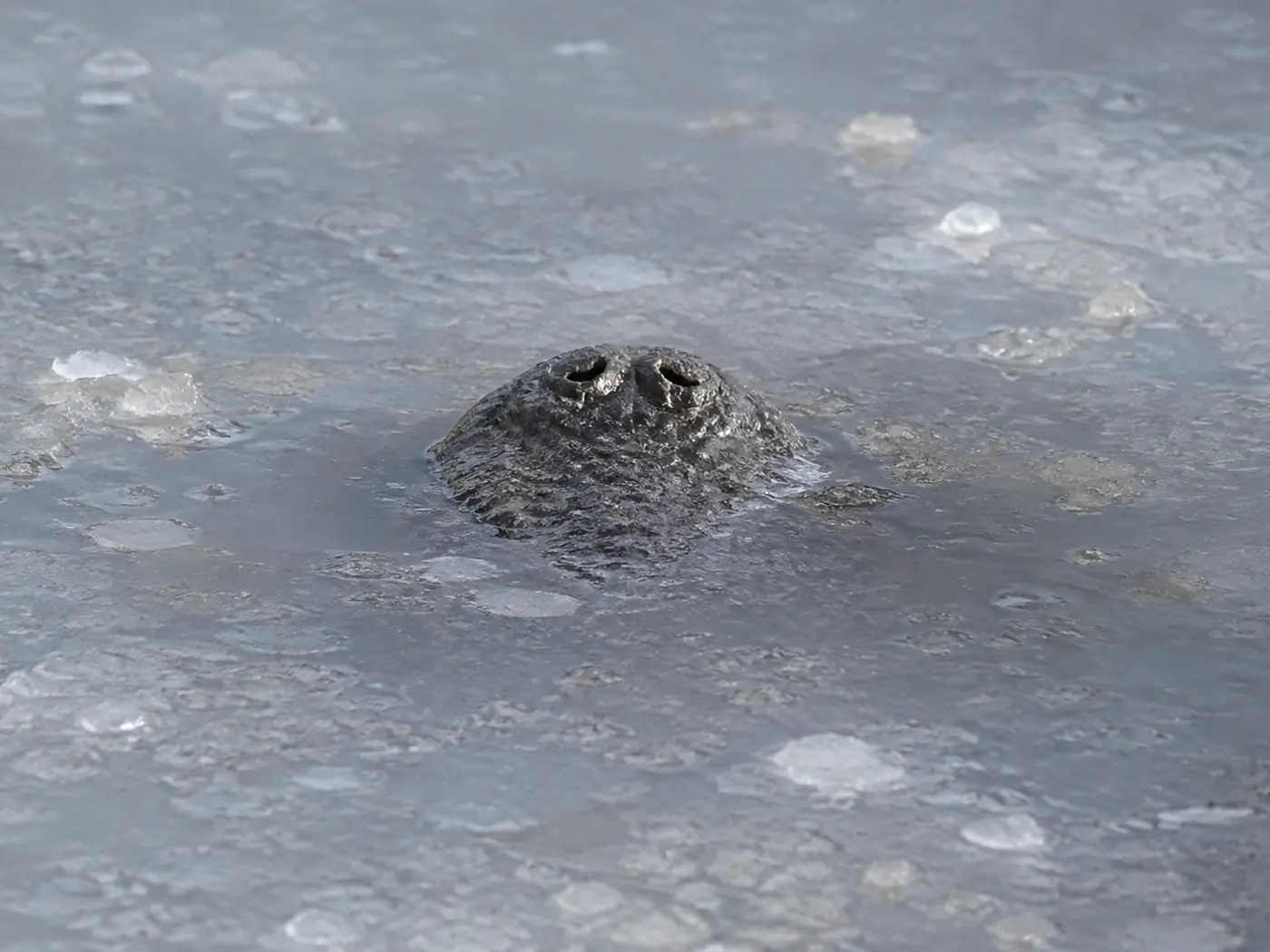
- When shallow water freezes, an alligator can position its nostrils above the surface.
- Ice may form around the exposed snout.
- The animal remains mostly submerged and extremely still.
- This behavior lets it continue breathing through a temporary freeze.
- The alligator is not literally frozen solid.
- Warm weather restores normal activity as body temperature rises.
- Cold tolerance helped American alligators occupy temperate wetlands.
- Extreme prolonged cold can still be dangerous.
- Young alligators are generally more vulnerable than huge adults.
- Climate influences the northern limit of the species’ range.
- Photos of snouts protruding through ice look bizarre because they reveal a reptile using winter survival behavior.
Ten surprising alligator facts
- Only two living species belong to the genus Alligator.
- American alligators can survive brief freezes with their nostrils locked above ice.
- An alligator’s bellow can make water dance visibly above its back.
- Alligator holes provide emergency dry-season water for other wildlife.
- Temperature inside the nest helps determine whether babies are male or female.
- A mother with one of the world’s strongest bites can carry hatchlings gently in her mouth.
- Alligators repeatedly replace damaged teeth throughout life.
- They can detect tiny water ripples through pressure sensors on their jaws.
- American alligators were once federally endangered in much of their range but recovered dramatically under protection.
- For more reptile trivia, browse our crocodile facts and Science facts.
Quick alligator FAQ
How many alligator species are there?
Two living species: the American alligator and Chinese alligator.
What is the easiest difference between alligators and crocodiles?
Alligators usually have broader U-shaped snouts and hide most lower teeth when the mouth closes. Crocodiles often have narrower snouts and a visible lower fourth tooth.
Can alligators survive freezing weather?
American alligators can survive short cold spells by becoming extremely inactive and keeping their nostrils above the water while ice forms around them.
Do alligator mothers protect their babies?
Yes. Females guard nests, respond to hatchling calls, help babies emerge, carry them gently, and may protect young for an extended period.
What is an alligator hole?
It is a wetland depression excavated and maintained by alligators. The hole can hold water during dry periods and provide habitat for many other animals.

Ellie is the owner and sole author of Fun Facts, combining her mechanical engineering background with years of research-driven writing to deliver facts you can trust. Every article is thoroughly fact-checked and routinely updated as new science and sources emerge to keep information accurate and current. Her mission is to make learning delightful while upholding high standards of reliability and transparency.