
Cookies are tiny chemistry experiments disguised as dessert. A few changes in butter temperature, sugar type, flour, mixing, or oven heat can turn the same basic ingredients into something chewy, crisp, cakey, sandy, puffy, or paper-thin. Their history crosses medieval sugar kitchens, Dutch language, American chocolate chips, Japanese American fortune-cookie roots, factory biscuits, and holiday traditions. These 145 cookie facts explain the science, history, famous styles, and delicious details.
Cookie basics
- A cookie is a small baked sweet food usually made from flour and sugar.
- Fat, eggs, flavorings, chocolate, nuts, fruit, spices, or other ingredients are common additions.
- The word cookie comes from Dutch koekje, meaning little cake.
- In Britain and many Commonwealth countries, similar foods are usually called biscuits.
- American English normally uses biscuit for a different soft quick bread.
- Cookie dough contains less liquid than most cake batter.
- That lower moisture helps cookies hold individual shapes during baking.
- Cookies can be dropped, rolled, sliced, pressed, molded, piped, or cut.
- Some cookies are crisp throughout.
- Others are intentionally chewy or soft in the center.
- Sandwich cookies place filling between two baked pieces.
- Bar cookies are baked in pans and cut after baking.
- No-bake cookies set through cooling or other processes instead of oven baking.
- Cookies appear in cuisines around the world.
- The category includes far more than the familiar chocolate-chip cookie.
Cookies grew from older baking traditions
- Small sweet baked foods existed long before the modern word cookie.
- Sugar became more available to wealthy cooks through medieval trade networks.
- Early bakers sometimes used small portions of cake batter to test oven temperature.
- These little test cakes could be eaten rather than wasted.
- Persian and Middle Eastern cuisines developed sophisticated sweet baked pastries after sugar cultivation expanded.
- Trade carried sugar, spices, nuts, and baking traditions into Europe.
- European cookies changed as ingredients such as cinnamon, ginger, almonds, and dried fruit became available.
- Dutch settlers helped bring the word koekje to North America.
- English-language Americans transformed its pronunciation into cookie.
- Industrial milling made refined flour more consistent.
- Commercial sugar production made sweet baked goods increasingly affordable.
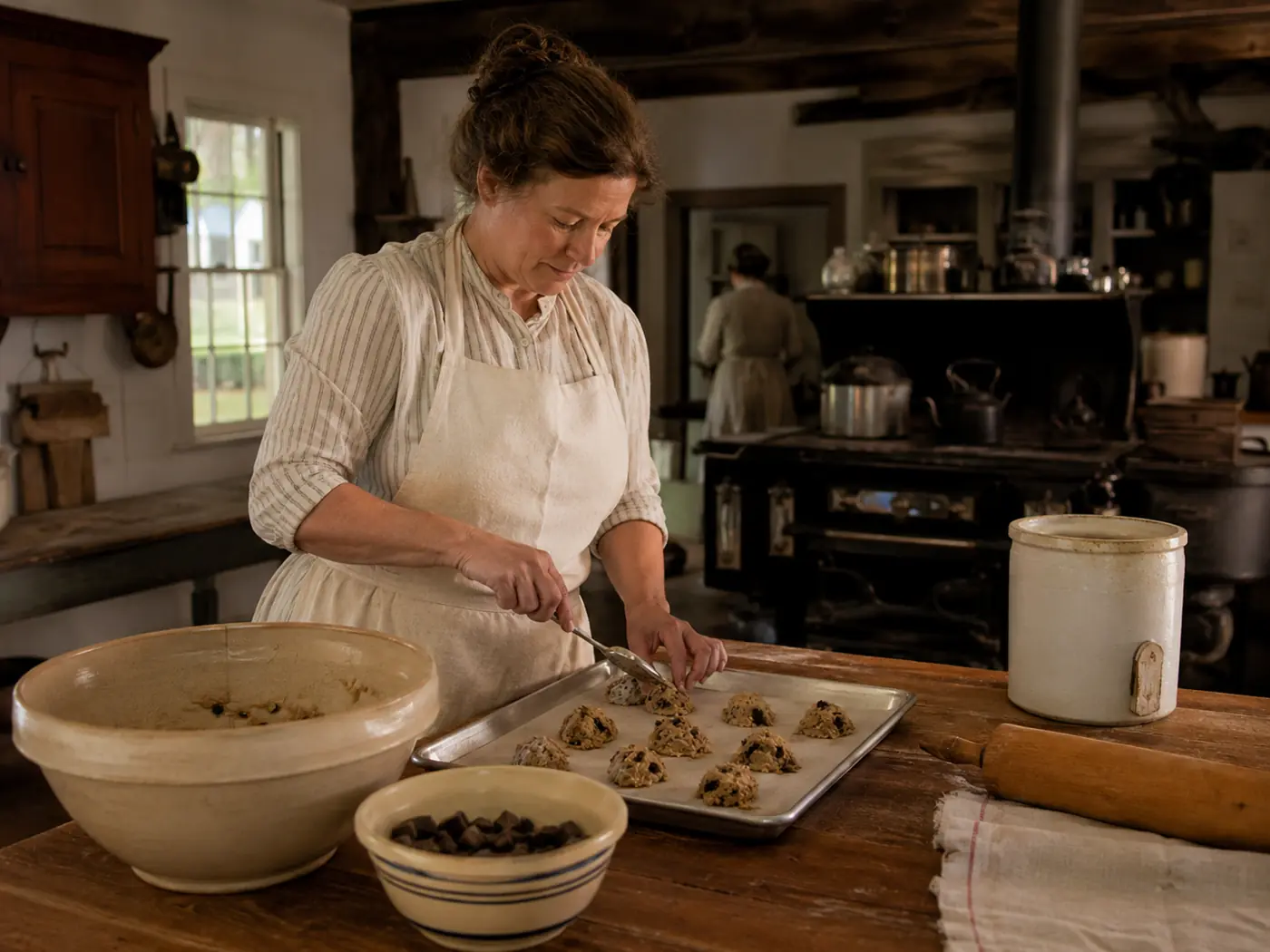
- Home ovens became easier to control during the 19th and 20th centuries.
- Packaged baking ingredients encouraged standardized recipes.
- Industrial bakeries turned cookies into long-lasting grocery products.
- Cookies evolved alongside changing ovens, agriculture, trade, packaging, and household technology.
Chocolate-chip cookies were an American invention
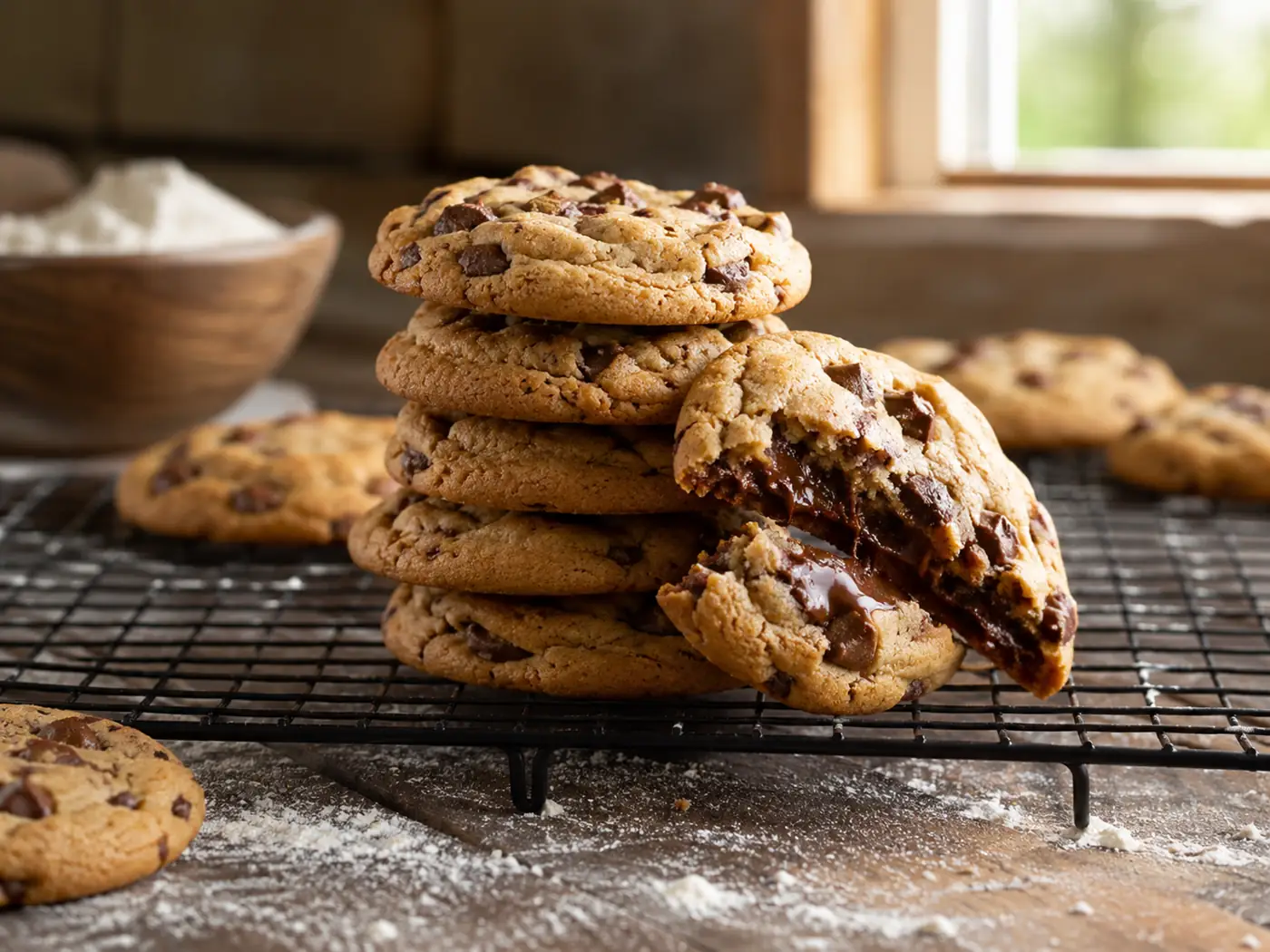
- Ruth Graves Wakefield is credited with creating the chocolate-chip cookie.
- Wakefield ran the Toll House Inn with her husband in Massachusetts.
- The famous cookie appeared during the 1930s.
- Wakefield added chopped Nestlé semisweet chocolate to cookie dough.
- The chocolate remained in distinct softened pieces rather than disappearing completely.
- The recipe became known as the Toll House chocolate cookie.
- Nestlé began printing the recipe on chocolate packaging.
- The company eventually produced small ready-to-use chocolate morsels.
- Chocolate chips made the recipe easier to reproduce.
- The cookie became one of the most recognizable American desserts.
- A common legend says Wakefield expected chocolate pieces to melt entirely into the dough.
- Food historians question that accidental-invention story because Wakefield was an experienced professional cook.
- It is safer to credit her with deliberately developing the recipe.
- Chocolate-chip cookies can be crisp, chewy, thick, thin, or cakey depending on formula and technique.
- The humble cookie helped create an entire baking-ingredient category.
The science of butter and sugar
- Butter contributes fat, water, milk solids, and flavor to cookie dough.
- Room-temperature butter can trap air when beaten with sugar.
- This technique is called creaming.
- Trapped air can help cookies become lighter.
- Melted butter cannot hold the same creamed-air structure.
- Melted butter often produces denser or chewier cookies.
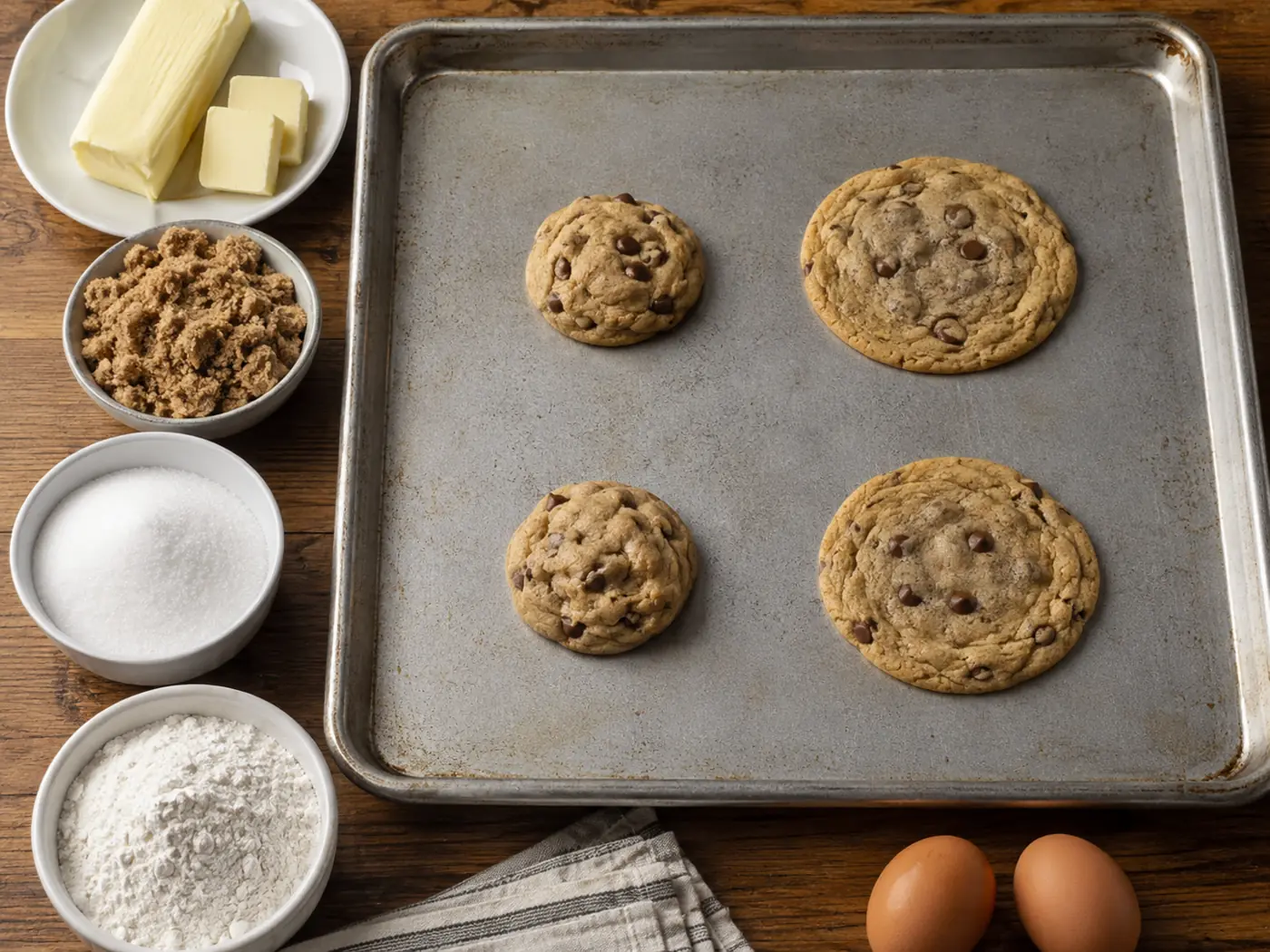
- Butter temperature also affects how quickly dough spreads in the oven.
- Cold dough takes longer for fat to melt.
- Chilling can therefore reduce spread in many recipes.
- White granulated sugar encourages crispness and spread.
- Brown sugar contains molasses.
- Molasses adds flavor, acidity, minerals, color, and hygroscopic compounds.
- Brown sugar helps many cookies remain softer and chewier.
- Changing the white-to-brown sugar ratio can transform texture.
- Sugar is structural chemistry in a cookie, not only sweetness.
Flour, gluten, and eggs
- Wheat flour supplies starch and proteins to most conventional cookies.
- Water lets gluten-forming proteins interact.
- Mixing develops gluten.
- Too much gluten can make delicate cookies tougher than intended.
- That is why many recipes say to mix flour only until combined.
- Higher-protein flour can create more structure.
- Lower-protein flour can produce more tender texture.
- Egg whites contribute water and proteins.
- Egg yolks provide fat, emulsifiers, and proteins.
- More yolk can create a richer, more tender cookie.
- Egg proteins set as they heat.
- They help hold the baked structure together.
- Starch absorbs water and gelatinizes during baking.
- As moisture evaporates, the cookie becomes firmer.
- A cookie continues setting for several minutes after leaving the oven.
Why cookies brown
- Cookie browning comes from several chemical reactions.
- The Maillard reaction occurs between amino compounds and reducing sugars.
- It creates many roasted aromas and brown pigments.
- Caramelization also changes sugars at high temperatures.
- Dark metal pans absorb heat differently from shiny pans.
- Dark pans can brown cookie bottoms faster.
- Convection ovens circulate hot air around food.
- That moving air can speed surface drying and browning.
- Oven thermostats are not always perfectly accurate.
- An inexpensive oven thermometer can reveal large temperature errors.
- Opening an oven door releases hot air and lowers temperature temporarily.
- Cookies near oven walls may bake differently from those in the center.
- Rotating sheet pans can improve evenness in some ovens.
- Parchment paper changes surface contact compared with a bare metal pan.
- Small temperature and pan choices can dramatically change one dough.
Famous cookie styles
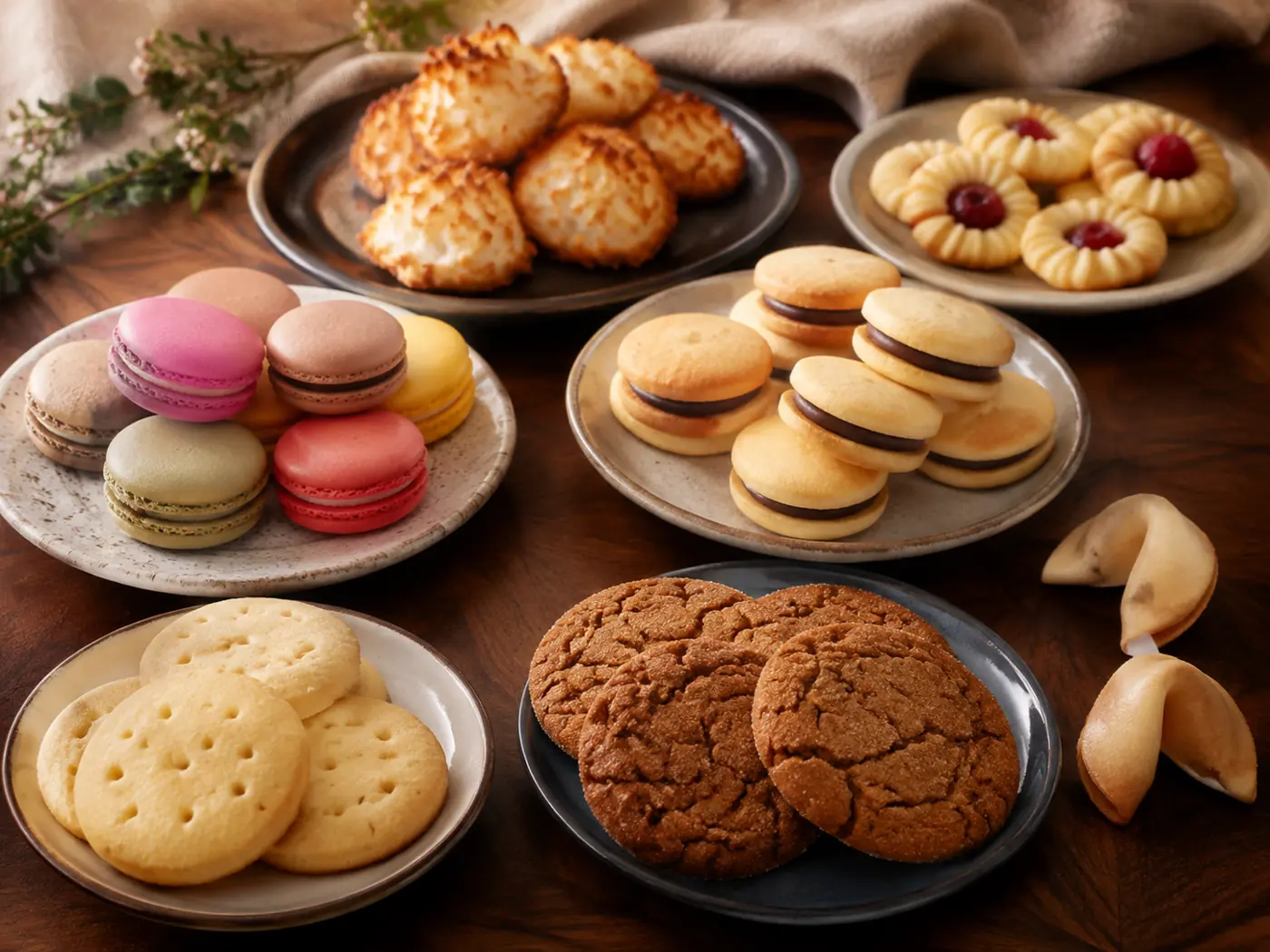
- Shortbread traditionally relies heavily on butter, sugar, and flour.
- Its name reflects the crumbly “short” texture created when fat limits gluten development.
- Gingerbread cookies use warming spices such as ginger and cinnamon.
- Molasses gives many American gingerbread recipes deep color and flavor.
- Snickerdoodles are rolled in cinnamon sugar before baking.
- Peanut-butter cookies often carry a crisscross fork pattern.
- Oatmeal cookies use rolled oats for texture.
- Biscotti are baked twice to create a dry crisp texture.
- The word biscotti reflects an Italian idea of twice-baked foods.
- Macarons are French-style almond-meringue sandwich cookies.
- Macaroons are different cookies usually associated with coconut or almond traditions.
- Linzer cookies adapt flavors from Austrian Linzer torte.
- Speculoos are spiced biscuits associated with Belgium and the Netherlands.
- Alfajores sandwich a sweet filling between delicate cookies in Latin American traditions.
- Cookie styles reveal how portable a basic flour-sugar-fat idea became across cultures.
Oreo and factory cookies
- Oreo cookies were introduced in 1912.
- They were launched by the National Biscuit Company, later known as Nabisco.
- Oreo was not the first chocolate sandwich cookie.
- Hydrox had appeared earlier.
- Oreo eventually became far more culturally recognizable.
- The origin of the Oreo name remains uncertain.
- Its embossed wafer design changed over time.
- Industrial sandwich cookies require precise control of wafer thickness and filling.
- Uniform dimensions help automated machines align and sandwich pieces.
- Commercial bakeries use continuous ovens for high-volume production.
- Packaging controls moisture to keep crisp cookies crisp.
- Oxygen barriers can slow rancidity in fatty ingredients.
- Factory cookies are engineered for long shelf life as well as flavor.
- Homemade cookies can prioritize textures that would be harder to maintain for months on a shelf.
- The cookie aisle is therefore a lesson in food engineering as much as baking.
Fortune cookies are not originally Chinese
- Fortune cookies are strongly associated with Chinese restaurants in the United States.
- Their origin is more closely connected with Japanese confectionery traditions and California.
- Japanese crackers containing paper fortunes existed before the American restaurant cookie.
- Japanese immigrants operated confectionery businesses in the western United States.
- Several California businesses later claimed roles in creating or popularizing the modern fortune cookie.
- There is no single uncontested inventor.
- After World War II, fortune cookies became increasingly tied to Chinese American restaurants.
- Japanese American incarceration disrupted many Japanese-owned businesses during the war.
- Chinese American restaurateurs adopted and expanded the cookie tradition.
- Modern fortune cookies are folded while still hot and flexible.
- Once cooled, the thin cookie becomes crisp.
- Machines now manufacture enormous numbers automatically.
- The fortunes may contain predictions, sayings, jokes, or lucky numbers.
- Fortune cookies are much more common in American Chinese restaurants than in China.
- Their history shows how foods can shift cultural identity through migration and business.
Ten surprising cookie facts
- The word cookie literally traces back to an idea meaning little cake.
- The chocolate-chip cookie was created by an experienced innkeeper, not necessarily by a lucky accident.
- Changing butter from creamed to melted can completely transform the same recipe.
- Brown sugar changes texture because molasses affects moisture as well as flavor.
- Shortbread’s “short” name refers to crumbly texture, not its physical height.
- Macarons and macaroons are different cookies.
- Oreo was not the first chocolate sandwich cookie.
- Fortune cookies have stronger historical roots in Japanese American food culture than in China.
- A cookie keeps cooking and setting briefly even after leaving the oven.
- For more sweet trivia, explore our chocolate facts and Food facts.
Quick cookie FAQ
Who invented chocolate-chip cookies?
Ruth Graves Wakefield developed the Toll House chocolate cookie at her Massachusetts inn during the 1930s.
Why do cookies spread?
Fat melts before the dough fully sets. Sugar, flour, egg, temperature, pan surface, and chilling all influence how far the softened dough can flow.
Why does brown sugar make cookies chewy?
Its molasses adds moisture-attracting compounds, acidity, and flavor. These properties often help a cookie retain a softer, chewier texture.
Are fortune cookies Chinese?
They are a Chinese American restaurant tradition today, but their historical roots point strongly toward Japanese-style fortune crackers and immigrant businesses in California.
What is the difference between a macaron and a macaroon?
A macaron is a delicate almond-meringue sandwich cookie. A macaroon is a different dense cookie commonly made with coconut or almonds.

Ellie is the owner and sole author of Fun Facts, combining her mechanical engineering background with years of research-driven writing to deliver facts you can trust. Every article is thoroughly fact-checked and routinely updated as new science and sources emerge to keep information accurate and current. Her mission is to make learning delightful while upholding high standards of reliability and transparency.