
The Fourth of July celebrates American independence, but the most famous date in the story is not the day Congress first voted to become independent. The holiday mixes the Declaration of Independence, fireworks, flags, presidential coincidences, parades, picnics, music, and traditions that grew over nearly 250 years. These 145 facts separate the founding-era history from the legends and explain how July 4 became America’s biggest patriotic birthday party.
Fourth of July basics
- The Fourth of July is the common name for Independence Day in the United States.
- It is celebrated annually on July 4.
- The holiday commemorates the adoption of the Declaration of Independence in 1776.
- The Declaration announced that the thirteen colonies regarded themselves as independent states.
- Independence Day is a federal holiday.
- Government offices, banks, schools, and many businesses close for the holiday.
- Fireworks are one of the holiday’s most recognizable traditions.
- Parades, concerts, picnics, cookouts, and flag displays are also common.
- Red, white, and blue dominate decorations because they are the colors of the U.S. flag.
- The holiday is celebrated in cities, small towns, military communities, national parks, and private homes.
- Communities often hold events on nearby weekend dates when July 4 falls midweek.
- Independence Day traditions vary by region.
- Some towns are known for historic readings of the Declaration.
- Others are famous for enormous fireworks shows.
- The holiday combines civic history with family and community traditions.
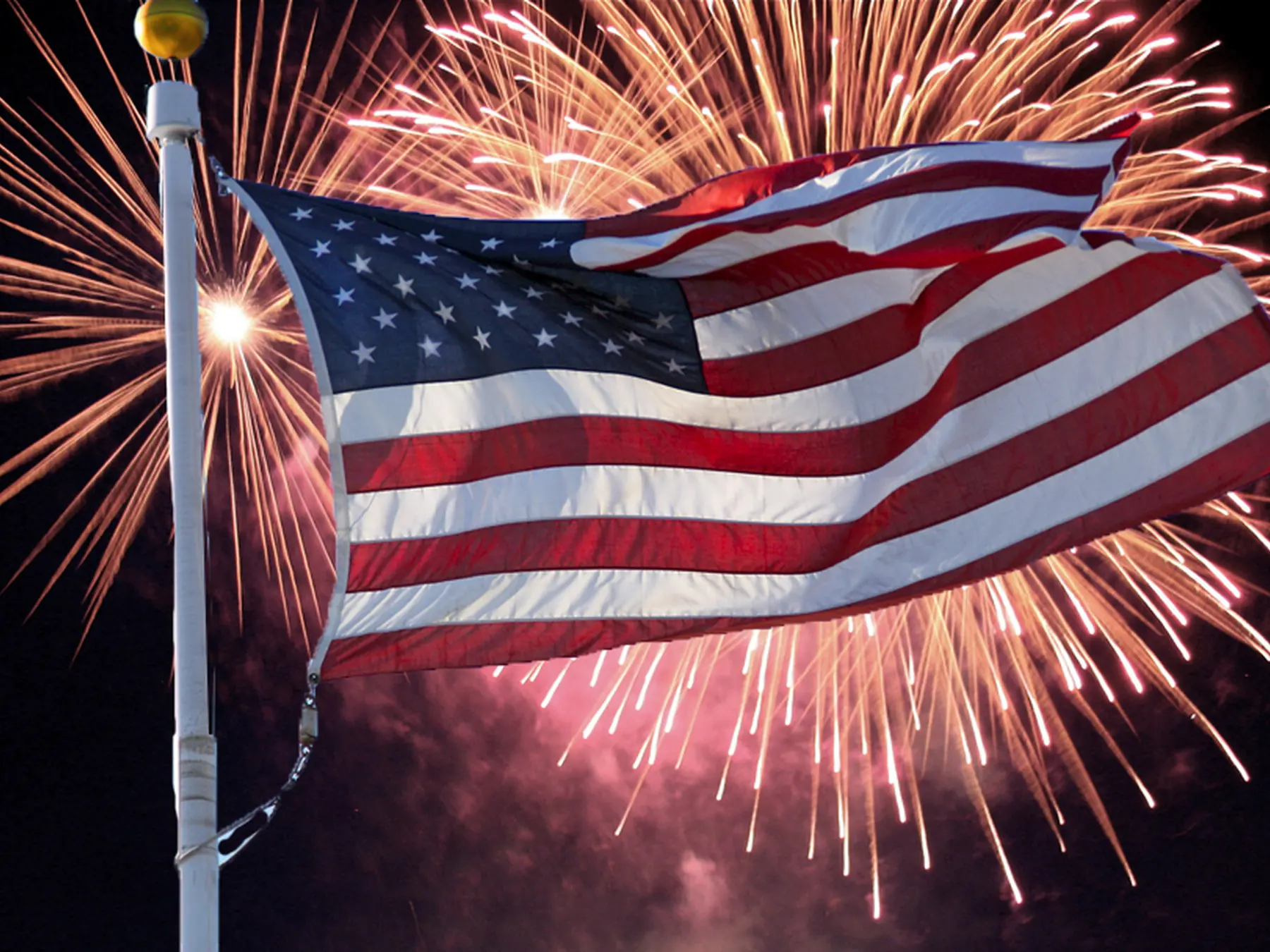
Independence was actually voted on July 2
- The Continental Congress took a decisive vote for independence on July 2, 1776.
- That vote approved the Lee Resolution declaring the colonies free and independent states.
- Richard Henry Lee of Virginia had introduced the independence resolution in June.
- Congress then focused on final wording of the Declaration.
- The Declaration of Independence was formally adopted on July 4, 1776.
- That adoption date appeared on the printed document.
- July 4 therefore became the date remembered publicly.
- John Adams expected July 2 to become the great anniversary celebration.
- He wrote to Abigail Adams predicting future festivities around the independence vote.
- Adams imagined pomp, parades, games, bells, bonfires, and illuminations.
- His prediction was remarkably accurate except for the date.
- The distinction between July 2 and July 4 surprises many Americans.
- Independence was a political process rather than one single moment.
- News also traveled slowly through the colonies.
- Communities learned about the Declaration days or weeks after its adoption.
Who wrote the Declaration?
- Congress appointed a five-man committee to prepare a declaration.
- The group became known as the Committee of Five.
- Its members were Thomas Jefferson, John Adams, Benjamin Franklin, Roger Sherman, and Robert Livingston.
- Thomas Jefferson wrote the primary draft.
- Adams and Franklin reviewed and suggested changes.
- Congress then debated and revised the text.
- Jefferson disliked some of the changes made to his draft.
- The final Declaration contains 1,300-plus words depending on transcription conventions.
- Its most famous sentence begins with the claim that all men are created equal.
- The document lists grievances against King George III.
- It also explains a political theory of natural rights and government by consent.
- The original draft criticized the slave trade more explicitly.
- Congress removed that passage before adoption.
- The contradiction between liberty and slavery shaped American history from the beginning.
- The National Archives preserves the engrossed Declaration today.
The signing did not all happen on July 4
- A popular painting shows delegates gathered dramatically around the Declaration.
- It can create the impression that everyone signed together on July 4.
- That is not what happened.
- The engrossed parchment was prepared after the text had been adopted.
- Most delegates signed the parchment on August 2, 1776.
- Some signatures were added later.
- John Hancock’s signature became famously large and prominent.
- Hancock was president of the Continental Congress.
- Charles Thomson, Congress’s secretary, authenticated early official versions.
- Printed broadsides spread the Declaration before most delegates signed the parchment.
- Printer John Dunlap produced the first official printed copies overnight.
- These are known as Dunlap broadsides.
- Copies were sent to political leaders, military commanders, and colonies.
- George Washington had the Declaration read to troops in New York on July 9.
- The National Archives explains this timeline on its Declaration of Independence resource.
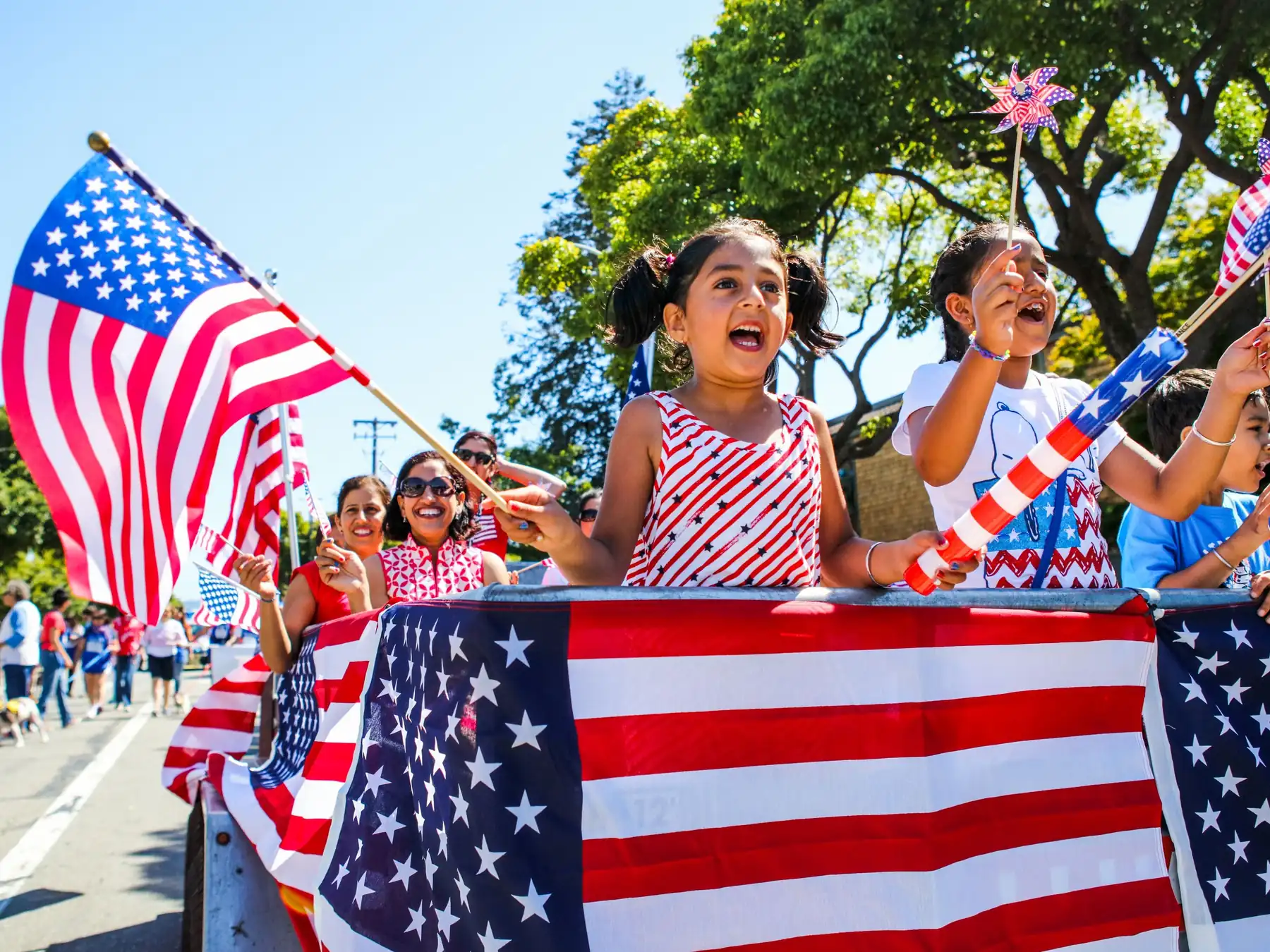
Early Independence Day celebrations
- Americans began commemorating independence before the Revolutionary War ended.
- Philadelphia held a major anniversary celebration on July 4, 1777.
- The event included bells, music, ships, military displays, and fireworks.
- Thirteen rockets represented the thirteen states.
- Bonfires and illuminations were already familiar European celebration traditions.
- Independence Day adapted these customs to a new national anniversary.
- Public readings of the Declaration became a major tradition.
- Political speeches also became central to 19th-century celebrations.
- Militia drills and cannon salutes added dramatic sound.
- Thirteen-gun salutes symbolized the original states.
- Church bells sometimes rang as part of local commemorations.
- Communities hosted dinners and toasts.
- Newspapers printed patriotic essays and reports from celebrations.
- The holiday grew as national identity developed after independence.
- Celebrations could also become politically partisan in the young republic.
Fireworks have a much older history
- Fireworks were invented in China centuries before the United States existed.
- Early gunpowder pyrotechnics developed from Chinese experiments with explosive mixtures.
- Fireworks spread through trade and cultural exchange into Europe.
- European royal courts used fireworks for major celebrations.
- American colonists inherited these public spectacle traditions.
- John Adams specifically predicted “illuminations” as part of future independence celebrations.
- Fireworks appeared at the Philadelphia anniversary celebration in 1777.
- Modern professional fireworks use carefully engineered pyrotechnic compositions.
- Metal salts and other compounds create different colors.
- Strontium compounds can contribute red colors.
- Copper compounds can contribute blue colors.
- Sodium compounds create strong yellow light.
- Firework shapes depend on how pyrotechnic stars are arranged inside shells.
- Professional displays are choreographed using electronic firing systems.
- Fireworks can cause fires, injuries, hearing damage, and distress to animals, so safety rules matter.
The flag changed after independence
- The modern 50-star U.S. flag did not exist in 1776.
- Congress adopted the first national flag resolution on June 14, 1777.
- That date is now commemorated as Flag Day.
- The 1777 resolution called for thirteen stripes and thirteen stars.
- It did not specify the exact arrangement of the stars.
- Many early American flag designs therefore existed.
- The familiar Betsy Ross circle-of-stars story cannot be proven from contemporary evidence.
- Stars were added as new states joined the Union.
- The number of stripes temporarily increased too.
- The 15-star, 15-stripe flag inspired “The Star-Spangled Banner.”
- Congress later returned the stripe count permanently to thirteen.
- One star is added for each state.
- New stars officially take effect on the July 4 following a state’s admission.
- The current 50-star design became official on July 4, 1960.
- It remains the longest-serving U.S. flag design.

Presidential July 4 coincidences
- Thomas Jefferson died on July 4, 1826.
- John Adams died the same day.
- The date was exactly 50 years after the Declaration’s adoption.
- Jefferson and Adams had been political rivals and later renewed their friendship by letter.
- Adams reportedly did not know Jefferson had died earlier that day.
- James Monroe also died on July 4.
- Monroe died in 1831.
- That makes three of the first five U.S. presidents who died on Independence Day.
- Calvin Coolidge was born on July 4, 1872.
- He is the only U.S. president born on Independence Day.
- Zachary Taylor became ill after a July 4 celebration in 1850.
- He died five days later.
- Old stories blamed cherries and milk for Taylor’s illness.
- Modern historians cannot diagnose his exact gastrointestinal disease with certainty.
- The Fourth of July produced an unusually memorable cluster of presidential coincidences.
Food, music, and modern traditions
- Backyard cookouts became major Independence Day traditions during the 20th century.
- Hot dogs and hamburgers are common holiday foods.
- Watermelon, corn, potato salad, pies, and ice cream often appear at picnics.
- Food traditions vary widely by region and family.
- Boston hosts a famous July 4 concert connected with the Boston Pops.
- Tchaikovsky’s 1812 Overture is often performed despite celebrating a Russian victory over Napoleon.
- The piece has no connection to the American War of 1812.
- Its use of cannon effects made it a dramatic fireworks-concert favorite.
- “The Star-Spangled Banner” became the U.S. national anthem in 1931.
- “America the Beautiful” is another common patriotic performance.
- Naturalization ceremonies are held at historic sites around Independence Day.
- Major League Baseball often schedules special patriotic presentations.
- National parks and historic sites interpret Revolutionary history during the holiday period.
- The Fourth became an unpaid federal holiday in 1870.
- Federal employees received paid Independence Day leave under later law in 1938.
Ten surprising Fourth of July facts
- Congress voted for independence on July 2, not July 4.
- John Adams correctly predicted huge annual celebrations but picked July 2.
- Most delegates did not sign the famous parchment on July 4.
- The first official printed copies were produced before the mass signing.
- Fireworks appeared in an American independence anniversary celebration as early as 1777.
- The U.S. flag had only thirteen stars when the holiday began.
- Three early presidents died on July 4.
- Two of them, Jefferson and Adams, died on the 50th anniversary.
- The 1812 Overture played at many July 4 concerts celebrates events in Russia, not America.
- For more U.S. trivia, explore our United States facts and History facts.
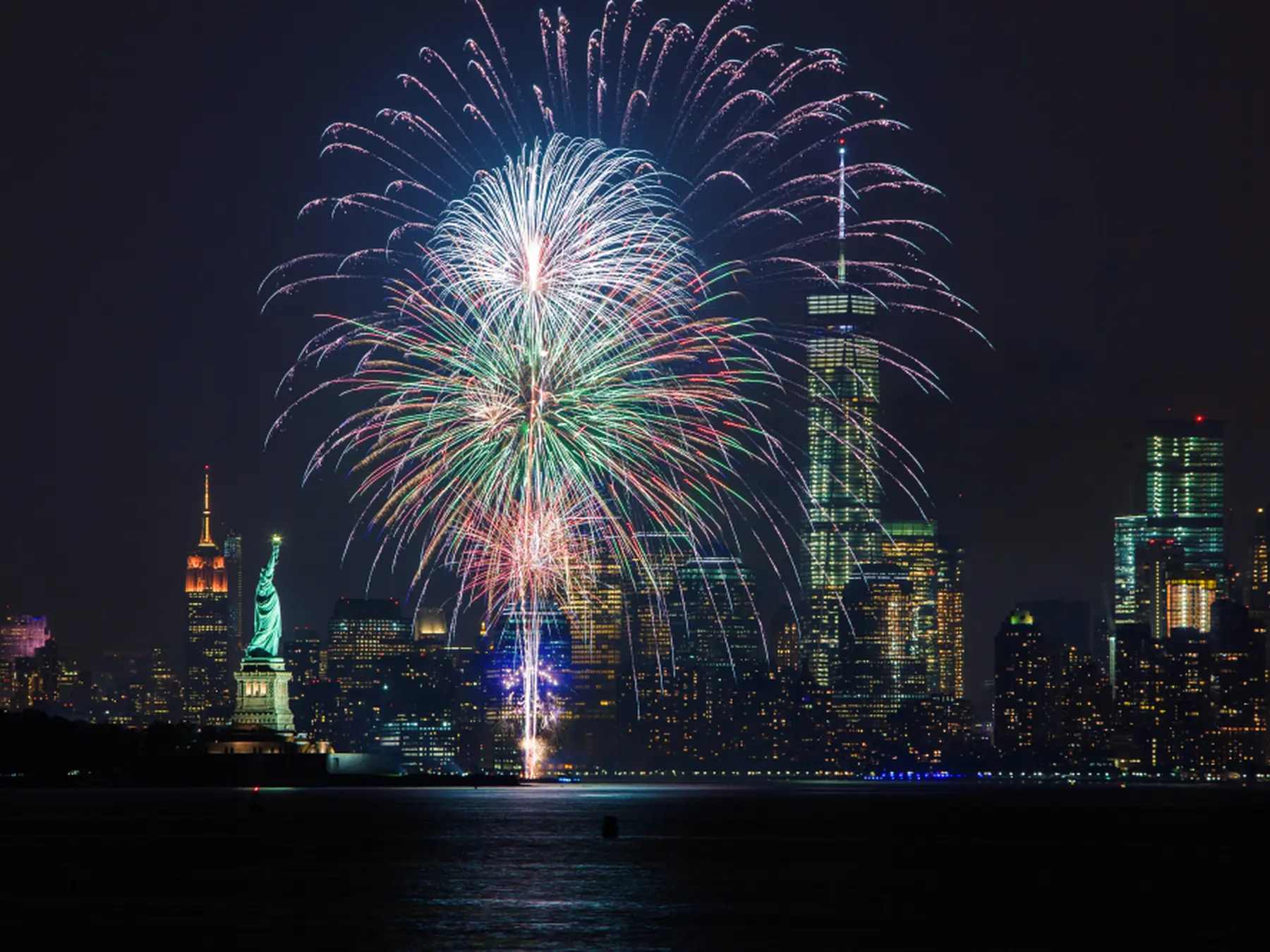
Quick Fourth of July FAQ
Did America declare independence on July 4?
Congress voted for independence on July 2, 1776, then adopted the final Declaration of Independence on July 4. The July 4 document date became the anniversary Americans remember.
Was the Declaration signed on July 4?
Not by everyone. Most delegates signed the engrossed parchment on August 2, 1776, and some signatures were added later.
Why do Americans use fireworks?
Fireworks were already traditional public celebration spectacles. John Adams predicted illuminations, and fireworks were used at a Philadelphia independence anniversary in 1777.
Which presidents died on July 4?
Thomas Jefferson and John Adams died on July 4, 1826. James Monroe died on July 4, 1831.
When did Independence Day become a federal holiday?
Congress made July 4 a federal holiday in 1870. Later legislation established paid leave for federal employees.

Ellie is the owner and sole author of Fun Facts, combining her mechanical engineering background with years of research-driven writing to deliver facts you can trust. Every article is thoroughly fact-checked and routinely updated as new science and sources emerge to keep information accurate and current. Her mission is to make learning delightful while upholding high standards of reliability and transparency.