
Skin is easy to think of as wrapping, but it is active living tissue that senses, repairs, cools, protects, communicates, and renews itself constantly. It hosts microbes, makes vitamin D, changes color, grows hair, forms fingerprints, and keeps the watery human body from leaking into the world.
Skin is your body's largest protective interface
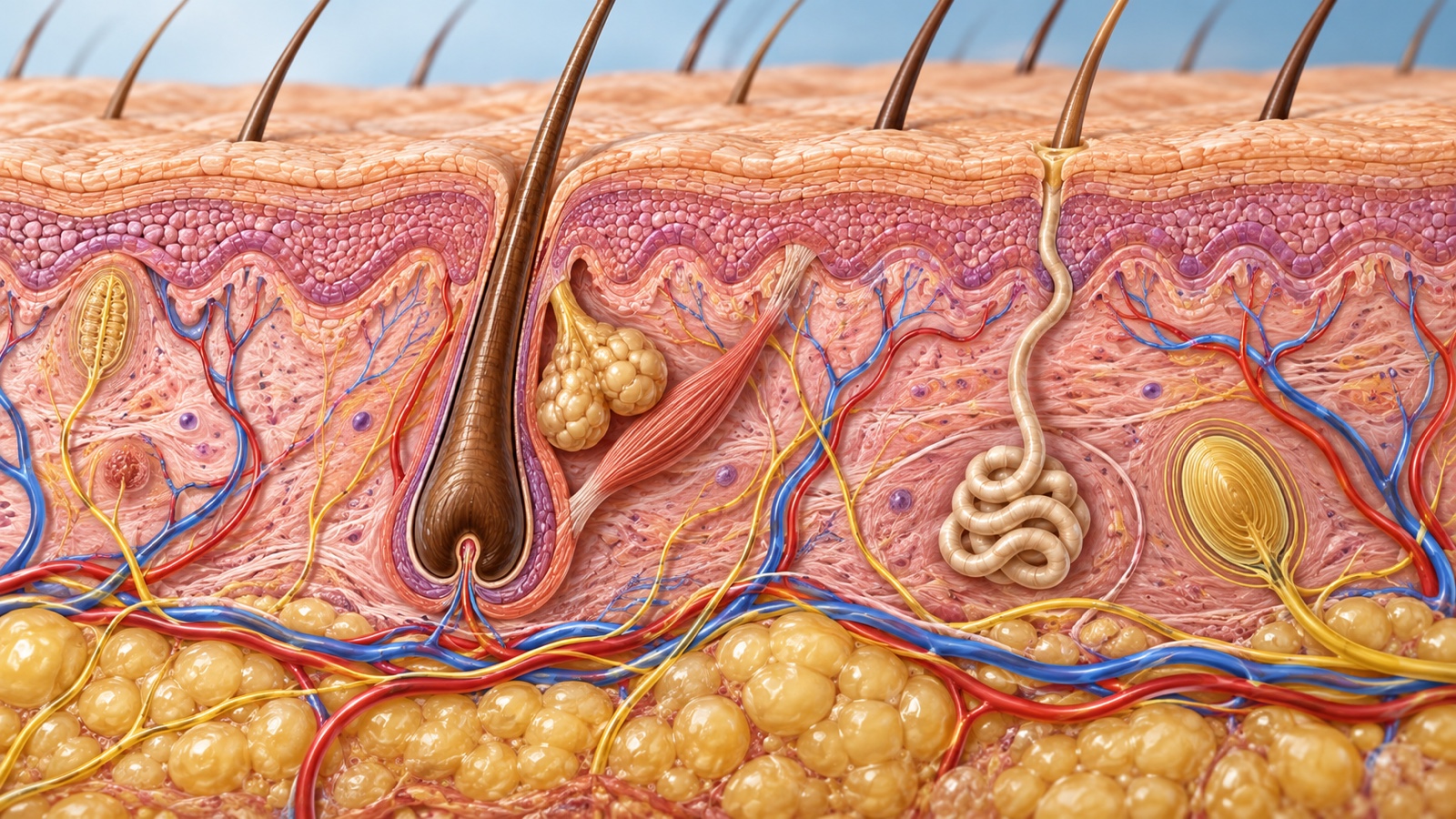
- Skin is part of the integumentary system along with hair, nails, sweat glands, and oil glands.
- It is the body's largest organ when surface area is considered.
- An adult's skin covers roughly 20 square feet, although body size changes that estimate.
- Skin accounts for a meaningful share of body weight rather than being a paper-thin wrapping.
- The outermost major skin layer is the epidermis.
- The dermis lies beneath the epidermis.
- Subcutaneous tissue lies deeper and contains fat, connective tissue, vessels, and nerves.
- The subcutaneous layer is closely associated with skin but is not always classified as part of the skin itself.
- The epidermis has no blood vessels of its own.
- Epidermal cells receive nutrients by diffusion from vessels in deeper tissue.
- The dermis contains blood vessels, nerves, glands, and hair follicles.
- Skin forms a physical barrier against many microbes and chemicals.
- It slows the loss of water from the body.
- Skin helps protect deeper tissue from mechanical injury.
- Its slightly acidic surface environment helps support barrier function.
- The skin surface is not sterile.
- Billions of microorganisms live on healthy human skin.
- Different skin regions support different microbial communities.
- Moist armpits, oily faces, and dry forearms are biologically different habitats.
- Calling skin “just a covering” is like calling a castle wall “just some rocks” while ignoring the gates, sensors, guards, plumbing, and repair crews built into it.
The epidermis is constantly rebuilding itself
- Keratinocytes are the most abundant cells in the epidermis.
- They produce keratin and other proteins important to the skin barrier.
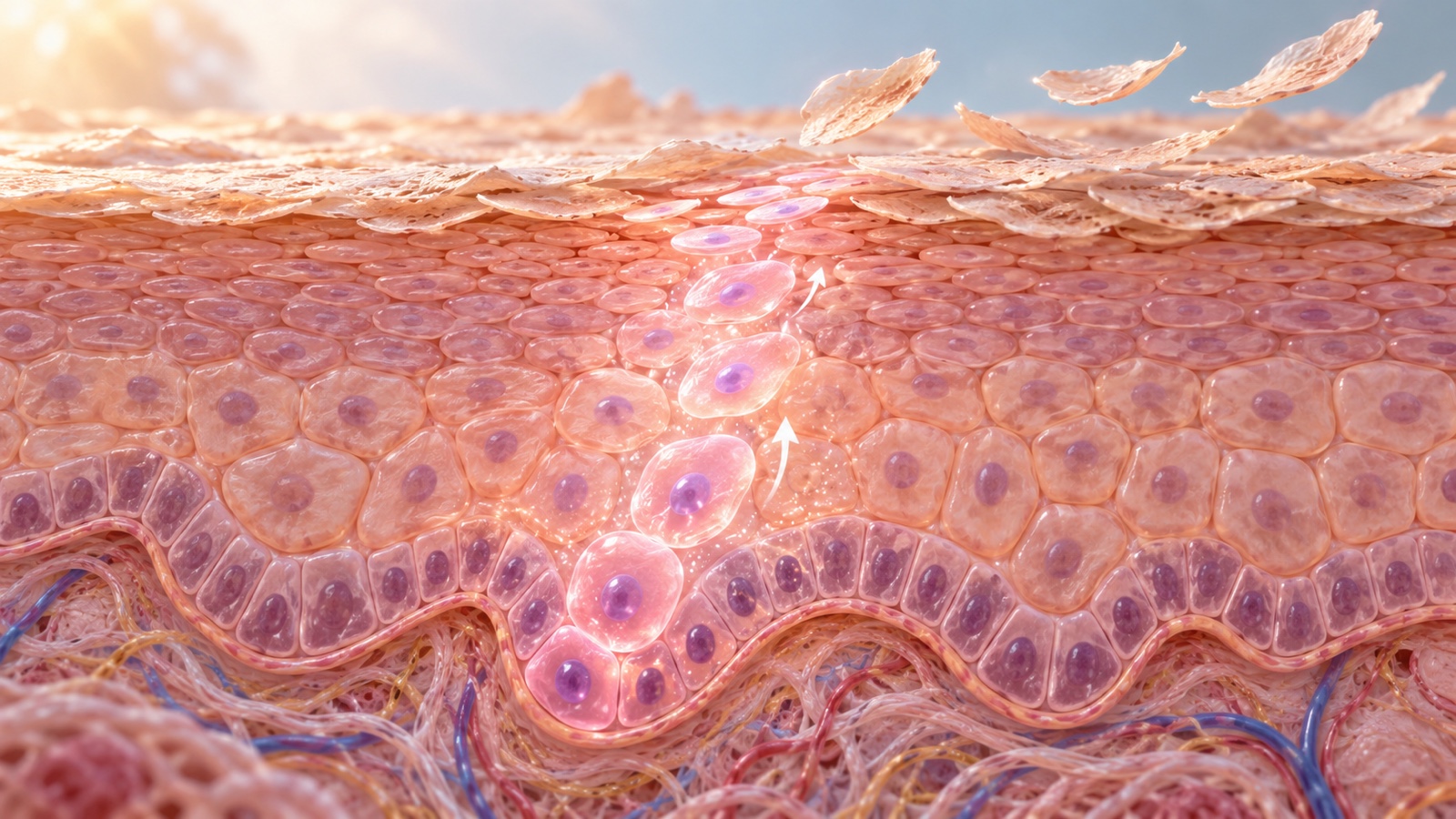
- New keratinocytes form near the bottom of the epidermis.
- They gradually move toward the surface as they mature.
- Surface cells become flattened and packed with keratin.
- The outermost epidermal layer is called the stratum corneum.
- Cells in the stratum corneum are called corneocytes.
- Corneocytes are dead cells embedded in a lipid-rich matrix.
- This structure is sometimes compared with bricks held together by mortar.
- Surface corneocytes are continuously shed in tiny amounts.
- The entire epidermal renewal process takes several weeks in healthy adults, but timing varies.
- Cell turnover is generally faster in young people than in older adults.
- Injury and skin disease can alter turnover speed dramatically.
- Psoriasis involves abnormally rapid epidermal cell turnover among other immune changes.
- The epidermis is thicker on palms and soles than on most other body areas.
- Thick skin on palms and soles has an extra epidermal layer called the stratum lucidum.
- Most of the body is covered by thinner skin without that distinct layer.
- Calluses form when repeated friction or pressure stimulates thickening of the outer skin.
- Calluses are protective adaptations but can become painful when excessive.
- The dust in a home contains many materials, and shed human skin contributes some of it, although the popular claim that household dust is mostly skin is an exaggeration.
Melanin helps create skin color and defend against ultraviolet light
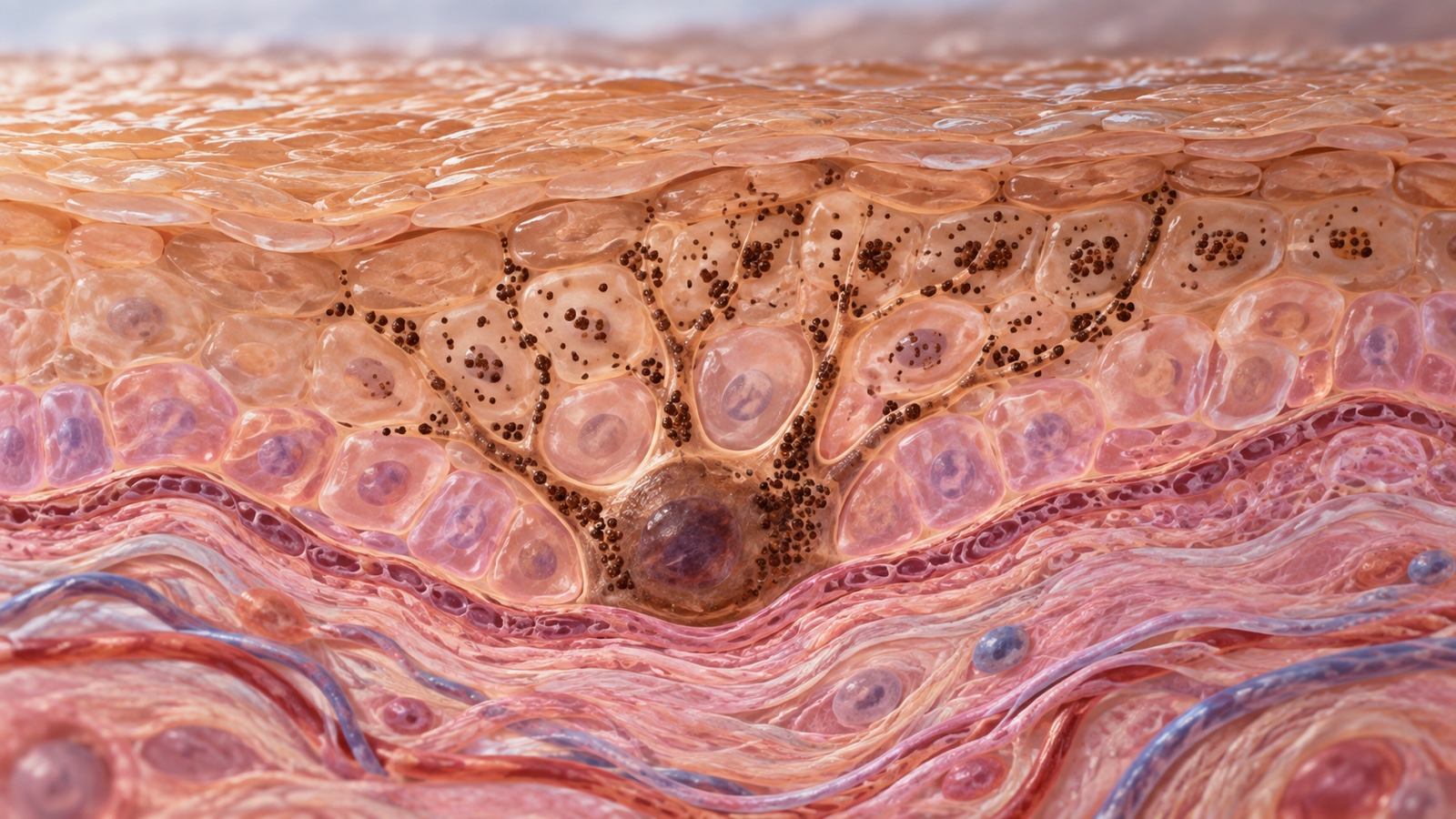
- Melanocytes are pigment-producing cells located mainly near the base of the epidermis.
- Melanocytes make a pigment called melanin.
- Melanin is packaged into structures called melanosomes.
- Melanosomes are transferred from melanocytes to nearby keratinocytes.
- Human skin color depends on melanin amount, type, distribution, genetics, blood flow, and other factors.
- People with different skin tones have broadly similar numbers of melanocytes in comparable body regions.
- Major color differences arise largely from how melanocytes produce, package, and distribute pigment.
- Eumelanin is typically brown to black.
- Pheomelanin contributes red to yellow tones.
- Ultraviolet exposure can stimulate increased melanin production.
- This response produces tanning in people whose skin is capable of tanning.
- A tan is evidence that skin has responded to ultraviolet injury rather than proof that sunlight caused no damage.
- Melanin can absorb and scatter some ultraviolet radiation.
- Darker natural pigmentation provides more UV protection on average but does not eliminate sunburn or skin-cancer risk.
- Freckles are small areas of increased pigmentation that often become more visible with sun exposure.
- Common freckles do not contain dramatically more melanocytes than surrounding skin.
- Instead, their melanocytes tend to make more pigment in those spots.
- Albinism includes inherited conditions that reduce melanin production or distribution.
- Vitiligo causes loss of functioning melanocytes in patches through an autoimmune process.
- Human pigmentation is a beautiful example of biology responding to ancestry, genetics, sunlight, and evolution rather than fitting into a few neat color boxes.
Sweat, blood flow and goosebumps help manage temperature
- Skin helps regulate body temperature through sweating and changes in blood flow.
- Eccrine sweat glands are distributed across most of the body.
- They are especially numerous on palms, soles, and the forehead.
- Eccrine sweat is mostly water with dissolved salts and other substances.
- Evaporation of sweat removes heat from the skin surface.
- Sweating works less effectively in very humid air because evaporation slows.
- Hot skin can receive more blood when surface vessels dilate.
- This helps transfer internal heat toward the environment.
- Cold conditions can narrow skin blood vessels and reduce heat loss.
- Skin can look redder when surface blood flow increases.
- Apocrine glands are concentrated in areas such as the armpits and groin.
- Apocrine secretions are initially nearly odorless.
- Body odor develops largely when skin bacteria break down components of these secretions.
- Humans have tiny muscles called arrector pili attached to many hair follicles.
- These muscles contract during cold or strong emotion.
- The contraction makes hairs stand and produces goosebumps.
- Goosebumps are much more useful for insulation in furry mammals than in nearly hairless humans.
- They are an evolutionary leftover of a response that can fluff an animal's coat.
- Goosebumps can also occur during music, fear, awe, or other emotional experiences.
- Your skin can sweat, flush, pale, and raise thousands of tiny bumps without conscious permission because temperature control and emotion both have direct lines into the system.
Skin is packed with sensors for touch, pain and temperature
- Skin contains many sensory nerve endings.
- Different receptors respond preferentially to pressure, vibration, stretch, temperature, pain, and itch.
- Merkel-cell complexes help detect sustained pressure and fine detail.
- Meissner corpuscles respond strongly to light touch and low-frequency vibration.
- Pacinian corpuscles respond strongly to rapid vibration and deep pressure changes.
- Ruffini endings respond to skin stretch.
- Free nerve endings participate in pain, temperature, itch, and other sensations.
- Hands, lips, and face have especially dense sensory representation.
- The back has much poorer fine-touch resolution than fingertips.
- Two nearby touches may feel like one when they occur on a low-resolution skin region.
- This can be measured with a two-point discrimination test.
- Fingertips can distinguish points much closer together than the upper arm can.
- Touch receptors adapt at different speeds.
- Some respond strongly when a stimulus begins and then quiet down.
- Others continue signaling while pressure remains.
- Pain receptors help protect the body by warning about potential tissue damage.
- Itch uses overlapping but distinct neural pathways from ordinary pain.
- Scratching can temporarily inhibit itch signaling while also risking skin injury if excessive.
- Neuropathy can reduce skin sensation even when the skin itself looks normal.
- The reason a tiny splinter in a fingertip can dominate your entire attention is that your nervous system gave that patch of skin an absurdly detailed reporting budget.
Cuts heal through a carefully staged repair process
- Skin repair begins almost immediately after injury.
- Damaged blood vessels constrict and clotting helps limit bleeding.
- Platelets release chemical signals that help organize early healing.
- Inflammation brings immune cells into the wound.
- Neutrophils help remove microbes and damaged material early in healing.
- Macrophages clear debris and release signals that coordinate later repair.
- Fibroblasts move into the wound and produce collagen and other matrix materials.
- New blood vessels grow into healing tissue.
- Epithelial cells migrate across the wound surface.
- Collagen fibers are remodeled for weeks to months after a wound closes.
- Scar tissue is usually not identical to the original uninjured skin.
- Scar tissue often lacks normal hair follicles and sweat glands.
- Fresh scars can look red because blood-vessel activity is high.
- Scars often flatten and fade with time.
- Some people develop thick raised hypertrophic scars.
- Keloids grow beyond the original wound boundaries.
- Keloid tendency varies with genetics and is more common in people with darker skin pigmentation.
- Wounds heal more slowly when blood supply, nutrition, immune function, or glucose control is impaired.
- Repeated picking can restart inflammation and delay repair.
- A paper cut looks trivial, but the repair response recruits clotting proteins, immune cells, migrating epithelium, new vessels, collagen builders, and weeks of structural remodeling.
Sunlight, vitamin D and the microbiome make skin chemically busy
- Ultraviolet B radiation can start vitamin D synthesis in skin.
- A cholesterol-related molecule in the epidermis is converted into a vitamin D precursor by UVB.
- The liver and kidneys later modify vitamin D into forms used by the body.
- Sun exposure is not the only way to obtain vitamin D.
- Diet and supplements can also supply vitamin D.
- Excess ultraviolet exposure damages DNA in skin cells.
- Sunburn is an inflammatory response to ultraviolet injury.
- Repeated UV exposure accelerates wrinkles, pigment changes, and loss of skin elasticity.
- Ultraviolet exposure is a major preventable cause of skin cancer.
- Broad-spectrum sunscreen protects against both UVA and UVB radiation when used correctly.
- SPF primarily describes protection against UVB-related sunburn under standardized testing conditions.
- No sunscreen blocks 100 percent of ultraviolet radiation.
- Shade, clothing, hats, and timing outdoor exposure add protection beyond sunscreen alone.
- Skin microbes include bacteria, fungi, viruses, and microscopic mites.
- Many resident microbes are harmless or beneficial under ordinary conditions.
- Skin microbes compete for space and nutrients with potential pathogens.
- The microbiome differs between people and between body sites on the same person.
- Washing changes skin microbes temporarily but does not sterilize healthy skin.
- Overly harsh cleansing can damage the barrier and increase dryness or irritation.
- The skin barrier depends heavily on lipids including ceramides, cholesterol, and fatty acids.
Fingerprints, aging and 5 final skin facts
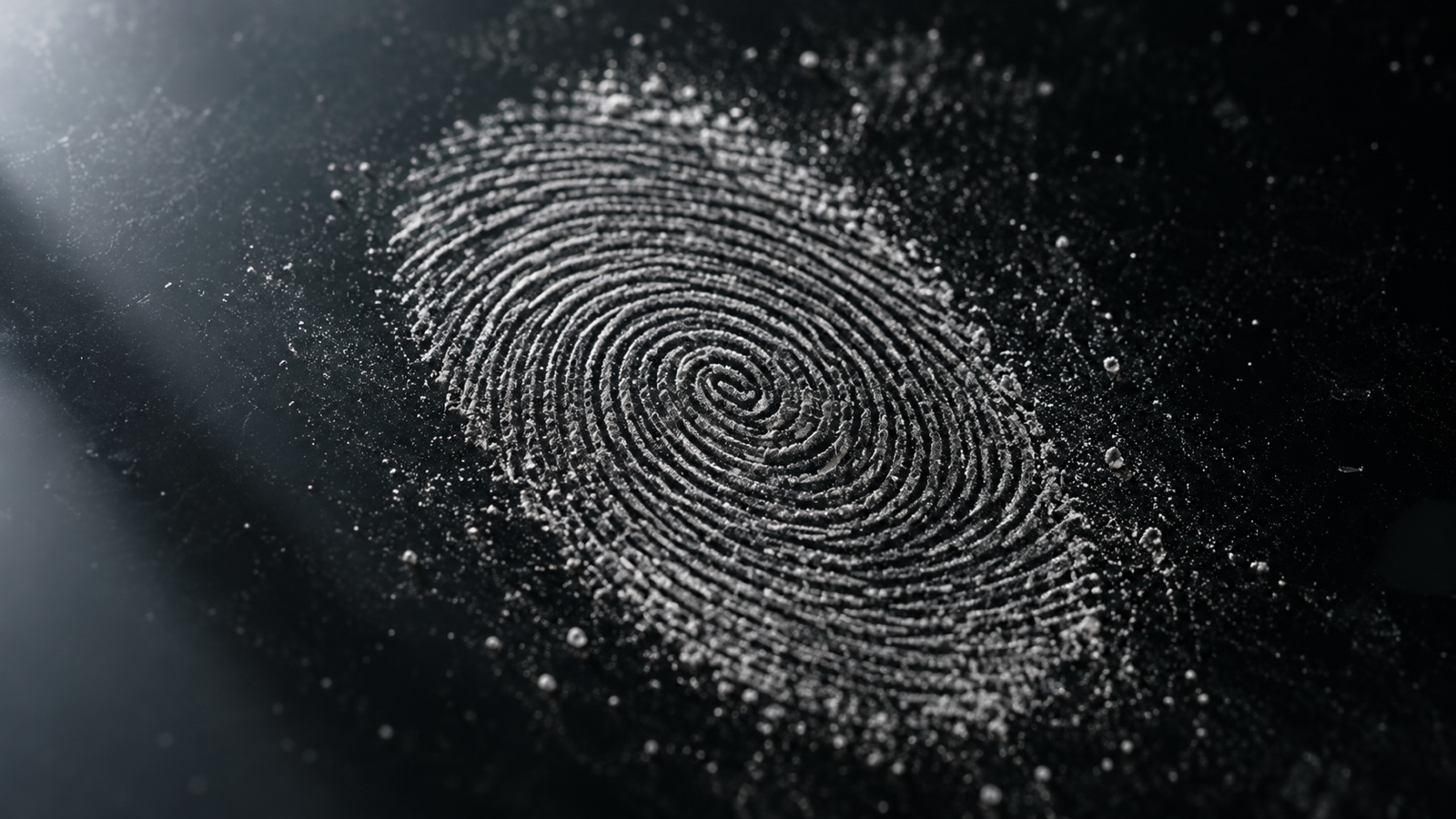
- Friction ridges on fingertips form before birth and create the patterns commonly called fingerprints.
- Identical twins have very similar genes but do not have identical fingerprints because development includes tiny local differences.
- Aging skin generally becomes thinner, drier, less elastic, and slower to repair as cellular and connective-tissue changes accumulate.
- Wrinkles reflect a mix of intrinsic aging, facial movement, gravity, genetics, smoking, and especially cumulative ultraviolet exposure.
- After 145 facts, skin stops feeling like packaging and starts looking like a self-renewing barrier, sensory network, thermostat, immune habitat, repair system, pigment organ, and biochemical interface with the outside world.
Quick FAQ
Q: What are the main layers of skin?
A: The two main skin layers are the epidermis and dermis. Subcutaneous tissue lies underneath and is closely associated with the skin.
Q: Does darker skin still need sun protection?
A: Yes. More melanin provides some natural UV protection, but people with every skin tone can develop sun damage and skin cancer.
Q: Are goosebumps useful?
A: They are a remnant of a much more useful response in furry mammals, where raised hair traps insulating air and can make an animal look larger.
Q: Is household dust mostly dead skin?
A: No. Shed skin contributes to indoor dust, but dust also contains fibers, soil particles, pollen, microbes, soot, and many other materials.
Q: Why does skin wrinkle with age?
A: Collagen, elastin, fat distribution, hydration, cell turnover, facial movement, genetics, and cumulative ultraviolet damage all contribute.

Ellie is the owner and sole author of Fun Facts, combining her mechanical engineering background with years of research-driven writing to deliver facts you can trust. Every article is thoroughly fact-checked and routinely updated as new science and sources emerge to keep information accurate and current. Her mission is to make learning delightful while upholding high standards of reliability and transparency.