
Eggs are breakfast, baking ingredient, sauce thickener, foam, binder, glaze, protein source, and tiny biology lesson all at once. Crack one open and you get membranes, proteins, fats, pigments, water, and an entire structure designed to support a developing chick.
An egg is a carefully layered biological package
- A chicken egg begins forming inside the hen's reproductive tract.
- The yolk develops first.
- The yolk is released from the ovary during ovulation.
- Egg white is added around it as it moves through the oviduct.
- Membranes form around the white.
- The shell is added last.
- Shell formation takes many hours.
- Most eggshell is calcium carbonate.
- The shell contains thousands of microscopic pores.
- Those pores allow gas exchange.
- A thin protective coating covers a freshly laid egg.
- This coating is called the cuticle or bloom.
- Two shell membranes sit just inside the shell.
- An air cell forms between those membranes as the egg cools.
- The air cell grows larger as the egg ages.
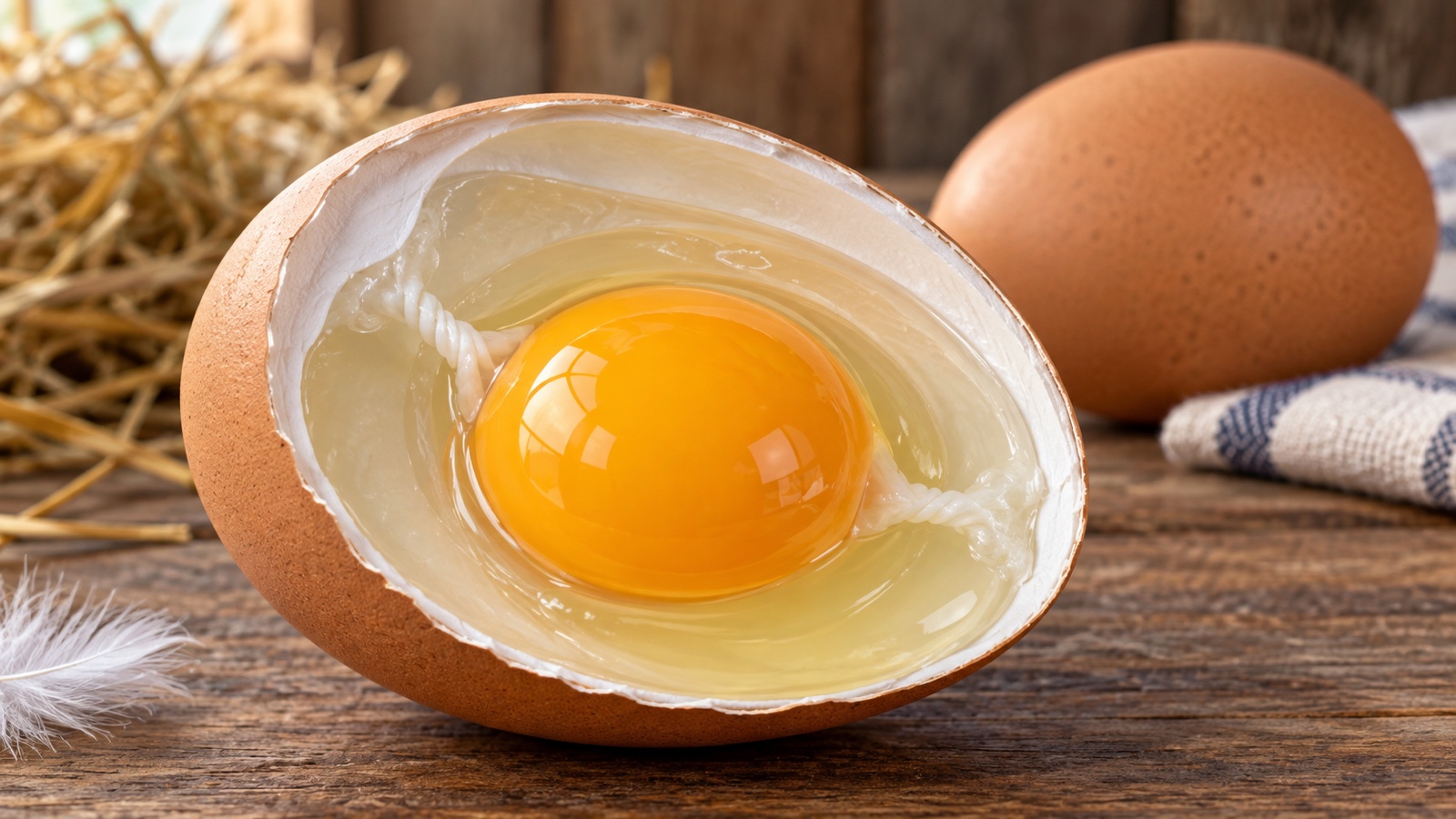
- The chalazae are twisted cords that help center the yolk.
- They are more noticeable in fresh eggs.
- The yolk is enclosed by a vitelline membrane.
- Egg white is also called albumen.
- An egg is basically a self-contained life-support package that humans discovered is also excellent on toast.
Shell color comes from genetics, not nutrition
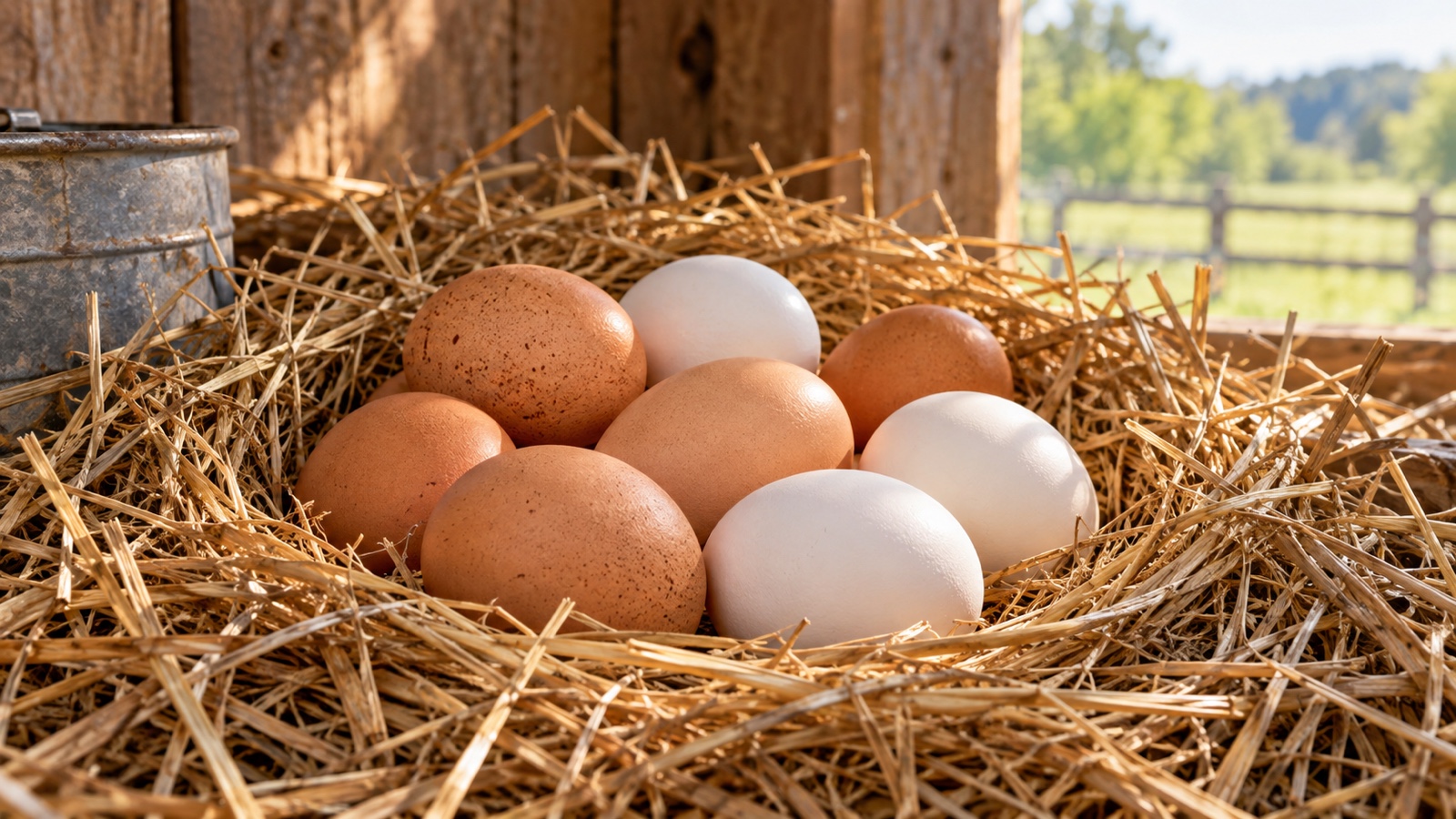
- Chicken eggs can have white shells.
- They can also be brown, blue, green, cream, or speckled.
- Shell color depends mainly on hen genetics.
- White Leghorns typically lay white eggs.
- Many Rhode Island Reds lay brown eggs.
- Araucana-related breeds can lay blue eggs.
- Olive eggers produce greenish eggs.
- Brown pigment is deposited late in shell formation.
- Blue pigment is incorporated through more of the shell thickness.
- Shell color does not determine nutritional quality.
- Brown eggs are not automatically healthier.
- Blue eggs are not naturally lower in cholesterol.
- Shell thickness varies with hen age and nutrition.
- Older hens often lay larger eggs with somewhat thinner shells.
- Calcium intake affects shell quality.
- Heat stress can reduce shell strength.
- Shell texture can vary naturally.
- Occasional ridges or bumps may form.
- Commercial grading focuses on quality rather than shell color.
- The egg aisle looks like a nutrition chart, but much of the color difference is really chicken genetics doing interior design.
Yolk color reflects the hen's diet
- Egg yolks range from pale yellow to deep orange.
- Carotenoid pigments create much of that color.
- Hens eating more yellow-orange plant pigments lay darker yolks.
- Corn can deepen yolk color.
- Marigold-derived pigments are used in some feeds.
- Pasture diets can also change yolk color.
- Darker yolks are not automatically more nutritious.
- Yolk contains nearly all of an egg's fat.
- It also contains cholesterol.
- Yolk supplies choline.
- It contains vitamins A, D, E, and K in varying amounts.
- Egg yolks contain lutein and zeaxanthin.
- These carotenoids are associated with eye health.
- The yolk contains about half the egg's protein.
- Egg white contains the other major share.
- Yolk emulsifiers help mix fat and water.
- Lecithin is an important yolk phospholipid.
- Mayonnaise depends on egg-yolk emulsification.
- Hollandaise sauce also relies on egg emulsification.
- The yolk is doing enough chemistry that calling it “the yellow part” feels disrespectful.
Heat transforms egg proteins
- Raw egg proteins are folded into specific shapes.
- Heat unfolds those proteins.
- This process is called denaturation.
- Unfolded proteins link together.
- This creates a gel network.
- Egg whites turn from clear to opaque as proteins coagulate.
- Different egg proteins set at different temperatures.
- Egg whites begin setting before yolks fully firm.
- This makes soft-boiled eggs possible.
- Overheating squeezes water from protein networks.
- That makes scrambled eggs rubbery.
- Low gentle heat creates softer curds.
- High heat creates firmer curds quickly.
- Salt can affect egg protein behavior.
- Acid also changes protein interactions.
- Custards use eggs to thicken liquids gently.
- Too much heat can curdle custard.
- Baked goods use eggs for structure.
- Egg wash browns pastries and adds shine.
- Cooking an egg is really controlled protein unfolding, which sounds less cozy but explains almost everything.
Egg whites can hold astonishing amounts of air
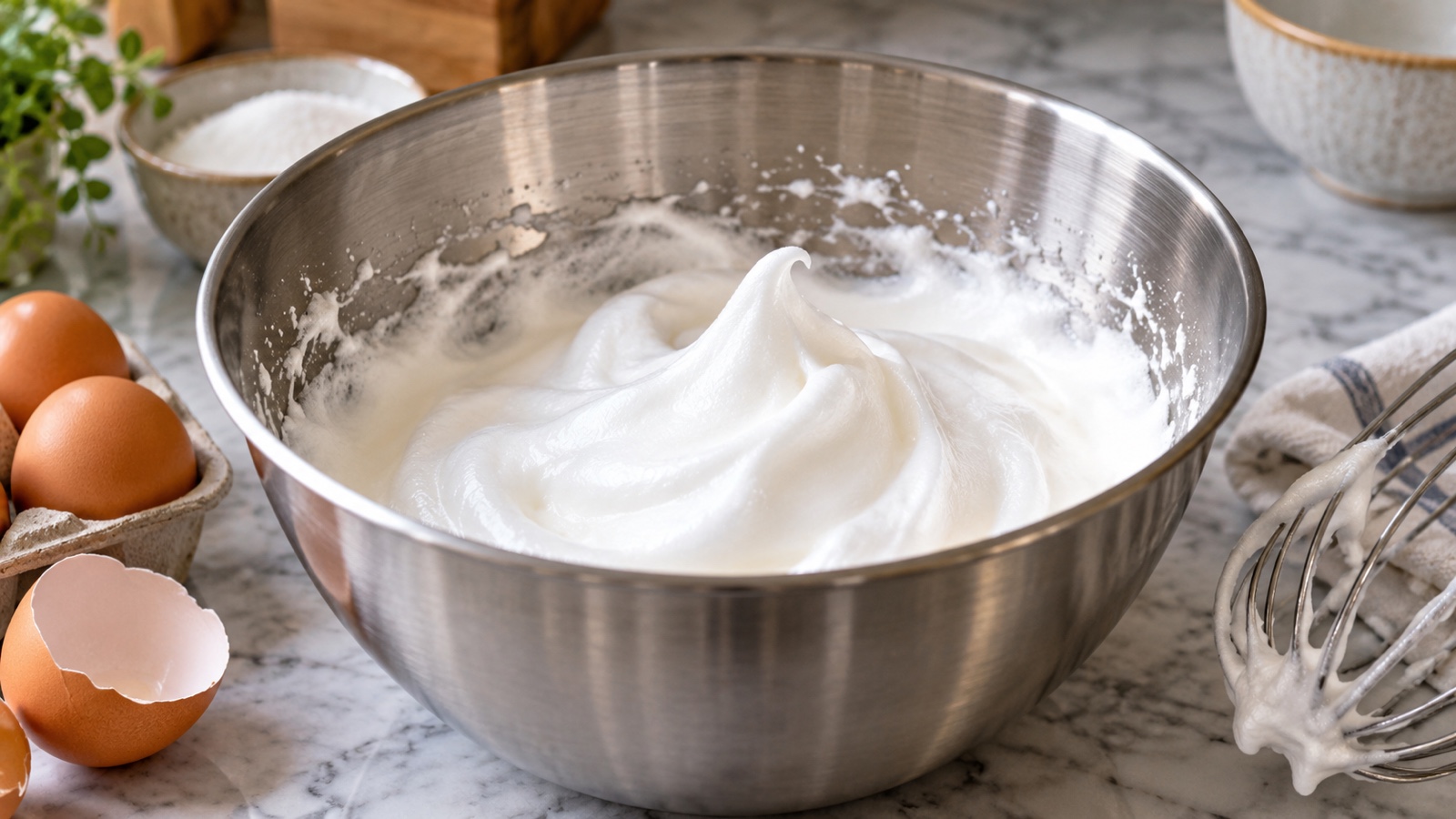
- Whisking egg whites creates foam.
- Beating unfolds proteins at air-water boundaries.
- Those proteins stabilize tiny air bubbles.
- Clean bowls improve foam formation.
- Fat interferes with egg-white foaming.
- Even a small amount of yolk can reduce volume.
- Copper bowls can stabilize egg-white foam.
- Acid such as cream of tartar also stabilizes foam.
- Sugar slows foaming but strengthens finished meringue.
- Soft peaks bend over.
- Stiff peaks stand more upright.
- Overbeaten whites become dry and difficult to fold.
- Meringue relies on whipped egg whites and sugar.
- Angel-food cake uses egg-white foam for lift.
- Soufflés use expanding air and steam.
- Macarons depend on meringue structure.
- Pavlova combines crisp meringue with a soft interior.
- Foamed eggs can increase many times in volume.
- Egg-white foams are temporary until heat sets them.
- A single egg white can become a bowl of foam because proteins are surprisingly good bubble security guards.
Freshness changes how eggs behave
- Fresh eggs have thicker whites.
- The yolk sits higher in a fresh egg.
- As eggs age, carbon dioxide escapes through the shell.
- The white becomes more alkaline.
- Proteins loosen and the white spreads more.
- The yolk membrane also weakens with age.
- Older eggs are easier to peel after hard boiling.
- Fresh eggs can cling strongly to shell membranes.
- The air cell enlarges as water evaporates.
- This is why older eggs float more readily in water.
- The float test estimates age, not safety.
- A floating egg is not automatically spoiled.
- Cracking and checking odor is more informative.
- Rotten eggs often smell strongly sulfurous.
- Hydrogen sulfide creates the classic rotten-egg smell.
- Hard-cooked yolks can develop a green-gray ring.
- This comes from iron sulfide.
- Overcooking and slow cooling encourage the ring.
- The discoloration is harmless.
- The egg's chemistry keeps changing in the refrigerator even when absolutely nothing visible appears to happen.
Nutrition, safety and 25 final egg facts
- A large egg contains roughly 70 calories.
- It provides about 6 grams of protein.
- Egg protein contains all essential amino acids.
- Eggs are a significant source of choline.
- They also provide vitamin B12.
- Egg yolks contain dietary cholesterol.
- Dietary cholesterol affects blood cholesterol differently among individuals.
- Saturated fat usually has a larger effect on LDL cholesterol than dietary cholesterol for many people.
- Raw or undercooked eggs can carry Salmonella.
- Refrigeration lowers bacterial growth.
- Pasteurized shell eggs reduce raw-egg risk.
- Pasteurized liquid egg products are common commercially.
- Eggs should be refrigerated in the United States.
- U.S. commercial eggs are washed before sale.
- Washing removes the natural bloom.
- That makes refrigeration especially important.
- Many European countries use different egg-handling systems.
- Egg storage rules therefore differ internationally.
- Cooked eggs should not sit at room temperature for long periods.
- Hard-boiled eggs should also be refrigerated.
- Double-yolk eggs occur when two yolks are released close together.
- Young hens are especially likely to lay them.
- Eggs can occasionally contain tiny blood spots.
- Blood spots do not mean an egg was fertilized.
- After 145 facts, an egg feels less like one ingredient and more like a protein laboratory, emulsifier, foam machine, nutrient package, and miniature reproductive system inside a calcium shell.

Ellie is the owner and sole author of Fun Facts, combining her mechanical engineering background with years of research-driven writing to deliver facts you can trust. Every article is thoroughly fact-checked and routinely updated as new science and sources emerge to keep information accurate and current. Her mission is to make learning delightful while upholding high standards of reliability and transparency.