
Skateboarding began as a sidewalk answer to flat surf and grew into a sport, art form, transportation tool, youth culture, design laboratory, and Olympic event. Its most important tricks were invented by riders experimenting with ramps, empty pools, curbs, handrails, and eventually the board itself. These 145 skateboarding facts explore origins, decks, trucks, wheels, ollies, street and park skating, famous innovations, video culture, competitions, safety, physics, and Olympic history.
Skateboarding basics
- A skateboard is a narrow deck mounted on two pivoting trucks and four wheels.
- Skateboard decks are commonly made from laminated maple veneer.
- Most modern street boards have an upturned nose and tail.
- Grip tape covers much of the top surface.
- Grip tape works like very coarse sandpaper.
- It helps a rider’s shoes stay connected to the deck.
- Trucks allow a skateboard to steer when the rider leans.
- Urethane wheels provide grip and rebound.
- Ball bearings inside each wheel reduce rolling friction.
- Skaters ride either regular or goofy stance.
- Regular stance places the left foot toward the front.
- Goofy stance places the right foot toward the front.
- Neither stance is inherently better.
- Switch stance means riding with the opposite stance from a skater’s natural one.
- Modern skateboarding includes street, park, vert, bowl, downhill, freestyle, cruising, and other disciplines.
Sidewalk surfing
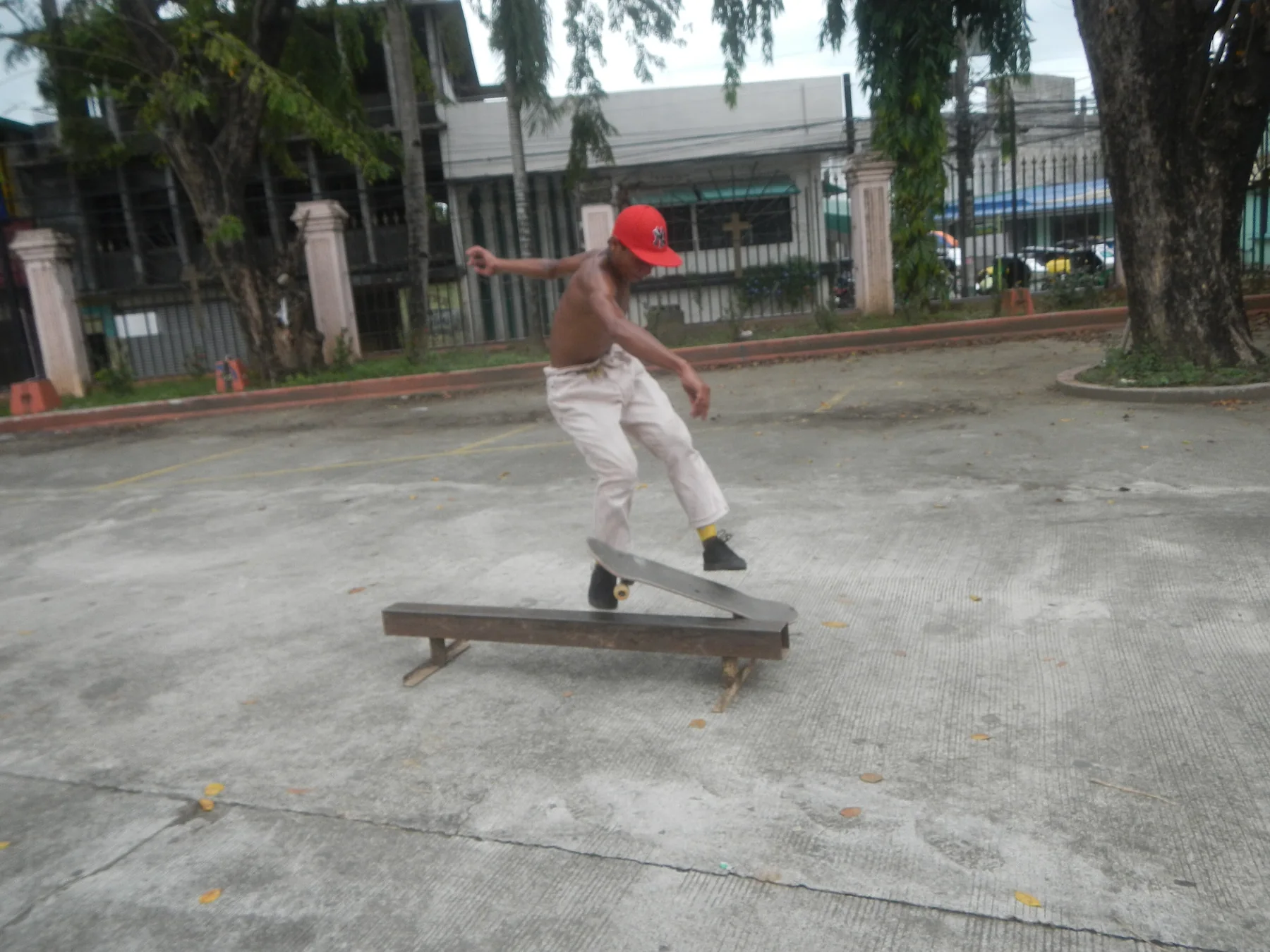
- Skateboarding developed in California during the mid-20th century.
- Its exact inventor is unknown.
- Early riders attached roller-skate wheels to boards or wooden platforms.
- Surfers used early skateboards when ocean waves were poor.
- The activity became known as sidewalk surfing.
- Surfing strongly influenced early stance and turning style.
- Commercial skateboard products appeared by the late 1950s and early 1960s.
- Early wheels were often made from clay or hard metal-like materials.
- Those wheels had poor grip compared with modern urethane.
- Small cracks or pebbles could stop a board abruptly.
- Early skateboarding boomed and crashed repeatedly in popularity.
- Safety concerns led some cities and businesses to restrict it.
- Skateboard magazines began documenting the emerging culture.
- Skateboarding gradually developed its own identity separate from surfing.
- What started as imitation wave riding became a sport capable of using nearly any paved environment.
Urethane wheels changed everything
- Polyurethane skateboard wheels became widely influential during the 1970s.
- Frank Nasworthy is closely associated with popularizing urethane wheels through Cadillac Wheels.
- Urethane offered better grip than earlier clay wheels.
- It also rolled more smoothly over rough pavement.
- Better traction allowed deeper turns.
- Higher confidence encouraged riders to go faster.
- Wheel hardness affects grip, speed, and vibration.
- Softer wheels are often comfortable for cruising on rough streets.
- Harder wheels slide more predictably for many technical street tricks.
- Large wheels maintain speed over rough ground more easily.
- Small wheels can reduce board height and weight.
- Wheel profiles and contact patches also influence handling.
- Modern formulas are tuned for different disciplines.
- A seemingly simple change in plastic chemistry helped trigger a major skateboarding revival.
- The modern sport would be almost unrecognizable on the hard slippery wheels of its earliest era.
Empty pools create vertical skating
- Southern California drought conditions in the 1970s are famously associated with empty swimming pools being skated.
- Skaters also sought out drained pools for their curved walls regardless of one simple drought origin story.
- Pool transitions allowed riders to carve far above flat-ground angles.
- The Zephyr Competition Team became famous for aggressive low-slung surf-influenced skating.
- The group is commonly nicknamed the Z-Boys.
- Members included influential skaters such as Tony Alva, Jay Adams, and Stacy Peralta.
- Pool skating pushed riders toward vertical terrain.
- Skateparks began building purpose-designed bowls and transitions.
- Halfpipes and vert ramps developed from these curved-wall traditions.
- Vert means vertical.
- A vert ramp includes sections that reach a vertical wall angle near the top.
- Skaters launch above the coping to perform aerial maneuvers.
- Coping is the metal or concrete edge along the lip of a ramp or pool.
- Grinding uses trucks or other board parts sliding along an edge.
- Modern skatepark design still carries the DNA of backyard pools and 1970s concrete parks.
The ollie changed skateboarding
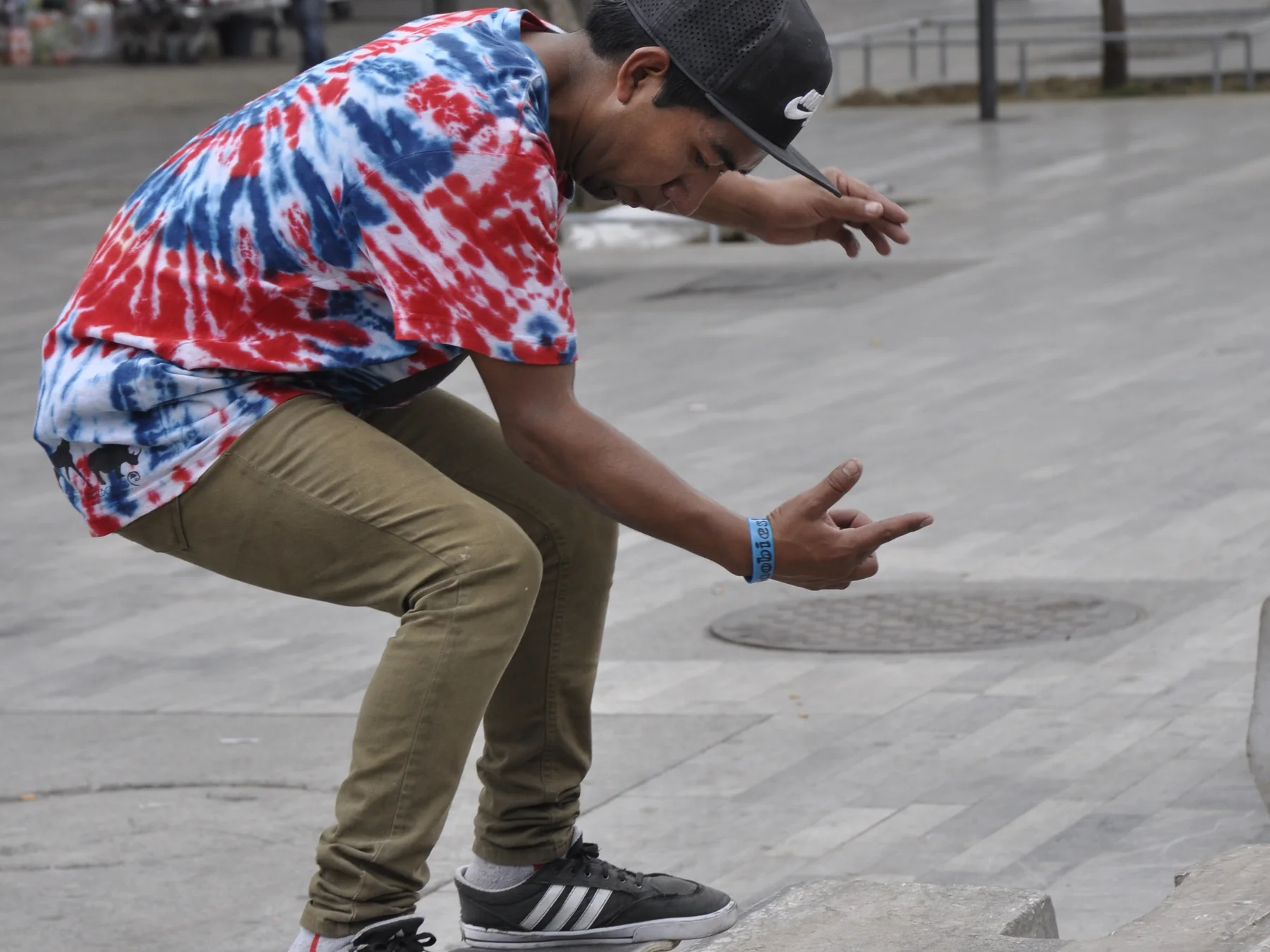
- An ollie is a jump performed without grabbing the skateboard with the hands.
- Alan Gelfand developed the original no-hands aerial ollie on transition in the late 1970s.
- His nickname was Ollie.
- The trick took its name from him.
- Rodney Mullen adapted the ollie to flat ground.
- The flatground ollie became the foundation of modern street skating.
- The rider snaps the tail against the ground.
- The front foot slides upward and forward along the deck.
- The board rotates and rises with the rider.
- Timing and body motion matter more than simply stomping the tail.
- The board is not physically attached to the rider.
- Grip and foot movement help keep it controlled in the air.
- Ollies allow skaters to jump onto curbs, rails, ledges, stairs, and other obstacles.
- Many flip tricks begin with an ollie-like pop.
- One no-hands jump transformed streets from surfaces to roll across into three-dimensional terrain.
Rodney Mullen rewrites flatground skating
- Rodney Mullen became one of skateboarding’s most influential technical innovators.
- He began as a freestyle skateboarder.
- Freestyle emphasized flatground balance, spins, handstands, flips, and precise board control.
- Mullen developed or popularized numerous tricks that became street-skating foundations.
- He is credited with the flatground ollie.
- He developed the kickflip from earlier freestyle flip ideas.
- A kickflip rotates the board along its length while the rider remains above it.
- The heelflip rotates in the opposite direction from a kickflip.
- The 360 flip combines board spin with a flip.
- Mullen also pioneered darkslides and other highly technical maneuvers.
- Street skaters adopted freestyle tricks on larger obstacles.
- Board shapes changed to support technical street riding.
- Noses became more functional for tricks.
- Modern double-kick decks allow popping from either end more easily.
- Much of today’s trick vocabulary can be traced to experimentation by a teenager practicing alone on flat pavement.
Street skating turns cities into terrain
- Street skateboarding uses features found in built environments.
- Curbs become grindable edges.
- Stair sets become gaps.
- Handrails become sliding or grinding obstacles.
- Benches can function like ledges.
- Banks and loading docks create transitions and drops.
- Architecture strongly influences which tricks are possible.
- Famous skate spots can become cultural landmarks.
- Security measures intended to prevent skating are often called skate stoppers.
- Conflicts arise when skating damages property or disrupts pedestrians.
- Purpose-built plazas can recreate street-style terrain legally.
- Good skatepark design uses familiar urban forms while controlling traffic and landing space.
- Street skating rewards creativity because the same obstacle can be approached in many ways.
- Video documentation became especially important because street tricks might happen only once at a spot.
- Skateboarding teaches riders to see ordinary architecture as a map of possible movement.
Skate videos shaped the culture
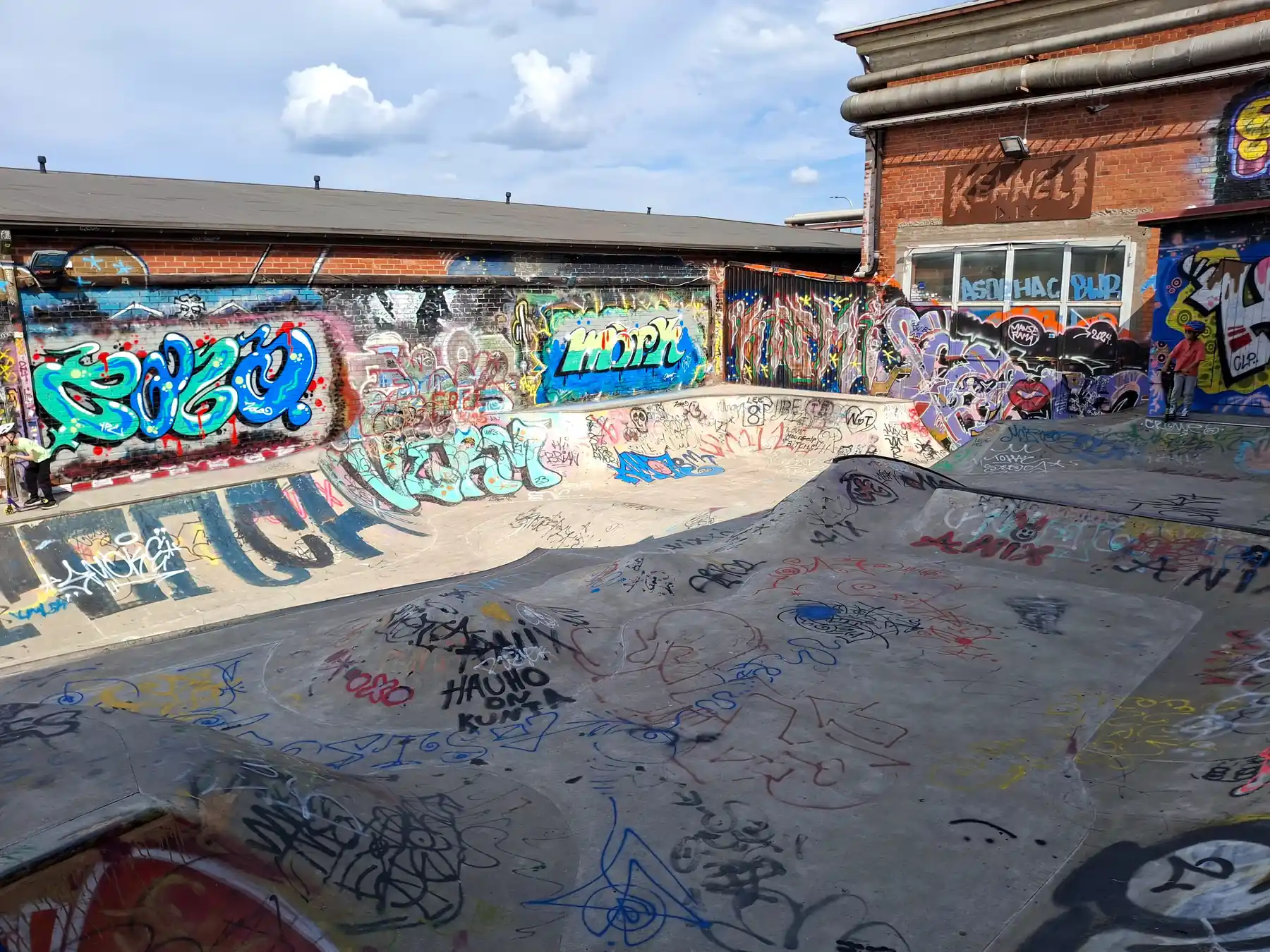
- Skateboarding developed a strong video culture before online social media existed.
- Companies released team videos on VHS tapes.
- Videos introduced skaters to new tricks and spots.
- Soundtracks became part of skate identity.
- Filming style influenced how tricks felt to viewers.
- Wide-angle lenses became visually associated with street skating.
- The fisheye lens lets a filmer stay close while capturing the skater and obstacle.
- Dedicated skateboard filmers developed specialized techniques.
- Slow motion helps reveal board rotation and foot placement.
- Repeated video watching became a way to learn tricks.
- DVDs later replaced many VHS releases.
- Online video then transformed distribution again.
- Phone cameras allow nearly every skater to document attempts instantly.
- Social platforms speed up the spread of new tricks and style.
- Even in the streaming era, a carefully edited full skate video remains an important artistic format.
Park and street at the Olympics
- Skateboarding was approved for the Tokyo 2020 Olympic program in 2016.
- The delayed Tokyo Games were held in 2021.
- Skateboarding made its Olympic debut there.
- Olympic skateboarding includes street and park events.
- Street courses feature stairs, handrails, ledges, banks, and other urban-style obstacles.
- Park courses use large flowing bowls and transitions.
- Judges evaluate difficulty, execution, speed, height, originality, and overall performance factors.
- Olympic formats include runs and individual trick attempts depending on discipline.
- Japan’s Yuto Horigome won the first Olympic men’s street gold medal.
- Japan’s Momiji Nishiya won the first Olympic women’s street gold.
- Australia’s Keegan Palmer won the first Olympic men’s park title.
- Japan’s Sakura Yosozumi won the first Olympic women’s park title.
- Several Tokyo medalists were teenagers.
- Skateboarding returned for Paris 2024.
- The sport is also part of the pathway toward the Los Angeles 2028 Olympic Games.
Ten surprising skateboarding facts
- No single person can be credited with inventing skateboarding.
- Early skaters called the activity sidewalk surfing.
- Urethane wheel chemistry helped rescue the sport from the limitations of slippery clay wheels.
- The original ollie was a ramp trick named after Alan “Ollie” Gelfand.
- Rodney Mullen brought the ollie to flat ground and helped invent many modern flip tricks.
- A skateboard turns because its trucks pivot as the rider shifts weight.
- Regular and goofy are equally legitimate stances.
- Skate videos helped spread trick innovation decades before social media.
- Skateboarding made its Olympic debut at Tokyo 2020, held in 2021.
- For more action-sports trivia, explore our surfing facts, snowboarding facts when available, and Olympics facts.
Quick skateboarding FAQ
Who invented skateboarding?
No single inventor is known. It developed gradually in California from improvised wheeled boards and strong surfing influence.
What is an ollie?
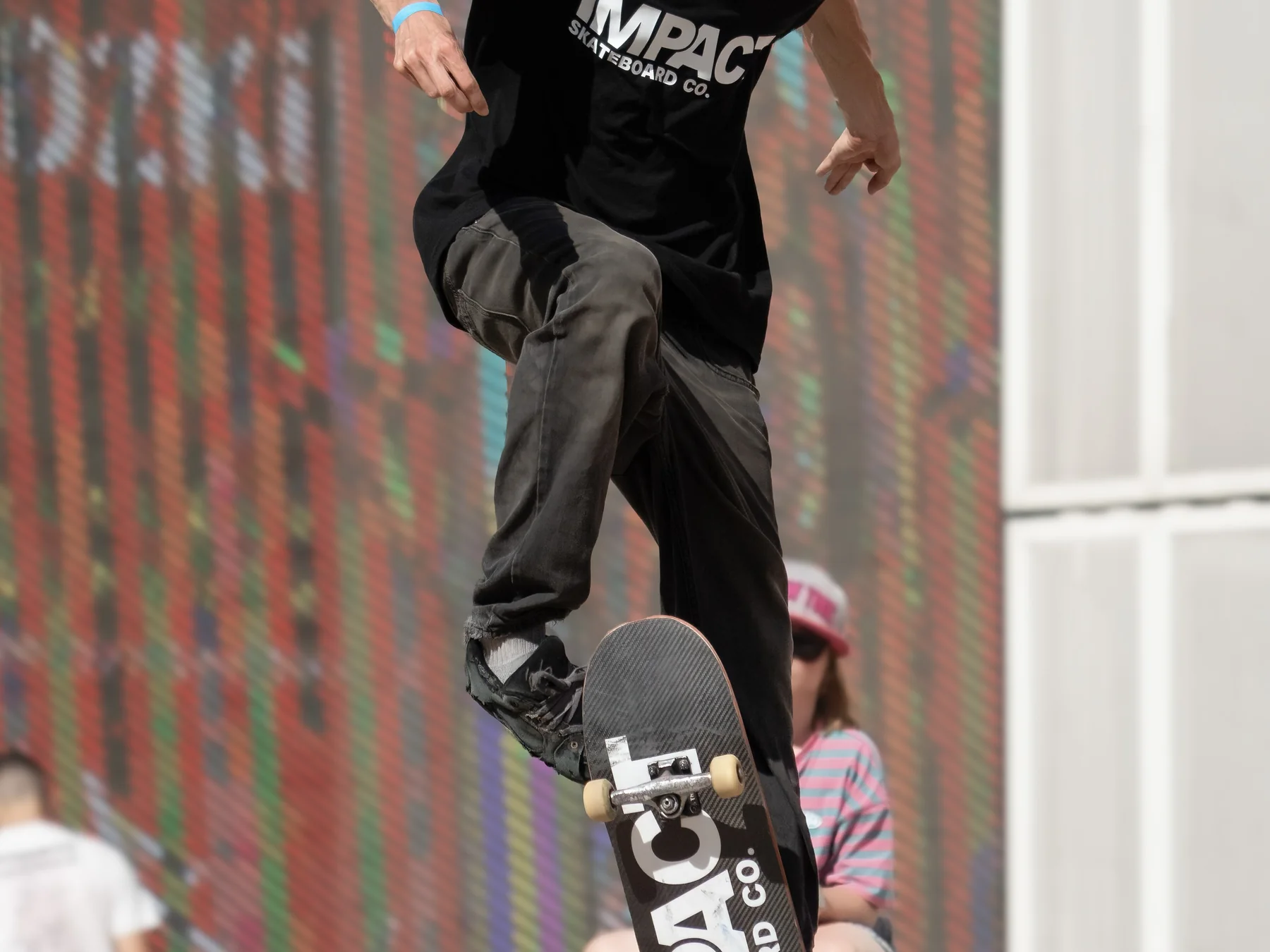
A no-hands skateboard jump in which the rider pops the tail and guides the board upward with foot movement and body timing.
What is the difference between street and park skating?
Street uses urban-style obstacles such as rails and stairs, while park uses flowing bowls, banks, walls, and transition terrain.
When did skateboarding become an Olympic sport?
It was approved in 2016 and debuted at the Tokyo 2020 Olympic Games, which were held in 2021.
What are regular and goofy stance?
Regular riders place the left foot forward, while goofy riders place the right foot forward.

Ellie is the owner and sole author of Fun Facts, combining her mechanical engineering background with years of research-driven writing to deliver facts you can trust. Every article is thoroughly fact-checked and routinely updated as new science and sources emerge to keep information accurate and current. Her mission is to make learning delightful while upholding high standards of reliability and transparency.