
Peru packs mountains, jungle, desert, and deep culture into one unforgettable country.
This list brings Peru to life with quick, kid-safe facts about places, animals, food, and history.
Whether you love archaeology, wildlife, or snacks with chili peppers, these bite-size facts make learning Peru easy and fun.
Origins & definitions
- The official name is the Republic of Peru.
- Peru is a country in western South America on the Pacific Ocean.
- Its capital and largest city is Lima.
- The country covers about 1,285,000 square kilometers (496,000 sq mi).
- Peru shares borders with Ecuador, Colombia, Brazil, Bolivia, and Chile.
- Spanish, Quechua, and Aymara are official languages at the national level.
- The national currency is the sol, written as S/.
- Peru uses Peru Time (UTC−5) and does not observe daylight saving time.
- The flag shows vertical bands of red, white, and red.
- The country dialing code is +51.
- Internet domains from Peru end with .pe.
- People from Peru are called Peruvians, or peruanos in Spanish.
Record-breakers & wow numbers
- Peru has a coastline longer than 2,400 kilometers (1,490 miles).
- Huascarán rises to 6,768 meters (22,205 ft), the highest peak in Peru.
- Lake Titicaca sits about 3,812 meters (12,507 ft) above sea level.
- The Peruvian Andes include some of the highest tropical mountains on Earth.
- Colca Canyon is over 3,000 meters deep, deeper than the Grand Canyon.
- Cotahuasi Canyon is even deeper than Colca Canyon.
- Iquitos is one of the largest cities in the world not connected by road to the rest of its country.
- Peru is one of the world’s 17 megadiverse countries.
- Over 1,800 bird species have been recorded in Peru.
- Peru hosts thousands of orchid species in its varied habitats.
- The Inca road system stretched for more than 30,000 kilometers.
- The Amazon River begins in the Peruvian Andes.
- The Nazca Lines cover hundreds of square kilometers in the southern desert.
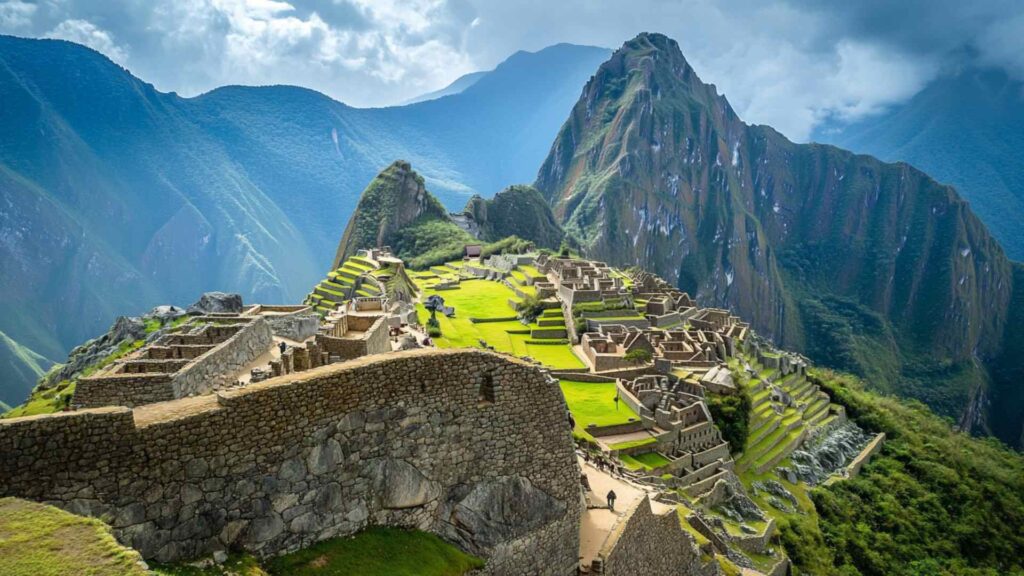
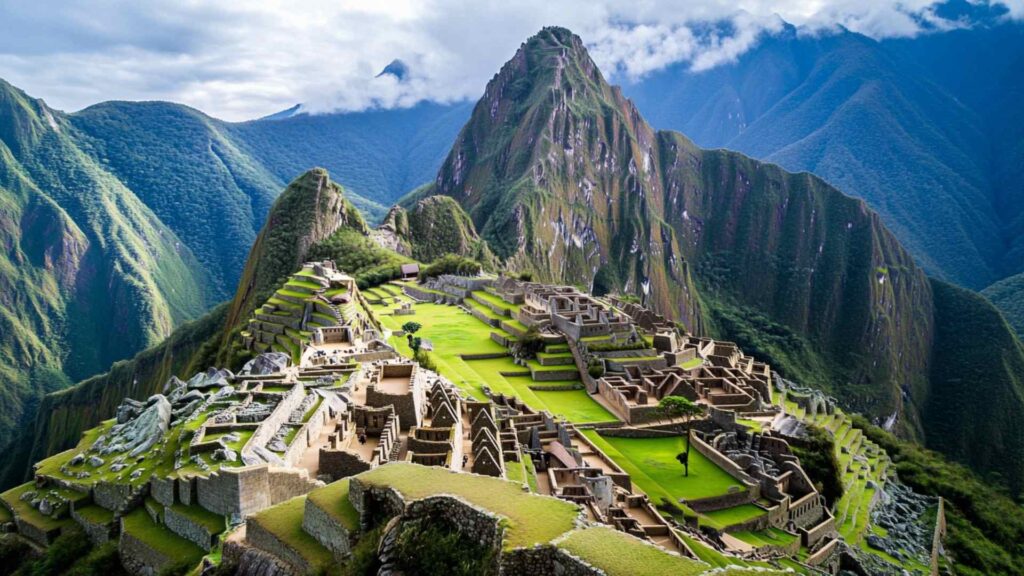
- Machu Picchu sits at about 2,430 meters (7,970 ft) above sea level.
- The Humboldt Current makes Peru’s seas among the world’s most productive fisheries.
- Peru has dozens of protected areas spanning desert, highlands, and rainforest.
- The Central Railway climbs to altitudes above 4,700 meters (15,400 ft).
- Rainbow Mountain reaches over 5,000 meters and is banded with mineral colors.
Geography & nature
- Peru has three main geographic regions: the coast, the Andes, and the Amazon.
- The coastal strip includes big cities, ports, and long beaches.
- The Sechura Desert in the north is one of the driest places in Peru.
- The Andes in Peru split into western, central, and eastern ranges.
- The high Andean plateau is called the Altiplano.
- Glaciers crown the Cordillera Blanca, the highest tropical mountain range.
- Huascarán National Park protects many Andean peaks and glacial valleys.
- The Callejón de Huaylas is a long valley running between high ridges.
- The Apurímac, Ene, Ucayali, and Marañón rivers help form the Amazon.
- The Amazon rainforest covers more than half of Peru’s territory.
- Manu National Park shelters an exceptional variety of plants and animals.
- Tambopata is famous for macaw clay licks where parrots gather.
- The Humboldt Current brings cold, nutrient-rich waters to Peru’s coast.
- El Niño events can warm these waters and disrupt marine life and weather.
- Paracas National Reserve protects wind-sculpted desert and rich coastal seas.
- The Ballestas Islands are nicknamed the “mini Galápagos” for their wildlife.
- Humboldt penguins live along parts of the Peruvian coast.
- Giant sea lions bask on rocky islets near Paracas and Callao.
- Andean condors soar on mountain thermals with wingspans over 3 meters (10 ft).
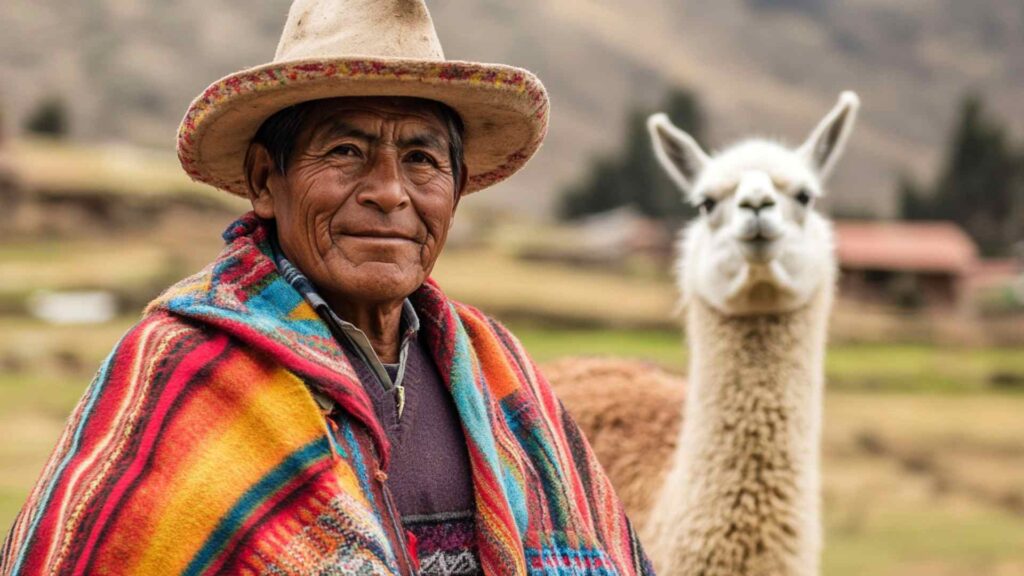
- Vicuñas, guanacos, llamas, and alpacas are native camelids of the Andes.
- Vicuña fiber is among the finest animal fibers used for clothing.
- The Puya raimondii plant can grow over 10 meters tall when it blooms.
- The high Andes support hardy crops like potatoes, quinoa, and oca.
- The Uros people maintain floating islands made of totora reeds on Lake Titicaca.
- Titicaca harbors the giant Titicaca water frog that rarely leaves the water.
- The Maras salt pans harvest salt from a mineral spring on terraced pools.
- The circular terraces at Moray may have created varied microclimates for crops.
- Cerro Blanco near Nazca is among the highest sand dunes on Earth.
- The Kuelap fortress stands on a ridge high above the Utcubamba Valley.
- Gocta Waterfall drops hundreds of meters through cloud forest near Chachapoyas.
History & timelines
- People have lived in Peru for more than 12,000 years.
- Caral, dating to around 2600 BCE, is one of the oldest known cities in the Americas.
- The Chavín culture flourished in the highlands around 900–200 BCE.
- The Paracas culture is noted for elaborate textiles and coastal geoglyphs.
- Nazca artists created large desert drawings between about 500 BCE and 500 CE.
- The Moche built adobe pyramids and fine metalwork on the north coast.
- The Wari established a highland empire before the rise of the Incas.
- The Chimú built Chan Chan, a vast adobe city near today’s Trujillo.
- The Inca Empire united much of the Andes in the 1400s and early 1500s.
- The Incas called their realm Tawantinsuyu, meaning the land of four regions.
- The Inca capital was Cusco in the southern highlands.
- The Inca road network linked mountains, valleys, and coasts with paved paths and rope bridges.
- Inca engineers built terraces, canals, and stone cities fitted without mortar.
- Quipus of knotted cords recorded numbers and information for officials.
- Sacsayhuamán’s massive walls guard a hill above Cusco.
- Spanish forces arrived in the 1530s and formed a colonial viceroyalty.
- Lima became the main colonial capital on the Pacific coast.
- Silver and gold mining powered much of the colonial economy.
- Peru declared independence on July 28, 1821.
- Final victory for independence came in 1824 after decisive highland battles.
- The 19th century saw conflicts and boundary changes with neighboring countries.
- Railways climbed into the Andes during the late 1800s.
- Rubber booms transformed Amazon towns like Iquitos around 1880–1912.
- The 20th century brought waves of migration from the countryside to Lima.
- The national currency changed names several times before returning to simply “sol” in 2015.
Culture, people & society
- Peru’s population is a blend of Indigenous, European, African, and Asian heritage.
- Spanish is widely spoken, and many people also speak Quechua or Aymara.
- More than 40 Indigenous languages are still used, especially in the Amazon.
- Family gatherings and community festivals are central to social life.
- The Inti Raymi festival in Cusco honors the winter solstice in June.
- Puno hosts colorful celebrations on the shores of Lake Titicaca each year.
- The marinera is a graceful couples’ dance known across the country.
- Huayno music features highland rhythms, panpipes, and charangos.
- Afro-Peruvian music styles like festejo and landó add coastal swing.
- The cajón, a box drum, is a signature Peruvian percussion instrument.
- Bright textiles woven on backstrap looms showcase Andean patterns.
- Traditional dress in the highlands includes layered skirts and felt hats.
- The Peruvian paso horse is prized for its smooth four-beat gait.
- Soccer is the most popular sport, and red-and-white jerseys fill stadiums.
- Surfing beaches near Lima and the north coast draw riders year-round.
- The Q’eswachaka rope bridge over the Apurímac is rebuilt annually by hand.
- Market days feature piles of potatoes, corn, chilies, and tropical fruit.
- Many highland homes keep cuy, or guinea pigs, for special-occasion meals.
- Coca leaves are chewed or brewed as tea in the highlands to ease altitude.
- Voting is compulsory for most adult citizens.

Names & etymology
- The origin of the name “Peru” is debated among historians.
- Lima’s name is linked to the nearby Rímac River, often pronounced “Lima” in old usage.
- Cusco comes from a Quechua word often translated as “navel” or “center.”
- Machu Picchu in Quechua means “Old Peak.”
- Qhapaq Ñan translates as “Great Road” or “Noble Road.”
- Tawantinsuyu means “the four united regions.”
- Quipu means “knot” in Quechua.
- Pisco likely takes its name from a word for “bird” or a coastal port where it was shipped.
- Titicaca is often interpreted as “puma rock” from local languages.
- The word “Andes” may derive from a term for “high crest” or “east” in Indigenous tongues.
For kids: quick comparisons
- Peru is a bit smaller than Alaska but bigger than Texas.
- Huascarán is taller than every mountain in the Rocky Mountains.
- Colca Canyon is deeper than the Grand Canyon by well over a kilometer.
- Lake Titicaca is higher than Denver by about 1,500 meters (4,900 ft).
- Machu Picchu was built in the 1400s, around the same time as the European Renaissance.
- The Nazca geoglyphs can stretch longer than several soccer fields laid end to end.
- A full-grown Andean condor’s wingspan can be wider than a small car is long.
- Alpacas are smaller and softer-fleeced than llamas.
- The Amazon River that starts in Peru is longer than a trip across the continental United States.
- Iquitos is reachable by boat or plane but not by highway from other big cities.
Food & flavors
- Ceviche, fresh fish cured in citrus juice, is a beloved national dish.
- Leche de tigre is the tangy, spicy marinade left over from ceviche.
- Lomo saltado stir-fries beef with onions, tomatoes, and soy-influenced sauces.
- Aji amarillo is a fruity yellow chili pepper used in many sauces.
- Ají de gallina is a creamy chicken dish flavored with chilies and cheese.
- Anticuchos are skewers of marinated meat grilled over hot coals.
- Causa layers mashed yellow potatoes with avocado, chilies, and fillings.
- Purple corn flavors sweet drinks and desserts like chicha morada and mazamorra.
- Pisco is a grape brandy distilled on the coast and used in the pisco sour.
- Peru grows thousands of potato varieties in many colors and shapes.
Pop culture & fun extras
- The fictional bear Paddington is said to come from “darkest Peru.”
- Chicama in northern Peru offers one of the world’s longest left-hand waves for surfers.
- The Mariner’s Cross called the Cruz del Sur appears in many Andean designs.
- The Torito de Pucará is a pair of ceramic bulls placed on rooftops for good luck.
- The Inca Trail is a multi-day trek that ends at the Sun Gate above Machu Picchu.
- The Santa Catalina Monastery in Arequipa is a city within a city of colorful alleys.
- The Nazca aqueducts called puquios still channel water through the desert.
- Peruvian hairless dogs have warm skin and are recognized as a national breed.
- The salt ponds of Maras form pink and white patterns that change with the sun.
- Retablos from Ayacucho are colorful portable altars that tell stories with tiny figures.
Quick FAQ
Q: What is Peru most famous for?
A: Peru is famous for Machu Picchu, the Andes Mountains, the Amazon rainforest, and a vibrant food scene led by ceviche and chili-based sauces.
Q: When is the best time to visit the Andes in Peru?
A: The dry season from May to September usually offers the clearest skies for trekking in the highlands.
Q: What languages are spoken in Peru?
A: Spanish is common nationwide, and many people also speak Indigenous languages such as Quechua and Aymara.
Q: How high is Cusco?
A: Cusco sits around 3,400 meters (11,200 ft) above sea level.
Q: What money does Peru use?
A: Peru uses the sol, written as S/.

Ellie is the owner and sole author of Fun Facts, combining her mechanical engineering background with years of research-driven writing to deliver facts you can trust. Every article is thoroughly fact-checked and routinely updated as new science and sources emerge to keep information accurate and current. Her mission is to make learning delightful while upholding high standards of reliability and transparency.