
Lungs are easy to ignore until I try holding my breath for thirty seconds and suddenly remember how demanding oxygen can be. These soft organs move thousands of gallons of air, trade gases across microscopic membranes, clean themselves with moving cilia, and somehow keep working while we talk, laugh, exercise, sleep, and sneeze.
Your lungs are light, spongy organs built around air
- Humans normally have two lungs.
- The lungs sit inside the chest on either side of the heart.
- The rib cage helps protect them.
- The right lung is usually larger than the left lung.
- The right lung has three lobes.
- The left lung has two lobes.
- The left lung makes room for the heart with an indentation called the cardiac notch.
- Lung tissue is soft and elastic rather than hollow like two balloons.
- Most of each lung consists of branching airways, blood vessels, connective tissue, and millions of microscopic air sacs.
- A thin membrane called the pleura covers each lung.
- Another pleural layer lines the inside of the chest wall.
- A tiny amount of lubricating fluid lies between the pleural layers.
- That fluid reduces friction as the lungs move during breathing.
- The lungs do not contain large skeletal muscles that actively pull themselves open.
- They expand mainly because movements of the chest and diaphragm lower pressure around them.
- Healthy lungs contain a large amount of air even after a normal exhalation.
- You cannot voluntarily squeeze every last bit of air out of healthy lungs.
- Residual air helps keep tiny air spaces from collapsing completely.
- Lung size varies with height, sex, age, body size, health, and physical conditioning.
- The fact that these organs feel almost foam-like makes their nonstop gas-exchange workload seem even less reasonable.
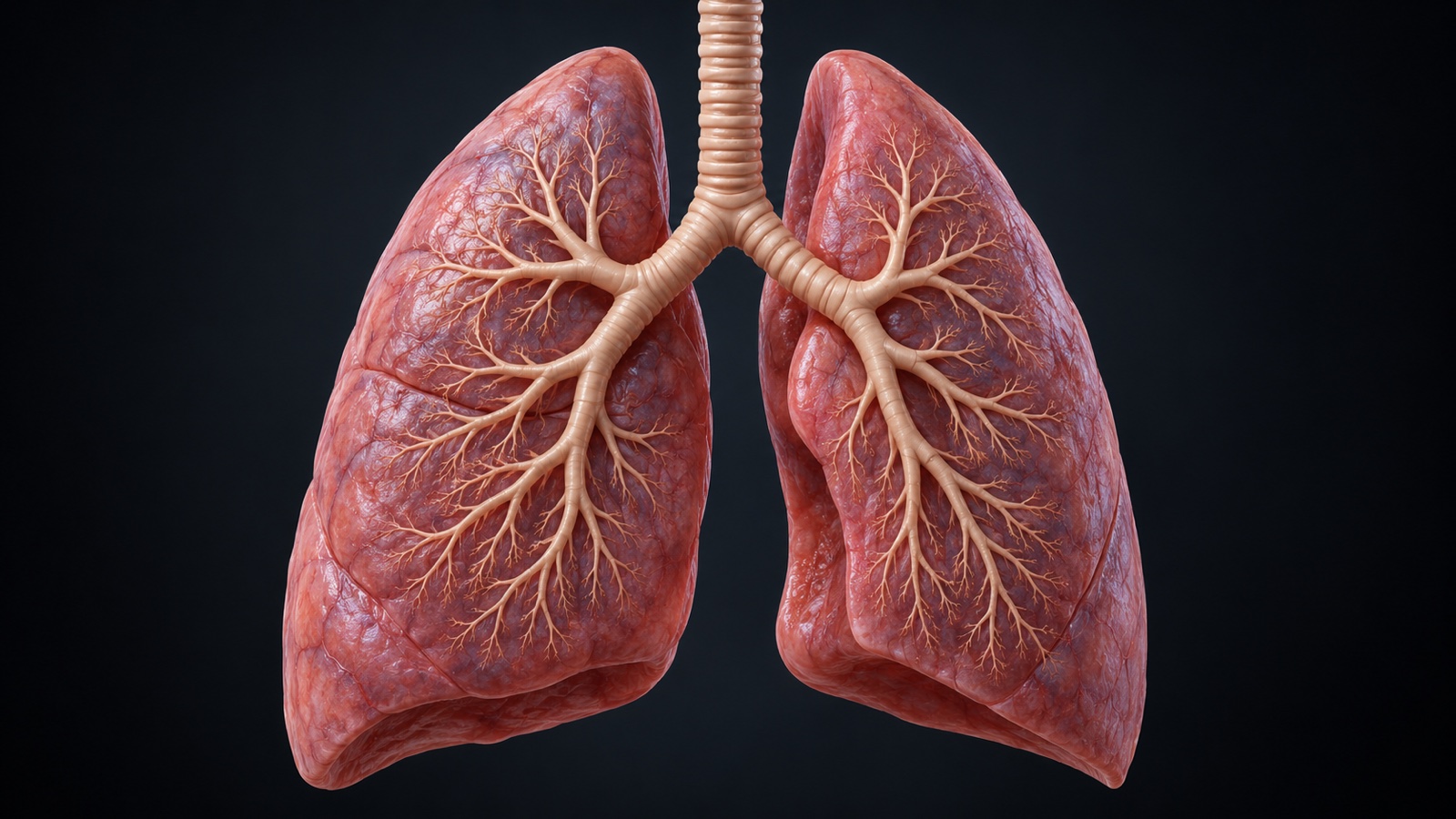
Every breath travels through a branching airway tree
- Air usually enters through the nose or mouth.
- The nose warms, humidifies, and filters incoming air.
- Air then passes through the pharynx in the throat.
- The larynx sits at the entrance to the lower airway.
- The larynx contains the vocal folds.
- The trachea carries air toward the lungs.
- The trachea is commonly called the windpipe.
- C-shaped rings of cartilage help keep the trachea open.
- The trachea divides into a right and left main bronchus.
- Each main bronchus enters one lung.
- The bronchi divide repeatedly into smaller branches.
- Those branches become bronchioles.
- Bronchioles contain much less cartilage than larger bronchi.
- Smooth muscle in bronchiole walls can change airway diameter.
- Airways become progressively narrower but vastly more numerous with each division.
- The branching pattern is sometimes compared with an upside-down tree.
- The right main bronchus is generally wider and more vertical than the left.
- That anatomy helps explain why inhaled foreign objects more often enter the right side in adults.
- The airway tree's job is not gas exchange at first. It mainly moves, conditions, and distributes air.
- One breath starts as a single stream and ends up being divided among an enormous number of microscopic destinations.
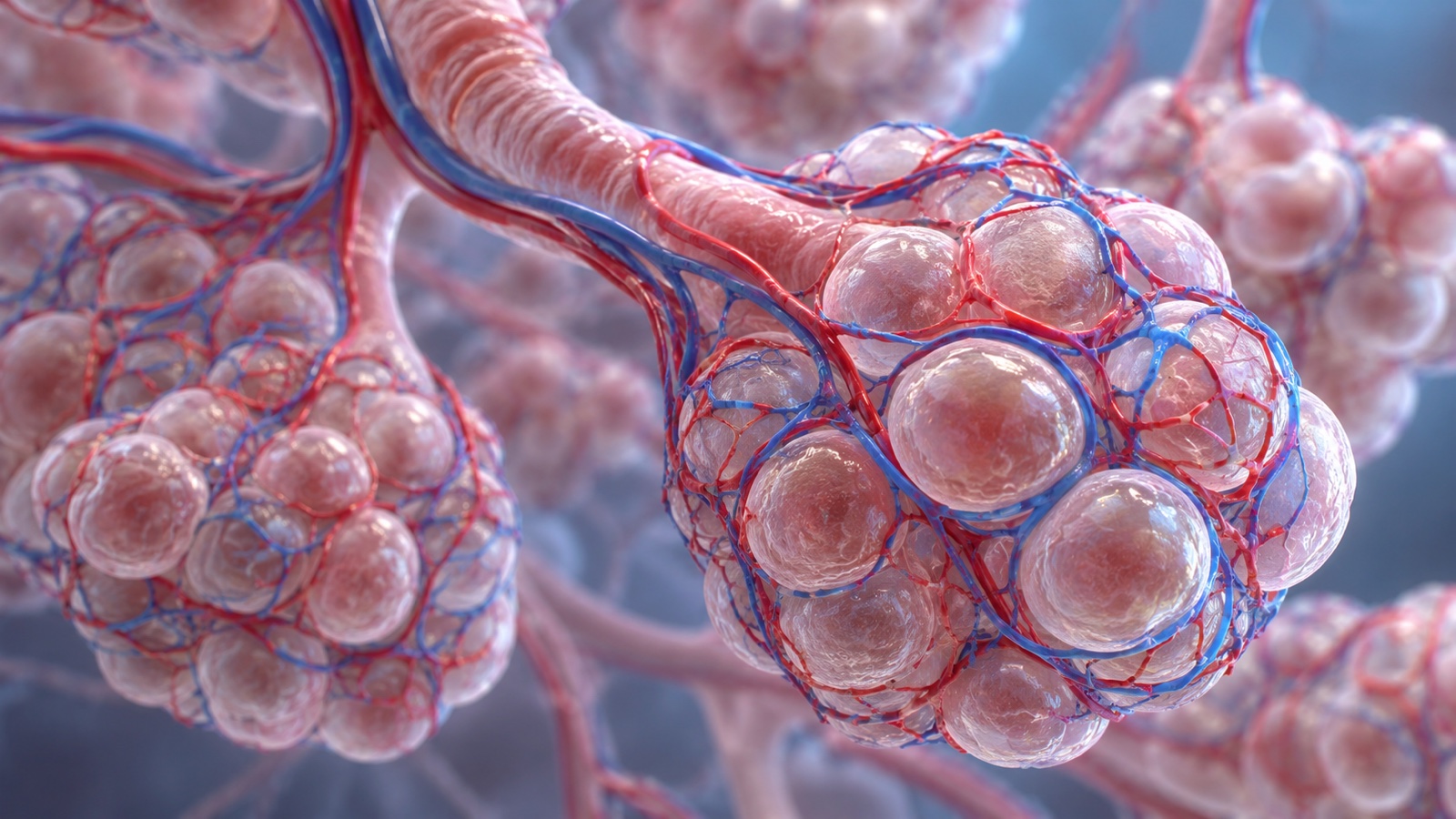
Alveoli are where oxygen actually enters the blood
- The smallest functional air spaces are called alveoli.
- An adult human lung contains hundreds of millions of alveoli.
- Alveoli are arranged in clusters at the ends of tiny airways.
- The walls of alveoli are extremely thin.
- Capillaries wrap closely around the alveoli.
- Capillary walls are also only about one cell thick.
- Oxygen moves from alveolar air into the blood by diffusion.
- Carbon dioxide moves from blood into the alveoli by diffusion.
- Diffusion follows differences in partial pressure rather than being pumped mechanically across the membrane.
- The combined alveolar surface area in healthy adult lungs is enormous.
- Estimates vary with measurement method, lung volume, and body size.
- A large surface area lets gas exchange occur quickly.
- Type I alveolar cells form most of the thin gas-exchange surface.
- Type II alveolar cells produce pulmonary surfactant.
- Surfactant reduces surface tension inside the alveoli.
- Without enough surfactant, tiny air sacs are much harder to keep open.
- Premature babies can struggle with breathing when surfactant production is not mature enough.
- Macrophages patrol alveoli and engulf particles or microbes.
- Efficient gas exchange depends on matching airflow with blood flow.
- Your oxygen supply ultimately depends on microscopic wet membranes so thin that gases can cross them in fractions of a second.
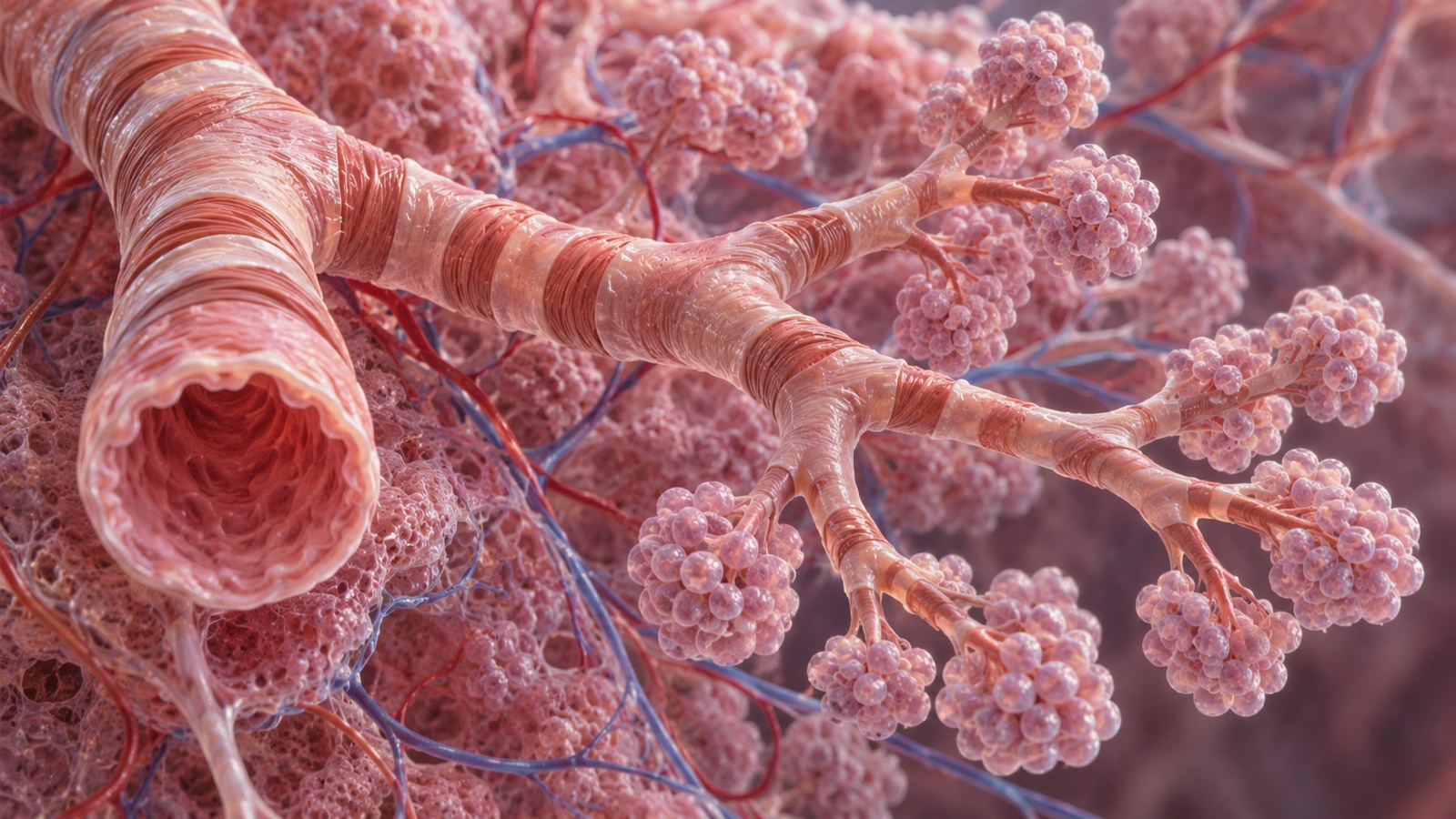
The diaphragm does most of the breathing work
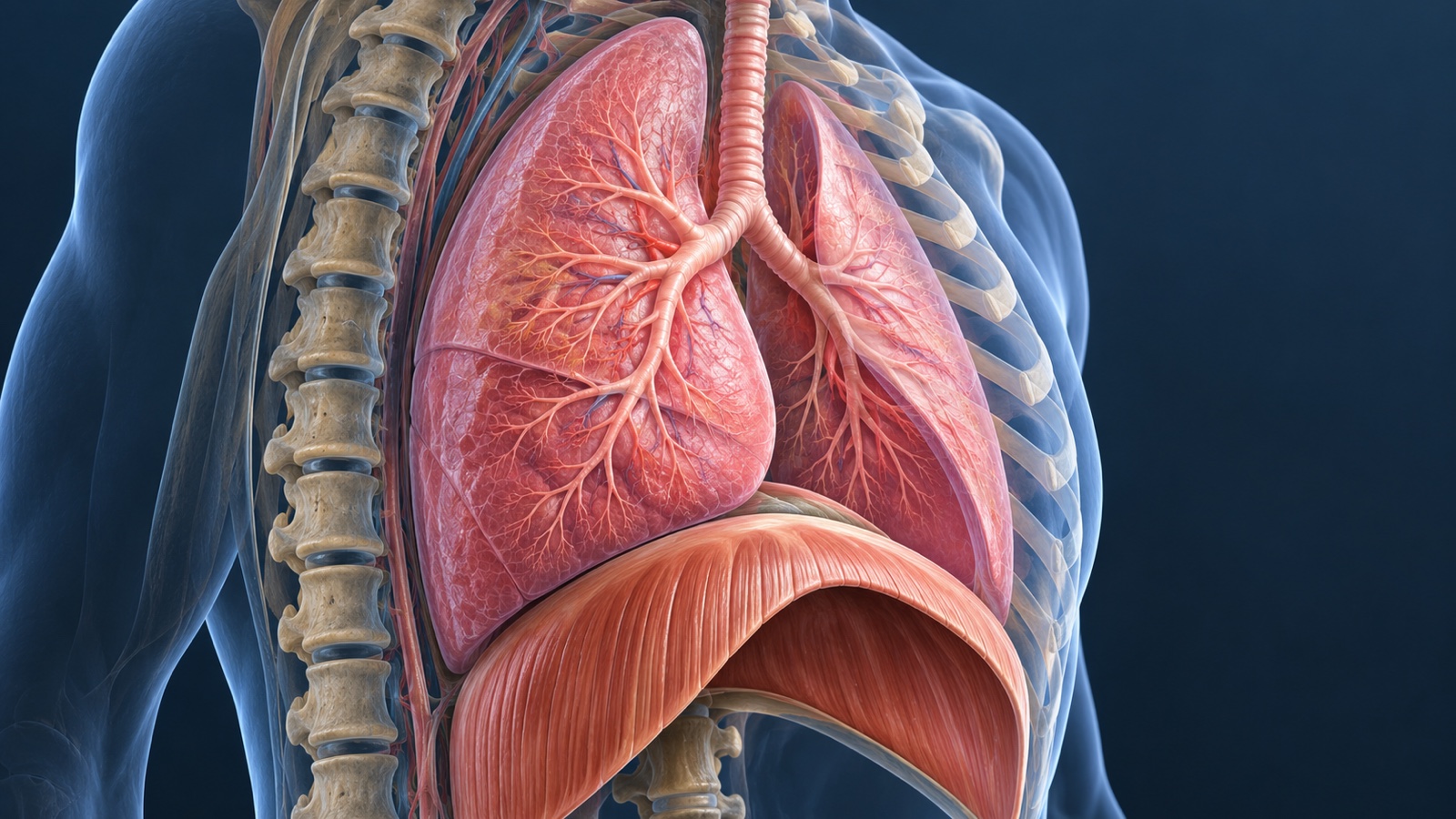
I used to picture lungs inflating themselves. The real mechanism is better: a dome-shaped muscle beneath them contracts downward, the chest cavity gets larger, pressure falls, and atmospheric air rushes in because physics hates an unanswered pressure difference.
- The diaphragm is the primary muscle of quiet breathing.
- It forms a muscular sheet beneath the lungs.
- At rest, the diaphragm curves upward into a dome.
- During inhalation, it contracts and moves downward.
- That movement increases chest-cavity volume.
- Pressure around the lungs decreases.
- Air flows inward because atmospheric pressure is then relatively higher.
- External intercostal muscles between the ribs also assist inhalation.
- They help lift and expand the rib cage.
- Normal quiet exhalation is mostly passive.
- Elastic lung and chest tissues recoil when inspiratory muscles relax.
- Forced exhalation recruits abdominal and internal intercostal muscles.
- Laughing uses rapid coordinated breathing and vocal-fold movements.
- Coughing begins with a deep inhalation followed by pressure buildup and a forceful release.
- Sneezing uses a related explosive airflow response centered on irritation in the nasal passages.
- Hiccups involve sudden involuntary contractions of the diaphragm followed by closure of the vocal opening.
- The familiar hic sound comes from that abrupt glottic closure.
- Breathing continues automatically during sleep.
- The brainstem adjusts respiratory muscle activity without conscious supervision.
- It is mildly humbling that the muscle doing most of my breathing gets almost none of the publicity compared with the lungs sitting above it.
Carbon dioxide helps control when you need to breathe
- Breathing is regulated primarily by networks in the brainstem.
- Chemical sensors monitor carbon dioxide, acidity, and oxygen levels.
- Carbon dioxide strongly influences breathing under ordinary conditions.
- Carbon dioxide dissolves in blood and affects acidity.
- Rising carbon dioxide usually increases the drive to breathe.
- This is why holding your breath becomes uncomfortable before oxygen is completely depleted.
- Peripheral chemoreceptors also respond strongly when blood oxygen falls substantially.
- Exercise increases carbon dioxide production.
- Breathing therefore becomes deeper and faster during exercise.
- Healthy lungs can increase ventilation enormously above resting levels.
- A typical resting adult breathes roughly 12 to 20 times per minute.
- Rates vary with age, fitness, temperature, emotion, sleep, and illness.
- Children normally breathe faster than adults.
- Newborns breathe much faster than adults.
- Anxiety can increase respiratory rate.
- Slow voluntary breathing can temporarily influence autonomic activity.
- You can consciously control breathing for speech, singing, swimming, and breath holding.
- Automatic control resumes when conscious attention disappears.
- Breathing rhythm is flexible because the body must coordinate gas exchange with talking, eating, moving, and sleeping.
- The uncomfortable part of a breath hold is largely your body yelling about carbon dioxide long before it is willing to negotiate calmly.
Your airways have their own cleaning conveyor belt
The lungs cannot be scrubbed with a sponge, so the respiratory tract runs its own cleanup system. Mucus traps particles, microscopic cilia beat upward, and material gets swallowed or coughed out before much of it can reach the delicate gas-exchange surface.
- Mucus lines much of the conducting airway.
- It traps dust, microbes, pollen, and other inhaled particles.
- Microscopic hair-like structures called cilia cover many airway cells.
- Cilia beat in coordinated waves.
- They move mucus upward toward the throat.
- This system is called mucociliary clearance.
- Most cleared mucus is swallowed without you noticing.
- Stomach acid then destroys many swallowed microbes.
- Coughing provides a faster backup clearance mechanism.
- Nasal hairs trap some of the largest incoming particles.
- The nose also adds moisture to dry air.
- Warm humidified air is less irritating to lower airways.
- Smoking damages airway cilia.
- Reduced ciliary function makes mucus harder to clear.
- That helps explain the cough many smokers develop.
- Air pollution can irritate airways even in nonsmokers.
- Very small particles can penetrate deep into the respiratory tract.
- Alveolar macrophages help remove particles that reach the deepest air spaces.
- Lung defenses must remove threats while avoiding unnecessary inflammation from harmless material.
- Every quiet breath is passing through a cleaning system whose moving parts are far too small to see without a microscope.
Exercise, development and 25 final lung facts
- Fetal lungs develop long before they are used to breathe air.
- Before birth, the placenta performs gas exchange for the fetus.
- Fetal lungs are filled with fluid rather than air.
- The first breaths after birth help expand the lungs and replace much of that fluid.
- Pulmonary circulation changes dramatically after birth.
- Lung growth continues through childhood.
- The number and size of alveoli increase during development.
- Maximum lung function is usually reached in early adulthood.
- Lung function gradually declines with normal aging.
- Regular exercise strengthens respiratory muscles.
- Exercise also improves how efficiently the cardiovascular system delivers oxygen to working tissue.
- Training does not usually make adult lungs physically enormous.
- Athletes often become better at using the respiratory and cardiovascular capacity they already possess.
- Swimming does not give humans gills or unusual oxygen extraction from water.
- High-altitude living exposes the body to lower oxygen pressure.
- Acclimatization includes faster breathing and changes in blood physiology.
- The lungs themselves are only one part of oxygen delivery.
- Blood, heart function, muscle mitochondria, and circulation are equally critical to aerobic performance.
- Yawning is not simply the body correcting low oxygen.
- The exact function of yawning remains incompletely understood.
- You do not use only a tiny fraction of your lungs during normal life.
- Different lung regions receive different amounts of airflow and blood depending on posture and gravity.
- Taking a very deep breath recruits more of the available volume than ordinary quiet breathing.
- Healthy lungs contain enough reserve capacity that losing some function may not cause immediate symptoms at rest.
- After 145 facts, breathing feels less automatic and more astonishing: every breath coordinates muscles, pressure, branching tubes, microscopic air sacs, blood flow, chemistry, brainstem control, and a cleaning crew you never consciously hired.
Quick FAQ
Q: Which lung is bigger?
A: The right lung is generally larger and has three lobes. The left has two lobes and makes room for the heart.
Q: How many alveoli are in the lungs?
A: Healthy adult lungs contain hundreds of millions of alveoli, although estimates vary with body size, age, lung volume, and measurement method.
Q: Do the lungs have muscles?
A: Lung tissue itself does not actively inflate with skeletal muscle. The diaphragm and chest muscles change pressure around the lungs so air flows in and out.
Q: Why do we feel desperate to breathe when holding our breath?
A: Rising carbon dioxide and the resulting change in blood acidity create much of the normal urge to breathe.
Q: Can lungs clean themselves?
A: Airways have mucus, cilia, cough reflexes, immune cells, and other defenses that continuously remove many inhaled particles and microbes.

Ellie is the owner and sole author of Fun Facts, combining her mechanical engineering background with years of research-driven writing to deliver facts you can trust. Every article is thoroughly fact-checked and routinely updated as new science and sources emerge to keep information accurate and current. Her mission is to make learning delightful while upholding high standards of reliability and transparency.