
Lightning is a giant electrical discharge that can heat air to roughly 50,000°F, travel inside a cloud without ever reaching the ground, strike miles away from the rain, and even shoot upward from tall structures. Thunder is simply the atmosphere reacting to that sudden burst of heat. These 145 lightning facts explore charge separation, leaders, return strokes, thunder, cloud-to-ground strikes, sprites, volcanic lightning, safety, lightning rods, famous experiments, fulgurites, aircraft, space observations, and the physics behind one of weather’s most dramatic displays.
Lightning basics
- Lightning is a powerful electrical discharge in the atmosphere.
- Most lightning occurs inside thunderstorms.
- Not every lightning flash reaches the ground.
- In-cloud lightning is extremely common.
- Cloud-to-cloud lightning can connect different clouds.
- Cloud-to-ground lightning connects a cloud charge region with Earth.
- Ground-to-cloud lightning can initiate upward from tall structures.
- Lightning channels can branch dramatically.
- A single visible flash can contain multiple electrical pulses.
- Lightning heats surrounding air extremely rapidly.
- The heated air expands explosively.
- That expansion produces thunder.
- Lightning and thunder are therefore parts of the same event.
- NOAA’s National Weather Service provides extensive lightning science and safety guidance.
- Lightning occurs on Earth millions of times every day when global thunderstorms are considered together.
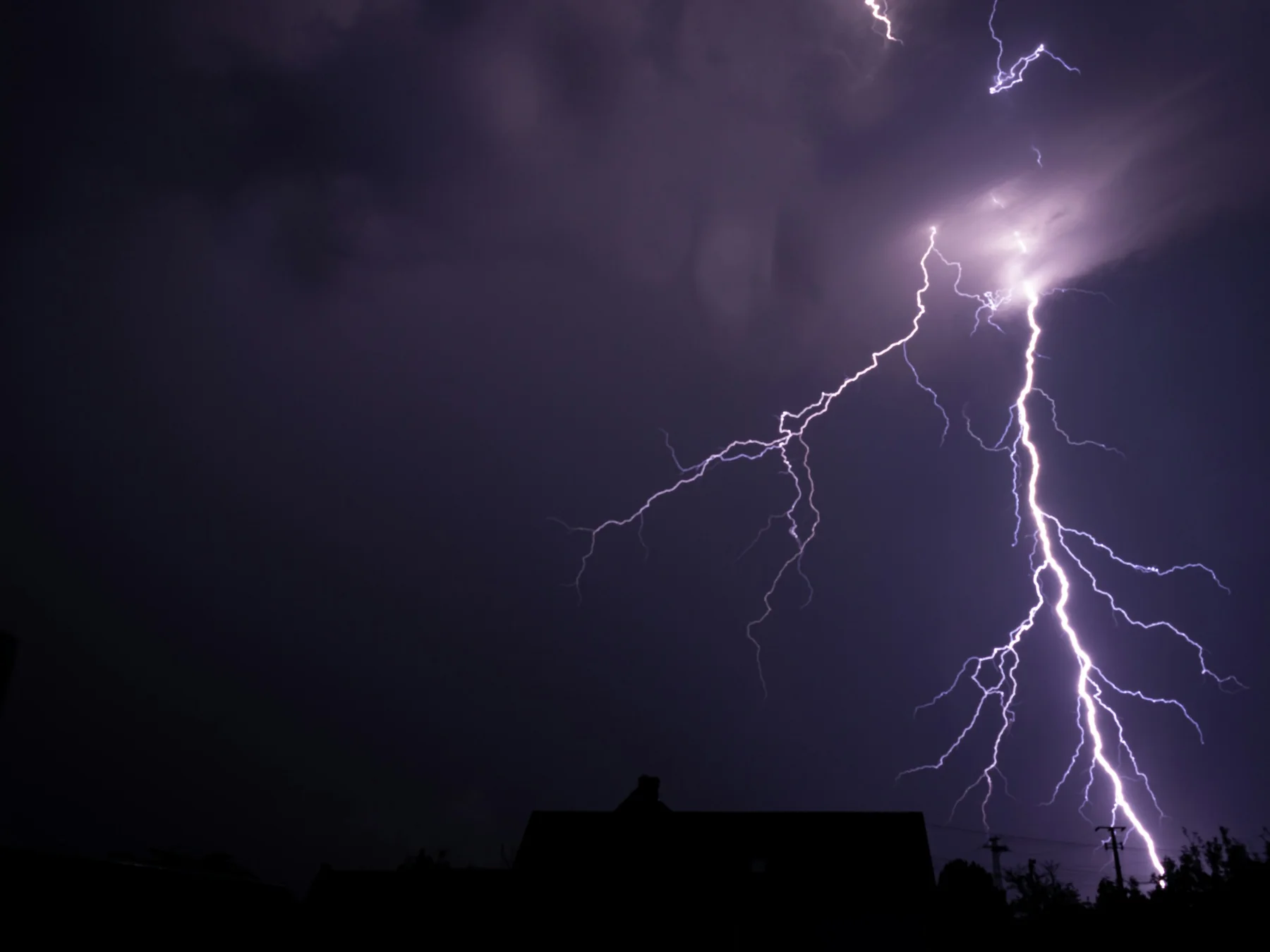
Thunderstorms separate electric charge
- Lightning begins with electric-charge separation inside a storm.
- Strong updrafts carry water droplets and ice particles upward.
- Ice crystals, graupel, and supercooled droplets collide.
- Those collisions transfer electric charge.
- Smaller ice crystals often acquire positive charge in common storm conditions.
- Heavier graupel often becomes negatively charged.
- Updrafts carry lighter positively charged ice higher.
- Heavier negatively charged particles tend to remain lower.
- This creates major separated charge regions inside the cloud.
- A smaller positive-charge region may also develop near the cloud base.
- The electric field strengthens as charge separation increases.
- Air normally acts as an electrical insulator.
- A sufficiently intense electric field can break air molecules into charged particles.
- This process makes the air conductive.
- Lightning occurs when the atmosphere can no longer maintain the electrical separation.
A strike grows in steps
- Many cloud-to-ground flashes begin with a stepped leader.
- The leader moves downward from the cloud in short jumps.
- It branches as it searches for electrically favorable paths.
- The developing leader is relatively faint compared with the main flash.
- As it approaches the ground, electric fields intensify around tall objects.
- Upward streamers can rise from trees, buildings, poles, or even open ground.
- One streamer may connect with a descending leader.
- That connection completes an electrically conductive path.
- A bright return stroke then races upward through the channel.
- The return stroke creates much of the brilliant light people associate with a lightning bolt.
- The visible process happens far too quickly for human eyes to resolve all the stages.
- High-speed cameras reveal the step-by-step development.
- Additional dart leaders can travel down the existing channel.
- They can trigger more return strokes.
- This repeated pulsing explains why a single lightning flash can appear to flicker.
Lightning is hotter than the Sun’s surface
- A lightning channel can heat air to around 50,000°F.
- That is roughly 28,000°C.
- This is several times hotter than the visible surface of the Sun.
- The comparison refers to temperature, not total energy output.
- The Sun is vastly larger and radiates incomparably more total energy.
- Lightning’s extreme temperature lasts only briefly in a narrow channel.
- Air expands suddenly when heated that fast.
- The expansion creates a shock wave.
- As the shock wave travels outward, it becomes the sound wave heard as thunder.
- Nearby thunder can sound like a sharp crack.
- Distant thunder often becomes a long rumble.
- Different sections of a lightning channel lie at different distances from the listener.
- Sound from those sections arrives at different times.
- Terrain and clouds can reflect or refract sound too.
- Thunder is therefore an acoustic map of a long irregular lightning channel arriving piece by piece.
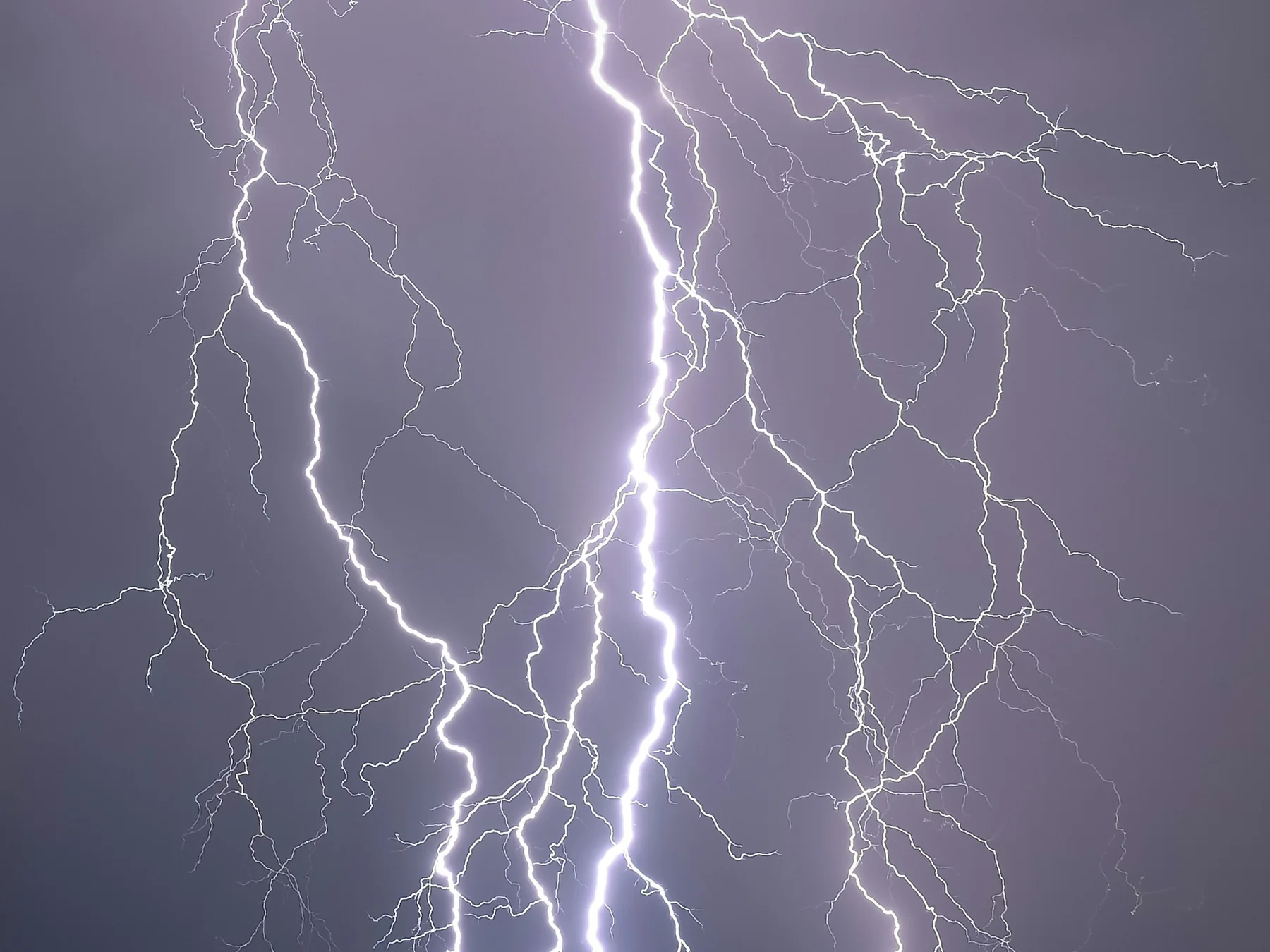
Why you see lightning before thunder
- Light travels far faster than sound.
- Visible light moves at roughly 300,000 kilometers per second in air.
- Sound moves only about 343 meters per second near room temperature.
- You therefore see a flash almost instantly at ordinary storm distances.
- Thunder arrives noticeably later.
- A rough rule is to count seconds between flash and thunder.
- About five seconds corresponds to roughly one mile of distance.
- About three seconds corresponds to roughly one kilometer.
- The method provides only an estimate.
- Lightning channels can stretch for many miles.
- The visible part you notice may not be the closest part.
- Wind and temperature affect sound speed slightly.
- If you can hear thunder, lightning is close enough to be dangerous.
- Safety experts advise moving indoors rather than using the time delay to decide whether a storm is “far enough away.”
- The old phrase “when thunder roars, go indoors” summarizes that safety rule.
Positive lightning can be especially powerful
- Most cloud-to-ground lightning transfers negative charge toward the ground.
- A smaller fraction of cloud-to-ground flashes are positive.
- Positive lightning often originates from positively charged regions higher in a storm.
- These flashes can carry unusually large currents.
- They can also last longer than typical negative strokes.
- Positive flashes may strike far from the heaviest rain.
- Some emerge from the upper portions or edges of storms.
- They are associated with a greater risk of igniting fires.
- Long continuing currents can heat struck materials intensely.
- Winter thunderstorms can produce strong positive lightning.
- Lightning polarity refers to the sign of charge transferred.
- It does not mean one type is harmless and the other dangerous.
- All cloud-to-ground lightning can kill.
- The rarity of positive lightning makes it scientifically interesting.
- A storm’s electrical structure can change over its lifetime, altering the types of flashes it produces.
Lightning can strike far from the rain
- A “bolt from the blue” is lightning that travels away from a storm before reaching the ground.
- It can strike under apparently clearer sky.
- Some bolts travel horizontally for many miles from a thunderstorm.
- This is why standing outside just beyond the rain shaft is unsafe.
- A storm does not need to be directly overhead to pose a lightning threat.
- Lightning can strike before rain begins at a location.
- It can also strike after rain has stopped.
- Open fields offer little protection.
- Hilltops increase exposure.
- Water is dangerous because swimmers and boaters are often the tallest exposed objects.
- Trees are not safe shelters.
- A strike to a tree can travel through the trunk, side-flash to a person, or spread through the ground.
- Small open shelters such as picnic pavilions provide poor lightning protection.
- A substantial enclosed building or hard-topped vehicle is much safer.
- The safest decision is based on thunderstorm presence, not whether raindrops are falling on you.
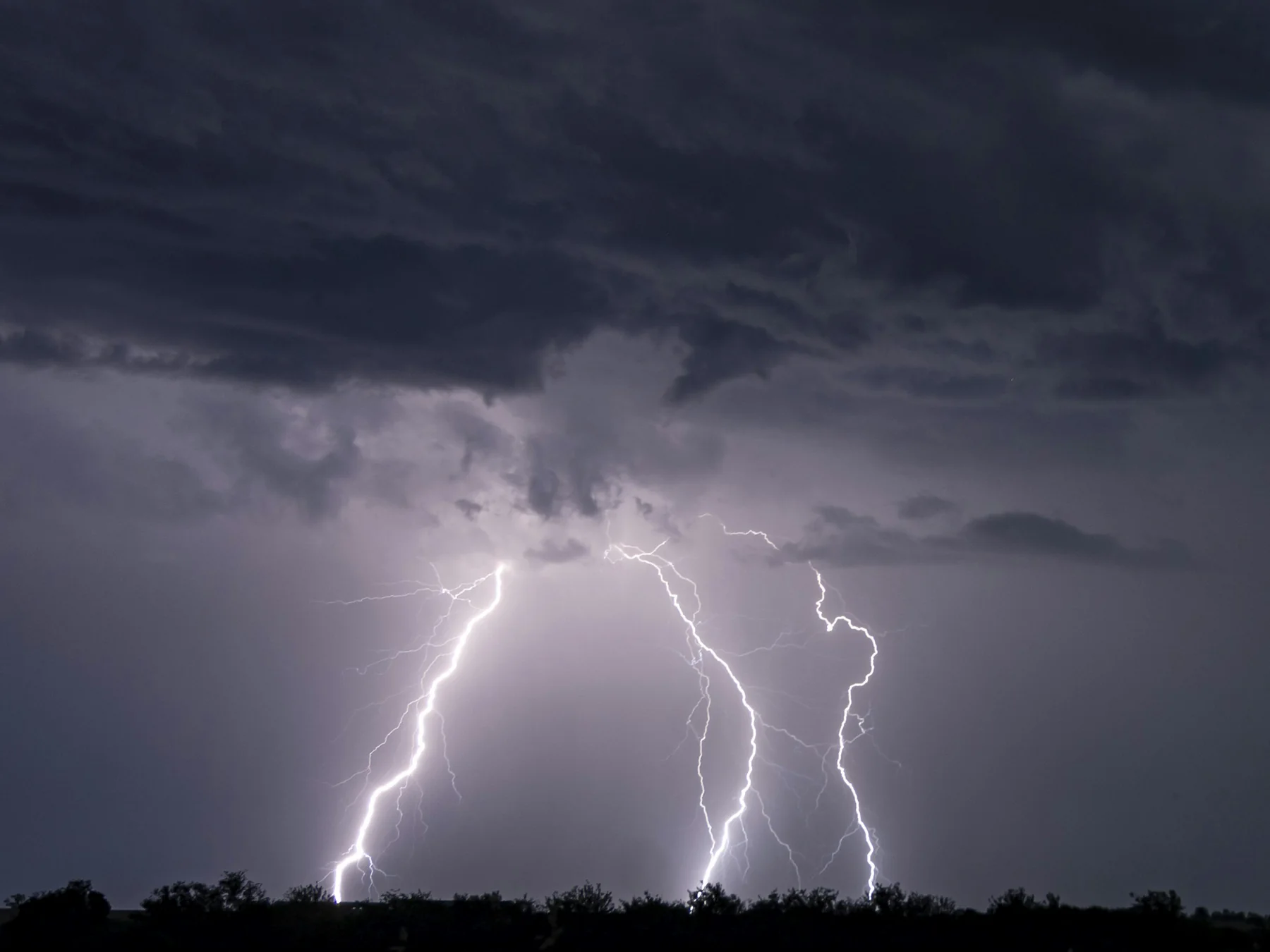
Lightning safety is mostly about location
- No outdoor place is completely safe during a thunderstorm.
- The best protection is inside a substantial building.
- A fully enclosed metal-topped vehicle can also provide good protection.
- The metal body helps conduct current around occupants.
- Rubber tires are not the main reason a car protects people.
- Inside a building, avoid direct contact with plumbing during a storm.
- Lightning current can travel through conductive pipes and wiring.
- Avoid corded electrical equipment.
- Wireless devices that are not plugged in do not create the same conductive path.
- Stay away from windows and doors.
- Wait at least 30 minutes after the last thunder before returning outdoors under common safety guidance.
- The old lightning crouch is no longer recommended as meaningful protection when a safe shelter is available.
- If a person is struck, it is safe to touch them.
- A lightning victim does not retain an electric charge.
- Immediate CPR and emergency medical response can save lives because lightning can stop breathing or disrupt the heart.
Lightning rods do not attract storms
- A lightning protection system provides a controlled path for electrical current.
- A lightning rod is usually a metal terminal mounted high on a structure.
- Conductors connect the terminal toward the ground.
- Grounding electrodes disperse current into the earth.
- The system does not prevent thunderstorms.
- It does not magically repel lightning either.
- Its purpose is to reduce damage if lightning attaches to the structure.
- Benjamin Franklin famously studied electricity and lightning in the 18th century.
- Franklin proposed pointed lightning rods.
- His kite experiment has been heavily dramatized in popular retellings.
- He did not simply hold a metal key directly in a lightning bolt.
- A direct strike would probably have killed him.
- Franklin’s experiments helped establish that lightning and laboratory electricity were related phenomena.
- Modern lightning protection uses engineering standards far more sophisticated than one metal rod alone.
- A properly designed system protects a building by managing enormous current rather than trying to stop nature from producing it.
Ten surprising lightning facts
- Most lightning never reaches the ground.
- A lightning channel can reach temperatures around 50,000°F.
- Thunder is caused by explosive expansion of air heated by lightning.
- A single flash may contain several return strokes.
- Lightning can strike miles away from the main rain area.
- Rubber tires are not why a hard-topped car protects you.
- A person struck by lightning is safe to touch afterward.
- Blackened branching marks on skin are called Lichtenberg figures and are temporary patterns rather than ordinary burns.
- Lightning can fuse sand into glassy tubes called fulgurites.
- For more atmospheric trivia, explore our rainbow facts and northern-lights facts.
Quick lightning FAQ
What causes lightning?
Collisions among ice particles inside thunderstorms separate electric charge until the electric field becomes strong enough to create a conductive path through air.
Why does thunder happen?
Lightning heats air extremely rapidly. The air expands explosively, creating a shock wave that becomes thunder.
How far away is lightning if thunder comes five seconds later?
Roughly one mile, although the estimate is imperfect because lightning channels are long and irregular.
Can lightning strike without rain?
Yes. Lightning can travel far from a storm and strike where no rain is falling.
What should you do if you hear thunder?
Move into a substantial enclosed building or hard-topped vehicle and remain sheltered until at least 30 minutes after the last thunder.

Ellie is the owner and sole author of Fun Facts, combining her mechanical engineering background with years of research-driven writing to deliver facts you can trust. Every article is thoroughly fact-checked and routinely updated as new science and sources emerge to keep information accurate and current. Her mission is to make learning delightful while upholding high standards of reliability and transparency.